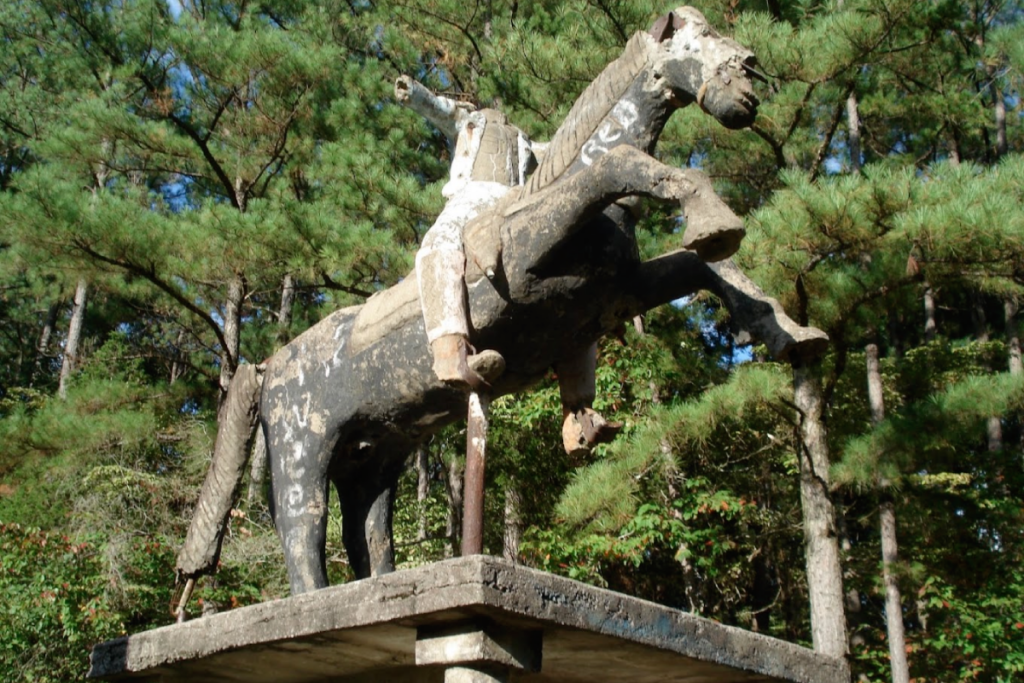
Along a quiet stretch of rural road in Palmyra, Tennessee, something extraordinary waits for travelers willing to slow down. Massive stone figures rise from the roadside like silent guardians, their weathered faces watching over the countryside with an almost haunting presence.
This hidden collection of hand-carved sculptures tells the story of one man’s lifelong passion and has quietly amazed visitors for decades.
A Strange Sight on a Quiet Tennessee Backroad
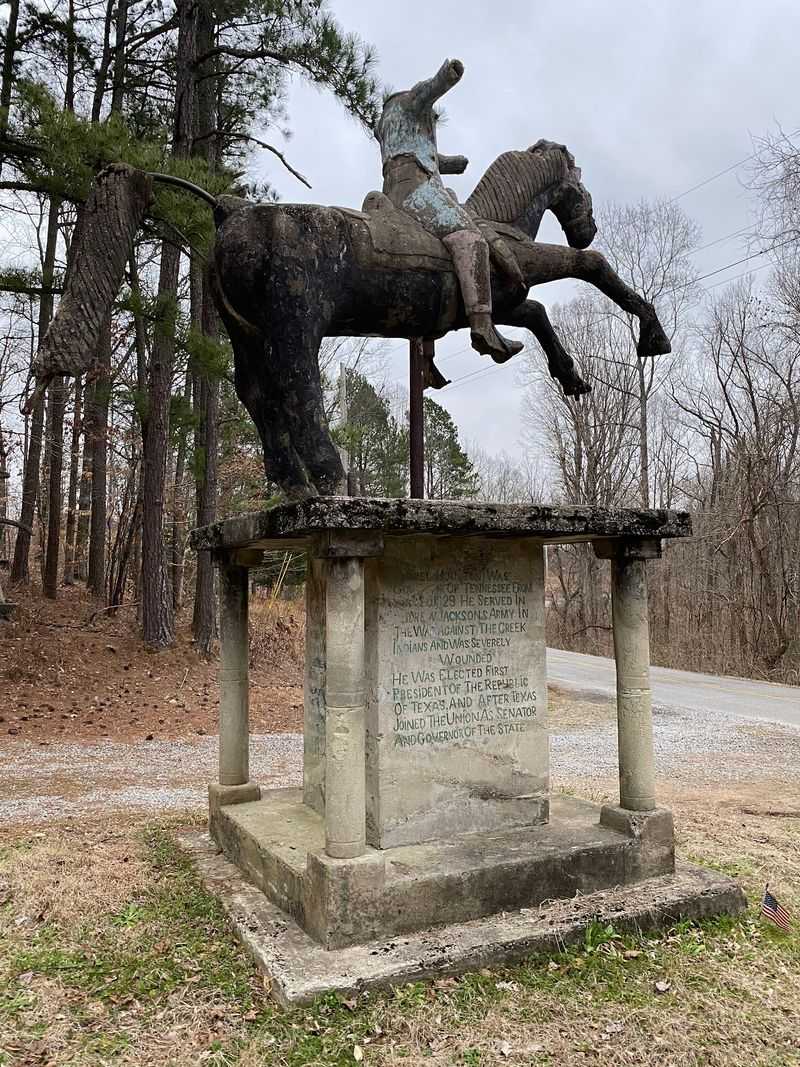
Buck Smith Hill Road doesn’t look like the kind of place where you’d stumble across anything unusual. It’s the sort of narrow country lane where you might pass a tractor or two, maybe wave at a neighbor checking their mailbox.
Then suddenly, towering stone figures appear along the shoulder, and you’re wondering if you’ve driven into some forgotten corner of history.
The statues stand in various states of preservation, some intact and imposing, others showing the wear of decades exposed to Tennessee weather. A few have lost pieces over the years to vandalism and time, but even damaged, they command attention.
Their presence transforms an ordinary drive into something memorable.
Most people discover this place by accident or through whispered recommendations from locals who’ve known about it forever. There are no billboards advertising the site, no tourist center to guide you through.
Just a roadside collection that feels like a secret someone decided to share with the world.
The contrast hits you immediately when you first arrive. Rural farmland stretches in every direction, peaceful and predictable, while these massive carved figures stand like they’ve been transported from another era entirely.
Some depict recognizable historical figures, others seem more mythical or symbolic in nature.
Visitors often pull over onto the grassy shoulder, stepping out to take photos and walk among the sculptures. The experience feels personal and unfiltered, without the polish or commercialization you’d find at official attractions.
It’s Tennessee folk art in its rawest, most authentic form, waiting patiently for anyone curious enough to stop and look.
The Story Behind Wickham Stone Park
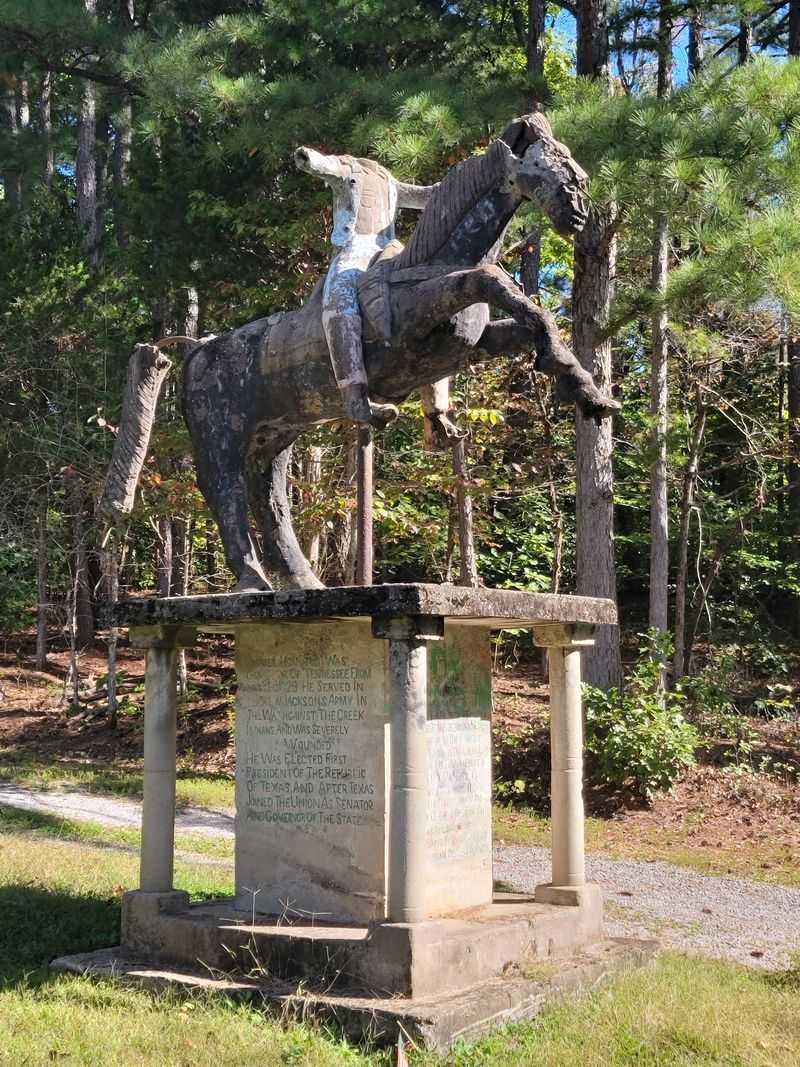
Every unusual roadside attraction has an origin story, and Wickham Stone Park’s tale centers on determination and creative vision. The property became home to this remarkable collection through one man’s dedication to leaving something lasting behind.
What started as a personal project gradually grew into a roadside landmark that would outlive its creator.
Enoch Tanner Wickham began working on these sculptures in the mid-20th century, carving them on his own property over the course of many years. He didn’t have formal training in sculpture or access to professional tools and materials.
Instead, he worked with concrete and whatever resources he could gather, shaping figures that reflected his interests and imagination.
The park isn’t really a park in the traditional sense with maintained grounds and visitor facilities. It’s more accurately described as a private property where sculptures line the roadside, visible to anyone passing by.
Over time, word spread about this unusual collection, and people started making deliberate trips to see what Wickham had created.
Some of the sculptures have inscriptions carved into their bases, offering glimpses into Wickham’s thinking and the subjects he chose to immortalize. These details add layers of meaning to figures that might otherwise seem purely decorative.
They reveal a man who thought deeply about history, leadership, and the personalities that shaped America.
Today, the site remains on private property, though visitors can view the statues from the roadside. The family has allowed this folk art legacy to stay visible, preserving Wickham’s work for future generations even as nature and time continue their slow work of reclaiming the materials.
Meet the Man Who Carved a World in Stone
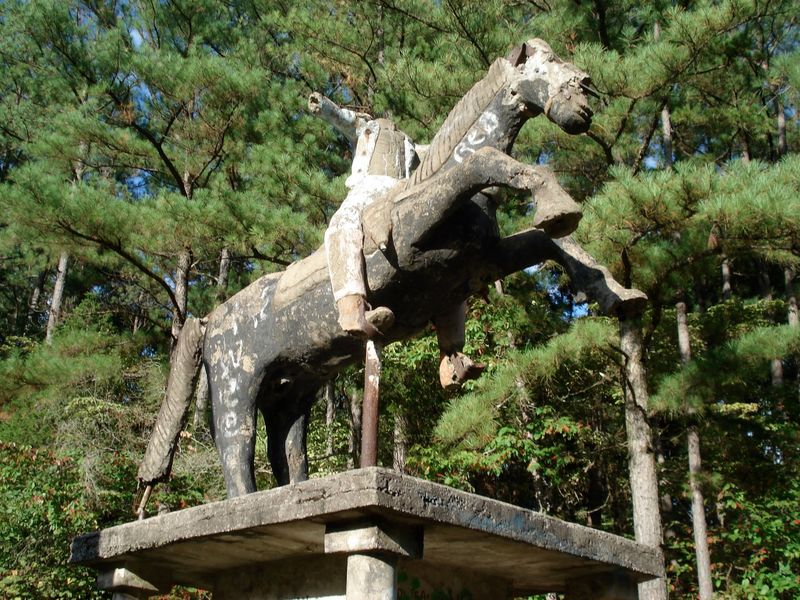
Enoch Tanner Wickham wasn’t a professionally trained sculptor or someone with gallery connections. He was a Montgomery County resident who felt compelled to create something meaningful with his hands and his time.
His background was rooted in rural Tennessee life, far removed from the art world’s fancy studios and prestigious exhibitions.
What drove someone to spend decades carving massive concrete figures along a country road? Friends and visitors who knew Wickham described him as someone fascinated by history and the larger-than-life personalities who shaped it.
He seemed to want to honor these figures in his own way, creating monuments that reflected his personal interpretation of greatness.
The work required incredible physical effort and patience. Concrete is unforgiving material, heavy and difficult to shape with precision.
Wickham worked outdoors in all seasons, slowly building up forms that would eventually stand taller than most people. Each sculpture represented countless hours of labor, all done without the promise of fame or financial reward.
Some of the statues had lights installed in their eyes, a detail that added an eerie, almost mystical quality to the collection when darkness fell. This creative touch showed Wickham’s desire to make his work more than just static monuments.
He wanted them to have presence, to feel alive in some way.
His dedication to this project lasted for decades, continuing even as his sculptures weathered and aged. Wickham created a legacy that would outlast him, though he likely never imagined his roadside collection would still be drawing curious visitors so many years after he set down his tools for the final time.
Presidents, Patriots, and Larger-Than-Life Figures
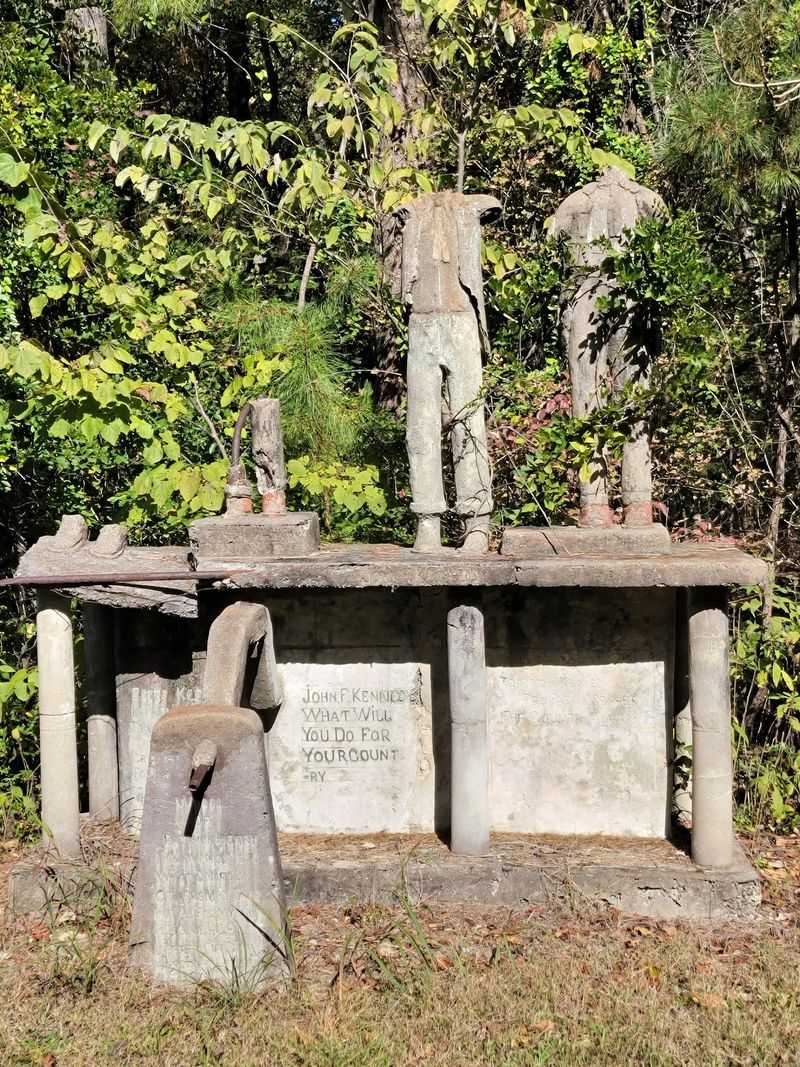
Walking among the statues feels like stepping into an unconventional history lesson taught by someone with strong opinions about who mattered most. Presidents feature prominently in the collection, their stone faces gazing out over the Tennessee countryside with expressions that range from stern to thoughtful.
These aren’t perfectly proportioned replicas you’d find in a museum, though. They carry the distinct character of folk art.
Some figures are immediately recognizable even with their rough-hewn features and weathered surfaces. Others require a moment of study, their identities revealed through inscriptions or distinctive elements Wickham included in the design.
The sculptor clearly had favorites among American historical figures, devoting more space and detail to certain personalities.
Beyond presidents, the collection includes other figures that captured Wickham’s imagination. Patriots, symbolic representations, and characters that seem drawn from legend all share space along the roadside.
The variety gives the site an eclectic, almost dreamlike quality, as if you’re walking through someone’s personal vision of an American pantheon.
The scale of these sculptures adds to their impact. Many stand well over human height, forcing visitors to look up at faces carved from concrete and stone.
This perspective shift creates a sense of awe, even for figures whose identities might not be immediately clear. Size matters when you’re trying to capture greatness in permanent form.
Time and vandalism have taken their toll on some pieces. A few statues are missing heads or have significant damage, which some visitors find haunting while others simply see as sad.
Still, enough remain intact to give a strong sense of what Wickham envisioned when he began this ambitious project decades ago.
Why the Sculptures Feel So Different From Museum Art
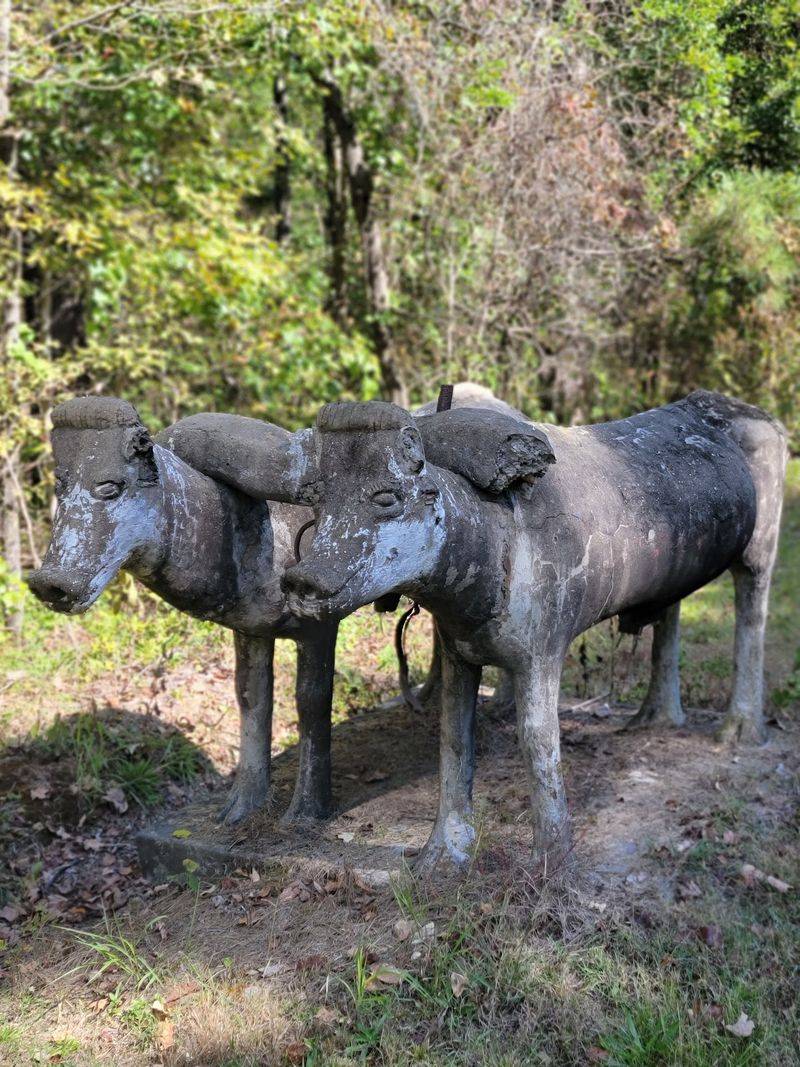
Museum sculptures sit under controlled lighting, protected from weather, carefully maintained by conservation experts. Wickham’s creations exist in the opposite environment, fully exposed to rain, heat, cold, and the slow erosion that comes with decades outdoors.
That fundamental difference changes everything about how you experience them.
The folk art quality sets these pieces apart from academic sculpture. There’s no concern here for perfect proportion or classical technique.
Wickham worked intuitively, creating forms that captured something essential about his subjects even if the details weren’t technically precise. This raw approach gives the statues an emotional directness that polished museum pieces sometimes lack.
Weather has become part of the art itself. Concrete surfaces show streaks and stains from years of rain.
Some statues have developed cracks or lost pieces, creating unintended textures and forms. What might be considered damage in a traditional art context becomes part of the story here, evidence of time passing and nature reclaiming what it can.
The outdoor setting eliminates the hushed reverence of gallery spaces. You’re not walking on polished floors past velvet ropes.
You’re standing on grass and gravel, probably swatting mosquitoes, with the sounds of rural Tennessee all around you. This casual accessibility makes the art feel more democratic, less intimidating to people who might never set foot in a formal museum.
Graffiti has unfortunately marked some sculptures, adding another layer to their complex history. While some visitors find this vandalism disrespectful, others see it as proof that these works exist in the real world, vulnerable and exposed rather than safely locked away.
The sculptures carry all their history on their surfaces, both intended and accidental.
What It’s Like to Visit This Hidden Tennessee Landmark
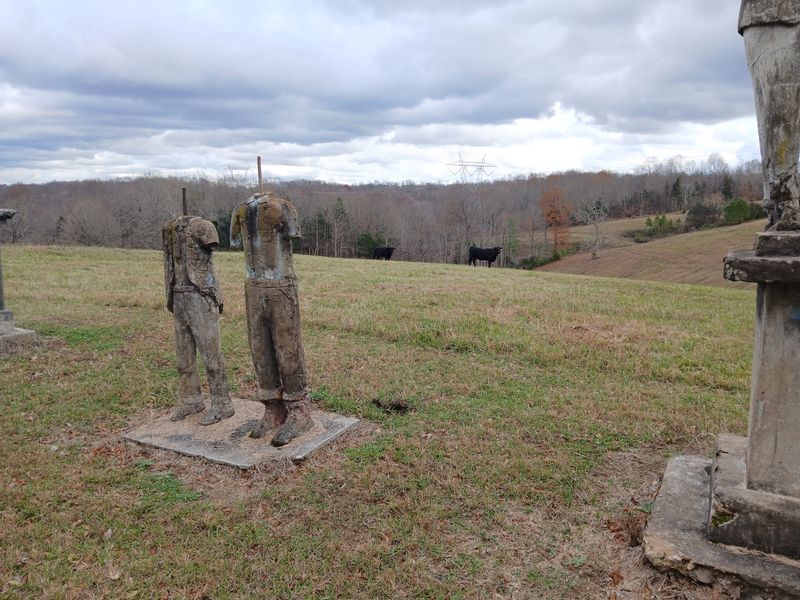
Getting there requires following directions carefully since GPS sometimes struggles with rural Montgomery County roads. Buck Smith Hill Road isn’t the kind of place you accidentally end up.
You have to want to find it, which means most visitors arrive with some idea of what they’re seeking.
The drive itself sets the mood. You’ll pass farmland, scattered houses, and the kind of peaceful countryside that makes you slow down naturally.
Then the statues appear, and the quiet rural scene suddenly includes these imposing stone figures that seem completely out of place yet somehow perfectly suited to the setting.
Most people park along the shoulder since there’s no official parking area. It’s important to remember this is private property, so viewing from the roadside is the respectful approach.
Some visitors spend just a few minutes taking photos, while others linger longer, walking the length of the collection and studying individual sculptures.
The atmosphere feels almost sacred in its quiet strangeness. There’s usually no one else around, giving you space to experience the site at your own pace.
Birds call from nearby trees, wind rustles through grass, and these massive concrete figures stand silent watch over it all.
Photography enthusiasts love this place for its unique character. The contrast between rural Tennessee landscape and monumental sculpture creates striking images, especially during golden hour when low sunlight casts long shadows.
Overcast days give the statues a more somber, mysterious quality.
Visiting doesn’t take long, maybe twenty minutes to half an hour if you walk the full roadside stretch. But the impression lingers much longer.
This isn’t the kind of place you forget easily, and many visitors return over the years, sometimes bringing friends who’ve never heard of this hidden Tennessee treasure.
A Forgotten Roadside Wonder Worth Slowing Down For
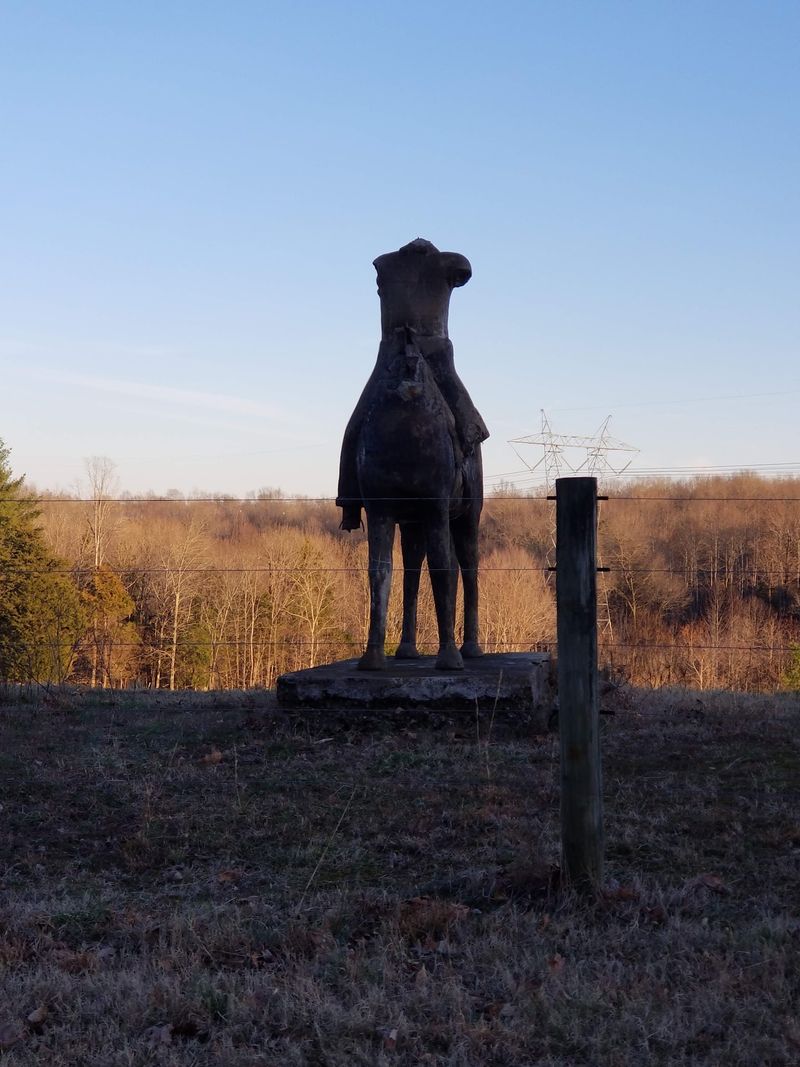
Tennessee has its share of well-known attractions that draw crowds year-round. Wickham Stone Park operates in a completely different category, known mostly to locals and curious travelers who seek out the unusual.
It represents a particular kind of American creativity that flourished along roadsides before interstate highways redirected traffic and attention elsewhere.
The sculptures won’t win awards for technical perfection, and they’re not going to appear in art history textbooks. Their value lies somewhere else entirely, in the story they tell about one person’s determination to create something permanent and meaningful.
Wickham didn’t have resources or training, just vision and stubbornness.
Some visitors arrive expecting more than what they find. The statues show their age, and the site lacks the polish of maintained tourist attractions.
But others appreciate exactly that unvarnished quality, seeing it as authentic folk art that hasn’t been sanitized or commercialized. Your experience depends largely on what you’re hoping to discover.
The park serves as a reminder that interesting things hide in unexpected places throughout Tennessee. Not everything worth seeing sits along major highways with convenient parking and gift shops.
Sometimes the best discoveries require a willingness to follow vague directions down roads that don’t look particularly promising.
For people who love roadside Americana, folk art, or just genuinely weird Tennessee history, Wickham Stone Park delivers something special. It rewards travelers who slow down, who take the time to seek out places that don’t advertise or promote themselves.
In an era of carefully curated tourist experiences, there’s something refreshing about a site that simply exists, take it or leave it. The statues will continue standing along Buck Smith Hill Road, weathering slowly, waiting for the next curious visitor to pull over and wonder at what one determined man created over decades of patient work.