Tennessee holds far more surprises than its famous music venues, mountain towns, and well-traveled state parks. Scattered beyond the usual tourist routes are underground wonders, unusual works of art, historic communities, ancient archaeological sites, and peaceful natural areas that even longtime residents may have overlooked. Some destinations reveal fascinating chapters of Tennessee history, while others offer landscapes and attractions unlike anything else in the state.
From mysterious caverns and forgotten settlements to cultural landmarks hiding in plain sight, every stop provides a fresh reason to explore beyond familiar favorites. Whether you are planning a weekend road trip or searching for somewhere completely unexpected, these remarkable Tennessee places prove there is always another story, trail, or hidden treasure waiting to be discovered.
1. The Lost Sea Adventure – Sweetwater
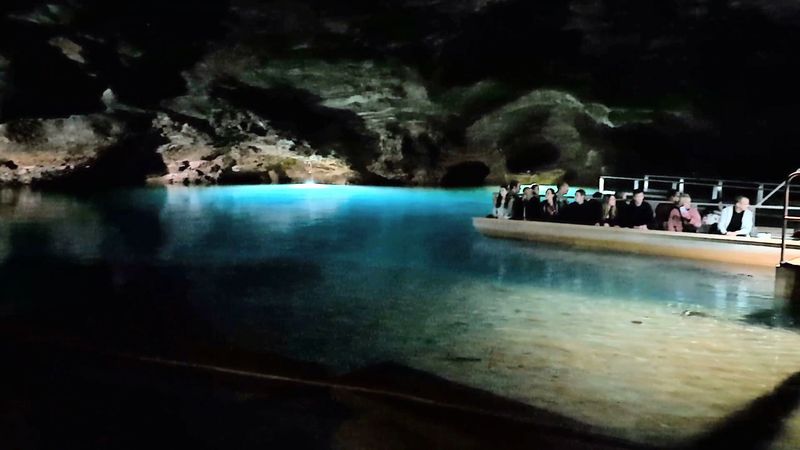
Floating on a lake that never sees the sun. At The Lost Sea Adventure in Sweetwater, that is exactly what happens. The lake sits deep inside Craighead Caverns, and it is known as one of the largest underground lakes in the country.
Getting there is half the fun. A guided walk leads you down through wide cave rooms with cool, damp air and rock shapes that look like they belong in a fantasy movie. Guides share stories about the cave’s long history, including its past use by Native Americans and later settlers.
Once you reach the water, you hop into a glass-bottom boat. Peer down and you might spot large trout swimming below. The water is so clear and still that it almost looks like glass itself.
Here is a smart tip. The cave stays cool all year, so bring a light jacket even in July. Comfortable shoes with good grip matter too, since paths can be slippery and there is some walking on slopes.
Families with younger kids usually love the tour because it moves at an easy pace. Older kids and teens might want to ask about wild cave tours, which offer a muddier, crawl-through-tight-spaces kind of adventure for groups.
Above ground, there is a small village area with shops, snacks, and places to rest. Plan a couple of hours for the full visit. Pair it with a drive through nearby small towns, and you have an easy day trip that feels like a real discovery.
2. Raccoon Mountain Caverns and Campground – Chattanooga
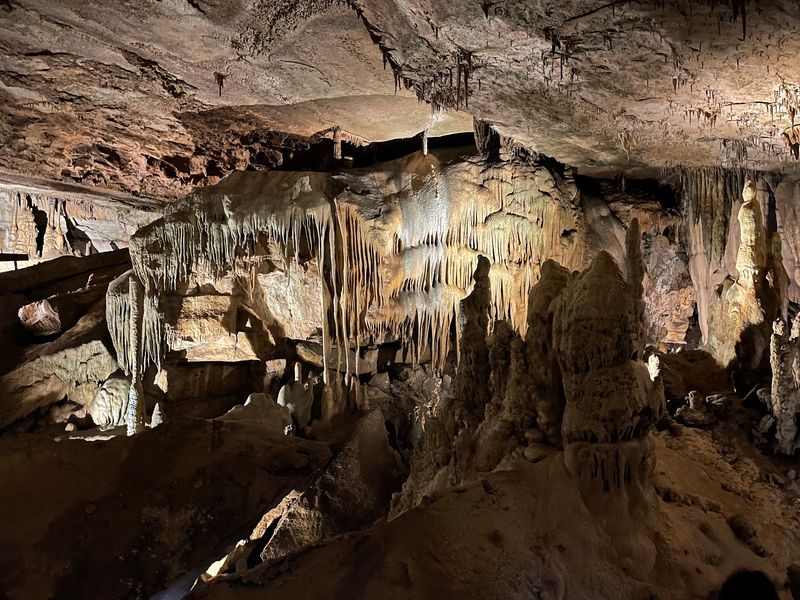
Chattanooga gets plenty of love for its aquarium and Rock City. Meanwhile, just a few minutes away, Raccoon Mountain Caverns quietly offers one of the most hands-on cave experiences in the region. If you like getting a little dirty, keep reading.
The standard walking tour is a great start. You follow lighted paths past stalactites, stalagmites, and shimmering formations that took thousands of years to grow. Guides explain how water and minerals slowly shaped the rooms around you, drop by drop.
For bolder visitors, the wild cave tours are where things get exciting. You strap on a helmet and a headlamp, then squeeze, crawl, and climb through passages most people never see. Some tours last a couple of hours, while longer ones can take much of a day.
Wear clothes you do not mind ruining. Seriously, you will leave with mud on your knees and a grin on your face.
What makes the spot even better is the campground right on site. You can pitch a tent, park an RV, or rent a simple cabin. That makes it easy to explore the cave in the morning and spend the evening around a campfire.
Kids often enjoy the gemstone mining area too, where they sift through sand to find colorful stones. It is a fun break between bigger adventures.
Check the website before you go, since some tours need reservations and have age limits. A little planning goes a long way here.
3. Cumberland Caverns – McMinnville
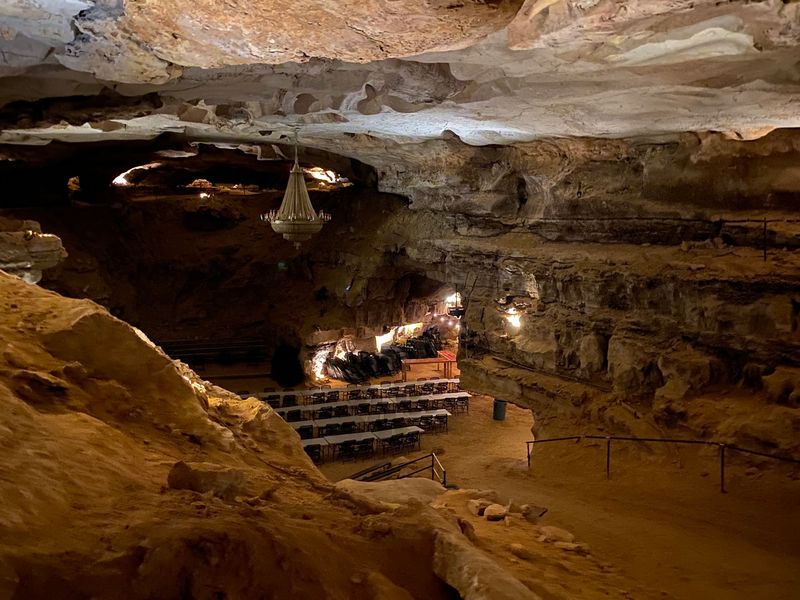
Ever heard live music 333 feet below the ground? Cumberland Caverns in McMinnville is famous for its Volcano Room, a massive underground space that has hosted concerts and even a popular show called Bluegrass Underground. The sound bouncing off those rock walls is something you have to hear in person.
Even without a concert, the cave is a showstopper. It is one of the longest cave systems in Tennessee, with miles of mapped passages. Regular tours lead you past towering formations, quiet pools, and rooms so big you forget you are underground.
One of the coolest sights is a huge chandelier hanging inside the cave. It feels a little bit fancy and a little bit strange in the best way possible.
History fans will enjoy learning that the cave was mined for saltpeter long ago. That mineral was used to make gunpowder, and guides point out spots where miners once worked.
Families and scout groups often book overnight stays here. You sleep inside the cave, which is a story your friends will never top. These trips usually include extra exploring and plenty of flashlight fun.
Plan for a cool, steady temperature, so dress in layers. Sturdy sneakers are a must because some paths have stairs and uneven spots.
McMinnville itself is known as the Nursery Capital of the World, thanks to its many plant nurseries. After your tour, take a slow drive through the countryside and enjoy all that greenery.
4. Elkmont Historic District – Gatlinburg
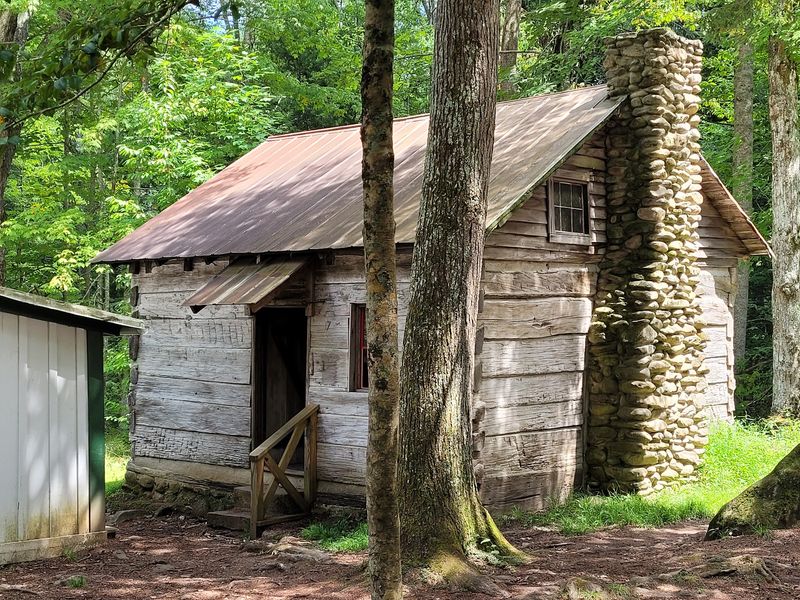
Old cabins sit quietly among the trees, their porches empty and their windows staring out at the forest. Welcome to Elkmont, a once-busy vacation spot inside Great Smoky Mountains National Park near Gatlinburg. Today, many people call it a ghost town.
Elkmont started as a logging community in the early 1900s. Later, wealthy families from Knoxville built summer cabins here to escape the city heat. When the national park was created, those families eventually had to leave, and the buildings were left behind.
The park has restored many of the cabins, so you can step inside a few and imagine life a century ago. Walking down the old streets feels like flipping through a dusty scrapbook.
The best part might be the hikes nearby. The Little River Trail follows a rushing stream and is fairly easy for most ages. Keep an eye out for stone walls, old chimneys, and other leftovers from the past hiding in the woods.
Elkmont is also famous for its synchronous fireflies. For a short time each year, usually in late spring, thousands of fireflies blink together in patterns. The park often uses a lottery system for viewing passes, so plan ahead if you want to see the show.
Parking can fill up on busy days, especially in summer. Arrive early in the morning for a calmer visit.
Bring water, bug spray, and a curious mind. Elkmont rewards people who slow down and look closely.
5. Historic Rugby – Rugby
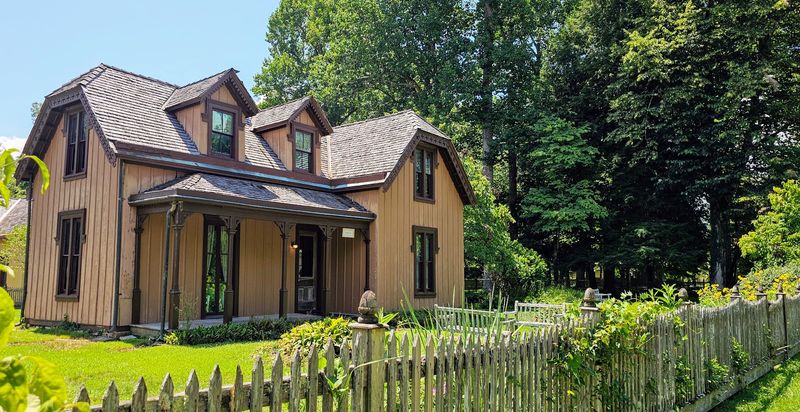
Back in 1880, an English author named Thomas Hughes had a big dream. He wanted to build a community in the Tennessee hills where younger sons of English families could work, learn, and live together. That dream became Rugby, a tiny village on the Cumberland Plateau.
The colony did not last as planned, but many of its buildings did. Today, Historic Rugby feels like a small slice of Victorian England tucked into the Tennessee woods. White wooden buildings, neat gardens, and quiet roads make it feel worlds away from busy city life.
One standout is the Thomas Hughes Free Public Library. It holds thousands of old books from the Victorian era, many still sitting on the original shelves. Book lovers, this one is for you.
Guided tours take you inside historic homes and the old church. Guides share stories about the settlers, their hopes, and the challenges they faced in a rugged new place.
There is also a bookshop, a gift shop, and a restaurant serving hearty meals. Staying overnight at one of the historic inns or cottages turns a quick visit into a cozy getaway.
Nature lovers get a bonus too. Trails nearby lead to the Clear Fork River and the Gentlemen’s Swimming Hole, a spot the settlers once used.
Check the calendar before visiting, as Rugby hosts special events throughout the year. Seasonal festivals add music, crafts, and extra fun to an already unique trip.
6. Pinson Mounds State Archaeological Park – Pinson
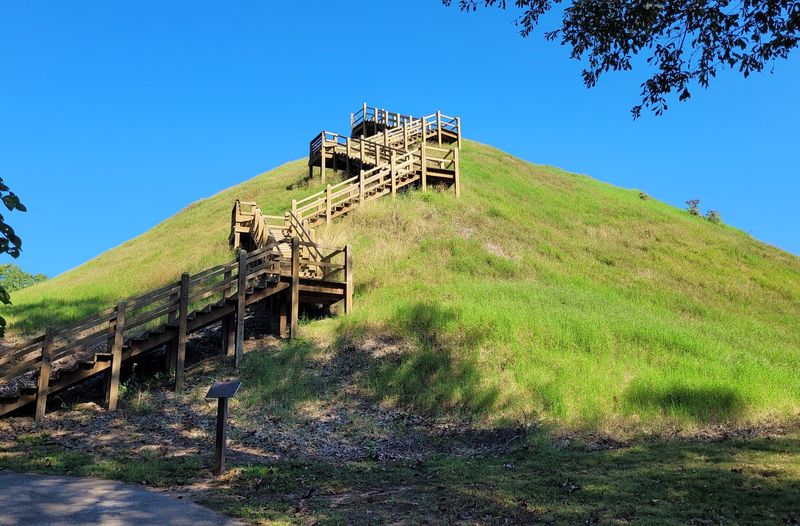
Long before anyone thought of building Nashville or Memphis, people in West Tennessee were moving huge amounts of earth by hand. The result can still be seen at Pinson Mounds State Archaeological Park, just south of Jackson. These mounds are around 2,000 years old.
The park protects a group of ancient earthworks built during what experts call the Middle Woodland period. One of them, Saul’s Mound, is among the tallest mounds of its kind in the United States. Climbing the stairs to the top gives you a sweeping view of the land.
Think about that for a moment. Without trucks, shovels, or machines, people carried basket after basket of soil to create these giant shapes.
Start at the museum, which is designed to look like a mound itself. Inside, exhibits explain who built these sites and what scientists have learned from studying them. It helps everything outside make much more sense.
Walking trails and boardwalks connect several of the mounds. Some paths wind through forest and wetlands, so you might spot birds, turtles, or deer along the way.
Treat the mounds with respect. They are important cultural sites, so stay on marked paths and leave everything as you found it.
Teachers and parents love this park for school projects and history lessons. It brings textbook pages to life in a way that sticks. Pack a picnic and spend a few hours soaking up a story far older than the state itself.
7. The Mindfield – Brownsville
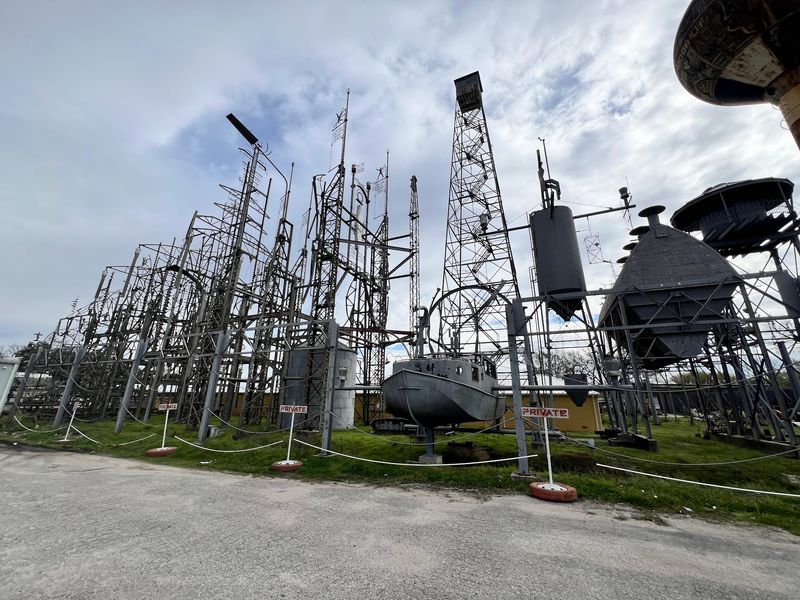
Drive into Brownsville and you might do a double take. Rising above the town is a giant tangle of welded steel towers, ladders, and odd shapes. That is The Mindfield, and it is one of the strangest and most fascinating art pieces in the state.
A local artist named Billy Tripp started building it in 1989. Over many years, he kept adding pieces, using scrap metal and salvaged parts. Some sections soar dozens of feet into the air, making the whole thing look like a sculpture garden from another planet.
The artist described it as a kind of autobiography in steel. Each part connects to his thoughts, memories, and experiences, which gives the place a deeply personal feel.
You cannot climb on the structures, but you can view them from the edges of the property. Walk slowly around the outside and notice the details. Signs, symbols, and words are woven into the metal if you look closely.
Photographers love this spot, especially at sunset when the light shines through the beams. The shadows and silhouettes are pretty dramatic.
Brownsville has more to offer while you are in town. The area has strong ties to blues music, and the West Tennessee Delta Heritage Center is close by. It is a great stop for learning about music legends from the region.
Grab a snack, bring your camera, and keep an open mind. The Mindfield is not something you understand all at once.
8. Crystal Shrine Grotto – Memphis
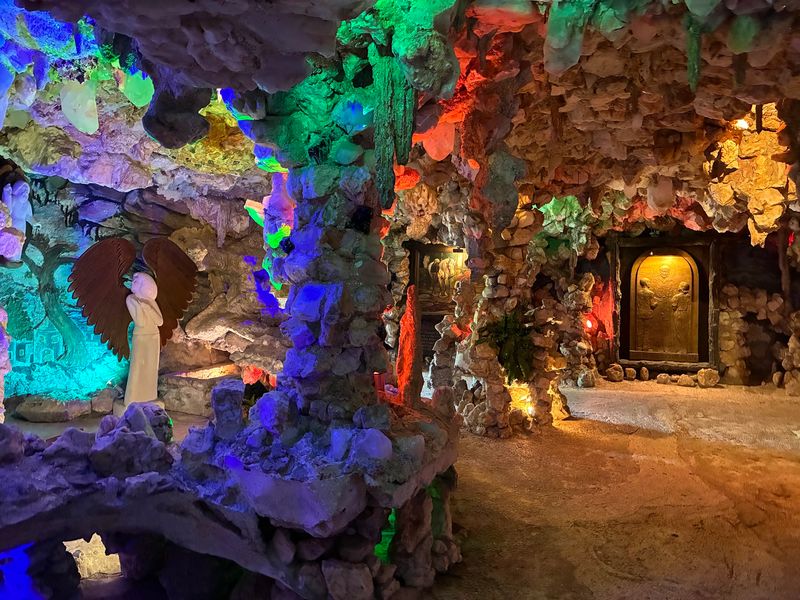
Here is something you would never guess. One of the most surprising sights in Memphis is a cave built inside a cemetery. The Crystal Shrine Grotto sits within Memorial Park Cemetery, and it sparkles with thousands of crystals.
The grotto was created in the 1930s by a Mexican artist named Dionicio Rodriguez. He was known for a special style of concrete work that looks like real wood and stone. Walk around the grounds and you will see benches, bridges, and trees that seem natural but are actually sculpted.
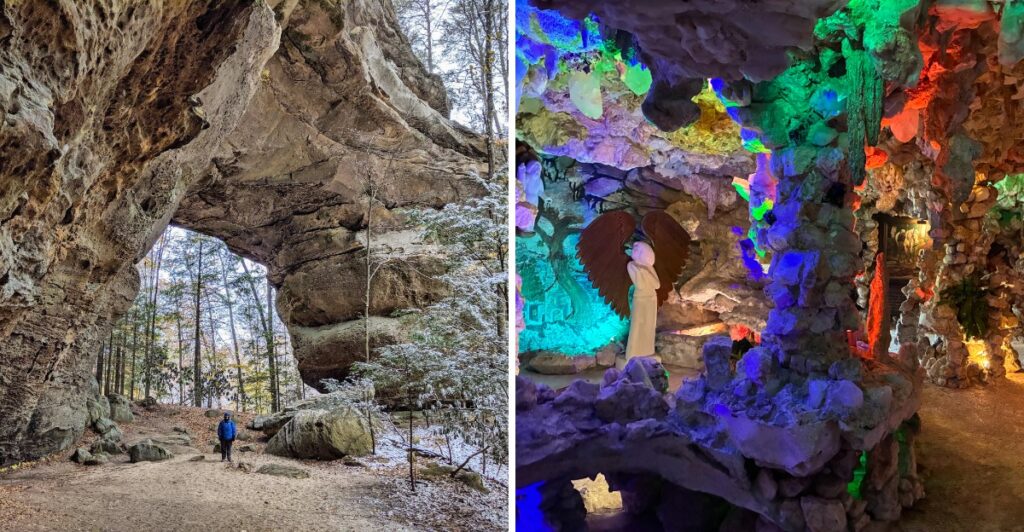
Inside the grotto, quartz crystals cover the walls and ceiling. Scenes showing stories from the life of Jesus are placed in small nooks along the path. The whole space glows softly and feels calm and peaceful.
Keep in mind that this is still an active cemetery. Be quiet, polite, and respectful of families who may be visiting loved ones nearby.
Many people who grew up in Memphis have never even heard of the grotto, which makes it a fun hidden find. Others remember visiting as kids and come back years later with their own families.
Check visiting hours before you go, since access can depend on the cemetery’s schedule. A short visit is often enough, but art lovers may want to linger.
Pair your trip with lunch at a local barbecue joint. You get a little mystery, a little art, and some classic Memphis flavor all in one afternoon.
9. Green McAdoo Cultural Center – Clinton
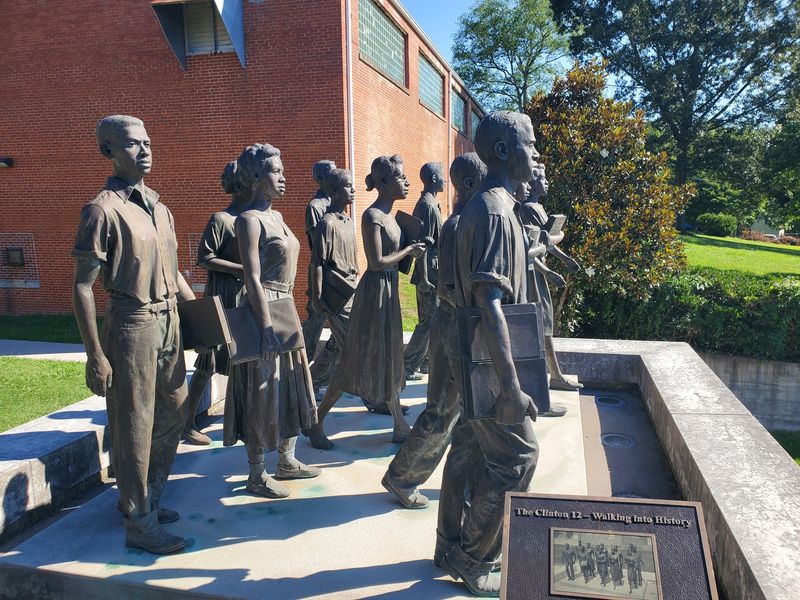
In 1956, twelve Black teenagers walked into Clinton High School. Their brave steps made Clinton one of the first places in the South to desegregate a public high school after the Supreme Court ruling in Brown v. Board of Education.
The Green McAdoo Cultural Center tells their powerful story.
The center is housed in the old Green McAdoo School, where Black students attended classes before desegregation. Inside, a restored classroom shows what learning looked like back then. Exhibits use photos, newspaper clips, and personal stories to explain what happened.
Outside, life-size bronze statues of the Clinton 12 stand in front of the building. Seeing them up close is moving. They look so young, which reminds you how much courage it took.
The museum does not shy away from hard truths. You will learn about the anger and violence some students faced, including the bombing of the high school in 1958. These lessons can spark important talks between kids and adults.
Admission is usually free, which makes it an easy stop for families and school groups. The staff are often happy to answer questions and share extra details.
Plan about an hour to explore, though you may want more time to read everything. Some visitors say the stories stay with them long after they leave.
Clinton sits just north of Knoxville, so the center fits nicely into a day trip. Take a short walk downtown afterward and think about how much one small town helped change history.
10. Big Cypress Tree State Park – Greenfield
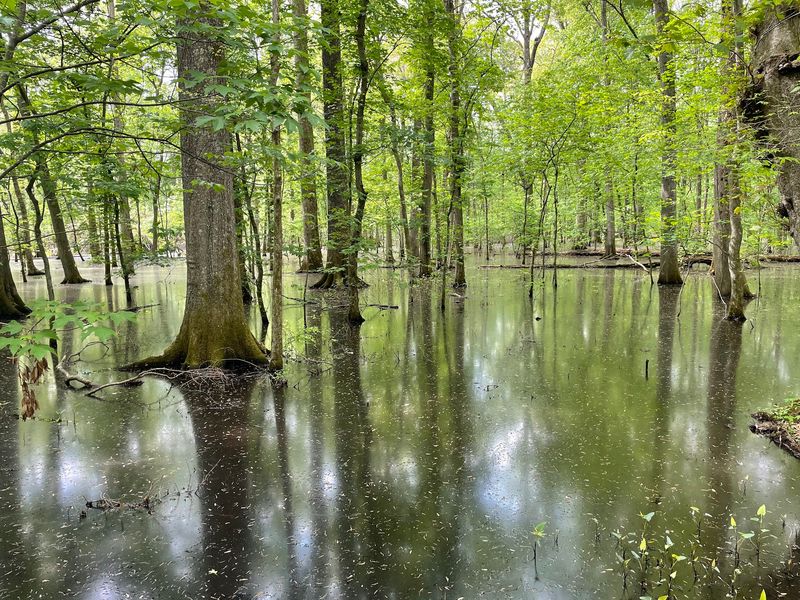
Some parks are famous for mountains or waterfalls. Big Cypress Tree State Park in Greenfield is famous for one really, really big tree. Or at least, it used to be.
The park was named for a massive bald cypress that once grew here. It was believed to be the largest bald cypress in the country and was estimated to be well over a thousand years old. Sadly, lightning struck the giant in 1976, and it eventually died.
Its legend, though, lives on.
Today, the park is a peaceful spot where you can see what helped that tree thrive. A boardwalk leads through wetlands filled with other bald cypress trees, wildflowers, and lots of birds. It is flat, easy, and great for little legs or strollers.
Bird watchers, bring your binoculars. The park is known for good birding, especially during spring and fall migrations.
Wildflower fans should visit in spring and summer, when blooms add pops of color along the paths. Butterflies often flutter around too, making the walk feel extra lively.
The park is small, quiet, and never crowded. That is exactly why so many people love it. You can spread out a blanket, enjoy a picnic, and just listen to nature.
There are picnic shelters and a playground, so it works well for family outings. Pair it with a drive through rural West Tennessee for a relaxing, slow-paced day away from screens and traffic.
11. Dunbar Cave State Park – Clarksville
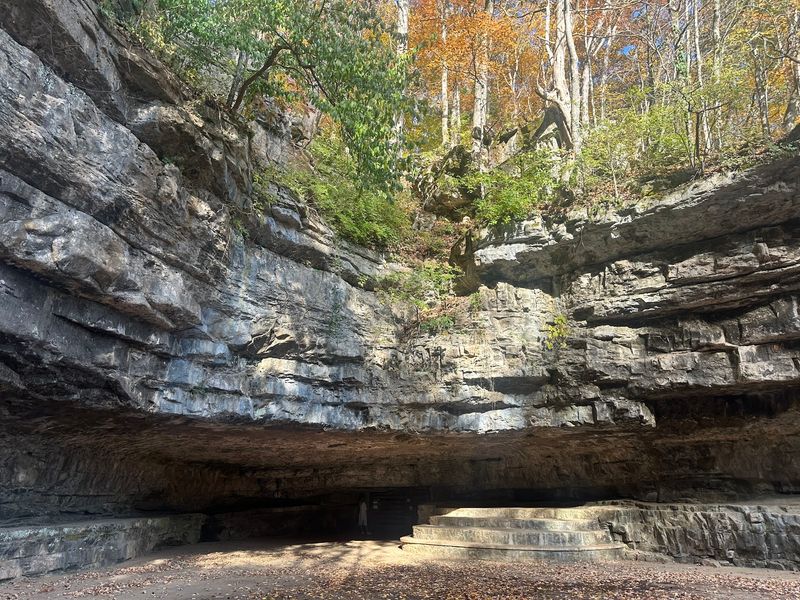
Swing bands once played at the mouth of a cave in Clarksville. Back in the early 1900s, Dunbar Cave was a popular hangout where people danced on summer nights in the cool air flowing out of the earth. Country music star Roy Acuff even owned the property for a while.
Now it is Dunbar Cave State Park, and the history goes back much further than dance parties. Native Americans used the cave thousands of years ago. Some even left drawings on the cave walls, which experts consider very important.
Because those drawings are fragile, cave access is limited. The park offers guided tours during certain seasons, often by lantern or flashlight. Spots can fill up fast, so book early if you want to go inside.
Even if you skip the cave, the park is worth a visit. Swan Lake sits near the entrance and is a lovely spot for a stroll. Several miles of trails wind through the woods, with gentle hills and pretty views.
Look for turtles in the lake and wildflowers along the trails. Early mornings tend to be quiet and calm.
The visitor center has exhibits about the cave’s past, from ancient times to its days as a resort. It is a quick way to learn the backstory before exploring.
Clarksville is a growing city, but this park feels like a hidden pocket of peace. Locals use it for walks, while visitors often wonder how they never knew about it.
12. Big South Fork National River and Recreation Area – Oneida
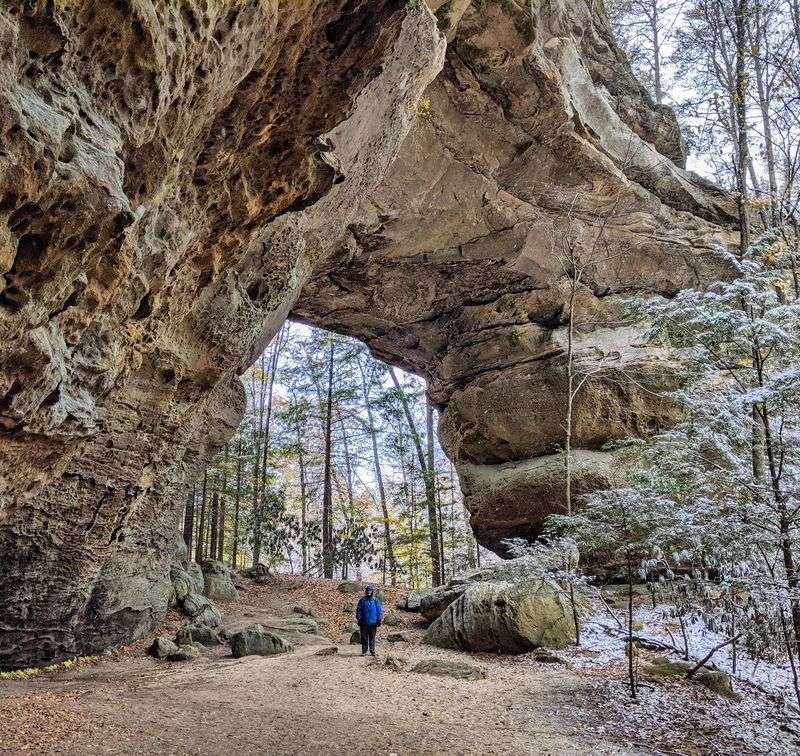
Ask most folks to name a big outdoor playground in Tennessee, and they will say the Smokies. Few mention the Big South Fork National River and Recreation Area near Oneida. That is great news for anyone who likes elbow room.
The area covers a huge stretch of land along the Cumberland Plateau, crossing into Kentucky. Deep river gorges, sandstone bluffs, and natural arches fill the landscape. Some views look so dramatic you might think you are out West.
Twin Arches is a fan favorite. These two massive stone arches stand side by side, and the hike to see them is fairly short for most families. Standing underneath them makes you feel tiny in the best way.
Adventure comes in many flavors here. You can hike, mountain bike, ride horses, paddle, or fish. Experienced paddlers love the river sections with whitewater, while beginners can stick to calmer stretches.
History is part of the fun too. The Blue Heron area shows life in an old coal mining town, and other spots hold old farmsteads and cemeteries.
Cell service can be spotty, so download maps ahead of time. Bring plenty of water and snacks since stores are far apart.
Camping options range from developed campgrounds to backcountry sites. Spending a night here lets you see dark skies full of stars.
Visit in fall for bright leaves or spring for flowing waterfalls. Either way, you will wonder why more people are not here.
Share this story