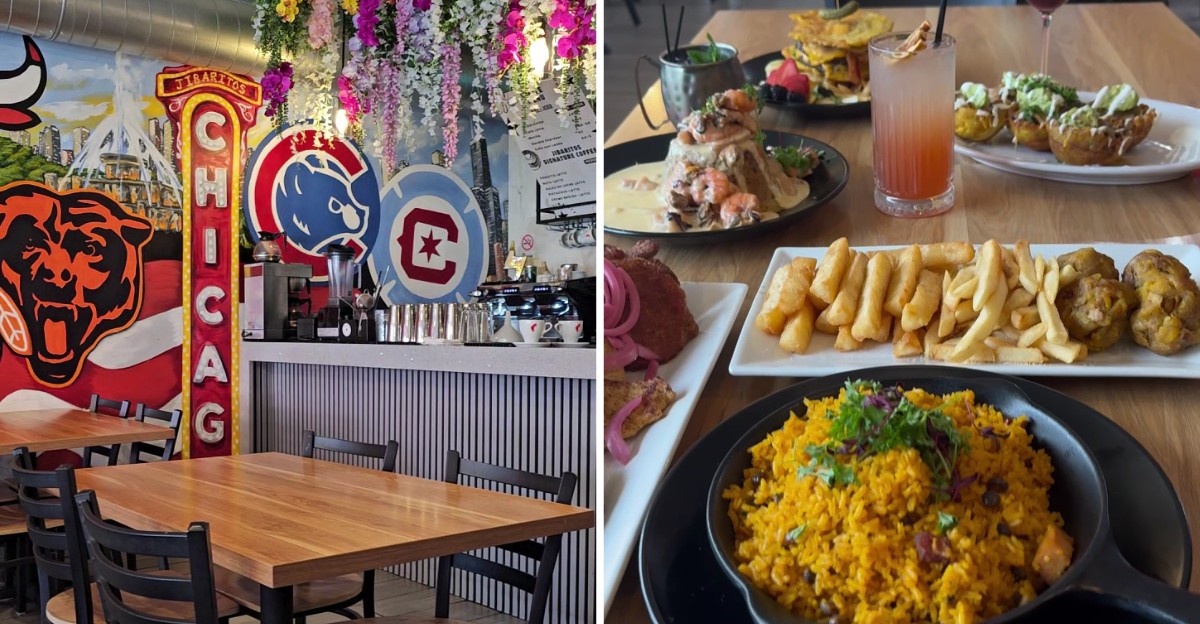
Come hungry to Jibaritos on Harlem, because restraint gets difficult once the plates start hitting the table. This Chicago favorite serves Puerto Rican comfort food in generous portions, with tender lechón, garlicky mofongo, arroz con gandules, and plenty of other hearty dishes competing for attention.
The expansive menu makes it easy to stick with a familiar favorite or order something new, while the casual atmosphere keeps the focus on bold, homestyle flavors. Steady crowds offer a clue that plenty of diners already know what awaits inside. Whether you are craving roast pork or plantains, this Northwest Side spot makes arriving with a serious appetite a smart move.
Painted Walls and a Line by the Register on Harlem Avenue
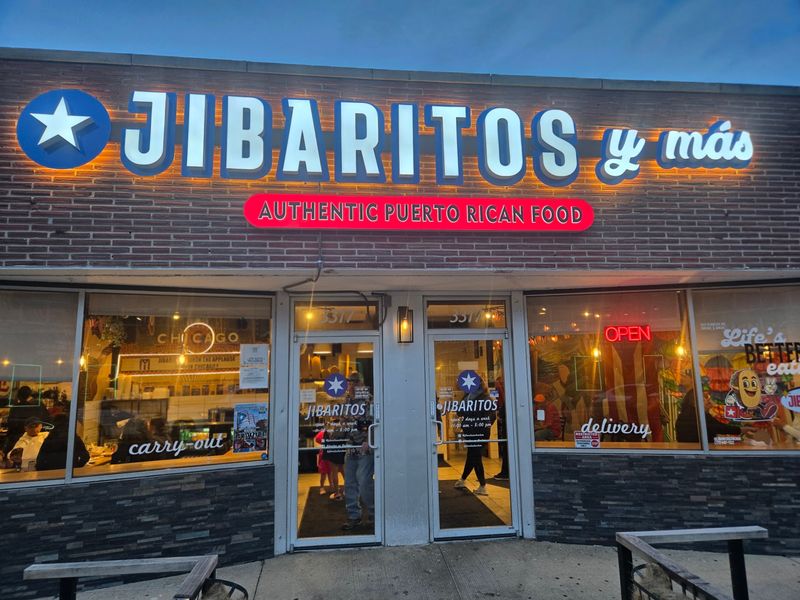
Bold color hits first. The walls at Jibaritos on Harlem are covered in paintings that mix two worlds, with Chicago scenes sitting right beside Puerto Rican landscapes and references. It reads like a love letter to both places at once.
Inside, the room is clean and bright, with sunlight pouring in from the street side. The restaurant was expanded at some point, so there is more seating than you might guess from the sidewalk. Even so, tables fill quickly, especially around lunch and on weekends.
Here is a layout detail worth knowing before you step in. The register sits almost directly in front of the entrance. That means when the place gets busy, the takeout line and the dine-in crowd share the same small patch of floor near the door.
On a packed Saturday, people line up along the wall while servers weave between tables carrying steaming plates. It gets loud, with orders being called and families chatting over big platters. If you like lively energy, that buzz is part of the fun. If you prefer quiet meals, plan around it.
The decor does a lot of the heavy lifting here. The art gives first-timers something to look at while they wait, and kids tend to point out the Chicago landmarks hidden in the scenes. Some walls feel almost like a gallery, with tropical colors bouncing off the plain tables and chairs.
Outside, the storefront blends into the everyday rhythm of Harlem Avenue, with cars rolling past and neighbors popping in for pickup. There is no fancy entrance or velvet rope. You just walk in, grab a menu, and start deciding how hungry you really are.
Look up while you wait. The skyline painted above the tables is a fun reminder of exactly where this island cooking found its home.
Lechón and Mofongo That Fill the Whole Plate
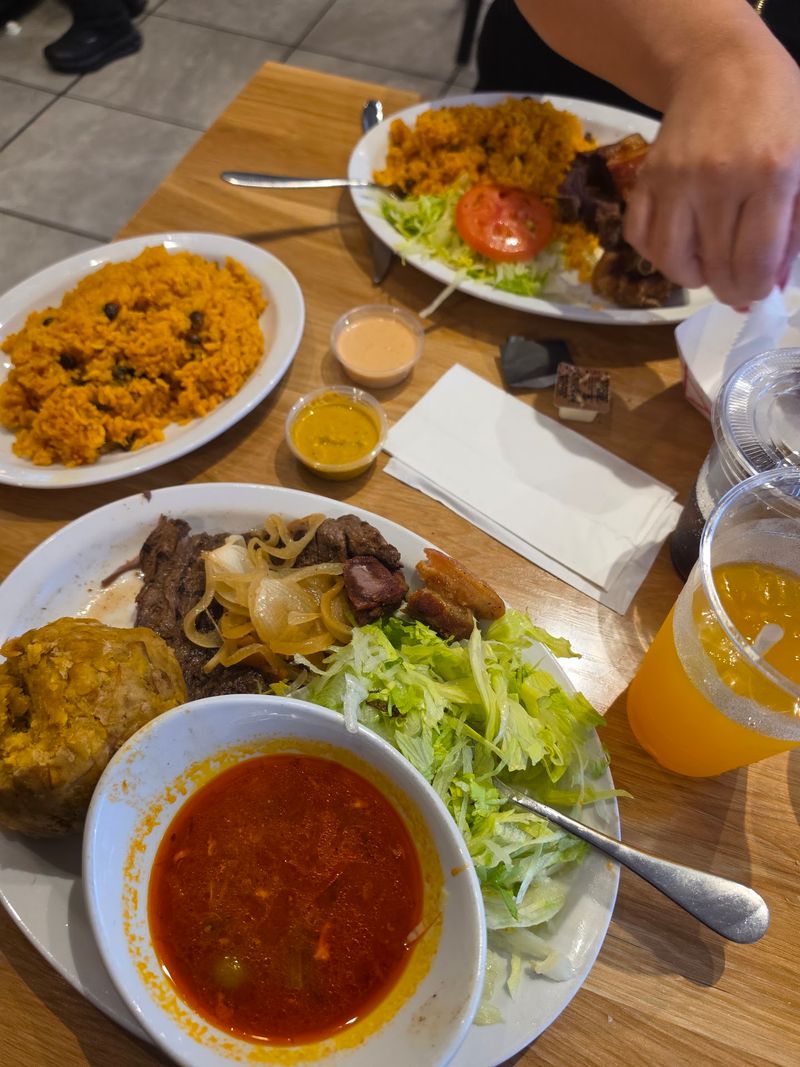
Bring an appetite, because nobody here believes in tiny plates. The lechón and mofongo are the stars at Jibaritos on Harlem, and both arrive in portions that easily stretch into leftovers.
Lechón is slow-roasted pork, a dish tied to big family gatherings across Puerto Rico. Here, the meat comes out juicy and full of flavor, with that rich roasted taste that makes you reach for one more forkful. It pairs nicely with rice, but it also holds its own straight off the plate.
Mofongo is a different kind of comfort. Green plantains get fried, then mashed with garlic into a dense, savory mound. The plantains are prepared well here, with a texture that soaks up sauce without falling apart.
You can order mofongo with different toppings. Skirt steak is a strong choice, cooked so it stays tender and pairs well with the sauce poured over the top. There is also a mofongo version served with broth, which makes it feel almost like a hearty soup bowl.
Not sure which to pick? Split them. One person orders lechón with rice, the other grabs a mofongo, and you trade bites. That way you taste the smoky pork and the garlicky plantain side by side.
Prices stay friendly for the amount of food you get. Many plates land in a range that feels fair for a sit-down meal, especially when half of it ends up in a to-go box for tomorrow’s lunch.
Ask your server about the sauces and garlic toppings, too. A little extra garlic on top turns a solid plate into a seriously punchy one. Then grab a fork and start working your way through the pile.
The Plantain Sandwich Chicago Calls Its Own
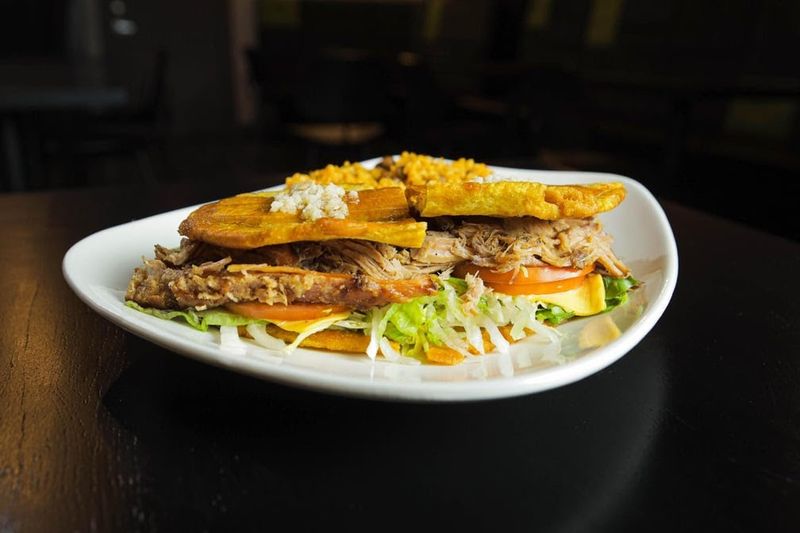
Swap the bread for fried plantains and you get the jibarito, a sandwich born right here in Chicago. It was created in the city’s Puerto Rican community in the 1990s, and it has been a local favorite ever since. Fittingly, it gives this restaurant its name.
Picture two flattened, crispy green plantains acting as the bun. Between them go meat, lettuce, tomato, cheese, and a generous swipe of garlic mayo. The result is crunchy, salty, and messy in the best way.
Steak is the classic filling, and it is one of the most ordered versions here. Chicken and lechón are popular swaps. For something different, try the ropa vieja jibarito, packed with shredded beef that soaks into the plantain edges.
Some versions come with avocado, which adds a creamy layer against all that crunch. A basic jibarito has been priced around eleven dollars, which is a solid deal for a sandwich this filling.
Here is some practical advice for ordering. You can customize, asking for extra crispy plantains, extra garlic, or no tomato. Online orders do not always get every request right, so if your tweaks really matter, ordering in person gives you the best shot at getting exactly what you want.
Most people pair their jibarito with a side of rice. Puerto Rican rice with pigeon peas or white rice with beans both work well, turning a sandwich into a full meal.
Eat it fast. Plantains are crispiest right out of the fryer, and they soften as they sit. Hold it with both hands, lean over the plate, and expect a few pieces of lettuce to escape onto the table.
Small Bites and Sides Worth Ordering First
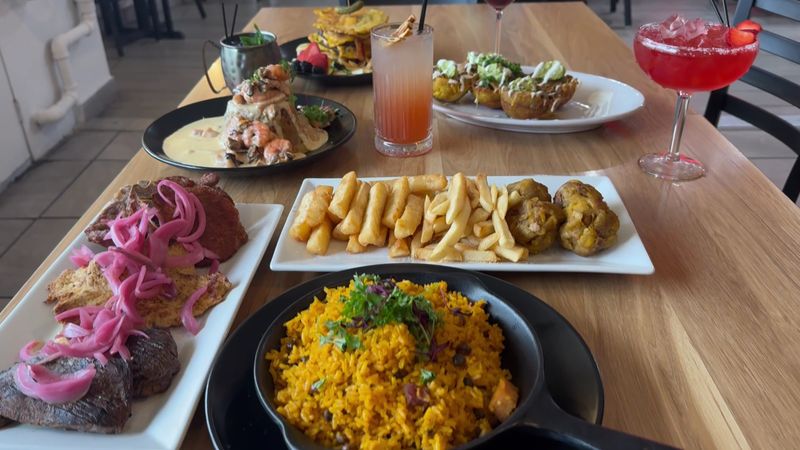
Alcapurrias. Bacalaitos. Morcilla. Read the appetizer list out loud and it sounds like a street-food stand in San Juan, and that is exactly the idea.
Start with an alcapurria, one of the most talked-about bites on the menu. It is a fritter made from a dough of green bananas and root vegetables, stuffed with seasoned meat, then fried until the outside turns golden. Crunchy shell, soft middle, savory filling.
Bacalaitos are thin, crispy codfish fritters with a salty bite. Morcilla is blood sausage, rich and spiced, and a fun pick for adventurous eaters. Pasteles, wrapped bundles similar to tamales, also make an appearance and lean toward holiday comfort food.
The beef empanadas have a loyal following. The pastry is flaky and the filling is well seasoned. Yuca fries are another crowd-pleaser, though they come pretty plain, so ask for a dipping sauce if you like a little extra kick.
Now for the sweet side. Maduros are ripe plantains fried until caramelized and soft, almost like candy next to salty dishes. They balance a plate of carne frita, which is fried chunks of seasoned pork, perfectly.
Do not skip the potato salad either. It is creamy and simple, a nice cool partner for all the fried food. To drink, grab a Kola Champagne, a bright, very sweet Latin soda with a cream-soda vibe. Piña coladas are also on offer and come out frosty and fruity.
A smart move for groups is ordering three or four small bites for the table before the mains land. It lets everyone sample more of the menu without overcommitting, and the menu is big enough that you could visit for a year and still find something new.
Arroz con Gandules by the Holiday Tray
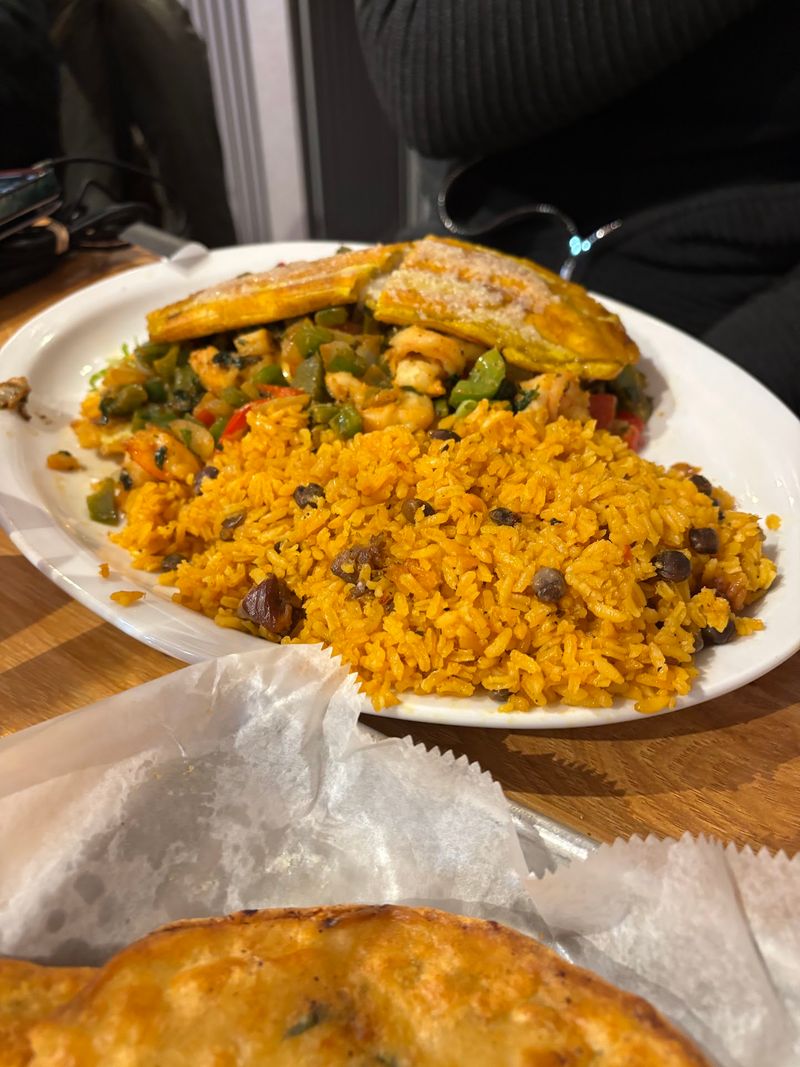
Ask regulars what they cannot leave without, and the answer is often the rice. Arroz con gandules, Puerto Rican rice cooked with pigeon peas, sofrito, and seasonings, is one of the most loved items at Jibaritos on Harlem.
The rice has a warm orange color and a savory, slightly herby flavor. Every spoonful carries little pops of pigeon peas. It works as a side for nearly everything, from jibaritos to lechón, but plenty of people would happily eat a bowl of it alone.
In Puerto Rico, arroz con gandules is a must at Christmas and other big celebrations. That tradition carries over to Chicago. Families order big trays of the rice from here for holidays, setting it at the center of the table next to the turkey or roast pork.
If you are planning to feed a crowd, this is a handy option. One large tray can stretch across a whole family dinner, and it saves hours of stovetop work. Pair it with an order of lechón or pasteles and the meal practically builds itself.
Timing is key, though. Holidays are the busiest stretch of the year, and staffing can get tight. Place your order early, call ahead to confirm, and have a backup plan in case anything changes. Picking up a little before the dinner rush also helps.
Prefer something milder? White rice with beans is also available, and the beans make a nice saucy topping. Just double-check your order before leaving, since rice swaps occasionally get mixed up during busy hours.
Warm leftovers in a covered pan with a splash of water. The grains loosen back up, and tomorrow’s lunch tastes nearly as good as the first plate.
Beating the Weekend Crowd in Chicago, Illinois
Saturday at noon is the toughest time to grab a table here. The dining room fills, the line stretches toward the door, and takeout waits can climb past half an hour. Smart timing changes everything.
Jibaritos on Harlem keeps the same hours every day of the week, opening at 9 a.m. and closing at 8 p.m. That steady schedule makes planning easy. Weekday mornings and mid-afternoons, roughly between 2 and 4 p.m., tend to be much calmer.
The early opening also means breakfast is on the table. A quiet morning visit gives you more space, quicker attention, and a chance to try something like a guava and cheese pastry with coffee. Just know that service can still move slowly at times, so do not book anything tight right after.
Parking takes a little strategy. There is no private lot, so you will be hunting for free street parking along Harlem Avenue and nearby side streets. During peak hours, spots disappear fast. Circle a block or two and be ready to walk a bit.
Ordering ahead works well for takeout, but leave some wiggle room. Quoted pickup times can run long when the kitchen is slammed, and food can cool while it waits. Arriving close to your pickup time keeps the plantains crispier.
Bringing a big group? Check your bill carefully. Larger parties may see an added service fee, so ask your server about it before ordering to avoid surprises when the handheld card reader comes around.
Families with kids, solo lunch-breakers, and hungry commuters heading home all pass through this stretch of the Northwest Side. Pick a weekday, slide into a booth before the rush, and you will have more room for that second plate of maduros.
Why Big Plates Win on the Northwest Side

Thousands of reviews and a 4.1-star rating tell a clear story. This is a busy, loved neighborhood spot with real strengths and a few rough edges, and knowing both helps you have a great meal.
The biggest win is value. Plates are large, flavors are consistent, and many dishes cost less than you would expect for the amount of food. Some diners even drive an hour just to eat here, which says a lot about the cooking.
The menu is another strong point. Few places in Chicago offer this many Puerto Rican choices in one room, from fritters and sandwiches to soups, steak, and slow-roasted pork. You can come back again and again and keep finding new things.
Now the honest part. When the place gets slammed, service can slip. Waits grow longer, takeout food may cool off, and orders are sometimes wrong. Staff have been known to fix mistakes with discounts, but patience helps on crowded days.
So what is the best game plan? Visit on a weekday, dine in if you can, and order the dishes the kitchen does best. That means a jibarito, a side of arroz con gandules, a plate of lechón or mofongo, and an alcapurria to start.
Bring friends and share. Generous portions make this an ideal spot for family-style eating, where everyone passes plates around and tries a bit of everything. Sweet maduros and a cold Kola Champagne round it out.
For locals, Jibaritos on Harlem works as an easy weeknight dinner and a holiday helper. For visitors, it is a tasty crash course in Chicago’s Puerto Rican food scene, served under bright murals with a to-go box almost guaranteed on your way out the door.