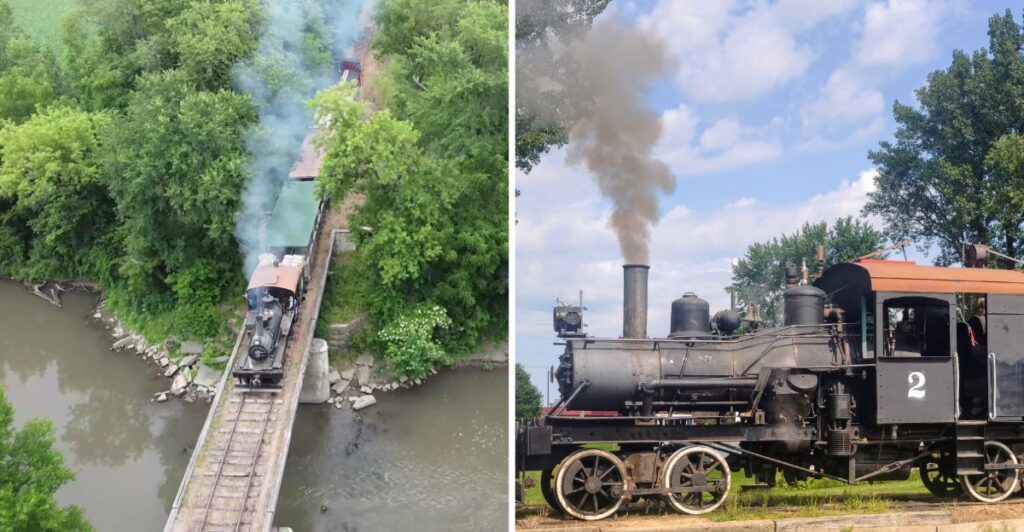
Smoke curling above the trees is your first clue that this is no ordinary Illinois train ride. Near Freeport, the Silver Creek & Stephenson Railroad gives families the chance to ride behind a wood-fired steam locomotive as it chugs through a peaceful stretch of countryside and forest.
Instead of high-tech attractions and crowded amusement-park lines, the experience revolves around old machinery, enthusiastic volunteers, and the unmistakable whistle of a working locomotive. A museum adds even more railroad history to explore before or after the ride. For families looking for something refreshingly different, this little railway turns a simple afternoon into an old-fashioned adventure.
Smoke, Wood, and Iron on a Country Road
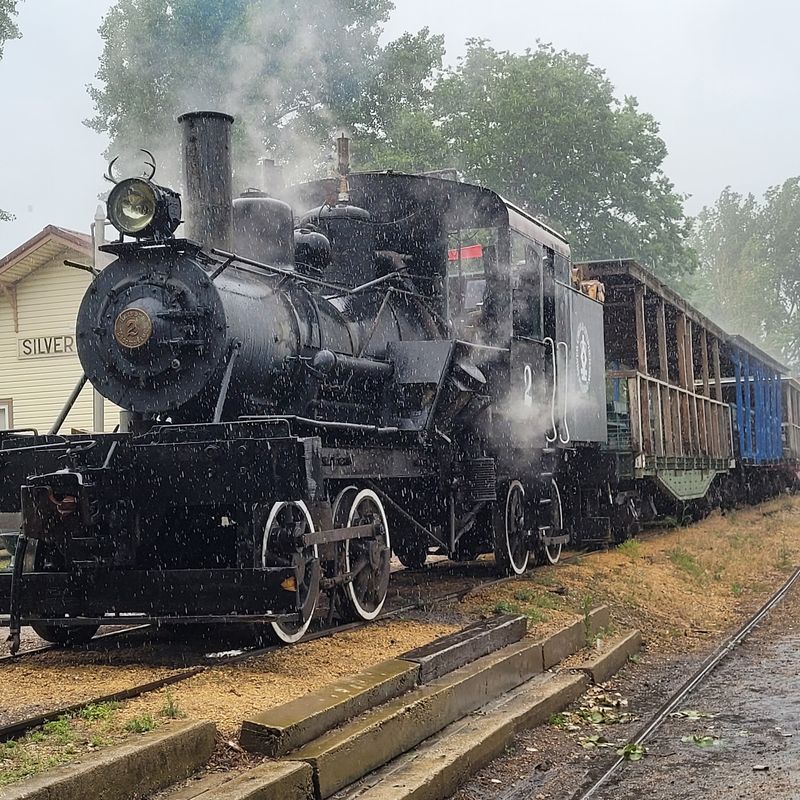
Most steam trains you see today burn coal or oil. The engine at Silver Creek and Stephenson does something rarer. It runs on wood, and you can smell it before you even park.
Drive west on Lamm Road near Freeport and the scenery stays plain for a while. Corn fields, a few barns, a wide sky. Then a neat little station building pops into view, with railroad cars lined up nearby and a dark locomotive sitting on the track like it is waiting for you.
A wood-fired engine has a different personality than a coal burner. The smoke looks lighter and smells more like a campfire than a factory.
Crew members feed split logs into the firebox, and the heat rolls out in waves when the door swings open. Kids tend to freeze and stare at that glowing orange box, and honestly, so do adults.
Up close, the engine shows its age in a good way. Pipes curl along the boiler, gauges stare out from the cab, and brass fittings catch the sun. You can hear it breathing, a steady hiss and gurgle as water turns into steam pressure.
That sound is the first clue that this place runs on real machinery, not a motor hidden under a fake shell. Everything you see on the locomotive has a job. The bell rings because someone pulls a rope. The whistle screams because someone yanks a lever.
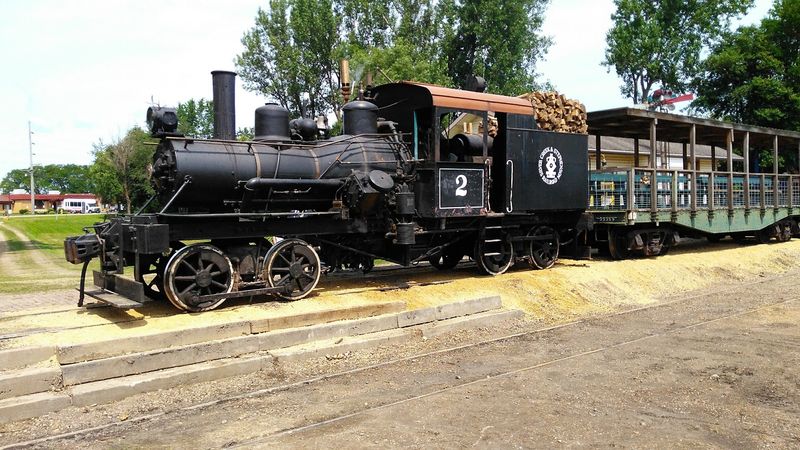
Before boarding, take a slow walk around the engine. Look at the wheels, the rods that connect them, and the stack where the smoke escapes. Notice the stacked wood waiting nearby.
Seeing the fuel pile helps you understand how much work goes into one short trip. Then find a seat, because the conductor will be calling soon.
Rolling Through the Illinois Woods at Walking Speed
Forget loops and drops. The ride here moves slowly on purpose, and that slow pace is the whole point. The track follows an old branch line, heading out about a mile and a half in a mostly straight path.
Trees crowd both sides, and in spots the woods open up to show farm fields stretching toward the horizon. When the train reaches the end, it reverses and carries you back to the station.
You get a choice of where to sit. Open-air cars built from old flatcars have simple bench seating, so wind, birdsong, and the smell of smoke reach you directly. A caboose offers a more classic spot, with windows and that cozy, boxy railroad look.
Pick the open cars on a nice day. You will hear the engine chuff up front and feel the gentle sway as the wheels click over rail joints. Leaves brush close enough to make you lean back a little.
Speed seekers should know what they are signing up for. Teenagers hoping for a roller coaster rush may grumble that the train never really hurries. Yet even the tough critics usually admit they had fun by the time the station comes back into view.
The slow pace actually helps you notice things. Watch for deer at the edge of the trees, hawks circling over fields, and wildflowers along the ballast in summer. In fall, the colors along the corridor turn the ride into a moving painting.
Hold on when the train first starts moving. That initial jerk from the couplers can catch standing riders off guard, so stay seated until you are rolling smoothly. Bring a light jacket, too. Open cars get breezy, especially on the return leg in late afternoon.
Grab a Seat in the Locomotive Cab
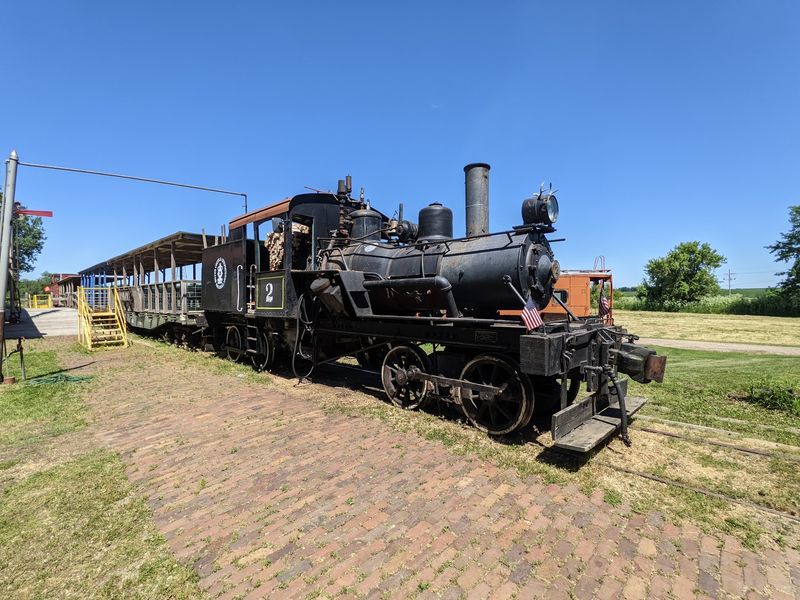
Here is the upgrade nobody should skip. For a small extra fee, you can ride inside the locomotive cab with the engineer and fireman.
Up there, the trip turns into a completely different adventure. The floor vibrates under your feet. The firebox blasts heat when it opens, and you watch the crew toss in wood to keep the steam pressure where it needs to be.
Every lever and valve suddenly makes sense. The engineer controls speed with the throttle and stops the train with the brake handle. The fireman keeps an eye on the water glass, which shows how much water sits in the boiler. Too little water is dangerous, so that tiny glass tube gets a lot of attention.
The crew here is known for being welcoming. They explain what they are doing as they do it, and they usually enjoy questions. Ask how long it takes to build up steam in the morning, or how they keep the wood dry. You will get stories along with the answers.
Railroad fans who have ridden in cabs at bigger heritage lines often say this one compares well, mostly because it feels so personal. You are not one of fifty people crowding a window. You are standing beside the people running the machine.
A few practical notes help. Wear closed shoes, since the cab floor can be gritty and warm. Skip loose scarves or dangling clothes near moving parts. Expect a little soot on your sleeves by the end, and wear it proudly.
Cab spots are limited, so ask about them when you buy your ticket. Since the price stays modest, it is one of the best deals around for anyone who has ever dreamed of driving a train.
Across the Street: A Museum of Rural Life Room by Room
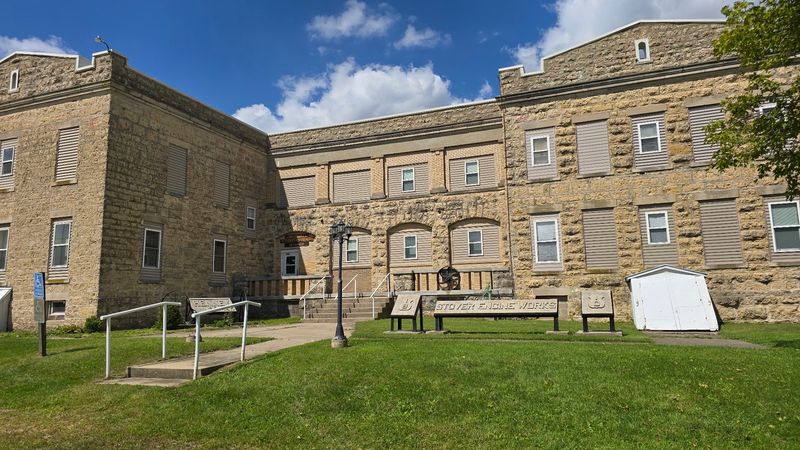
Plenty of people come for the train and nearly miss the best surprise. The museum across the street holds two floors of rooms, and each one tells its own story.
Walking through feels a bit like flipping pages in a giant scrapbook. One room might show an old shop setting, while another recreates a scene from everyday country life decades ago. The layout is thoughtful, so you move from theme to theme without feeling lost.
Look closely at the displays tied to the Rawleigh company, a big name in Freeport history. The company sold a huge range of household products, from spices to remedies, and bottles and packages fill the shelves. Old labels, odd product names, and faded colors make it fun to guess what each item was used for.
Near the front door, a large wall painting of Freeport shows the town in an earlier era. Spend a minute matching streets and buildings to what you know today. Kids can turn it into a spotting game.
Train lovers have their own reward inside. A detailed model railroad winds through tiny scenery, complete with buildings and miniature landscapes. Watching the little trains run after riding a real one makes a neat comparison.
Plan more time than you think. A two-hour visit covers a lot, but curious folks could easily stay longer reading signs and studying objects.
The museum also stays clean and well kept, which matters when so many fragile items sit on display. Volunteers wander through and are happy to explain what you are seeing.
If you have younger kids, give them a mission before you enter. Ask them to find the oldest-looking bottle or the strangest tool. Suddenly a history museum becomes a treasure hunt.
The Giant Corliss Engine Out Back
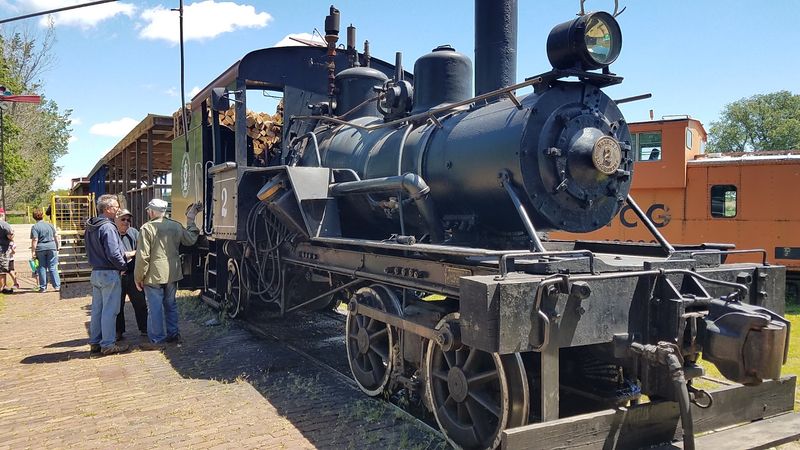
Behind the museum sits a building that holds a true beast. Inside rests a huge Corliss steam engine, along with a sizable collection of antique engines.
Corliss engines were once the muscle behind factories, mills, and pumping stations. Their massive flywheels spun steadily to power belts, machines, and whole workshops. Standing beside one gives you a sense of how much raw strength older industry needed.
The size alone stops people in their tracks. The flywheel towers over adults, and the frame looks heavy enough to anchor a ship. Some of the engines in this collection came from Lockport, Illinois, adding an extra in-state connection.
Getting a machine like this into a country building took serious effort. Crews had to take it apart, haul the pieces, and put it all back together. Ask a staff member about that process, because the story of moving it may be as impressive as the engine itself.
The engine does not run on every visit. If yours is a quiet day, search online videos for the Lockport Corliss engine to see it in motion later. Watching that flywheel turn makes the trip back home more interesting.
The smaller engines around it deserve attention too. Each one has its own gears, belts, and odd shapes. Some powered farm equipment, others helped with pumping or grinding.
Bring curious questions here. How did farmers use this? What fuel did it burn? Why is the flywheel so big? Volunteers love these conversations and often share details you would never find on a sign. For kids who like building things or taking toys apart, this room can be the highlight of the whole day.
Spooky Season Brings the Train of Terror
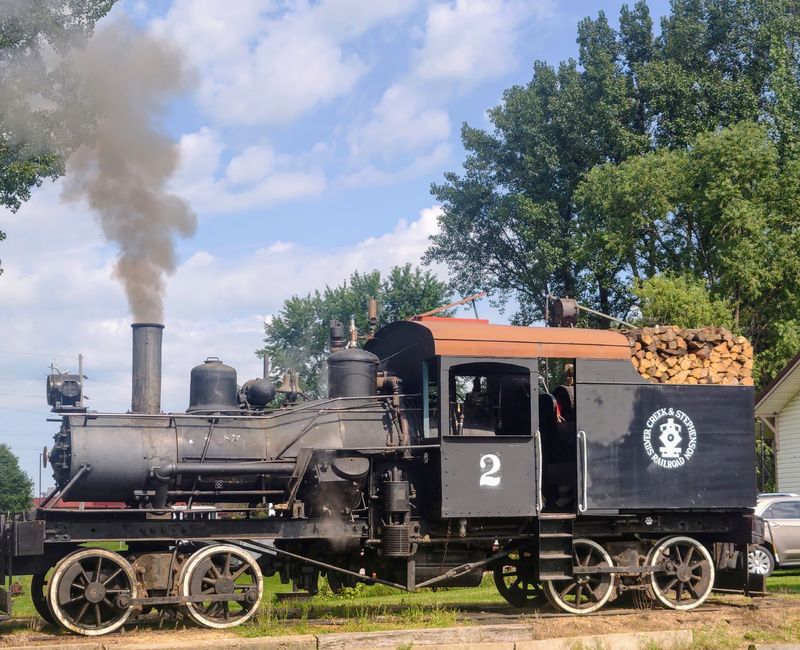
When October rolls around, the quiet woods get a lot louder. The Train of Terror takes riders out after dark, and creepy surprises wait along the tracks.
Picture this. The engine hisses in the cold night air, open cars fill with families in hoodies, and lanterns glow between the trees. Then the train rolls forward and the screams start.
The scares lean playful rather than horrifying. Younger kids can handle it, especially with a parent nearby, while older kids still get a few good jumps. It works well for mixed-age groups who want Halloween fun without nightmares.
Many families turn it into a yearly tradition. Riding the same route every fall and seeing what has changed becomes part of the fun.
Plan ahead on a few points. Tickets have traditionally been sold on site, not in advance, so arrive early on busy nights. Popular evenings can draw crowds, and waiting in a cold line is easier with warm drinks and patience.
Bring cash, since card payments have not been available in the past. Small snacks such as popcorn are often for sale, which helps if the line runs long.
Accessibility has been manageable for riders with mobility needs, but ask staff when you arrive to get the best spot.
Dress for the weather. Northern Illinois nights in October can bite, and open cars catch every breeze. Gloves, hats, and blankets make the ride far more comfortable.
Remember that the first tug of the train can surprise you. In the dark, with spooky distractions everywhere, stay seated and hold onto little ones as the cars lurch forward. Then let the woods do the rest.
Plan Smart Before You Drive to Freeport, Illinois
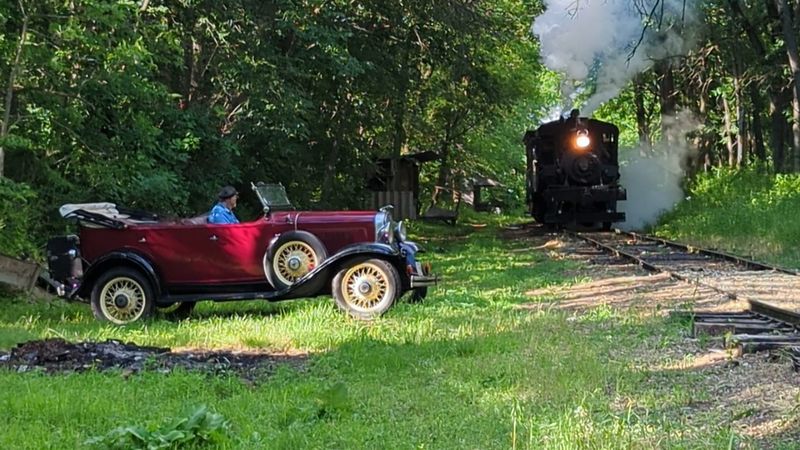
A little planning saves a lot of frustration. This railroad runs on volunteer power, so its schedule works differently from a big attraction open every day.
Operations are seasonal. The regular season wraps up around October, and some travelers have shown up on off days only to find the gates closed. Online listings are not always current, so confirm hours directly before a long drive, especially if you are coming from out of state.
Weekends are the usual time to visit. Arriving earlier in the day gives you room to ride the train, tour the museum, and visit the engine building without rushing.
Cash is king here. Credit and debit cards have not been accepted, and the nearest ATM may be a drive away. Stop in Freeport first and grab enough for tickets, a cab ride, and snacks.
Prices stay friendly for families. That makes it an easy pick for grandparents, scout troops, or anyone trying to fill a Saturday without spending theme park money.
Know which engine might be running. Some days feature the steam locomotive, while others use a small diesel switcher. If steam matters to you, ask ahead.
Pack simple supplies. Sunscreen and water help on summer days, and layers matter in spring and fall. Comfortable shoes are smart since you will walk between the station, rail cars, and museum.
Leave room in your plans to wander. Old railcars sit near the station, and exploring them is part of the experience. Volunteers often chat about the history of the line and the cars you rode.
Freeport itself sits about two hours from Chicago, so the trip pairs nicely with lunch downtown. Then head out Lamm Road and listen for that whistle.