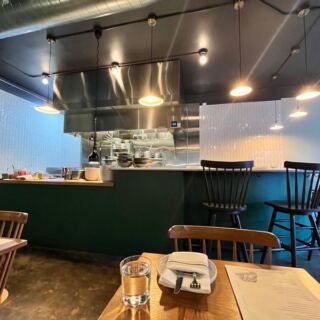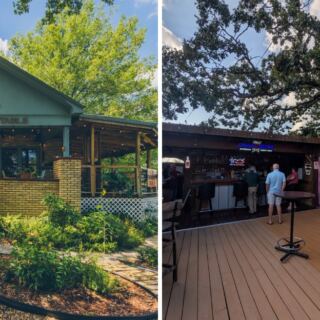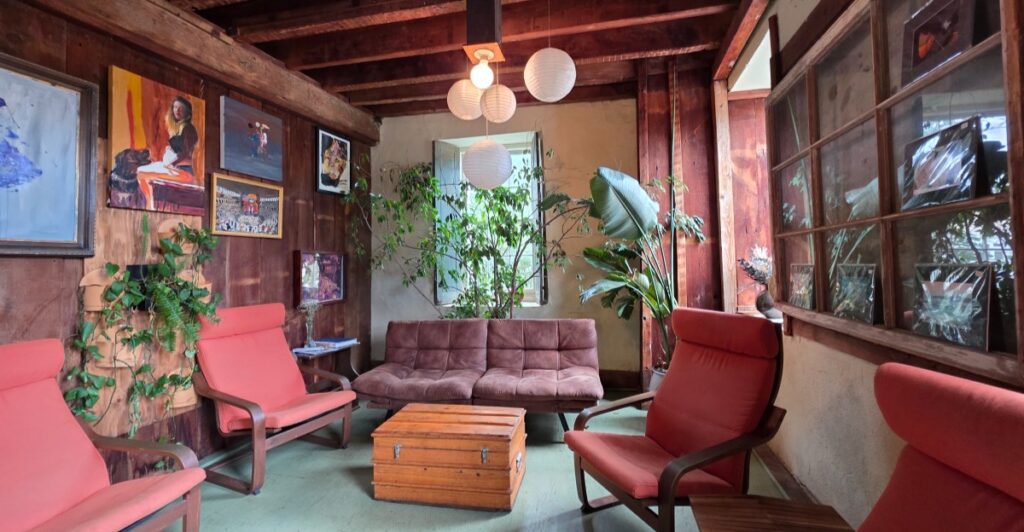
A latte tastes a little different when you are drinking it inside an old bank vault. The same goes for espresso served in a former firehouse, coffee beside a century-old pottery kiln, or breakfast in a railroad station that once sent passengers rolling through North Jersey.
Across New Jersey, some of the state’s most memorable coffee stops have taken over buildings that were never designed with cappuccino machines in mind.
There are converted mills, Victorian general stores, 19th-century homes, grand hotels, and former banks where the architecture is almost as interesting as what is being poured behind the counter.
Some lean heavily into their history; others simply let old brick, timber, fireplaces, vault doors, and original details do the talking. Either way, these are places where grabbing coffee can turn into an excuse to linger, look around, and wonder what happened inside those walls long before anyone started ordering oat-milk lattes.
1. Café 1903, Collingswood: Start With the Setting
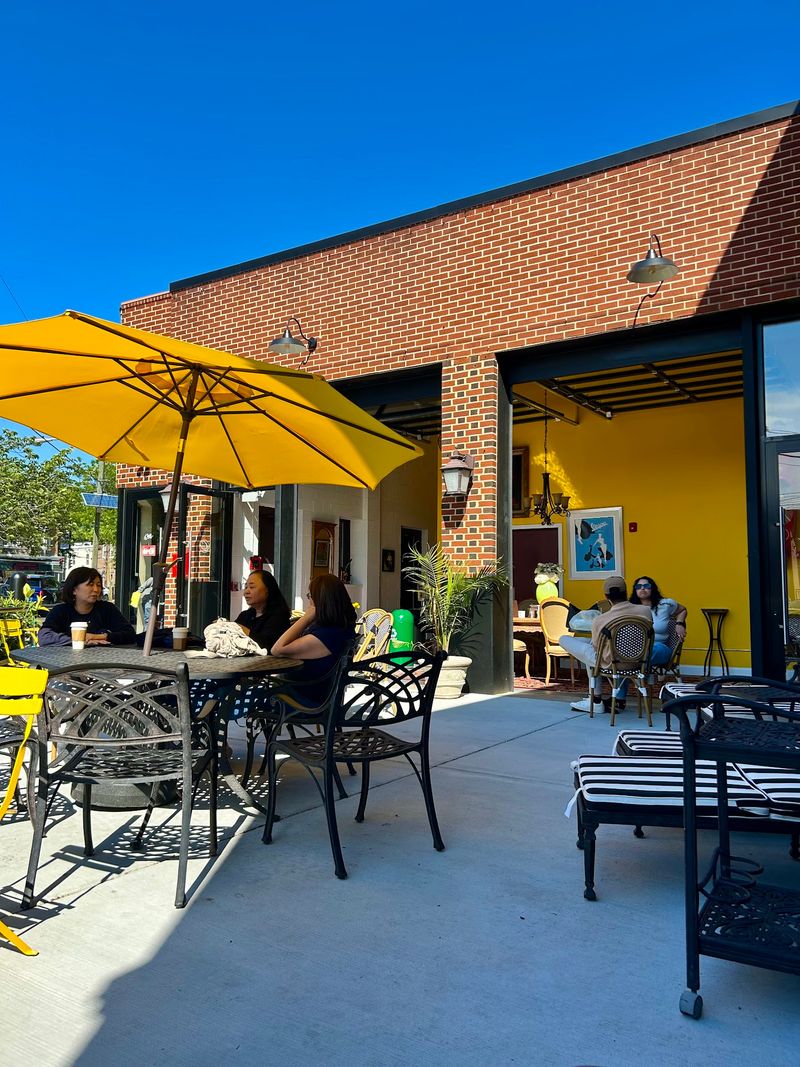
A former municipal firehouse is not the obvious place to look for Southern Italian coffee culture, which is precisely why this Collingswood newcomer is such a fun fit for the list. Café 1903 opened in 2026 inside the borough’s historic former fire station, occupying part of a larger redevelopment that has given the recognizable old building a completely different purpose.
Rather than trying to make the room feel like a themed firehouse restaurant, the café went in another direction, pairing the bones of the old building with an espresso-bar setup, lounge seating, and a European sensibility.
The menu centers on properly made coffee drinks and pastries, making this an easy stop for an espresso, cappuccino, or something sweet rather than a place where you need to commit to a full meal.
There is also outdoor seating, which works especially well in walkable downtown Collingswood when the weather cooperates. The fun is in the contrast: an old civic building associated with engines, equipment, and emergency calls now has people lingering over espresso instead.
Café 1903 is also close enough to the PATCO station to work as a pre-train coffee stop, although the setting gives you a good reason not to rush out the door.
2. Alkemy Coffee Co., Flemington: Main Street With a Fresh Pour
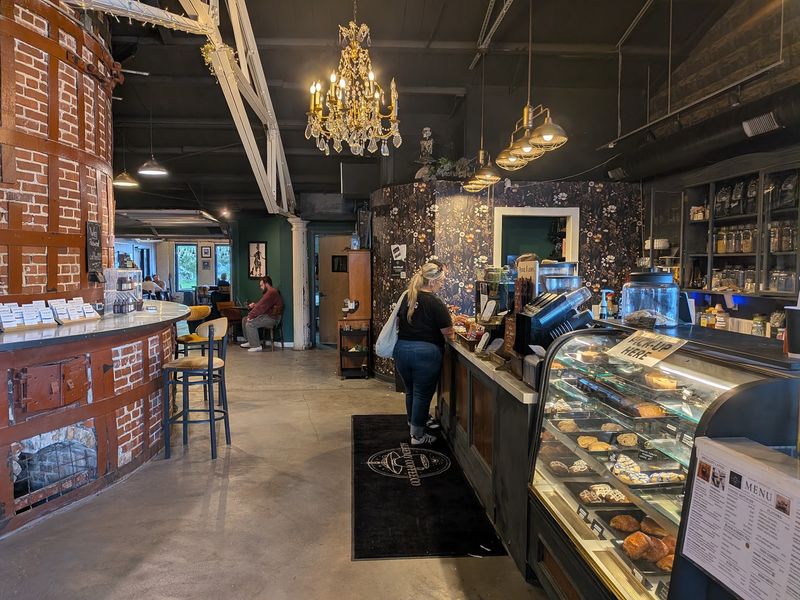
The table everybody is going to ask about sits inside a pottery kiln. That alone earns Alkemy Coffee Co. a place here.
The Flemington café occupies part of the former Stangl Pottery factory, a red-brick industrial complex dating to the 1920s that has been revived as an arts-and-culture destination.
One of the factory’s massive original kilns now forms an intimate seating area inside the coffee shop, with curved raw-brick walls and built-in seating following its circular footprint.
It is the rare historic detail that is not just something to photograph; you can actually take your drink inside it. Alkemy roasts coffee on site and combines the usual espresso drinks with a more unusual menu influenced by co-owner Valentina’s background in herbalism and aromatherapy.
Expect botanical drinks, teas, seasonal creations, and vegan and gluten-free baked goods alongside the coffee. That makes this a particularly good choice if your group contains one person who wants a straightforward latte and another who inevitably orders whatever drink on the menu contains the most unfamiliar ingredients.
The café is at 2 Stangl Road, and the surrounding former factory complex gives you more to explore afterward. Just make sure you get a look inside that kiln before somebody else claims the best seat.
3. Bean Vault Coffee, Hoboken: A Different Kind of Deposit
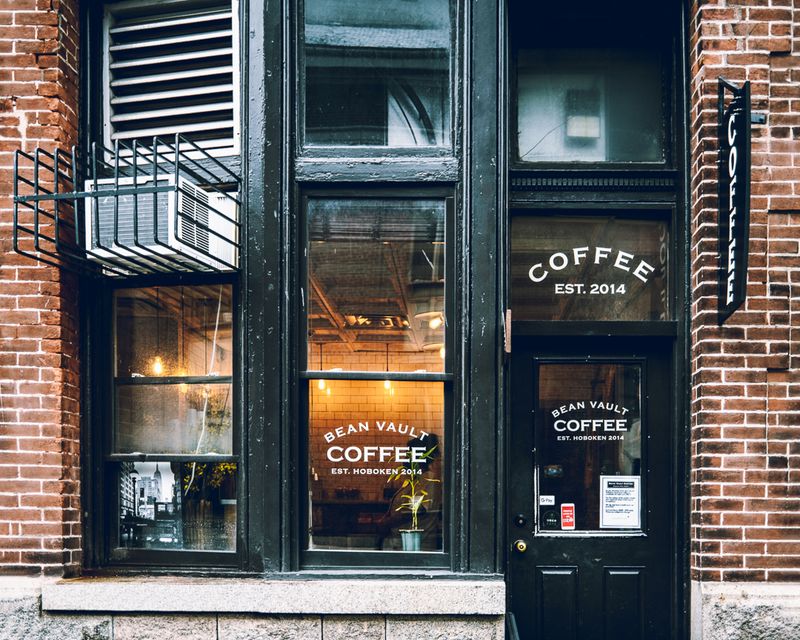
There is no decorative imitation happening at this Hoboken coffee shop. The vault is real.
Bean Vault Coffee sits at 1 Newark Street inside the historic Hoboken Land Building, a late-19th-century structure that originally housed a bank. When the coffee shop moved in, one of the building’s most useful leftover features became its defining characteristic: an old bank vault.
The heavy-duty reminder of the building’s previous life is still visible inside, along with other old structural details that make the compact shop far more interesting than its footprint suggests.
Coffee is the main event, with beans sourced from established growing regions and the usual espresso-based options available for commuters, neighborhood regulars, and anyone arriving from nearby Hoboken Terminal.
This is a particularly easy place to work into a day in town because it sits close to the waterfront, PATH, trains, and the southern end of Washington Street. Yet it does not feel like an anonymous station coffee counter.
The old architecture gives the room personality before the first shot of espresso is pulled. Hoboken has plenty of handsome old buildings, but getting your morning coffee in a space where bankers once locked away valuables is hard to beat.
The name may sound like clever branding until you walk through the door and realize they really did inherit a vault.
4. Forum Coffee Hoboken North: Look Beyond the Counter
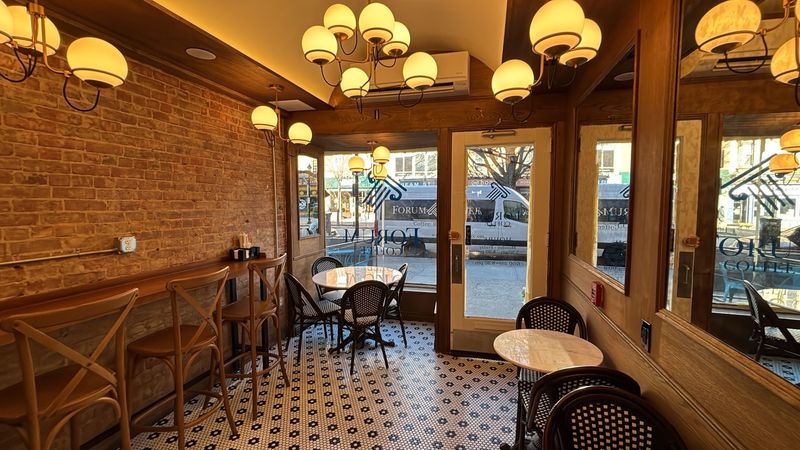
Look up before ordering at Forum Coffee’s uptown Hoboken location and the building tells you immediately that this is not a standard storefront.
The limestone-clad structure at Washington and 14th streets opened in 1903 as the Hoboken Trust Company, giving the corner the kind of substantial old-bank architecture designed to make depositors feel that their money was not going anywhere.
The building later spent years as the headquarters of a local newspaper company before taking on newer commercial uses. Forum Coffee opened here in 2025, bringing organic coffee, espresso drinks, lattes, cold brew, matcha, pastries, sandwiches, desserts, and its frozen drinks into the historic setting.
Unlike Bean Vault farther downtown, the draw here is less about stepping into an actual vault and more about seeing a modern café fitted into one of uptown Hoboken’s most distinctive surviving commercial buildings.
Outdoor seating wraps into a particularly busy neighborhood corner, so the location works well for people-watching when Washington Street is humming.
Early hours also make it practical: the café currently opens at 6 a.m. on weekdays and 7 a.m. on weekends. Stop in for the coffee, but give yourself an extra minute outside first.
Those old stone bank façades were built to impress, and this one still does more than a century later.
5. Odyssey Coffee, Ocean Grove: A Victorian Neighborhood Pause
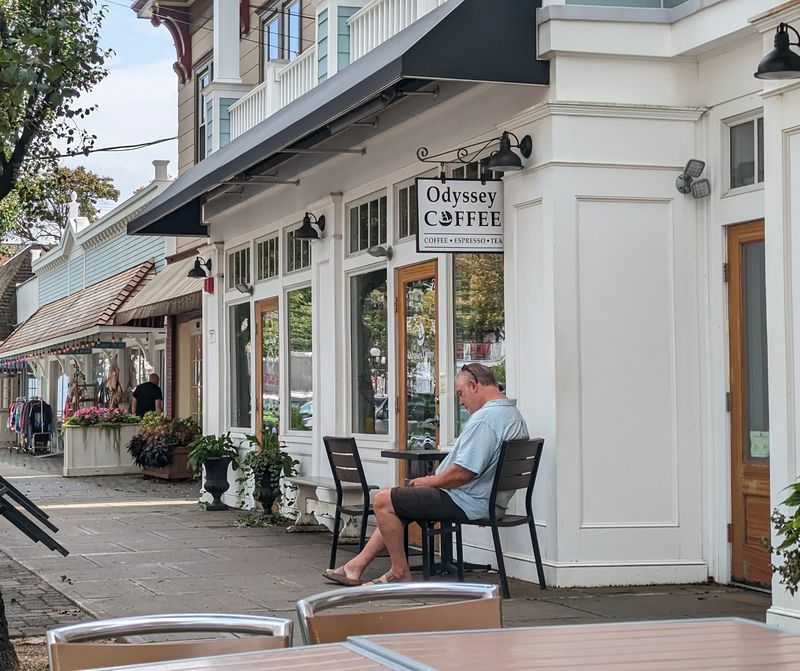
A soaring ceiling and an unmistakable bank vault make Odyssey Coffee feel more substantial than your average neighborhood caffeine stop. The Ocean Grove café occupies a former bank building on Main Avenue, where the wide-open room and leftover financial-world architecture have been repurposed for considerably more relaxed transactions.
These days, people come through the doors carrying laptops, beach bags, and strollers rather than deposit slips. The vault is the obvious historic conversation piece, but the scale of the room matters just as much; it gives Odyssey enough breathing space to function as one of those coffeehouses where staying for a while does not feel awkward.
That makes it particularly handy in Ocean Grove, where a morning walk through streets of ornate Victorian homes can naturally end here before heading toward the beach. Coffee is the focus, and this is the sort of place where a simple espresso or cold drink makes sense when you want a break without turning the stop into a full sit-down meal.
The café sits at 63 Main Avenue, right in the small commercial heart of town. Ocean Grove is already unusually good at preserving architectural character, so it seems fitting that even a coffee run can involve stepping inside a former bank rather than another anonymous modern box.
6. Café Angelique, Tenafly: Coffee at the Old Station
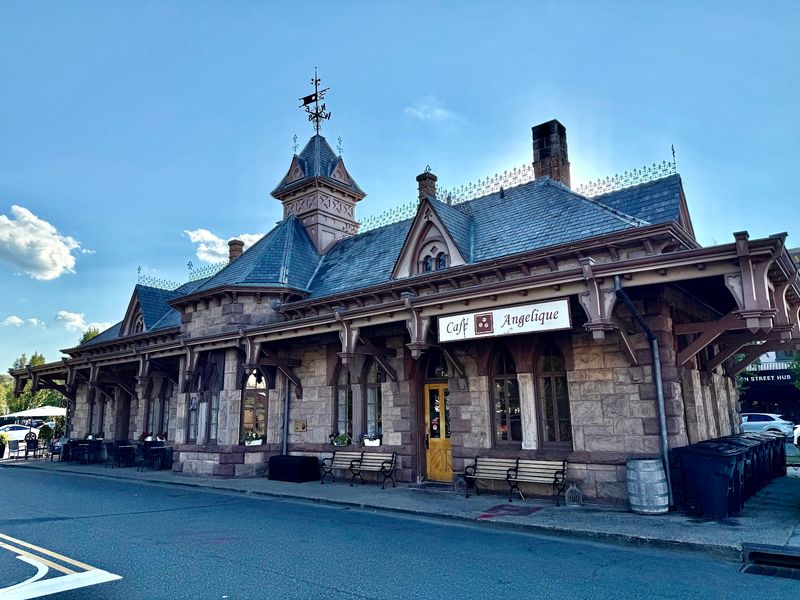
The trains stopped carrying commuters through Tenafly decades ago, but the old station never lost its usefulness. Café Angelique occupies Tenafly’s historic railroad depot, a handsome 1872 station designed by architect Daniel Topping Atwood.
Passenger service ended in the 1960s, and the building eventually found a much more delicious second career as a café. Today, its railroad architecture provides the backdrop for coffee, pastries, breakfast, and Mediterranean-influenced dishes.
You can keep the stop simple with a cappuccino and something from the pastry case, or settle in for shakshuka, a smoked-salmon bagel, avocado toast, or an omelet. That broader menu makes Café Angelique particularly useful when one person says “coffee” and everyone else hears “brunch.”
The old station setting prevents the meal from feeling like one more suburban breakfast stop, especially when you consider that travelers once waited here for trains bound along the Northern Railroad.
Outdoor seating adds another option in warmer weather and lets you appreciate the depot from the outside rather than only admiring it from your table. For anyone who likes adaptive reuse done without erasing the original building’s identity, this is an easy recommendation.
The railroad may be gone, but Tenafly wisely kept the station busy.
7. The Moth Coffeehouse, Allentown: Meet Me at the Mill
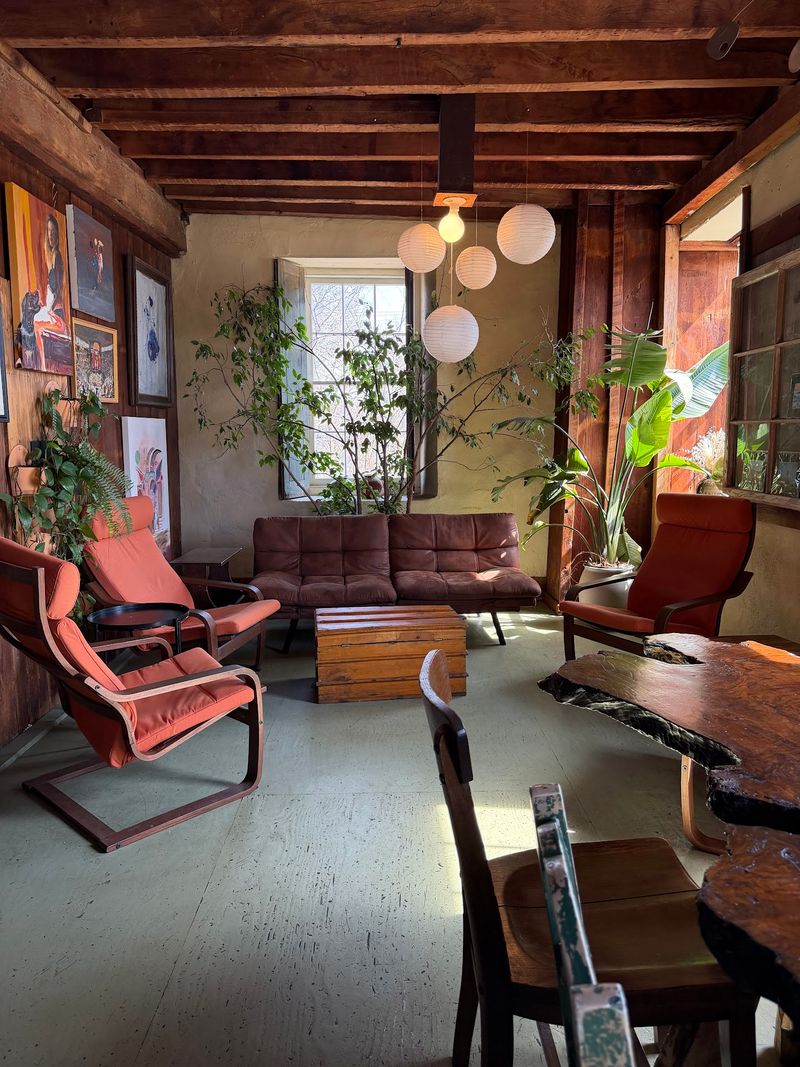
Long before anyone was ordering cold brew in Allentown, grain was the business inside this building. The Moth Coffeehouse occupies the first floor of a historic grist mill on South Main Street, a structure dating all the way back to 1706.
That makes it one of the oldest buildings on this list by a comfortable margin. The mill was restored after Corky Danch bought it in 1975, later spending years vacant before the family opened The Moth in 2015 and brought daily life back into the structure.
You still get the visual payoff of old timber, rustic details, and a waterside setting overlooking Conines Millpond, but the menu has its own personality too. The Moth is especially known for vegetarian and vegan food, including its beet burger, vegan sausage sandwich, chickpea dishes, and vegan mac and cheese.
Coffee drinkers can stick with espresso, cappuccino, lattes, café au lait, cold brew, and sweeter specialty choices. House-baked treats make an excellent second decision after you convince yourself you came in “just for coffee.” Parking is available on site, with street parking as backup, and the café currently operates Tuesday through Saturday.
It is hard to think of many New Jersey coffee breaks where the building itself predates the American Revolution by several decades.
8. Tommy’s Folly Café, Cape May: A Grand Hotel Coffee Break
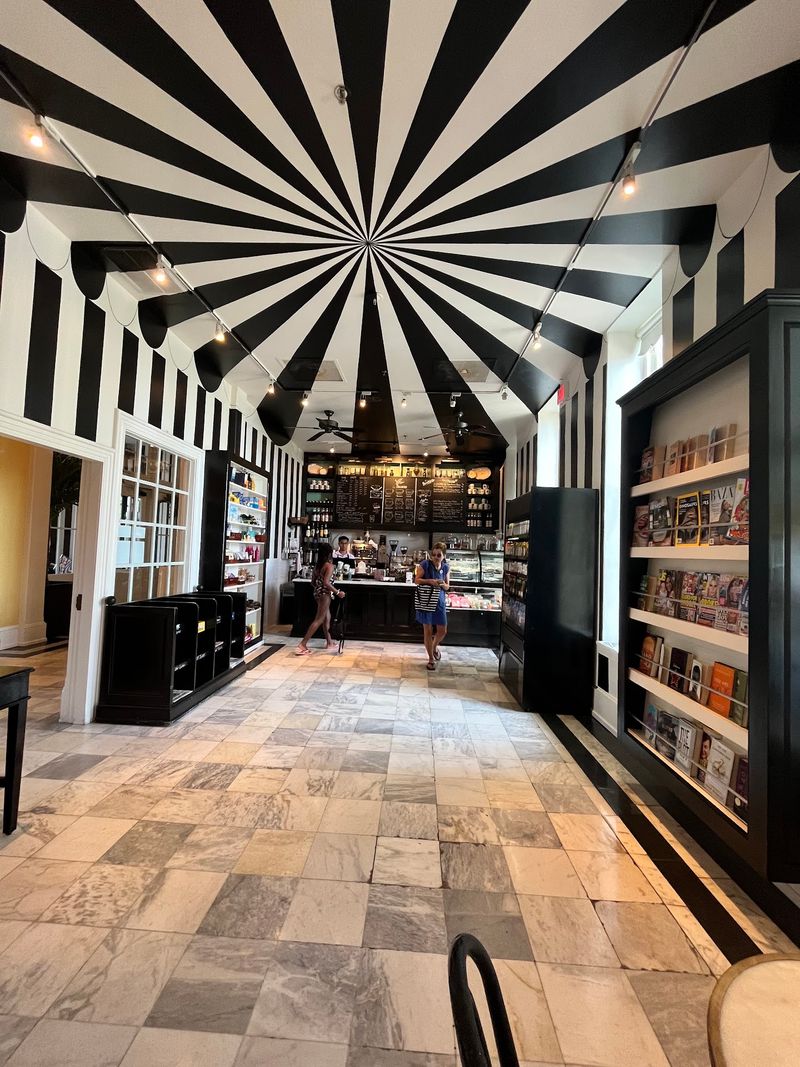
Few coffee shops can casually claim an address inside a hotel whose story began in 1816. Tommy’s Folly Café is tucked into Congress Hall in Cape May, the grand seaside hotel that started life as a boarding house called the Big House.
Locals doubted such an enormous place could succeed and sarcastically nicknamed it “Tommy’s Folly,” which explains the café’s name today. The original hotel burned in Cape May’s Great Fire of 1878, and the present brick Congress Hall rose the following year.
That still gives your morning latte a considerably more interesting backdrop than drywall and fluorescent lighting. The café serves brewed coffee, espresso drinks, cappuccino, lattes, chai, matcha, breakfast sandwiches, bagels with lox, pastries, smoothies, juices, and a compact lunch selection.
Early opening hours make this an especially useful stop before Cape May gets busy for the day. The best move is to grab coffee and then spend a little time around Congress Hall itself, where broad verandas, lawns, and views toward the ocean make the setting part of the experience.
And yes, ordering coffee from a place named after a 200-year-old insult that turned out to be spectacularly wrong makes the whole thing even better.
9. The Coffee Box, Rahway: Downtown Details Worth Noticing
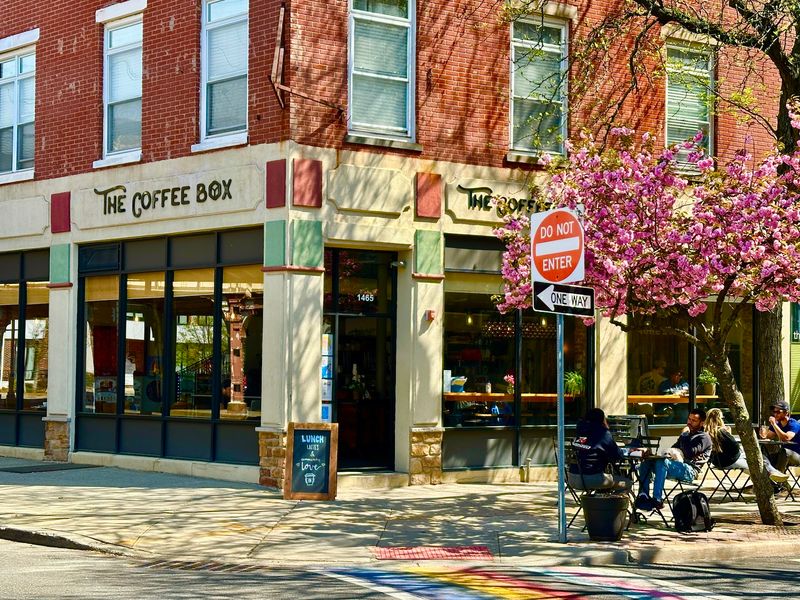
Nothing about the words “coffee shop near the train station” prepares you for a building that dates to the 1840s. The Coffee Box in downtown Rahway has operated since 2019, but its home is roughly 175 years older than the business.
Inside, the café balances the age of the structure with warm wood tones and an industrial edge rather than turning the place into a historical exhibit. That suits Rahway nicely: the shop feels connected to downtown life rather than frozen in another era.
The coffee program uses Intelligentsia beans, while the menu stretches from pour-overs, cappuccinos, flat whites, matcha, and hot chocolate to Belgian waffles, croissant sandwiches, avocado toast, panini, salads, and pastries baked in house. A smoked-salmon and cream-cheese panini or avocado toast can turn a coffee run into lunch without requiring a change of venue.
There is indoor seating for a modest crowd plus outdoor tables when the weather behaves, and Rahway station is close enough that this works beautifully before or after a train. The Coffee Box also regularly hosts live music, including a weekly open mic and community jam, giving the old structure yet another life.
An 1840s building that has survived long enough to become a neighborhood café deserves to be enjoyed slowly.
10. Tasting Room on Main, Mullica Hill: Slow Down on Main Street
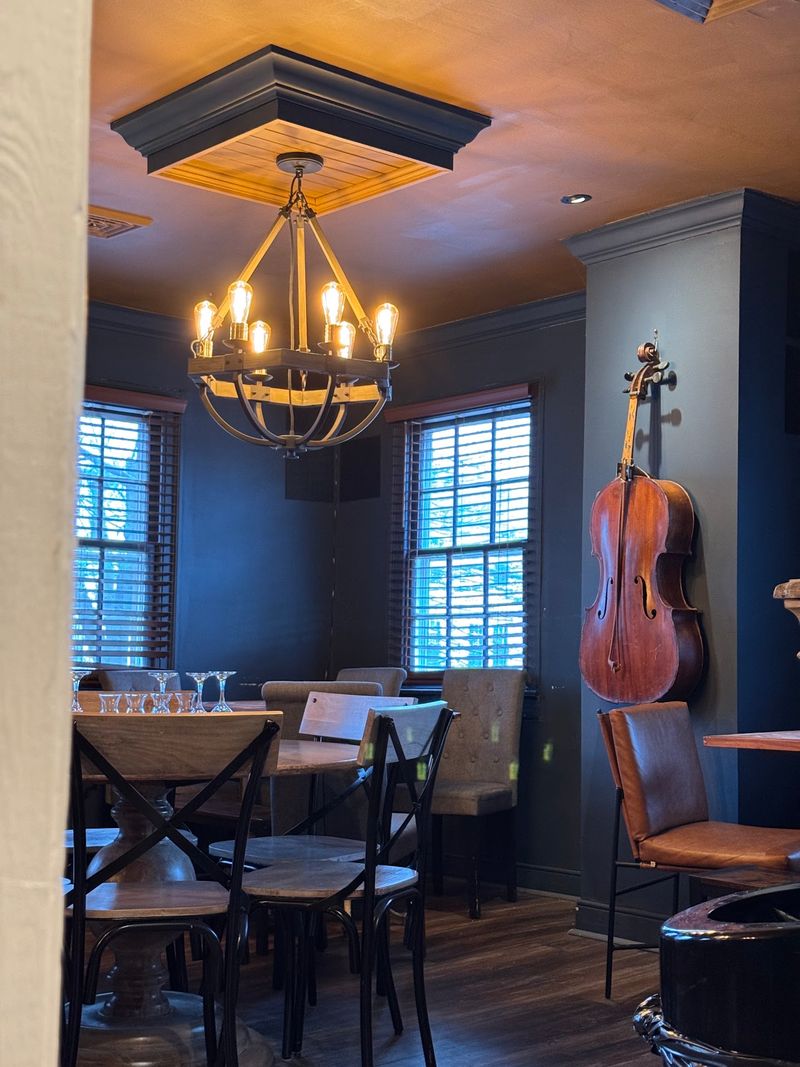
Morning coffee and evening wine share an address inside an 1840 house in Mullica Hill. Tasting Room on Main occupies the historic Maull home, a former residence more than 180 years old in the town’s National Register-listed historic district.
Rather than gutting the building into a generic commercial shell, the conversion retained the character of a two-story old house while adapting the rooms for café seating, small plates, events, and wine tastings.
In the morning, the concept operates as “Rise Up,” with coffee joined by bagels, breakfast sandwiches, avocado toast, and other light dishes.
One of the most fun orders is the coffee flight, which has included an Americano, macchiato, vanilla latte, and mocha served together for anyone who does not believe in choosing just one. Later in the week, the focus shifts toward Kennedy Cellars wine, flatbreads, and small plates.
There is seating across two floors plus outdoor tables, and parking is available behind the building—a welcome detail on a historic Main Street where you might otherwise assume parking will become part of the adventure. This is less a grab-and-run coffee counter than a place to appreciate the old rooms while you stay awhile.
Mullica Hill has no shortage of historic houses, but this one comes with espresso.
11. The Vreeland Store, West Milford: General Store Roots
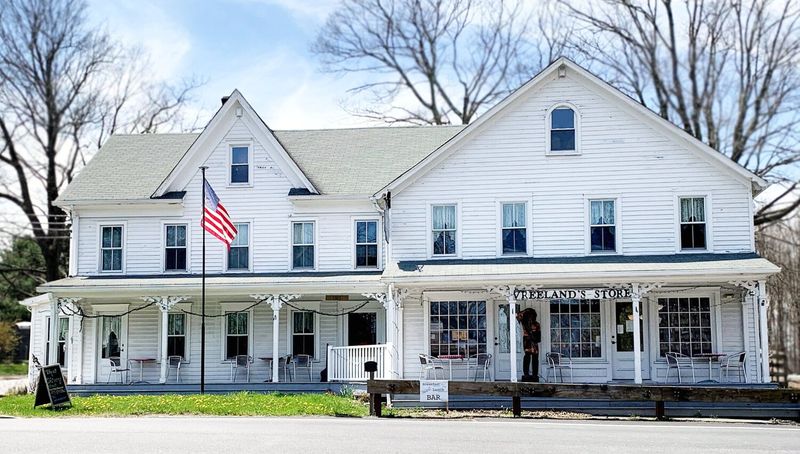
The postal ledgers on the walls are not reproductions bought to make the room look old. They belong to the story of the building.
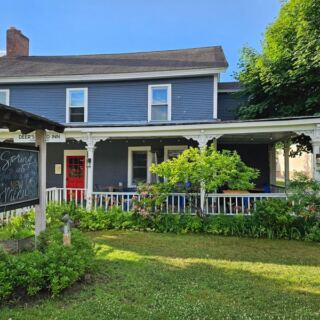
The Vreeland Store in West Milford began as a Victorian house around 1840 and was serving the rural community as a general store and post office by 1861. Residents once came here to buy grain and household goods, order suits, vote, and collect mail.
After the property changed hands in the 2000s, an extensive restoration preserved old floors, recreated appropriate windows, and reused historic material found inside the structure as decoration. Today, the building operates as a café, bar, bakery, inn, and gathering place.
Coffee comes from nearby Greenwood Lake Coffee Roasters, while the kitchen handles breakfast and lunch and the bakery keeps the display supplied with house-made sweets. The café currently opens at 7 a.m.
Tuesday through Sunday, making this one of the better historic options for an early start. What really separates it from newer cafés is that it still feels like a country general store that gradually evolved rather than a restaurant dropped into an old shell.
Sit down with coffee, look around at the surviving documents and details, and it is easy to picture generations of West Milford residents conducting very different business in exactly the same rooms.
12. Almost Home General, Navesink: A Village Coffee Detour
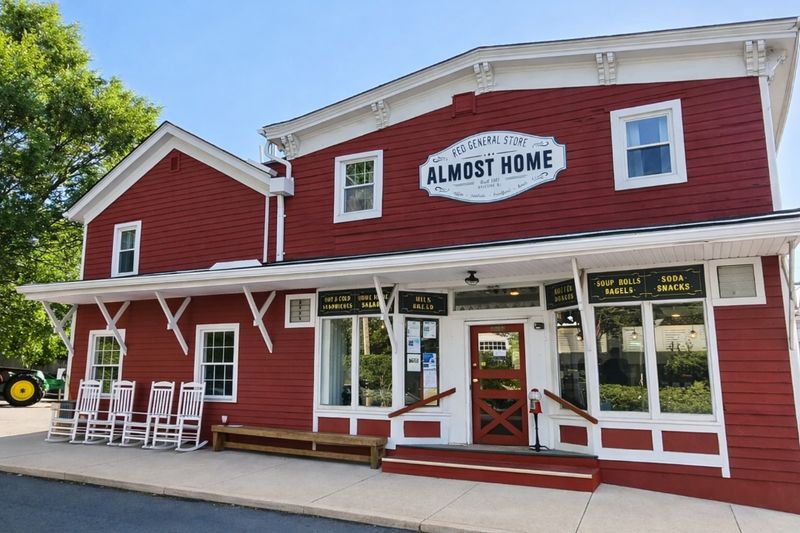
Ask a longtime Navesink resident about the building at 101 Navesink Avenue and there is a good chance they know it simply as the old red general store.
Almost Home General has turned that familiar historic structure into a modern neighborhood stop for coffee, pastries, breakfast, sandwiches, salads, and prepared foods without stripping away the old-store identity that made the property recognizable in the first place.
The Navesink location uses counter service and offers seating, so it works equally well for a quick coffee or a more substantial breakfast before exploring the Atlantic Highlands area.
The OG Breakfast Sandwich keeps things straightforward with eggs, American cheese, and a choice of meat on a Kaiser roll, while larger options have included breakfast burritos, biscuit sandwiches, cheesesteaks, and other unapologetically substantial choices.
Coffee ranges from drip and espresso drinks to cold brew and rotating specialty creations, with matcha and tea for the non-coffee contingent. The historic building is the reason this particular Almost Home location belongs on the list; the company now operates several cafés, but Navesink gives you the old general-store setting.
There is something satisfying about seeing a neighborhood building continue doing roughly what general stores have always done best: giving people a reliable place to pick something up, run into somebody they know, and stay longer than planned.
13. Lambertville Trading Company, Lambertville: Coffee Between Storefronts
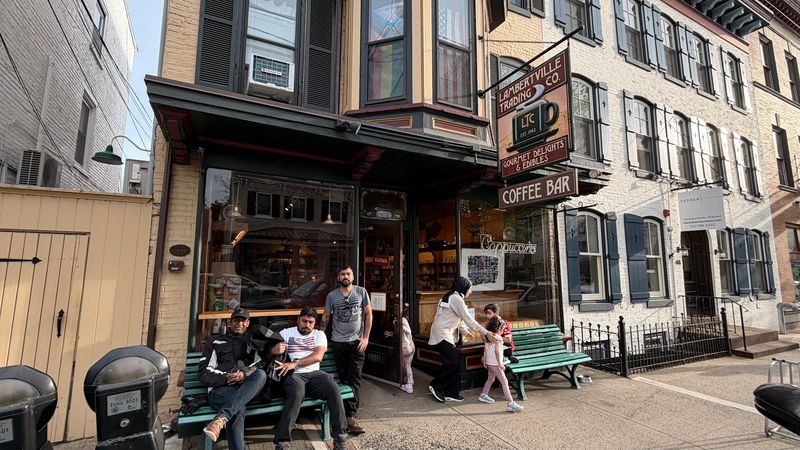
Lambertville is the sort of town where a plain glass-box coffee shop would almost look suspicious. Lambertville Trading Company fits its surroundings much better, occupying a historic storefront at 43 Bridge Street in the middle of the city’s old commercial district.
The family-owned coffee bar has been here since 1982, which means it has had decades to become part of Lambertville’s daily rhythm rather than simply borrowing atmosphere from the architecture around it.
Coffee is serious business: the shop offers espresso drinks, several daily drip selections, French press by the cup, whole beans, tea, and a notably good excuse to visit during warm weather—iced coffee made with coffee ice cubes, so the drink does not slowly dilute into brown water.
The spiced hot chocolate is another longtime specialty. Bagels, muffins, scones, croissants, cookies, biscotti, and other pastries keep the food side simple, while shelves of chocolates, specialty foods, mugs, and coffee gear preserve some of the shopkeeper feel suggested by the Trading Company name.
It is open seven days a week apart from Thanksgiving and Christmas, making it an unusually dependable stop during a day of antique hunting and walking around town. Cash or Venmo is the current setup for walk-in purchases, one practical detail worth knowing before ordering.
14. The Bridge Café, Frenchtown: A Station With a New Purpose
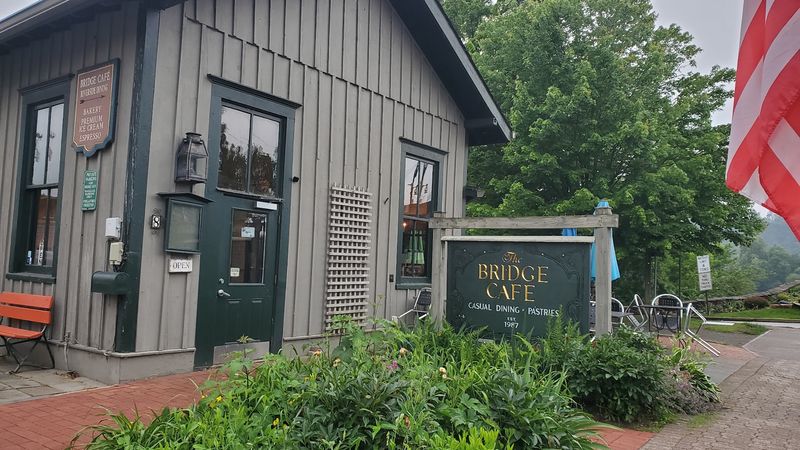
Breakfast beside the Delaware River comes with a side of railroad history in Frenchtown. The Bridge Café occupies the town’s former Belvidere-Delaware Railroad station, a building dating to around 1863 when rail service was enormously important to this stretch of the river.
Freight trains continued using the line into the 1970s, but the station eventually found a new purpose. Culinary Institute of America graduates Kenneth and Lisa Miller opened the café here in 1987, turning the old depot into a small restaurant and bakery without sacrificing the reason the location is so special.
The property looks toward the Delaware River and Frenchtown-Uhlerstown Bridge, and outdoor patios make those views part of breakfast or lunch in good weather. Coffee and other hot and cold drinks are joined by morning pastries, baked goods, cakes, pies, breakfast fare, and lunch dishes, so there is no need to stop at caffeine if hunger takes over.
Inside, the modest scale of the old station keeps things intimate; outside, the river setting does most of the decorating. Frenchtown has plenty of historic architecture within walking distance, which makes the café a natural starting point for exploring downtown.
A century and a half ago, people stopped here because they had a train to catch. Now the better reason is coffee, breakfast, and absolutely nowhere you need to be for the next half hour.
Share this story