Few Illinois landmarks carry quite as many unsettling stories as Old Joliet Prison. Behind its imposing limestone walls, generations of inmates lived under strict rules from 1858 until the prison finally closed in 2002. Today, guided tours offer a rare glimpse into the cellblocks, exercise yards, and weathered spaces that once defined daily life behind bars.
The prison also has a Hollywood connection, appearing in The Blues Brothers and Prison Break, while ghost stories add another layer of intrigue. Whether you are drawn to dark history, famous filming locations, or eerie legends, this Joliet landmark offers an unforgettable look inside a notorious Illinois institution.
Limestone Walls That Look Like a Castle Gone Wrong
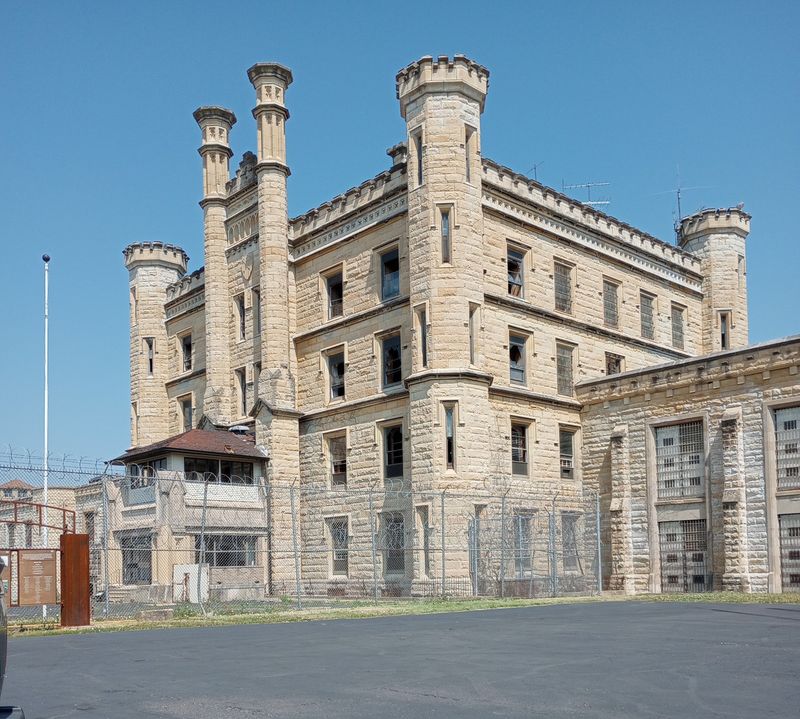
Picture a medieval castle, then wrap it in barbed wire. That is the first view of Old Joliet Prison from Collins Street, and it hits hard. Pale limestone towers rise above the road with turrets that seem borrowed from a fairy tale, except nobody here was a prince.
The stone came from the local area, and early inmates helped quarry and stack it. That detail changes how the walls look once you know it. Every block was moved by people who would end up living behind it.
Up close, the scale gets bigger. The walls stretch on and on, and rolls of wire run along the top like silver vines. Guard towers poke up at the corners, giving the whole place the shape of a fortress built to keep one secret: whoever was inside.
Spend a minute just standing across the street before heading in. The front building has arched windows, heavy doors, and a grand style that feels oddly fancy for a prison. Builders in the 1850s wanted government buildings to look powerful and serious, and this one still does.
Photographers will love the textures here. Morning and late afternoon light bring out the rough grain of the stone and throw long shadows from the towers.
A wide shot from across the road captures the full stretch of wall, while close shots show weathered patches, rust stains, and chipped edges from more than 160 years of Illinois winters.
Look closely at the main gate, too. Rust on the metal, worn steps, and old signage all hint at the thousands of men and women who passed through. Some walked in for a few months. Others never walked out at all. Then it is time to cross that line yourself.
Inside the Cell Houses Where Two Men Shared Four Feet
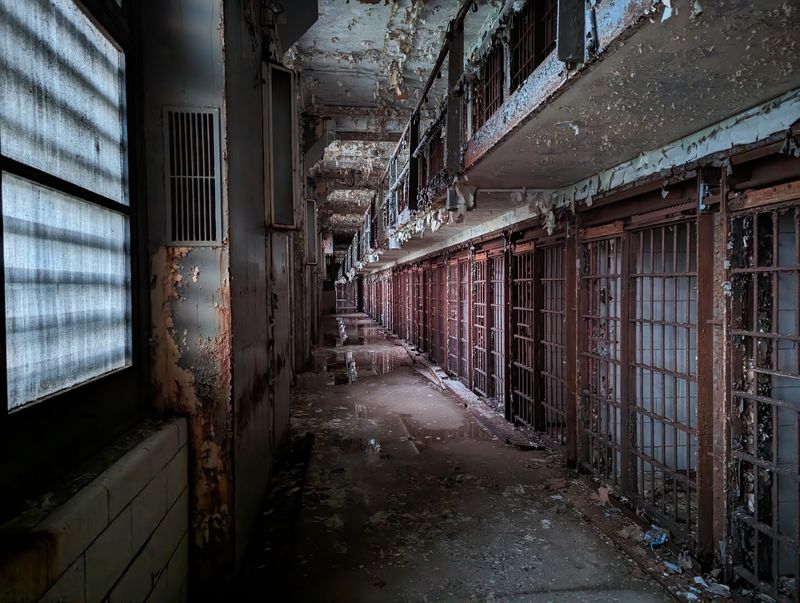
Four feet wide. Seven feet long. Seven feet tall. Those were the measurements of the original cells, and each one was meant to hold two people. Stand in one with a friend and stretch out your arms, and you will understand fast.
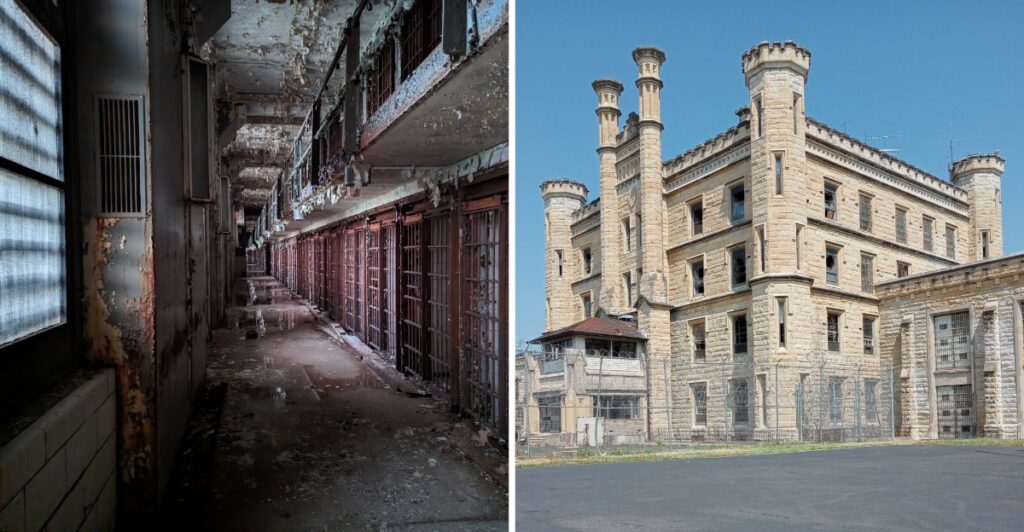
The cell houses are the heart of any visit. Rows of iron doors line long walkways, stacked in tiers so guards could watch many prisoners at once. Paint peels off the walls in big curling sheets, revealing layers of old colors underneath like rings in a tree.
Walking inside, you can almost map out a whole day. There was a bunk, a small shelf, and barely room to turn around. Sound bounces off the concrete, so even quiet footsteps echo down the rows.
Many visitors notice a heavy mood in certain cells. Some describe a tight feeling in the chest or a sudden urge to step back out. Whether that comes from ghosts or simply from imagining life in such a tiny box, the effect is real.
Look for small details as you move along. Scratches on the walls, bent bars, and leftover fixtures tell their own stories. Light drifting in through high windows creates sharp stripes across the floor, which makes for striking photos.
Signs posted near each building explain what happened there and how the prison changed over time. Reading them adds meaning to what could otherwise look like just a run-down room. You learn how rules, punishments, and living conditions shifted across decades.
Give yourself time here instead of rushing. Step into a cell, sit for a moment, and listen. The walls are thick, the space is small, and the silence says a lot about the people who once counted the days inside.
Ghost Stories and Paranormal Hot Spots After 144 Years
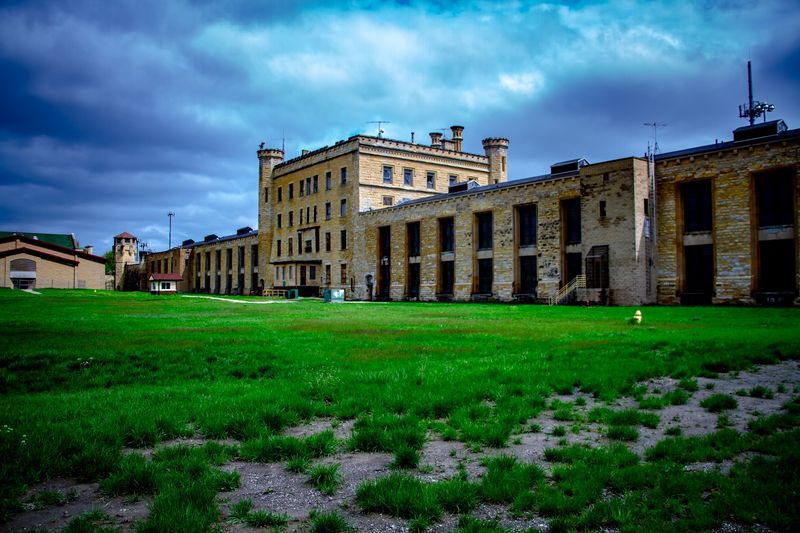
Ask a staff member where the hot spots are, and watch their face light up. Paranormal fans travel from far away to spend time in specific corners of Old Joliet, and the team on site is happy to point the way.
Why so many ghost stories? A prison that ran from 1858 to 2002 saw a huge amount of human pain. There were riots, illnesses, harsh punishments, and deaths behind these walls, and those events left behind plenty of tales.
Some areas draw extra attention. Solitary confinement spaces, older cell blocks, and the shadowy halls of damaged buildings are favorites for people carrying voice recorders or electromagnetic meters. Even skeptics tend to slow down in these spots, glancing over their shoulders at a creak or a slammed door caused by the wind.
Fire damage adds to the eerie look. Several structures still show scorched beams, blackened walls, and collapsed roofs. Sunlight pours through holes that were never meant to be there, and the mix of light and charred wood looks like a movie set nobody cleaned up.
Quiet days work best for ghost hunting. Weekday mornings and slower Sundays often mean fewer crowds, giving you room to stand still and listen. Bring a fully charged phone, since many people record audio hoping to catch something strange on playback.
Special haunted tours run at certain times of year, especially in fall. These events lean into the spooky side, with guides sharing darker stories from the prison’s past. Check the schedule ahead, because they can fill up quickly.
Respect matters here more than anywhere. Real people lived and died in these rooms. Treat the space with care, skip the yelling and the touching of fragile fixtures, and you might just hear what the old prison has to say.
The Blues Brothers Gate and Prison Break Fame in Joliet, Illinois
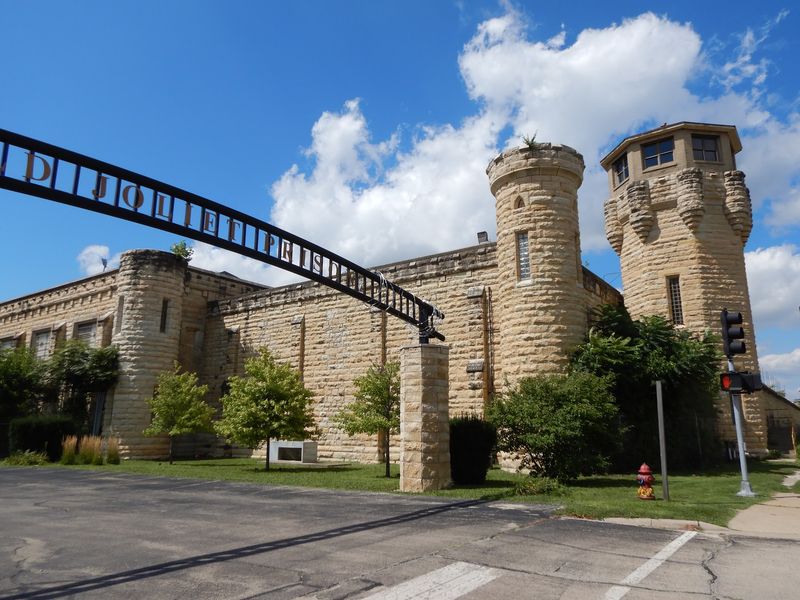
Jake Blues walked out of this gate in 1980, squinting at the sky while his brother Elwood waited in a battered old police car. That opening scene of The Blues Brothers turned Old Joliet Prison into a movie landmark, and fans still line up to stand on the same spot.
For many visitors, this is a pilgrimage. People show up in black suits, skinny ties, and dark sunglasses, posing in front of the gate like they just finished their own sentence. Laughing at yourself is part of the fun.
The gate looks almost the same as it did on screen. Stone pillars, the heavy entry, and the walls stretching away on both sides match the film closely enough to give fans chills. Bring a hat and some shades if you want the full effect in photos.
Blues Brothers nods are scattered across the grounds, too. The site has even hosted a Blues Brothers convention, with music, costumes, and plenty of quoting of famous lines. If you can recite the whole movie, you will find friends here.
Television fans have their own reason to visit. The first season of Prison Break was filmed at Joliet, and the yards and buildings may look familiar if you have watched the show. Try streaming a few clips after your tour and spotting the places you just walked through.
Movies and shows chose this location for good reason. The castle-like walls and gritty interiors look exactly like what most people picture when they think of an old American prison. No set builder could fake that much real age.
So grab your sunglasses, straighten your tie, and take your best walking-out-of-jail photo. Just remember, unlike Jake, you get to leave whenever you want.
Famous Faces and Forgotten Lives Behind the Walls
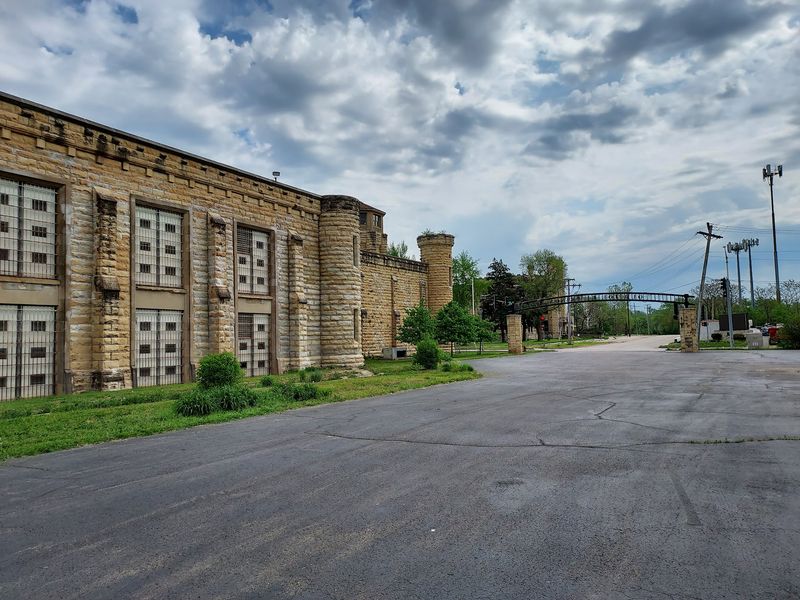
Long before Hollywood showed up, Joliet was one of the busiest prisons in the country. It opened in 1858, when Illinois needed a bigger place to hold prisoners, and it stayed in use for almost 150 years until closing in 2002.
Some well-known names passed through. Nathan Leopold and Richard Loeb, whose 1924 crime shocked Chicago, served time here. Their story became one of the most talked-about cases of the 1900s, and it connects this prison to a major moment in American legal history.
Yet most inmates were ordinary people, not headline makers. Farmers, factory workers, and young men who made bad choices filled the cells. Women were held here too in the early years before getting their own separate facility nearby.
Daily life followed strict rules. Prisoners worked long hours, often quarrying limestone or making goods in prison shops. Silence was enforced at certain times, and punishments for breaking rules could be harsh by today’s standards.
The signs around the grounds dig into these details. They explain changes in how prisons were run, from older ideas about punishment to later efforts at reform. Reading them helps you see Joliet as part of a bigger story about how America has treated people who break the law.
Walking through the dining hall makes that story personal. Long tables once seated hundreds of men at a time, all eating the same food under watchful eyes. Imagine the clatter of trays, the guards pacing, and the strict timing of every meal.
After closing, the property sat empty and suffered from vandalism, theft, and fires. Local groups and the city stepped in to save what was left. Today, ongoing restoration is slowly opening more buildings to the public, and each one adds another chapter.
Self-Guided Wandering or a Guide by Your Side
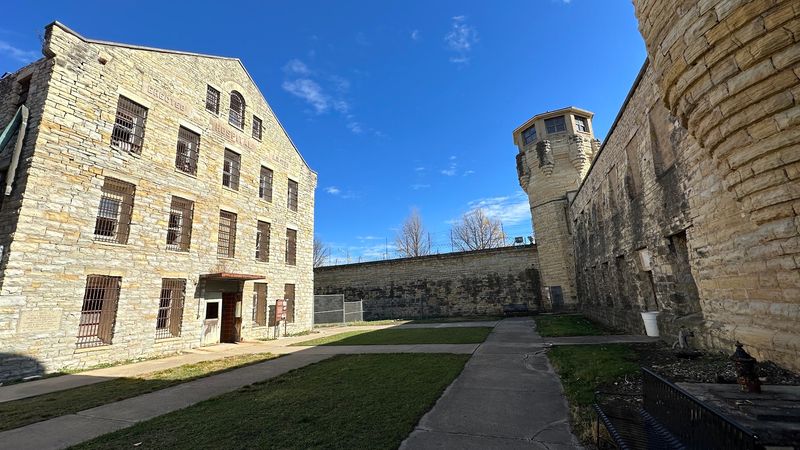
Two kinds of explorers visit Old Joliet. Some want a storyteller leading the way, while others prefer roaming with a map and their own curiosity. Luckily, the prison welcomes both.
Self-guided visits give you freedom. After paying the entry fee and hearing a quick rundown of the rules, you get a map with a suggested route. It can take a few minutes to get your bearings, but once you do, the path flows nicely from building to building.
Each stop has a detailed sign explaining what happened there. You might learn about a hospital wing, a workshop, or a solitary block. Read at your own speed, linger where you want, and skip what does not grab you.
Friendly staff roam the grounds and pop up to answer questions. They know a lot, so ask away. Why are some buildings burned? Where did the guards sleep? They will usually have a story ready.
Guided tours offer something different. A guide adds context, little-known facts, and personal tales that signs cannot fit. If you love history, this option pulls everything together, though guided tours are not available every day, so check before you go.
Plan on about two hours for a relaxed visit. History lovers who read every sign can easily spend two and a half or more. Wear comfortable shoes, since the grounds are large and some paths are uneven.
Teens tend to enjoy this place a lot. The mix of spooky ruins, real cells, and movie connections keeps them interested longer than a typical museum. Younger kids may need closer watching around damaged areas.
Restrooms are available, and a gift shop sells souvenirs, cold drinks, and small snacks. Grab a bottle of water before setting out, especially on hot summer afternoons.
Hours, Events, and Smart Timing for Your Visit
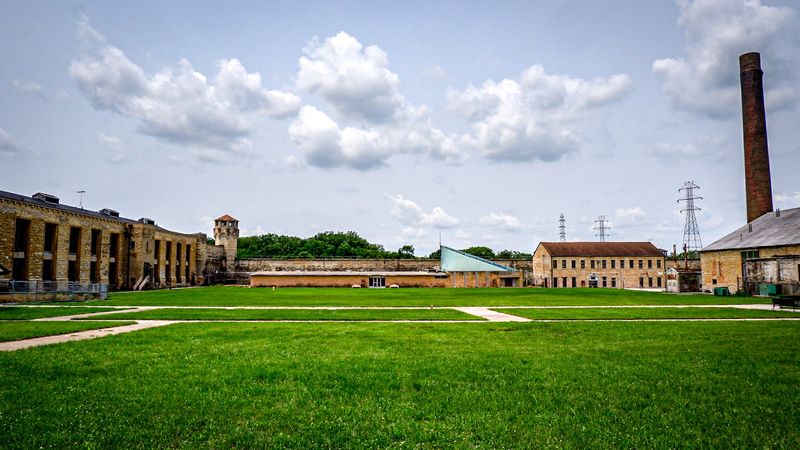
Doors open at 10 AM and the gates close at 4 PM, seven days a week. That schedule makes it easy to fit a visit into a day trip from Chicago, which sits about an hour away depending on traffic.
Arriving early pays off. Mornings are calmer, the light is softer for photos, and you get more time before closing. If you show up after 2 PM, expect to hurry through some areas.
Weekdays and Sundays often bring smaller crowds. Fewer people means easier photos inside cells and more quiet moments in the spookier buildings. Saturdays can be busier, especially in warm months.
Special events turn the prison into something unexpected. Cars Behind Bars fills the yards with classic cars and motorcycles while visitors explore the buildings. Disc golf tournaments wind through the grounds, and the Joliet Slammers have even played baseball inside the walls on a small field where balls fly out constantly.
Events are fun but bring trade-offs. Parking gets tight, and some areas may be crowded. If seeing every cell is your main goal, a regular day works better, then come back for an event another time.
Fall is prime season for haunted tours and themed nights. Those dates tend to sell out, so buy tickets ahead. Summer days can get hot on open pavement, so pack sunscreen and a hat.
Restoration keeps moving forward. Areas that were closed a few years ago are now open, and the list grows over time. Repeat visitors often notice something new on each trip.
Treat the property gently. Years of graffiti, theft, and damage nearly destroyed parts of it. Stay on marked paths, leave everything where you find it, and help keep this piece of Illinois history standing for the next curious explorer.
Share this story