At the southernmost tip of Illinois, where the Mississippi and Ohio rivers meet, Cairo holds the remains of a much bigger American dream. Once a bustling transportation hub filled with steamboats, railroads, and ambitious plans for growth, this historic river town seemed destined for greatness.
Instead, economic decline and changing circumstances left behind quiet streets, striking old buildings, and reminders of a once-thriving community. Its towering levees and surviving architecture still offer glimpses of the city Cairo hoped to become. For travelers fascinated by overlooked history, this unusual corner of Illinois reveals a story of ambition, prosperity, and a future that never quite arrived.
Where the Ohio Meets the Mississippi
Stand at the southern edge of Cairo and you are looking at one of the biggest water meetings in North America. The Ohio River rolls in from the east, the Mississippi slides down from the north, and they join right at the point of land below town.
On many days the two rivers do not blend right away. The Ohio often looks darker and greener, while the Mississippi carries a muddy, tan color. For a stretch, you can sometimes see a faint line where the waters run side by side before mixing.
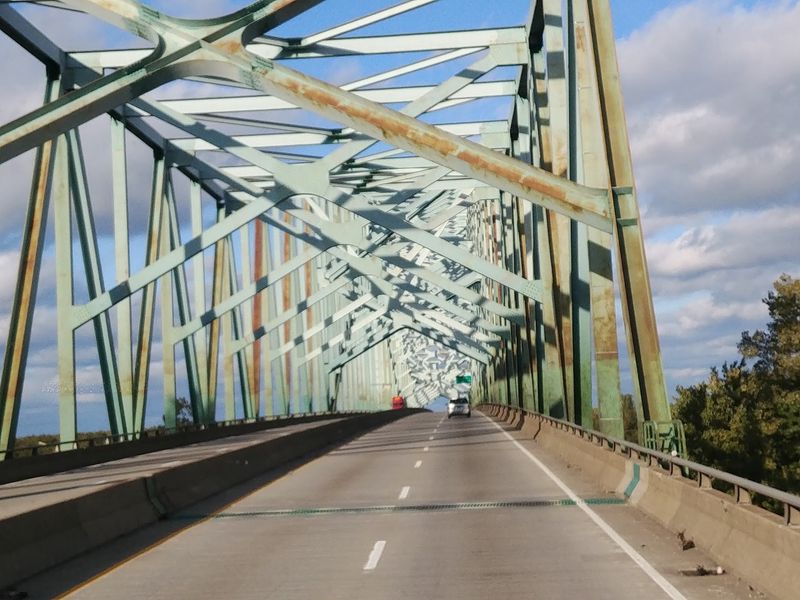
The best spot to see this is Fort Defiance Park, at the far tip of the peninsula. A short drive south from downtown takes you there, passing under the highway bridges that cross into Kentucky and Missouri. From the point, you can see three states at once, which is a fun thing to tell friends back home.
Geography explains almost everything about Cairo. Early planners saw this point and imagined a huge trading city, since boats from Pittsburgh, St. Louis, and New Orleans would all pass by. On paper, the location looked unbeatable.
The same rivers that brought hope also brought danger. Floods have pushed against this land for as long as people have lived here, which is why the town sits behind walls of earth and concrete. The low ground makes Cairo the lowest point in all of Illinois.
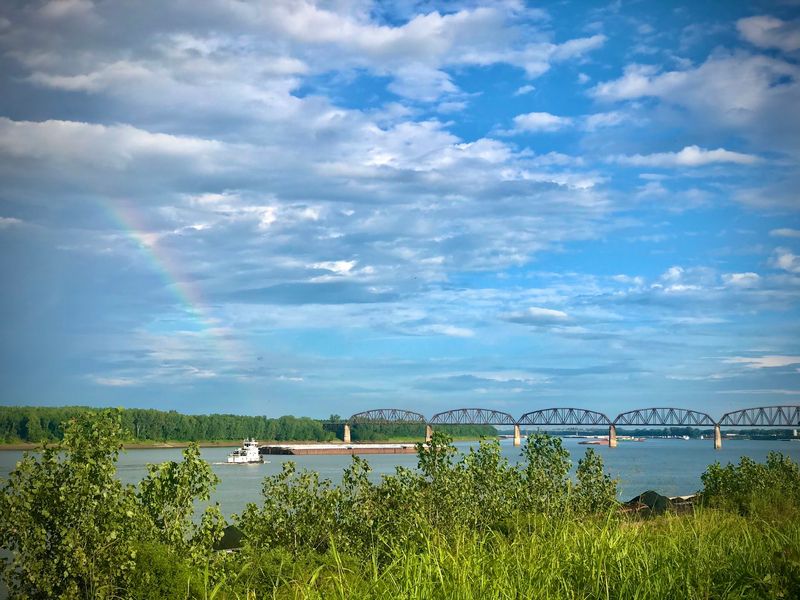
Bring binoculars if you have them. Long barges pushed by towboats move slowly through the confluence, sometimes stacked several barges wide.
Watching one make the turn around the point is a lesson in how much cargo still travels these waters, even if Cairo itself no longer takes center stage.
A Town Wrapped in Levees
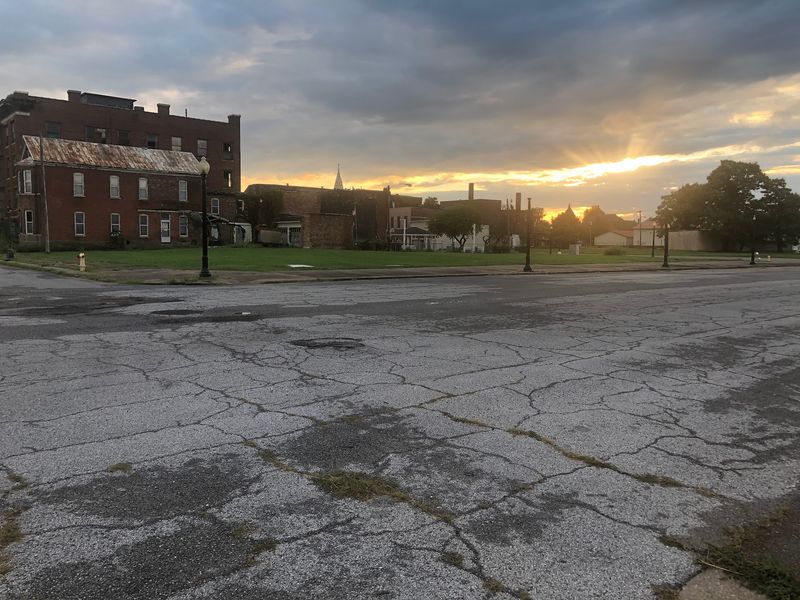
Few towns in America live inside a ring of walls, but Cairo does. It is the only city in Illinois completely surrounded by levees, and once you notice them, you cannot stop seeing them.
Drive into town and the road climbs up and over a grassy ridge before dropping back down to street level. That ridge is the levee. On the Ohio River side, sections of concrete floodwall rise near the old business district, with heavy gates that can be closed when the water climbs.
Why so much protection? Cairo sits on a low, flat point between two rivers that both flood. When heavy rain or melting snow upstream swells the water, the rivers can rise higher than the streets themselves. Without the levees, much of the town would be underwater.
Big floods have tested this system more than once. In 2011, rising water put so much pressure on the area that the Army Corps of Engineers blew open a levee across the Mississippi in Missouri to ease the strain. That event made national news and reminded everyone how close the danger can get.
For visitors, the levees are more than flood barriers. Walking or standing on top of one gives you a raised view over rooftops on one side and wide floodplain on the other. The contrast is striking: neat streets below, a sea of trees and water beyond.
Pay attention to the floodgates when you pass them. Their thick steel and tracks show just how seriously the town treats high water. Respect any closed areas, though, especially during flood season, since levees are working structures and crews may be inspecting them.
Mansions From Cairo’s Steamboat Glory Days
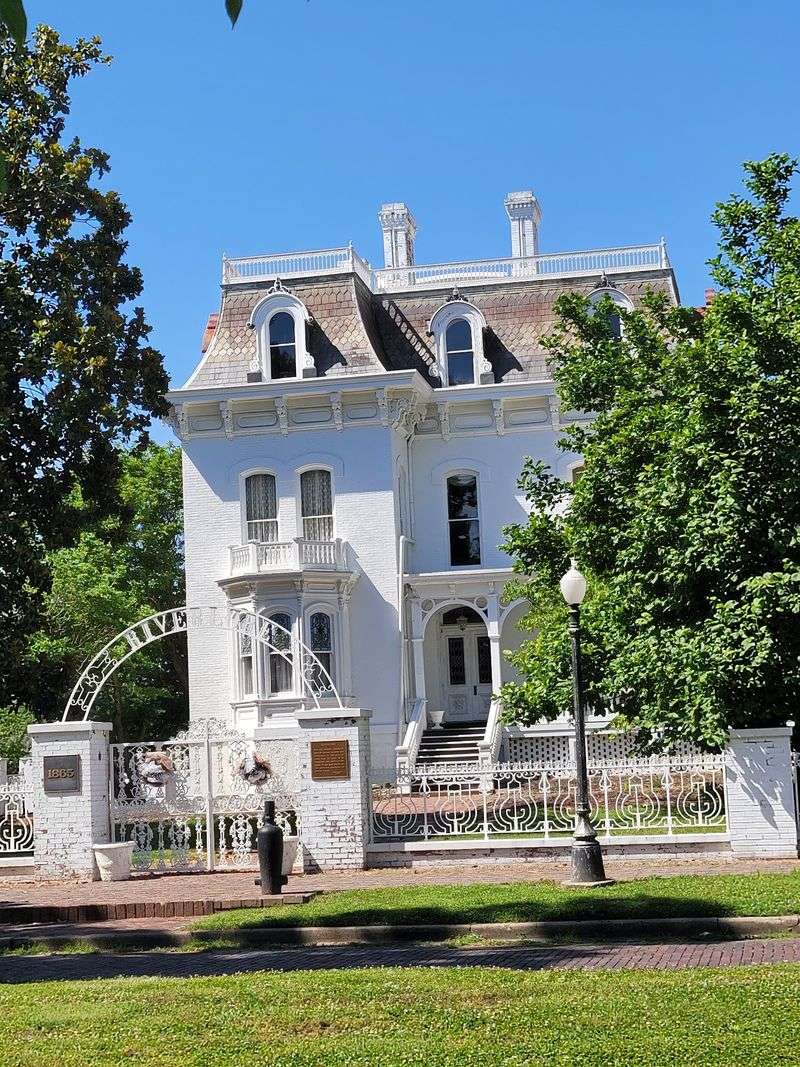
Picture a river captain or a wealthy merchant in the 1860s, money flowing in from cotton, grain, and shipping. Many of them built their dream homes right here, and some of those houses still stand.
The star is Magnolia Manor, a large red brick house built around 1869 for merchant Charles Galigher. Its Italianate style shows off tall windows, decorative trim, and roomy interiors meant to impress guests.
The home is known for a visit from President Ulysses S. Grant, who had strong ties to Cairo from his Civil War days. Inside, rooms are filled with period furniture and objects that show how comfortable life was for Cairo’s upper class.
Ceilings soar, wood details shine, and the layout makes it easy to imagine fancy dinners and long talks about river trade. Check ahead for tour hours, since they can be limited.
Nearby streets hold more grand homes, part of what locals sometimes call Millionaire’s Row along Washington Avenue. Some are beautifully kept, while others show their age with peeling paint and quiet porches. Both kinds tell the story.
The Cairo Public Library is another treasure from this era. Its building houses old art, a historic clock, and decorative touches that feel surprising for a small town today. It was built when leaders believed Cairo deserved fine public spaces to match its future.
Walking this part of town is a good way to understand how rich Cairo once was. Look up at rooflines, carved brackets, and fancy chimneys. These were not modest homes. They were statements from people who fully expected their city to rival St. Louis or Chicago one day.
Commercial Avenue’s Quiet Brick Storefronts
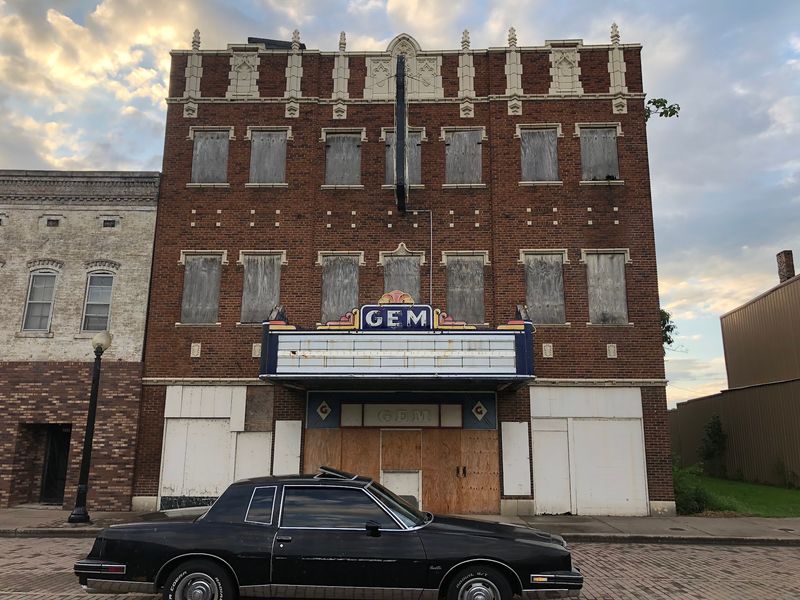
Silence is the first thing you notice on Commercial Avenue. The street is wide enough for heavy traffic, yet on most days only a few cars roll past rows of old brick buildings.
Back in its prime, this was the busy heart of Cairo. Shops, banks, hotels, and theaters lined the avenue, and the sidewalks would have been crowded with shoppers, sailors, and railroad workers. The buildings were made to last, with tall front windows, cast iron details, and decorative tops.
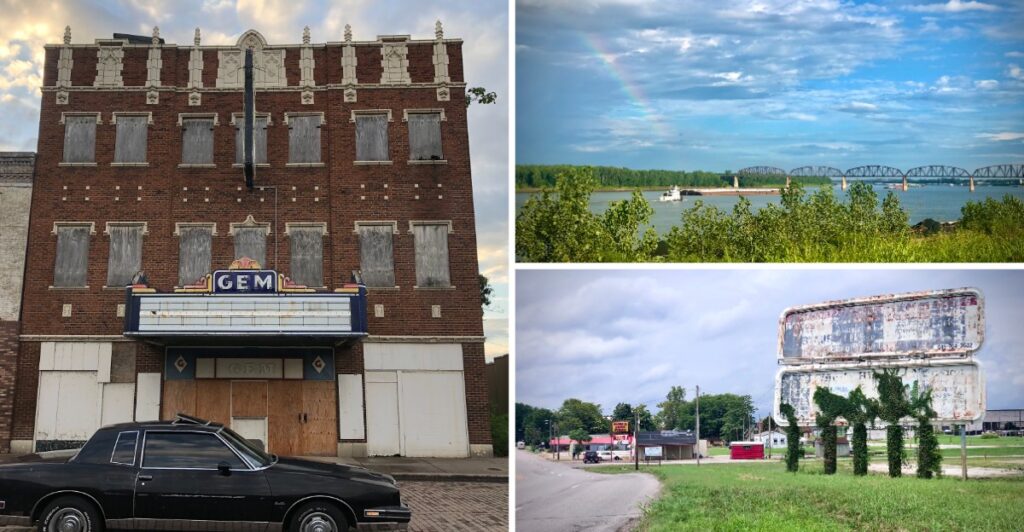
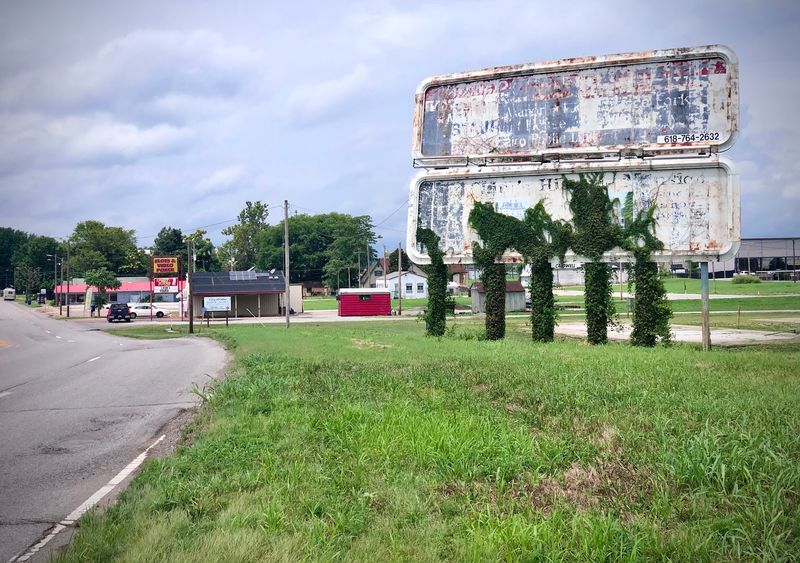
Today many storefronts are empty. Some have boarded windows, and a few have partly collapsed. It can be surprising, and even a little sad, to see so much fine architecture standing unused.
Still, this street is a favorite for photographers and history fans. The faded painted signs on brick walls, called ghost signs, hint at businesses long gone. Look for old names, arches, and dates set into the tops of buildings.
The Gem Theatre is one landmark worth spotting. Its marquee has become a symbol of the town, and local efforts have worked to keep it from fading away.
A few practical pointers help here. Stay on public sidewalks and do not enter empty buildings, since some are unsafe. Keep your camera ready but be respectful, because people still live and work in Cairo, and it is their home, not a movie set.
Walk slowly from one end to the other. You will spot details you would miss from a car, like a tile entryway, a rusted fire escape, or a tiny tree growing from a rooftop. The avenue reads like an open-air museum about rise and decline.
Why Cairo, Illinois Never Became a Giant
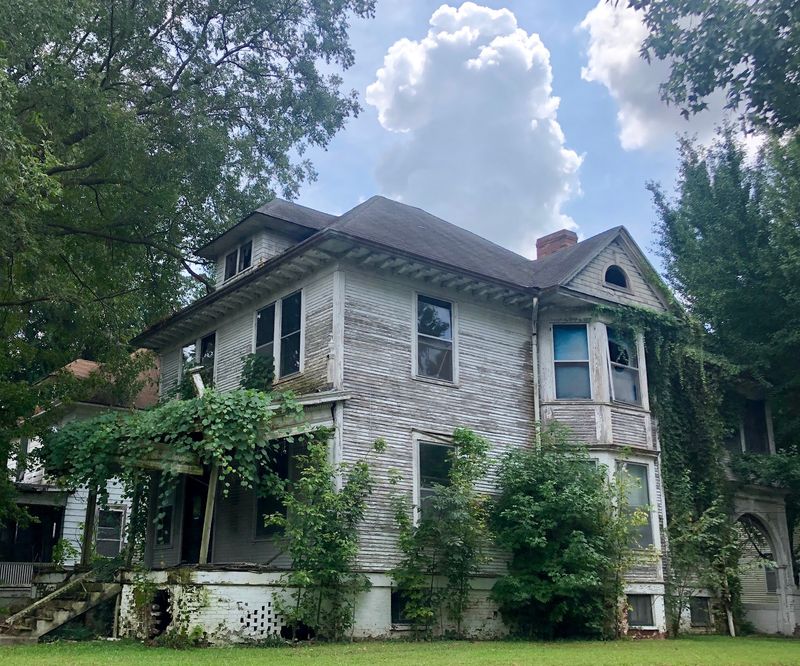
Mapmakers in the 1800s had big plans for this spot. With two major rivers and a railroad link, Cairo looked set to become a powerhouse city of the Midwest.
The Illinois Central Railroad reached town in the 1850s, connecting it to Chicago. During the Civil War, Cairo turned into a key Union base. General Ulysses S. Grant was stationed here, and soldiers, supplies, and gunboats poured through on their way south. The population grew fast, and so did hopes.
So what went wrong? Several things at once. Railroads built bridges across the rivers, so trains no longer had to stop and unload in Cairo.
Steamboat traffic, the town’s lifeblood, faded as rail and later trucks took over. The town’s low, flood-prone land also scared off some big investors.
Hard social history played a part too. In the 1960s and 1970s, Cairo saw intense racial conflict, protests, and boycotts during the civil rights era. Many businesses closed and families moved away. The population dropped from around 15,000 at its peak to only a small fraction of that today.
Learning this history makes a visit far more meaningful. Those empty buildings are not random. They are the result of choices, conflicts, and changing technology over more than a century.
Some historians see Cairo as a lesson in how fragile success can be. A perfect location on a map does not guarantee a bright future. Transportation, economics, and how people treat one another all matter just as much.
Before you go, read a little about the Civil War camp and the civil rights struggle here. Those stories will turn quiet corners into scenes you can picture.
Spending a Day Exploring the Peninsula
Good news for planners: Cairo is small enough to see in one day without rushing. A simple loop can take you from grand homes to river views to the old downtown.
Start in the morning near Washington Avenue. Light hits the mansion fronts nicely early on, and the streets are calm. If Magnolia Manor is open, tour it first, then stroll past nearby homes and the public library.
Next, head to Commercial Avenue for a walking stretch. Give yourself about an hour to look at storefronts, ghost signs, and the Gem Theatre marquee. Comfortable shoes are a must since sidewalks can be cracked in spots.
Around midday, drive south to Fort Defiance Park. Pack a lunch, because food choices in town are very limited. Eating by the confluence while barges drift past is a great break.
In the afternoon, stop by the levees and floodwall for a raised view of town. Then consider a short side trip. Horseshoe Lake State Fish and Wildlife Area lies a few miles north, with cypress trees standing in the water and plenty of birds.
Shawnee National Forest is also within reach if you want hills and trails. A few extra pointers make the trip smoother. Fill up on gas before arriving, since services are sparse. Carry water and snacks. Phone signals usually work, but downloading a map ahead of time is a smart backup.
Finish your day back at the river as the sun drops low. The water often glows orange and the bridges turn into dark outlines against the sky, a fitting end before the road north.
The Southernmost Surprise in the Prairie State
Most people think of Illinois as cornfields and the Chicago skyline. Cairo flips that picture. It sits farther south than Richmond, Virginia, and has a warmer, more Southern feel than almost anywhere else in the state.
Plants show it first. Magnolias bloom in yards, cypress trees rise from nearby swamps, and summers turn thick and humid. Some locals have accents that sound closer to Kentucky or Tennessee than to Springfield.
This mix of North and South gives Cairo a personality all its own. It was a Union stronghold during the Civil War, yet it shares a lot of culture with the Deep South. That blend shows up in history, food traditions, and the slower pace of daily life.
Travelers who visit come away with a very different idea of what Illinois can be. Instead of new shopping centers, you get century-old brick, sweeping river views, and real stories of ambition and struggle.
Cairo is also a place that still matters. People here keep working on preservation projects, community events, and efforts to bring new life to old buildings. A visit, a meal at a local spot, or a purchase from a small business helps in a small but real way.
Timing matters too. Spring and fall bring milder weather, blooming trees, and colorful leaves. Summer can be very hot, and flood season sometimes limits riverside access.
Go with curiosity and patience. Read the plaques, notice the rooftops, and watch the rivers. Cairo rewards travelers who look closely, and it offers a chapter of American history you simply will not find printed on a postcard.
Share this story