A football announcer’s voice and an archaeological site might seem like unlikely neighbors. In Vernon, they belong to the same afternoon.
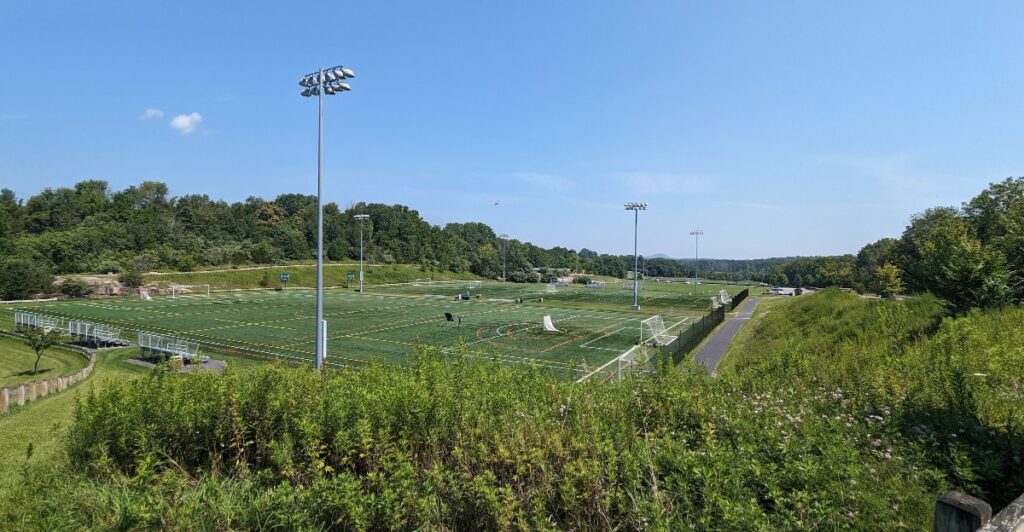
Maple Grange Park has the familiar ingredients of a family outing, including sports fields, playgrounds, picnic tables, and paths for stretching your legs. Beside it, the protected Black Creek Site holds evidence of Indigenous life reaching back thousands of years.
That changes how you look at an ordinary walk. The open ground becomes more than scenery, and the creek becomes more than a landmark along the way.
You can arrive thinking about a child’s soccer game and leave wondering who used this valley long before anyone painted a sideline. The appeal is that both experiences fit together without much fuss.
There’s room for playtime, a packed lunch, and a closer look at a part of New Jersey’s history that deserves more attention than a passing glance.
Maple Grange Park Has a Story Beyond Its Playing Fields
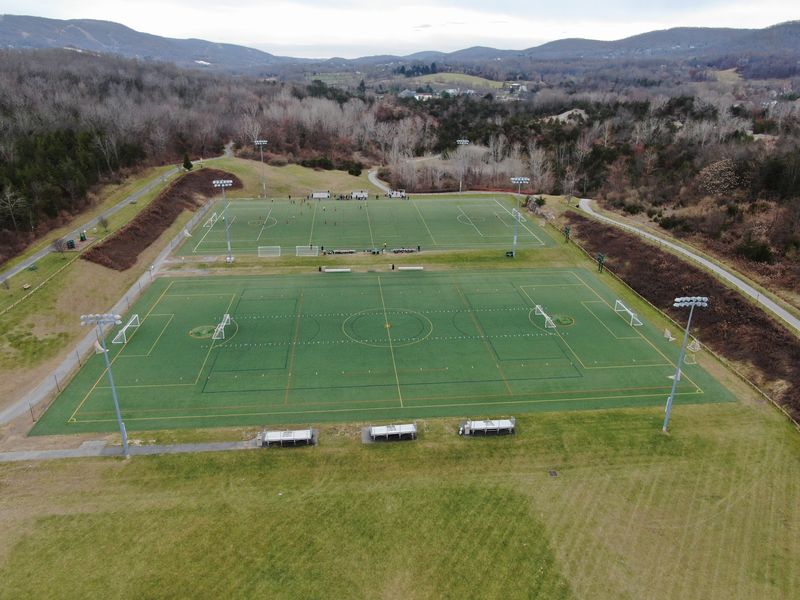
Three multipurpose turf fields give you a pretty clear first impression of what happens here. This is a working community park, the kind of place where practice schedules matter and someone in the family probably has cleats in the car.
Located on Maple Grange Road in Vernon Township, the recreation grounds also include a walking and biking path and the Great Lawn, a natural grass area for less organized afternoons. You don’t need a team assignment to enjoy that arrangement.
A walk can be the whole outing, or it can fill the time between dropping someone off and picking them up. Bring a book, leave room for lunch, or let the afternoon develop at the speed of whoever is least interested in sticking to a schedule.
The historical surprise lies beside those familiar park activities. Vernon identifies the Black Creek Site Walking Trail as adjacent to Maple Grange Park, making the recreation grounds and archaeological landscape neighboring destinations rather than interchangeable names for one attraction.
That distinction helps you plan a better visit. Walking around the playing fields gives you the community park experience; making time for Black Creek adds the historical one.
You shouldn’t expect every stretch of the recreation path to explain Lenape life, or every open patch of grass to announce its archaeological significance. Instead, think of the park as an approachable starting point.
It lets a history outing share space with ordinary family priorities, including exercise and the deeply serious business of keeping children entertained. There’s something appealing about learning local history in that setting.
It doesn’t require everyone to arrive already fascinated by archaeology. Sometimes curiosity begins with a simple question about what’s next door, and this particular neighbor has a substantial answer.
The Black Creek Site Preserves Thousands of Years of Indigenous History
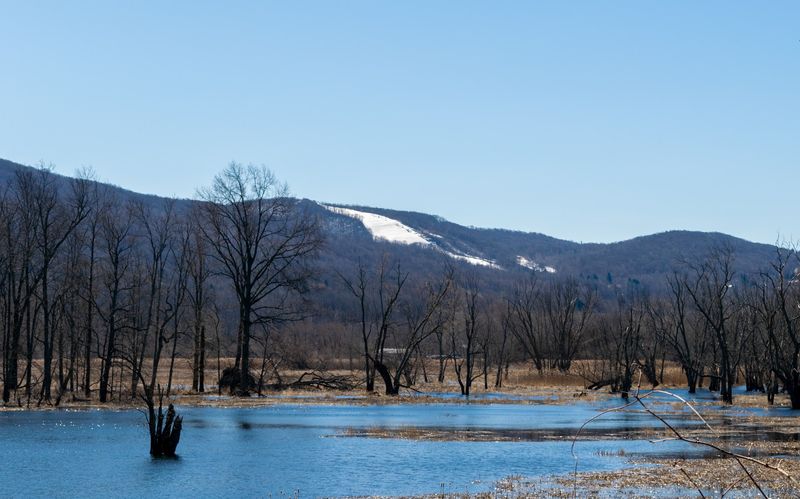
Nearly 10,000 years is a difficult span to picture while standing beside a field. The Black Creek Site’s documented period of significance extends from approximately 8000 BC to 1740, across about 40 acres of fields, partial woodland, and a creek.
Archaeological evidence points to a place used for obtaining food and other resources, settlement, and social activity. Those dates deserve a moment rather than a quick nod.
They reach far beyond colonial houses, Revolutionary War landmarks, and the other familiar starting points of many New Jersey history outings. They also describe a long archaeological record, not proof that one unchanged community occupied exactly the same spot continuously for every year in that range.
The documented Lenni Lenape connection is an important part of that record. The broader landscape preserves evidence from multiple periods of Indigenous life, giving the site a depth that a single date or label cannot fully explain.
For a visitor, the most useful approach is to consider the ground as a place where people made practical decisions. Where could they find water?
What resources were available nearby? How did the surrounding terrain affect movement and daily work?
Those questions bring the timescale closer to human experience without requiring you to invent a village scene. The creek offers a visible feature to consider as you learn, while the fields and woodland help you understand the site as a landscape rather than an isolated collection of objects.
Don’t arrive expecting standing buildings to make the past obvious. Much of an archaeological site’s importance comes from evidence that requires careful study and explanation.
Here, an apparently modest piece of open land holds a history far larger than its appearance suggests. Once that registers, the view becomes more interesting without needing to become more dramatic.
Archaeological Finds Reveal the Valley’s Lenape Past
A shaped stone can tell a story that an empty field cannot tell on its own. Black Creek has yielded more than 6,000 artifacts representing roughly 10,000 years of occupation, giving researchers a substantial body of evidence to examine.
The site came to the New Jersey Department of Transportation’s attention in the early 1990s during work associated with replacing the Maple Grange Road bridge. It’s a wonderfully specific reminder that major historical discoveries can emerge from thoroughly practical projects.
Someone plans a bridge, and the ground complicates the conversation. Subsequent work has brought archaeology into the community as well.
A two-day study led by archaeologist Dr. Cara Blume involved more than 50 township and county residents, with archaeologists John Kraft and Glenn Wershing participating. The work examined a trench created during earlier efforts to build ball fields, and the historical society documented the discovery of a projectile point.
That last detail is worth keeping precise. “Projectile point” is more informative than casually calling every pointed stone an arrowhead. An object’s form, age, and archaeological context help researchers understand how it may have been used.
The location matters, too. Archaeology depends on relationships between objects, soil, and other evidence, which is why a find loses information when someone pockets it as a souvenir.
For visitors, this is a place to follow the designated route and let interpretation do the explaining. An ordinary walk is not an artifact hunt, and the documented excavations should not create an expectation that discoveries are laid out beside the path.
The pleasure comes from knowing that seemingly small objects have helped establish a much larger history. You can look across the ground and understand that its significance rests on tangible evidence, carefully recovered, rather than a good story attached to a pleasant view.
A Community Effort Helped Save This Historic Ground
The protected landscape beside today’s park was never a guaranteed outcome. Black Creek’s preservation involved sustained work by Indigenous advocates, local residents, historians, and preservation organizations.
In March 2005, New Jersey announced the preservation of a 134-acre Maple Grange parcel containing the archaeological site. The state specifically credited the Nanticoke Lenni Lenape, the National Trust for Historic Preservation, Preservation New Jersey, and the Vernon Civic Association with helping save the property from development.
The approximately 40-acre archaeological site and the larger parcel acquired for preservation describe different boundaries. What mattered was protecting both significant ground and a surrounding landscape in which its history could be understood.
The Vernon Township Historical Society also worked with the Nanticoke Lenni-Lenape on preservation, interpretation, and recognition through the New Jersey and National Registers of Historic Places. This gives the place a second history alongside its ancient one.
There is the story preserved in the soil, and there is the more recent story of people insisting that the soil deserved protection. Both belong in an account of what visitors encounter today.
It also keeps the Lenape connection from being treated solely as something remote. Indigenous people helped shape the decisions that protected this site, participating in the modern effort to preserve and explain its significance.
A walking route through historic ground can look pleasantly uncomplicated once the difficult work is over. The visitor sees a path; behind it are research, advocacy, legal questions, and years of attention.
Remembering that doesn’t make the outing heavy. It gives the quiet setting a little more substance.
The ability to walk here and learn is itself part of what those preservation efforts achieved.
The Neighboring Trail Turns a Walk Into an Outdoor History Lesson
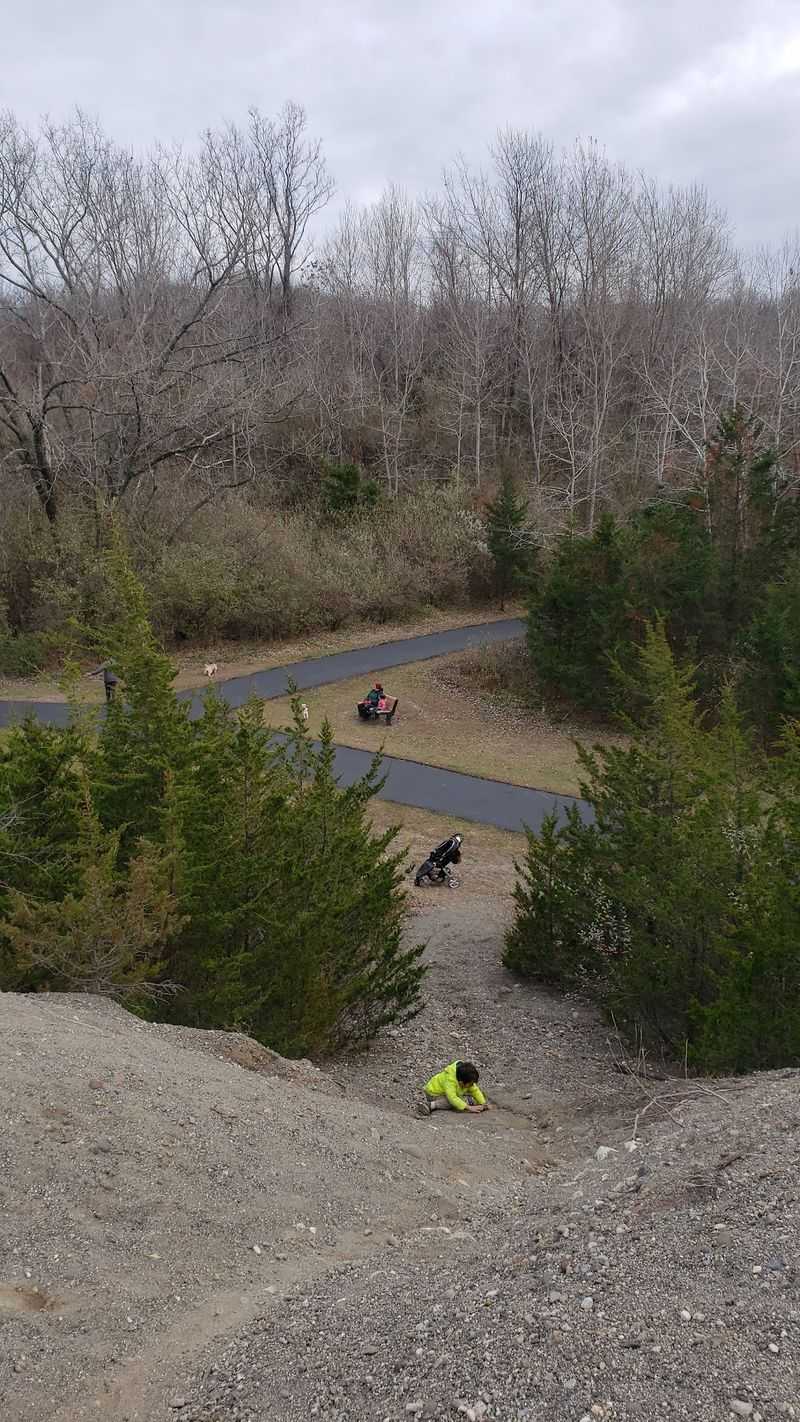
Slow down enough to read, and the outing takes on a different pace. The Black Creek Site has a hiking trail and an outdoor classroom, while a 2018 preservation grant helped fund six wayside interpretive signs.
An earlier grant supported an interpretive plan for explaining the site’s history. That is a useful format for anyone who enjoys learning in small portions.
You can pause, absorb a piece of information, and then look back at the landscape with something new to consider. A trail setting gives a discussion of land and resources an immediate reference point: the ground is right there.
For families, one good question often works better than a running lecture. Ask what people would have needed to live in the valley, or what an archaeologist might learn from a tool.
Then leave space for an answer that isn’t polished. Children don’t need to memorize a chronology to understand that people lived meaningful, complicated lives here long before the modern park existed.
Education has been part of Black Creek’s stewardship for years. Local projects have included school programs and trail work; in one scouting effort, volunteers cleared walking trails and removed invasive vines under the historical society’s direction.
Those efforts connect learning with caring for the place, which makes sense when the landscape itself is part of the evidence. For your own visit, distinguish the archaeological trail from the park’s recreation path and use the posted directions rather than improvising shortcuts.
Wear footwear suited to an outdoor trail, carry water, and allow time for reading stops instead of treating the walk as a timed lap. There’s no need to squeeze every possible historical fact into one afternoon.
A clear understanding of where you are, why the ground matters, and who helped protect it is a satisfying amount to bring home.
Make Time for the Park’s Paths and Playgrounds
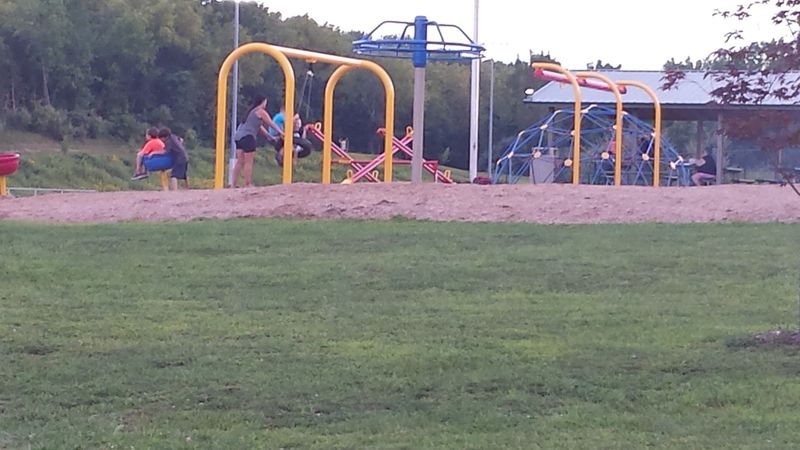
A zip line may win the family vote before archaeology even gets nominated. The park’s two playground areas sit beside the pavilion, with one designed for ages 2–5 and another for ages 5–12.
The older children’s area includes swings, a tire swing, and a zip line. Picnic tables and the covered gathering area make it practical to build a break into the outing.
Restrooms are available daily, while the snack bar operates during peak sporting events. Grilling and open flames are prohibited, so a packed lunch is the straightforward option.
Start with whatever helps your group settle in. For some families, that means playtime first and a walk afterward.
For others, it means exploring the historical trail while everyone still has energy, then returning to the recreation grounds. Neither order needs to become a grand itinerary.
Packing water and something to eat gives you more flexibility than counting on concessions, particularly when your visit isn’t tied to an event. A quieter walk and a busy sports afternoon also offer different experiences, so consider whether you want the game-day activity to be part of your visit.
If reading and conversation are the priority, give them their own time rather than squeezing them into the final minutes before departure. The two neighboring destinations complement each other best when neither feels like an obligation.
A child can enjoy the playground without being tested on dates; an adult can appreciate the history without giving up the simple pleasure of an afternoon outside. After learning about Black Creek, even the return to the park feels slightly different.
The familiar business of snacks, swings, and walking shoes resumes, but the nearby ground now has a name and a history. What first looked like an ordinary park outing has acquired another layer, one that stays with you after the lunch containers are empty.
Share this story