A dairy cow getting milked can hold an audience just as surely as a carnival ride, especially when someone explains what happens between the barn and the breakfast table. At Sussex County Fairgrounds in Augusta, those everyday farm routines become part of the summer fair’s main attraction.
Livestock enter the show ring, young exhibitors put their handling skills to the test, and horse competitions give spectators a reason to linger along the rail. Nearby, antique tools and rare heritage breeds add depth to the story.
This is the New Jersey State Fair and Sussex County Farm and Horse Show, where agriculture remains central to the experience. You can certainly spend time on the midway, but leave room for the barns, demonstrations, and competitions.
They introduce you to the people and practical skills behind a farming tradition that still has plenty of life in it. And yes, the animals deserve some attention.
A Farm and Horse Show With Deep Sussex County Roots
Long before the fair had its current name, Branchville businessmen held a three-day horse show in September 1919. That early gathering belongs to a history that eventually brought horses, farm exhibits, and a much larger audience together in Augusta.
The Sussex County Farm and Horse Show incorporated as a nonprofit organization in 1940, dedicated its new fairgrounds in 1976, and added the New Jersey State Fair name in 1999. Those milestones explain why the event carries two identities so comfortably.
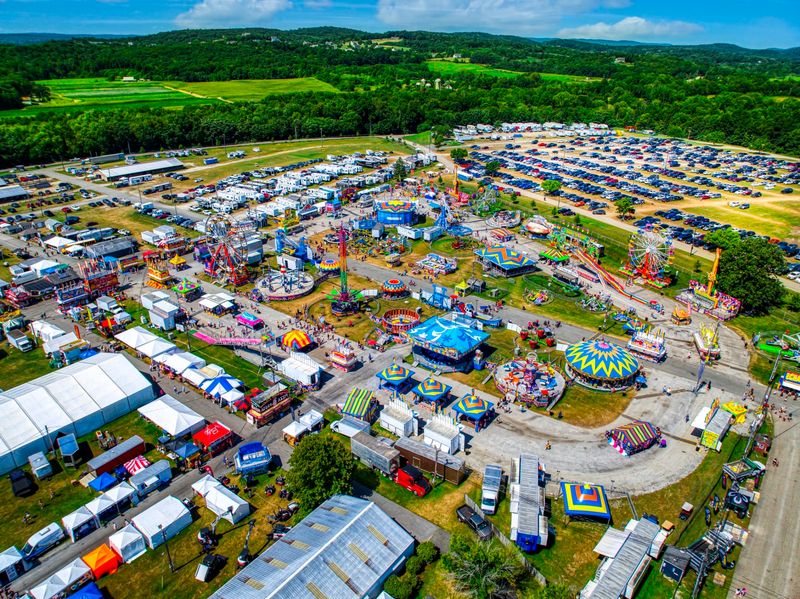
The broader name welcomes visitors from across the state, while the original one keeps its agricultural purpose right up front. The grounds sit at 37 Plains Road in Augusta, and the agricultural area includes a livestock pavilion, animal barns, a milking parlor, and educational exhibits.
These are substantial parts of the property, giving farm activities room to unfold alongside the entertainment. The association’s Agriculture Division develops that area and organizes demonstrations using spaces such as the Snook Agricultural Museum and the heritage breeds exhibit.
For a visitor, the useful takeaway is simple. Give the agricultural program its own share of the day.
A quick lap past the barns between rides barely scratches the surface, particularly when a show or demonstration is about to begin. Think of the fair map as a way to find a few good places to settle in, rather than a checklist to finish.
One stretch of time might belong to a livestock class, another to the horse rings, and another to a conversation about an unfamiliar farm tool. The fairgrounds also host other events, so choosing the annual agricultural fair matters if these are the experiences you want.
A festival on the same property can offer an entirely different afternoon.
Livestock Competitions Put Months of Hard Work in the Spotlight
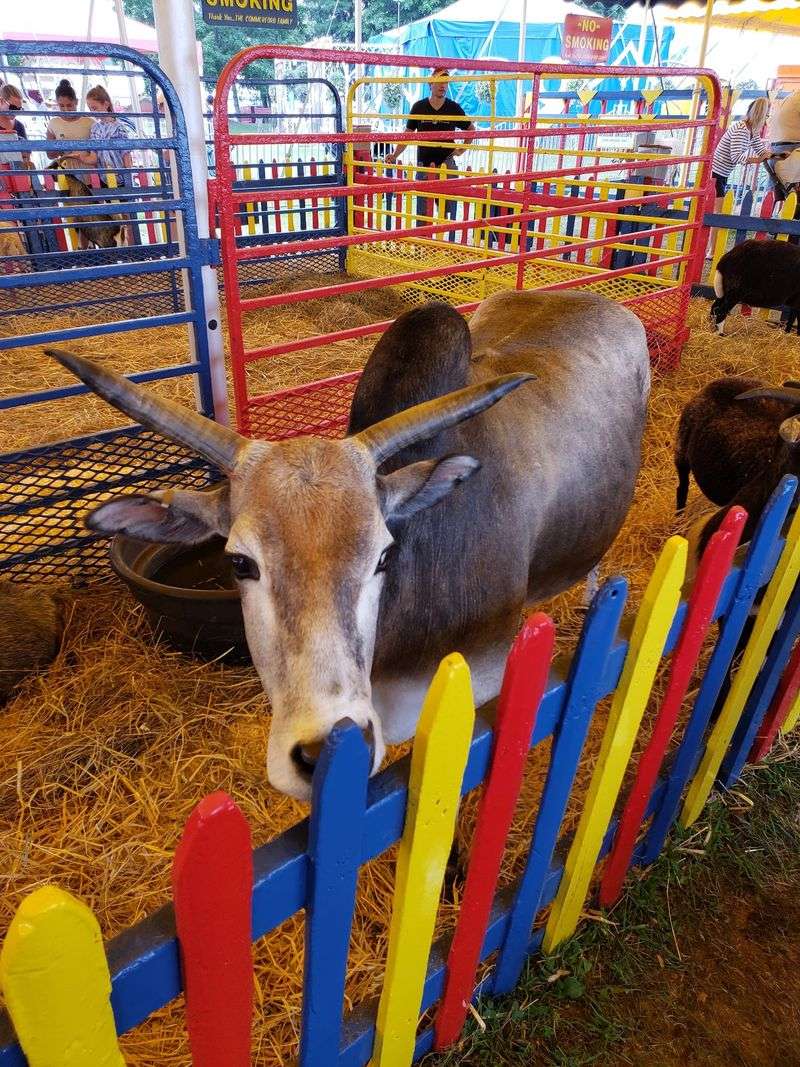
Watch a showmanship class for a few minutes, and the person holding the lead becomes as interesting as the animal. The fair distinguishes between breeding classes, which judge the livestock, and showmanship classes, which assess an exhibitor’s ability to present an animal to its best advantage.
That distinction gives newcomers a useful starting point. Sometimes the focus is the animal itself; sometimes it is the handler’s skill.
Knowing which competition you are watching makes the movements around the ring much easier to follow. Before and after their competitions, animals are displayed in the agricultural area, with the daily lineup reflecting the shows taking place.
The number and mix of animals therefore change with the exhibitors attending. That is worth remembering if your household has one particular favorite.
Choose the relevant show day rather than assuming every species will be equally represented whenever you arrive. Larger livestock occupy open-sided pole barns, while the Small Animal Building features poultry, rabbits, and guinea pigs associated with 4-H projects.
Owners and handlers can answer questions about their animals, although it helps to wait until they have a free moment. A good question goes further than a quick photograph.
Ask what the animal eats, how an exhibitor prepares for a competition, or what makes that particular breed distinctive. Those conversations give the ribbons some context and help children understand the responsibility behind bringing livestock to a fair.
Keep hands outside pens unless a handler specifically invites interaction, and follow the access signs around each area. Once a class starts, stay long enough to see it develop.
The appeal lies in the small adjustments, the handler’s concentration, and the difference between simply leading an animal and presenting it well. You do not need an agricultural background to appreciate the patience involved.
A little attention is enough to turn a passing glance into an absorbing competition.
Young 4-H Members Carry Farming Traditions Forward
For many young exhibitors, fair week gives a project a public audience. Sussex County 4-H members participate in livestock competitions and display their work in the Shotwell 4-H Building, connecting the animal areas with a wider range of interests and skills.
The building showcases exhibits from nearly 60 county clubs and stays open throughout the fair. That makes it an important stop even for visitors who initially came for the horses or the livestock pavilion.
There is more to youth participation here than the few minutes when someone steps into a ring. Animal projects bring learning into especially sharp focus.
Preparing livestock for a public competition involves responsibility, practice, and the ability to work with an animal that has its own ideas about the afternoon. Sussex County’s fair preparation program includes opportunities for members to raise, show, and sell livestock, along with showmanship activities spanning several animal categories.
From the spectator’s side, it is easy to concentrate on who wins. Spend a little longer watching, though, and other accomplishments become visible.
An exhibitor has to pay attention, respond to instructions, and remain composed while being evaluated. A ribbon records a result; the experience also gives a young person practice in handling pressure.
The Shotwell Building adds another dimension, with static exhibits offering participation beyond animal projects. Moving between those displays and the show areas makes the fair feel like a community-wide presentation of what young people have been learning.
Parents visiting with curious children can use that variety to start a conversation about interests of their own. Maybe the attraction is caring for animals.
Maybe it is creating something worth exhibiting. Either way, the agricultural tradition becomes easier to understand when the people carrying it forward are right there.
It has faces, questions, nervous moments, and achievements that matter well beyond fair week.
The Horse Rings Deserve a Place on Your Fair Itinerary
Settle beside a competition ring, and the fair’s pace changes. Instead of moving from booth to booth, you can follow one horse and rider through a performance, then compare it with the next.
The Sussex County Horse Show program includes different styles of competition, making the day’s schedule especially useful for newcomers. The 2026 fair program, for example, included Western Weekend activities, ranch-horse competition, and a later hunter and jumper show sanctioned by US Equestrian.
It also featured an open-breed show combined with 4-H participation. Those examples show the range, although each fair’s lineup needs its own look.
You do not have to understand every class to enjoy watching. Begin with something straightforward: how smoothly a horse responds, how a rider prepares for a turn, or how a pair approaches a fence.
As you follow several entries, the differences become easier to notice. Hunters generally reward a polished performance over a course, while jumper competition places greater emphasis on clearing obstacles within the applicable rules and time.
Equitation shifts attention toward the rider’s performance. Even a basic sense of those distinctions helps the action make more sense.
Pick a class that interests you and allow enough time to watch several competitors. Walking away after one round is a little like leaving a ballgame after the first batter.
The comparison is part of the pleasure. Keep entrances and working areas clear, and give horses and riders space as they move around the grounds.
Horse shows also take place outside the annual fair, with schooling and benefit events appearing on the fairgrounds calendar. That provides another way to enjoy the equestrian side of the property, though the complete fair experience belongs to fair week.
For an afternoon combining livestock, exhibits, and entertainment, the rings offer a particularly satisfying place to pause and let the action come to you.
Milking Demonstrations and Heritage Breeds Bring Farm Life Closer
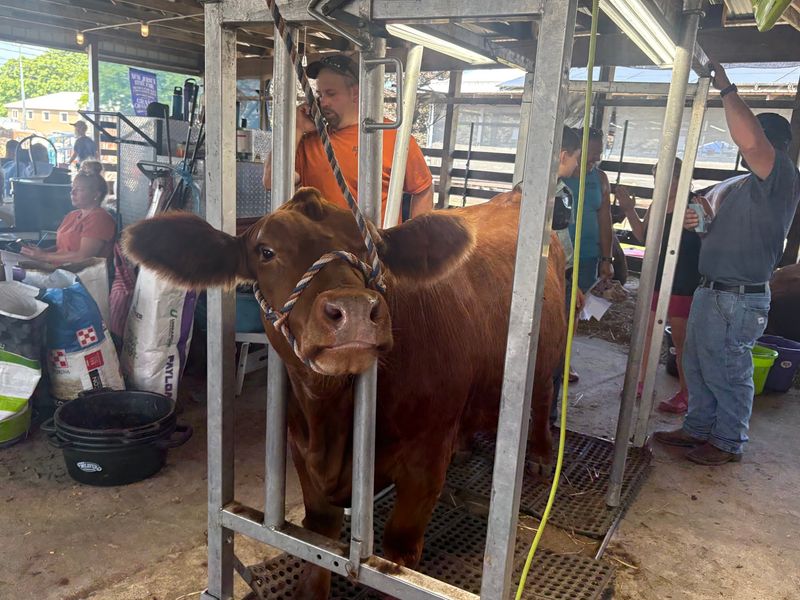
The clock attached to the milking parlor is a small detail with a practical purpose. It tells visitors when the cows will be milked, helping them arrive for the demonstration rather than discover an empty interval between sessions.
Dairy cows from local farms are milked twice daily by a local farm family, with bleacher seating available for spectators. Questions are welcome, and the explanation follows milk’s journey from cow to carton.
This is an especially useful stop for anyone whose experience of dairy farming begins at the supermarket refrigerator. Seeing the process gives familiar food a more concrete origin.
Children can ask questions that adults sometimes skip, and the working demonstration gives those answers something visible to connect with. Allow time to sit through the explanation rather than treating the parlor as a photo stop.
The most interesting part may be a detail you had never thought to ask about. Elsewhere in the agricultural area, the Rare Heritage Breeds Educational Center introduces another side of animal husbandry.
It displays examples of livestock breeds facing the risk of disappearing and explains the conservation work associated with keeping them in existence. The Livestock Conservancy’s efforts form part of that educational story.
There is a surprising idea tucked into that exhibit. An animal can look thoroughly ordinary to a casual visitor while belonging to a breed with an uncertain future.
Reading the information alongside the animals changes what you notice and gives the display a purpose beyond appearance. Together, the parlor and heritage breeds exhibit make a strong pairing.
One explains a farm routine behind an everyday product; the other asks visitors to consider which animals will remain part of farming’s future. Neither requires a classroom lecture to hold your interest.
A real cow, a good explanation, and a question asked at the right moment can do quite a lot.
Antique Farm Equipment Tells the Story Behind Today’s Show Ring
Try shelling corn and grinding it into cornmeal, and an old farm tool becomes much easier to appreciate. The Snook Agricultural Museum offers that kind of hands-on connection during fair week, alongside a collection of agricultural tools dating from around the turn of the twentieth century.
Operated by the Sussex County Agricultural Society since 1983, the museum honors Lafayette farmer and agricultural leader Jack Snook. Its exhibits give visitors a chance to consider the work behind farm products before modern conveniences made many processes less visible.
The demonstration program includes traditional skills such as spinning, weaving, woodcarving, and lace making, with a local wheelwright among the featured participants. A blacksmith also often works at a coal-fired forge on the museum porch during fair week.
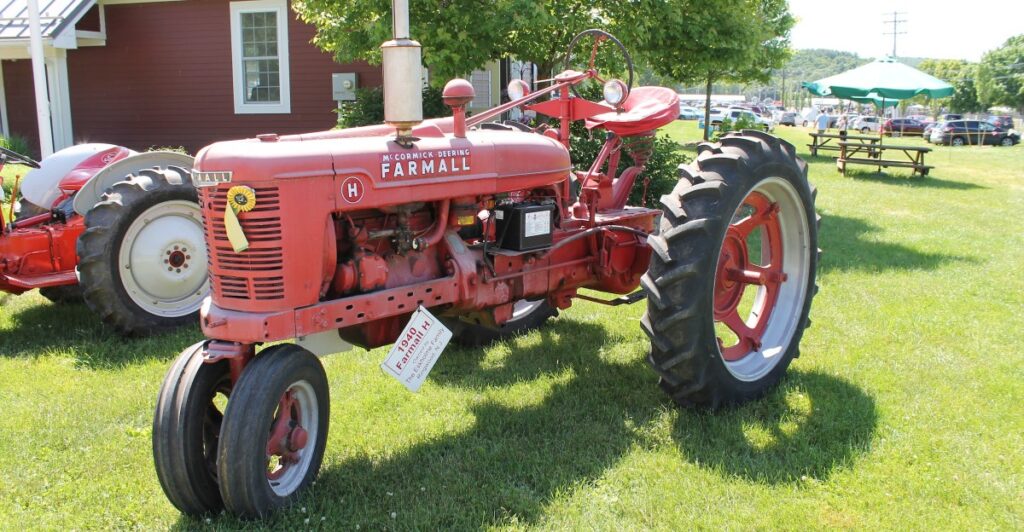
Because demonstrations vary, the day’s activity matters more than arriving with a rigid list of expectations. Beside the museum, the North Jersey Antique Engine Shed adds the machinery side of the story.
Club members discuss and demonstrate the engines on display, and talks are scheduled during the week. This is a good place to ask what a machine did, how it worked, and why someone has taken the trouble to preserve it.
An explanation can turn a puzzling piece of metal into something with a clear job and a place in farm life. The museum and engine shed also give the show-ring experience some perspective.
A livestock competition concentrates attention on animals and their exhibitors. These neighboring displays widen the frame to include tools, power, and the practical skills that helped farms function.
Leave enough time for a demonstration to unfold. The satisfying part is often watching a process become understandable, one movement at a time.
Back in the livestock pavilion, a handler may be preparing for the next class. Here, someone is showing how an earlier generation got its work done.
Both belong to the same long story.
Share this story