A chest beneath one altar holds 84 relics of saints and martyrs, including Saint Patrick. That detail alone made me stop scrolling.
Construction began in 1875, and the cathedral was dedicated in 1893. The bishop behind it refused to build unless the money was already in hand, so the walls rose slowly, stone by red stone.
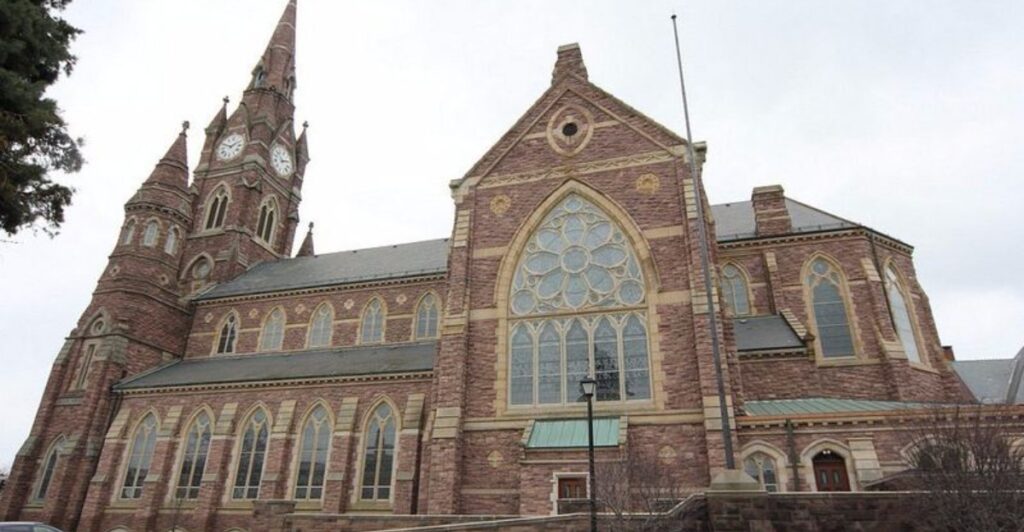
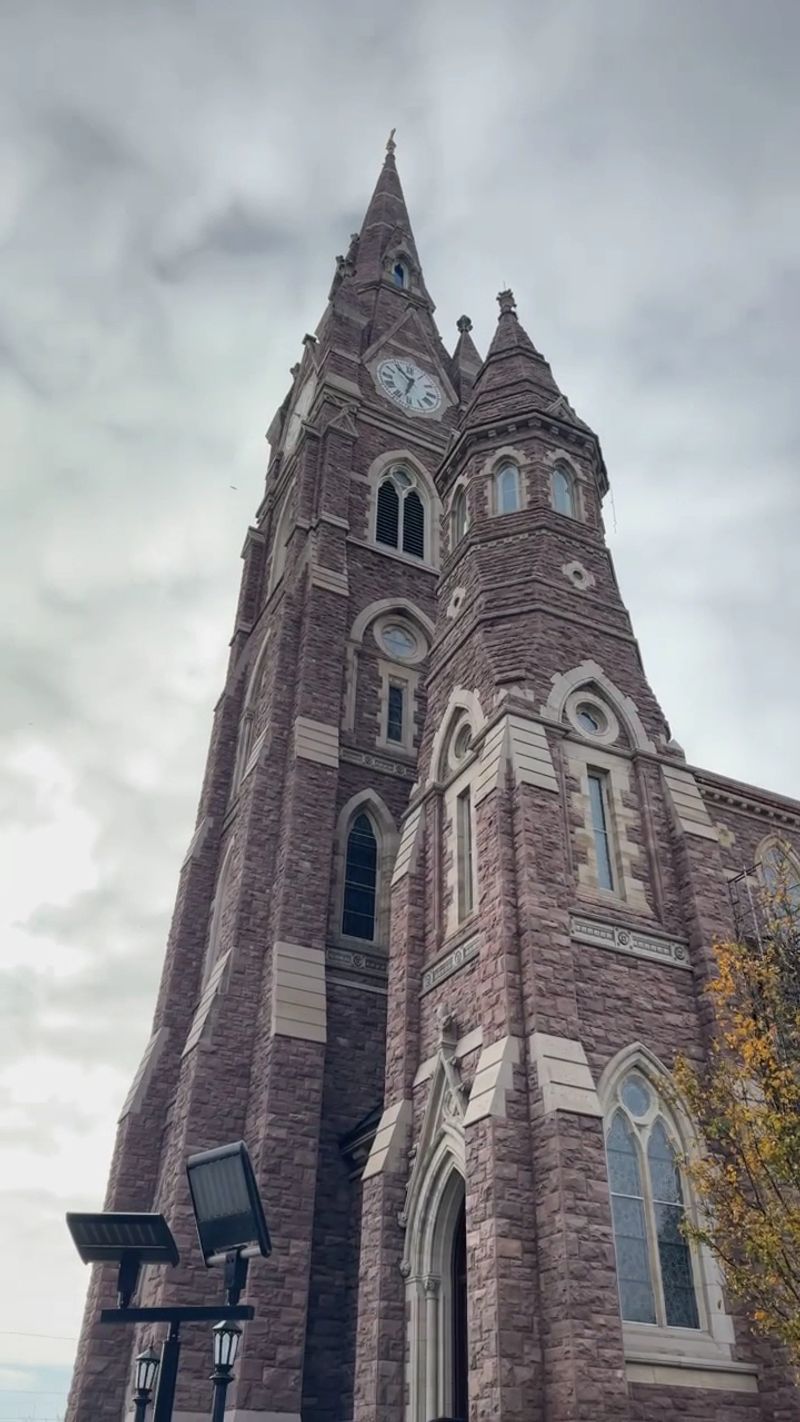
The result towers 265 feet over a Pennsylvania city street. Twelve bells hang up there, weighing 14 tons together. I can’t imagine hearing them for the first time without looking straight up.
I like how this place feels borrowed from an old European town square. Yet it sits in a working American neighborhood and still opens its doors daily. If you love exploring aesthetic places, you should definitely come here!
1. A Bishop Who Refused To Build On Credit Gave Us This Masterpiece
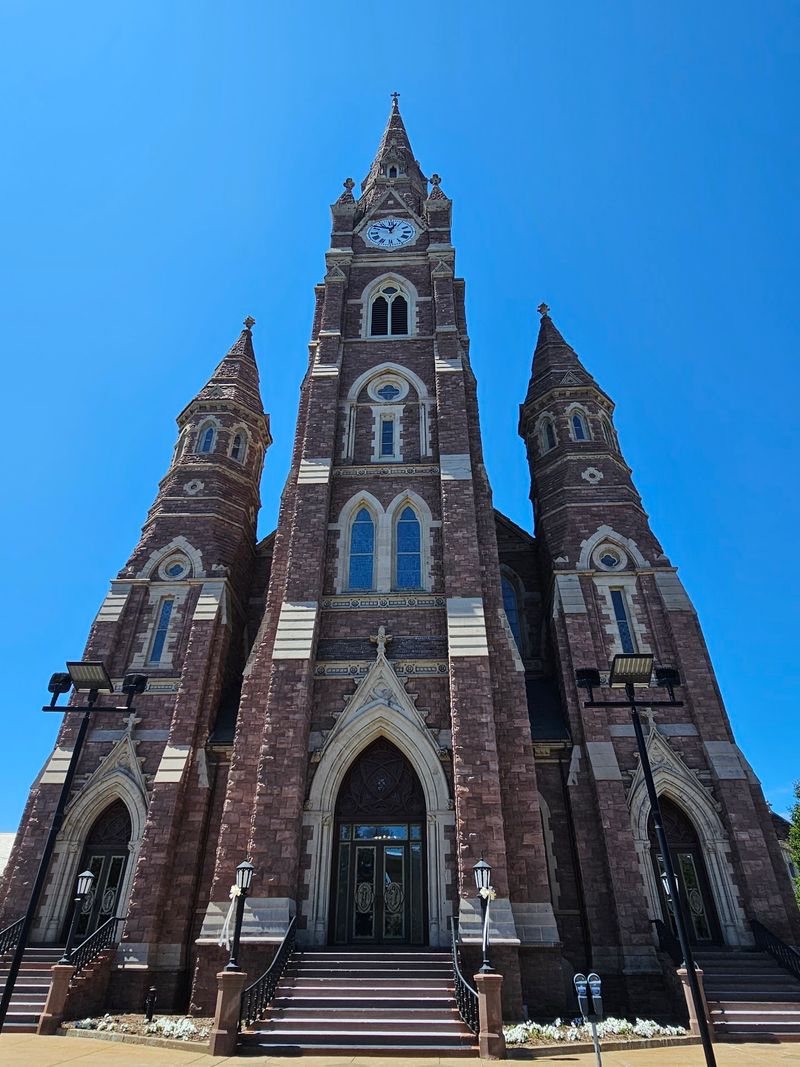
Patience built Saint Peter Cathedral, and plenty of it.
Bishop Tobias Mullen envisioned the project in 1870, then refused to borrow his way to the finish line.
His rule was simple and stubborn.
Construction only moved forward when enough money was already collected.
The cornerstone went down on August 1, 1875.
After that, work crept along whenever the funds allowed, which meant about twenty years of building.
The cathedral was finally dedicated on August 2, 1893.
Formal consecration followed on May 17, 1911, so the full story stretches across four decades.
Architect Patrick Keely drew up the plans in the Gothic Revival style.
He designed many Catholic churches and cathedrals, so he knew how to make stone feel lofty.
Today the building serves as the mother church of the Diocese of Erie.
It also works as a regular city parish, which keeps it lively rather than museum-quiet.
I believe that slow pace is part of the charm.
Nothing here feels rushed, because nothing was.
Think of it as the most impressive savings account in Pennsylvania.
Every stone was paid for before it was placed.
2. Look Up, Way Up, Because That Center Tower Means Business
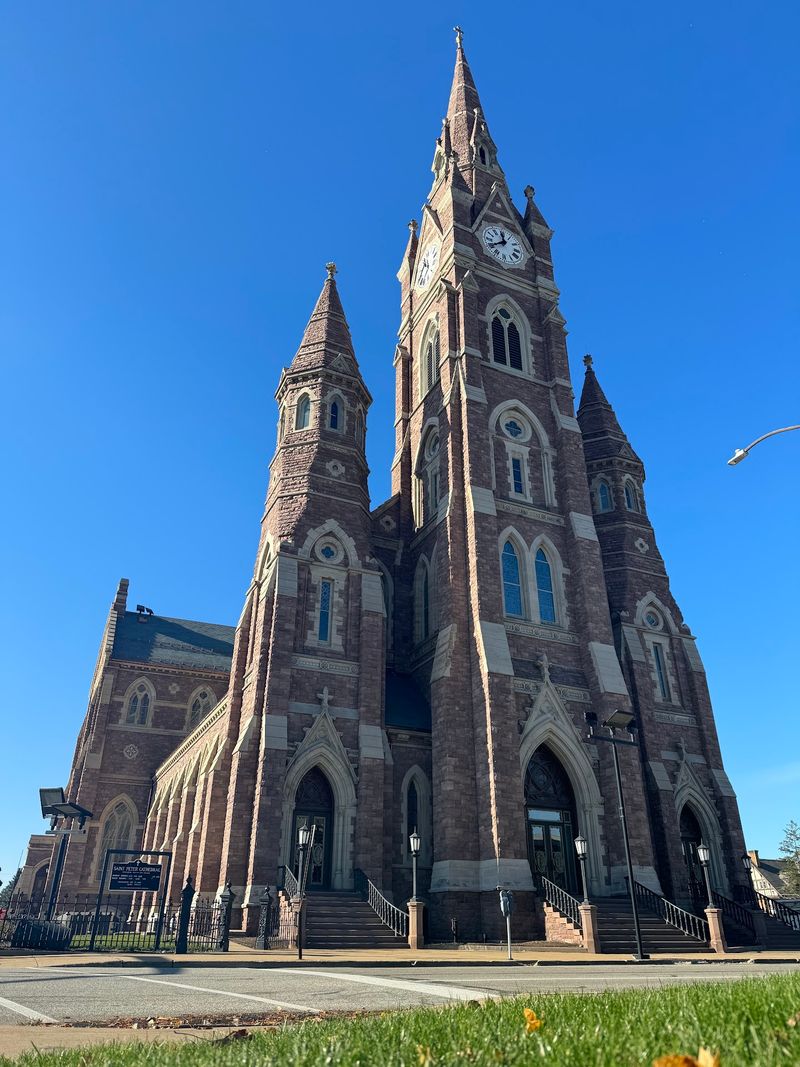
Two hundred sixty-five feet.
That’s how high the central bell tower climbs above the streets of Erie.
Sitting on top is an 11-foot cross made of copper and plated in gold.
On a bright day, that cross catches the eye from a long way off.
Flanking the main tower are two side towers, each rising 150 feet.
They follow a Norman style, giving the front a sturdy, castle-like balance.
The overall footprint matches that big skyline presence.
The building runs 220 feet long and 112 feet wide.
Those numbers explain why this cathedral feels lifted straight from an old European city.
Three towers working together create a silhouette few American churches can match.
Photographers, take note.
Stepping back across the street helps fit all three towers into one frame.
Neck strain is a real risk here, honestly.
You’ll keep tilting your head back to follow the lines upward.
Give yourself a minute outside before heading in.
The exterior deserves its own moment, and the towers alone justify the trip to this corner of Pennsylvania.
3. Fourteen Tons Of Bells Keep This City On Schedule
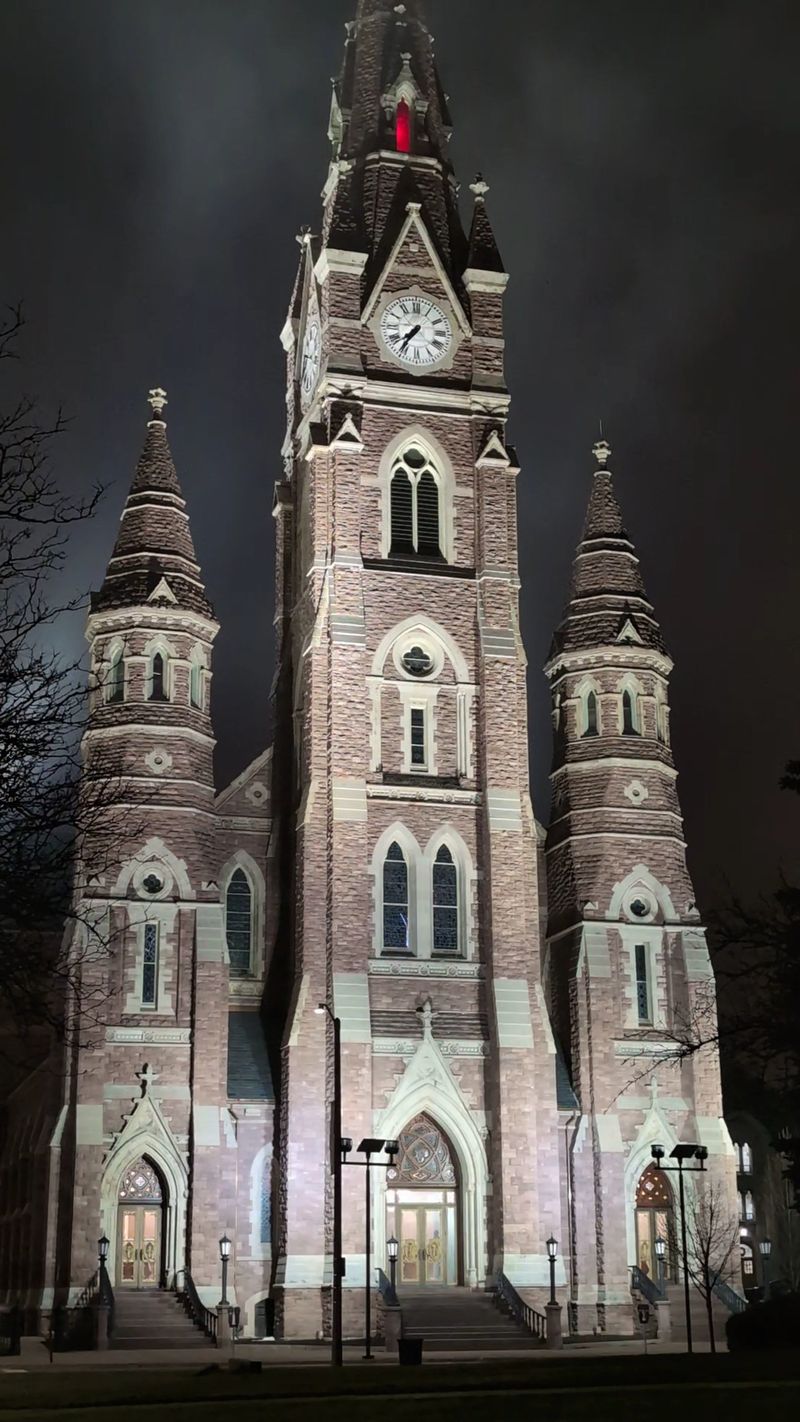
Somewhere high in that central tower hang twelve bells.
Together they weigh a whopping 14 tons.
The Andrew Meneely Bell Foundry cast them in 1903.
That foundry had a strong reputation for making bells built to last for generations.
A twelve-bell chime is not just one big bong.
Multiple bells allow melodies, which gives the tower a musical voice instead of a single note.
That same year brought another upgrade.
The E. Howard Clock Company installed a clock in the tower.
So 1903 was a big year for Saint Peter Cathedral.
The building gained both a sound and a schedule in one stretch.
I love the idea of a neighborhood timekeeper made of brass and bronze.
Phones can tell time, sure, but they can’t fill a whole downtown with music.
If you’re nearby when the bells sound, pause for a moment.
It’s a sound that connects modern Erie with over a century of daily life.
Just don’t try to count all 14 tons in your head.
Admiring them works better.
4. Those Red Walls Carry Stone From Three Places And One Old Canal
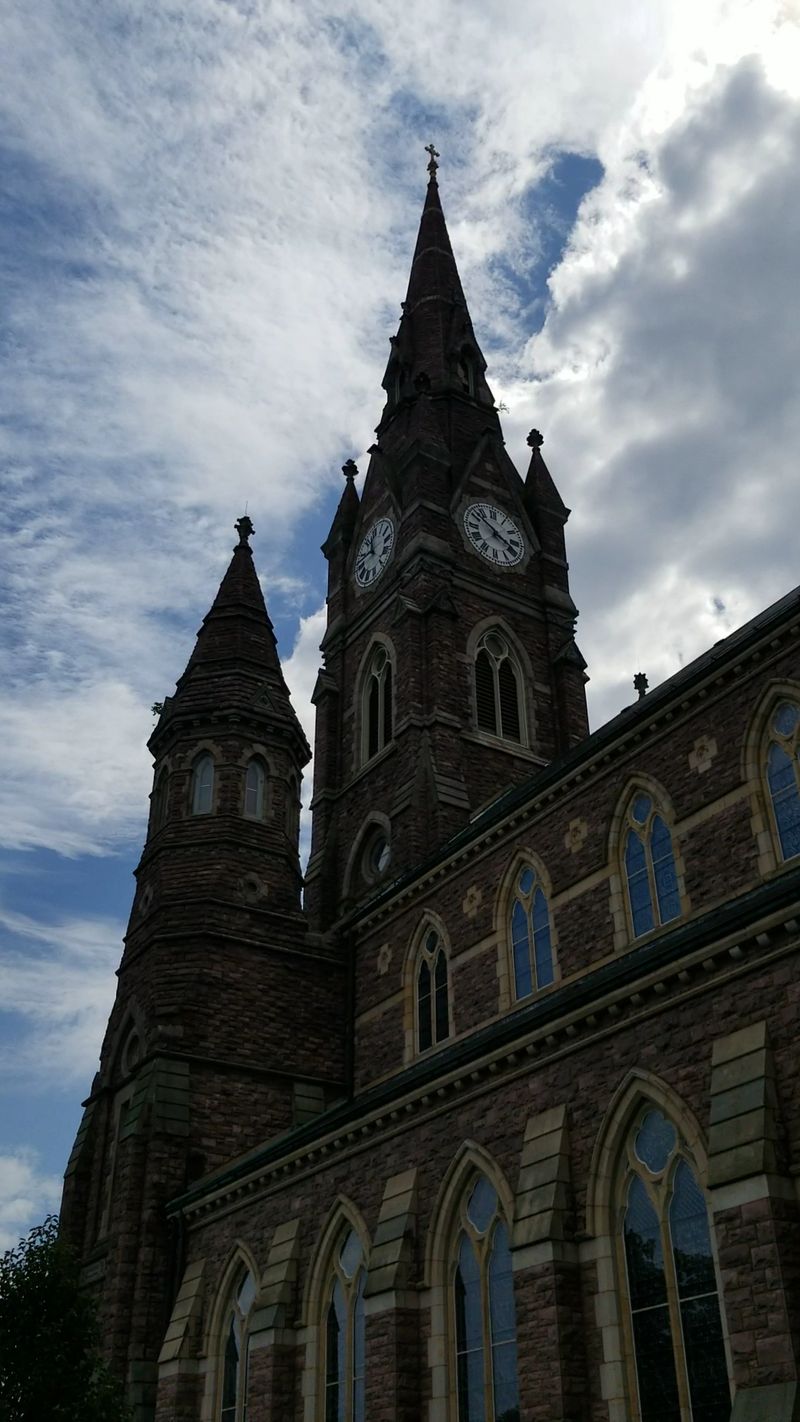
Red sandstone gives the cathedral its warm, rosy glow.
That stone came from quarries in Medina, New York.
The builders didn’t stop there.
White sandstone for the trim was brought in from Amherst, Ohio, and Mercer County, Pennsylvania.
The mix creates a sharp contrast.
Red walls and pale edges make every arch and window pop.
Now for my favorite bit of trivia.
Some foundation stones came from the old locks of the dismantled Erie Extension Canal.
That means part of the cathedral literally rests on transportation history.
Stones that once helped boats move through the region now hold up a house of worship.
I like how practical that choice feels.
Why waste good stone when an old canal is offering it up?
Next time you walk the perimeter, notice the color shifts.
The light changes how the red and white play off each other throughout the day.
Medieval builders often reused materials too.
In a way, this recycling move makes the European comparison even more fitting.
5. Saints Peter And Paul Greet You Before You Even Open The Door
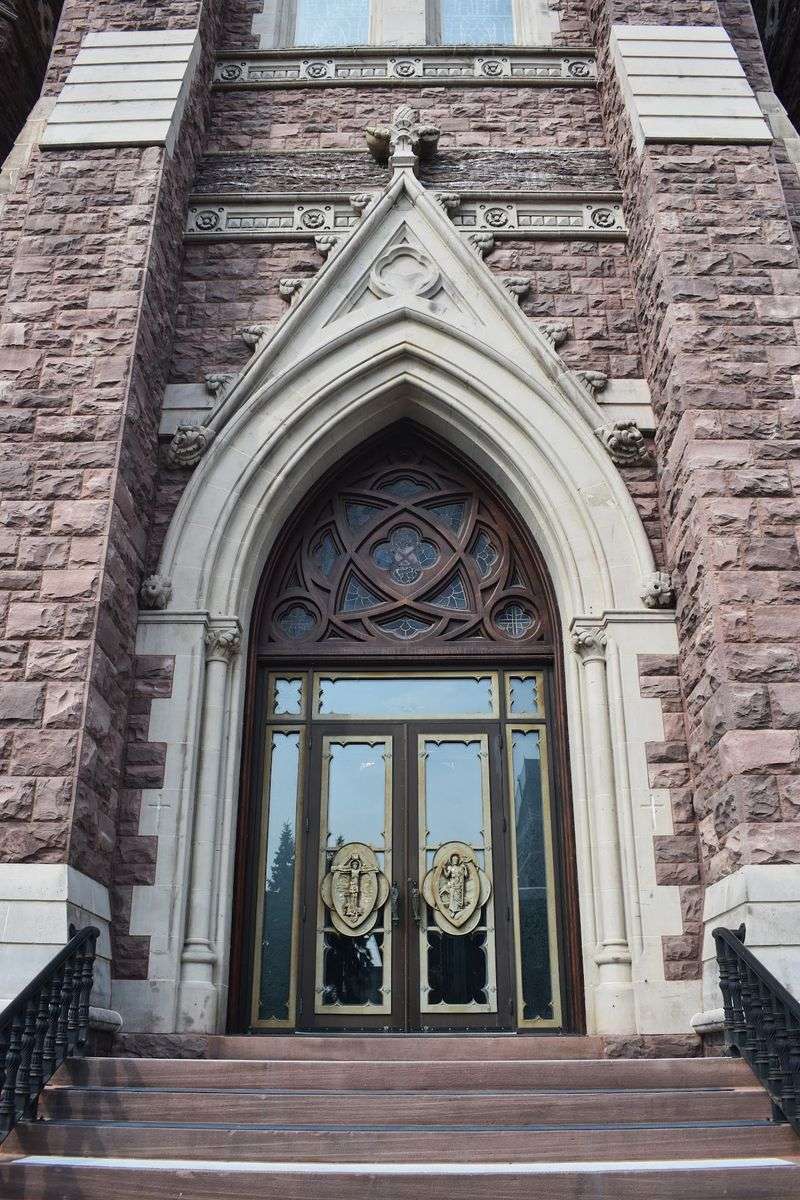
Grab a handle at the main entrance and you’re shaking hands with history.
The door handles feature sculpted metal figures of Saints Peter and Paul.
Those two saints weren’t chosen at random.
They symbolize the church’s apostolic foundation, a big idea packed into a small detail.
Inside, the first major feature is the baptistery near the entrance.
It includes two pools designed for different forms of baptism.
The fount is a real looker.
Its interior is blue pearl granite with inlaid gold mosaics.
Wrapping around that is dark green marble.
The color combination feels rich without being flashy.
Then comes the central aisle of the nave.
It’s made of Spanish and Italian marble, which makes every step feel a bit fancier than usual.
I believe entrances set the tone for a whole building.
This one says, very clearly, that someone cared about every inch.
Slow down at the doorway on your visit.
Plenty of people rush past the handles, and they miss a lovely welcome.
6. Colored Light From Munich Pours Across Every Pew
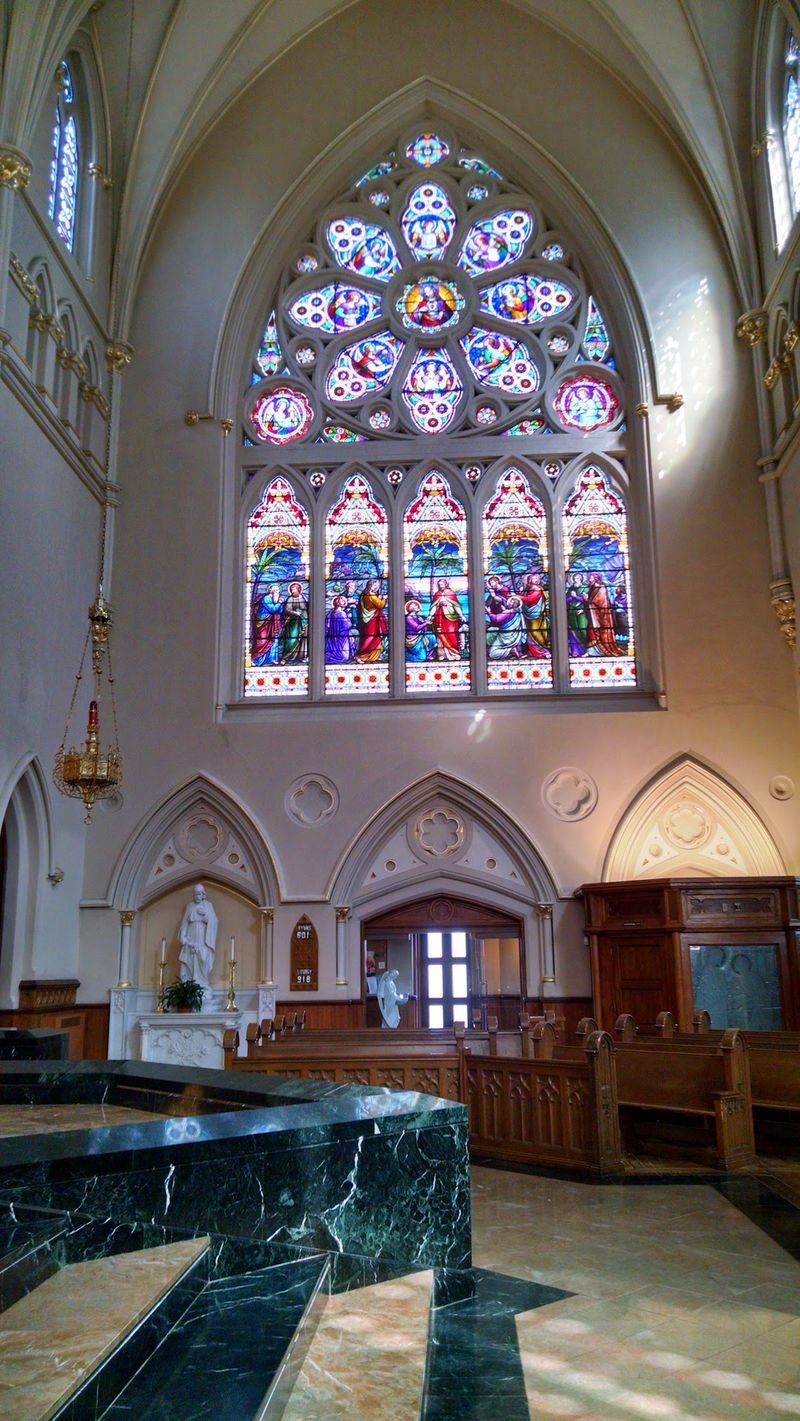
Some of the glass here traveled a long way.
Royal Bavarian windows date to around 1890, and portrait windows by Franz Meyer of Munich arrived around 1908.
The scenes tell stories you can read like a picture book.
You’ll find the Conferral of Keys to Saint Peter and scenes from his life.
Another window shows Jesus at supper in the house of the Publican.
Four Western Doctors of the Church appear too.
Not every window was meant to stay.
Simple stencil windows were installed as temporary fill-ins, then became permanent when money got tight during World War I.
A major restoration came in 1992 and 1993.
Crews cleaned, restored, and framed over 3,000 square feet of glass.
They also added glass prisms to boost natural light.
Clever move, since brighter light makes the colors glow even more.
Visit on a sunny afternoon if you can.
The difference between cloudy and bright days is easy to appreciate here.
Bring patience for this part.
Each window rewards a long look.
7. Eighty-Four Relics Rest Right Under The Altar
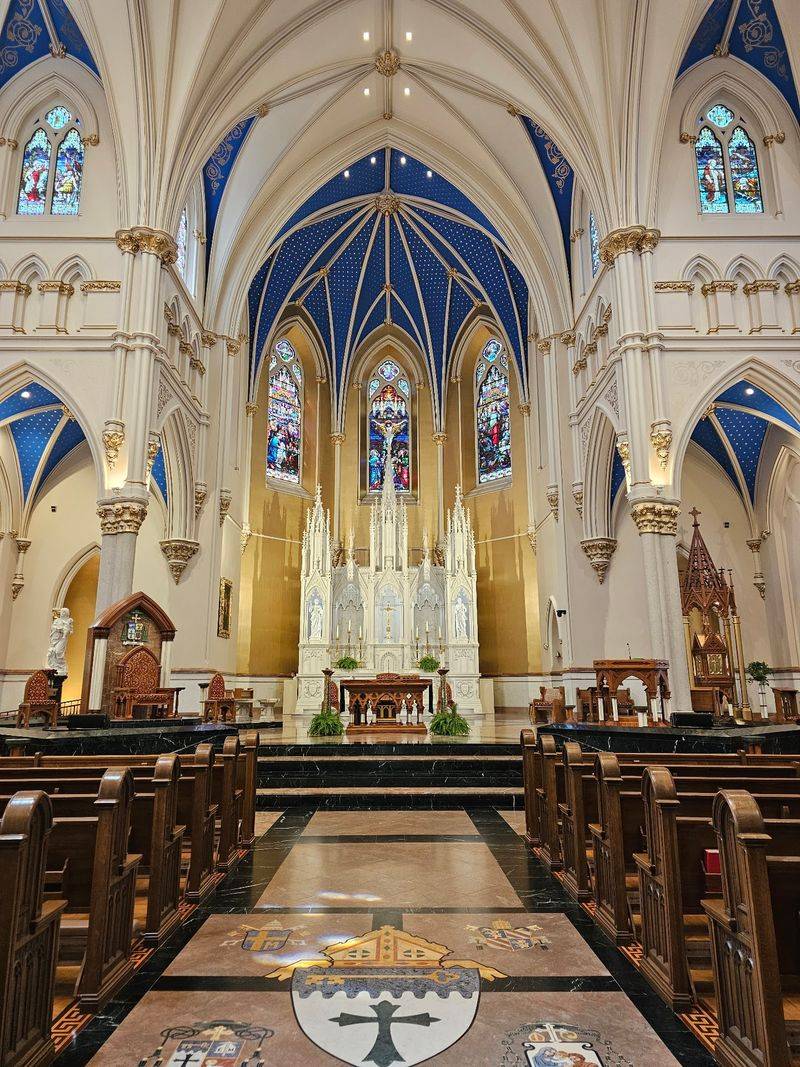
Saint Patrick has a connection to Erie, in a pretty remarkable way.
A reliquary chest beneath the altar holds 84 verified relics of saints and martyrs, including him.
That chest sits in the sanctuary, the heart of the cathedral.
The area also includes the bishop’s cathedra, or official chair, and the pulpit.
The cathedra is what makes a church a cathedral.
It marks this spot as the bishop’s seat for the whole Diocese of Erie.
The original marble high altar dates to 1911.
A wooden baldachin, or canopy, encloses the tabernacle on the north side.
Beneath the high altar lies the bishops’ crypt, completed in 1902.
Seven past bishops of the diocese rest there.
All of this adds layers of meaning to one end of the building.
It’s the kind of space that rewards quiet attention.
Please remember this is an active church.
Visit respectfully, especially during Mass, and keep voices low.
I can’t think of many places in Pennsylvania holding this much history in one small area.
8. Two Organs From Quebec Make The Stone Walls Sing
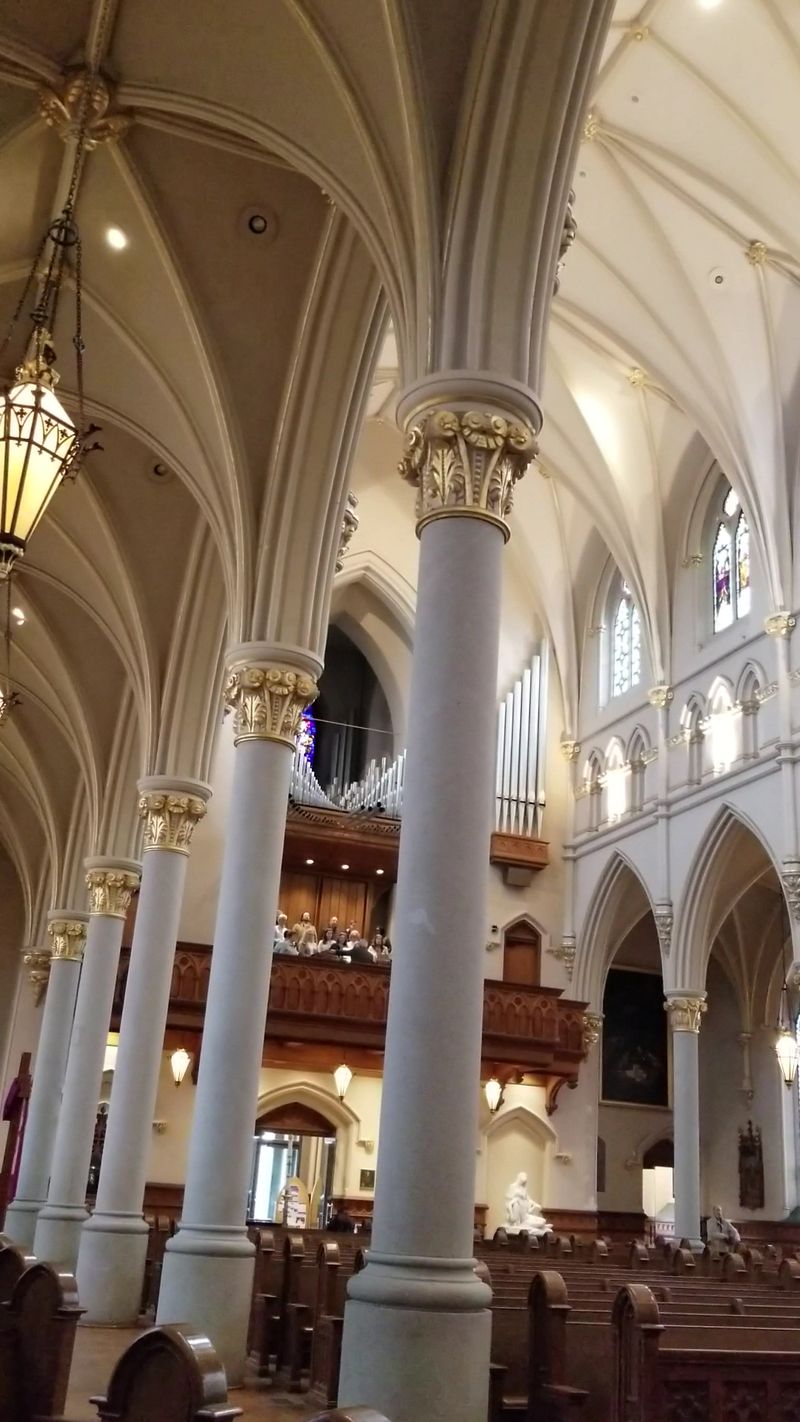
Music fans, this one’s for you.
Saint Peter Cathedral holds not one but two pipe organs.
Both were built by Casavant Frères of Saint-Hyacinthe, Quebec.
That company is famous among organ lovers worldwide.
The main organ arrived in 1977.
It replaced an earlier instrument that had been damaged by a water leak.
Bad luck for the old organ, but the new one got even better with time.
It was expanded in 1999, adding more range to its voice.
Pipe organs and Gothic buildings go together like snow and Erie winters.
Tall ceilings let the sound swell and hang in the air.
Attending a Mass is the most natural way to hear the instruments in action.
Check the parish schedule before you go so you don’t miss it.
I like that the music here crosses a border.
A Canadian-built sound filling an American cathedral feels fitting so close to the Great Lakes.
Even non-musicians will feel those low notes.
They tend to rumble right through the floor.
9. Plan Your Stop On West 10th Street Before You Lose Track Of Time
Good news for drop-in visitors.
Saint Peter Cathedral sits at 230 West 10th Street in Erie, Pennsylvania.
Hours have been listed at different times, so confirm before you go.
Daytime visits are your safest bet for seeing the interior.
Accessibility is considered too.
A ramp on the 9th Street side provides handicap access.
The cathedral does more than look beautiful.
It runs a food pantry that provides groceries to neighborhood residents on select Tuesday afternoons.
I love that detail most of all.
A building this grand still rolls up its sleeves for the people next door.
When visiting, dress comfortably but respectfully.
Silence your phone, since worship happens here regularly.
Give yourself at least an hour.
Between the towers, glass, marble, and relics, rushing would be a real shame.
Erie may be famous for its lakeshore, but this cathedral deserves a spot on your list.
You won’t need a plane ticket to feel like you crossed an ocean.
Share this story