Somewhere in Illinois, a bald cypress tree has been growing for more than 1,000 years. It was likely a sapling when Leif Erikson reached North America. Hardly anyone talks about it.
That surprised me, so I kept digging. The search turned up a bog that quakes underfoot, a bison herd roaming restored prairie, and a powder magazine believed to be the state’s oldest building. One tiny museum even holds replicas of Abraham Lincoln’s casket.
None of these places come with giant crowds or tour bus lines. You get cypress swamps, sandstone canyons, stone villages, and an old capitol where Lincoln worked as a young lawmaker. I love that so much story sits this far off the radar.
Plenty of people zoom past them on the way somewhere louder. Maybe it’s time to slow down and take the exit. I’d start with that thousand-year-old cypress tree, but I have a feeling a few of these places would be worth a detour.
1. Cache River State Natural Area
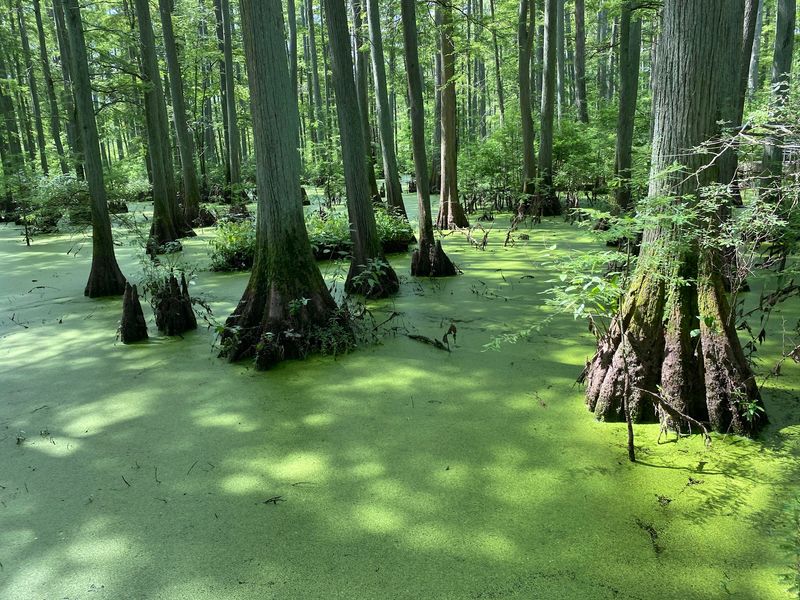
Louisiana called, and it wants its bayou back. Southern Illinois quietly hides a cypress-tupelo swamp that looks like it wandered north and decided to stay.
The natural area covers nearly 15,000 acres of wetlands, woods, and water. Some of its bald cypress trees are over 1,000 years old.
The state champion bald cypress has a base circumference of more than 40 feet. You could link arms with a bunch of friends and still struggle to hug it.
Those ancient trees were saplings around the time Leif Erikson explored North America. That’s a long time to stand around in wet socks.
Want the best view? Paddle the 6 miles of canoe trails through Buttonland Swamp, where the route winds right through the cypress-tupelo swamp.
Prefer dry land? Heron Pond and Big Cypress trails let you hike into the swamp scenery without a boat.
Both Buttonland Swamp and Heron Pond are National Natural Landmarks. In 1996, the wetlands were also named a Wetland of International Importance under the Ramsar Convention.
That’s a big honor for a place many Illinois folks have never heard of. More than 100 threatened or endangered plant and animal species live here too.
Start at the Henry Barkhausen Cache River Wetlands Center in Cypress. Its exhibits and film give you a quick crash course before you explore.
The wetlands center is open daily from 8:30 AM to 3:30 PM, making it an easy first stop before exploring the surrounding trails.
Into biking? The Tunnel Hill State Trail connects here, giving you another way to roll into the wetlands.
People once worked hard to drain these wetlands for farmland. Since 1991, a partnership has been restoring habitat, and the old swamp is still holding its ground beautifully.
Address: 930 Sunflower Lane, Belknap, IL 62908
2. White Pines Forest State Park
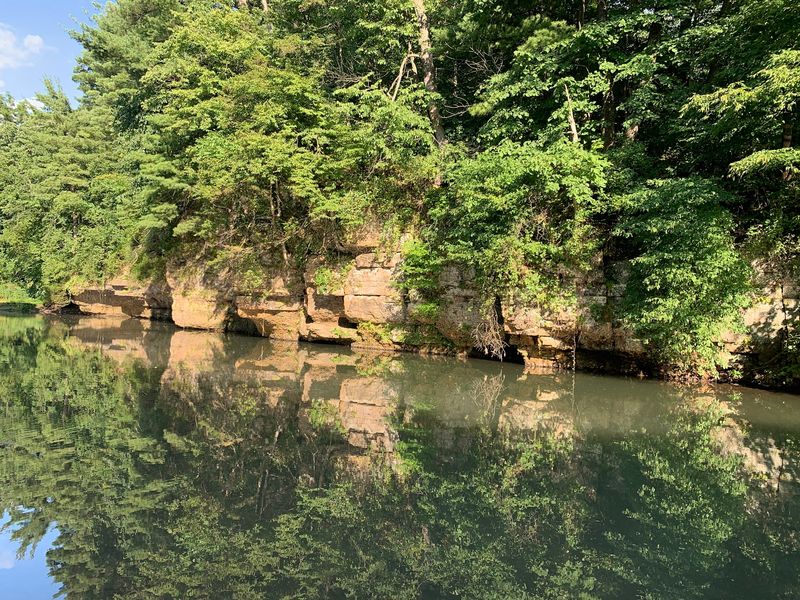
Driving through a creek sounds like a bad idea, until you find a park built for it. Concrete fords here let you roll your car right across flowing water.
That splashy detail is only part of the charm. The 385-acre park protects the southernmost remaining stand of native white pines in Illinois.
Yes, real pine forest in the Prairie State. A 43-acre section became an Illinois Nature Preserve in 2001, giving those pines top legal protection.
Pine Creek and Spring Creek wind through the park. White sandstone formations, limestone bluffs, and vine-covered cliffs fill in the scenery.
About 5 miles of trails let you explore at your own speed. Bring binoculars, because more than 100 bird species have been spotted here.
Anglers can try for smallmouth bass and channel catfish in the streams. It’s a calm way to spend a morning with a line in the water.
Picnic spots come with tables, fireplaces, and playgrounds under the shade. Pack sandwiches and let the kids run off some energy.
Campers get 103 sites with vehicle access, showers, and flush toilets. Some have electric hookups, and you can reserve through ExploreMoreIL.
The historic White Pines Lodge adds another reason to visit. Its rustic cabins, restaurant, and dinner theater offer a cozy way to extend your stay among the towering trees.
The buildings date to the 1930s, when the Civilian Conservation Corps helped develop the park. Check current reservations and restaurant hours before planning an overnight trip.
The park’s story goes back further than that. This land was once part of Sauk leader Black Hawk’s territory.
Folks pushed to make it a state park as early as 1903. It finally became official in 1927, so patience clearly paid off.
Late fall deer hunts can close trails on certain dates. Check the park’s schedule before planning a November or December trip.
Address: 6712 West Pines Road, Mount Morris, IL 61054
3. Volo Bog State Natural Area
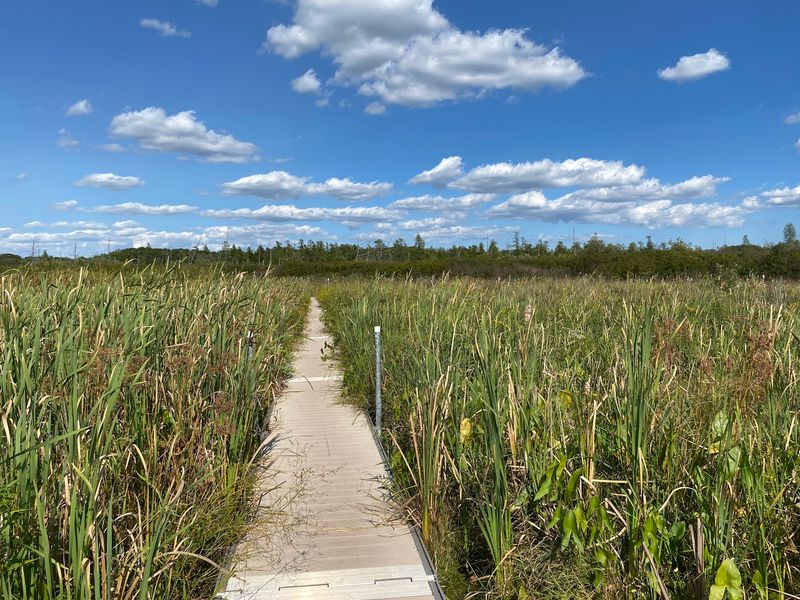
Ground that jiggles is usually a problem. At this northern Illinois preserve, it’s the whole point.
Volo Bog is the only open-water quaking bog in Illinois. A floating mat of sphagnum moss, cattails, and sedges surrounds an open pool in the center.
It’s also the southernmost quaking bog in North America to show each stage of bog succession. That’s science talk for watching a lake slowly turn into land.
The bog started as a glacial kettle lake between 6,000 and 12,000 years ago. Nature has been working on this project for a while.
A half-mile interpretive loop takes you through those stages to the eye of the bog. The boardwalk has received temporary repairs, and a replacement is planned.
Keep an eye out for carnivorous pitcher plants. Bugs, beware.
Tamarack trees grow here too, a conifer that drops its needles each fall. The Tamarack View Trail stretches 2.8 miles if you want more walking.
Shorter options include the 1.1-mile Deerpath Trail and the 0.9-mile Prairie Ridge Trail. The whole site covers 1,150 acres of marsh, prairie, woods, and savanna.
The visitor center sits in a renovated dairy barn from the early 1900s. Inside, you’ll find exhibits, a hands-on discovery area, and a library.
Guided bog tours run most Saturdays and Sundays at 11 a.m. and 1 p.m. They’re a smart pick if you want a naturalist explaining what you’re seeing.
Survival here came down to regular people. In 1958, local citizens led by Cyrus Mark campaigned to buy and protect the bog.
It became an Illinois Nature Preserve in 1970 and a National Natural Landmark in 1973. Not bad for a soggy patch of moss.
The grounds open daily at 8 a.m., except Christmas and New Year’s Day. Call ahead about visitor center hours, since staffing can vary.
Address: 28478 W. Brandenburg Rd., Ingleside, IL 60041
4. Nachusa Grasslands
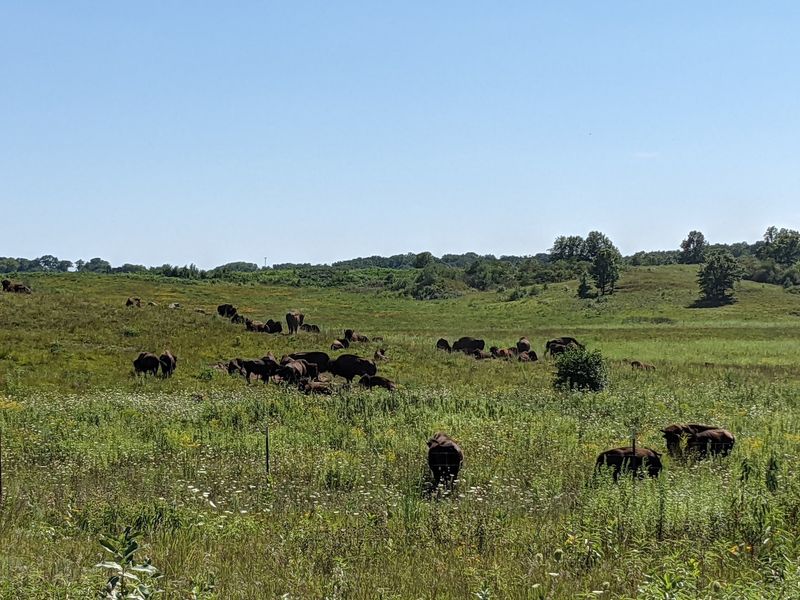
Bison in Illinois? It sounds like a tall tale, but a conservation herd has roamed here since October 2014.
Those animals were the first conservation bison herd in the state. They graze across roughly 1,500 acres of the preserve.
Sightings aren’t guaranteed, so pack binoculars and some patience. You can often spot them from designated roadsides and viewing areas.
Fenced bison units are off-limits to visitors. Honestly, a creature that big deserves its personal space.
Nachusa Grasslands is managed by The Nature Conservancy. It covers more than 4,000 acres of tallgrass prairie, oak savanna, wetlands, and woodlands.
Most of northern Illinois was once tallgrass prairie. Within a century after 1818, the vast majority had been plowed for farmland.
Restoration here began in 1985, with the first big land purchase in 1986. The preserve celebrated its 40th anniversary in 2026.
Five hiking areas wind through rolling hills, sandstone outcrops, and wildflower prairies. Wear sturdy shoes and give yourself time to wander.
The numbers are wild. Over 700 native plant species, 245 bird species, and 280 bee species call this place home.
Butterfly fans should look for the state-threatened regal fritillary. It’s a showy orange flier that makes any summer hike better.
Start at the visitor center for exhibits and a short trail. A show garden there labels about 40 plant species, which helps you identify what you see later.
Don’t expect fancy plumbing. Water comes from a hand pump, and the restrooms are compost toilets.
Dogs and other pets aren’t allowed, so leave Fido at home. Some woodlands also close during deer hunting dates and controlled burns.
The headquarters barn was restored in 1999 from an 1868 timber-frame barn. The preserve opens daily from dawn to dusk, so early birds win here.
Address: 2075 Lowden Road, Franklin Grove, IL 61031
5. Elsah
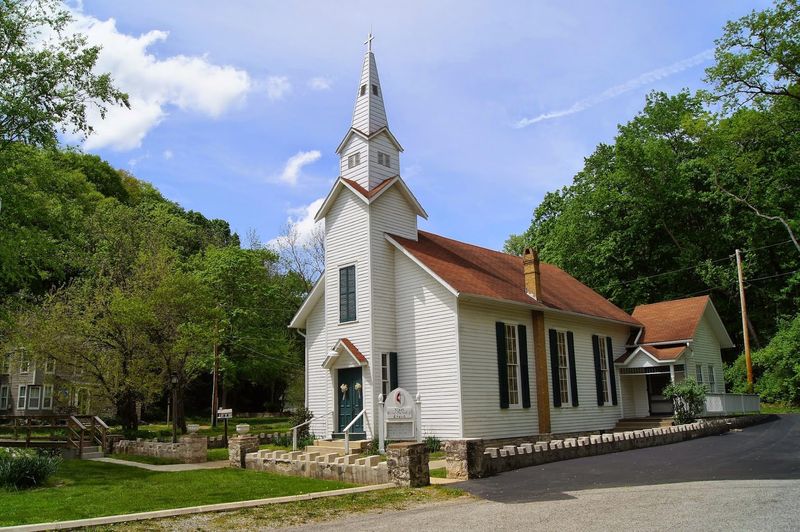
Back in 1853, a U.S. senator made a wild offer. James Semple gave free land to anyone who built with stone from his quarry.
People said yes, and the result is Elsah. By 1861, the village had mostly reached the size it is today.
That’s why it’s nicknamed the Village Where Time Stood Still. The whole village joined the National Register of Historic Places in 1973.
Stroll the streets and you’ll spot 19th-century stone homes in several styles. Greek Revival, Gothic Revival, and Italianate all show up here.
Photographers love it, and it’s easy to see why. Bring your camera and walk slowly.
For backstory, visit the Village of Elsah Museum inside the 1887 Village Hall. It covers local history, building styles, and tools from the mid-1800s.
Look for the mural by Glenn Felch inside. The museum opens weekend afternoons from April through October, or by appointment.
The old stone schoolhouse served students from 1857 to 1970. Today it’s the Elsah Civic Center, home to village meetings and public events.
Pottery fans, here’s your stop. At Crocker and Springer, Jan and Jonathan Wright handcraft early American salt-glazed stoneware and redware.
You can watch them work in the studio. It’s a rare chance to see old-school craft happening right in front of you.
Railroads skipped Elsah and boosted other towns, so the village faded for a while. Then Principia College arrived in the 1930s and brought new life.
The campus features architecture by Bernard Maybeck and offers tours. It became a National Historic Landmark in 1993.
Elsah sits along Illinois Route 100, so it fits easily into a river-road drive. Business hours vary, so check before you go.
Small, quiet, and made of stone, the village feels like a storybook page. Just remember people live here, so keep voices low.
Address: 26 LaSalle St., Elsah, IL 62028
6. Fort de Chartres State Historic Site
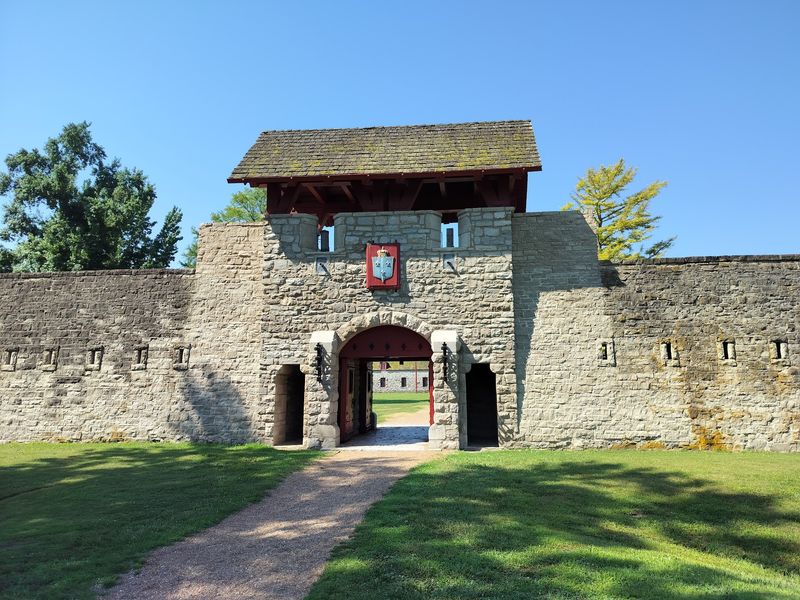
Somewhere inside these stone walls stands a small building with a big claim. The powder magazine is believed to be the oldest existing building in Illinois.
It was restored in 1917, a few years after the state bought the ruins in 1913. Not bad for a structure that predates the United States.
The French built the first wooden fort here between 1718 and 1720. River flooding forced rebuilds, and the final limestone fort went up in 1753 and 1754.
It served as the administrative and military center for French Illinois Country. Then France handed the territory to Great Britain in 1763.
British troops moved in by 1765. In 1772, the river ate away enough land that the south wall collapsed.
Today you’ll see reconstructed walls, a rebuilt gate, and stone buildings. The Guard House holds a Catholic chapel furnished in 1750s style.
Curious about colonial cooking? An operating bake oven and a kitchen garden with 18th-century produce show how folks ate back then.
There’s also a garden shed built from upright logs. It’s a small detail that’s easy to miss.
Admission is free, though donations help. The grounds open daily from sunrise to sunset.
The museum and display buildings usually open Wednesday through Sunday, 10 a.m. to 4 p.m. Hours depend on staff, so check first.
Weekend visitors often meet costumed interpreters. Big events like the June Rendezvous and October French and Indian War Assemblage draw crowds.
For a quieter trip, pick a regular weekday. You’ll have more room to wander and read at your own pace.
Pack a lunch for the picnic shelter and grills outside the fort. Prairie du Rocher is a tiny town, so plan snacks ahead.
The site became a National Historic Landmark in 1960. Honestly, it deserves far more visitors than it gets.
Address: 1350 State Route 155, Prairie du Rocher, IL 62277
7. Bishop Hill
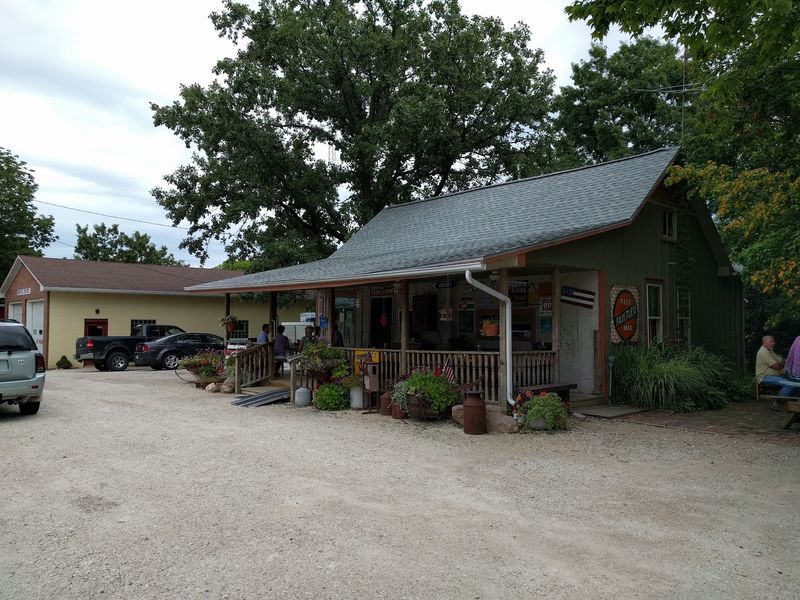
Swedish meatballs on the Illinois prairie might sound random. In Bishop Hill, they come with nearly 180 years of backstory.
Swedish Pietist Erik Janson and his followers founded the village in 1846. They came seeking religious freedom and built a communal colony.
The commune lasted until 1861. Its nickname, Utopia on the Prairie, still fits the quiet streets today.
The whole village is a National Historic Landmark and a State Historic Site. Nearly a dozen original colony buildings still stand.
Start with the 1848 Colony Church, where the sanctuary keeps its original pews. Sitting there connects you to settlers who prayed in the same seats.
Next, check out the Colony Hotel, built between 1852 and about 1860. Both buildings offer self-guided tours of their first floors.
The 1854 Steeple Building houses a museum open weekdays from 10 a.m. to 4 p.m. It’s a handy stop for local history.
One letdown is worth knowing. The Bishop Hill Museum, home to colonist Olof Krans’s primitivist paintings, is temporarily closed.
An orientation video there covers areas that aren’t accessible. Keep checking, because those paintings are a big part of the village’s story.
Shopping here is a treat. Look for antiques, pottery, Swedish imports, quilts, and baskets.
Artisans demonstrate crafts like blacksmithing and broom making. Watching a broom come together beats scrolling your phone any day.
The VASA National Archives Museum also keeps regular hours. It’s a solid stop for anyone curious about Swedish American roots.
Hungry? Local restaurants serve Swedish meatballs, and P.L. Johnson’s opens for lunch on Fridays and weekends.
Events celebrate the village’s heritage through the year. Watch for Jordbruksdagarna, Lucia Nights, and Julotta.
Shop hours vary a lot here, so call ahead. Then grab a seat by the gazebo in the village park and enjoy the calm.
Address: 103 N. Bishop Hill St., Bishop Hill, IL 61419
8. Vandalia State House State Historic Site
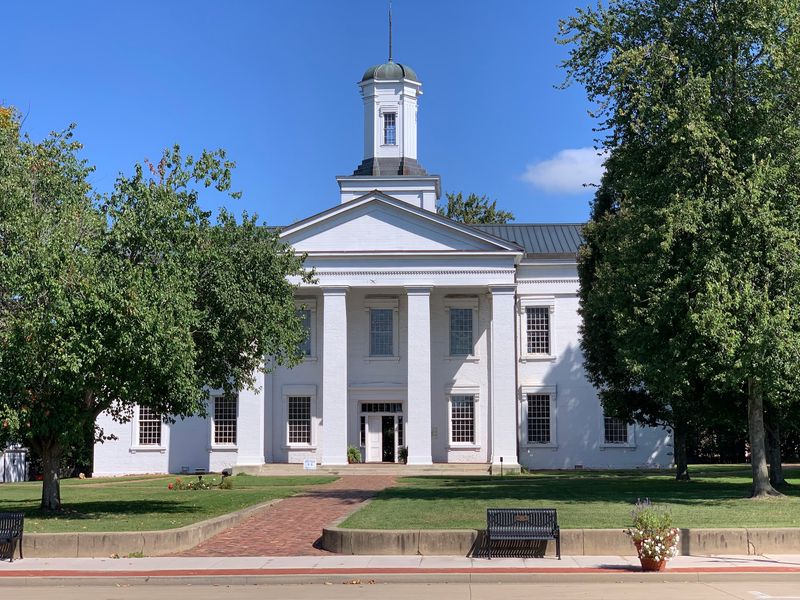
Long before Springfield took the spotlight, Illinois lawmakers met in a brick building in a small town. It still stands as the oldest surviving capitol in the state.
Vandalia served as the state capital from 1819 to 1839. This building handled the job from 1836 until the move.
Here’s a fun twist. This is actually the fourth statehouse in Vandalia, since two burned and an earlier wooden one fell apart.
Abraham Lincoln served in the Illinois House as a young lawmaker. He worked in this building starting in 1836.
In 1837, he made his first public speech against slavery right here. That’s a big moment for such a modest town.
Chicago also received its city charter in this statehouse. Yes, the giant city got its official start in tiny Vandalia.
The two-story Federal-style building sits on a landscaped city block. Inside, the first floor shows former offices and the Supreme Court chamber.
Head upstairs for the recreated House and Senate chambers. Visitor galleries let you look down like a curious citizen from the 1830s.
Signs in each room explain what happened there. A small first-floor exhibit covers Lincoln’s ties to the building.
From May through September, interpreters in 1830s dress may greet you Thursday through Sunday. Check first, since staffing has been tight lately.
Right now, temporary hours run 10 a.m. to 2 p.m., Tuesday through Friday. The grounds stay open from sunrise to sunset.
Outside, find the Madonna of the Trail statue, dedicated in 1928. It honors Vandalia as the western end of the historic National Road.
Special events add extra fun. Look for the Lincoln Birthday Observance in February and the Grande Levee in June.
December brings a Christmas open house with candlelight tours. That sounds like a lovely way to see history glow.
Address: 315 West Gallatin Street, Vandalia, IL 62471
9. Lusk Creek Wilderness Area
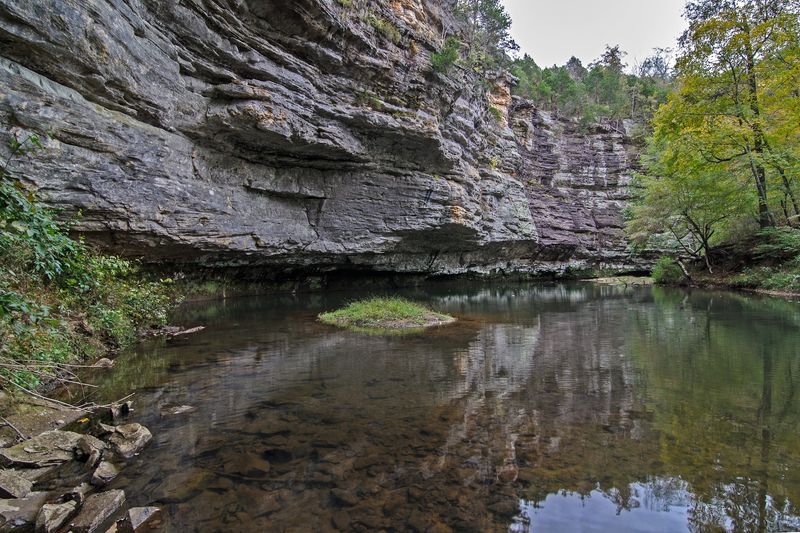
Rock walls up to 200 feet tall don’t usually come to mind when people picture Illinois. Lusk Creek Wilderness Area is ready to change that.
At 6,293 acres, it’s the largest wilderness area in the Shawnee National Forest. It became official in 1990 under the Illinois Wilderness Act.
Expect rugged terrain, winding canyons, and deep sandstone gulches. Caves, sinkholes, and broad ridge tops add to the adventure.
Lusk Creek itself ranks among the highest-quality streams in Illinois. It flows year-round and draws canoes and kayaks in spring and early summer.
Big names on the map include Owl Bluff, Saltpeter Cave, and Rock House. Natural Bridge is large enough for you to crawl under.
Indian Kitchen is a favorite, and its trailhead leads to the precipice. The bluff top overlook sits on private property, so stay off it.
People may have used the Indian Kitchen area as long as 10,000 years ago. Standing in that canyon connects you to a very old story.
The 160-mile River-to-River Trail passes right through. Hikers and horseback riders share most trails, though some are hiker-only.
Spring hikes come with a bonus. Look for wild columbine and French’s shooting star among the wildflowers.
Small patches of old-growth timber survive here too. The land was once pasture before becoming national forest in the 1930s.
Anglers can fish for bass and bluegill along the creek. Bring a light rod.
Camping is allowed in the wilderness, and no permit is needed. Just skip the Lusk Creek Canyon Nature Preserve, where camping is off-limits.
Groups max out at 10 people or stock animals. That rule helps keep the wild feeling wild.
Riders should note seasonal stock closures from December through March and after heavy rains. Eddyville is the closest town, so fuel up before heading in.
Address: Shawnee National Forest, Pope County, near Eddyville, IL 62928
10. Apple River Canyon State Park
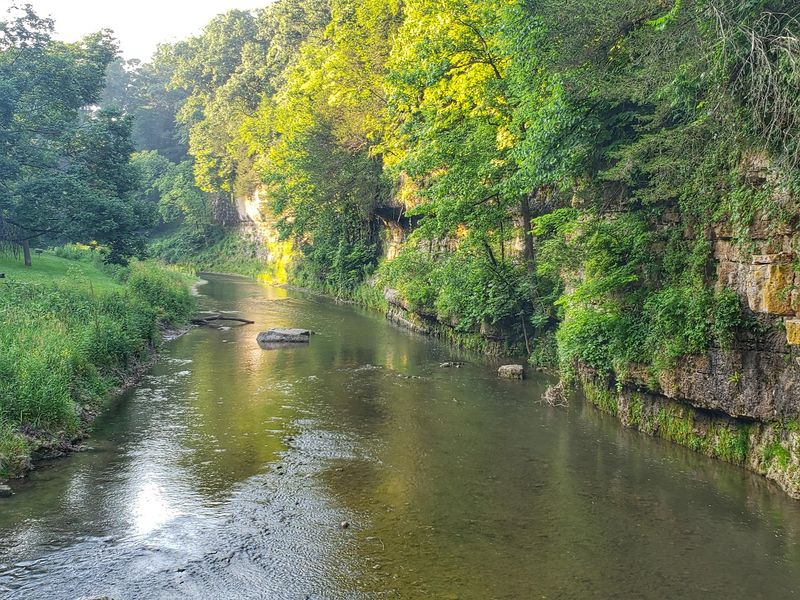
Glaciers flattened much of Illinois, but they skipped this corner entirely. That’s why the land here looks rugged, hilly, and a little rebellious.
The park sits in the Driftless Area of Jo Daviess County. It covers 1,907 acres of limestone bluffs, deep ravines, springs, and streams.
Millions of years ago, this spot was a sea bottom. Later, the Apple River reversed course near the end of the last Ice Age and carved the canyon.
Today the river moves slow and quiet. It’s great for floating, kayaking, or casting a line.
Anglers chase smallmouth bass, sunfish, crappie, carp, and suckers. Seasonal trout add a little extra excitement.
Five marked trails wind through woods, bluffs, and riverbanks. Pine Ridge, Tower Rock, River Route, Sunset, and Primrose each offer something a bit different.
Primrose Trail is accessible, which makes it a nice pick for mixed groups. The River Route Nature Trail leads to a peaceful spot by the water.
Plant lovers, take note. The park holds over 500 herbaceous plants, 14 kinds of ferns, and 165 varieties of flowers.
One rare beauty is the bird’s-eye primrose. Spotting it feels like finding a secret the hills kept just for you.
Birders can look for 47 bird varieties. Bring binoculars and take your time along the bluffs.
Four picnic areas line the riverbanks with tables, grills, water, and toilets. Two of the three shelters are accessible and can be reserved.
Campers can stay at Canyon Ridge Campground from mid-April through October. Sites are Class C, so don’t count on electric hookups.
History adds another layer. During the 1800s lead mining boom, the town of Millville thrived near here, though it’s long gone now.
The state created the park in 1932. Since it sits far from big cities, crowds tend to stay thin, and that’s the charm.
Address: 8763 E. Canyon Rd., Apple River, IL 61001
11. Kibbe Hancock Heritage Museum
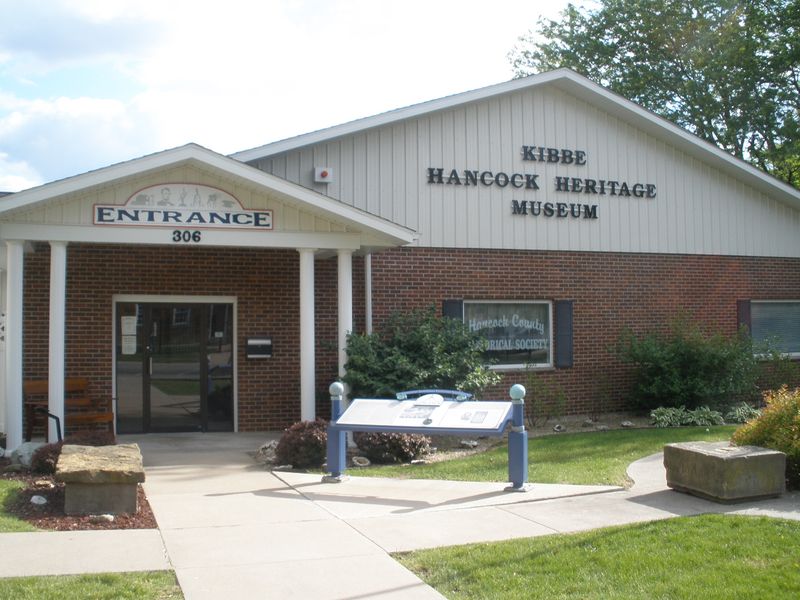
A biology professor’s collection grew into one of the quirkiest museums in western Illinois. Dr. Alice Kibbe of Carthage College donated her collections and home to the city in 1964.
Her natural history finds came first. The current building opened in 1989 and now tells the story of Hancock County across centuries.
Topics range far and wide. Think archaeology, farming, fashion from about 1840 to 1920, toys, textiles, and military history.
Native American history, religion, and technology get space too. So do the towns and cities across the county.
The most surprising section came in 2011. The museum acquired a collection from the former Illinois Funeral Directors Association Museum.
It documents funeral customs through history. You’ll see mourning clothes, Lincoln burial items, and details about his funeral train.
Lincoln fans have even more to explore. The exhibit Lincoln: The Making of a Man covers his ties to Hancock County.
It includes an 18-star flag from his 1858 Carthage speech. A replica of his casket is on display as well.
Civil War artifacts add more history. Car buffs should find the 1910 Burg Touring Car, built in nearby Dallas City.
Little scenes bring old daily life back. Peek into a Victorian parlor, country kitchen, classroom, post office, and doctor’s office.
The museum stands across the street from the historic Carthage Jail. That makes it easy to pair two stops in one afternoon.
Admission is free, and donations are welcome. Pretty sweet deal.
Plan your trip between April and October. Hours run noon to 4 p.m. Tuesday through Saturday, and 1 to 4 p.m. on Sunday.
It’s closed Mondays and major holidays. Groups and classes can arrange tours by calling ahead.
Give yourself plenty of time, because the collection sprawls. You might come for Lincoln and leave knowing way more about Hancock County than expected.
Address: 306 Walnut Street, Carthage, IL 62321
Share this story