Monday’s craving will have to wait until Friday. At Rick’s Backyard BBQ in Mizpah, the regular dining schedule gives you three days to work with, which makes a rib dinner something you actually put on the calendar.
This roadside spot on Route 40 keeps things straightforward with barbecue, homemade sides, a pickup window, and picnic tables beneath a covered pavilion. The address once belonged to Uncle Dewey’s, and owner Richard Gray has carried its barbecue tradition forward under a name inspired by his own family cookouts.
There’s room here for a brisket sandwich on the way somewhere else or a longer lunch with several plates spread across the table. The trick is matching your appetite to the opening hours.
Get that part right, and an ordinary South Jersey weekend can include smoky meat, a little local history, and a meal that invites you to linger over the last few bites.
Rick’s Backyard BBQ Gives You Just Three Days to Get Your Fix
Forget penciling this place into a Tuesday lunch break. The regular hours are Friday from 3 to 7 p.m., Saturday from 11 a.m. to 7 p.m., and Sunday from 11 a.m. to 6 p.m.
Monday through Thursday are closed, giving Saturday the widest window for anyone trying to coordinate a drive, a hungry group, and whatever else the weekend holds. Friday works better for an early dinner, while Sunday leaves plenty of room for lunch before the afternoon slips away.
Those distinctions matter more than they would at a restaurant with daily service. A Friday arrival at noon puts you three hours ahead of opening; a Sunday arrival at 6:30 puts you on the wrong side of closing.
The limited schedule also gives the visit a pleasing sense of occasion without requiring anything elaborate. You can build a Saturday around barbecue and still have the rest of the day available, or make Friday dinner the point at which the workweek officially loses its grip.
Keep the trip flexible enough to accommodate a meal that deserves some breathing room. Ordering, choosing sides, and sitting down together are easier when nobody is watching the clock between bites.
Before a longer drive, call 609-476-4040 to confirm service and the day’s menu, particularly around holidays or near the beginning and end of the outdoor dining season. The business advertises rain-or-shine opening, but confirming a specific date is still sensible when your whole outing depends on one stop.
A short operating week is easy to work around once you know the rhythm. The disappointment comes from assuming barbecue will be available whenever the craving happens to arrive.
Here, the calendar gets a vote in dinner.
A Roadside Stop in Mizpah Keeps a Local Barbecue Tradition Alive
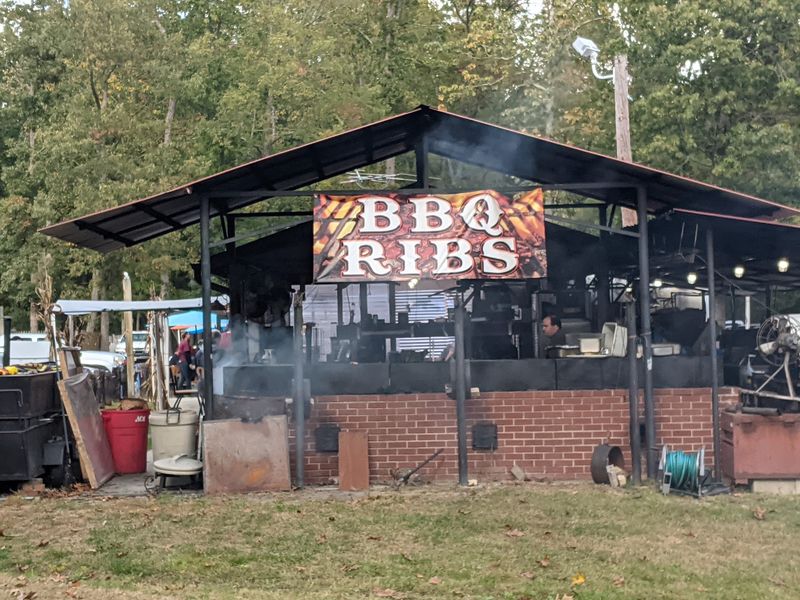
Long before Richard Gray put his name on the business, people knew this address as Uncle Dewey’s. Dewey Johnson and his wife, Sharon Hazard Johnson, spent roughly 25 years building their roadside barbecue operation before handing it over to Gray in 2019.
That change joined two people who already knew each other well: Gray and Johnson were longtime friends and hunting buddies. It also connected two versions of the same idea, because both men began by cooking for family and friends.
Gray’s own backyard gatherings supplied the inspiration for the restaurant’s name. His father’s belief that barbecue brought the family together helped shape what he wanted the business to become.
That background gives the place a more personal foundation than a theme dreamed up for a dining room. The gathering came first; the restaurant grew out of it.
You’ll find the current operation at 6931 Harding Highway, along Route 40 in Mizpah, a small community in Atlantic County’s Hamilton Township. It’s the sort of address worth entering precisely before you leave, especially if Mizpah is a name you’ve never encountered on your usual Jersey drives.
The location makes sense for a roadside food stop: travelers can work it into a journey through South Jersey, while local customers have a familiar place to return to. There’s no need to turn the history into a solemn ceremony before ordering lunch.
It simply explains why this spot has roots that reach beyond its current sign. A new owner can change the menu and improve the property while preserving the thing people valued in the first place.
At Rick’s, that connection is particularly clear. The address remained a place for barbecue, and the next chapter belonged to someone who already understood the people behind the previous one.
The Ribs Make a Strong Case for Planning Your Weekend Around Lunch
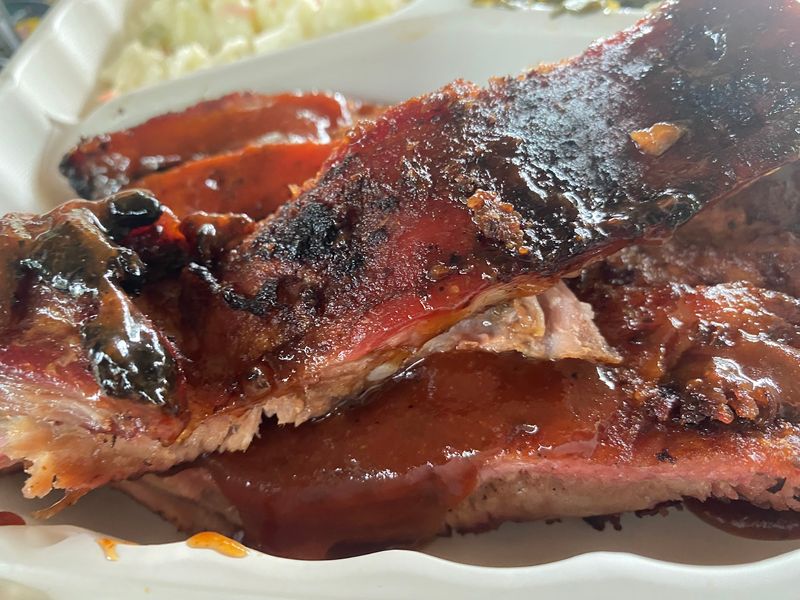
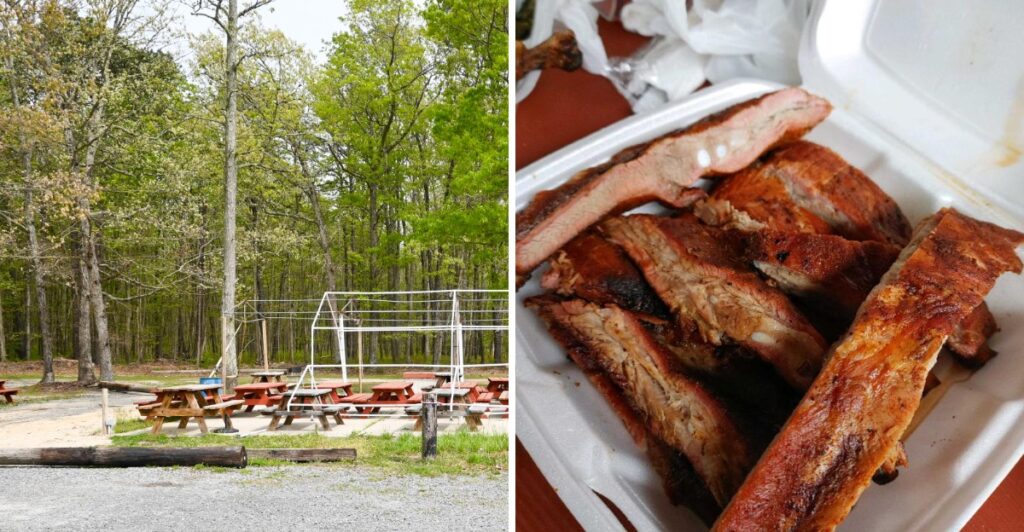
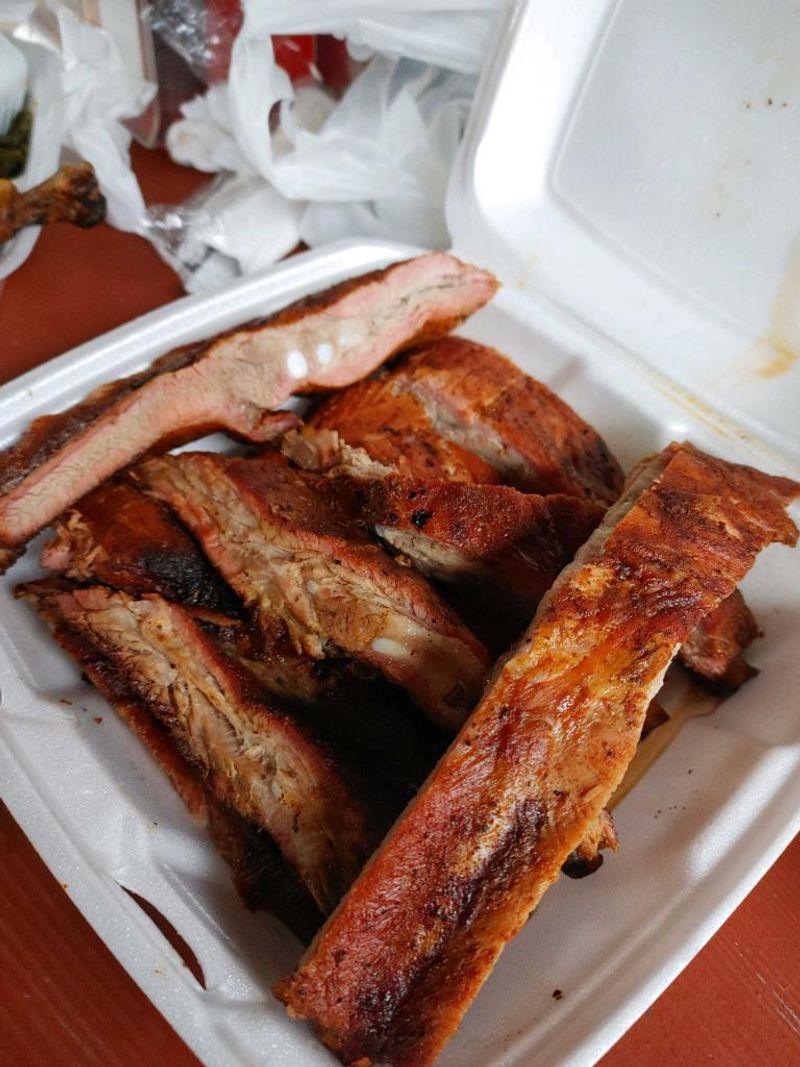
A rack of ribs settles the question of whether this will be a tidy lunch. Probably not, and that’s perfectly fine.
Ribs are among Gray’s best-known dishes, and the menu identifies a rustic block smoker as part of their preparation. The attraction is easy to understand: this is food you pick up, turn in your hands, and eat at your own pace.
A sandwich can disappear while you’re distracted. Ribs tend to insist that you pay attention.
Start with them if you want the most direct introduction to the place, then decide whether you’re ordering for yourself or setting up a shared spread. A half rack makes a different commitment from a full rack, particularly when other meats and sides are joining the table.
Ordering together helps avoid the familiar barbecue problem in which everyone independently chooses enough food for two people and then acts surprised by the leftovers. Sauce is another decision worth considering before you automatically request everything coated.
Customers have been able to order the ribs with or without Rick’s barbecue sauce, giving you a choice about how you want to approach the meat. Either way, keep napkins within reach before the first bite rather than attempting a careful search afterward with sticky fingers.
The picnic-table setting makes ribs feel especially appropriate. There’s space to put down your food, set aside a bone, and return to the conversation without treating lunch as a performance.
You don’t need to dress up, understand competition barbecue terminology, or deliver a verdict on smoke rings. The useful questions are much simpler: how hungry are you, who wants a taste, and which sides should go beside the meat?
A rib order gives the whole meal a clear center, leaving everything else to fill in around it.
Brisket and Chicken Give You Plenty of Reasons to Branch Out
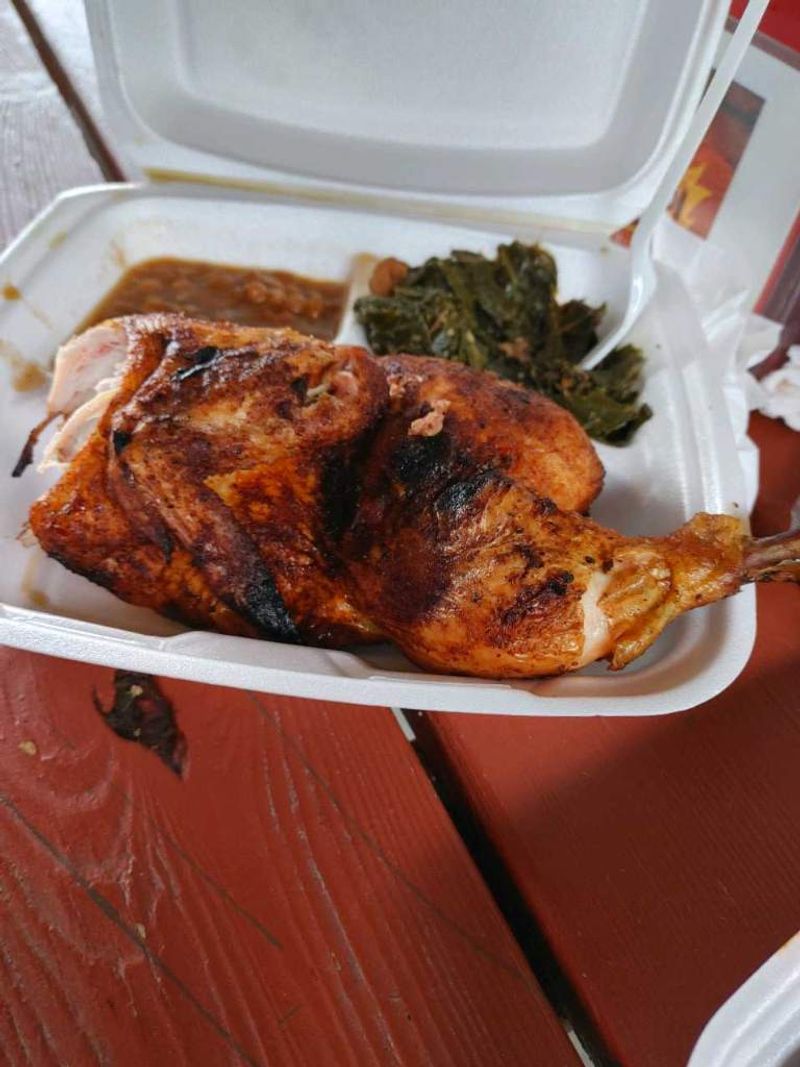
The smartest group order may be the one that refuses to make everybody choose the same meat. Rick’s offers beef brisket and barbecue chicken alongside its ribs, so a table can take several directions without losing the barbecue thread.
Brisket suits the person who wants a fork-friendly meal or a substantial sandwich; chicken provides another way into the menu for someone who simply prefers poultry. There’s no reason to frame one as the serious order and the other as a compromise.
Different appetites are part of eating together. If you’re choosing brisket, consider how much of the meal you want built around bread.
A sandwich keeps everything gathered into one main item, while a platter leaves more room to move between meat and sides. That distinction matters when you’re also hoping to sample somebody else’s ribs.
Chicken works equally well as the center of its own plate or as part of a spread where people trade a few bites. Agreeing on that arrangement before ordering is helpful; announcing that everyone’s lunch is communal after the food arrives can produce some remarkably protective behavior around a good piece of meat.
The broader menu also makes the stop easier for groups whose enthusiasm for barbecue varies. Fried fish, pulled pork, wings, and burgers have appeared among the choices, although the day’s availability should guide the final order.
You don’t have to force the entire table into a rib-and-brisket club. For a first visit, choosing two different meats between two people creates a useful comparison without turning lunch into an oversized tasting project.
Each person still gets a proper meal, and both get a clearer sense of what they would order next time. Sometimes the best outcome is discovering that your favorite dish is the one you almost left to somebody else.
The Sides Deserve Their Share of the Plate
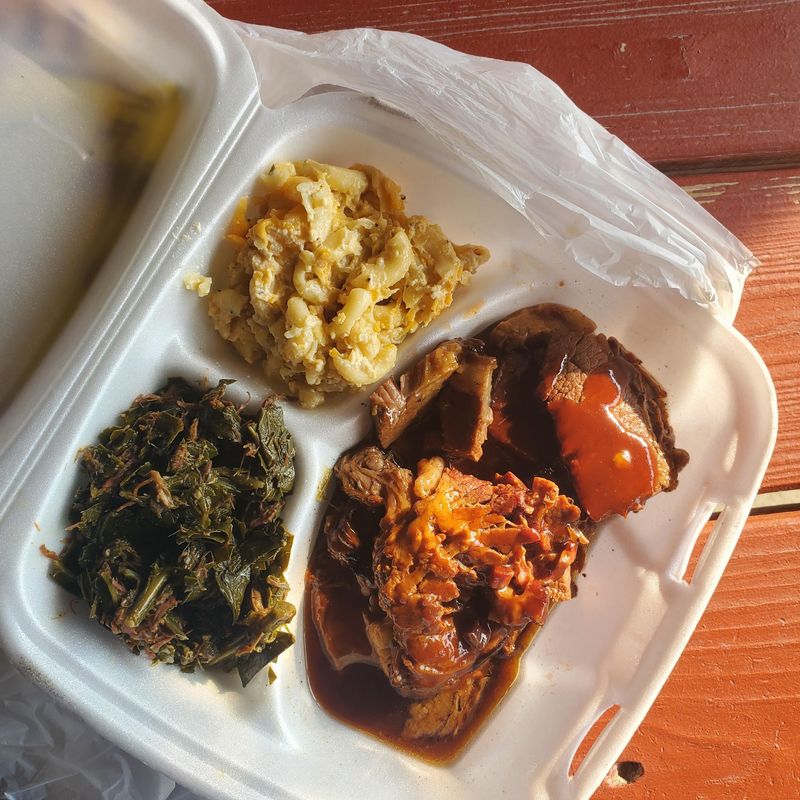
Choosing the meat is only half the discussion. A barbecue plate changes considerably depending on whether you put something creamy, something crisp, or another rich dish beside it.
Rick’s side lineup includes macaroni and cheese, coleslaw, baked beans, collard greens, green beans, and potato salad, with cornbread also available. That gives you several ways to shape the meal rather than treating the sides as whatever happens to fit in the remaining space.
Macaroni and cheese takes things firmly into comfort-food territory. Coleslaw offers a different texture, while vegetables create a useful break between bites of meat.
Beans and potato salad make sense for anyone who wants the familiar lineup of a family cookout. None of those combinations needs to follow a rule, but thinking about contrast helps.
If every item on the plate is rich and soft, you may appreciate something with a little crunch. If you’re hungry enough to make lunch the main event of the afternoon, a more substantial pairing might be exactly what you want.
For a shared meal, variety becomes more useful than duplication. Two people can each order their favorite, or choose different sides and trade a few forkfuls.
Larger groups should settle that question early, especially when several people have quietly decided that all the macaroni and cheese belongs to them. Cornbread fits neatly into this style of eating because it can sit alongside several dishes without demanding a separate course.
Take a bite of meat, try a side, then return to the bread; the plate stays interesting as you work through it. There’s also a practical reason to give the accompaniments some thought.
They help determine how much food you actually need. A rack ordered beside several substantial sides is a different proposition from ribs alone.
The complete meal should guide the order, with enough room on the table—and in your appetite—for everything you picked.
Grab a Picnic Table and Settle Into the Backyard Atmosphere
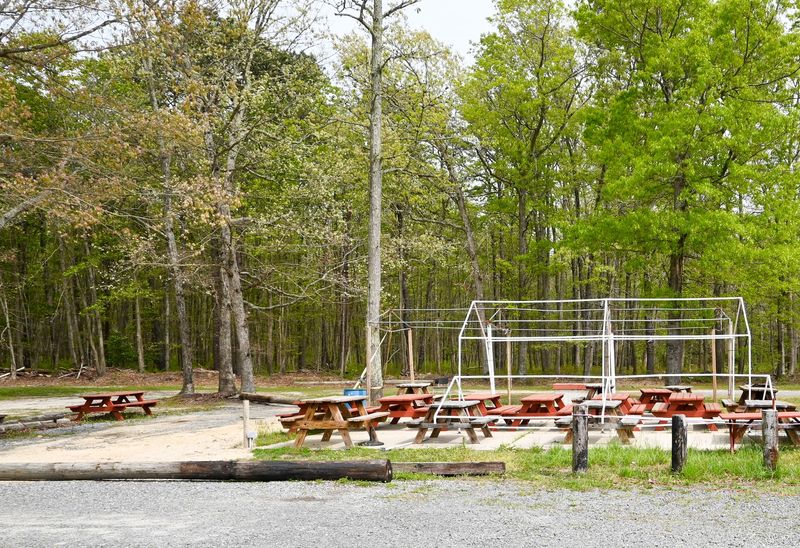
Under a covered pavilion, lunch takes on a different pace. Rick’s has picnic tables for eating on-site as well as a pickup window for takeout, letting you choose between settling in and carrying your order elsewhere.
The seating is a meaningful part of the experience because barbecue benefits from a table that can handle the whole spread. Plates, napkins, drinks, and the occasional shared side need somewhere to land.
A picnic table understands the assignment. The outdoor setup also makes the restaurant’s name feel natural.
Gray learned by watching his father grill and developed his own reputation through family barbecues, so the backyard idea runs deeper than the furniture. It connects the way the place looks with the kind of gathering that inspired it.
You can appreciate that without expecting every visit to unfold like somebody’s family reunion. Sometimes it’s simply two people having lunch, a group stopping between destinations, or one customer enjoying a plate without much ceremony.
Dress for the actual weather, since a roof provides cover but doesn’t turn outdoor seating into a climate-controlled dining room. On a cool afternoon, an extra layer will contribute more to your comfort than any amount of optimism.
Takeout is useful when eating outside doesn’t suit your plans, though sitting down gives you the easiest chance to enjoy the food immediately and make the meal its own part of the day. There’s no need to keep adding activities around it.
After coordinating the opening hours, deciding between ribs and brisket, and negotiating the sides, a little time at the table is a fair reward. The food gives everyone something to discuss at first.
Then the conversation can wander, the plates gradually clear, and a roadside barbecue stop becomes an unhurried stretch of the weekend.
Share this story