A pink stove, a starburst clock, and a motel sign rescued from demolition make an unlikely museum collection. In Wildwood, they make perfect sense.
The Doo Wop Experience Museum gathers the things that gave midcentury Shore vacations their unmistakable personality, from exuberant furniture to neon lettering designed to catch a passing driver’s eye. Even the building has a second life, having started out as a restaurant with a roof that refused to behave like an ordinary roof.
Inside, the appeal goes beyond recognizing something your grandparents owned. These objects explain why Wildwood looks the way it does, and why saving a sign or a steel framework can mean saving part of a town’s identity.
You can fit a visit around the beach and boardwalk, but the museum deserves more than a quick peek. It gives all those colorful motel façades a backstory you’ll carry into the streets afterward, too.
Step Inside Wildwood’s Doo Wop Experience Museum
At 4500 Ocean Avenue, across from the Wildwoods Convention Center, the past comes with considerably more personality than a row of dates behind glass. The Doo Wop Experience focuses on the architecture, design, music, and everyday objects associated with Wildwood’s 1950s and 1960s vacation culture.
Vintage signs and furnishings give that history something tangible to work with. A chair can tell you about the era’s taste; a motel sign can tell you how a business hoped to stand out.
Together, they make a beach town’s history feel surprisingly personal. The useful distinction here is that “Doo Wop” means more than a musical sound.
In the Wildwoods, it also describes a wonderfully expressive approach to buildings and decoration. That helps explain why a pop culture museum spends so much attention on rooflines and furniture.
The vacation experience began before anyone unpacked a suitcase, with the visual promise a motel made from the street. Once you understand that connection, the collection becomes easier to read.
Look at an object first for its appearance, then consider where it belonged and who encountered it. Was it meant to attract customers, make a room feel fashionable, or turn an ordinary purchase into something memorable?
Those questions give children and adults something to discuss without turning the visit into homework. This is also an easy stop to combine with other Wildwood plans because of its Ocean Avenue location.
Timing deserves a little attention, though. The museum operates seasonally, with a narrower schedule outside summer, so confirm opening hours before arranging your day around it.
Arriving with a little breathing room is worthwhile. The fun comes from noticing the details, including the ones you might initially dismiss as merely decorative.
The Space Age Building Has a Comeback Story of Its Own
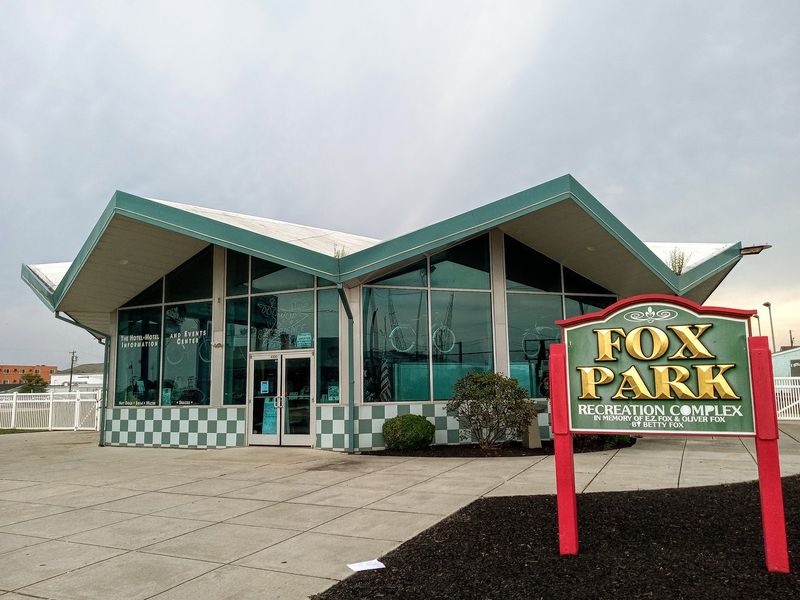
In 1960, the Surfside Restaurant opened in Wildwood Crest with an angular, pinwheel-shaped roof and broad expanses of glass. It was the kind of building that could advertise itself before anyone read the name.
That same structure eventually became the foundation for the museum, but its journey involved disassembly, storage, and a determined preservation effort. When demolition threatened the restaurant in 2002, the Doo Wop Preservation League helped raise $20,000 to save its steel framework.
Wildwood agreed to support its reconstruction in 2005, and the museum opened in April 2007. Knowing those dates changes the experience of standing outside.
You are looking at more than a suitably retro setting for retro objects. The building itself demonstrates what preservation requires when a familiar landmark loses its original purpose.
Someone has to see value in the shape, make a practical case for keeping it, and find somewhere it can belong again. The result also challenges the idea that an old building needs to look solemn to deserve attention.
The Surfside’s roof is playful, with angles that draw your eye around the structure rather than settling into a conventional rectangle. Its theatrical appearance was part of its usefulness as a restaurant: it made people look.
Now, it gives visitors a reason to pause before entering a museum. Take a moment to study the relationship between the roof and the glass beneath it.
Notice how much of the building’s identity comes from its outline rather than applied decoration. That is a useful lesson to carry through the rest of the collection.
Signs, furnishings, and buildings all worked together to give Wildwood a recognizable style. Here, the museum’s shell makes that point before a single exhibit gets involved.
A restaurant that once depended on attracting hungry vacationers now attracts people curious about the world those vacationers knew.
Vintage Furniture Brings the 1950s and 1960s Back Into Focus
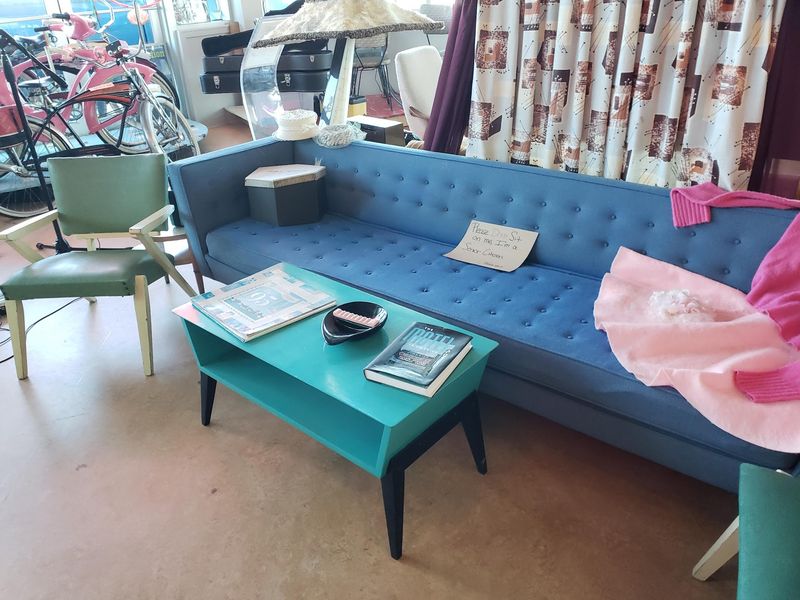
Someone in your group may recognize a clock before they recognize an architectural style. That is one of the pleasures of the furniture displays: everyday objects offer an immediate way into a period that can otherwise feel distant.
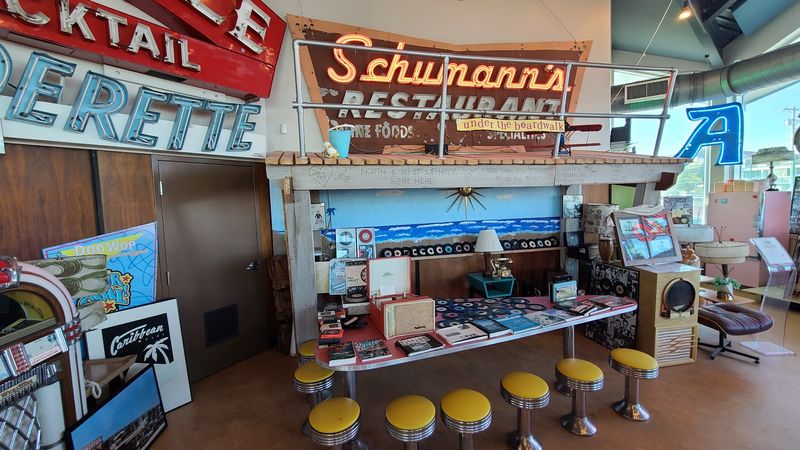
Lamps, chairs, tables, and household pieces bring the scale of the story down from an entire resort to a single room. The kitchen display is particularly good at catching attention.
A pink stove, green cabinetry, and a starburst clock make a persuasive case that practical spaces need not be shy about color. Elsewhere, a Wurlitzer jukebox and a malt-shop-style counter connect domestic design with the places people gathered outside the home.
Rather than treating everything as a photo backdrop, look at how the objects balance usefulness and showmanship. The stove still had a job to do; the clock still needed to be readable.
Yet their appearance mattered enough to make them expressive parts of a room. That is where the displays become more interesting than a simple parade of old possessions.
They reveal choices people made about how ordinary life should look. It is also worth separating recognition from memory.
You do not need to have grown up with this furniture to enjoy its proportions, materials, or unexpected colors. Younger visitors can approach the objects as unfamiliar designs, while older visitors may find themselves explaining exactly where a similar piece stood in a relative’s house.
Both responses belong here. Allow those conversations to happen rather than racing toward the next object.
A museum about popular culture works especially well when a small detail prompts a story from someone beside you. One person sees an unusual lamp; another remembers the room it illuminated.
Suddenly, the object has moved beyond its date and become part of an actual life.
Rescued Neon Signs Keep Old Wildwood Glowing
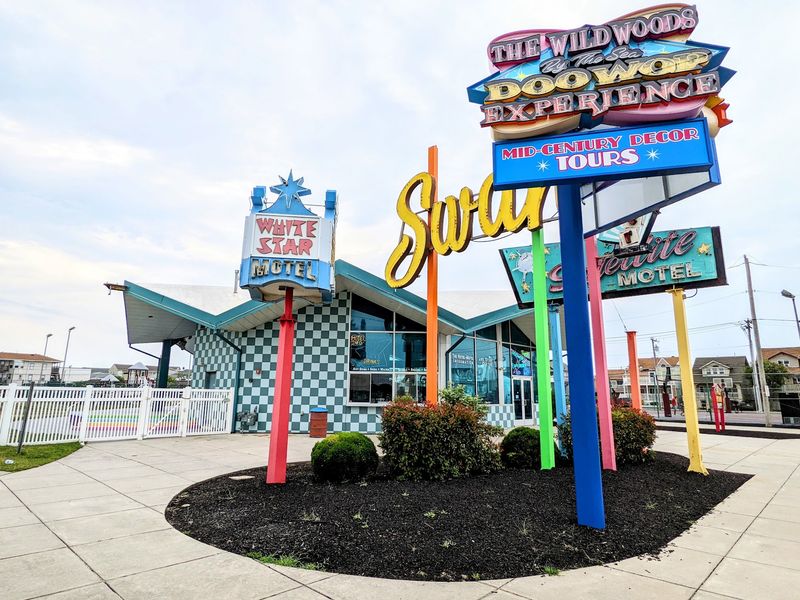
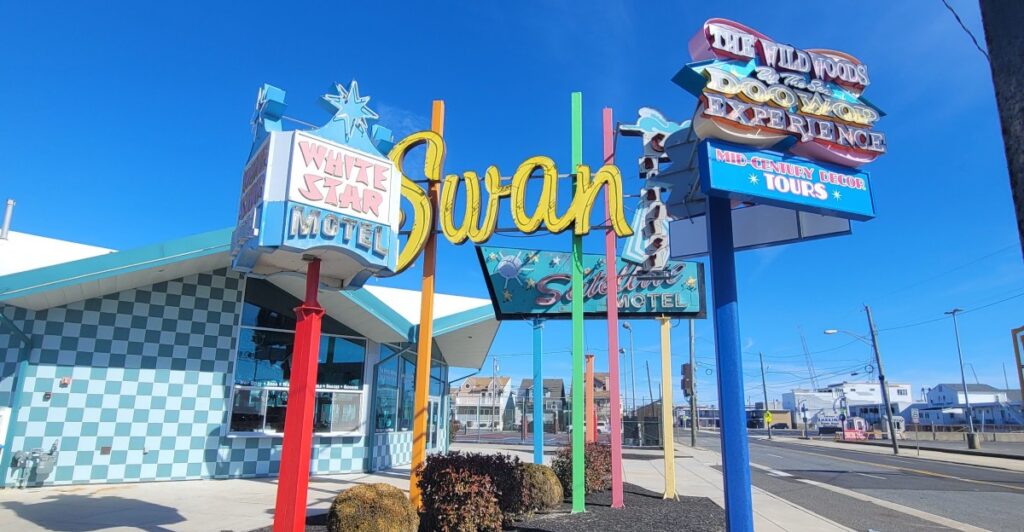
A motel can disappear while its name survives in glass tubing and metal. Outside the museum, the Neon Sign Garden preserves restored signs from Wildwood properties that were demolished or remodeled.
They are remnants of businesses, certainly, but they are also examples of how the town once introduced itself to vacationers. Consider the original assignment.
A sign had to be legible, memorable, and tempting enough to pull attention away from competing properties. The Doo Wop approach answered with exaggerated shapes, distinctive lettering, and plenty of light.
Stars and other bold forms gave a business an identity that could register quickly from the road. Seen together, the signs invite comparison.
Look at which features catch your eye first. Is it the outline, the typeface, or the way the name fills the available space?
Some designs communicate excitement; others suggest escape or an imagined destination far from New Jersey. That variety is part of the appeal.
The signs share an era without all speaking in the same voice. They also make the consequences of redevelopment easier to understand.
When a property changes, the loss can include something much more distinctive than a building footprint. A familiar piece of lettering may have marked the start of somebody’s annual vacation for decades.
Saving it preserves a small but recognizable part of that experience. Daylight is useful for examining the physical construction and shapes.
When the signs are illuminated after dark, the emphasis shifts toward their original purpose: commanding attention through light. Neither view tells the whole story alone.
The garden works as a collection of design objects, but it also gives a sense of the visual competition that once animated the streets. These signs were built to be noticed in passing.
Here, they finally get the benefit of an audience willing to stop.
Discover the Music and Motel Culture That Shaped the Shore
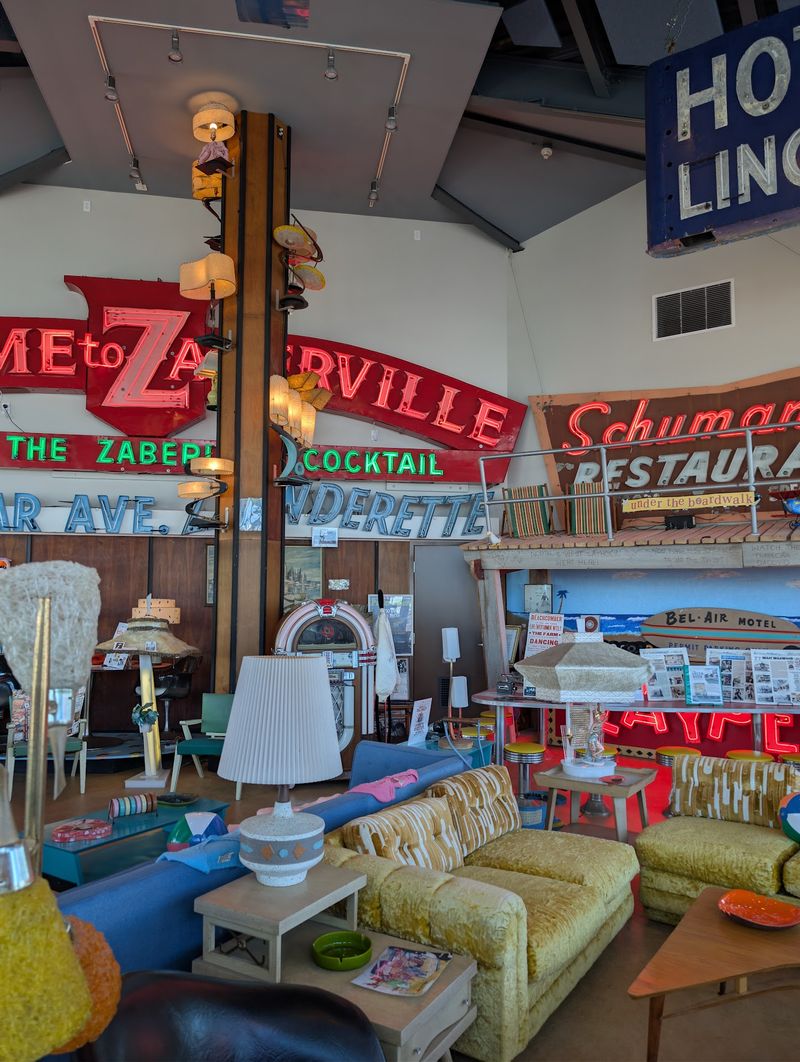
Before a family reached the sand, it had already encountered a carefully designed vacation setting. Postwar prosperity and car travel helped shape the Wildwoods, where motels competed for motorists’ attention and entertainment venues added another reason to stay.
The resort’s architecture reflected that energy through angular forms, tropical imagery, vivid colors, and neon. Music belonged to the same larger picture of a place selling a good time.
That connection makes the museum’s mix of subjects sensible. A jukebox and a motel sign might appear to belong in separate exhibitions, yet both helped establish the mood of a vacation.
One offered the soundtrack; the other supplied the first impression. Furniture carried that impression into the room.
Together, they show how popular culture reached people through experiences rather than existing only on records or television screens. The motel designs are especially revealing because their basic functions were straightforward.
Guests needed somewhere to sleep, park, and relax. Owners could meet those needs while still giving the property a memorable name, an unusual entrance, or a striking color scheme.
Architectural flourishes turned practical accommodation into part of the entertainment. The Doo Wop design vocabulary includes boomerang rooflines, decorative balcony railings, pastel colors, and poolside imagery that borrows from imagined tropical vacations.
Once you start spotting those elements, they seem less random. A building’s appearance becomes a deliberate invitation.
That does not mean every detail needs a scholarly explanation. Sometimes the pleasure is simply noticing how much character a railing or sign can add.
Still, understanding the relationship between music, motels, and motoring gives the collection depth. Wildwood’s identity was shaped by all three, and the museum lets you consider them together.
What first looks like an assortment of nostalgic objects becomes evidence of how a resort made itself distinctive, one visual decision and one evening’s entertainment at a time.
Take Your Nostalgia Trip Beyond the Museum Walls
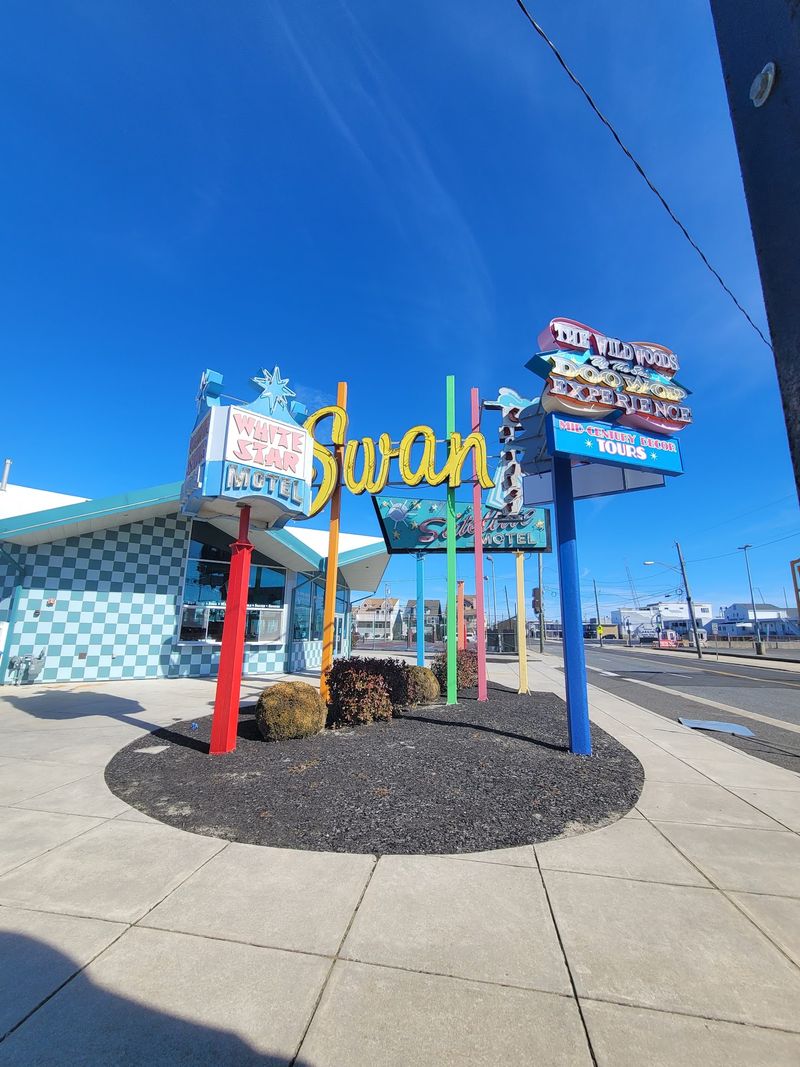
Back on Ocean Avenue, the exhibits have a useful aftereffect: the surrounding buildings become harder to overlook. A roofline that previously registered as “old motel” may now reveal an intentional gesture.
A curving railing starts to look like part of the property’s personality. The museum provides a way of looking that travels comfortably beyond its entrance.
The Wildwoods’ surviving midcentury resort architecture gives you plenty of opportunities to use it. A self-directed walk can be as simple as slowing down and paying attention to buildings visible from public streets.
Compare names, entrances, lettering, and colors rather than trying to find one definitive example. Avoid wandering into motel courtyards or pool areas unless you are a guest or have permission; these are working properties as well as pieces of local history.
The distinction matters because their continued use is part of what makes the setting interesting. For a guided version, the seasonal Doo Wop Back to the ’50s Neon Night Tours explore motel architecture and signs by trolley, departing from the museum.
The 2026 summer schedule ran on Tuesday and Thursday evenings, with adult tickets priced at $25 and tickets for children 12 and younger at $15. Those dates have passed, so a future visit needs the next season’s confirmed schedule rather than assumptions based on the previous one.
The beach and boardwalk also fit naturally into the day, without requiring the museum to become a rushed intermission. Give each part of Wildwood its own time.
The broad vacation story makes more sense when you have experienced both the exhibits and the town around them. By evening, a motel sign can carry more than a business name.
It can suggest the people who designed it, the drivers it hoped to attract, and the families who came to recognize it as the beginning of another summer.
Share this story