Pennsylvania’s queen snake is a picky eater with a strange rule: it mostly eats crayfish that have just shed their shells. A soft crayfish is easy to swallow, and this snake has built its whole life around that timing.
The more common northern water snake has its own odd habits. It doesn’t lay eggs. Instead, females give birth to live babies in late summer, sometimes a couple dozen at once. People often mistake it for a copperhead, even though it has no venom at all.
I love that these slippery neighbors share our favorite fishing holes, paddling routes, and creekside trails. They bask on rocks, logs, and low branches, then slide into the water the second you get close.
So where are your odds best? A few rivers and creeks around the state stand out, and one even carries a name tied to snakes. Don’t let the beauty of these places make you forget to stay cautious!
1. Susquehanna River
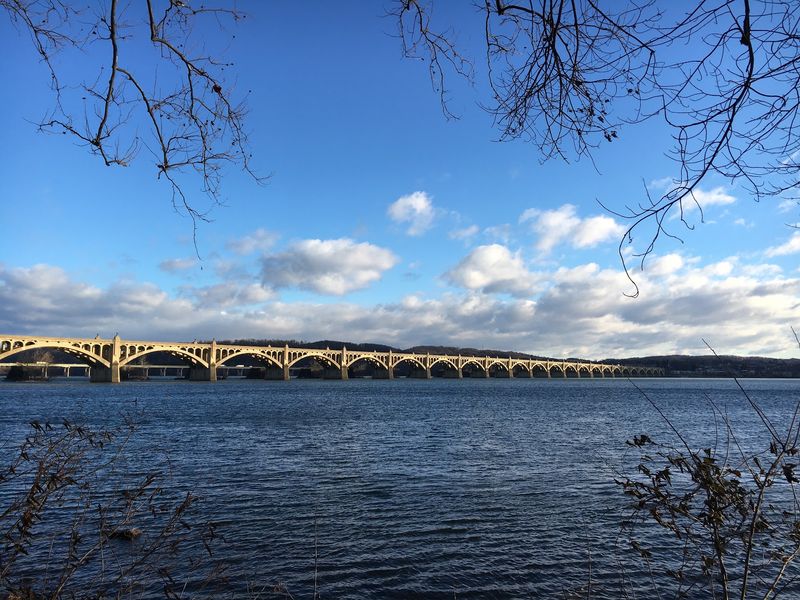
Three snake species treat the Susquehanna like a riverside buffet with plenty of seating.
Northern water snakes, eastern garter snakes, and queen snakes all make their homes along this giant waterway.
Size is a big part of the appeal.
The Susquehanna is wide, and many stretches have shallow shoals and bubbling riffles that suit reptiles perfectly.
Queen snakes especially love those rocky shallows.
Why?
Crayfish hide under the stones, and queen snakes eat them almost exclusively.
You can spot a queen snake by its slim brown body.
Look for a yellow stripe running along each lower side, like racing stripes on a tiny car.
Northern water snakes are the bigger, bolder cousins.
They have dark bands that can fade as they age, so older ones might look plain brown or nearly black.
Your best viewing spots are sun-warmed boulders near the shore.
Snakes are cold-blooded, so they soak up heat there before slipping off to hunt fish and frogs.
Susquehanna Riverlands State Park in York County gives you a handy place to start.
It sits right along the river near Wrightsville, with access to the shoreline and floodplain.
The floodplain matters more than you might think.
Garter snakes cruise these grassy, damp areas looking for worms, toads, and other small snacks.
Want to see a snake without spooking it?
Walk slowly and scan rocks before you reach them, because a snake that feels your footsteps will splash away fast.
Keep your hands to yourself, though.
A northern water snake isn’t venomous, but it will bite if grabbed and release a stinky musk that sticks around.
Bring binoculars for the best views of basking snakes.
You’ll get great looks while keeping a polite distance.
Spring and early summer are great times to watch for activity.
Snakes come out to warm up after cool nights, so mid-morning sunshine can be prime time.
Paddlers may notice snakes swimming with just their heads above water.
That’s normal behavior, and the snake almost always wants to avoid you more than you want to avoid it.
Address: Susquehanna Riverlands State Park, 6309 River Rd, Wrightsville, PA 17368
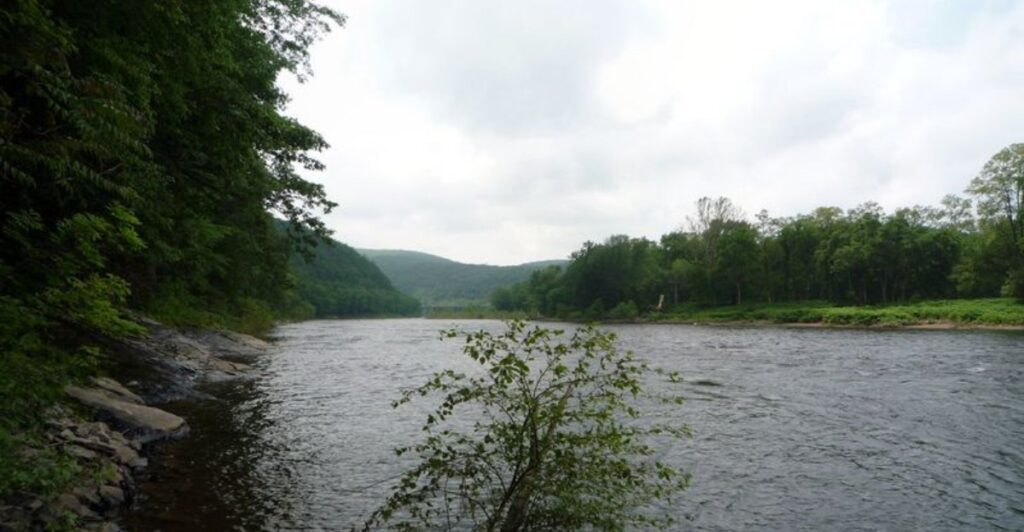
2. Delaware River
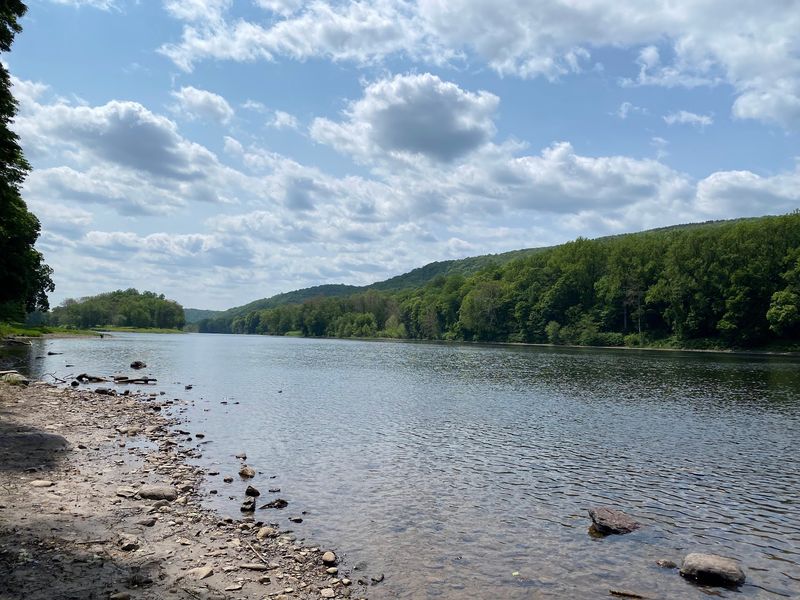
Paddling the Delaware means sharing the current with some of the river’s quietest locals.
Northern water snakes live in both the water and the land around the Upper Delaware region.
That double life makes them easy to bump into.
One minute a snake is coiled on a log, and the next it’s gliding across a calm pool.
Near Bushkill, the river flows through the Delaware Water Gap National Recreation Area.
Here, the river forms the border between Pennsylvania and New Jersey, so you’re technically eyeing two states at once.
Water snakes love edges with a mix of sun and shade.
Rocks, fallen logs, and thick plants along the bank give them places to bask and hide.
Look closely at those partly shaded spots.
A brown snake on a brown log is a master of disguise, and you may notice it only when it moves.
Eastern garter snakes also show up near the river.
They’re usually smaller and have three light stripes running down their bodies.
Here’s a fun fact for your next float trip.
Northern water snakes can stay underwater for a while as they hunt fish along the bottom.
Many people panic and call them water moccasins.
Good news: cottonmouths don’t live in Pennsylvania, so the snake you spot is likely to be a nonvenomous northern water snake, but never approach or handle an unidentified snake.
Still, give it space.
A water snake that feels cornered may flatten its head and strike, which looks scary but is mostly a bluff.
If one swims toward your canoe, stay calm.
It’s likely just heading for the far bank and sees your boat as a floating log.
Fishing along the shore?
Check the rocks before you sit, since your perfect casting seat might already belong to a sunbathing snake.
Hiking trails near the river offer chances too.
Watch damp areas and stream mouths, where small creeks join the main river.
With its forested hills and clear water, the Delaware feels wild even close to busy towns.
That wildness is exactly why snakes thrive here.
Address: Delaware Water Gap National Recreation Area, Bushkill, PA 18324
3. Brandywine River
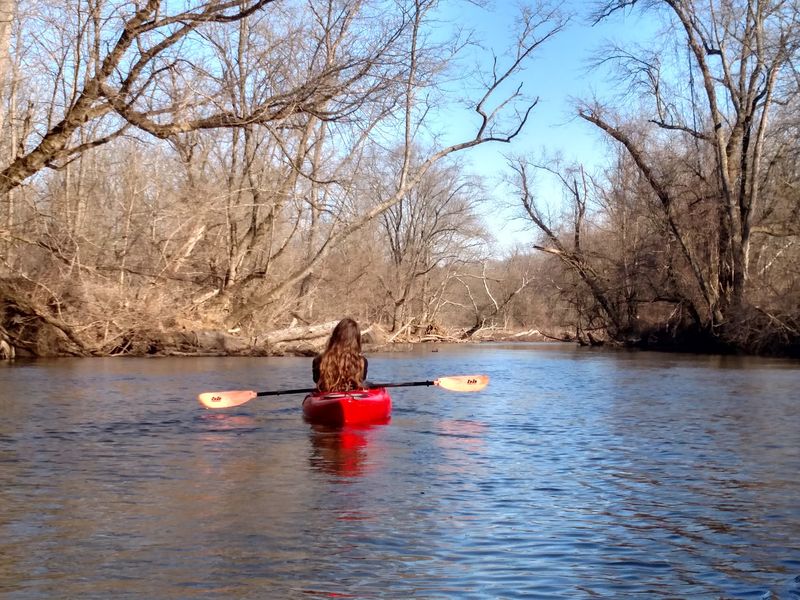
Kayakers on the Brandywine sometimes get a scaly escort.
Northern water snakes have been spotted along the river, especially between Downingtown and Chadds Ford.
That stretch is popular for kayaking and canoeing.
Calm water and leafy banks give you plenty of chances to watch for reptiles while you paddle.
So what should you look for?
A thick snake with dark crossbands, often swimming with its head poking above the surface.
Young water snakes look flashier than adults.
Their bands are crisp and bold, while older snakes often turn dull and muddy brown.
Brandywine Meadows Preserve near Downingtown is a handy place to stop.
It gives you an easy spot to view the river from land.
Meadows and riverbanks are classic garter snake country.
These striped snakes are common near water across Pennsylvania and often hunt in tall grass.
Garter snakes have a neat trick.
Like water snakes, they give birth to live young instead of laying eggs.
When you walk the banks, move at a slow, easy pace.
Snakes feel ground vibrations, so stomping is like ringing a doorbell before you arrive.
Sunny mornings after a cool night are a smart time to look.
Snakes stretch out on rocks and logs to warm up before getting busy.
Got kids along?
Turn it into a game of spotting, not catching, and reward the first person who finds a basking snake.
Teach them a simple rule too.
Look with your eyes, never your hands, because even harmless snakes bite when they feel grabbed.
The Brandywine eventually crosses into Delaware on its way to meet other waters.
Along the way, it passes through farmland, woods, and small towns that make it feel peaceful.
Snakes help keep that balance.
They eat fish, frogs, and other small animals, and in turn they become food for herons and hawks.
So when a snake slips off a rock ahead of your kayak, take it as a good sign.
A river with snakes is usually a river full of life.
Address: Brandywine Meadows Preserve, 1750 U.S. 322, Downingtown, PA 19335
4. Cocalico Creek
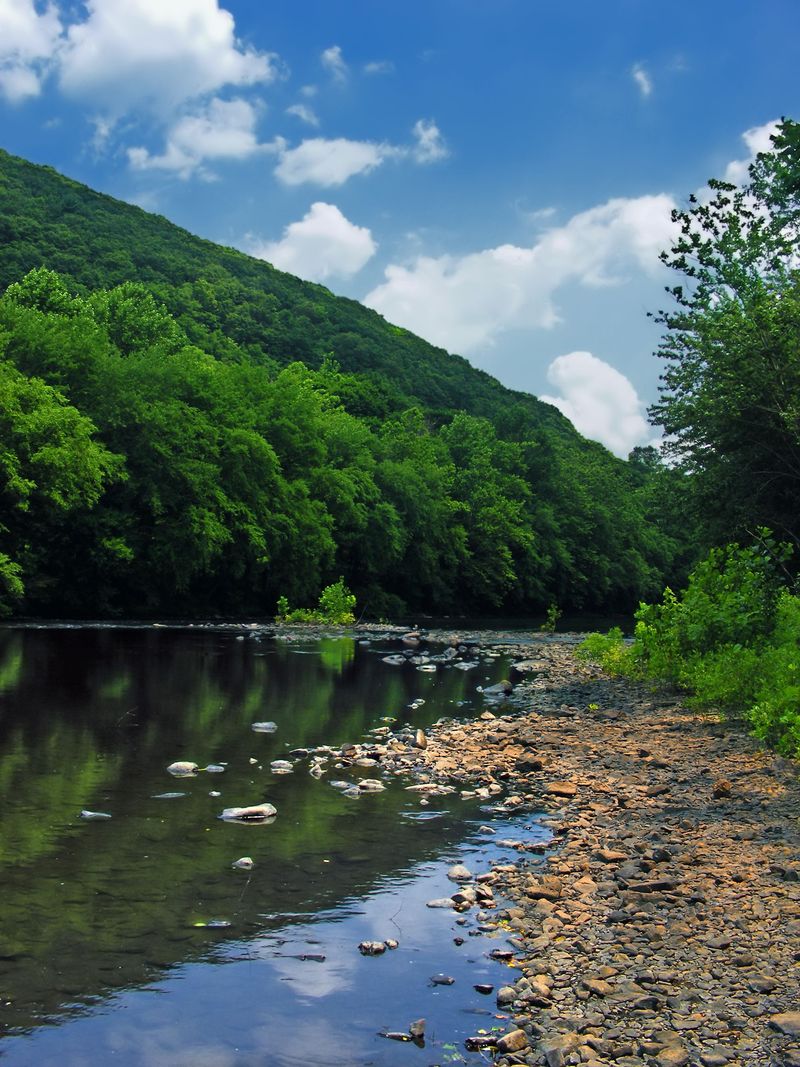
Talk about truth in advertising.
The name Cocalico traces back to a Native American phrase often translated as den of snakes.
That old name still fits.
Northern water snakes, eastern garter snakes, and queen snakes all match the habitat this creek offers.
Queen snakes need clean streams with lots of crayfish.
Cocalico Creek’s flowing water and rocky bottom give them the setting they crave.
These snakes are super picky about dinner.
They mostly eat crayfish right after the crayfish shed their hard shells, when the bodies are still soft.
Because of that diet, queen snakes are a clue about water quality.
If crayfish thrive, the stream is likely in decent shape.
A fun place to explore is near Zooks Mill Covered Bridge in Brownstown.
The bridge crosses the creek in Lancaster County farm country.
Covered bridges and snakes might seem like an odd pair.
Yet the shady banks and rocks below bridges make great spots for basking reptiles.
Look along the water’s edge for slim brown snakes.
A queen snake has yellow stripes low on its sides and a belly with dark lines.
Northern water snakes are chunkier and more common.
You might see one draped on a branch hanging over the water.
The creek is part of the Cocalico Creek Watershed, which stretches through Lancaster and Lebanon counties.
That’s a lot of streamside space for snakes to roam.
Remember that much of the land nearby is private farmland.
Stick to public spots and respect posted signs while you explore.
Flip rocks?
Better not.
Moving stones can crush crayfish homes and disturb snakes hiding underneath.
Instead, sit quietly near a riffle for a while.
Snakes often reappear after a few minutes once they decide you’re harmless.
Bring a camera with a decent zoom.
A queen snake gliding between stones under a historic bridge makes a pretty great photo.
Address: Zooks Mill Covered Bridge, 4771-4799 Creek Rd, Brownstown, PA 17508
5. Wissahickon Creek
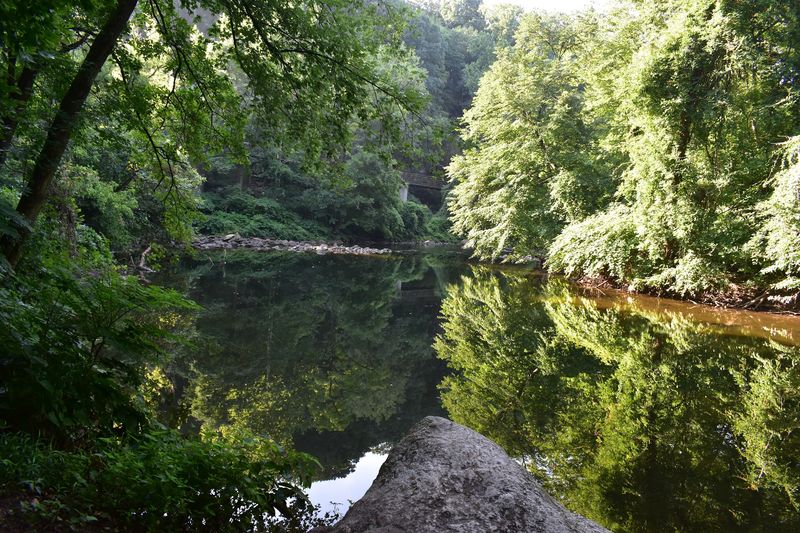
Philadelphia might be famous for cheesesteaks, but its creek snakes deserve some fame too.
Northern water snakes are common along the banks of Wissahickon Creek.
The creek winds through Wissahickon Valley Park, a huge stretch of woods inside the city.
You can hear traffic one minute and spot a basking snake the next.
Rocky ledges and bushes line much of the water.
Those features give snakes sunny perches and quick escape routes.
Livezey Dam is one standout spot.
The rocks around the dam offer prime real estate for snakes soaking up warmth.
Many visitors start near Valley Green Road.
From there, Forbidden Drive follows the creek, giving walkers and bikers easy views of the water.
Keep your eyes low as you stroll.
A northern water snake often lies flat on a rock, blending in with mud and moss.
Eastern garter snakes also hang around wet areas in the park.
Their stripes make them a bit easier to pick out against green leaves.
You may hear a splash before you see anything.
That plop near the bank could be a frog, a turtle, or a snake making a quick exit.
Dogs are curious about snakes, so keep yours close.
A sniff can turn into a nip, and nobody wants that.
Here’s a cool thing to watch for.
Water snakes sometimes hunt by poking their heads under rocks in shallow water, searching for small fish.
Urban snakes face plenty of challenges.
Litter, runoff, and busy trails all affect them, so carry out any trash you bring in.
Love photography?
Find a quiet rock, sit still, and wait, since snakes often return to their favorite basking spots.
Spotting wildlife in a big city feels like a small victory.
The Wissahickon proves that nature can thrive right next to rowhouses and city buses.
Address: Wissahickon Valley Park, Valley Green Road, Philadelphia, PA 19128
6. Schuylkill River
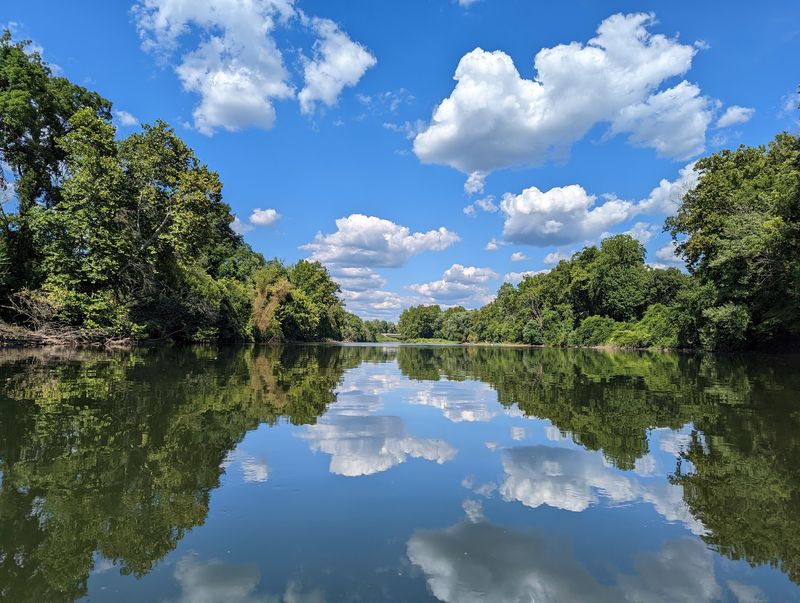
Cyclists on the Schuylkill River Trail zip right past some of the river’s most relaxed residents.
Northern water snakes are often found along this busy waterway.
Look at low branches hanging over the river.
Snakes like to drape themselves there, soaking up sun with an easy escape straight down.
When something gets too close, they simply drop.
A snake hitting the water with a sudden plunk can make even calm people jump.
Upper Schuylkill Valley Park in Royersford gives you a nice spot near the river.
Its riverside setting makes snake watching easy without a boat.
The trail itself offers many access points too.
You can hop off your bike and scan the banks from several different places.
Eastern garter snakes are also common here.
They often slither across grassy edges near the path, especially on warm days.
Spot a snake on the trail?
Simply stop and let it cross, since it’s usually in a hurry to get somewhere safer.
Never try to move a snake with your foot.
That’s a quick way to earn a defensive strike and a smelly musk on your shoe.
Want a quick ID tip?
Northern water snakes have thick bodies and banded patterns, while garter snakes are slimmer with stripes.
Spring is mating season for many snakes.
You might even see a few water snakes tangled together near the water.
Fishing along the Schuylkill?
Snakes may eye your catch on a stringer, so keep it close and watch the water.
The river runs through suburbs, parks, and towns on its way toward Philadelphia.
Snakes have adapted surprisingly well to living near people.
Patience pays off here.
Find a spot with a view of overhanging branches and give it ten quiet minutes.
Address: Upper Schuylkill Valley Park, 1615 Black Rock Rd, Royersford, PA 19468
7. Allegheny River
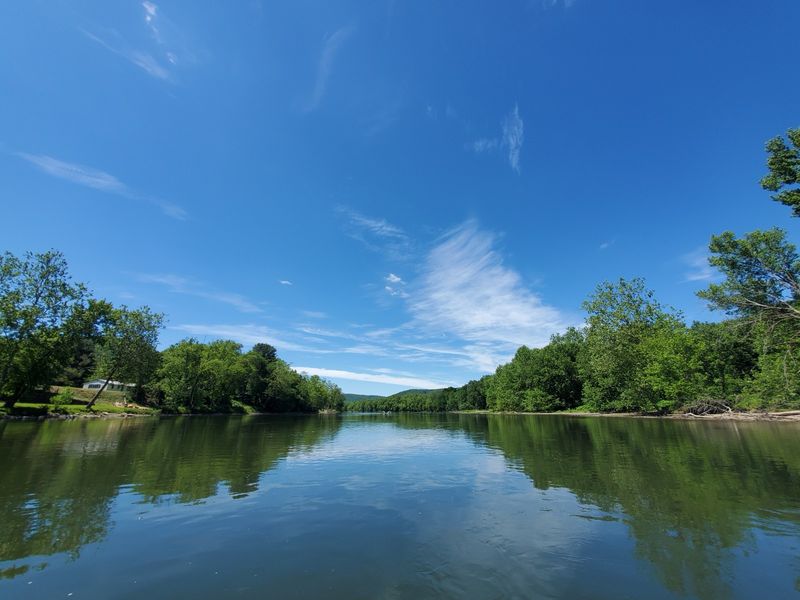
Deep in the Pennsylvania woods, the Allegheny River hosts a quiet snake party.
Northern water snakes and queen snakes both live along this forested river.
The Allegheny National Forest surrounds long stretches of the river.
Thick trees, clean water, and plenty of food make life easy for reptiles.
Food is the big draw.
Fish, frogs, and crayfish fill the river, so snakes rarely go hungry.
Queen snakes zero in on those crayfish.
They search under rocks in shallow areas where crayfish hide after shedding.
Northern water snakes are less fussy.
They’ll grab small fish, amphibians, and whatever else fits in their mouths.
Eastern garter snakes join the crew too.
You might spot them near campsites, meadows, and the damp edges of the forest.
Paddlers on the Allegheny often enjoy calm, scenic water.
Keep an eye on rocky banks and fallen trees as you drift by.
A snake sunning on a log will probably slide away as you approach.
Coast quietly and you might sneak a closer look.
Camping near the river?
Store food well and keep your gear zipped, mostly for the mice that snakes love to chase.
Morning mist can make wildlife spotting tricky.
Wait for the sun to burn it off, since warming rocks bring snakes out to bask.
The forest office in Sheffield is a good place to grab information.
Rangers can point you toward river access areas and trails.
Here’s a fun fact for your trip.
Queen snakes are excellent swimmers and spend lots of time in or right next to the water.
With so much wild space, the Allegheny feels like a true snake sanctuary.
Bring good shoes, a sense of adventure, and a sharp pair of eyes.
Address: Allegheny National Forest, 407 E Main St, Sheffield, PA 16347
8. Ohio River
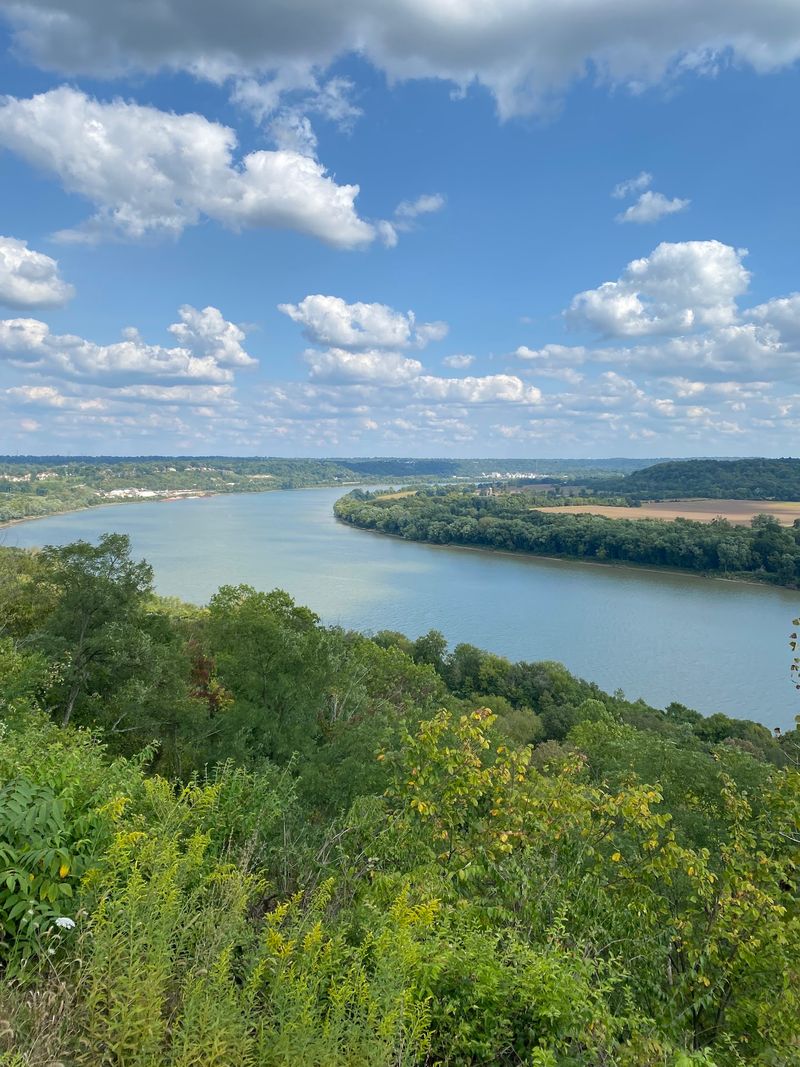
Few snakes can claim a skyline view like the ones along the Ohio River.
The river begins right in Pittsburgh at Point State Park.
That famous spot is where the Allegheny and Monongahela meet.
Together they form the Ohio, which then rolls west toward other states.
Northern water snakes live up and down the Ohio.
Look for them basking on stumps, logs, and rocks along the shore.
Eastern ribbon snakes also call the river home.
They’re thin and striped, a bit like a garter snake that went on a diet.
Queen snakes show up as well.
Their love of crayfish keeps them near rocky shallows where those little critters hide.
Point State Park is known for its big fountain at the tip.
Families gather here to watch boats, bridges, and the busy rivers.
Snake spotting in a downtown park takes some patience.
Head toward quieter stretches of riverbank away from crowds for better luck.
Ribbon snakes are fast and shy.
If you see a slim striped flash dart into the plants, you might have met one.
Want to tell a ribbon snake from a garter snake?
Ribbon snakes have a longer, skinnier tail and a more slender body overall.
Bridges and river walls create odd but handy snake habitat.
Cracks and rocks give them places to tuck away from the heat.
Remember that city rivers carry boat traffic.
Snakes stay near the edges, so that’s where your eyes should focus.
Snakes help control fish and frog populations here.
They also feed herons and other birds that hunt along the shore.
Seeing wildlife with skyscrapers behind it is a special kind of thrill.
The Ohio River proves wild things can still thrive in a big city.
Address: Point State Park, 601 Commonwealth Pl, Pittsburgh, PA 15222
9. Monongahela River
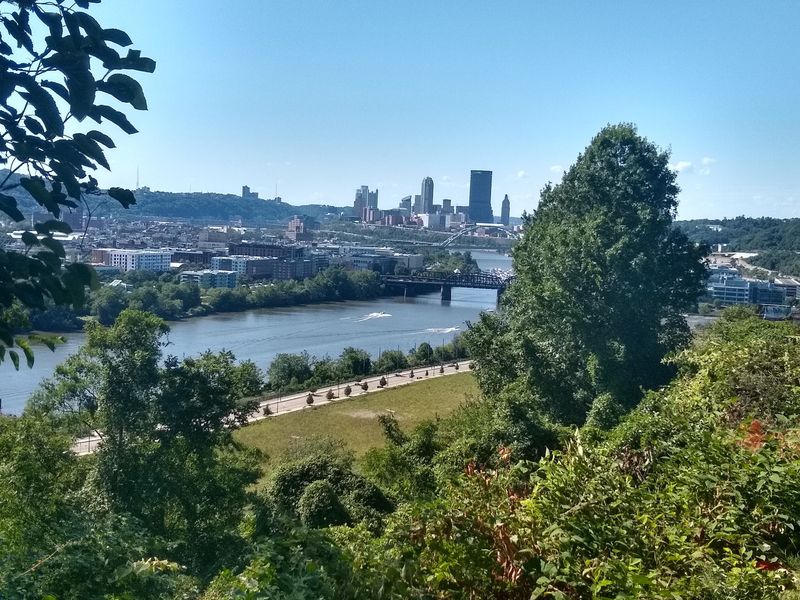
Pittsburgh locals call it the Mon, and snakes seem to like it just fine.
The Monongahela flows north before joining the Allegheny to form the Ohio.
Since all three rivers share water and wildlife, it makes sense that snakes would too.
Northern water snakes and eastern garter snakes are strong bets here.
The river’s banks hold driftwood, rocks, and plants.
That mix gives snakes places to bask, hunt, and hide.
Point State Park sits right where the Mon ends.
It’s an easy spot to see the meeting of the rivers and scan the edges for wildlife.
Northern water snakes love slow, calm sections.
They swim with their heads up, looking a bit like a stick with a mission.
Garter snakes stick closer to grassy land.
Check the edges of lawns and paths near the water on warm days.
Want a fun observation challenge?
Try counting how many basking spots you can find before you spot an actual snake.
The Mon has a long industrial past tied to steel.
Today, cleaner water helps fish return, and snakes follow the food.
That comeback is good news for nature lovers.
Herons, fish, and turtles share the river with its reptile residents.
Out on a boat?
Look along walls and riprap, the piles of rocks used to protect banks, since snakes love those crevices.
Keep a respectful distance when you spot one.
A startled water snake might strike, but it’s mostly a warning to back off.
Remind young explorers that snakes are not slimy.
Their scales are dry and smooth, even when they’ve just been swimming.
From city trails to quiet coves, the Monongahela offers plenty of snake-watching chances.
Just pick a sunny afternoon and stay curious.
Address: Point State Park, 601 Commonwealth Pl, Pittsburgh, PA 15222
10. French Creek
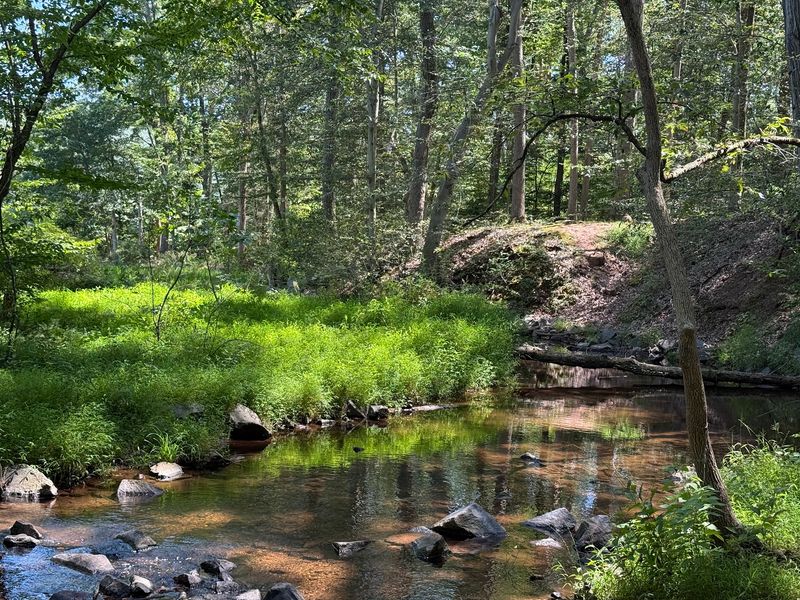
Scientists have a soft spot for French Creek, and snakes appear to agree.
This northwestern Pennsylvania stream is known for its wide variety of aquatic life.
Wetlands, lakes, and streams all feed into its watershed.
Those mixed habitats give snakes both hunting grounds and sunny basking spots.
Studies in the Erie County parts of the watershed documented northern water snakes.
Eastern garter snakes turned up there too.
Wetlands are snake heaven.
Frogs, small fish, and insects gather in shallow water, creating an easy menu for hungry reptiles.
Bousson Environmental Center near Saegertown is a great place to learn more.
It’s run by Allegheny College and focuses on nature study.
Visiting a place built for learning adds extra fun.
Bring a notebook and sketch the snakes, plants, and animals you spot.
Northern water snakes can grow fairly long and thick.
Big ones might look intimidating, but they still pose little danger to careful watchers.
Garter snakes are smaller and quicker.
Their striped backs help them blend into tall grass along the creek.
French Creek is also famous for freshwater mussels.
Healthy mussel beds usually point to good water quality, which helps the whole food chain.
Paddling the creek offers peaceful, twisting routes.
Watch overhanging branches and muddy banks as you float.
Spotted a snake?
Snap a picture and share it with local nature groups, since sightings help researchers track wildlife.
Wear sturdy shoes near wet areas.
Slippery mud is a bigger threat to your day than any snake.
French Creek shows how clean water supports lots of life.
Seeing a water snake here means the stream is doing its job well.
Address: Bousson Environmental Center, 12700 Crawford Dr, Saegertown, PA 16433
11. Conestoga River
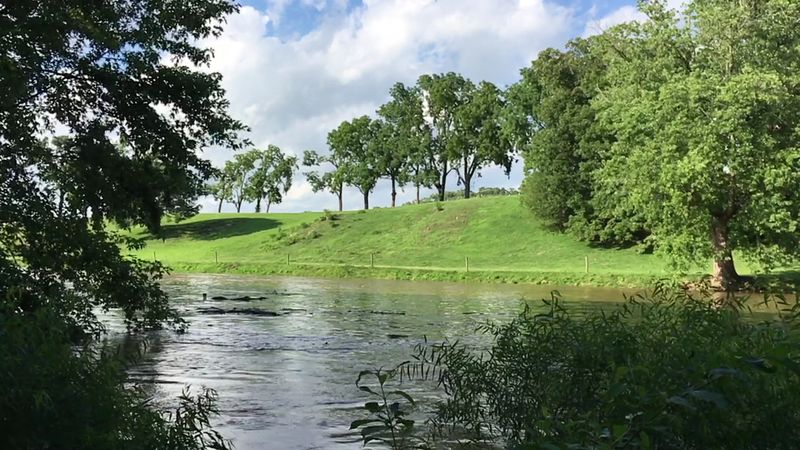
Long before snakes stole the show, this river lent its name to the famous Conestoga wagon.
Those sturdy wagons were tied to the Lancaster County region.
Today, the Conestoga River offers a different kind of traveler to watch.
Northern water snakes, eastern garter snakes, and queen snakes all find good habitat here.
Queen snakes like shallow, rocky streams loaded with crayfish.
Parts of the Conestoga in Lancaster County fit that description nicely.
Crayfish shelter under stones in the riffles.
Queen snakes slip between those rocks, searching for a freshly molted meal.
Northern water snakes stay busy too.
They hunt fish and frogs and bask on logs between meals.
Garter snakes roam nearby fields and banks.
Lancaster County’s farmland and woods give them plenty of room to explore.
Conestoga River Park in Lancaster gives you a spot to start your search.
Walk the banks slowly and keep an eye on sunny rocks.
Bring water shoes if you want to wade in safe, shallow areas.
Watch where you step, since snakes may rest under ledges.
Here’s a fun detail about queen snakes.
They’re shy and often hide rather than bite, though they may release musk if handled.
Want to help the snakes?
Leave rocks where they are and avoid trampling streamside plants.
Farm runoff can affect local streams.
Healthy crayfish and snakes are a hopeful sign that the river still supports a lot of life.
Kids might enjoy keeping a snake journal.
They can note the date, weather, and what each snake was doing.
The Conestoga makes a fine finale for Pennsylvania snake spotters.
Who knew wagon country could be such great serpent country too?
Address: Conestoga River Park, 1850 River Rd, Lancaster, PA 17602
Share this story