A cave in Tennessee comes with a ghost story so famous that a future president reportedly got curious about it. That alone would make a great trivia night answer, and it barely scratches the surface.
The same state also has a city that once stayed off maps while thousands of workers built something truly top secret. Under a mountain, divers have mapped more than 13 acres of underground water and still haven’t found the end.
Most of us grew up hearing about the Smokies and country music on repeat. The stranger stories often get skipped, even by folks born and raised right here, and I can’t resist digging them up.
So how well do you really know the Volunteer State? A few of these surprised me, and I suspect at least one will catch you completely off guard too.
1. Historic Bell Witch Cave, Adams
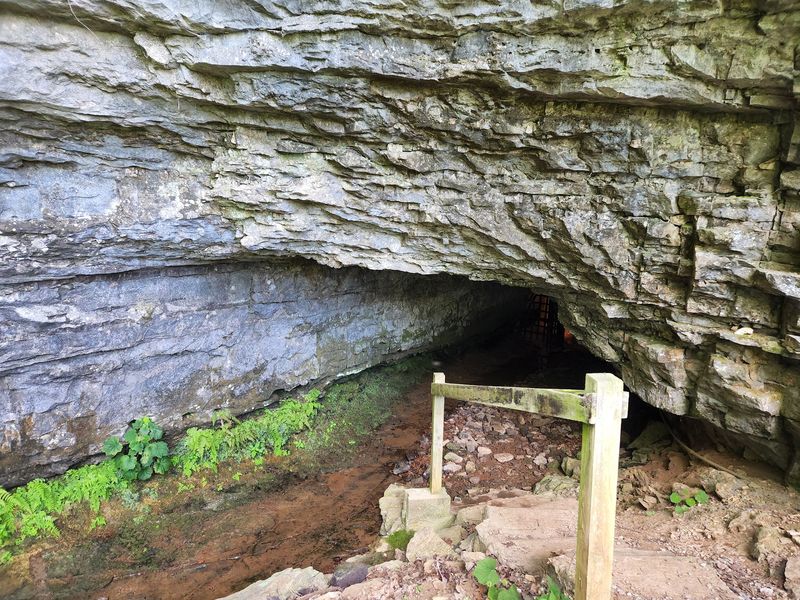
Few ghost stories get a future president involved, but this one reportedly did. The Bell family haunting of the early 1800s grew so famous that Andrew Jackson took notice.
Today you can explore the natural cave tied to that legend in the small town of Adams. It’s one of the most talked about haunted spots in America, and it sits right in northern Tennessee.
So who was the troublemaker? The most popular version of the legend points to Kate Batts, a neighbor who believed John Bell cheated her in a land deal.
Talk about holding a grudge. Whether you believe it or not, the story has stuck around for more than two centuries.
The guided cave tour runs about 40 minutes. Along the way, you’ll pass an ancient Native American burial site and see natural rock formations.
Your guide also shares tales of the Bell family hauntings. You’ll hear about more recent strange happenings inside the cave too.
Admission also includes a 30-minute tour of a hand-hewed log cabin. It’s a replica of the Bell family home, furnished with period pieces.
History buffs will appreciate the collection of historical documents and genealogy inside. It gives the spooky legend a real family behind it.
The site earned a spot on the National Register of Historic Places in April 2008. That’s a pretty official stamp for a place best known for a spirit.
Timing matters here, so plan ahead. The cave opens from May through September, with special event hours in October and limited weekend hours in November.
It closes from December through April. Heavy rain can also shut things down because the cave may flood.
Bring a light jacket and a brave friend. You might want someone to grab onto when the guide gets to the good part.
2. Tipton-Haynes State Historic Site, Johnson City
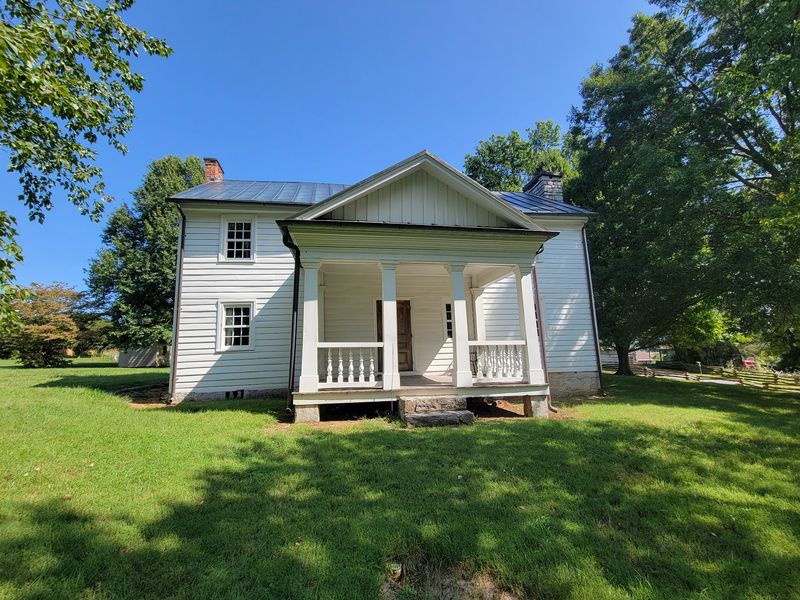
Before Tennessee became a state, settlers in what is now East Tennessee attempted to establish an independent state called Franklin.
Colonel John Tipton wasn’t having it. He led the opposition, and his home now sits at the center of this 45-acre historic site in Johnson City.
In 1788, the Battle of Franklin was fought in this very area. It was the only armed clash between supporters of the proposed state and those loyal to North Carolina.
Spoiler alert, Franklin never made it onto the map. Tipton later helped sign and frame the first Tennessee Constitution, so he clearly picked the winning side.
His original 1784 log house still stands on the grounds. You can explore eleven historic buildings in total, including a smokehouse, loom house, springhouse, log barn, and corncrib.
The site also includes the home of George Haynes, who was enslaved by the Haynes family. His story adds an important layer to the history told here.
In 1839, the estate passed to Landon Carter Haynes as a wedding gift, marking another chapter in the property’s history.
Haynes enlarged and renovated the home. He also built a separate office for his law practice.
Nature lovers get plenty to enjoy too. The grounds feature a limestone cave, a natural spring, a buffalo trace, and a nature trail.
Inside the Visitor Center, you’ll find permanent exhibits, a museum store, and a library. The site covers Tennessee history from pre-colonial times through Reconstruction.
From March through October, it’s open Tuesday through Saturday from 9 a.m. to 4 p.m. The last guided tour starts at 3:15 p.m., and winter visitors should call ahead.
Next time someone brags about state trivia, ask them about Franklin. Odds are good you’ll win that round.
3. Manhattan Project National Historical Park, Oak Ridge
An entire city once went missing from maps on purpose. Oak Ridge was left off them while it played a huge role in World War II.
In 1942, the rolling hills of East Tennessee were chosen for a top-secret atomic weapons program. Around 100,000 workers labored there without knowing the true purpose of their jobs.
Can you imagine clocking in daily with zero clue what you’re building? That secrecy is a big part of why the place is called the Secret City.
The city grew to more than 75,000 people and became headquarters for the Manhattan Project. It produced the enriched uranium for the Little Boy bomb dropped on Hiroshima on August 6, 1945.
Your best starting point is the Oak Ridge Visitor Center. Oddly enough, it sits inside the Children’s Museum of Oak Ridge.
There you can chat with National Park Service rangers and watch a short film. You’ll also pick up information about historic sites around town.
Key sites tied to the project include parts of the Y-12 complex and the K-25 Building site. The K-25 History Center is another stop worth adding to your list.
The American Museum of Science and Energy and the Oak Ridge History Museum add more context. You can also stroll Historic Jackson Square and the Secret City Commemorative Walk.
Some sites, like the X-10 Graphite Reactor and New Bethel Baptist Church, are currently closed to the public. Guided bus tours usually run June through August, with tickets sold through the science museum.
The Visitor Center opens Tuesday through Saturday from 10 a.m. to 4 p.m. Sunday hours run from 1 p.m. to 4 p.m., and it’s closed Mondays.
This is heavy history, but it’s fascinating. A visit offers insight into the secrecy surrounding the Manhattan Project and its profound impact on world history.
4. The Lost Sea Adventure, Sweetwater
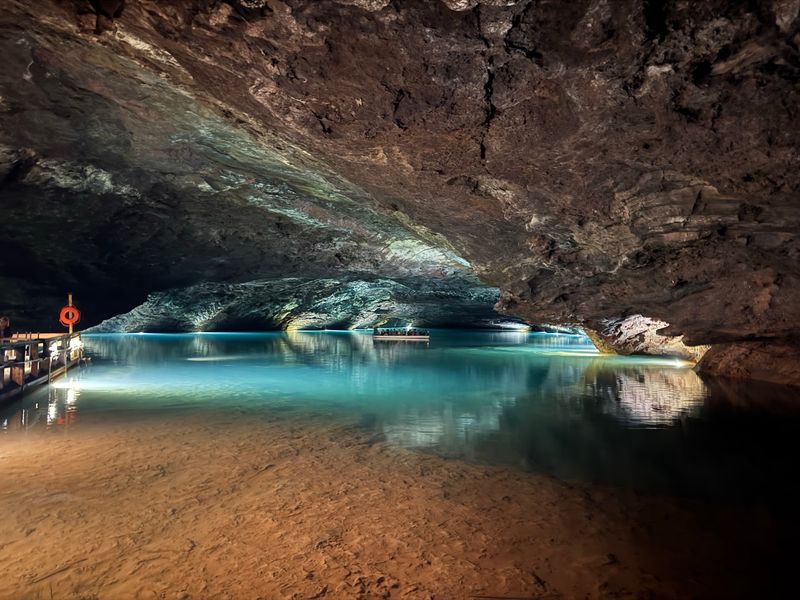
Boating inside a mountain sounds like something from a fantasy novel. Near Sweetwater, it’s just a regular Tuesday.
The Lost Sea is America’s largest underground lake, according to the Guinness Book of World Records. It also ranks as the second largest non-subglacial underground lake in the world.
The part you can see stretches 800 feet long and 220 feet wide. Divers have mapped more than 13 acres of water in connected rooms, and nobody knows how far it really goes.
That mystery is pretty thrilling. Somewhere down there, the lake just keeps going.
Your trip starts with a guided walk through Craighead Caverns. It’s about three-quarters of a mile round trip on sloping paths, so wear good shoes.
Along the way, you’ll learn how the cave formed and hear its long history. Keep an eye out for rare crystal clusters called anthodites, also known as cave flowers.
The big finale is a glass-bottom boat ride across the lake. It’s the kind of moment that makes you forget you’re underground.
Fun fact for history fans: the lake was first discovered in 1905. The cave also has ties to Cherokee history and the Civil War.
Here’s my favorite tidbit. Evidence suggests a Pleistocene jaguar wandered in long ago, earning it the title of the cave’s earliest known tourist.
The temperature stays at 58 degrees year-round. That makes it a sweet escape on a sticky Tennessee summer day.
It’s open daily except Thanksgiving and Christmas. Hours change by season, running as late as 7 p.m. from May through August.
Pack a light sweater even in July. You’ll thank yourself once you reach the water.
5. Museum Of Appalachia, Clinton
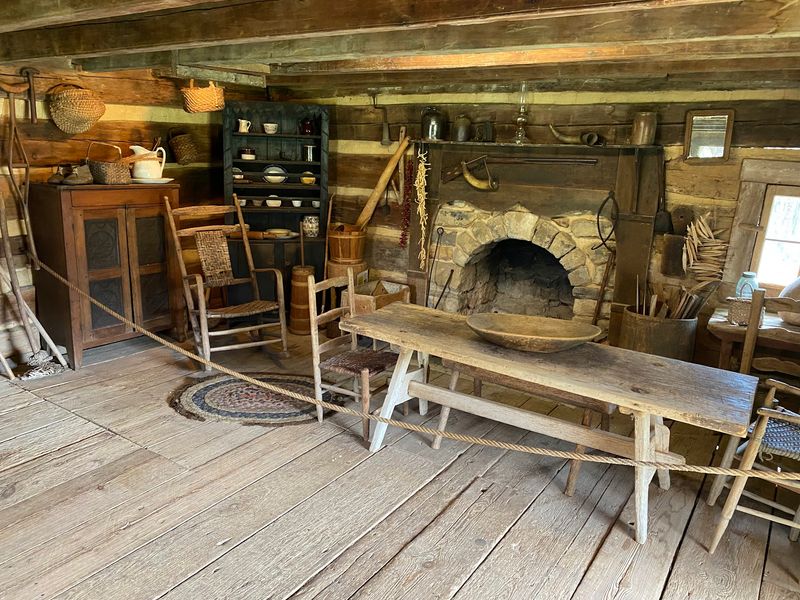
Mark Twain’s family left a mark on Tennessee, and you can see proof in Clinton. A Mark Twain Family cabin stands at the Museum of Appalachia.
That’s a fun surprise, but it’s only one piece of this sprawling place. The museum covers 65 scenic acres and paints a full picture of Southern Appalachian life.
John Rice Irwin founded it in 1969. His goal was to give a voice to the people of the region through their belongings and stories.
The result feels like stepping back in time. You’ll find a recreated mountain community with 35 authentic log cabins, plus barns, churches, schools, and gardens.
Farm animals roam the grounds too. Kids and grown-ups alike tend to love that part.
Three exhibit buildings hold tens of thousands of artifacts. Collections include folk art, musical instruments, baskets, quilts, and Native American items.
Each object tells a little story about how mountain families lived and worked. Some of those handmade quilts are true works of art.
Bragging rights alert: the museum is affiliated with the Smithsonian Institution. That’s a big deal for a homegrown Tennessee treasure.
Hungry after wandering? An on-site restaurant serves Southern Appalachian country cooking.
The gift shop features locally made products. It’s a great spot to grab something more meaningful than a keychain.
Tours are self-guided, so you can move at your own pace. Linger over the cabins or race toward the animals, your call.
The museum is open daily, with hours varying by season. Visitors should check the official website for current opening times.
Give yourself a few hours here. Rushing through 65 acres of history just doesn’t feel right.
6. The Old Mill, Pigeon Forge
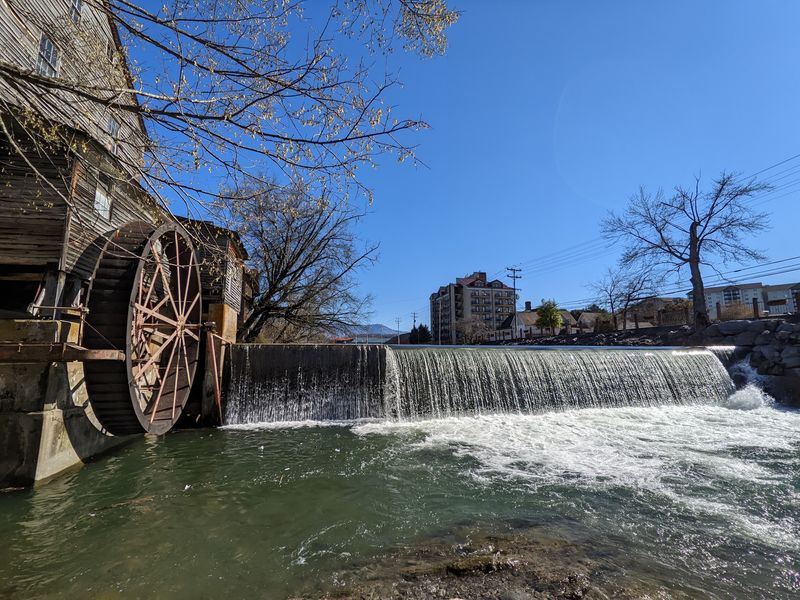
Pigeon Forge got its name from an iron forge, not a souvenir shop. Isaac Love built that forge in 1817, long before the go-karts arrived.
Then in 1830, Love and his sons built The Old Mill. It’s now one of the country’s oldest operating grist mills.
Yes, it still works. The mill uses 19th-century water power to grind flour and meal right before your eyes.
Its past is surprisingly action-packed. During the Civil War, a Union-supporting owner used it to weave cloth for Union uniforms.
The third floor even served as a hospital. Later, the mill supplied electricity to Pigeon Forge until the 1930s.
Not bad for a building made to grind corn. The whole Old Mill Square complex is listed on the National Register of Historic Places.
Tours run daily, so you can learn how the mill operates. You’ll also discover the old ways of making pottery and candy.
Shops around the square sell hand-thrown pottery, stone-ground grains, and sweet treats. Grabbing a bag of mill-ground goodies to take home feels like a must.
Hungry yet? The Old Mill Restaurant serves hearty Southern family-style meals daily from 8 a.m. to 9 p.m.
Bread lovers should check out The Old Mill Pottery House Cafe and Grille. It bakes fresh breads like sourdough and onion rye using grains milled on site.
Plenty of folks drive past on the way to bigger attractions. Make time to stop, because this mill holds more Tennessee history than most museums.
7. Reelfoot Lake, Tiptonville
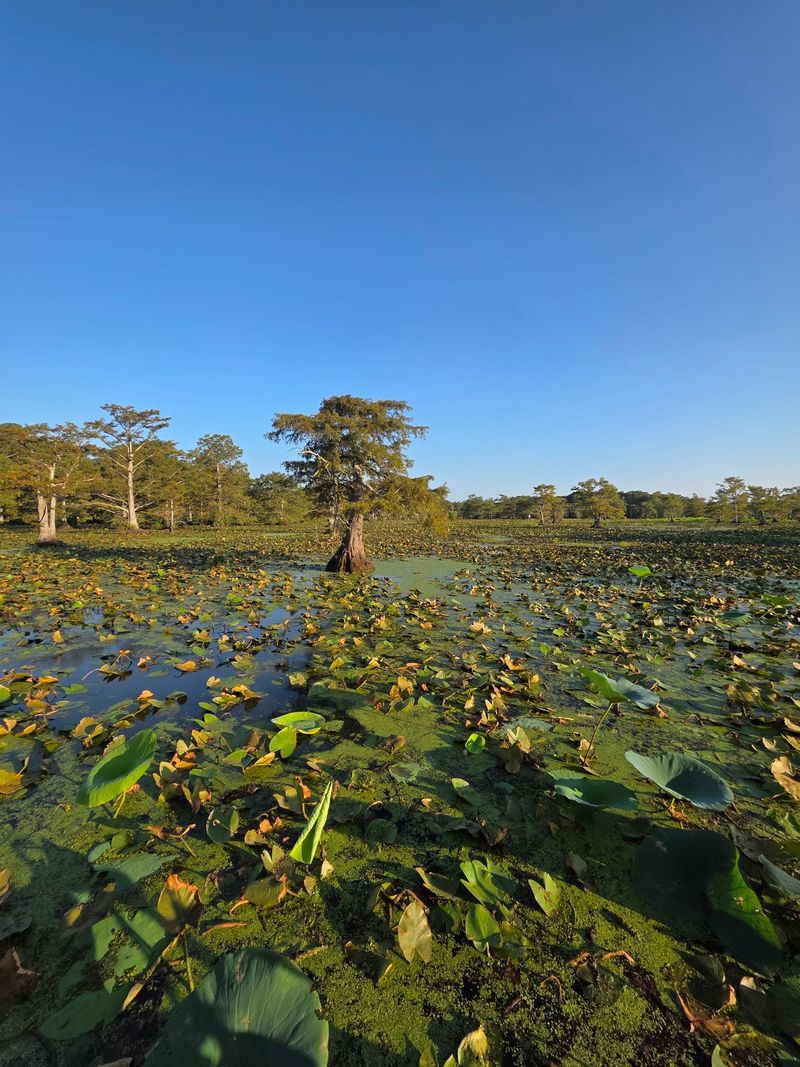
The Mississippi River once ran backward, and a Tennessee lake was the result. It sounds like a tall tale, yet it really happened.
Between December 1811 and February 1812, the New Madrid earthquakes shook the region. The land sank, and the river temporarily flowed backward to fill the new basin.
Out of all that chaos came Reelfoot Lake. Talk about a dramatic entrance.
Today it looks peaceful, almost like a Louisiana bayou dropped into northwest Tennessee. Much of the shallow lake is swamp-like, with ditches linking more open stretches of water.
Bald cypress trees rise straight out of the water. Their knobby shapes make the lake look like a scene from a storybook.
Birdwatchers, this one’s for you. Reelfoot is a crucial nesting ground for bald eagles.
Seeing America’s national bird in the wild never gets old. The lake is also a major home for waterfowl, which draws duck hunters and bird lovers alike.
In 1966, the National Park Service named it a National Natural Landmark. That puts it among the nation’s most notable natural sites.
Curious about the name? Legend says it comes from a chief with a twisted foot, compared to the lake’s uneven shape.
Samburg is the only incorporated town sitting right on the lake’s shores. It makes a handy home base for exploring.
Reelfoot Lake State Park is open and offers public access to the lake and surrounding areas. Bring binoculars and a camera with a good zoom.
Standing by the water, it’s wild to picture the ground heaving two centuries ago. Nature clearly knows how to rearrange the furniture.
8. Historic Rugby
An English author once tried to build a perfect little world in the Tennessee woods. His name was Thomas Hughes, and he founded Rugby in 1880.
Hughes was also a social reformer with big dreams. He pictured a class-free farming community for younger sons of English gentry and others wanting a fresh start.
For a while, it worked. The colony thrived in the mid-1880s, reaching a peak of roughly 300 to 350 residents.
Today, Historic Rugby is a restored Victorian village on the Cumberland Plateau. Several of Rugby’s original Victorian buildings still stand, preserving the community’s 19th-century character.
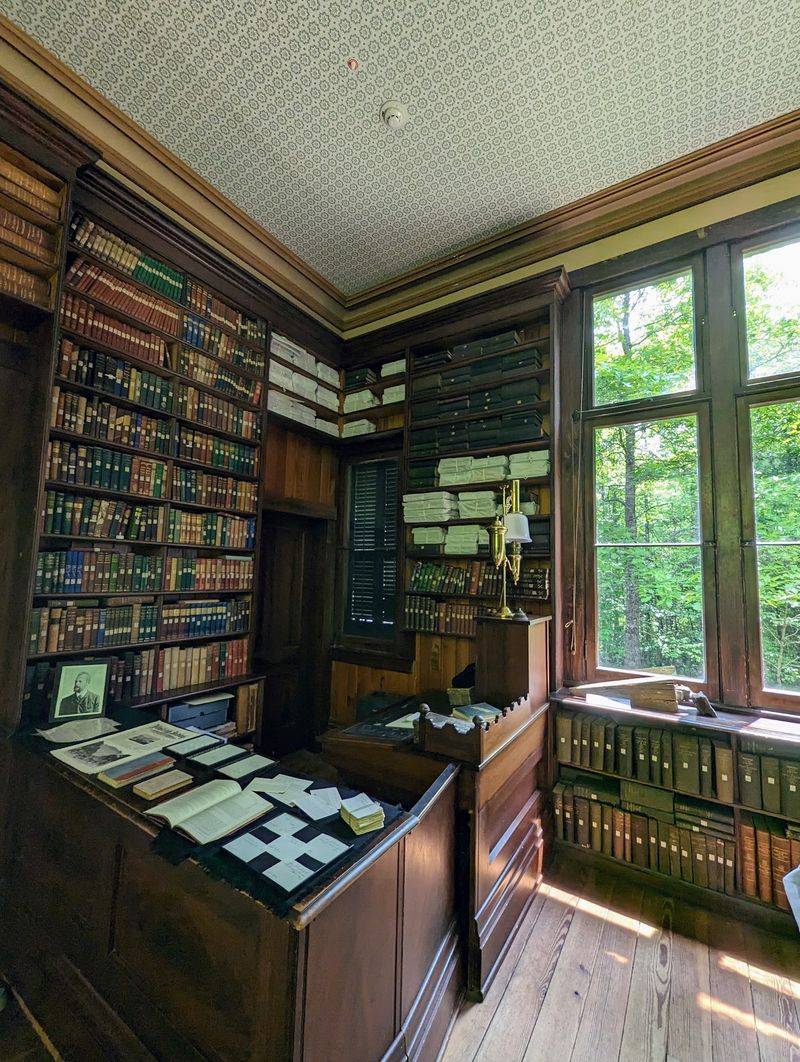
Book lovers, brace yourselves. The Thomas Hughes Library opened in 1882 and remains unchanged, with its original furnishings and a 7,000-volume collection.
Wandering those shelves feels like opening a time capsule. It’s easily one of the most charming rooms in the state.
Kingstone Lisle, the founder’s Gothic revival cottage, deserves a peek too. It’s filled with furnishings brought from England or made by early colonists.
The Schoolhouse holds exhibits about Rugby’s history. It helps explain how this English experiment ended up in rural Tennessee.
Christ Church Episcopal dates to 1887. Visitors can still attend Sunday services there.
Want to stretch your stay? Some historic lodgings are available, and a new visitor center and theater have recently been completed.
The area became a historic district on the National Register of Historic Places in 1972. It’s open Thursday through Sunday from 9 a.m. to 5 p.m.
Hughes didn’t get the utopia he imagined. Still, he left behind a village that feels like a page from a Victorian novel.
9. Historic Brushy Mountain State Penitentiary, Petros
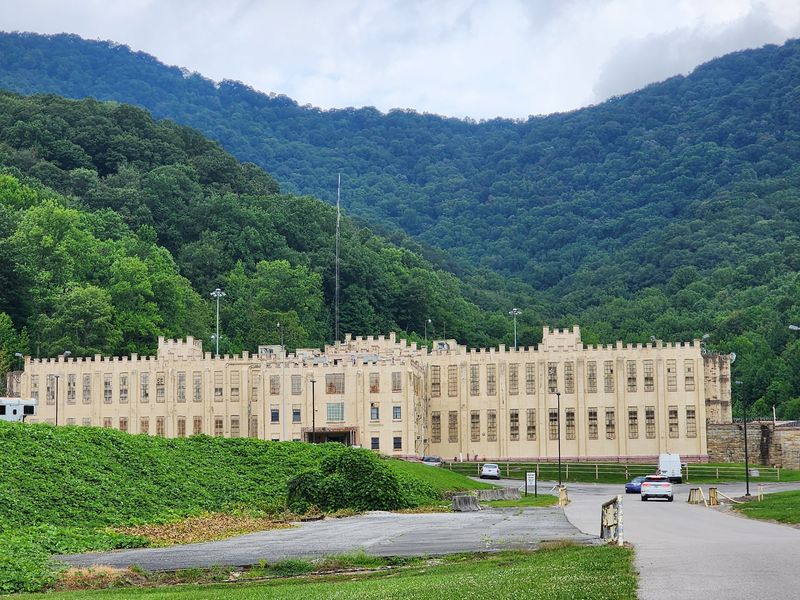
Nicknames don’t get much more ominous than the End of the Line. That’s what folks called Brushy Mountain, Tennessee’s first maximum-security prison.
It opened in 1896 in the mountains near Petros. For over a century, it held some of the state’s most violent criminals.
Now the gates swing open for curious visitors instead. And yes, you get to leave whenever you want.
The self-guided tour uses audio and video across 22 interactive stations. You’ll hear firsthand accounts from former inmates, guards, and prison workers.
Historic photos and videos fill in the details. The stories feel personal, which makes the place even more gripping.
Start with the 18-minute documentary in the on-site theater. It sets the stage before you wander the halls.
Got a taste for the unexplained? Paranormal tours are also offered for brave souls.
After the tour, you’ll probably be hungry. The Warden’s Table restaurant serves meals on site, which is a fun name for a lunch stop.
A gift shop rounds things out. It’s a good place to grab a quirky souvenir for that friend who loves true crime.
Plan your visit carefully because this attraction is seasonal. It typically closes for the season on the last Sunday of November.
In November, tour hours usually run from 10:30 a.m. to 6 p.m. Eastern time. The last ticket sells at 4 p.m.
The restaurant and gift shop stay open until 7 p.m. That gives you time to talk over everything you just heard.
10. Casey Jones Home & Railroad Museum, Jackson
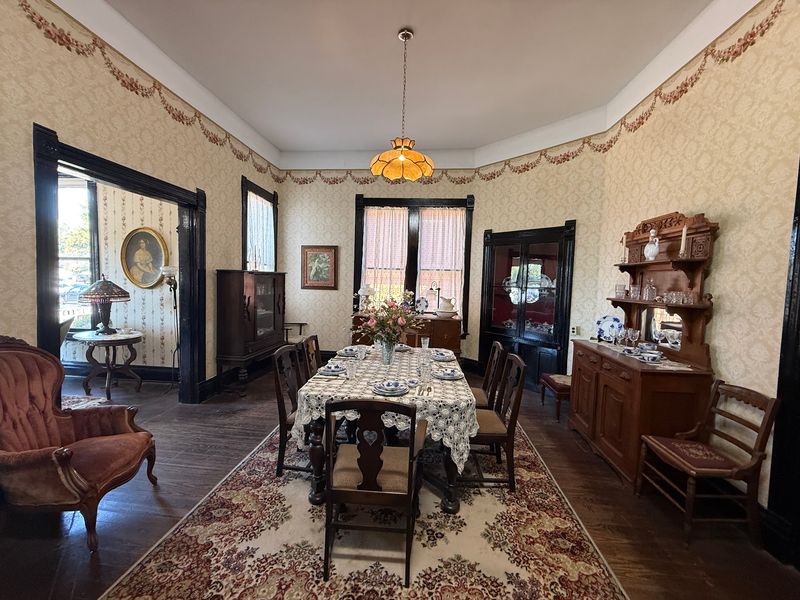
A railroad engineer became a folk hero, and Jackson keeps his legend rolling. His name was Casey Jones, and his story still draws visitors from far and wide.
In 1900, Jones lost his life in a train collision. His bravery that day turned him into a legend sung about for generations.
The Casey Jones Home and Railroad Museum tells that story in detail. It’s a great stop for train fans of any age.
The star attraction is a replica of his famous engine, the Ol’ 382. Seeing it up close helps you picture life on the rails back then.
Exhibits on railroad history fill a 19th-century train depot. That setting makes the history feel right at home.
You’ll learn how trains shaped towns and travel across America. It’s a reminder that railroads once connected the country like nothing else.
Did you know Jackson has long been tied to railroading? This museum makes that connection easy to understand.
Stop by the gift shop before you go. Train whistles and engineer caps practically beg to come home with you.
The museum sits inside the larger Casey Jones Village. That means more to explore once you finish the exhibits.
It’s a handy break if you’re driving across West Tennessee. Little ones who love trains will be in heaven.
Hours are simple here. The museum opens daily from 9 a.m. to 5 p.m.
You may have heard the old ballad without knowing the man behind it. A visit here puts a real face and story to the song.
11. Mayfield Dairy Farms Visitor Center, Athens
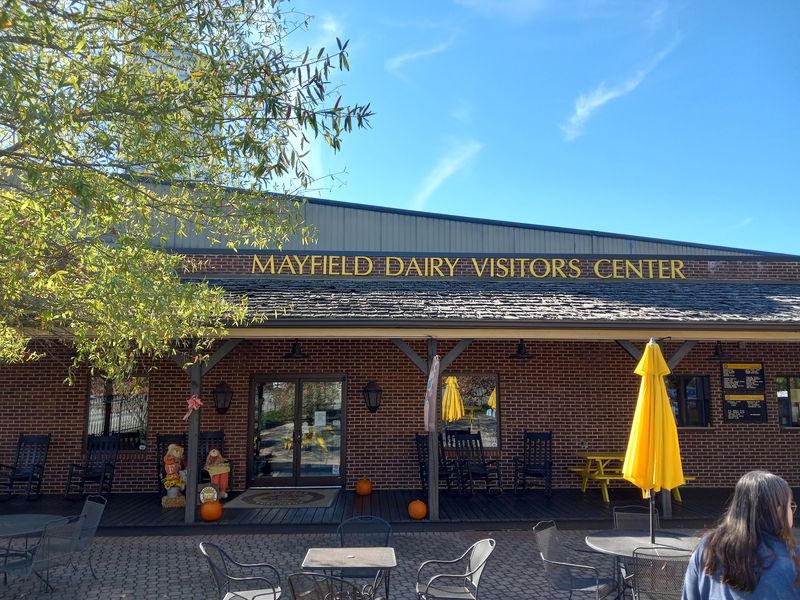
Ice cream with a side of history sounds like a perfect afternoon. In Athens, you can get exactly that.
Mayfield Dairy Farms was incorporated in 1910. For over 100 years, it has served Southern families milk and ice cream.
Plenty of Tennesseans have a carton in the fridge right now. Few realize they can watch how it’s made.
The visitor center offers tours of the milk and ice cream plant. You’ll get a behind-the-scenes look at production.
It’s surprisingly fun to see how a gallon goes from farm to freezer. Kids especially seem to love the process.
After the tour comes the best part. An old-fashioned ice cream parlor waits to serve you a cold treat.
Picking a flavor might be the toughest decision of your day. No pressure, but choose wisely.
Don’t forget to say hi to Maggie the Cow. She’s Mayfield’s official mascot and a total photo opportunity.
The gift shop is worth a browse too. It’s stocked with goodies for dairy fans.
Timing matters, so check the schedule. The center opens Monday, Tuesday, Thursday, and Friday from 10 a.m. to 5 p.m. Eastern time.
The last tour starts at 3 p.m. It’s closed on Wednesdays.
Hours can change, so double-check before you head out. A quick look ahead saves a sad ice cream-free drive home.
Share this story