One spot on this list sends you 300 feet underground in a mine car. Your guide might even be a former miner. I can’t think of a better way to spend a Saturday.
Another stop has 22 named waterfalls along one trail system. The tallest drops 94 feet. Some of the trees nearby are over 300 years old.
The best part is the price. Several of these places charge nothing to get in. That leaves your $50 for gas, snacks, and maybe a souvenir you’ll pretend you didn’t need.
Pennsylvania hides a lot of adventure in plain sight. Cannons, steam engines, lake beaches, and a boulder that looks ready to tip over are all waiting. Now that’s a Saturday plan I can get behind.
1. Ohiopyle State Park
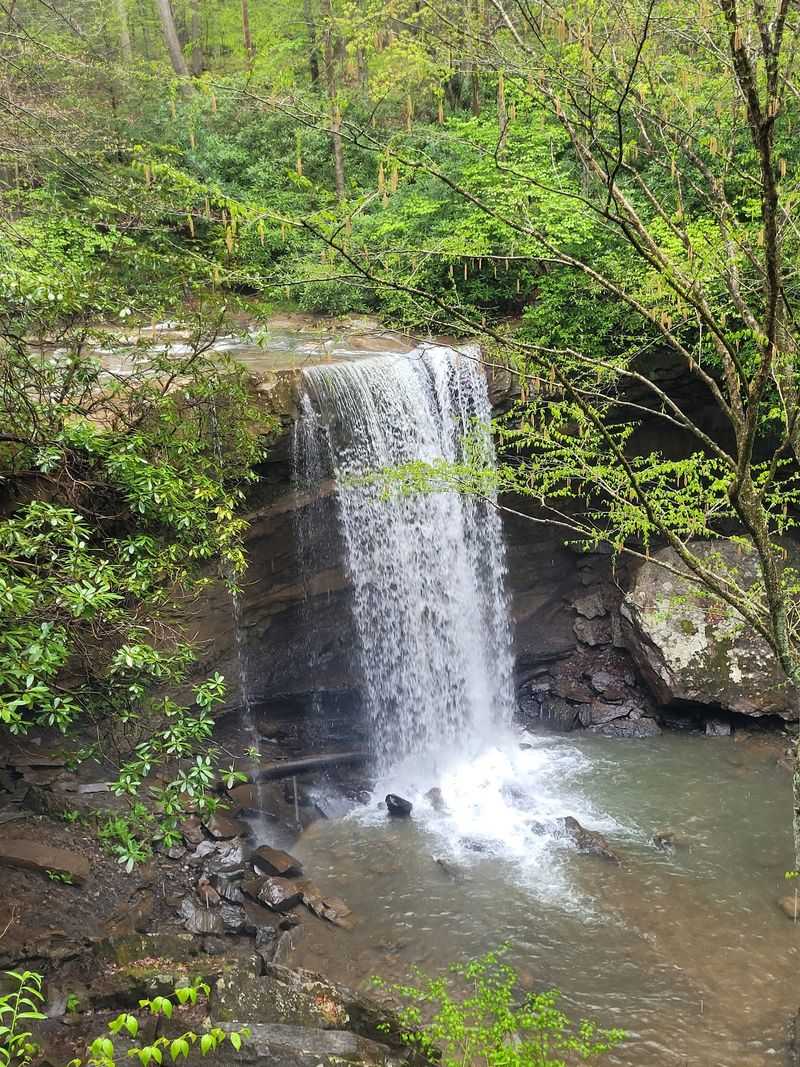
A waterfall shaped like a bridal veil and rocks that act like a free waterslide?
Ohiopyle makes a strong first impression.
The park covers about 20,500 acres in southwestern Pennsylvania.
The name has a fun backstory.
It likely comes from the Lenape phrase ahi opihəle, meaning it turns very white.
That phrase describes the foamy falls of the Youghiogheny River.
The river runs right through the heart of the park.
Start with Cucumber Falls.
It drops about 30 feet in a wide, lacy sheet of water.
Next, head to Meadow Run.
Its natural waterslides are a classic way to cool off on a hot day.
Want a view without a huge hike?
Baughman Rock Vista Overlook shows off the Youghiogheny River from above.
For more walking, the park has 79 miles of hiking trails.
Part of the 73-mile Laurel Highlands Hiking Trail runs through here too.
Plant lovers should save time for the Ferncliff Peninsula.
This 100-acre spot is a National Natural Landmark full of trees and wildflowers.
History buffs get something, too.
In 1794, George Washington and 6,000 militiamen marched near Ohiopyle during the Whiskey Rebellion.
The park itself opened to the public in 1965.
It was formally dedicated in 1971.
Stop by the Laurel Highlands Falls Area Visitor Center for exhibits on wildlife and recreation.
Staff there can help you plan your route.
The center usually opens from 8 AM to 4 PM.
From November through March, it closes on Sundays and Mondays.
Now for the budget part.
Pack a lunch and grab a spot in one of the picnic areas.
Wear shoes that can get wet.
The waterslides are fun, but the rocks can be slippery and rough.
The park is open daily from sunrise to sunset.
An early start gives you more time on the trails before you head home.
Honestly, one day here can feel like a full vacation.
Your wallet will barely notice.
Address: 124 Main Street, Ohiopyle, PA 15470
2. Ricketts Glen State Park
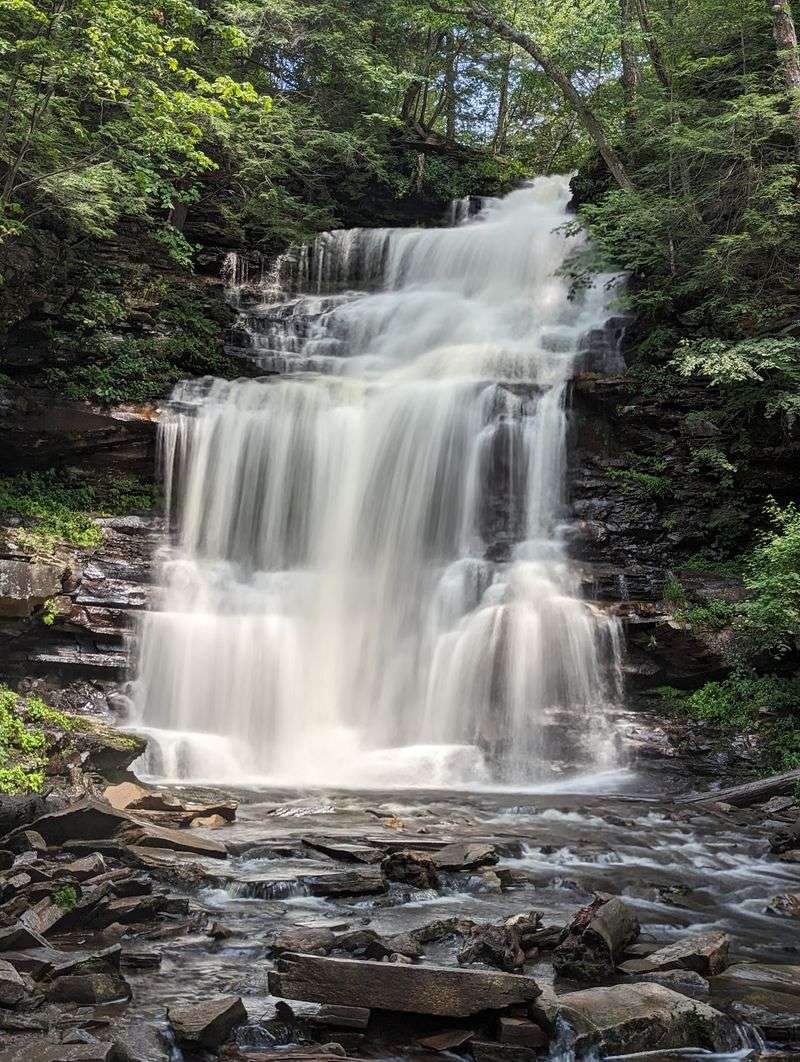
Twenty-two named waterfalls on one trail system sounds like a typo.
At Ricketts Glen, it’s simply a normal day.
The Falls Trail System is the main reason people come.
Each waterfall flows wild and free along Kitchen Creek.
The star is Ganoga Falls.
At 94 feet, it’s the tallest of the bunch.
Along the way, you’ll pass old-growth timber.
Some trees are over 300 years old and reach 100 feet tall.
That forest belongs to the Glens Natural Area.
It became a National Natural Landmark in 1969.
The park’s story is pretty cool.
Colonel R.
Bruce Ricketts fought at Gettysburg and later bought land here in 1868.
He wanted the land for timber at first.
Then fishermen found the waterfalls, and he built trails to reach them.
Ricketts named many falls after American Indian tribes, friends, and family.
So each sign you pass carries a bit of his life.
Plan your trip around the seasons.
The Falls Trail usually closes from late November to mid or late April because of ice.
The trail has steep, rocky sections.
Good boots and a slow pace will make your day much better.
After the hike, Lake Jean offers a relaxing break.
This 245-acre lake has spots for swimming, boating, and fishing.
Fun fact?
Lake Jean as you see it was created in 1950, when a bigger dam joined it with Mud Pond.
The park stretches across 13,193 acres in three counties.
There’s also room for horseback riding and wildlife watching.
To stay under budget, bring a packed lunch.
The picnic areas are a nice place to rest tired legs.
Day use areas are open from sunrise to sunset.
Get there early, since this hike takes time and lots of photo stops.
You’ll likely leave with sore calves and a full camera roll.
That’s a fair trade for a cheap day out in Pennsylvania.
Address: 695 State Route 487, Benton, PA 17814
3. Lackawanna Coal Mine Tour
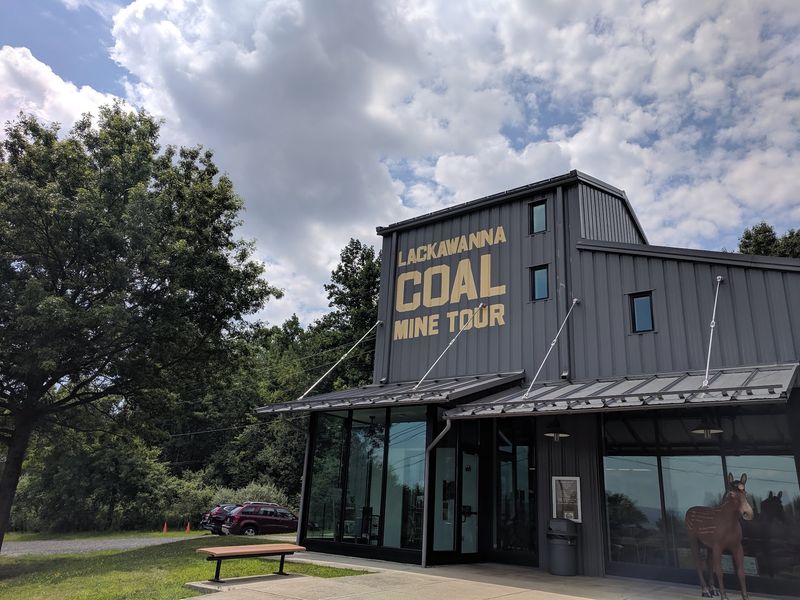
Most day trips go up a mountain.
This one rides a mine car 300 feet down into the earth.
The Lackawanna Coal Mine Tour sits inside McDade Park in Scranton.
You enter through Slope #190 and head deep underground.
Guides lead you through winding gangways and rock tunnels.
Many of them are former miners, which makes the stories hit harder.
You’ll see three different veins of anthracite coal.
Guides also show how mining was done and what daily life was like down there.
Bring a jacket, even in July.
The mine stays between 50 and 55 degrees all year.
The history runs deep, too.
The mine opened in 1860 under the Continental Coal Company.
It helped power the Industrial Revolution in Northeastern Pennsylvania.
Mining went on until 1966.
Restoration started in 1978.
The site reopened as a museum in 1985.
While you wait, the interpretive center plays an intro video about mining.
It’s a handy way to learn the basics before you ride down.
Timing matters here.
The tour runs from April through November, Thursday through Monday.
The ticket office opens at 10 AM.
The last tour leaves around 2:30 or 2:45 PM, so don’t sleep in.
Tuesdays and Wednesdays are saved for groups.
The mine also closes on Easter Sunday and Thanksgiving.
Here’s a nice budget perk.
Parking on site is free.
Next door, you’ll find the Pennsylvania Anthracite Heritage Museum.
It covers hard coal mining and the immigrant families who did the work.
Pairing both stops gives you a full day of history.
Pack sandwiches and eat outside in McDade Park between visits.
Kids who think history is boring might change their minds here.
Few classrooms come with a ride into a real mine.
You’ll come back up with a new respect for the people who worked below.
And probably a strong craving for sunshine.
Address: 1 Bald Mountain Road, McDade Park, Scranton, PA 18504
4. Steamtown National Historic Site
Free admission to a national park full of giant steam engines?
Scranton really knows how to treat a budget traveler.
Steamtown National Historic Site costs nothing to enter.
That includes the visitor center and the museums.
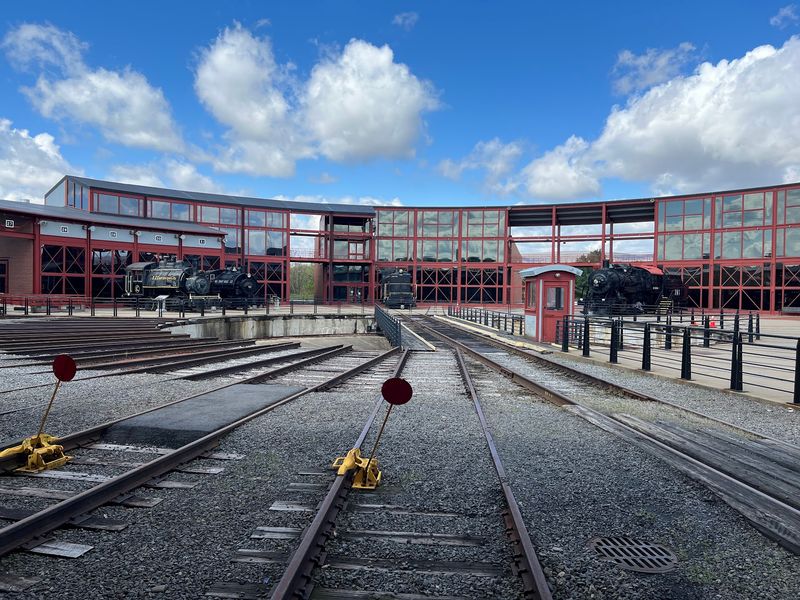
The park sits in downtown Scranton on the old Delaware, Lackawanna and Western Railroad yards.
It covers about 62 acres.
The big showpiece is a working roundhouse and turntable.
The roundhouse was rebuilt from pieces of a 1932 structure.
Inside, massive steam locomotives sit close enough to make you feel tiny.
You can also spot historic rail cars and watch restoration work.
Two museums dig into railroad technology and history.
They help explain how trains changed American life.
Catch the park film, Steel and Steam.
It plays in a 250-seat theater complex.
The collection began with one man.
F. Nelson Blount gathered these engines in the 1950s and 1960s.
His collection moved from Vermont to Scranton in 1984.
Congress made the site a National Park unit in 1986.
The museum complex and roundhouse opened to visitors in 1995.
So it’s a newer park built around very old machines.
Want to ride?
Short train rides run Fridays through Sundays from June through October.
Longer trips to the Poconos and Lackawanna Valley happen on select weekends.
Those cost extra, so check before you go.
Hours change with the seasons.
From early May to mid-November, the site opens daily from 9:30 AM to 5 PM.
In winter, it’s open Wednesday through Sunday until 4 PM.
It closes on Thanksgiving, Christmas, and New Year’s Day.
Since it’s only a short drive from the coal mine tour, you could pair them.
That makes a full Scranton day for very little cash.
Train fans will be thrilled.
Everyone else might quietly become one by the time they leave.
Address: 350 Cliff Street, Scranton, PA 18503
5. Valley Forge National Historical Park
George Washington’s army spent a brutal winter here.
You get to visit for free, with much better snacks.
Valley Forge National Historical Park covers 3,500 acres of hills and woods northwest of Philadelphia.
Entry costs nothing.
The Continental Army camped here from December 19, 1777, to June 19, 1778.
They came after the British took Philadelphia.
Soldiers faced disease and supply problems.
Still, the army left stronger and better trained.
Start at the Visitor Center.
It shows exhibits, artifacts, and a 19-minute film called Determined to Persevere.
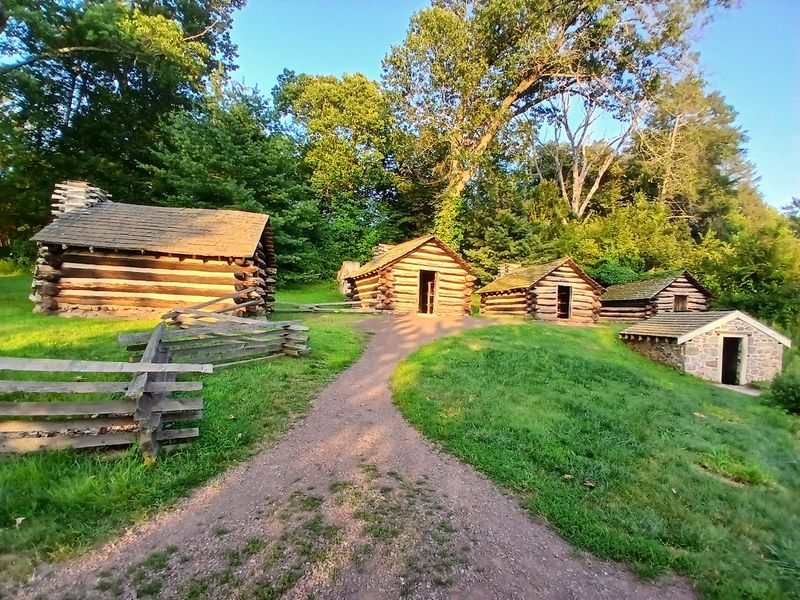
Then go see the Muhlenberg Brigade Huts.
These rebuilt log huts show how tight soldier life really was.
Artillery Park lines up rows of cannons.
It’s a great spot for photos.
The National Memorial Arch honors the army’s endurance.
It’s a fine place to pause and take in the view.
Here’s a heads-up.
Washington’s Headquarters is closed for restoration from May 4, 2026, until 2027.
You can still enjoy plenty of other sights.
The park has 35 miles of hiking trails and a six-mile multi-use trail.
It also links to the paved Schuylkill River Trail.
Bikes make the grounds easier to cover.
Fun fact: this spot became Pennsylvania’s first state park in 1893.
It turned into a National Historical Park on July 4, 1976.
That date was no accident.
It was the nation’s 200th birthday.
Picnic areas make lunch easy and cheap.
Pack a cooler and find some shade.
The grounds open at 7 AM and close 30 minutes after sunset.
The Visitor Center runs from 9 AM to 5 PM.
Bring comfy shoes and a little imagination.
Picturing that long winter makes your own day feel pretty easy.
Address: 1400 North Outer Line Drive, King of Prussia, PA 19406
6. Presque Isle State Park
Surf swimming in Pennsylvania?
It sounds made up, but Presque Isle has the state’s only spot for it.
The park is a 3,200-acre sandy peninsula curving into Lake Erie.
Entry is free, which makes your budget very happy.
The French named it presque-isle in the 1720s.
It means almost an island, and the name fits.
Beach lovers get 11 miles of shoreline.
Swimming is open daily from Memorial Day to Labor Day, usually noon to 7:30 PM.
Prefer wheels?
The 13.5-mile Karl Boyes trail is paved for biking, hiking, and inline skating.
Interior trails cover almost 11 miles.
They wind past sand dunes, ponds, and old-growth forest.
Bird watchers, grab your binoculars.
More than 340 bird species have been recorded here.
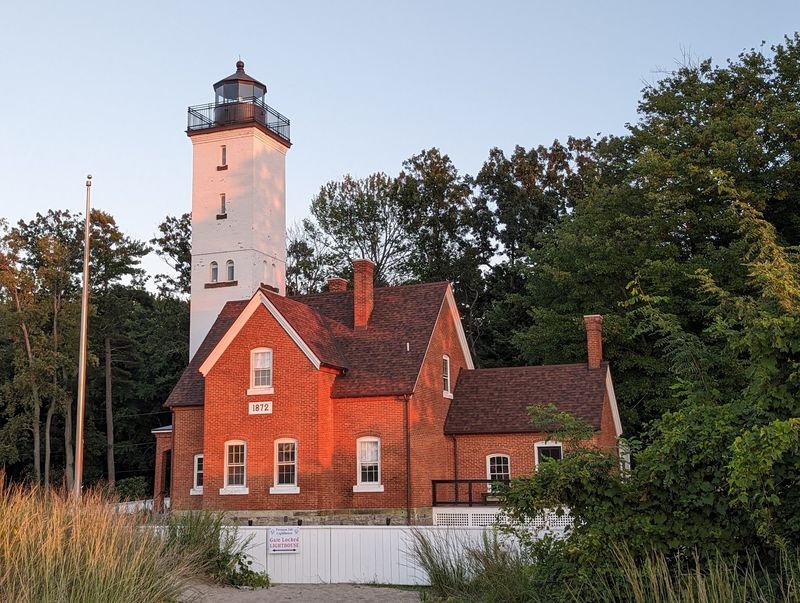
The Presque Isle Lighthouse is a 74-foot red brick tower.
It was built in 1872, lit in 1873, and still guides ships.
History runs deep along this shore.
During the War of 1812, Commodore Oliver Hazard Perry’s fleet used Presque Isle Bay.
The peninsula became a state park in 1921.
Breakwaters built between 1989 and 1993 help fight erosion.
Begin or end at the Tom Ridge Environmental Center.
Its exhibits about Lake Erie are free.
Climb the 75-foot observation tower there.
The view helps you see how the peninsula bends into the lake.
The center opened in 2006.
From November through March, it closes Sundays and Mondays.
Pack a towel, sunscreen, and lunch.
A beach day costs very little when you bring your own food.
The park opens at 5 AM and closes at sunset.
Sunset over the lake might be the best free show around.
Address: 301 Peninsula Drive, Suite 1, Erie, PA 16505-2042
7. Fort Hunter Mansion and Park
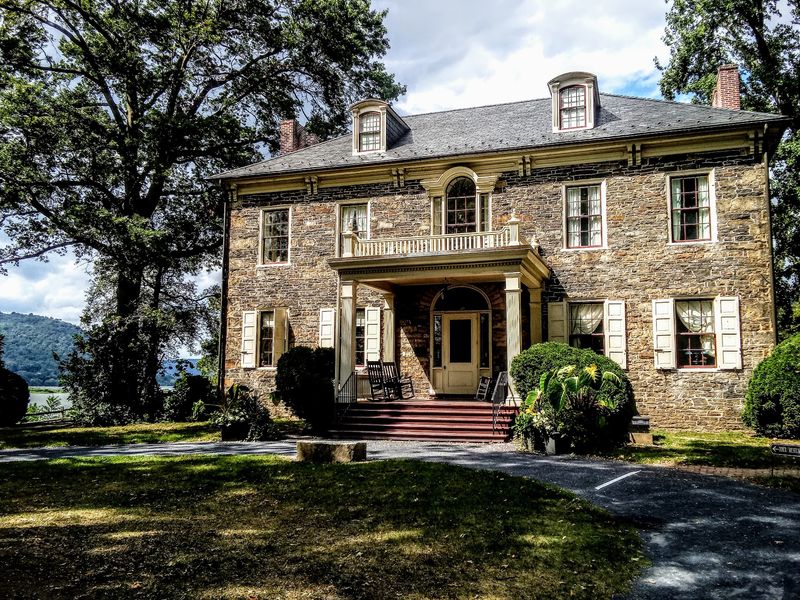
One house, three building eras, and a river view that never gets old.
Fort Hunter keeps a lot of history on 40 acres.
The estate sits above the Susquehanna River in Harrisburg.
You can see the Blue Mountains from the grounds.
The mansion is a stately Federal-style home.
It was built in three parts over almost a century.
The middle section dates to 1786.
The grand front house came in 1814, and a wooden rear part was added in 1870.
Guided tours show what 19th-century life looked like.
Rooms display furnishings of the Reily family.
Tours run from May 1 through December 23.
Hours are Tuesday through Saturday, 10 AM to 4:30 PM, and Sunday afternoons.
The site’s story starts early.
It was settled in 1725 as Hunter’s Mill.
In the 1750s, it served as a frontier fort during the French and Indian War.
That’s where the name comes from.
Captain Archibald McAllister bought the land in 1787.
He served in the Revolutionary Army under George Washington.
Under his care, the farm grew into a self-sufficient village.
Ten historic buildings still stand, including a barn and tavern house.
Don’t miss the covered bridge.
The Everhart Covered Bridge dates to around 1881 and was rebuilt here in 2006.
Walking trails follow the river and the old Pennsylvania Canal towpath.
They’re easy, pretty, and great for a slow stroll.
The park itself is free and open dawn to dusk.
Picnic areas and playgrounds make it easy to stretch your dollars.
Have a canoe or kayak?
There’s a launch for non-motorized boats.
Need more hiking?
The Fort Hunter Conservancy adds wooded mountain land for birdwatching and day hikes.
This stop proves Pennsylvania’s capital area has more than government buildings.
Bring lunch and stay awhile.
Address: 5300 N.
Front Street, Harrisburg, PA 17110
8. Trough Creek State Park
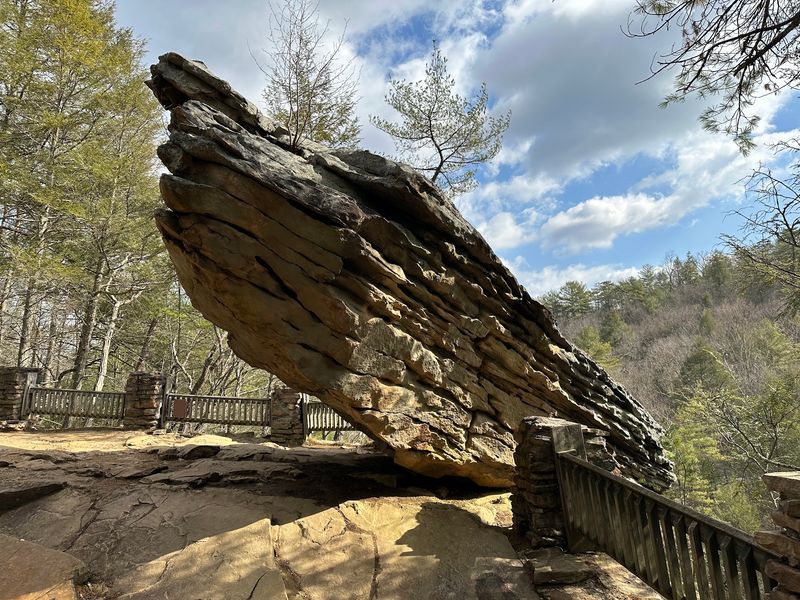
A giant boulder balancing on smaller rocks like it forgot to fall.
Balanced Rock is reason enough to make the drive.
Trough Creek State Park sits in Huntingdon County in south-central Pennsylvania.
Great Trough Creek cuts a gorge through Terrace Mountain here.
The creek then flows into Raystown Lake.
That rugged path creates some seriously fun hiking.
The park is just 541 acres.
Still, it packs 12 miles of trails into that space.
Those trails pass boulder fields, narrow ravines, and rocky ledges.
Wear real hiking shoes, because sandals won’t cut it.
Rainbow Falls is a favorite stop along the way.
A swinging bridge across Great Trough Creek adds a little wobble to the walk.
Then comes Balanced Rock.
It’s the kind of sight that makes you check twice before stepping closer.
History hides in these woods, too.
Nicholas Crum settled here in 1780 and built a gristmill on the creek.
Later, iron was big business.
Paradise Furnace was built in 1827, and Savage Forge followed in 1832.
In 1933, the Civilian Conservation Corps set up Camp Paradise Furnace.
Young workers built roads, trails, and park facilities.
Their work paid off.
The park opened in 1936.
Entry is free, and the park is open sunrise to sunset all year.
Picnic areas are scattered throughout, and some can be reserved.
Want to make it longer?
The park borders Rothrock State Forest and the Raystown Lake Recreation Area.
That means tons of public land for exploring.
You could easily fill a full day without spending much at all.
Pack water, snacks, and a camera.
You’ll want proof that the rock really stays put.
Address: 16362 Little Valley Road, James Creek, PA 16657
Share this story