
High in the West Hills, a century-old stone house watches over Portland and Mount Hood. Its story almost ended with a wrecking crew, until ordinary Portlanders stepped in to save it.
Today the grounds are free to explore, and the right arrival time can even save you the cost of parking. Here is how to see this local treasure at its best, from the early-morning lawn to the last hour before the doors close.
A Chateau Perched Above the City
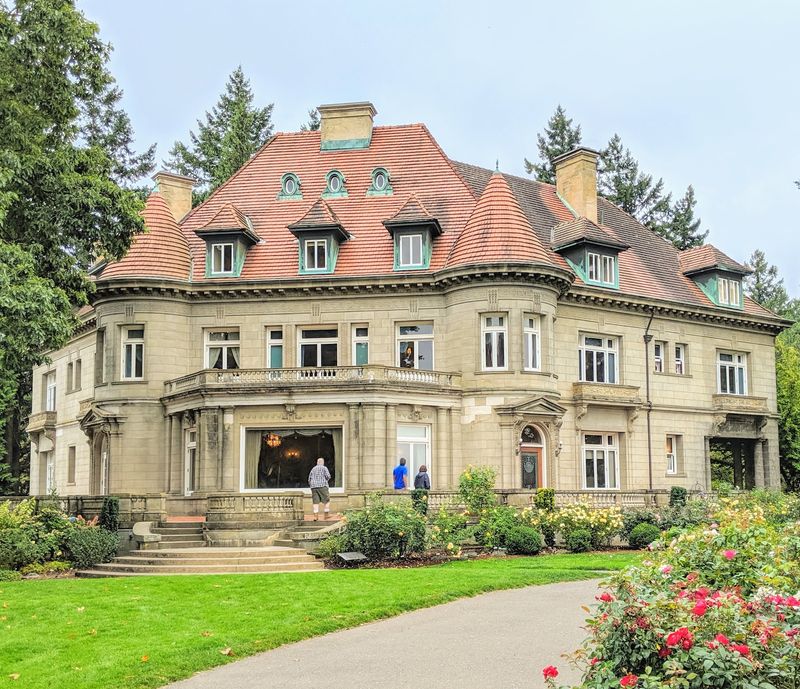
Some landmarks sit on main streets, while others prefer a little altitude. Pittock Mansion, at 3229 NW Pittock Dr, Portland, OR 97210, rests about 1,000 feet above Portland in the city’s West Hills.
The house is a 16,000-square-foot French Renaissance-style chateau set on 46 acres. Built in 1914, the 23-room home now operates as a local history museum.
Getting there is part of the outing. The drive up the hill winds through greenery before opening onto a parking area and a short, easy walk up the slopes to the mansion itself.
The property splits neatly into two experiences. The gardens, lawn, and lookout point are free to explore, while a paid admission covers the inside of the mansion and the gate lodge near the entrance.
That split makes the place unusually flexible. A quick morning stop for the view works just as well as a long afternoon spent reading every placard indoors.
The grounds are compact enough to circle in roughly 15 minutes. Adding the full house tour stretches a visit to around an hour and a half, even when traffic is light.
All of that history and scenery begins with one couple and a newspaper.
The Newspaper Family Behind the Walls
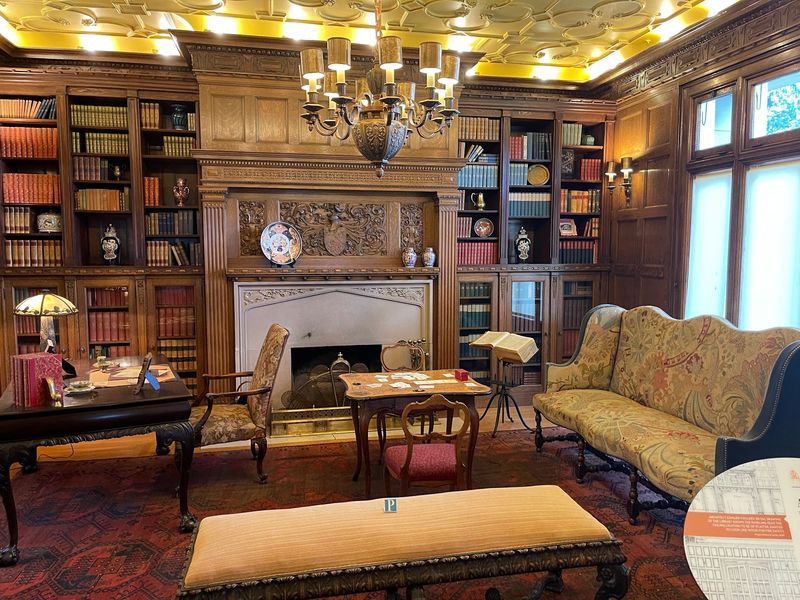
Long before it was a museum, this was simply home for Henry and Georgiana Pittock. Henry was the publisher of the Oregonian, and his influence on the growth of the Northwest newspaper industry was enormous.
The Pittocks played a major role in Portland’s early development. Many people describe Henry as the man who helped put the city on the map.
Inside the house, that larger story unfolds room by room. Placards explain the family, the house, and the times they lived in, giving plenty of context without feeling overwhelming.
History also follows you outdoors. Descriptions of early Portland and the Pittocks’ part in it are spaced throughout the grounds, so even a free stroll comes with a short lesson.
Former news lovers tend to find the publishing angle especially interesting. Everyone else gets a clear look at how one pioneer family shaped a growing American city.
The museum also offers a human view of the past. It shows how Portland’s elite lived in the early 1900s and invites comparison with how differently other people lived at the same time.
Knowing who built the house makes the next chapter even more dramatic, because the home nearly vanished.
Saved by Portlanders, Not a Wrecking Ball
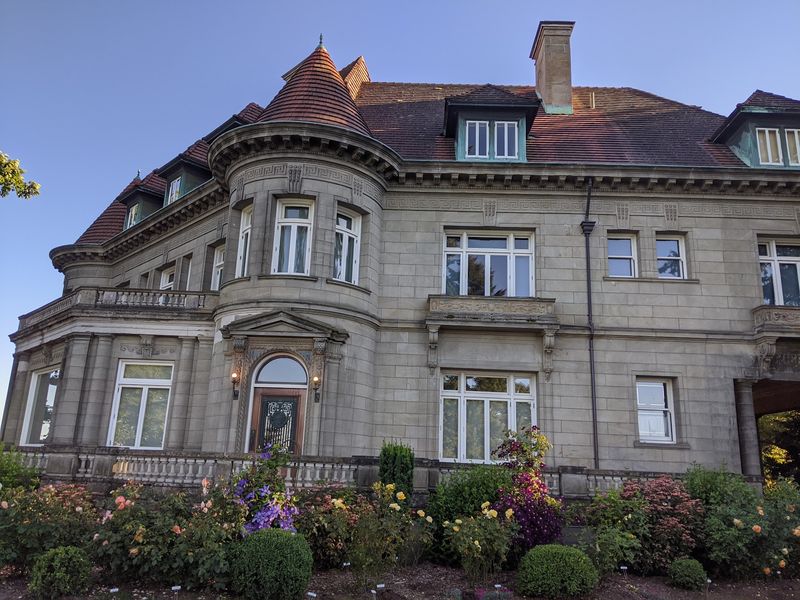
Here is the twist many people never expect. This grand home was once slated for demolition.
After the Pittock era, the house sat vacant. Then the 1962 Columbus Day storm caused serious damage, and its future looked grim.
Portland residents refused to let it go. Citizens launched a massive campaign to save the house, and the city ultimately purchased the property and restored it.
That effort is the reason anyone can walk these halls today. It stands as a clear example of a community choosing to keep a familiar landmark rather than lose it.
The restoration work is widely praised. The mansion is considered one of the best-preserved historic homes around, with displays handled carefully while still keeping guests comfortable.
One honest note helps set expectations. Much of the furniture is not original to the home, and some staging uses artificial flowers, so the rooms are a faithful recreation rather than a frozen moment.
Even so, the effort shows in every corner. For Oregonians who care about keeping beloved places alive, the mansion is a quiet success story worth supporting with a visit.
And once inside, the house reveals just how far ahead of its time it really was.
Gadgets Ahead of Their Time
A home elevator in 1914 sounds like a modern luxury. The Pittocks had one anyway.
The mansion was packed with cutting-edge conveniences for the early 20th century. Features included a central vacuuming system, an intercom, thermostat-controlled central heating, and a walk-in refrigerator room.
Those details surprise many guests more than the chandeliers do. They show a family that embraced new technology at a time when most households had none of it.
The elevator is more than a museum piece. The original elevator can still be used by guests with disabilities, which helps make the upper floors reachable.
Accessibility extends beyond that lift. Couples with mobility concerns have found the self-paced format easier than a fixed docent tour, since everyone can rest and move at a comfortable speed.
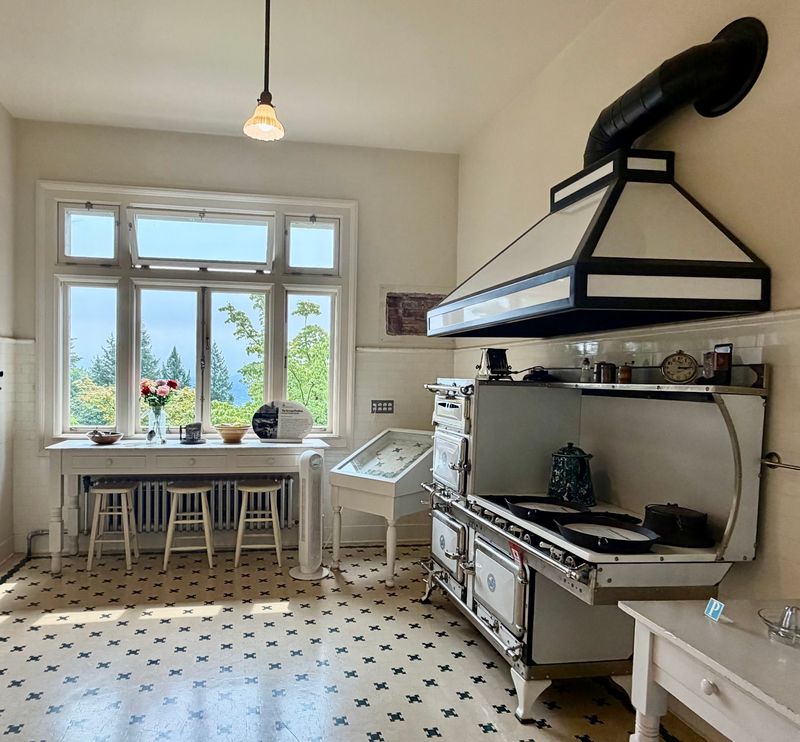
The antique kitchen rounds out the practical side of the house. Kitchenware, clocks, and other everyday items help show how the household actually ran.
Fun fact: the walk-in refrigerator room was a rare setup for the era, long before home fridges became standard.
All that clever engineering sets the stage for the rooms where the family spent their days.
Rooms, Stories, and a Whimsical Twist
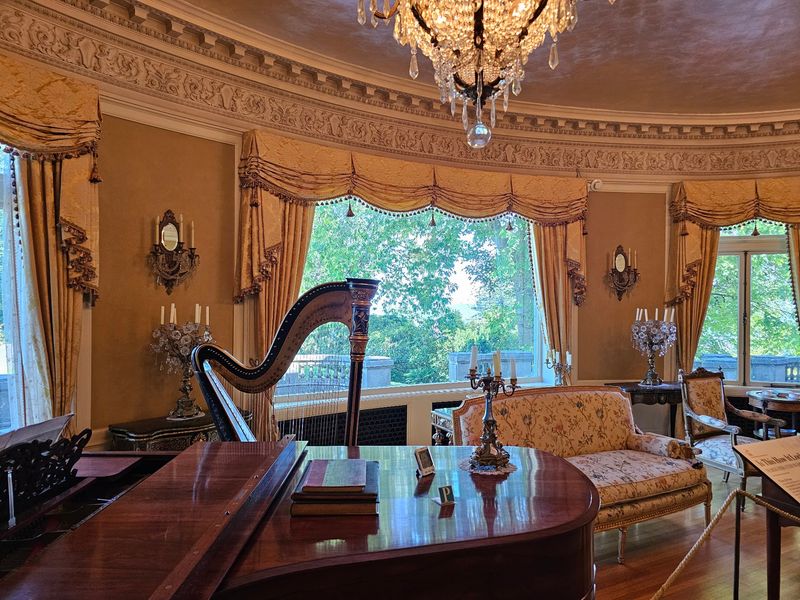
Self-guided is the magic word here. Guests roam the house at their own pace, pausing wherever a story catches their interest.
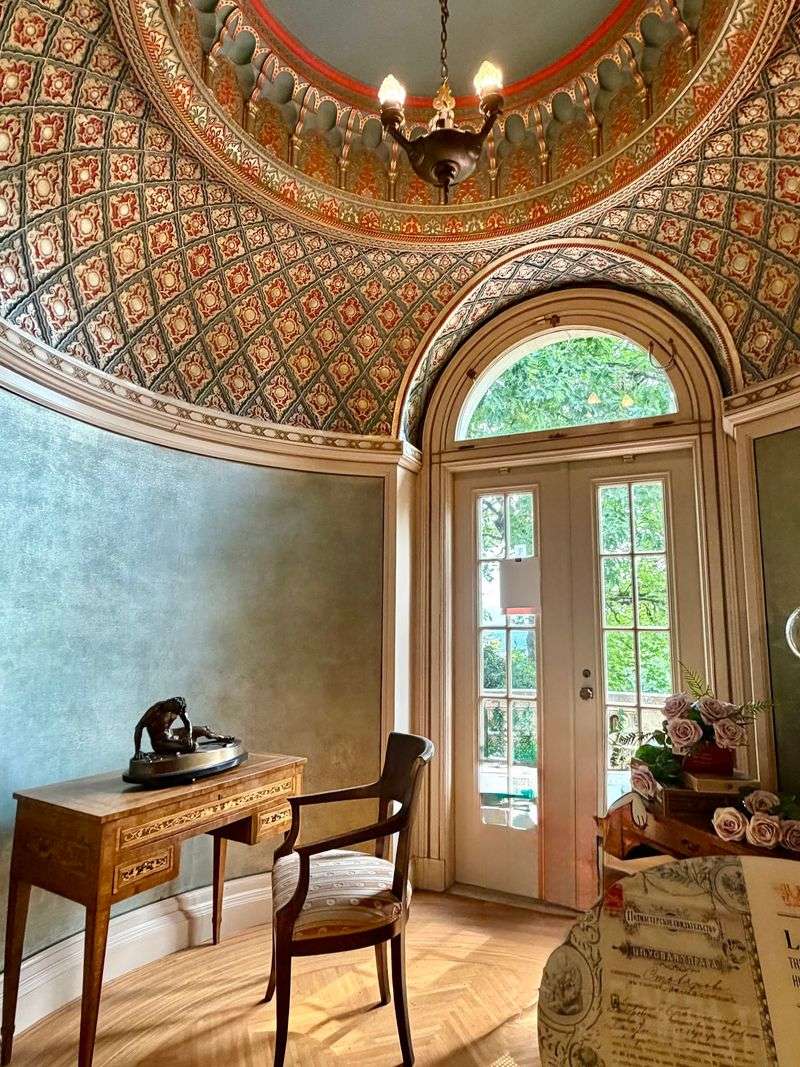
The elegant music room and striking chandeliers draw plenty of attention. Artwork, musical instruments, clocks, and personal belongings fill the rooms and help tell the family’s story.
Each room carries its own history. Many small details are easy to miss without slowing down to read or ask a question.
Volunteer staff and guides make that easy. They are friendly, knowledgeable, and happy to share extra facts that bring the house to life.
Some guests note there are fewer rooms than expected. The trade-off is a tour that feels focused and reasonably priced.
Artwork by Mark Bennett adds a whimsical touch to the mansion. It offers a lighter counterpoint to the formal décor.
Timing changes the interior, too. In December, holiday decorations transform the house into a festive setting.
Admission also includes the gatekeeper’s lodge, a smaller building that is easy to skip by accident. Make a point of stopping in.
Of course, many people come for something waiting just outside the back door.
Gardens, Benches, and That Mount Hood View
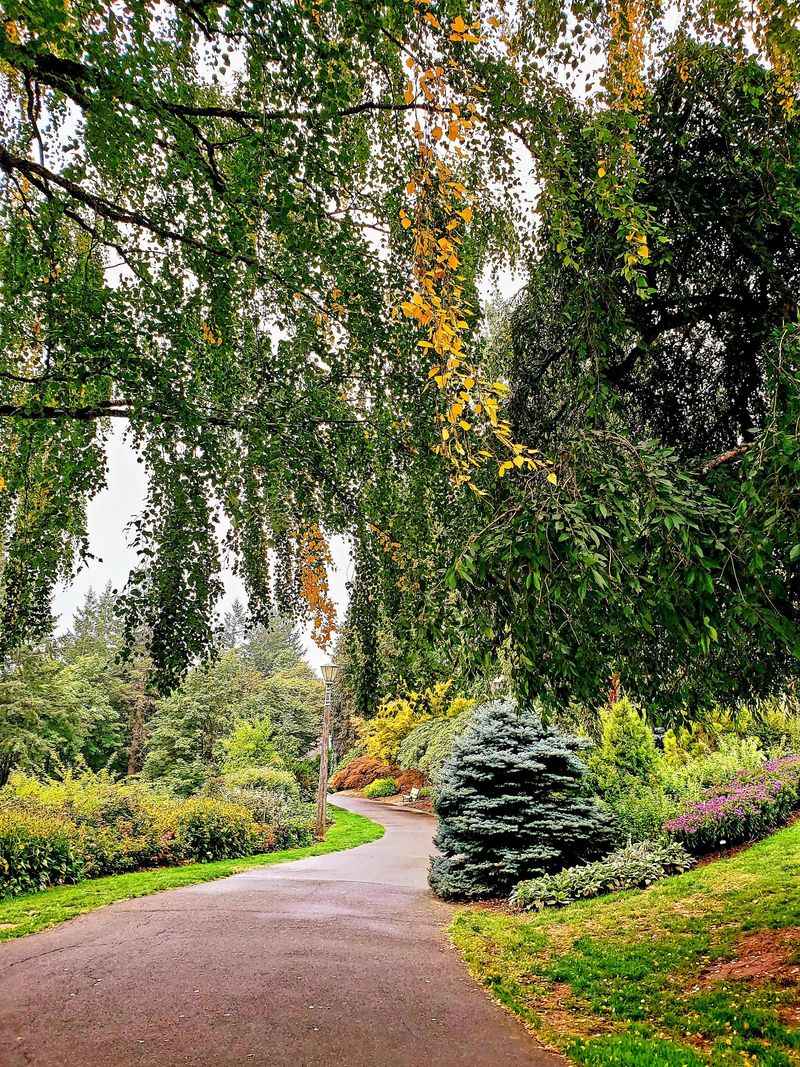
The view is the headline act for a reason. From the lawn behind the mansion, the Portland skyline spreads out below with Mount Hood rising in the distance.
Clear days make the biggest difference. When the sky cooperates, the mountain view ranks among the best in the city.
The best part is the price tag. The gardens and the lookout point are free, so a scenic stop costs nothing beyond parking.
Benches are scattered around the grounds. They make it easy to sit, rest, and take in the panorama without rushing.
The gardens themselves are a highlight and easily accessible for older guests. Paths and lawns stay manageable for most people.
Hikers have another reason to stop. The property connects with the Wildwood Trail, so some people combine a trail outing with a walk around the mansion.
The overall mood is calm and unhurried. Solo explorers, families, and groups of friends all find room to relax.
Bring a coffee and breakfast to enjoy on a bench, and the morning becomes a simple, budget-friendly treat. That early start leads directly to the most useful timing tips of all.
The Clock Matters Here
Timing can literally save you money. The grounds open as early as 6 AM, and parking is free until 9:30 AM.
After that, the lot charges about $2.40 per hour, though some people have reported paying a flat $7. Payment is handled by phone, and the process can be frustrating, so allow a few extra minutes.
The mansion does not take cash. Bring a card for admission.
Museum hours run 9 AM to 4 PM most days. Tuesday is the exception, with hours from noon to 4 PM.
Parking is limited on busy days. A shuttle is available during peak times and can spare you a circling search for a space.
Weekends are not always packed. Some Saturdays bring easy parking and modest crowds, but that can change quickly.
Golden hour in the evening is a favorite time for photos of the house and the city. Clear days also give the best shot at seeing Mount Hood.
Rain has its upside, too. The free lawn shines on bright days, while the indoor tour makes an excellent plan when the weather turns gray.
Plan around these windows, and the whole visit gets smoother and cheaper.
Worth the Climb, and Worth Keeping
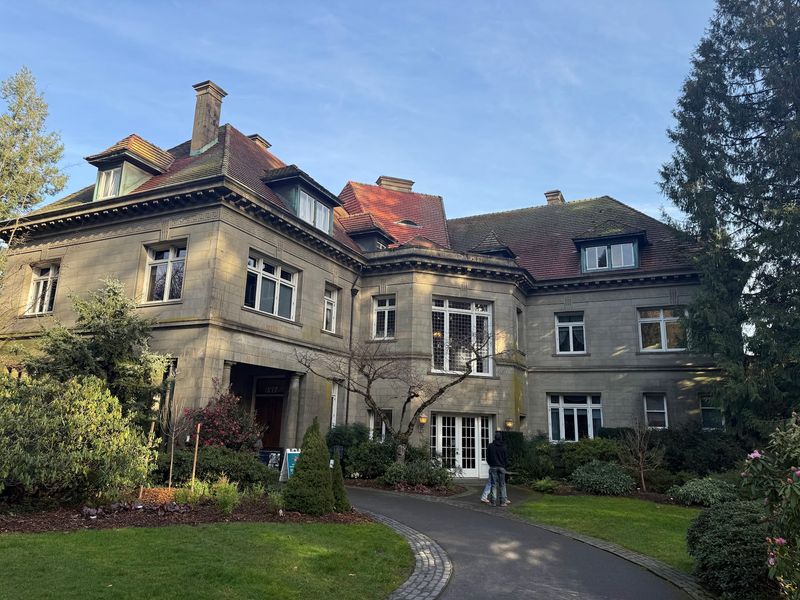
Few Portland outings mix history, preservation, and scenery this neatly. The mansion holds a strong 4.7-star standing across more than 8,500 opinions, and the reasons are easy to see.
The free grounds make it an affordable stop for locals who want a quick dose of fresh scenery. The paid tour adds real depth for anyone curious about how Portland grew.
A full day can stretch even further. The International Rose Test Garden sits only five to seven minutes away, making a natural pairing.
Families, couples, solo walkers, and history fans all find something here. Hikers heading to the Wildwood Trail can fold in a short loop around the house as well.
Expectations matter a little. Rooms are fewer than some expect, and parking payment can test your patience, yet neither seems to dent the overall experience much.
The bigger story is what the place represents. A house once headed for demolition now welcomes the public because Portlanders decided it was worth saving.
Arrive early, check the sky for Mount Hood, and save time for the gate lodge. The mansion has waited over a century for this visit, and it rewards anyone who plans the clock just right.
Share this story