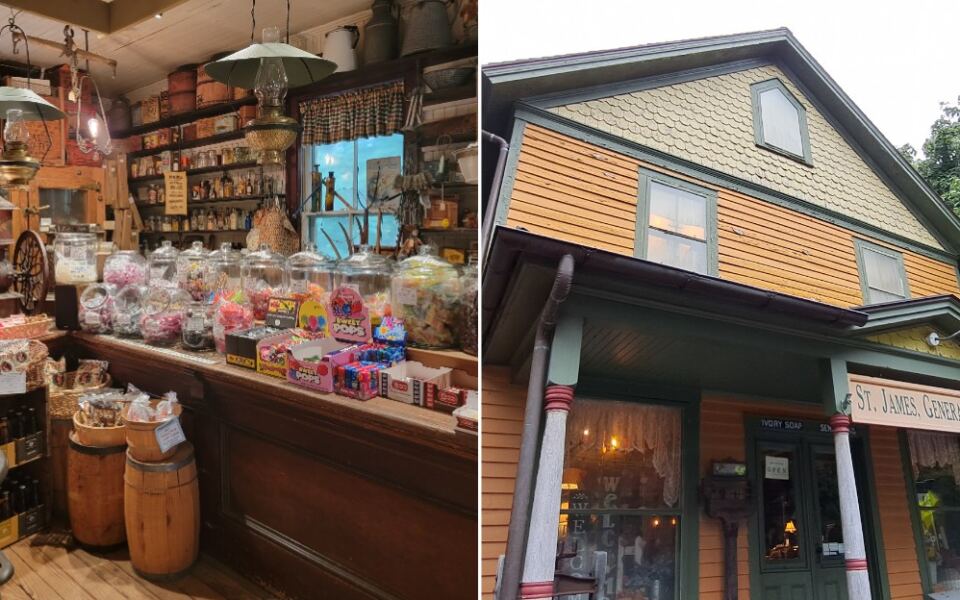
Some places on Long Island have refused to hurry, and one small shop on the North Shore wears that choice proudly. Candy still comes out of big glass jars and gets sold by the half pound, the way it did generations ago.
Families who shopped here as kids now bring their own children back for rock candy and honey sticks. Keep reading to learn how this store has stayed open since the mid-1800s, what fills its shelves, and how to plan a visit.
1. A Storefront on Moriches Road
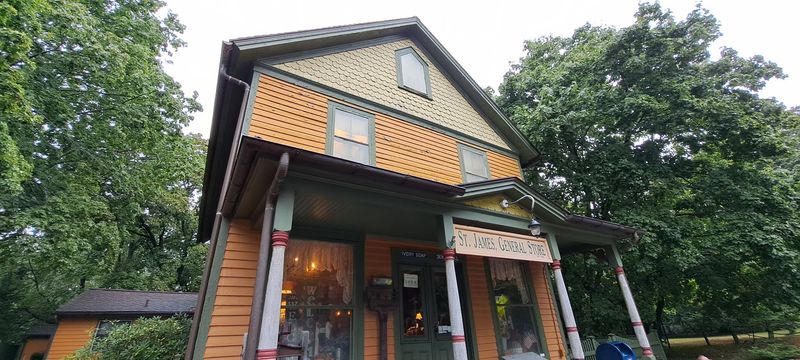
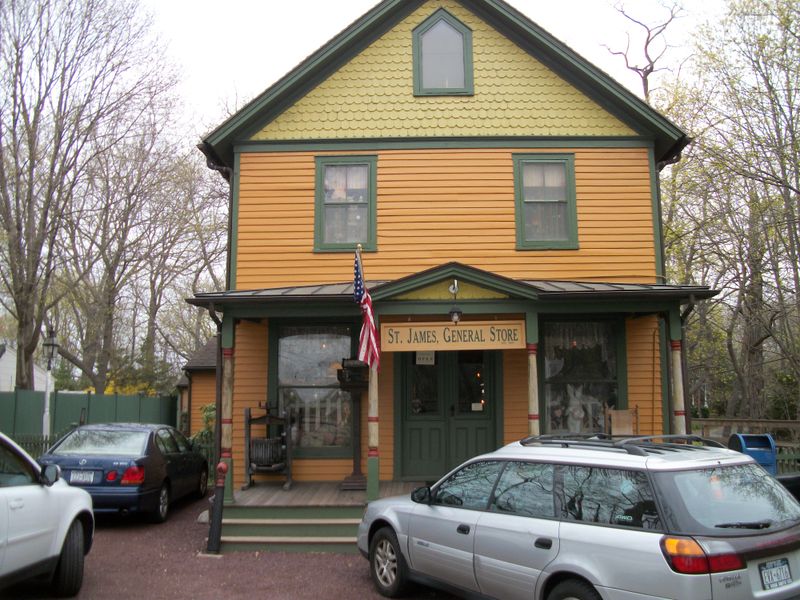
Long Island has plenty of shopping centers, but only one St. James General Store. The shop sits at 516 Moriches Rd, St James, NY 11780, in Suffolk County on the North Shore.
It is listed as a general store, though it works more like a living piece of local history. The website for the shop lives on the Suffolk County Parks page for historic sites, which tells you a lot about how the county sees it.
The building is small from the road. Inside, it turns out to be bigger than it looks, with a front room, a back room and a second floor.
That surprise is part of the fun. People who have driven past for years often admit they always meant to stop, and they leave wishing they had come sooner.
Shoppers find candy jars, jams, honey, postcards, toys, candles and handmade goods all under one roof. The mix keeps a quick stop from staying quick for long.
For a town shop that has outlasted so many changes, the welcome feels refreshingly simple: open the door and look around.
2. Open Since the Mid-1800s
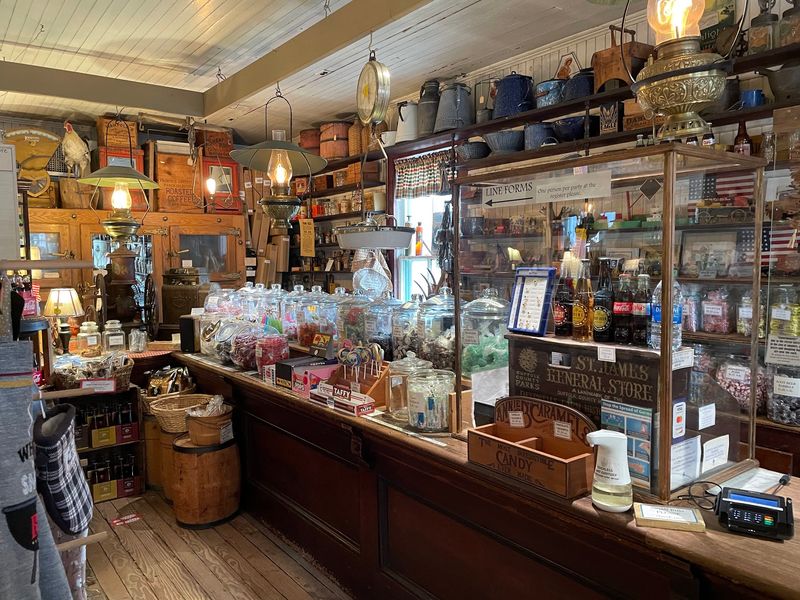
Count the decades and the number gets impressive. The store has reportedly been in continuous operation since the mid-1800s.
Right inside the door hangs a photo of the original owner along with a brief history. It is a good first stop before heading to the candy.
Over the years the outside has been fully renovated. Longtime regulars say the inside has not really changed much, which is exactly how they like it.
One former neighbor came back after about 25 years and found the place close to the way it was in the early 1990s. Another returned after more than four decades.
That kind of continuity is rare in a world of self-checkout lanes and chain stores. Here, a county-run historic site still sells goods across a counter to people who walk in the front door.
Some shoppers even sense a little historical energy in the old rooms. Call it spooky or call it charming, the building clearly carries its age well.
History here is not behind glass. It is the place where people still buy postcards.
3. Glass Jars and the Half-Pound Scoop
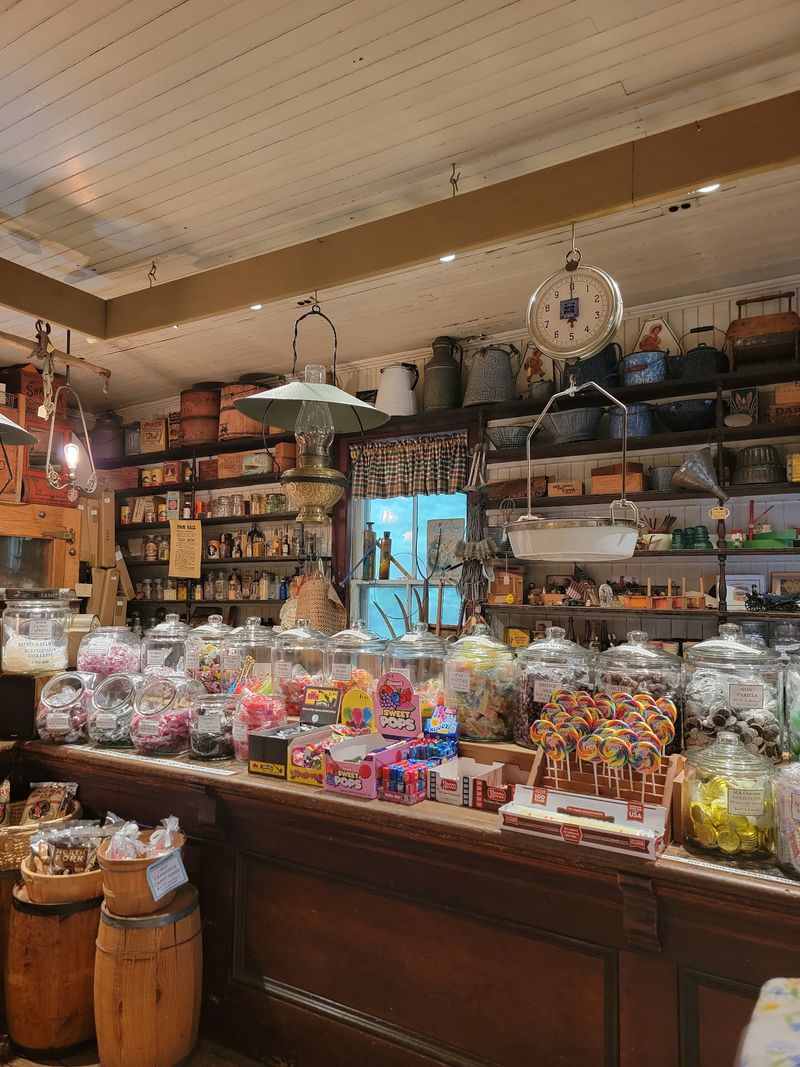
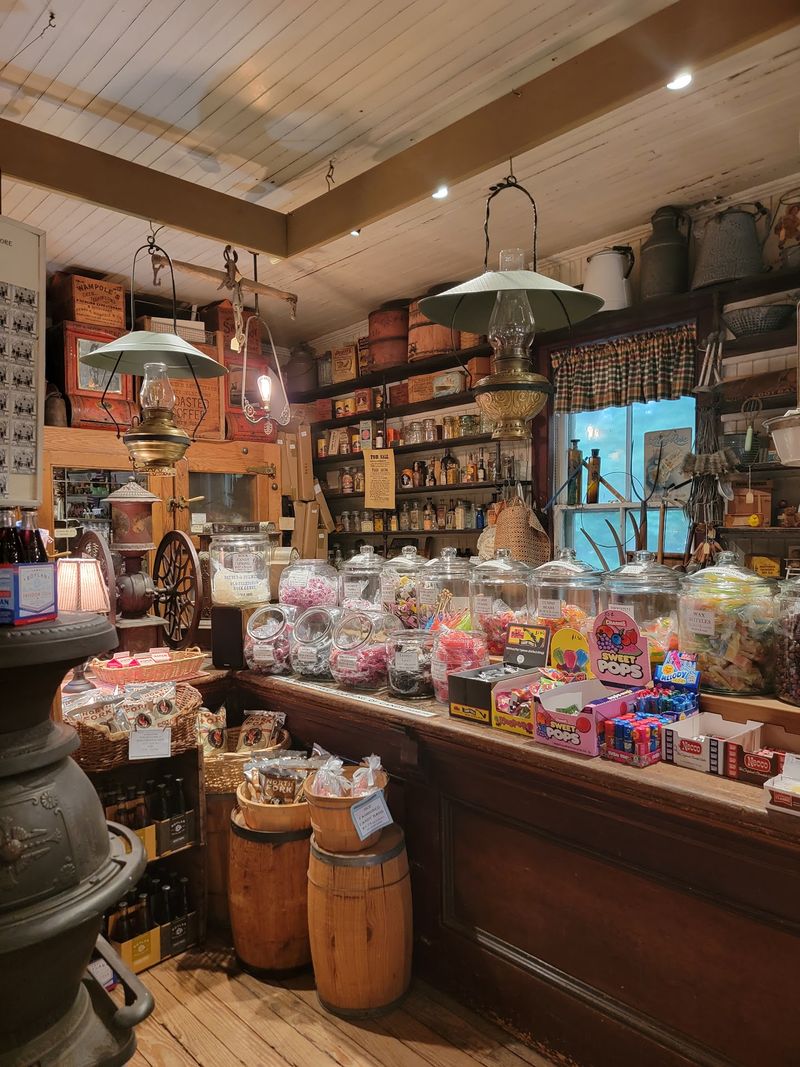
Candy is the headline act, and it earns the billing. Large jars of assorted candies line the front of the store, and shoppers buy them by the half pound.
The old fashioned candy counter is the part people talk about most. Penny candy, salt water taffy, rock candy pops and honey sticks all have loyal fans.
Staff encourage shoppers to go behind the counters for a closer look. That small invitation makes picking treats feel personal instead of rushed.
There are homemade chocolates too, which regulars mention often. For many families, the candy run is the whole reason for the trip.
One longtime shopper admitted it was the good old fashioned candy that finally got the wallet out. It is hard to argue with a sweet tooth that has waited years.
Kids get a lesson in how stores used to work. Adults get a reminder that some traditions are worth weighing out by hand.
4. Pantry Shelves of Jams, Honey and Dry Goods
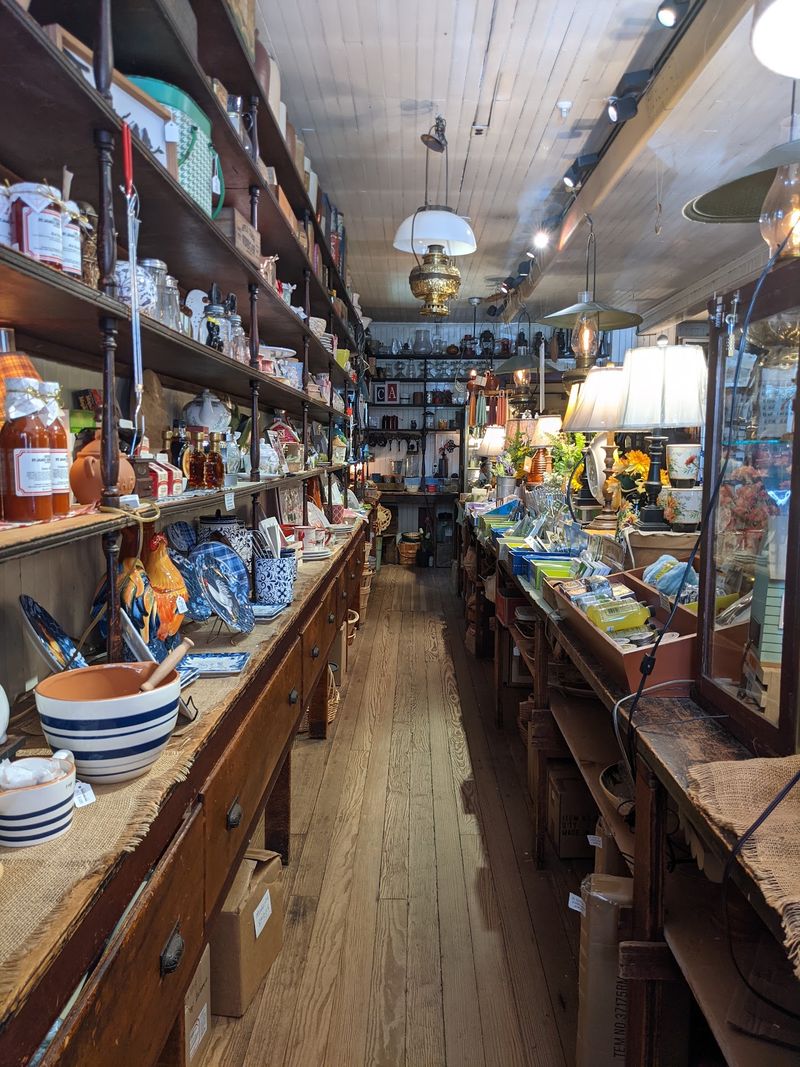
Beyond the sweets, the shelves lean toward the pantry. Jars of jams and jellies sit near local honey, ready to go home in a shopping bag.
Dry goods fill in the rest. Kitchen towels, pot holders, aprons and assorted stoneware keep the general store spirit alive.
Handmade soap and lotions show up as well. Many items come from local makers, so a purchase helps small businesses nearby.
Some prices may seem a bit high at first glance. Others call them fairly reasonable, and the local connection softens the sticker for most shoppers.
Jellies, honey and taffy make an easy trio for a first visit. They travel well and make good gifts.
It is the kind of shopping list a farm family might have written long ago, just with nicer packaging today.
5. Toys From Another Childhood
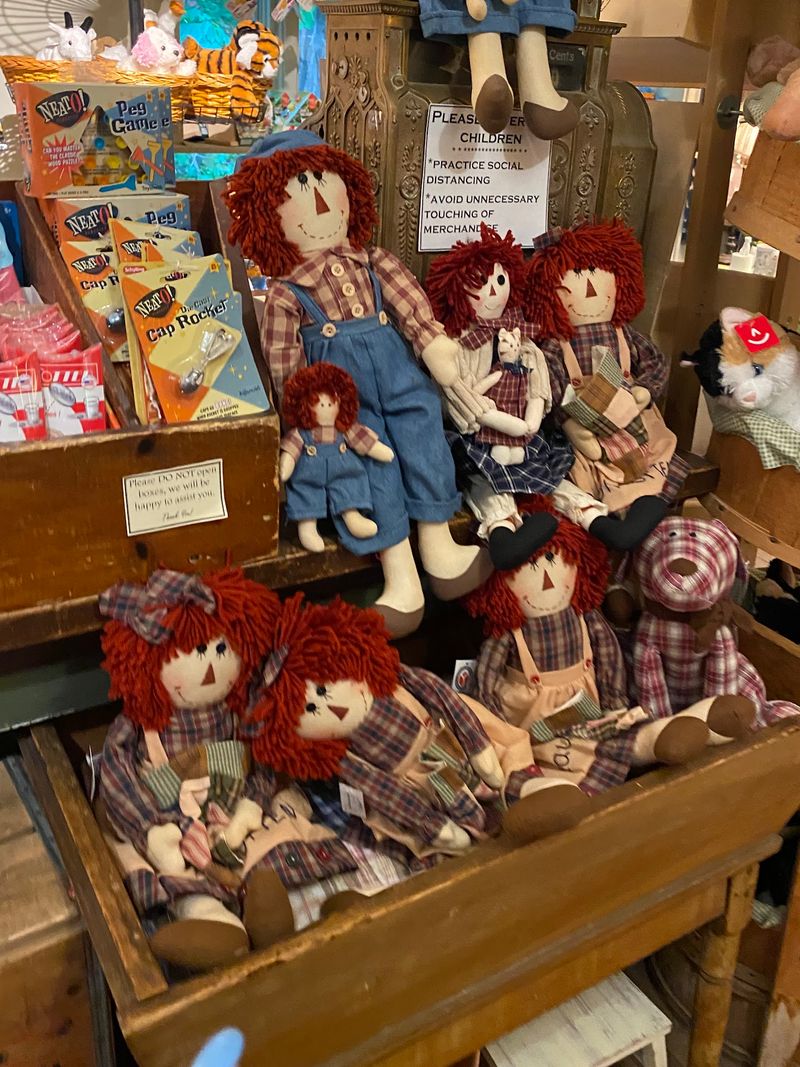
Tiddlywinks still have a home here. So do balsa wood plane glider kits, the kind many grown-ups remember building as kids.
The back room holds children’s toys and handmade goods. It feels a little more modern than the front, but the selection still leans classic.
Parents often use the store to show their own kids what their childhood looked like. One shopper has been coming for 30 years, first with a sister and nieces and nephews, now with her own children.
That handoff from one generation to the next is the real treasure on these shelves. A small toy becomes a story to tell on the drive home.
Some shoppers also come for the stuffed bears, returning every few months for a new one and some candy.
Not every item is antique, and some would like more period pieces. Still, the toy corner rarely sends a child out empty-handed.
6. Upstairs, Tins and Old Cartons
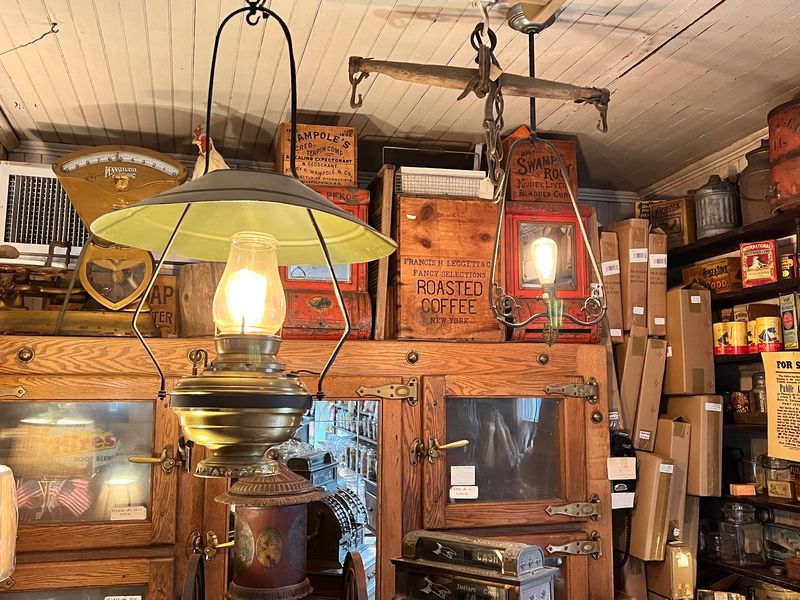
Look up before you look down. Above the modern goods sits a collection of old tins, cartons and containers for products a general store would once have sold.
These pieces of memorabilia turn the walls into a small display of everyday history. They are worth a slow walk around the room.
A second floor offers more to explore. It is reached only by stairs, so plan accordingly.
Clothing, tees, baby clothes and American flags round out the stock. Postcards in old-time styles make easy souvenirs.
The building is jam packed, so browsing takes time. The calm music playing in the background seems to encourage people to stay a while.
Each shelf seems to hold one more thing nobody expected to find.
7. Who Feels at Home Here
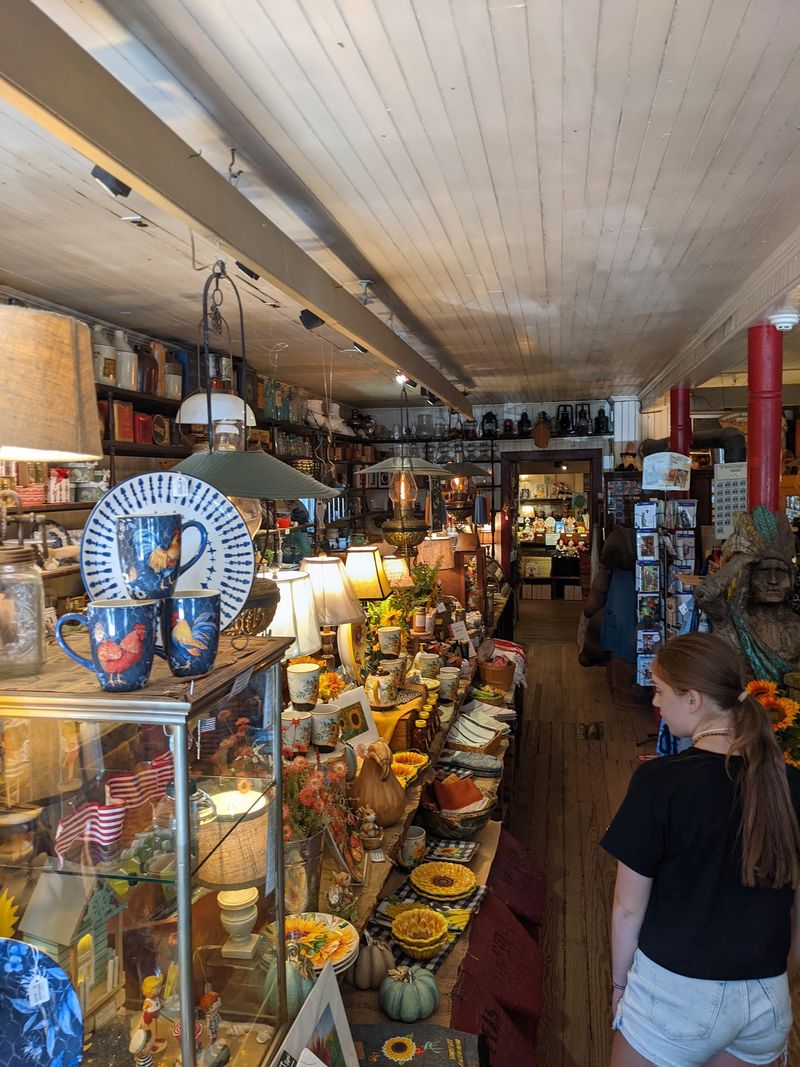
Families are the obvious crowd. Children have plenty to choose from, and adults have their own nostalgia to chase.
The store is quiet and relaxed. Staff are often described as friendly and sweet, and the shop is kept clean.
Gift hunters do well too. One-of-a-kind finds and country charm make it handy before birthdays and holidays.
History purists may want more period goods and fewer modern items. Some say it feels a bit like a gift shop, though most still recommend a stop.
Some say it reminds them of a shop upstate or in Vermont. That is high praise for a spot in Suffolk County.
Bring patience, a little curiosity and maybe a list of people who need a treat.
8. Hours, Payment and Parking Notes
Planning is easy because the hours rarely change. The store is open every day of the week from 10 am to 5 pm.
Cash, debit and credit cards are accepted. One shopper reported a surcharge on a card purchase, including debit, so carrying cash may help.
Parking out front is limited. There is extra parking directly across the street, and pedestrian crossing lights help with the walk over.
Picnic tables sit on the side of the building. They are handy for a snack or light lunch with the family.
Accessibility is a real limit. The front door is up a few steps, and the second floor is stairs only, so wheelchair users may find it difficult.
The surrounding area is pleasant for a stroll in warmer months, which makes a candy stop easy to turn into an afternoon.
9. Why the Counter Still Matters
Plenty of old stores on Long Island are gone. This one is still selling candy by the half pound, and that matters to a lot of people.
With a 4.7-star average across more than 300 opinions, the affection is easy to see. Candy, nostalgia and friendly service come up again and again.
It is not a museum, and it is not a mall. It sits somewhere in between, which is part of its appeal.
A few quibbles exist, from card fees to accessibility to a wish for more period goods. None of them seem to stop families from coming back year after year.
For North Shore locals, it is a tradition. For anyone farther away, it is a reason to drive out to St James.
Grab a bag, pick a few favorites from the jars and let the old counter do what it has done for generations.
Share this story