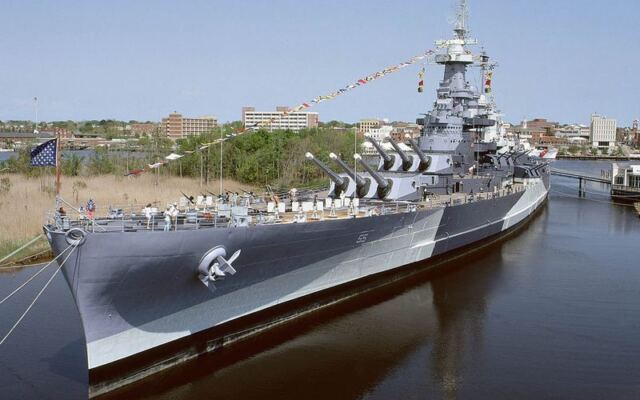
Across the river from downtown Wilmington, a gray steel giant sits so still that it almost looks like part of the skyline. It once carried 16-inch guns through World War II, and today it carries something just as heavy: the everyday stories of the sailors who lived inside it.
You can climb its ladders, squeeze through its hatches, and stand where the captain once steered. Textbooks give you dates and names, but this ship gives you bunks, galleys, engine rooms, and steep steps that test your knees.
It is a weekend outing that North Carolina families keep coming back to, and the numbers suggest people walk away impressed. Keep reading for the story behind the ship, the spots inside you should not miss, and the practical tips that can make your visit far more comfortable.
A Warship Parked Across From Downtown Wilmington

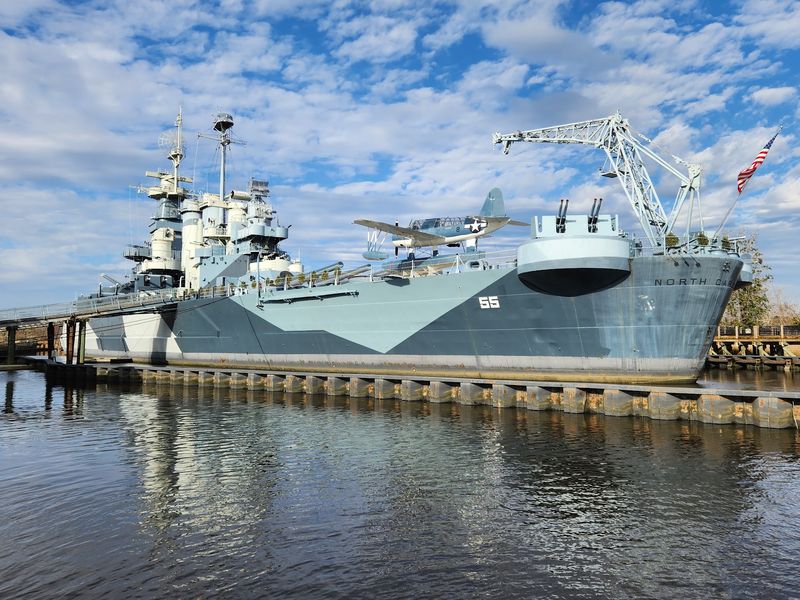
Some landmarks sit on hilltops. Battleship North Carolina sits on a riverbank, and it is hard to miss.
The ship rests at 1 Battleship Rd NE, Wilmington, NC 28401, in the United States, just across the river from historic downtown Wilmington. A short drive of a few minutes links the two, so a morning on the ship and an afternoon downtown fit easily into one day.
Officially, the site is a history museum built around a World War II battleship. Exhibits honor the ship’s wartime service, and a visitors center and gift shop round out the experience on land.
The vessel is also known by its hull number, BB-55. Naval history fans tend to use that label the way sports fans use a jersey number.
Plenty of people learn about it secondhand. Tour boat operators in Wilmington have been known to point guests toward the ship, which says a lot about its place in the local story.
For North Carolinians, the appeal is simple. A genuine WWII battleship carries the state’s name, and it sits within reach for a Saturday outing.
Few road trips deliver that much history per mile.
BB-55 and Its Place in Naval History
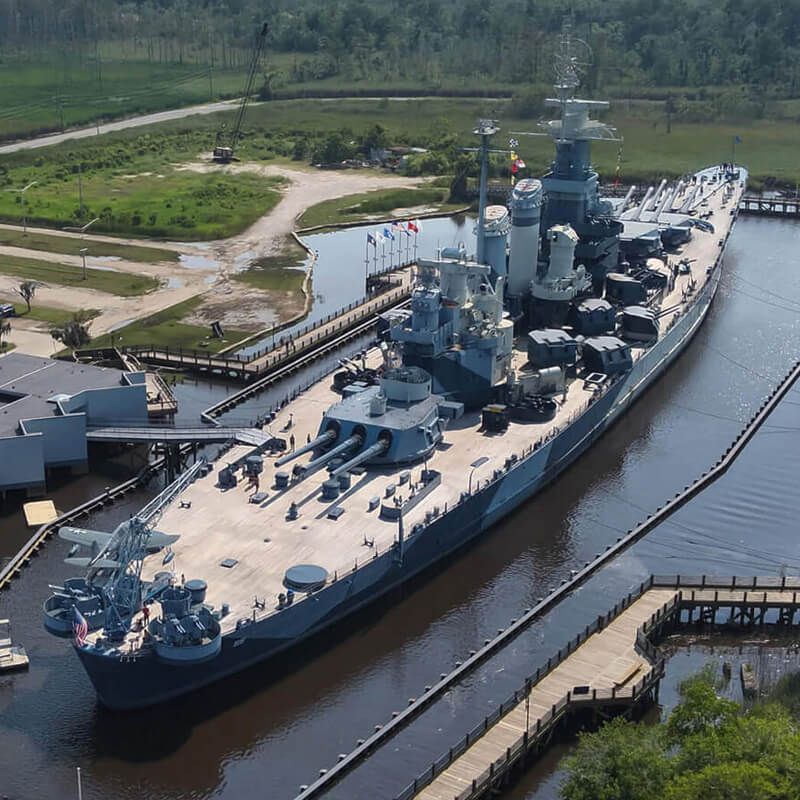
Long before it became a museum, BB-55 was a working battlewagon with a crew of sailors who called its steel decks home.
Battleship North Carolina belongs to a class of ships that was smaller and lighter than the famous Iowa class. Even so, it carried 16-inch guns, which put it firmly among the heavy hitters of its era.
Only two ships were built in this class. Naval history buffs often argue that the pair had an especially interesting service record during World War II, and the sister ship, USS Washington, is well worth reading about after a visit.
Here is a detail that gives the site extra weight. A huge share of WWII ships were eventually scrapped, so a surviving battleship of this size has become rare.
Keeping one afloat and open is not cheap. Ticket sales and gift shop purchases help fund the preservation, which means every visit plays a small part in keeping the ship around.
The museum’s exhibits memorialize the vessel’s wartime service, so the story is told with respect. Expect history first and flash second, which suits this ship just fine.
An Original-State Time Capsule
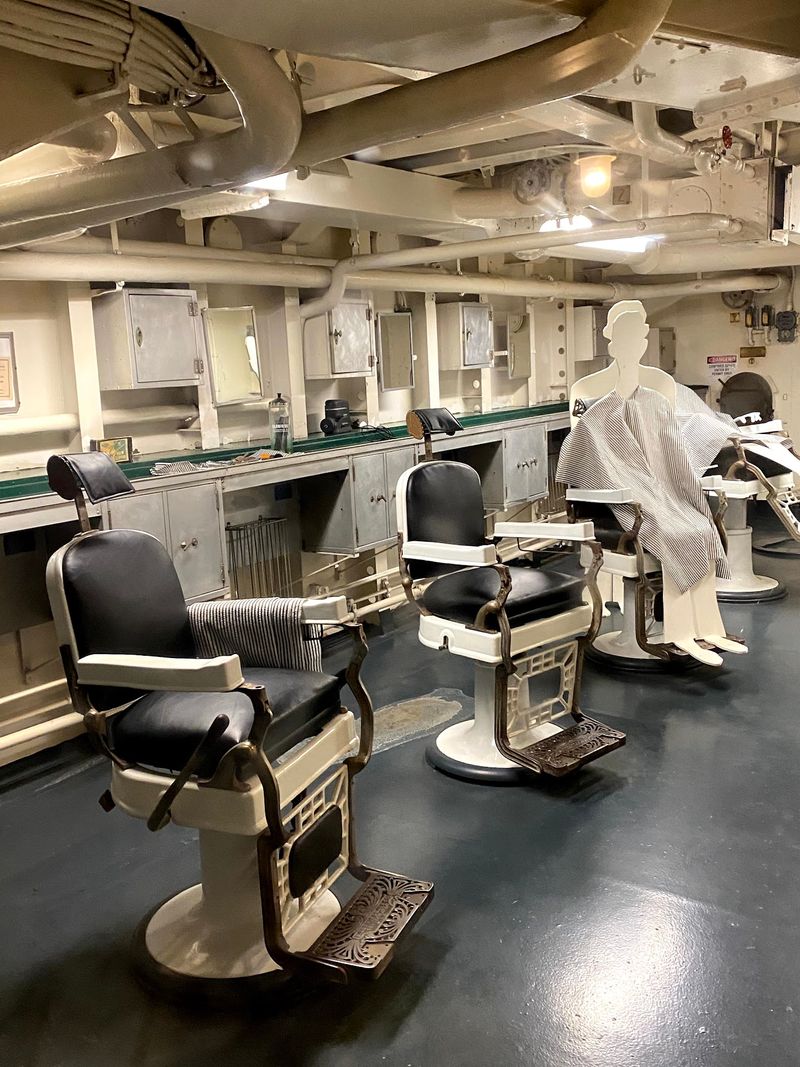
Modern upgrades are scarce aboard this ship, and that is exactly the point.
Much of the vessel is kept close to its original state. Rather than a polished, rebuilt version of the past, guests move through spaces that still look the part of a 1940s warship.
That choice gives the tour an authentic feel. Families often compare it to a time capsule, with everything carefully preserved and ready for a closer look.
Some areas sit behind plexiglass to protect delicate items. Others are open, so you can walk around them and even touch certain features.
The spaces are generally clean and well lit, which helps when you are reading plaques deep inside the hull. Preservation also continues, since an ongoing restoration project keeps the work moving forward.
Not every deck or room is open, mostly for safety reasons. Even so, the amount of accessible space can easily fill an afternoon.
History fans who enjoy comparing what they have read with the real thing tend to find this part especially rewarding. The ship does not just talk about the past.
It keeps a large slice of it intact.
Life Below Decks for the Crew
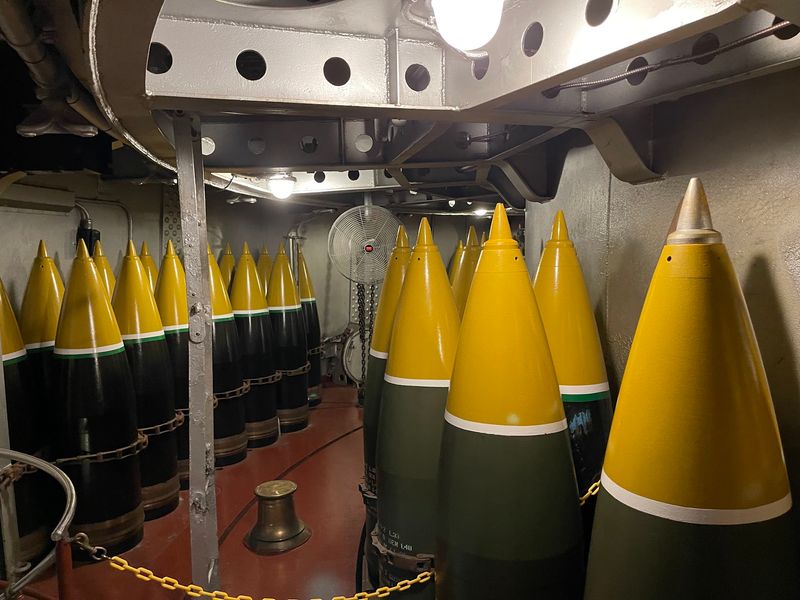
Bunks, mess areas, and tight corridors tell a story that no battle map can.
Life on the ship is the most talked-about theme here, and for good reason. The tour takes you through crew quarters and facilities below decks, where hundreds of daily routines once played out.
Information boards along the route explain how sailors worked, ate, and rested. The museum interviewed members of the ship’s crew, so many placards include photos and oral history in their own words.
Those crew memories leave a lasting impression on many guests. Reading a sailor’s recollection while standing in the same room is a different kind of lesson.
Small, unexpected spaces add to the picture. Keep an eye out for a dental room and a doctor’s lab, since these nooks are easy to walk past without noticing.
The sheer number of compartments helps explain why some people describe the ship as a floating city. Every space had a job.
WWII enthusiasts often say this section gives them a fresh view of everyday wartime life. It turns the sailors from names on a roster into real people with real routines.
Gun Turrets Built for Heavy Hitting
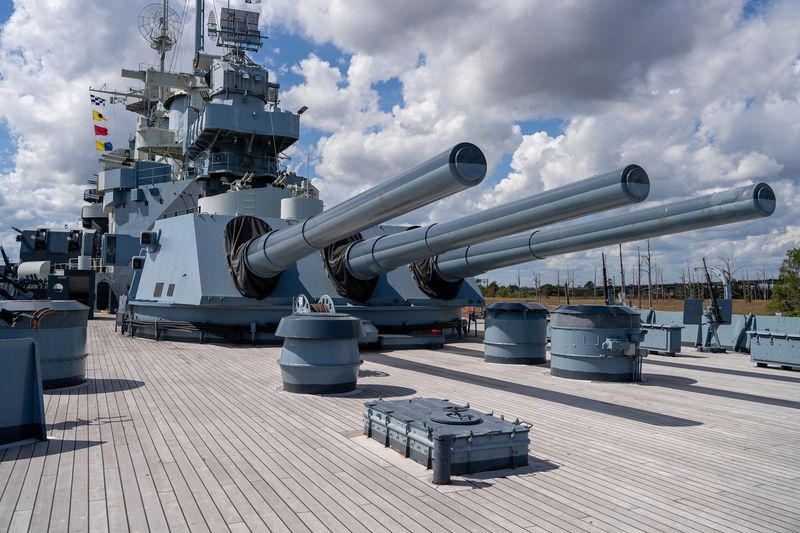
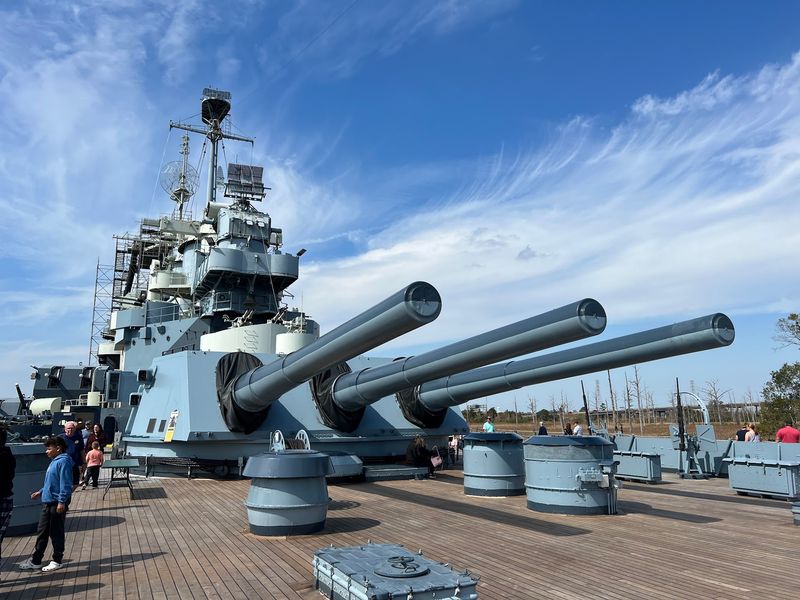
Sixteen-inch guns make a strong first impression, even when they are standing quietly over a river.
The gun turrets rank among the most popular stops aboard Battleship North Carolina. The full tour includes a visit to one of the main guns, giving you a close look at the hardware that defined a battleship’s role.
Getting inside the aft turret takes some effort. Taller guests may need to squat a bit to fit, and it can feel cramped when several people crowd in at once.
Anyone uneasy in small spaces can skip it without missing the rest of the tour. Those who go in, though, tend to come out talking about it.
The turrets also help explain the ship’s place among its peers. Though lighter than the Iowa class, this battleship still carried the same big caliber of main guns.
Out on deck, the size of the barrels speaks for itself. They make terrific photo backdrops, and kids often have plenty of questions about how they worked.
For a ship nicknamed a battlewagon by fans, the turrets are its calling card. Plan a few extra minutes here.
The Engine Room and the Ship’s Inner Workings
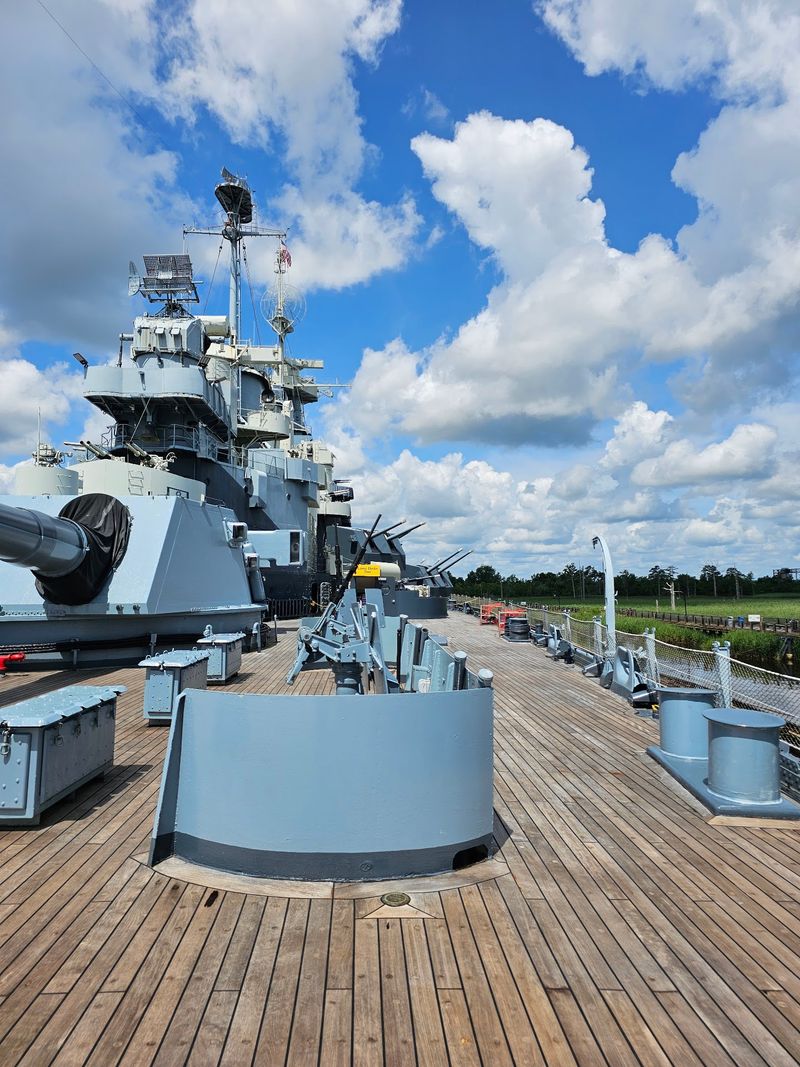
Deep in the hull, the tour shifts from daily life to raw machinery.
The engine room is one of the highlights for many guests. Going from the high bridge down to the motor and engine levels shows just how much of the ship stayed hidden from view.
Signs placed throughout explain the inner workings of the battleship. They help non-engineers follow along, so you do not need a mechanical background to enjoy the visit.
Interactive buttons and exhibits appear in various spots. They tend to be a hit with younger guests, who like seeing systems come alive at the push of a button.
Technology fans should watch for the guidance computer. It draws plenty of interest from people curious about how a 1940s warship handled aiming and navigation.
Spending time deep inside can make the vessel feel like one huge connected system. Every pipe, valve, and gauge served a purpose for the crew.
Lower decks can be warmer, so pace yourself here in summer. Once you reach the bottom, the climb back up feels like a small achievement.
Officer Country and the Bridge
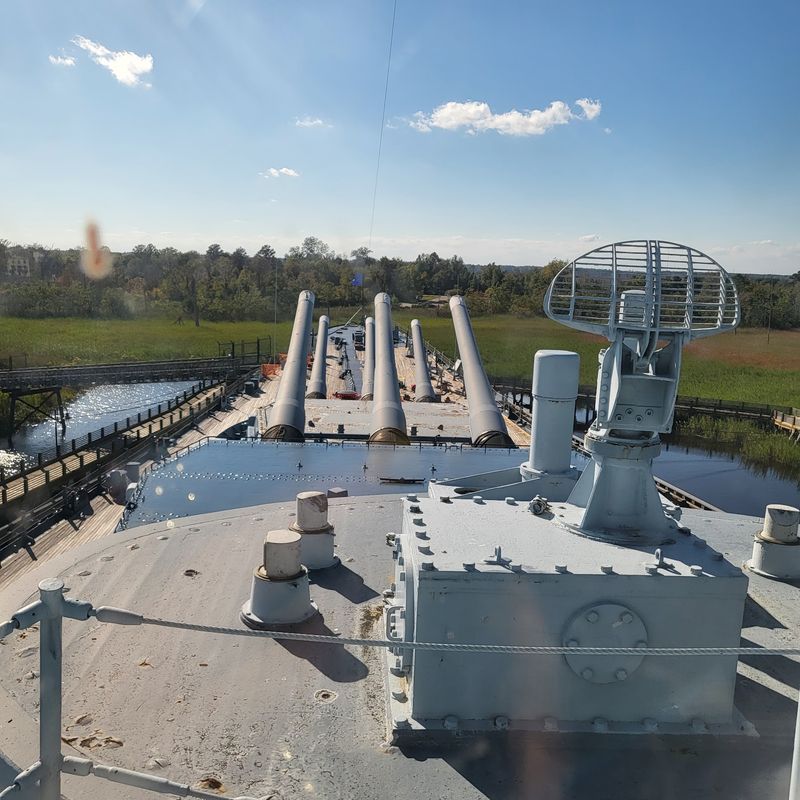
Few tour moments rival grabbing the helm of a WWII battleship.
The full route covers officer country and the bridge, giving a look at how the ship was led and steered. These spaces offer a clear contrast to the crowded crew areas below.
For many families, the captain’s area becomes the favorite stop. Standing at the helm and handling the controls turns history into a hands-on moment.
Kids especially enjoy this part. Some like to act out different jobs on board after learning what each crew member did.
Up high, the views shift too. The bridge sits at the opposite end of the vertical journey from the engine levels, so seeing both helps you grasp the ship’s full scale.
Certain days add a special bonus. On occasion, people portraying crew members are on board to explain how everything worked, which can make the bridge even more engaging for younger explorers.
Leadership aboard a battleship carried enormous responsibility. Spending a few minutes up here makes that idea easier to understand, and it offers great photo chances besides.
Ladders That Test Every Knee
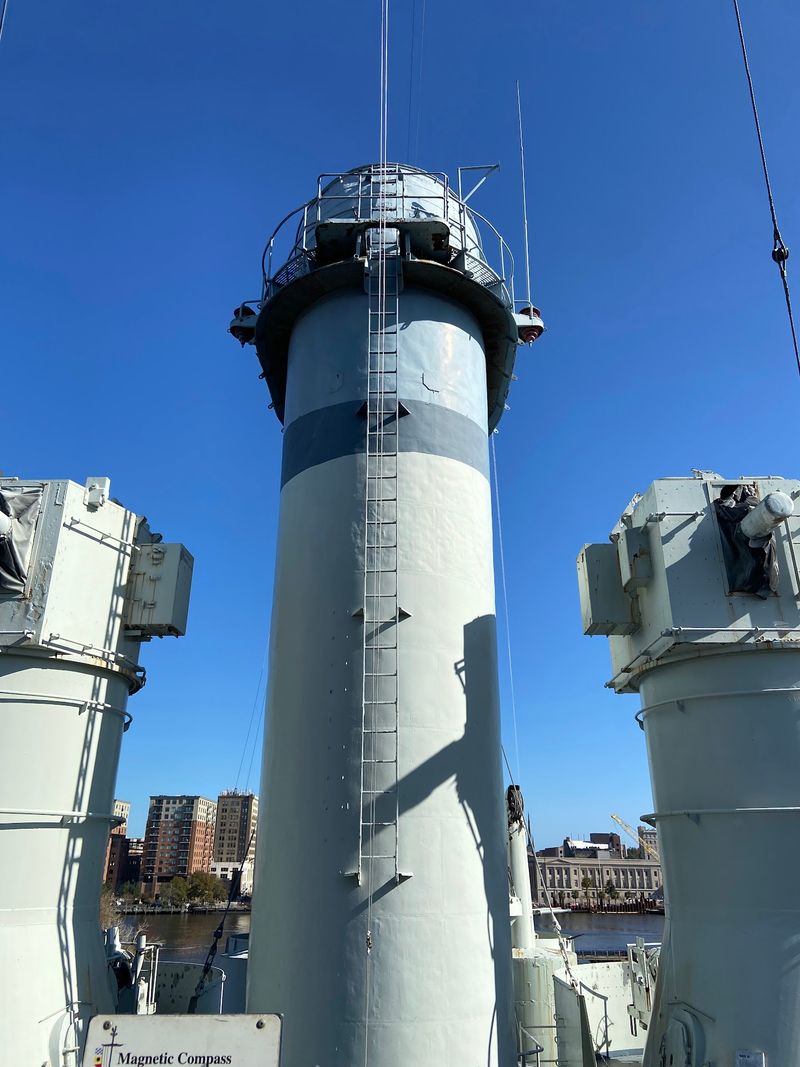
Fair warning: the ship asks something of your legs.
Ladders come up constantly when people talk about this battleship. Moving between upper and lower decks means climbing steep, narrow stair-ladders built to fit tight wartime spaces.
All the stairs have handrails. Still, they are smaller and steeper than what most people use at home, so a slow and steady pace works best.
The climbing matters for certain groups. Anyone carrying small children, dealing with stiff joints, or wearing a dress should plan ahead.
Comfortable shoes are a must. Sturdy footwear that handles climbing up and down well can make a big difference by the end of a long tour.
Accessibility has limits too. The main deck and the outside walkway are accessible, but much of the interior is not wheelchair friendly due to the ladders.
Families with mixed abilities can still enjoy the deck, the walkway, and the park. The deeper decks simply reward those ready to climb.
Many guests compare the corridors, hatches, and ladders to a historical escape room. The workout comes free with your ticket.
Self-Guided Wandering or a Guided Tour
Two styles of exploring are on offer, and both have loyal fans.
The self-guided tour lets you move at your own pace across many decks. Clearly labeled plaques and signs lead the way and explain what each space was used for.
Navigation can get tricky. Some people get turned around inside and wish for a better map, so a little patience helps you avoid missing hidden corners.
Guided tours cost a reasonable additional fee. They run at set start times listed on the website, and private guided tours can also be scheduled.
On quiet mornings, arranging a guided tour on the spot may be possible. That flexibility depends on crowds, so checking ahead is wise.
The guides earn high praise for their knowledge and enthusiasm. A good storyteller can make the ship feel lived in, bringing the crew’s world into sharper focus.
Choosing between the two comes down to style. Independent explorers may love lingering over plaques, while guided groups get stories and context they might not find alone.
Either option leaves you knowing far more than when you boarded.
The Free Walkway Around the Hull
Not every great view requires a ticket.
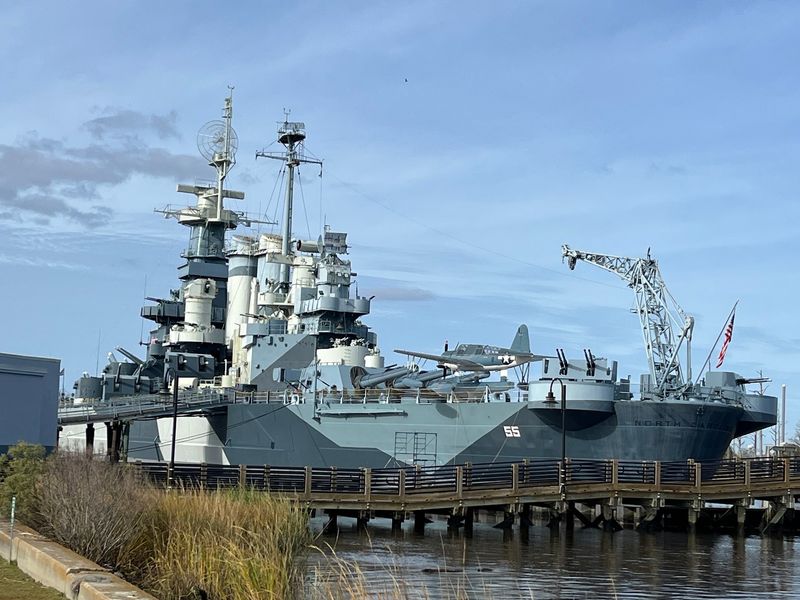
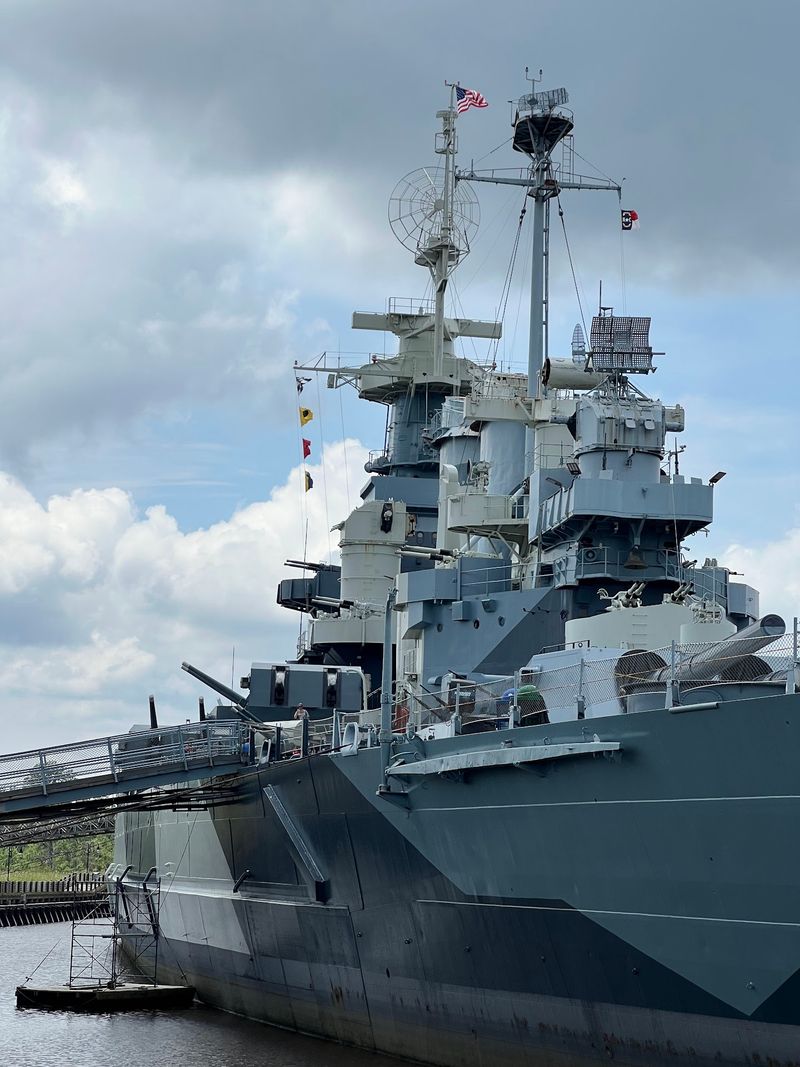
An elevated wooden walkway wraps around the outside of the ship, and it is free to use. It lets you see the battleship from many angles instead of only from its decks.
That outside perspective helps you understand the size of the vessel. Seeing the full hull from alongside offers a different appreciation than squeezing through its corridors.
The walkway is also accessible. Guests who cannot handle the interior ladders can still enjoy an up-close look at this impressive piece of history.
Even on busy days, the exterior makes a memorable stop. During holiday festivities, some guests have skipped the interior entirely and still left glad they came.
Nearby, the park area adds more to do. A picnic table pavilion by the river offers views of downtown Wilmington across the water.
The site even has an ADA accessible kayak launch, reportedly the only one in New Hanover County. That gives paddlers another reason to visit.
Bring a camera for this part. The angles along the walkway produce some of the best shots of the whole visit.
Summer Heat and How to Handle It
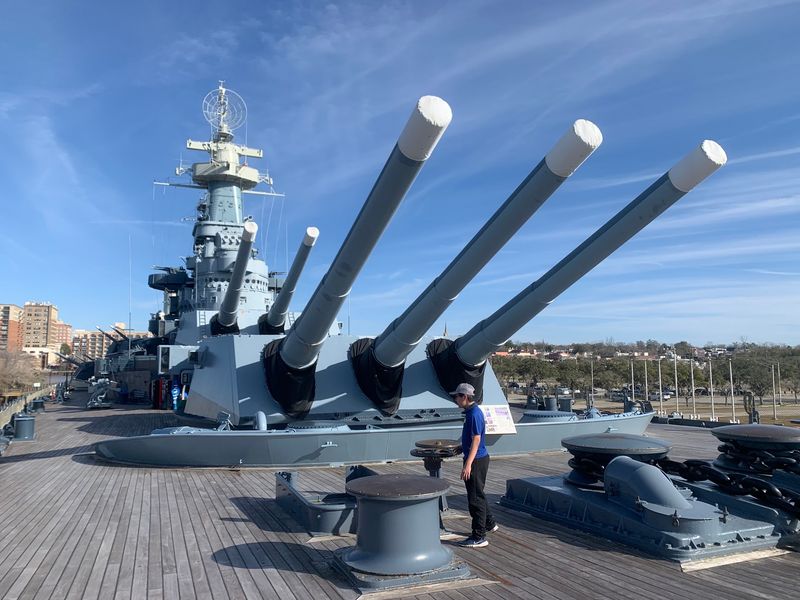
North Carolina summers are no secret, and the ship does not escape them.
Climate control is limited on board. Fans run throughout the vessel, but some spaces lack moving air, and the airflow is not air conditioning.
Lower decks and the open deck can both get warm during hot months. Humidity adds to the challenge, so preparation pays off.
Arriving early is a smart move in summer. Cloudy or cooler days can also make the climb through the interior more comfortable.
Bring a water bottle and dress light. Shorts, breathable clothes, sunglasses, and a hat for the deck can all help, and a damp towel may be handy for anyone prone to overheating.
Water fountains sit near restrooms on the ship. Vending machines with cold drinks are on the main deck, though none appear inside.
Restrooms exist before boarding and on the ship, but options on board are limited. Using the facilities before the tour is a good plan.
Comfort varies by day, and some guests feel perfectly fine even in hot weather. A little planning helps keep the focus on history instead of the thermometer.
Who Gets the Most From a Visit
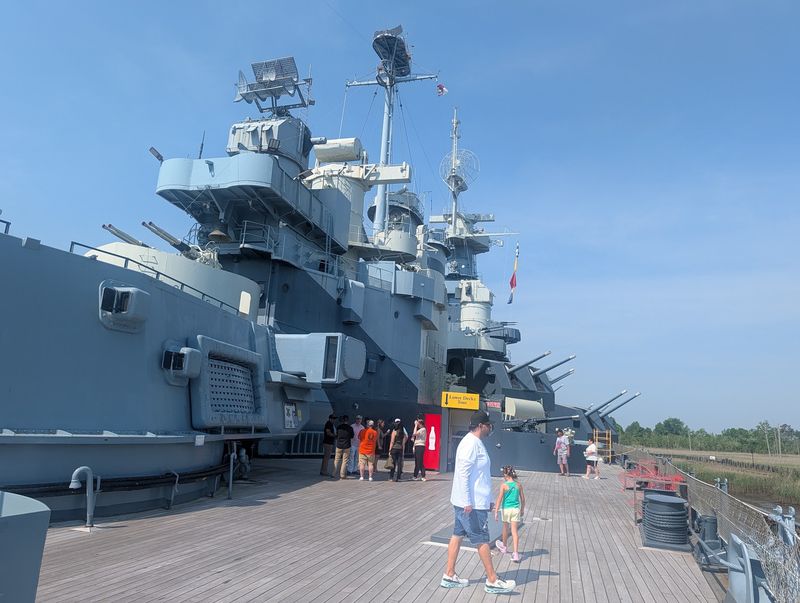
Grandparents, teens, and preschoolers rarely agree on an outing. This one manages it.
Families with a wide age range often leave equally happy. Groups spanning from young children to people in their 80s have found plenty to enjoy, though the ladders are worth considering for older guests.
Kids tend to treat the ship like a giant adventure. Hatches, buttons, and the helm keep them busy, and children as young as four have left asking to come back.
Even teenagers, a famously tough audience, seem to come around. The hands-on feel helps win them over.
Military history fans and WWII buffs find serious depth here. The amount of information on board is impressive, and the crew’s oral histories add layers that many books lack.
Casual visitors on a beach vacation can still enjoy it. A couple of hours aboard makes a nice change of pace from the sand.
Picnickers and paddlers also have reasons to stop by, thanks to the riverside park and kayak launch. Not many museums can claim fans this varied.
Hours, Tickets, and Parking Basics
Good news for planners: the schedule is refreshingly simple.
Battleship North Carolina is open every day of the week from 8 AM to 5 PM. Arriving late leaves less time, since some people show up 90 minutes before closing and cannot see everything.
Ticket prices are widely considered reasonable. One recent figure placed self-guided admission at about $15, though checking the official website before your trip is wise.
Guided tours cost extra and have listed start times online. The website, battleshipnc.com, is the best place for current details.
Parking is free, easy, and usually plentiful. That alone makes the outing less stressful than many city attractions.
Time on board varies. Most people spend around two to three hours, while dedicated history fans may stay four or five hours reading every plaque.
Early mornings may offer lighter crowds, especially outside summer. Early May has been a pleasant time before the busy season ramps up.
A photo package is offered near the end by the gift shop, with no pressure to buy. Add a few minutes for the extensive shop itself.
A Riverside Lesson Worth the Drive
History books summarize. A battleship you can climb through makes it personal.
Battleship North Carolina blends real wartime hardware with the voices of the sailors who served aboard. The result tends to stay with people long after they leave Wilmington.
Its strong reputation, with thousands of happy guests, suggests the experience keeps delivering. Many people return for second or third visits, sometimes finding new areas open to explore.
Practical details make it easy to say yes. Daily hours, free parking, and a quick drive from downtown Wilmington remove most of the usual hurdles.
Preparation does matter. Good shoes, water, and a plan for the summer heat can turn a tough climb into a fun one.
Every ticket and gift shop purchase may help keep this rare survivor afloat for future generations. That gives the visit a purpose beyond a good day out.
North Carolinians have a piece of national history sitting right on their own riverbank. Pick a weekend, round up the crew, and go see what 45,000 tons of history looks like up close.
Your knees may complain, but your curiosity will thank you.
Share this story