Some islands have boardwalks, snack bars, and rows of beach chairs. This one has wild horses, piles of shells, and not a single set of steps leading off the sand.
The only way most people get there is a short boat ride across the water from the Crystal Coast of North Carolina. Once the ferry pulls away, it is just you, the open beach, and a herd of horses that answers to nobody.
There are no lifeguards, no shade, and no fresh water, so a little planning goes a long way. In return, you get one of the calmest, least crowded beach days left in the state.
Keep reading to learn where this island is, how to get there, what to pack, and where the horses tend to hang out.
A Barrier Island With a Wild Reputation
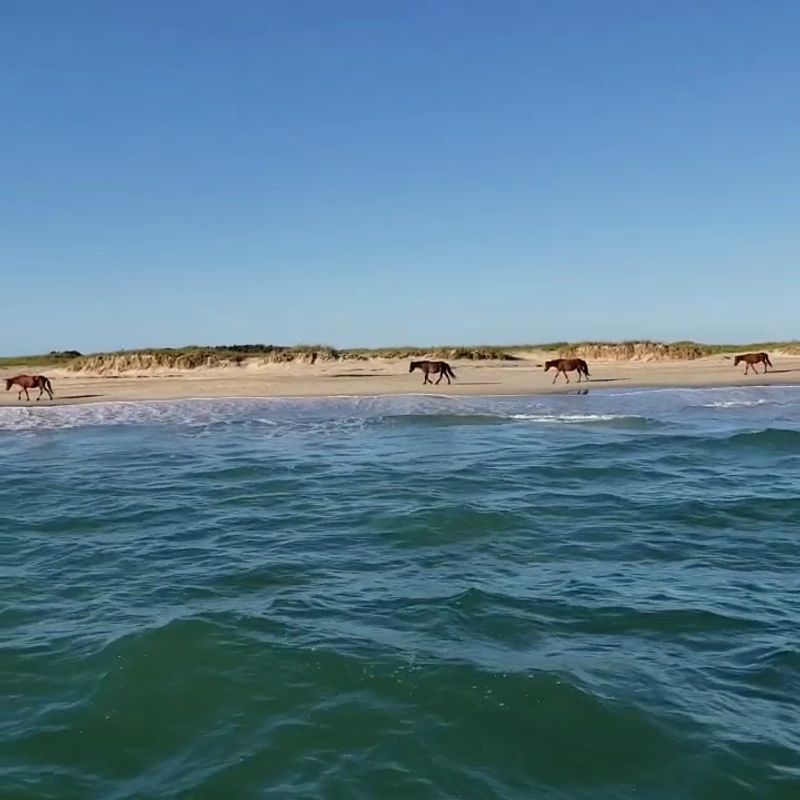
Nine miles of sand, one mile of width, and zero paved roads. That short list sums up Shackleford Banks, a barrier island in North Carolina, USA, sitting along the southern Outer Banks near the Crystal Coast.
The island is best known for two things. A herd of wild horses lives here year round, and the beaches remain largely unspoiled.
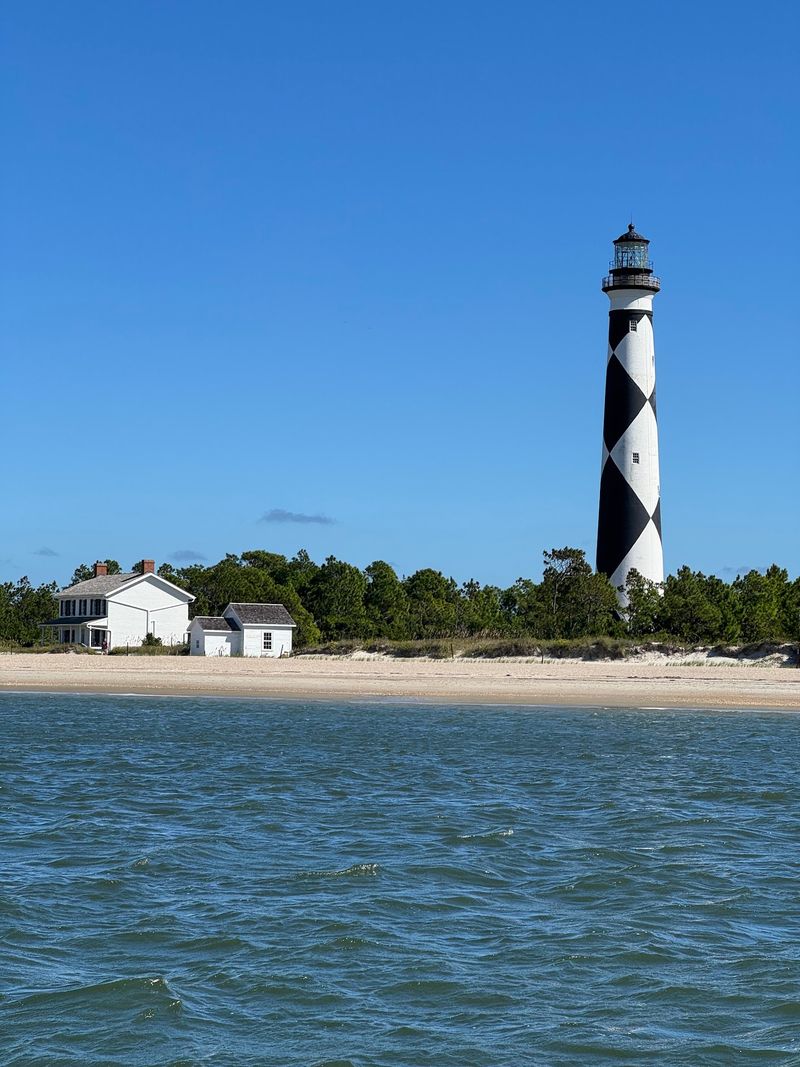
Shackleford sits close to Cape Lookout National Seashore, and the famous Cape Lookout Lighthouse stands within easy view across the water. Many day-trippers find that the lighthouse view alone makes the boat ride feel worthwhile.
There is no bridge here. Getting on and off the island means taking a ferry or arriving in your own boat, which keeps the crowds thinner than at mainland beaches.
Once ashore, the island offers no walkways or stairs. The lack of built features is deliberate, and it helps the place keep its natural character intact.
For North Carolinians who think they have seen every stretch of coast in the state, this island tends to surprise. It feels less like a beach town and more like a wild preserve that happens to have a shoreline.
And the residents with hooves are the real headliners.
Horses That Live on Their Own Terms
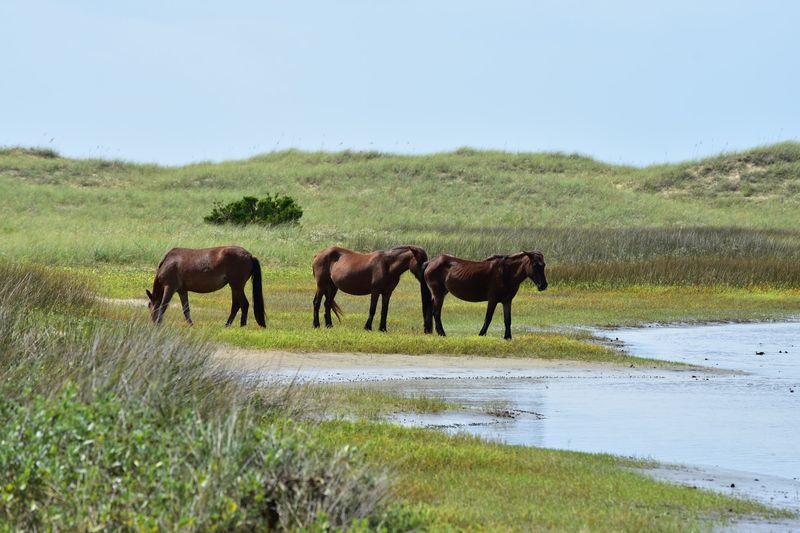
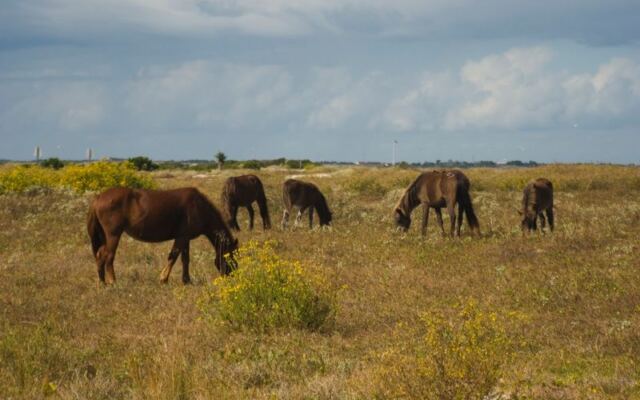
Nobody feeds them, nobody saddles them, and nobody tells them where to go. The horses of Shackleford Banks survive on grass and natural sea oats, living as a free-roaming feral herd.
Spotting them is the main reason many people make the trip. Locals even have a name for the hobby: horse hunting.
Luck plays a part. Some groups see a handful of horses, while one trip walking about three miles west from the eastern end turned up 23 of them in the island’s interior.
Other days, the herd stays hidden, and a few folks head home without a sighting at all. The beach still tends to make up for it.
Horses here often move through tall grass and over dunes rather than strolling along the water. Heading inland usually improves the odds, though it takes more effort.
Keeping a respectful distance matters. These animals are wild, and the experience works best when people simply watch rather than approach.
Dog owners should keep pets firmly under control. Incidents involving the horses are a real concern among those who love this island.
Patience, good shoes, and a quiet approach tend to be the winning combination for a sighting.
The Ferry Ride From Harkers Island
Half the adventure happens before your feet touch sand. Most people reach Shackleford Banks aboard Island Express Ferry, departing from the Harkers Island Visitor Center.
A round trip has run about $30, a fee many consider well worth it. Prices can change, so checking before you go is smart.
The ferry drops passengers at the easternmost end of the island. From there, you can stay as long as you like.
Pickups have historically come about once an hour, giving plenty of flexibility for a short visit or a full day. Some groups ride over in the morning and stay until late afternoon.
The crossing itself earns praise. Views of the Cape Lookout Lighthouse appear along the way, and dolphins sometimes surface close to the boat.
Spring outings have included dolphin sightings too, with one early April trip counting three of them. Wildlife watching can start long before the island comes into focus.
Private boaters can also anchor and come ashore. Either way, the lack of a bridge is part of what keeps the island feeling remote.
Arriving by water sets the tone for everything that follows.
Calm Sound or Wild Atlantic
Left or right? That small decision at the ferry landing shapes the whole day.
Turn left after stepping off the boat, and you will find the popular side. The water there tends to stay calm, clear, and shallow, which makes it a favorite for swimming and splashing.
Wading out around 50 meters on the inland-facing side can still leave the water only knee deep. Families with young kids often settle here.
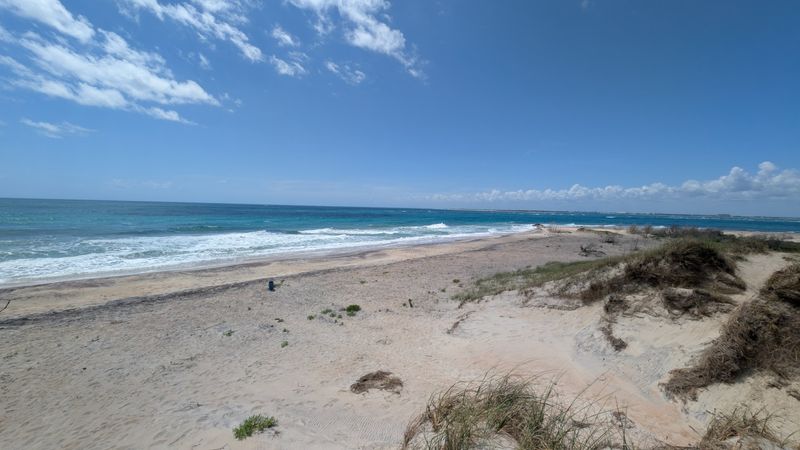
Head right instead, and the path leads around the tip of the island toward the Atlantic side. Waves there run much bigger, and the ocean breeze tends to be stronger.
That Atlantic stretch is often nearly empty. Some groups have claimed long sections of beach entirely to themselves.
The area near the ferry drop-off stays the busiest. Walking even a short way usually brings more elbow room.
The water clarity stands out on both sides. Some people call it the clearest water they have seen.
Keep in mind that no lifeguards work this beach. Swimmers are on their own, so caution and supervision for kids are essential.
Pick your side, or try both before the last ferry.
Shelling Worth Bending Over For
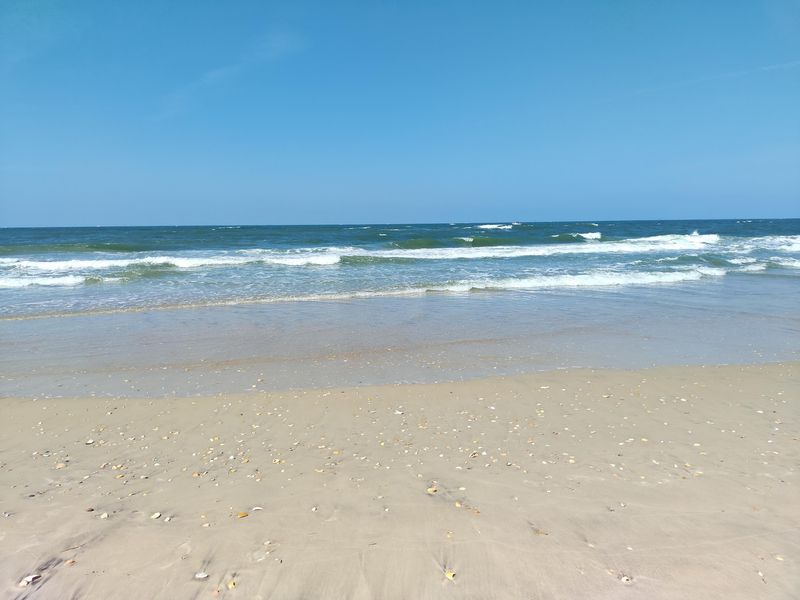
Bring a bag. Shell collectors rank Shackleford Banks among the best spots on the Crystal Coast, and some go further than that.
The range of finds is wide. Tiny twirly shells mix with huge ones that can reach the size of a person’s head.
Conch shells turn up along the southern beach, especially for those willing to walk farther from the landing. Sea glass appears from time to time as well.
Timing helps. Those who arrive early in the day tend to find a better selection before others have combed the sand.
One popular strategy combines horse hunting with shelling. Walk inland heading west, then cut over to the southern shore and stroll back along the beach.
That loop covers interior habitat and prime shell territory in a single outing. It also spreads out the walking between soft sand and firmer ground.
Even groups who miss the horses rarely leave empty-handed. The shells often become the souvenir of the trip.
Shelling also suits every age. Kids can spend hours sorting finds while adults scan the tide line nearby.
A sturdy bag and some patience can fill a windowsill back home.
Trails, Dunes, and a Few Surprises
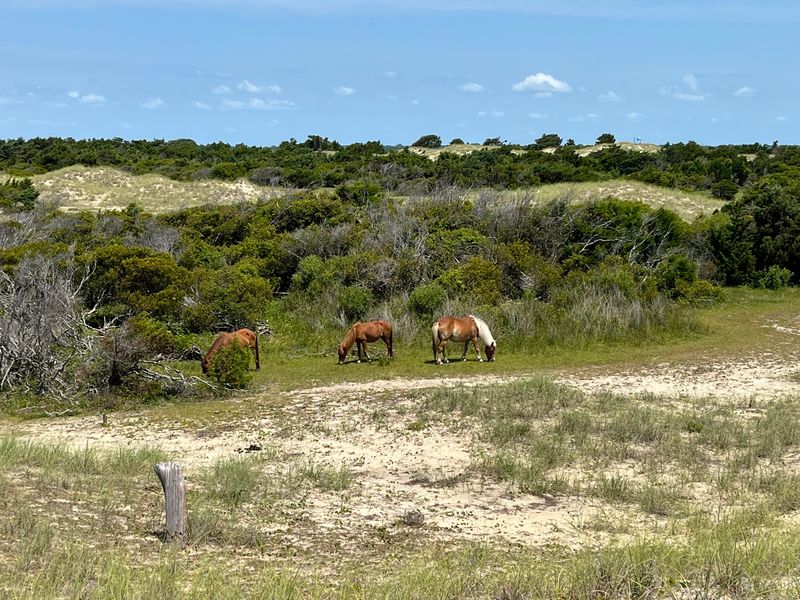
The interior of Shackleford Banks is no stroll in the park. It is a real hiking adventure, and the island makes that clear quickly.
Trails run through the middle of the island, though they can be hard to follow. One group trying the middle route ended up lost and stuck in marsh mud.
Many people have better luck sticking near the shoreline. Others commit to the interior because that is where horses often roam.
Hilly dunes can be deceptive. They look modest but may prove tough going for some walkers.
Small cactus plants grow across the island, and their thorns are serious. Flip-flops are a poor choice here.
Tall grass is common too. Long pants or tall socks can help protect legs on inland routes.
Expect horse droppings almost everywhere off the beach. It is no cause for alarm, just a reason to wear shoes you do not mind getting dirty.
The sand itself can be soft and tiring. A walking stick may help anyone who struggles with uneven footing.
Go in prepared, and the interior rewards the effort with the island’s wildest scenery.
Wildlife Beyond the Herd
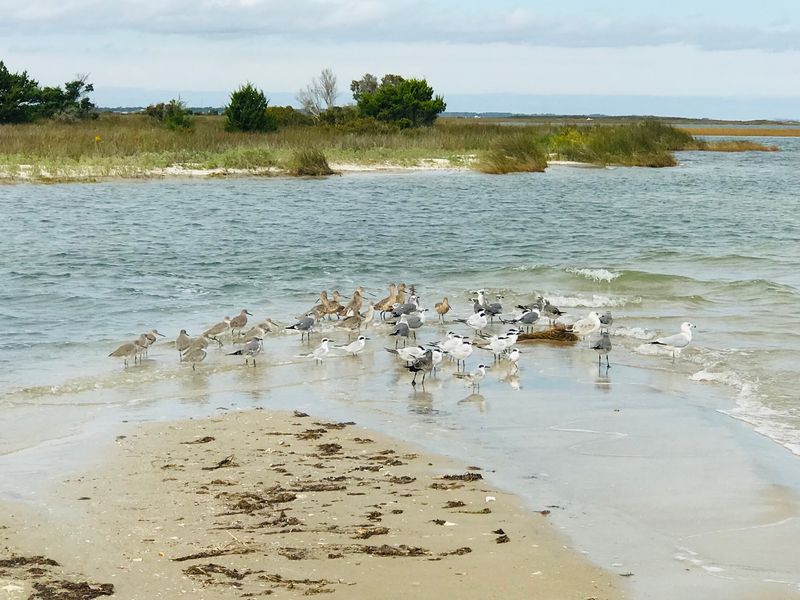
Horses get the headlines, but they have plenty of neighbors. Shackleford Banks supports a mix of wildlife that keeps binoculars busy.
Dolphins are a frequent bonus. Sightings happen both from the ferry and from the shore, sometimes remarkably close to boats.
Birds are a regular part of the scenery. Fish can be seen in the clear shallows on calmer days.
That variety is part of why the island appeals to wildlife watchers. A single day might include horses, dolphins, birds, and fish without ever leaving the sand.
The natural vegetation adds to the experience. Sea oats, grasses, and marsh areas form the habitat the horses rely on.
Of course, not every creature is welcome company. Mosquitoes can be intense depending on location, especially away from the breezy beachfront.
Bug spray ranks as a must for many repeat visits. Inland areas tend to be where the insects gather most.
The island works best for those who enjoy nature on its own schedule. Nothing here is staged or guaranteed.
Bring curiosity, a little repellent, and maybe a zoom lens.
Quiet Days and Who They Suit
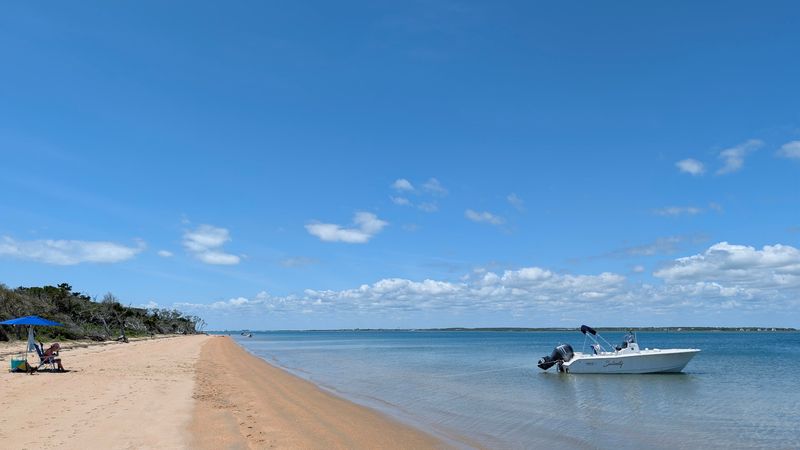
Crowds are a constant worry along North Carolina’s coast. Shackleford Banks remains one of the places where that worry fades.
The atmosphere is calm and unhurried. Many groups note that the beach is not crowded, especially beyond the ferry landing.
Off-season trips can feel just right. An early April visit drew a comfortable number of people without feeling empty.
The island suits families looking for a full day outdoors. Kids can swim in the calm sound water, hunt for shells, and watch for horses.
It also fits hikers, wildlife fans, and anyone wanting a simpler beach day. Some even compare it favorably with nearby Cape Lookout.
Not everyone loves it, though. Heat, deep sand, and limited comforts make the trip tougher for those who prefer amenities.
Some prefer nearby Carrot Island for horse viewing. Shackleford still draws loyal fans who return over many years.
One repeat traveler has made the trip three times across two decades. That kind of loyalty says plenty.
Protecting this calm is up to everyone who visits, from leaving no trash to giving the horses space.
Your No-Frills Packing List
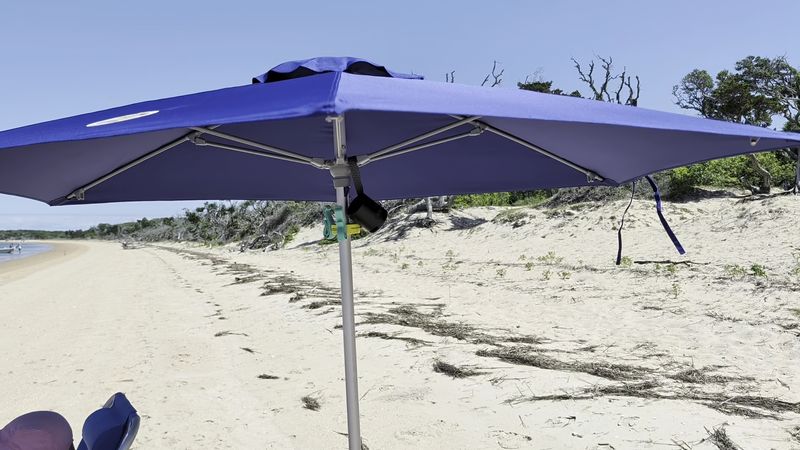
Forget the snack bar. Shackleford Banks offers no vendors, no fresh water, and almost no shade.
That means packing smart is the key to a good day. Water tops the list, followed closely by snacks or a picnic lunch.
Sun protection comes next. Sunscreen, a hat, and an umbrella or small tent can make the open beach far more comfortable.
Footwear deserves attention. Water shoes or sturdy closed shoes protect against cactus thorns and rough terrain.
Bug spray is highly recommended. Mosquitoes can be fierce in some parts of the island.
Long pants or tall socks help for inland horse hunting. Tall grass and dunes are common along the interior routes.
Restroom options are minimal. A compost toilet sits to the left of the ferry drop-off, but the rest of the island lacks facilities.
Carry everything you need, and remember that you will haul it through soft sand. Packing light but complete is the balancing act.
Plan to carry your trash back out as well. Leaving the island as you found it keeps it wild for the next crew.
Overnight Stays Under Open Skies
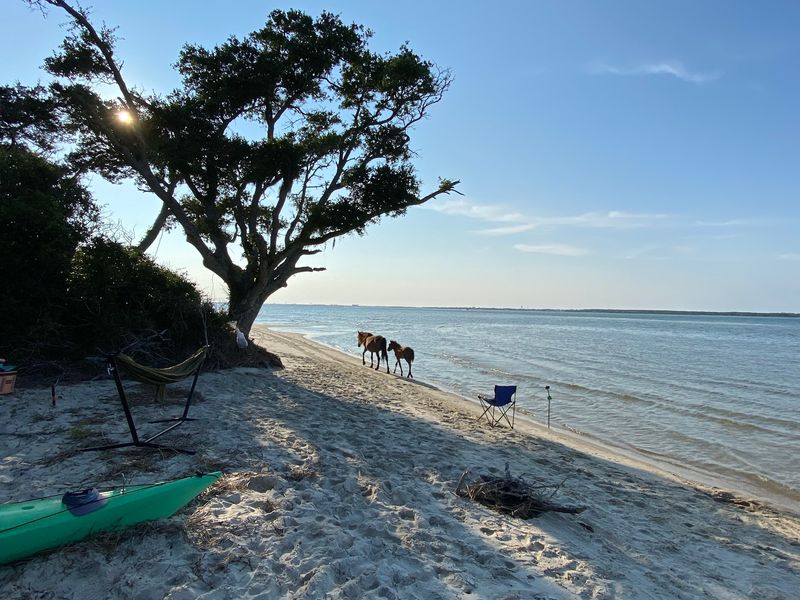
When one day is not enough, some folks simply stay. Overnight trips on Shackleford Banks are possible, and a few groups have done exactly that.
Getting there for a stay works the same way as a day trip. Island Express Ferry has carried overnight campers to the island.
Planning becomes even more important for a longer visit. With no fresh water and little shade, supplies must cover the whole stay.
Extra water and drinks with electrolytes are wise choices in the heat. Shelter from the sun can make afternoons much easier.
Camping offers more time to explore. Day-trippers often leave wishing they had seen more of the island’s nine miles.
Several people have left planning to camp on their next trip. More hours on the island can mean more chances to spot the horses.
Those considering an overnight stay should check current rules and ferry schedules before heading out. Conditions and requirements may change.
Respect for the horses matters even more after dark. Keep food secured and give the herd plenty of room.
Waking up on a wild island is an experience few beach towns can offer.
Worth the Boat Ride
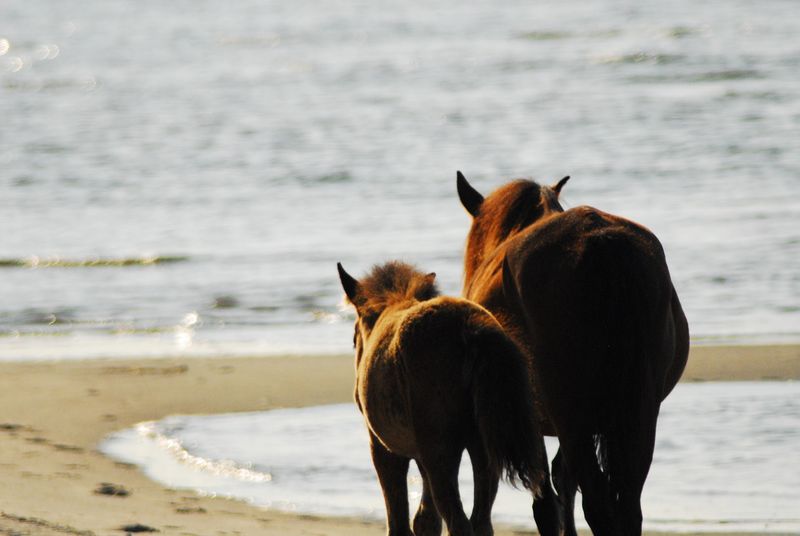
A 4.8-star reputation does not happen by accident. Shackleford Banks has earned a loyal following for reasons that are easy to understand once you go.
The island offers wild horses, clear water, excellent shelling, and lighthouse views in one trip. Few places in North Carolina pack that much into a single ferry ride.
It is not a resort, and it does not try to be one. Heat, cactus, mosquitoes, and soft sand all come with the territory.
Those willing to plan ahead usually find the trade-off worthwhile. The lack of amenities is exactly what keeps the island feeling untouched.
Horse sightings are never promised. Still, the beaches and the water rarely disappoint, even on days when the herd stays out of view.
Many people call it a must-see on the Crystal Coast. Plenty start planning a return trip before the ferry even docks back at Harkers Island.
For North Carolinians hunting for a weekend outing that feels truly different, this island fits the bill.
Pack the water, lace up real shoes, and let the wild ponies decide how the day unfolds.
Share this story