The first thing that hits you at Jimmy’s is not some carefully engineered “vibe.” It is the feeling that dinner has been handled. The parking lot is right there.
Valet is available. The dining room has the reassuring confidence of a place that has no interest in reinventing itself for social media, and the menu comes loaded with the kind of Italian-American standards that make indecisive people suddenly very decisive.
In Asbury Park, where a night out can swing from boardwalk casual to special-occasion pricey in a hurry, Jimmy’s still occupies a sweet spot that feels almost suspiciously old-fashioned in the best way.
You can order stuffed mushrooms, chicken parm, shrimp scampi over linguine, or lasagne without bracing for a bill that lands like a practical joke.
That alone would make it worth noticing. The fact that it has been doing this for decades is what makes it feel like a keeper.
The kind of old-school Italian place New Jersey hardly makes anymore
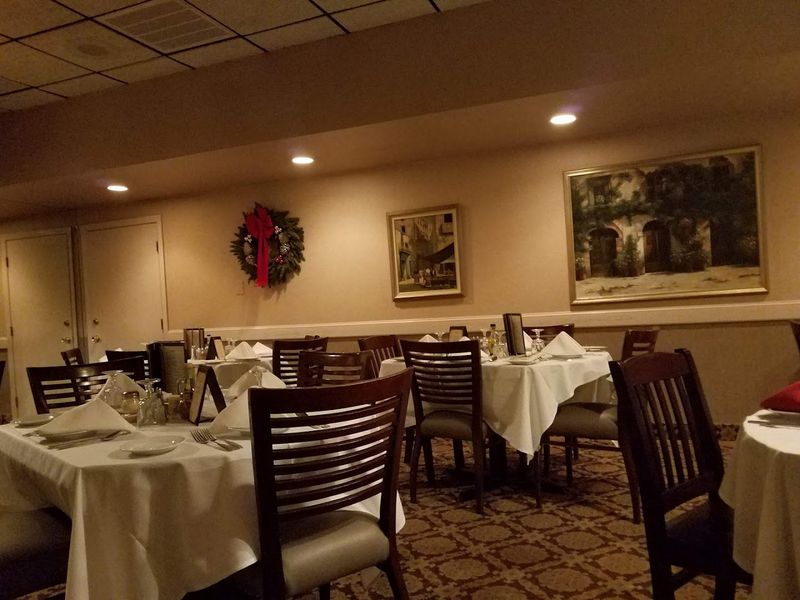
Jimmy’s has been part of Asbury Park since 1982, which matters because restaurants like this are getting harder to find in the exact form people actually mean when they say “old-school Italian.” Not faux-retro. Not a modern restaurant with one framed photo of Frank Sinatra and a side of burrata.
Jimmy’s was opened by Diane Marrucca and her late husband Jimmy after they got tired of going into New York City for a good meal, and that origin story explains a lot about the place even now.
It was built around the idea that the food should be fresh, made to order, and never frozen or pre-made, and the restaurant’s own history leans into that standard as the thing that never changed even when the decor did.
That is why the place feels rooted instead of styled. You are not there for a trend cycle.
You are there because New Jersey has always had a deep affection for red-sauce restaurants where the portions are generous, the menu is broad, and the room seems designed for actual dinner, not just a quick photo before everyone pokes at tiny plates.
Jimmy’s still has a separate bar area, spacious dining rooms, reservations, and even banquet facilities, which tells you exactly what kind of institution it is.
This is the type of restaurant that assumes people might come hungry, arrive in groups, order seafood and pasta and veal in the same meal, and stay long enough for espresso afterward. That old formula still works because, honestly, it was never broken.
Why Jimmy’s still feels like a neighborhood favorite in Asbury Park
You can learn a lot about Jimmy’s just by noticing where it sits. It is on Asbury Avenue, not posing as some exclusive hideaway, and that gives it the everyday usefulness of a real neighborhood restaurant.
Asbury Park may be known to outsiders for the beach, the boardwalk, and the louder, buzzier side of town, but locals know the city also runs on places that make ordinary weeknights easier and family dinners feel automatic. Jimmy’s fits that role perfectly.
The restaurant has its own private parking lot with valet, which might sound like a small thing until you have spent time circling shore-town blocks during dinner hours.
It is open for lunch and dinner on most days, with Monday, Wednesday, and Thursday service from noon to 10 p.m., later hours on Friday and Saturday, and Sunday service from 1 to 10 p.m.
That schedule says this is not just a special-occasion room you save for anniversaries. It is a place built to be used.
The restaurant’s own description talks about a family atmosphere, and the backstory supports it: much of the staff has been there for years, Diane Marrucca remains closely tied to the operation, and the whole identity of the place is wrapped up in being where “good friends come to meet.”
Even the praise on Jimmy’s site and other listings keeps circling back to the same trio of ideas: big portions, fair prices, and service that makes regulars feel known. In a town that gets a lot of seasonal attention, that kind of steadiness is part of the charm.
Jimmy’s does not feel like it is chasing a crowd. It feels like it already has one.
The red-sauce classics that keep regulars coming back
Here is the easiest way to understand Jimmy’s menu: it reads like someone took the greatest hits of Italian-American comfort food and refused to cut any fan favorites. The appetizer list alone is a small victory for people who still believe dinner should begin with something garlicky, saucy, baked, or all three.
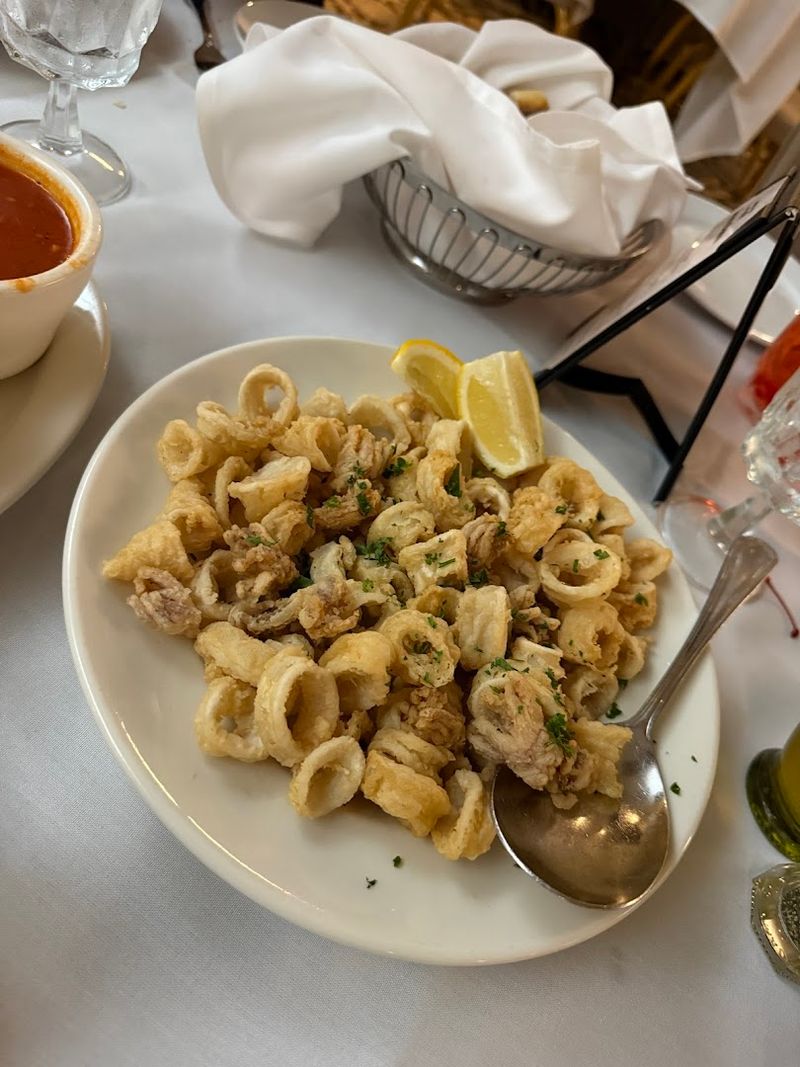
Stuffed mushrooms are listed at $12.95, fried calamari at $12.50, clams casino at $12.50, pasta fagioli at $12.50, and eggplant rollatini at $12.50. Then the pasta section gets gloriously familiar.
Linguine marinara is $12.95. Lasagne is $13.95.
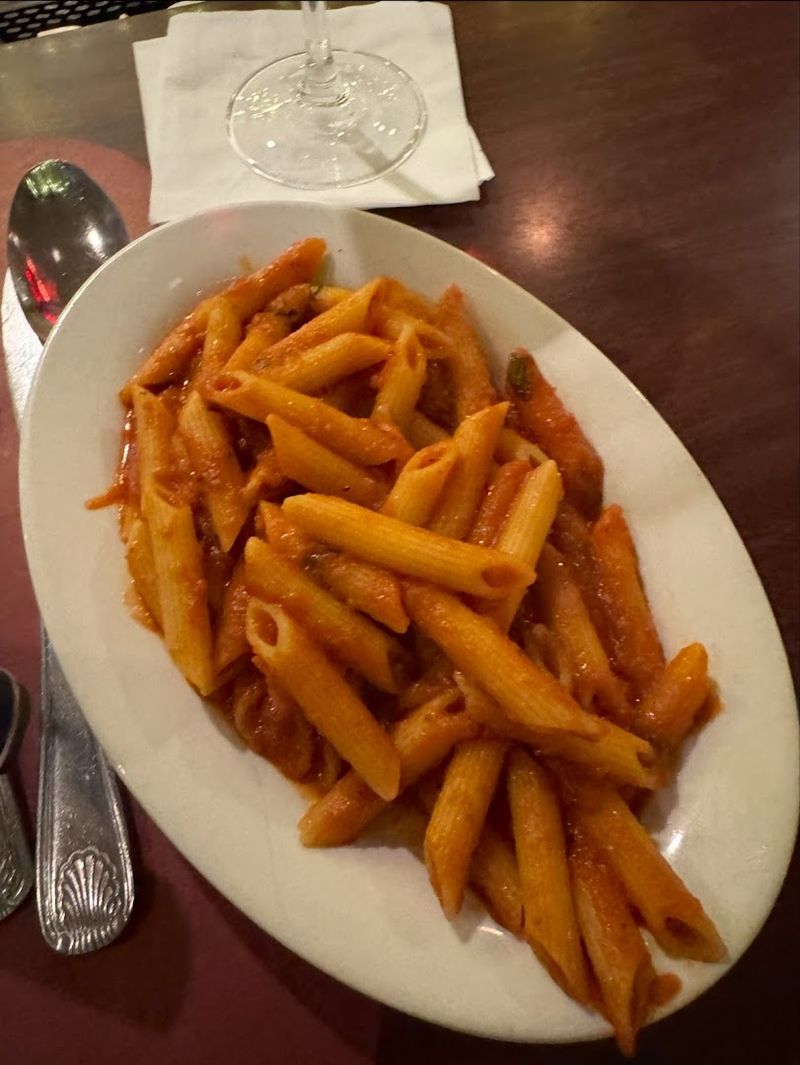
Stuffed shells are $13.95. Cheese ravioli and spinach ravioli both land at $13.95, while ziti bolognese, rigatoni, penne, cavatelli, and fresh tomato and basil sauce cluster around the mid-teens.
This is exactly the sort of menu that lets a table split into camps without anybody suffering. One person can go fully red-sauce traditional, another can drift toward broccoli rabe and sausage for $18.95, and a third can treat pasta as a warm-up act before moving into one of the bigger entrees.
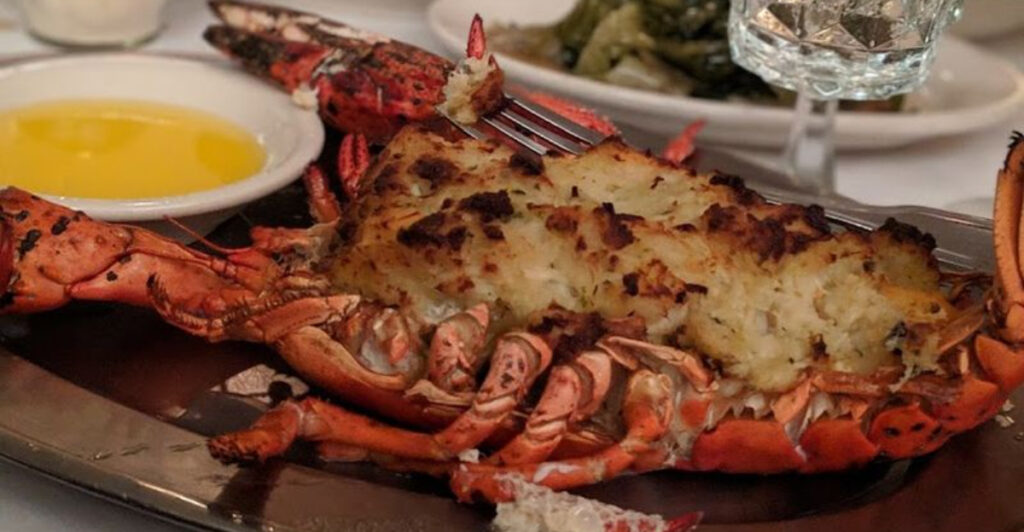
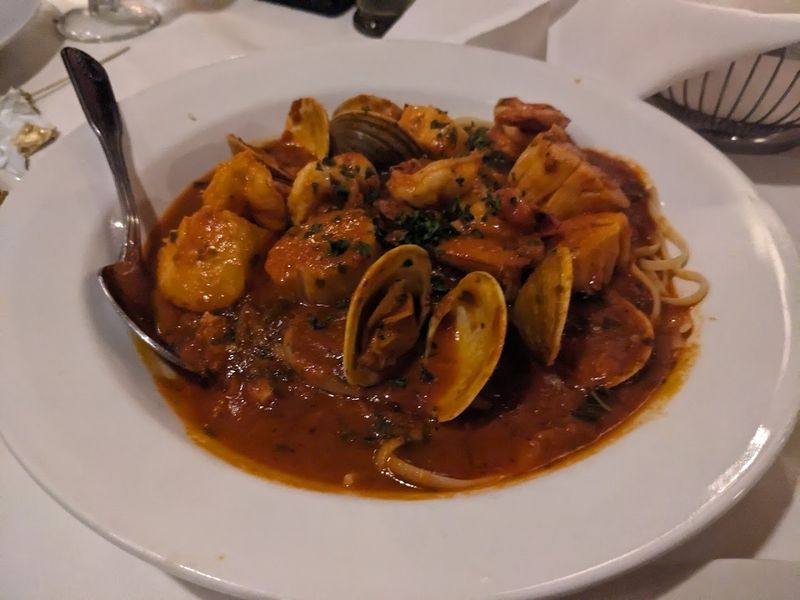
Chicken cutlet parmigiana sits at $24.95, chicken piccata at $26.95, veal parmigiana at $26.95, shrimp scampi over linguine at $28.95, and zuppa di pesce with linguine at $32.95.
There is also an unmistakable old-school swagger in dishes like veal Villa Daste, sole almondine, shrimp fra diavolo, and double-cut veal chop.
In other words, Jimmy’s is not trying to surprise you with novelty. It is trying to satisfy you with the classics, and judging by how often those dishes show up in menu listings and review highlights, that strategy is holding up just fine.
Big portions, warm service, and prices that do not feel outrageous
Reasonable is one of those slippery restaurant words that can mean almost anything, but at Jimmy’s it becomes easier to define because the menu still has a lot of dishes that live in price ranges people once considered normal.
Pasta options from about $12.95 to $15.95 are increasingly rare in full-service shore-area dining rooms, especially at a long-running independent restaurant rather than a fast-casual counter.
Even the more substantial entrees mostly sit in the mid-to-upper twenties, with chicken parmigiana and chicken francaise at $24.95, several veal dishes at $26.95, pork chops at $29.95, and seafood dishes like shrimp parmigiana and sea scallops in the high twenties.
Yes, there are splurge options too, including filet mignon at $34.95 and veal chop at $36.95, but the overall menu still leaves plenty of room for a satisfying dinner that does not feel like an act of financial self-sabotage.
That value argument gets stronger when you add in the recurring descriptions of generous portions. Jimmy’s own site explicitly calls out generous servings, and outside menu and review aggregators repeat that theme so consistently that it feels less like marketing and more like the restaurant’s reputation.
Warm service is the other half of the equation. An affordable meal that makes you feel rushed is one thing; a fairly priced meal served by people who know how to run an old-school dining room is another.
Jimmy’s keeps getting described in family terms, and that distinction matters. It suggests a place where hospitality is part of the package, not a separate luxury charge hidden somewhere between the appetizer and dessert.
In 2026, that combination of portion size, friendliness, and restraint on the check is not flashy. It is rarer than it should be.
What gives this longtime spot its timeless old-school charm
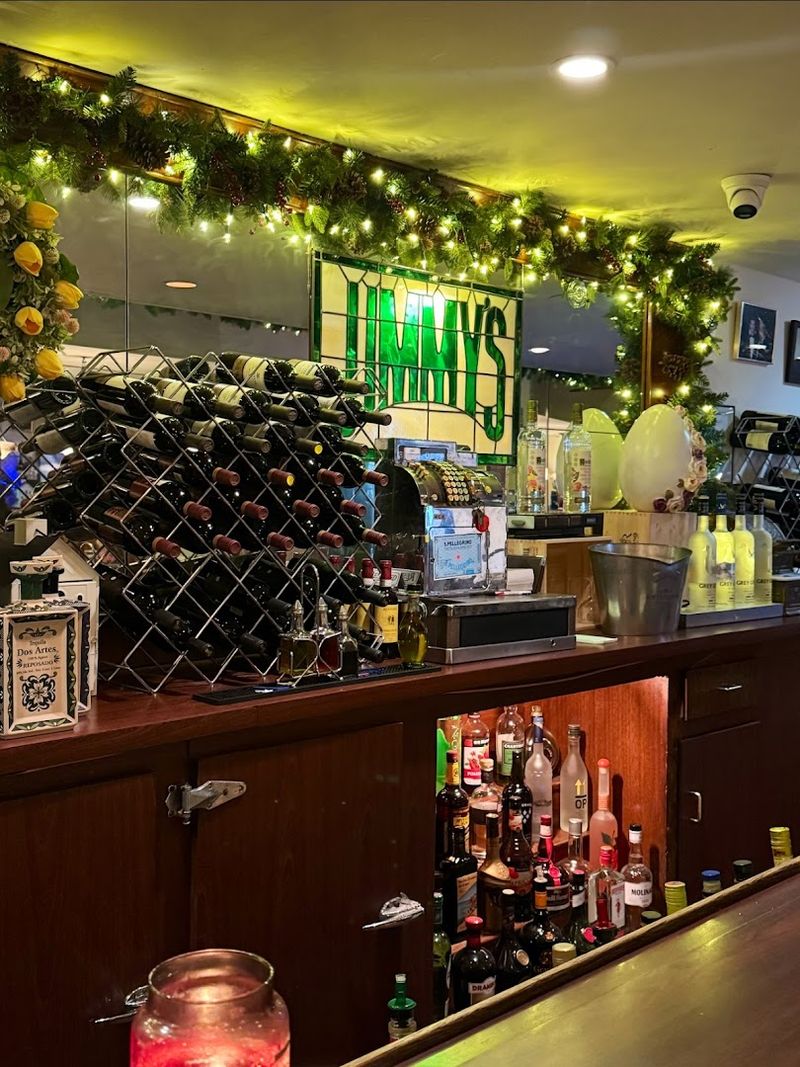
Some restaurants chase nostalgia with props. Jimmy’s does it the harder way, by still functioning like the real thing.
The restaurant’s own history says the decor has changed over the years, but the core promise has not, and that is probably why the place lands as timeless instead of dated.
It has a casually elegant dining room, a separate bar area, a broad menu that jumps from escarole and beans to filet mignon, and the kind of confidence that comes from knowing you do not need to explain yourself every five minutes.
The charm is in the accumulation of practical old-school details. Reservations are welcomed. There is valet parking. Large groups can be handled. The credit cards accepted are the classics. Parties of eight or more get a standard gratuity added.
Nothing about that setup is trying too hard. It simply reflects the habits of a restaurant that expects real dining-room business, not just a parade of one-time curiosity visits.
Then there is the family continuity. Diane Marrucca is still the name attached to the restaurant, and the official history emphasizes that her daughter, son, and longtime staff have helped keep the operation steady.
That sort of multigenerational involvement always changes the temperature of a place. It lowers the odds that the restaurant starts making weird decisions in pursuit of relevance.
Jimmy’s does not seem interested in shrinking portions, stripping the menu down to nine precious entrées, or pretending chicken parm is beneath it. Thank goodness.
Old-school charm, at least in New Jersey, is not only about framed photos and red sauce. It is about a room that understands what people came for and sees no reason to get cute about it.
Jimmy’s still seems to know that by heart.
Why this is the New Jersey Italian restaurant worth planning a meal around
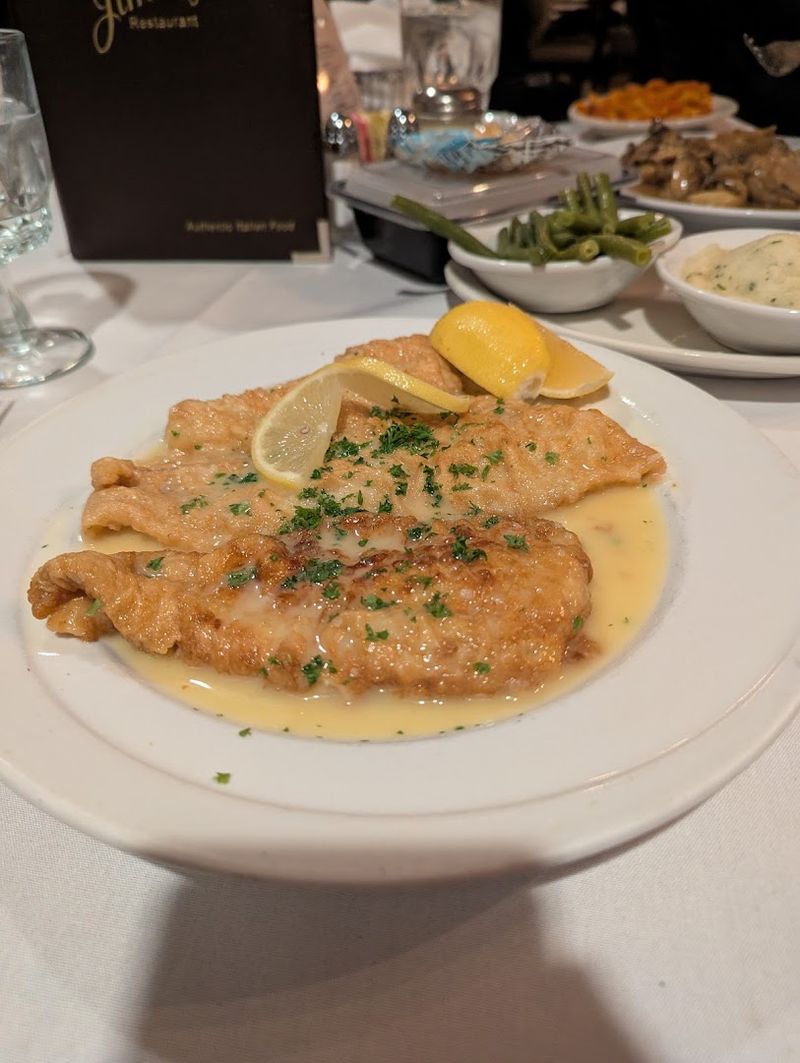
What makes Jimmy’s worth building an evening around is not that it is the trendiest Italian restaurant on the Jersey Shore. It is that it offers something more durable: a meal that feels deeply New Jersey in all the right ways.
You get the Asbury Park location, with the shore energy close by and the city’s main corridors feeding straight toward the ocean along Asbury Avenue. You get a restaurant that has been doing its thing since 1982.
You get a menu broad enough for picky eaters, red-sauce loyalists, seafood people, and the one person at the table who always somehow ends up ordering veal. You get prices that still leave room for a little relief when the check comes.
And maybe most important, you get a restaurant that does not act embarrassed by abundance, familiarity, or pleasure. Jimmy’s understands that an old-school Italian dinner is supposed to be satisfying in a very literal way.
The portions should be generous. The sauce should taste like somebody still believes in sauce.
The room should feel lived-in, not algorithmically optimized. In a state full of Italian restaurants, that would not be enough on its own.
But in a shore town where a lot of dining now leans trendy, seasonal, or expensive, Jimmy’s keeps standing out by being gloriously, stubbornly itself. That is why it feels less like a novelty and more like a landmark.
Some places become beloved because they are new and exciting. Others earn it by being reliable for so long that people stop thinking of them as discoveries and start thinking of them as part of the landscape.
Jimmy’s belongs firmly in the second category, which is usually the better one anyway.
Share this story