
A grand concert hall sits several stories beneath a busy Boston sidewalk. Thousands of people walk right over it every day, probably thinking about lunch, work, or where they parked.
Most have no idea what’s beneath their feet.
Built in the 1890s by a piano company that wanted a place to showcase its instruments, the hall fell silent in the 1940s. And somehow, it has remained hidden from everyday life ever since.
What fascinates me is that so much of it is still there. The curved balcony, the old decorations, and a room that once welcomed people for an evening of music.
I’d love to know what it felt like to sit in that audience more than a century ago.
And just imagine finding out that a building you’ve walked past a hundred times has an entire concert hall hiding underneath. I’d never look at that sidewalk quite the same way again.
A Concert Hall Hiding Underground Sounds Made Up, But It Is Real
Most music halls want to be seen from the street. Steinert Hall decided to go the opposite way and burrow underground.
The hall sits deep below a narrow building on Boylston Street in Boston. Accounts often describe it as roughly four stories beneath the sidewalk.
Above it, the building looks like a regular downtown storefront. Nothing on the outside shouts that a full concert space waits in the basement levels.
That surprise is a big reason people still talk about it. It feels like something from a mystery novel, yet it sits on one of the busiest streets in the city.
The hall opened in 1896, back when Boston was booming with music and culture. Builders squeezed a grand room into tight city land by simply digging down.
Honestly, that is a clever solution even by today’s standards. Land downtown was precious, so going deep made perfect sense.
Think of it as Boston’s original secret room. You could stand right above it and never guess a stage, seats, and a balcony were under your shoes.
A Piano Family Built The Whole Thing To Show Off Their Instruments
Pianos were the stars here long before any performer stepped on stage. The building belonged to M.
Steinert and Sons, a well-known piano business in New England.
Morris Steinert, a German immigrant, led the family company. He sold pianos and loved keyboard instruments so much that he collected historic ones.
His collection of old keyboard instruments later went to Yale University. That tells you this family took music seriously, not just as a way to make money.
The idea behind the hall was smart marketing. Customers could hear a piano played in a real concert setting before buying one.
Showrooms filled the floors above the hall. So shoppers could browse instruments upstairs and then head down to hear them shine.
It is a little like a car dealer building a racetrack in the basement. Bold, a bit extra, and kind of brilliant.
The Steinert name stayed tied to the address for generations. For many Bostonians, the building simply meant pianos, which is part of why the hidden hall stayed such a quiet secret.
Look Up At That Balcony And Try Not To Gasp
Curves everywhere. Photos of Steinert Hall show a graceful balcony that wraps around the room like a horseshoe.
Ornate plaster details line the walls and ceiling. Even with peeling paint and dust, the room still looks dressed for a fancy evening.
The hall was designed in the elegant style popular in the 1890s. Back then, a concert space was meant to feel special from every seat.
Reports often say the room held a few hundred guests. That size made it cozy compared with giant halls, so listeners felt close to the music.
Here is where the history gets haunting in a good way. Much of the original look survived simply because so few people touched it for decades.
Time did some damage, of course. Plaster cracked, and the space shows its age in honest, weathered ways.
Still, the bones are there. Anyone who loves old buildings can spot the craftsmanship right away, and it makes you wonder how dazzling it looked on opening night.
The Rumble Below Boylston Street Gives The Story Its Shake
Boston opened the first subway in America in 1897. That tunnel ran beneath Tremont and Boylston Streets, just steps from this underground hall.
So one year after the hall debuted, trains started rumbling nearby. Stories about Steinert Hall often mention that low train noise as part of its legend.
Imagine tuning a delicate piano solo while a streetcar hums somewhere close. It is a funny picture, and it fits the title of this article perfectly.
Boylston Station still serves riders today on the Green Line. It sits close to the hall, so the connection feels very real when you stand on the block.
That neighborhood rumble adds flavor to the hall’s legend. A fancy music room and early subway history share the same few blocks of ground.
Boston loves its firsts, and this corner holds a couple of them. The country’s pioneering subway and a secret concert space make an odd but charming pair.
Next time you ride the Green Line, give a little nod. A forgotten stage is resting quietly nearby.
Why The Music Suddenly Went Quiet
Concerts filled the hall for several decades. Then, around the early 1940s, the shows stopped.
Safety rules are usually given as the main reason. Fire codes tightened in Boston during that era, and a deep basement theater had a hard time meeting them.
Getting hundreds of people out of an underground room quickly is tricky. Exits and fresh air become serious problems when your stage sits several stories down.
Instead of being torn out, the hall was mostly closed off. The piano business kept running above while the room below slipped into silence.
That choice turned out to be lucky for history fans. Because nobody remodeled it, much of the old character stayed in place.
Sometimes forgetting something is what saves it. The hall became a time capsule almost by accident.
It is wild to think about. For roughly 80 years, people bought pianos, walked past, and went about their day while an entire concert room waited below, patient as a cat by the door.
Prime Real Estate Right Across From Boston Common
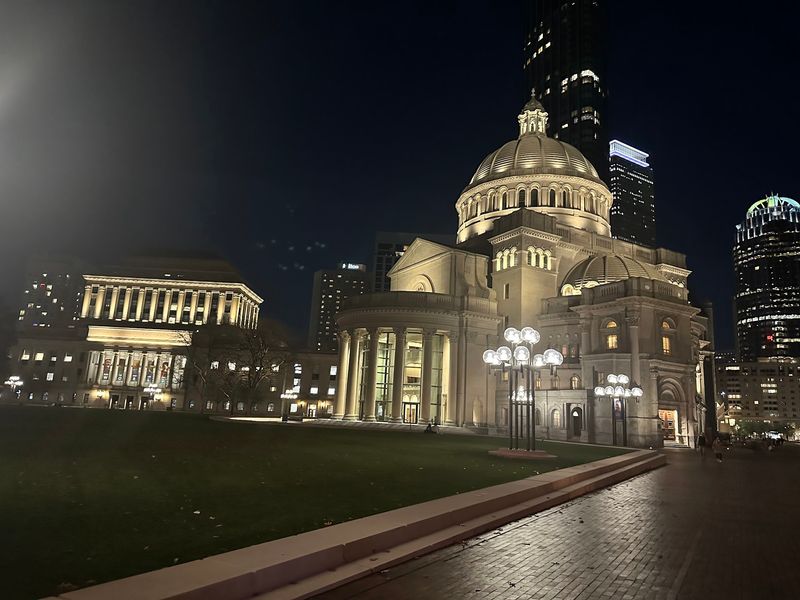
Location matters, and this address is a winner. You will find the building at 162 Boylston Street, Boston, MA 02116.
That puts it right across from Boston Common, the oldest public park in the country. The Public Garden sits a short stroll away too.
The Theatre District is also close by. It makes sense that a music hall landed in this lively part of town.
From the sidewalk, the building fits in with its neighbors. Its narrow front gives zero hints about what sits beneath.
Here is a practical tip for curious readers. The hall is not open for regular visits, so do not expect to stroll in and grab a seat.
You can still enjoy the block, though. Walk the Common, admire the old storefronts, and know you are standing near one of the most unusual rooms in Massachusetts.
Pair it with a visit to the park and nearby historic sites. You get a full Boston afternoon, plus a great secret to share with friends.
Dreamers Keep Trying To Wake It Up
Old halls attract big dreams. Over the years, different groups have floated ideas for bringing Steinert Hall back to life.
Restoring it would not be simple. Modern safety needs, like exits and ventilation, are tough to add to a room deep underground.
Costs climb fast with projects like this. Every fix has to respect the old details while meeting today’s building rules.
Still, the idea keeps popping up in local news and history circles. People clearly want to hear music in that space again.
I believe that hope is part of what keeps the hall famous. A room that might return someday is far more exciting than one that is simply gone.
Nothing about its future seems settled, so it is best not to count on any reopening date. The story is still being written.
For now, it remains one of Boston’s great what-ifs. Anyone who loves music or old buildings can root for a comeback, even from the sidewalk above.
Photographers And History Buffs Cannot Get Enough
Few rooms photograph quite like a forgotten theater. Images of Steinert Hall have spread widely online and in local stories.
Faded walls, curved railings, and empty floors make every photo look moody. It is the kind of place that seems built for a documentary.
Websites that collect odd landmarks, like Atlas Obscura, have featured the hall. That attention has turned it into a bucket-list curiosity for many readers.
Rare tours and special access have happened over the years. These have not been regular events, so keep your expectations realistic.
A good move is watching Boston history groups and local news. If any public access ever opens up, those sources will likely share it first.
Meanwhile, you can explore the photos from home. Zoom in on the plasterwork and balcony, and you will spot new details every time.
It is a fun rabbit hole for students too. Studying this one hall teaches a lot about architecture, city growth, and how buildings change across generations in Massachusetts.
A Little Lesson In How Cities Remember And Forget
Busy sidewalks hide plenty of stories. Steinert Hall might be the best example in all of Boston.
It shows how a city can lose track of something wonderful. A space once full of music slipped from everyday memory, even while sitting in plain sight.
That is a pretty great lesson to carry around. The next old building you pass might hold surprises nobody talks about anymore.
Steinert Hall also proves that history is not always in a museum. Sometimes it is right under your sneakers, waiting for someone to ask questions.
Kids and adults can try a simple game. Pick an old building in your town, then research what it used to be.
You might discover a former theater, shop, or meeting hall. Each find makes your hometown feel bigger and more interesting.
As for this quiet Boston treasure, it still sits below Boylston Street holding its breath. Maybe one day the lights will rise and a piano will ring out again, and honestly, I hope I hear about it.
Share this story