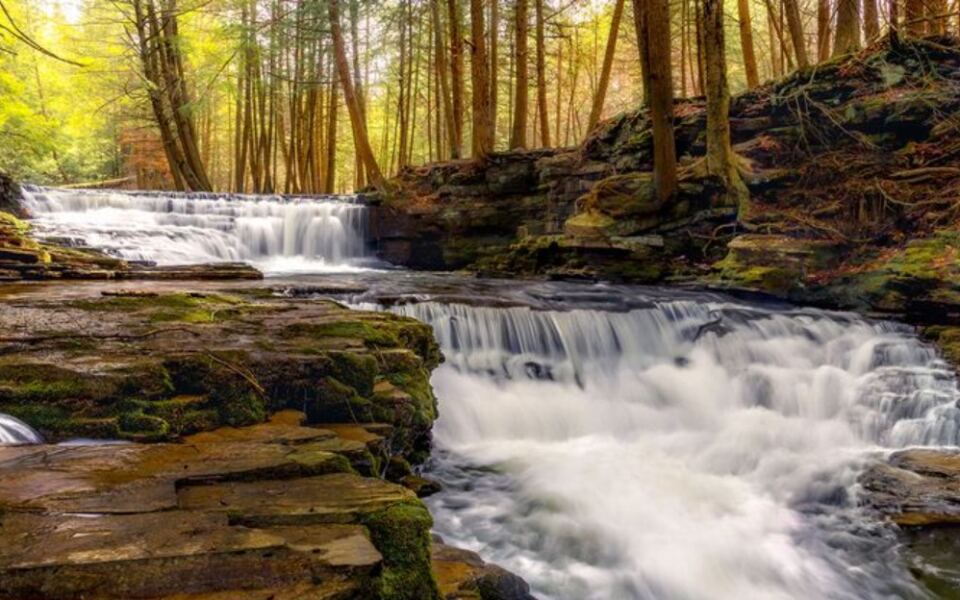
A spring in this park bubbles nonstop, and the fizz comes from methane gas rising through salty water. That alone made me stop scrolling. It is the reason the whole place got its name.
Then come the trees. Some of the eastern hemlocks here are estimated to be 300 to 500 years old. They rank among the largest trees in Pennsylvania, and they were standing long before anyone built a road nearby.
I like how calm and old-fashioned it all feels. There’s a gorge with three waterfalls, a farmhouse from the 1840s, and cabins with lights but no running water. It feels like a quiet secret that kept its manners.
Between the bubbling spring, centuries-old hemlocks, and waterfalls tucked into the gorge, this park has plenty going for it. It’s the kind of place that makes you wonder how you hadn’t heard of it sooner.
1. A Spring That Fizzes Like Nature Forgot To Close The Bottle
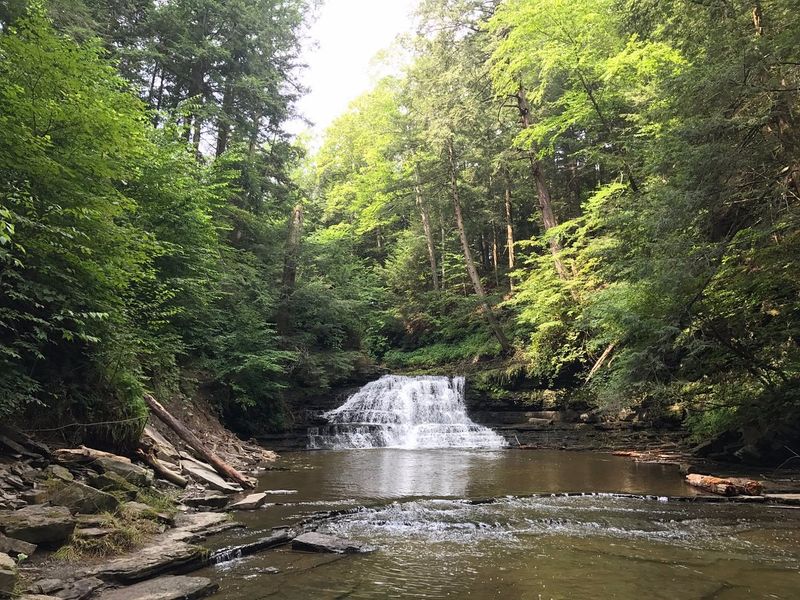
Bubbles rise all day long at Salt Springs State Park, and the source is pretty wild.
Methane gas pushes up through the water, so the spring keeps fizzing without a break.
That spring gave the park its name, and its story goes back a long way.
Indigenous peoples used the salty water to collect salt well before European settlers arrived.
Settlers showed up in the 1790s and saw dollar signs.
Between 1795 and 1870, people tried to turn the spring into a salt business.
None of those efforts worked out.
Honestly, I’m a little glad the spring won that round.
Today, you’ll find it at the east end of the picnic area.
It isn’t a giant geyser or anything dramatic, so set your expectations to charming rather than spectacular.
Water levels can change, which affects how lively it looks on a given day.
Even so, it’s a rare chance to see salt water bubbling up from the ground in the middle of a forest.
Here’s a tip for first-timers.
Grab a park map at a kiosk before you start wandering, since the spring is easy to miss.
Then make it your first stop.
It’s the reason this whole place exists, after all.
2. Three Waterfalls Are Hiding Closer To The Parking Lot Than You Think
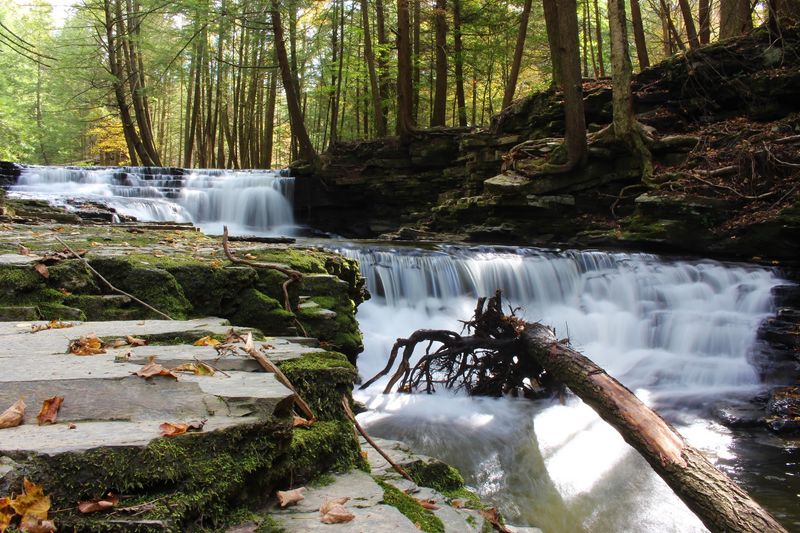
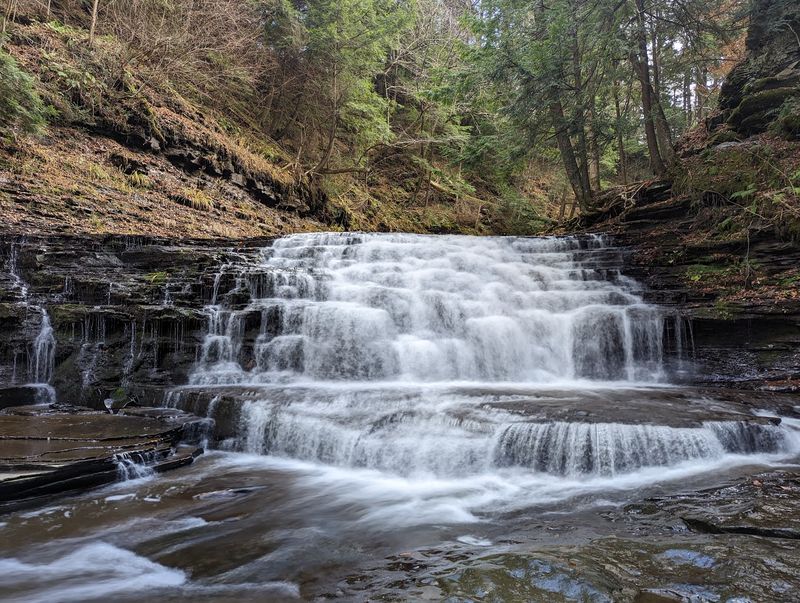
Fall Brook doesn’t just trickle along politely.
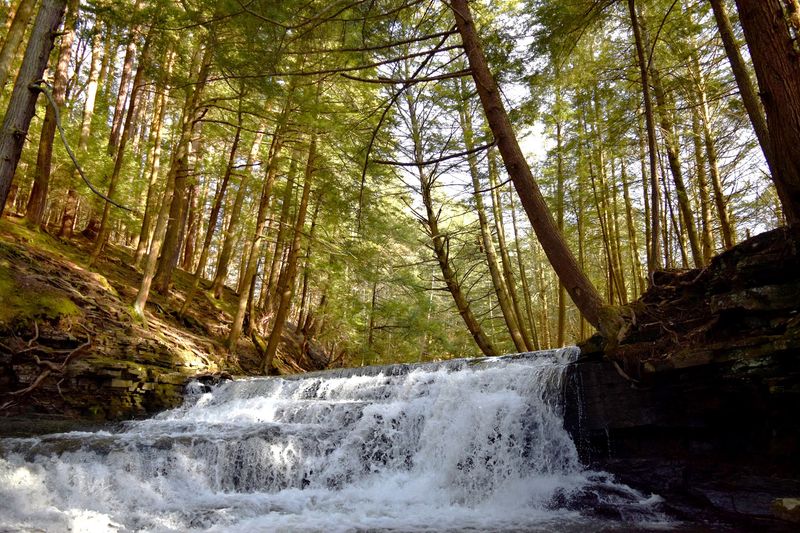
It drops through a rocky gorge and spills over three separate waterfalls.
The best part is how fast you can reach them.
The falls sit near the main parking area, so you don’t need a full day of hiking to earn the view.
For an easy look, head to the Overlook Trail.
It has an accessible boardwalk and an observation platform above the gorge.
That makes it a smart pick for families, slower walkers, and anyone carrying a camera.
You get the scenery without the scramble.
Want more of a workout?
The Fall Brook Trail follows the water toward the falls and the gorge.
Some stretches climb steeply, and roots and rocks can make footing tricky.
Good shoes matter here, especially after rain.
Keep a close eye on little kids near the edges.
Gorges look fun until someone small decides to run.
Each season changes the mood of the water.
Spring often brings stronger flow, while summer greenery frames the rocks nicely.
Either way, this spot is the heart of the park for a lot of first visits.
It’s easy to see why.
3. You’ll Feel Tiny Next To Hemlocks Older Than The Country
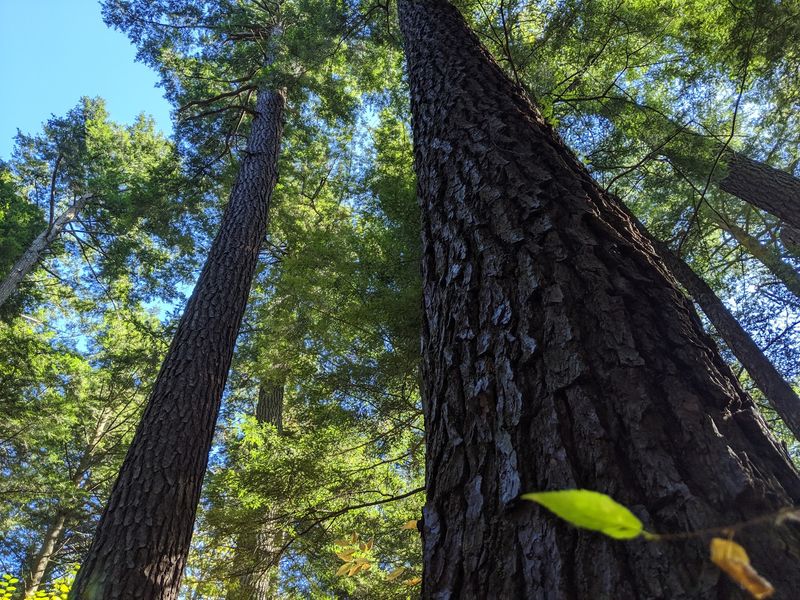
Some of these hemlocks are estimated to be between 300 and 500 years old.
A few were likely saplings before Pennsylvania was even a state.
They grow inside the Fall Brook Natural Area, and they rank among the largest trees in Pennsylvania.
That’s a big deal in a state with so much forest.
The area is also part of the Old-Growth Forest Network.
That group recognizes forests that have stayed wild and protected over time.
When settlers arrived in the 1790s, they found an unbroken old-growth forest.
Most of that kind of woodland vanished across the region, which makes these survivors extra special.
To see them up close, take the Hemlock Trail or the Woodland Trail.
Both lead you into the old-growth section.
The Hemlock Trail also links up with a boardwalk and overlook.
A newer bridge over the gorge makes reaching it easier than before.
Slow down while you’re in there.
Look up at the trunks and notice how the shade changes everything around you.
I can’t imagine rushing through a forest this old.
These trees have had centuries of patience, so a few extra minutes from us seems fair.
4. Fourteen Miles Of Trails Means Plenty Of Choices For Every Pair Of Legs
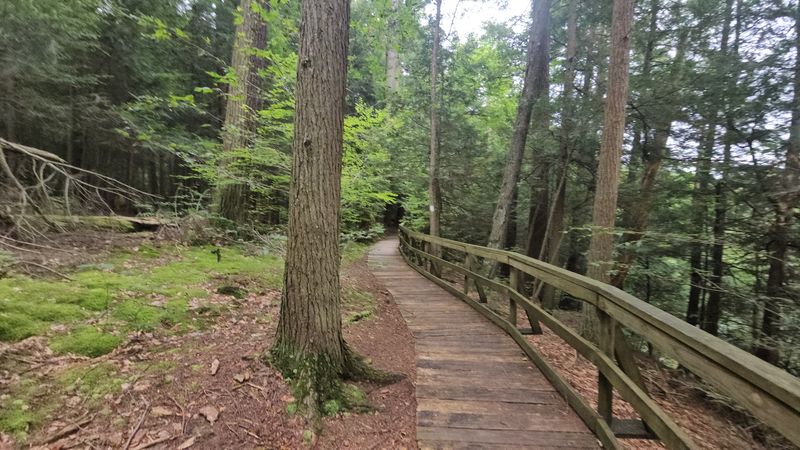
More than 14 miles of trails wind through this park.
For a place many people haven’t heard of, that’s a surprising amount of ground to explore.
The paths range from easy to moderate.
You can pick a short stroll or stitch several routes together for a longer outing.
Trail colors help a lot.
The Gorge Trail uses blue blazes, the Fall Brook Trail uses red, and the Hemlock Trail uses white.
A sign near the trails explains what the different markings mean.
It shows how to read turns, merges, and changes in direction.
One friendly warning applies here.
Some popular hiking apps create loops that don’t match the official routes.
The park suggests picking up its own trail map at a kiosk.
That keeps you from wandering in circles and blaming the trees.
Expect variety along the way.
You can pass through forest, along streams, near meadows, and up to overlooks.
Some sections can get muddy or wet after storms.
Waterproof boots and bug spray will make you much happier.
Start with a shorter loop if you’re new.
You can always come back for the tougher climbs once you know the lay of the land.
5. Camping Here Is Simple, Quiet, And Gloriously No-Frills
Electricity, yes.
Running water, no.
That sums up the three rustic cabins at Salt Springs State Park pretty well.
Each one has power, but no heat or plumbing, though propane heaters are allowed.
Tent campers have options too.
The park offers 14 tent sites, with eight walk-in spots and six drive-up spots.
Composting restrooms sit close by.
There’s also a hand pump in the main parking lot, but its water isn’t safe to drink.
So pack your own drinking water.
Bring more than you think you’ll need, especially on warm days.
Firewood is easy to find.
The park sells it from a vending machine, which might be the most practical gadget in the woods.
There are no showers, so think of this as a back-to-basics trip.
Wet wipes and a good attitude go a long way.
In return, you get quiet nights and a real forest setting.
It’s a nice change from crowded campgrounds packed with RVs.
Reservations are the safest bet with so few sites.
Plan ahead, especially for fall weekends when the leaves start turning.
6. Bring A Sandwich Because The Picnic Area Has Prime Creekside Seating
Lunch tastes better next to a stream.
Somebody should put that on a sign.
The picnic area here sits at the base of a mountain, right along a creek.
You’ll find picnic tables, grills, and restrooms nearby.
Planning a bigger get-together?
A pavilion is available for groups who need more space than one table can handle.
Shade from the trees helps on hot afternoons.
Many tables are close enough to parking that you won’t haul coolers very far.
Remember the water situation before you pack.
The park has no drinkable water, so bring plenty for drinking and cleanup.
The salt spring sits at the east end of this area.
That makes it easy to pair a meal with a quick peek at the bubbles.
A short stroll also gets you toward the waterfalls.
Lunch, a fizzing spring, and a gorge make a pretty great afternoon lineup.
Families with kids will like how easy it is to spread out.
There’s no playground, but the creek and woods do a fine job instead.
Pack out what you bring in.
Keeping this area clean helps it stay lovely for everyone who comes next.
7. An 1840s Farmhouse Adds A Dose Of History To Your Hike
Not every state park comes with its own farmhouse.
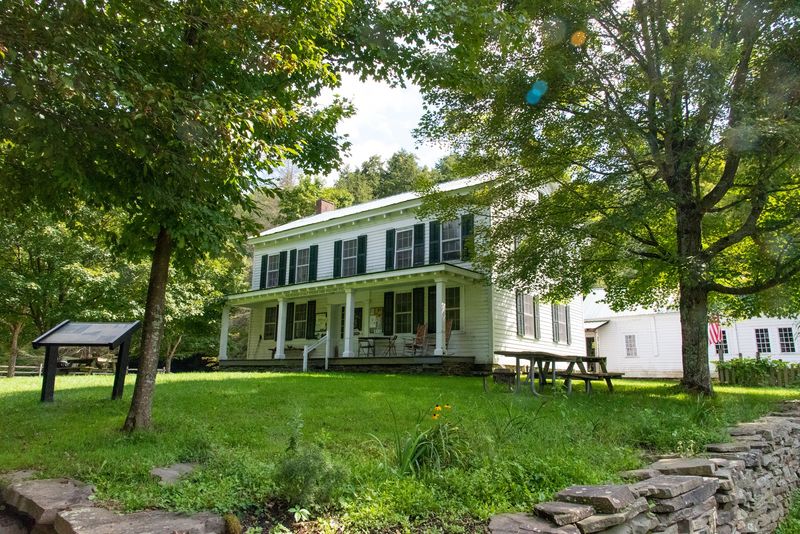
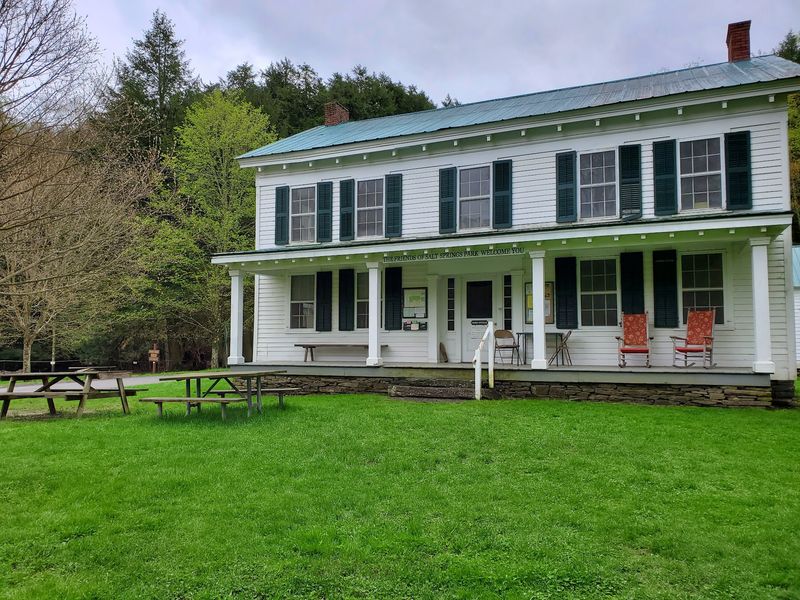
This one has the Wheaton House, which dates back to the 1840s.
It stands on the historic Wheaton Farm inside the park.
On weekends from May to December, the house offers historical and environmental displays.
That’s a nice bonus for curious minds.
You can learn about the land’s past and its natural world in one stop.
Behind the scenes, a local group keeps things running.
Since 1994, the nonprofit Friends of Salt Springs Park has managed the park with Pennsylvania’s Department of Conservation and Natural Resources.
The Friends also own 437 more acres next to the state land.
Together, that adds up to 842 acres of protected land that people can enjoy.
The group hosts recreational and educational programs throughout the year.
Members get discounts on some of them.
I love that so much of this place depends on neighbors who care.
It gives the park a homestead feel instead of a big-agency vibe.
Plan a weekend visit if the house is high on your list.
Then pair it with a trail walk for a day that mixes history and fresh air.
8. Anglers, Wildlife Watchers, And Snowshoers All Get A Turn
Trout fans, listen up.
Two stocked streams run through the park: Fall Brook and Silver Creek.
Spring is an especially popular time to cast a line here.
Be sure you have the proper Pennsylvania fishing license before you go.
Wildlife adds extra fun to any visit.
Deer, foxes, and many kinds of birds are common sights around the park.
Keep your eyes low too.
Frogs and salamanders often turn up near the damp, shady spots along the water.
Bring binoculars if you have them.
A slow walk and a quiet voice will help you spot more creatures.
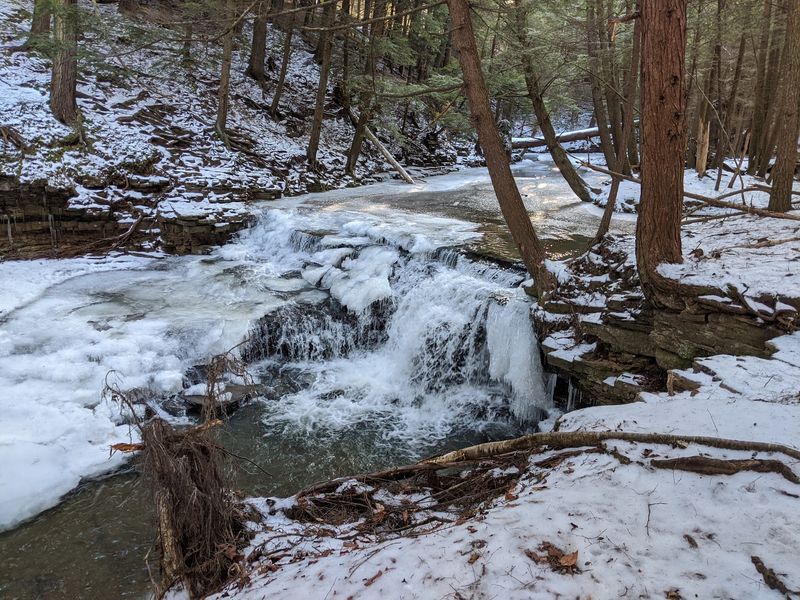
The park stays open all year, so winter isn’t off the table.
Snowshoeing and cold-weather hiking are both on the menu once snow arrives.
Picture-perfect hemlocks look even better with a white coat.
Just dress in layers and watch for icy spots on steeper trails.
Each season gives the place a new personality.
Fall brings bright leaves, spring brings rushing water, and summer brings cool shade.
That makes repeat trips feel fresh every time.
You might find yourself planning visit number two before you’ve even left.
9. Getting There Is Easy, And Leaving Is The Hard Part
Seven miles north of Montrose, the pavement gives way to forest and waterfalls.
Salt Springs State Park sits in Susquehanna County, in the quiet northeastern corner of Pennsylvania.
Set your GPS to 2305 Salt Springs Road, Montrose, PA 18801.
The main parking lot is roomy, and it puts you close to the falls and picnic area.
The park is open every day of the year.
Visiting hours run from sunrise to sunset, and day-use areas close at dusk.
Plan your arrival with daylight in mind.
Late starts can cut your hiking time shorter than you’d like.
Your packing list should be simple but smart.
Bring drinking water, sturdy shoes, bug spray, and a paper trail map.
Water shoes are handy in summer, since streams run right through the park.
Snacks never hurt either.
Dogs are welcome, which makes it a fun outing for four-legged hikers.
Keep them leashed and clean up after them.
With 405 acres of state land and more owned by the Friends group, there’s plenty to explore.
I believe one visit is all it takes to understand why it deserves more fans.
Share this story