A six-story elephant stands a block from the Atlantic, a glassy former science temple stretches across Holmdel like a spaceship that decided to settle down, and somewhere in Gloucester Township, a round little house looks ready for someone to lift its lid and sneak a cookie.
New Jersey has plenty of grand Victorians, boardwalk landmarks, and colonial-era charm, but the buildings on this list are in a stranger category altogether.
They are the ones that make you slow down, point out the window, and ask, “Wait, what is that?” Some were built as roadside attractions, some as private obsessions, some as serious architectural experiments that aged into local legends.
Together, they prove that the Garden State has never been shy about a bold silhouette, a peculiar backstory, or a building that refuses to blend in.
1. Lucy the Elephant – Margate City
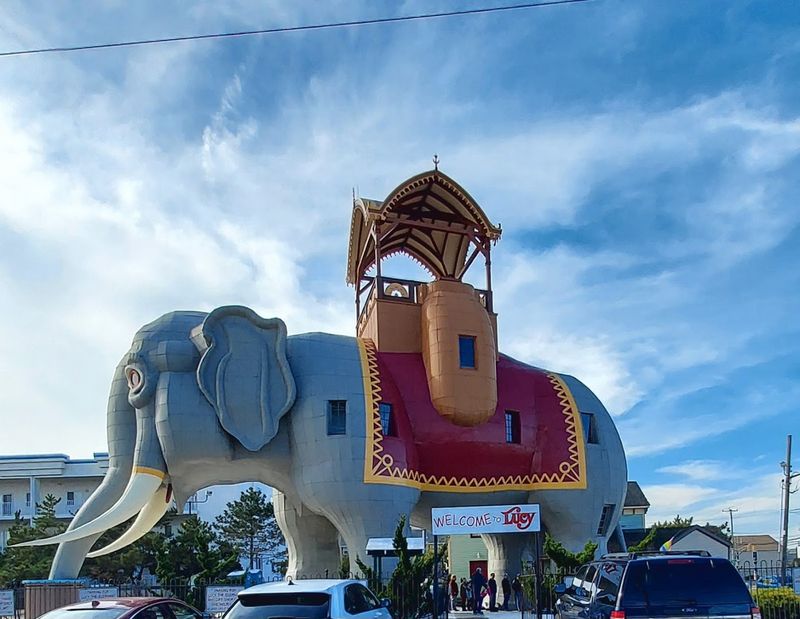
There are unusual buildings, and then there is a building you enter through an elephant’s leg. Lucy the Elephant has been watching over Margate since 1881, when real estate promoter James V.
Lafferty dreamed up a giant wooden-and-tin elephant as a way to draw attention to the shore. More than a century later, Lucy is still doing exactly that, only now she is less a gimmick than a beloved local icon.
At six stories tall and about 90 tons, she is impossible to miss, especially with the beach and ocean sitting just beyond her feet. The fun here is partly the photo op, of course, but the inside tour is what makes Lucy more than a roadside oddity.
Visitors climb through the structure, learn how she survived storms, decay, relocation, and restoration, and eventually reach the howdah on her back for a view of Margate that feels delightfully ridiculous in the best way. It is a quick stop, but a memorable one, especially if you are already near Atlantic City or Ventnor.
Check tour times before going, because hours can shift for events or maintenance. Still, if any New Jersey building deserves a detour simply because it exists, Lucy is the one.
2. Luna Parc – Sandyston
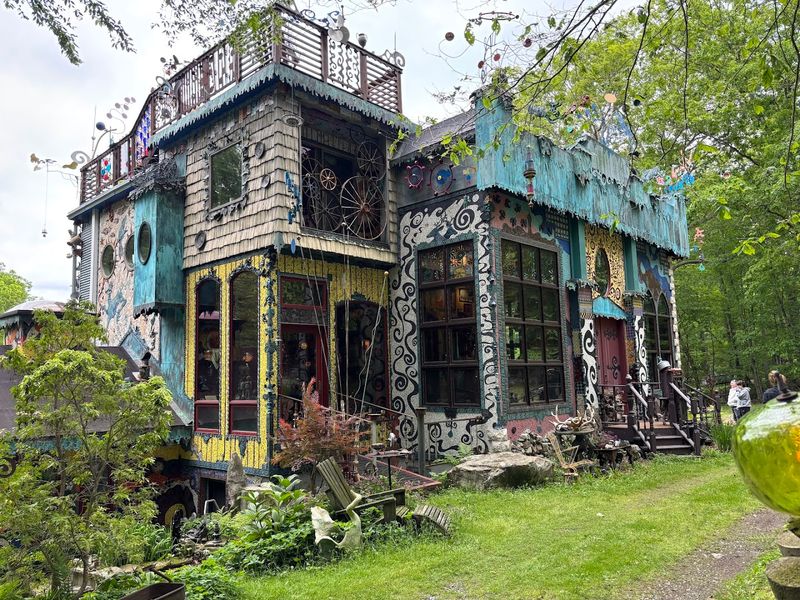
The first glimpse of Luna Parc feels less like arriving at a house and more like stumbling onto the set of a dream someone kept adding to for decades.
Artist Ricky Boscarino’s Sandyston home and studio is covered in mosaics, towers, found objects, strange sculptures, color, pattern, humor, and the kind of visual detail that makes your eyes keep changing their mind about where to land.
It is not “quirky” in the tidy, gift-shop sense. It is full-throttle, hand-built imagination.
What makes Luna Parc especially fascinating is that it is still a living, working place, not a frozen museum piece. The buildings and grounds sit in a wooded Sussex County setting, which only makes the whole thing feel more secretive and surreal.
You might notice a fence made from unexpected materials, a tower that looks like it belongs in a storybook, or a tiny detail embedded in a wall that someone else would have thrown away. Visiting requires planning, since Luna Parc is not a casual walk-in attraction; public access is typically through tours or open-house events.
That limitation actually suits the place. It feels like something you are lucky to catch, a private universe briefly opening its gate.
3. Cookie Jar House – Gloucester Township
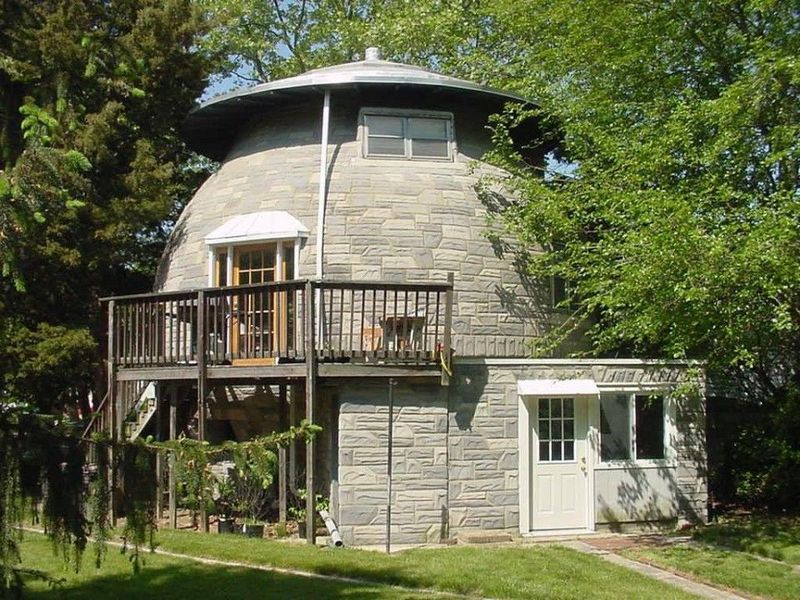
On an ordinary residential street in Gloucester Township, the Cookie Jar House looks like it escaped from a mid-century cartoon and tried to act normal.
The round, squat structure was built in 1949 and is often described as an Atomic Age experiment, with a design that looks whimsical at first glance and strangely practical after you learn more about it.
Its curved form was reportedly meant to be strong, efficient, and futuristic, though the effect today is pure neighborhood folklore. This is not a place to tour, and that is important.
It is a private residence, so the right way to appreciate it is from a respectful distance, without blocking driveways, knocking, or treating someone’s home like an attraction with admission hours. Still, it belongs on this list because it represents a very specific kind of New Jersey weirdness: the kind hiding in plain sight.
One minute you are passing typical South Jersey homes, and the next there is a circular house that looks like it should have a giant lid. It is odd without being flashy, historic without being formal, and wonderfully committed to its shape.
If you love architecture that makes you wonder what the future looked like to people in 1949, this one is a tiny time capsule.
4. Bell Works / Bell Labs Holmdel Complex – Holmdel
From the outside, Bell Works looks like a corporate mirage: a long, mirrored slab of glass stretched across a broad Holmdel campus with the confidence of a building that knows it changed the world.
Designed by Eero Saarinen and originally completed for Bell Labs in the early 1960s, the complex was once a research powerhouse where thousands of engineers and scientists worked.
Today, it has been reborn as a “metroburb,” with offices, restaurants, shops, events, and public gathering spaces inside a former temple of innovation. The strange part is how the building still feels futuristic, even though its bones are mid-century.
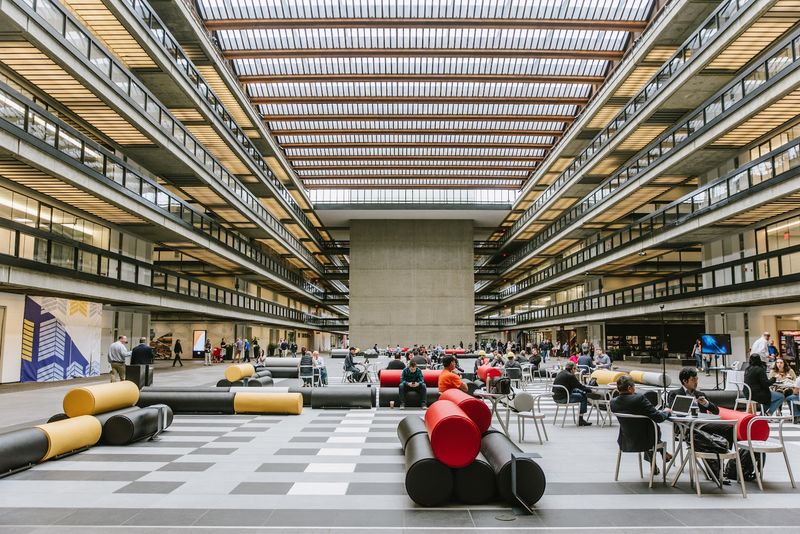
Walk inside and the vast atrium pulls your gaze upward; glass, symmetry, and scale do most of the talking.
It can feel part airport terminal, part university, part sci-fi headquarters, which explains why it has become recognizable to many viewers as a filming location for “Severance.” Unlike some entries on this list, Bell Works is easy to experience without much planning.
You can grab coffee, browse a shop, work remotely, attend a market, or simply wander through and take in the drama of the space. It is strange not because it is abandoned or eccentric, but because it turns an enormous former research lab into something oddly social.
5. Edison’s Concrete Houses – Montclair
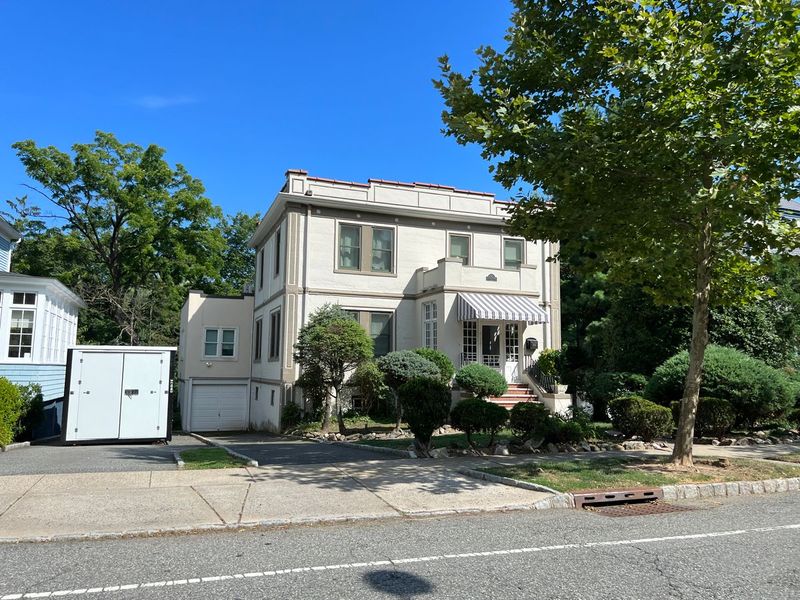
Thomas Edison did not just want to invent light bulbs and phonographs; he also had ideas about how people should live. In Montclair, a small cluster of concrete houses hints at one of his more ambitious experiments: affordable homes poured from concrete using molds.
The concept was bold for the early 1900s, especially because Edison imagined not only concrete walls but a future filled with concrete furniture and other mass-produced essentials. The result is stranger than it sounds.
These houses do not scream for attention the way Lucy or Luna Parc does. They sit on residential streets looking sturdy, plain, and slightly off, as if someone translated the idea of a normal house into a heavier language.
That quietness is part of their appeal. Once you know the backstory, the homes stop looking modest and start looking radical.
Because these are private homes, this is another look-don’t-linger entry. The best experience is a low-key architecture drive or walk through the area with respect for residents.
What makes the houses worth including is the gap between Edison’s huge vision and the small number of examples that remain. They are architectural “what ifs” made solid: practical, peculiar, and far ahead of their time in the most Edison way possible.
6. The Devil’s Tower – Alpine
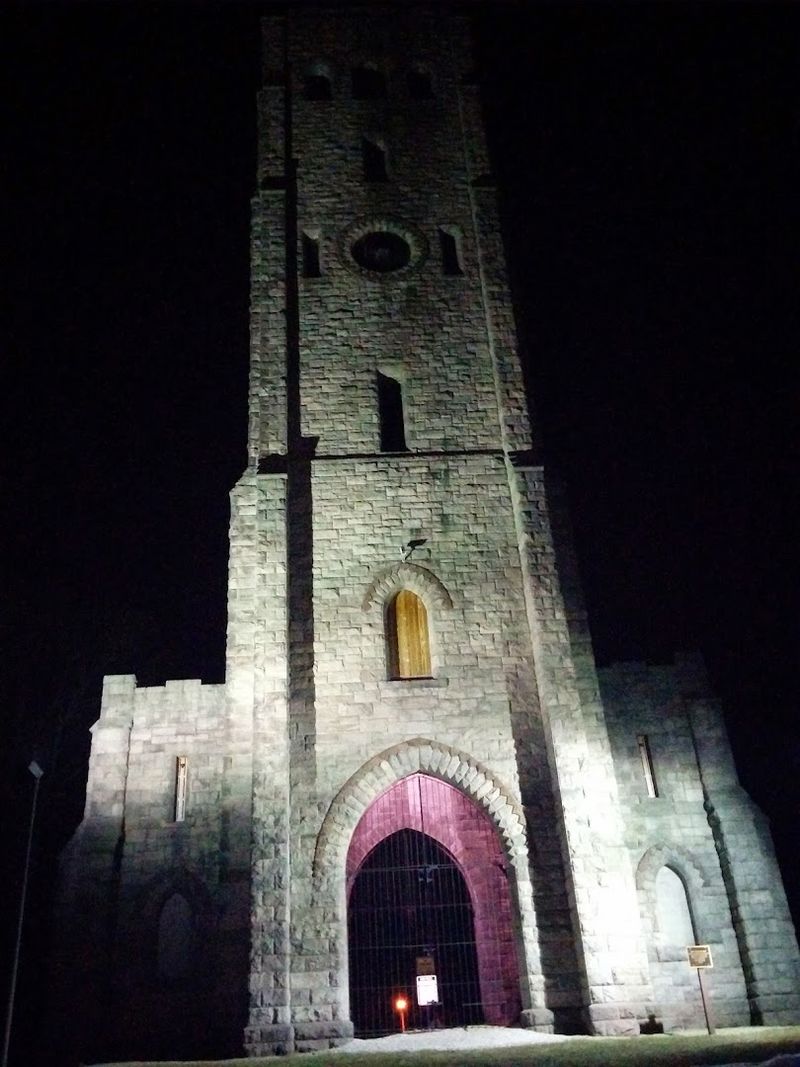
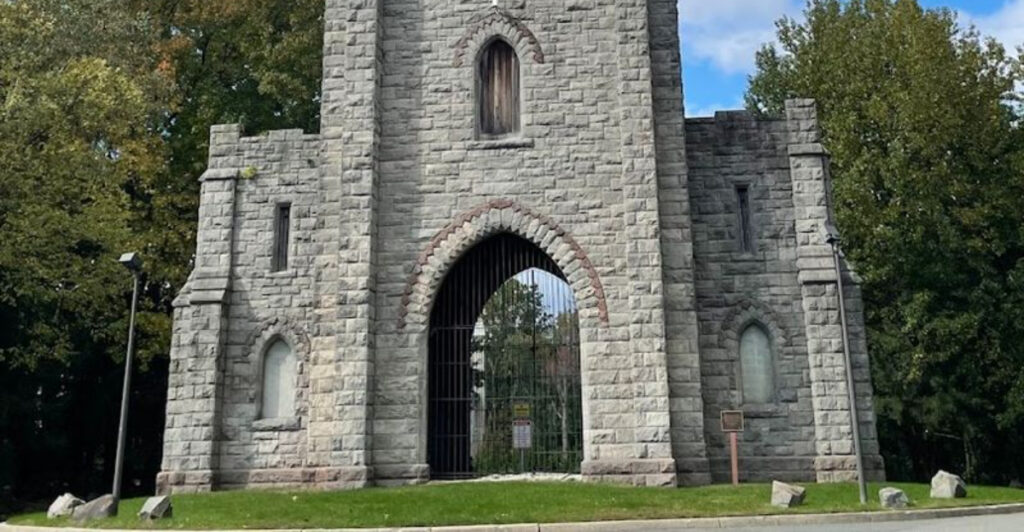
A stone tower rising from the middle of a wealthy Alpine neighborhood is already enough to make people talk. Add a nickname like the Devil’s Tower, a few ghost stories, and a road that curls around it, and you get one of North Jersey’s most persistent local legends.
Formally tied to the Rio Vista estate, the tower was built in the early 20th century by sugar importer Manuel Rionda and has long been associated with stories about his wife, the surrounding estate, and eerie late-night dares. The building itself is not huge compared with modern landmarks, but its setting gives it power.
It feels misplaced: a Gothic-looking structure standing guard among manicured properties near the Palisades, more old-world ruin than suburban feature. Locals have passed down tales about circling the tower, summoning spirits, or testing your nerve after dark, though the real history is interesting enough without embellishment.
This is not a formal attraction, and visitors should be mindful that it sits in a residential area. Go during the day, keep it brief, and skip the ghost-hunting theatrics.
The reward is seeing how one architectural remnant can turn an otherwise polished neighborhood into a place with a shadowy little myth attached.
7. Asbury Park Casino and Carousel House – Asbury Park
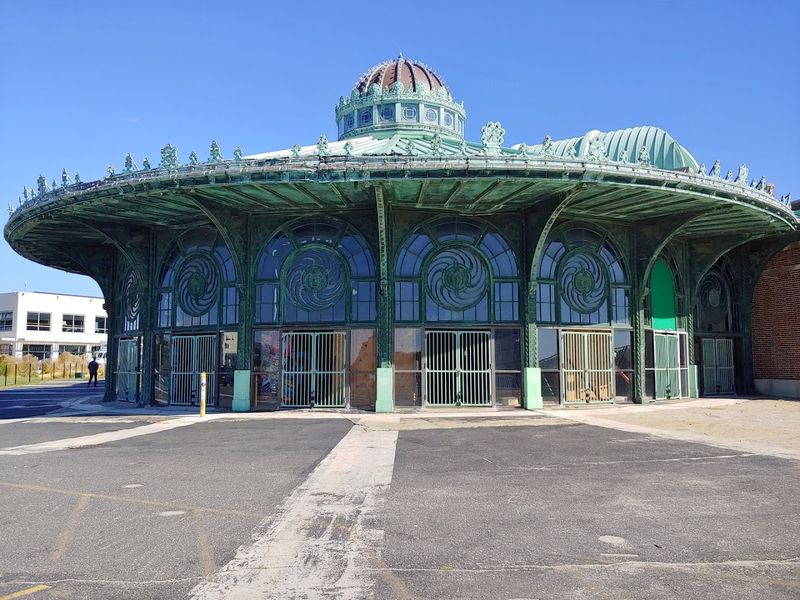
Salt air, old brick, arched openings, and a little bit of beautiful decay give the Asbury Park Casino and Carousel House a presence that newer waterfront buildings cannot fake.
Built in 1929 as part of Asbury Park’s boardwalk boom, the Casino complex and its carousel section were designed with the kind of seaside grandeur that expected crowds, music, rides, and summer nights to keep coming forever.
What remains today is not a polished amusement palace, and that is exactly why it sticks in the memory.
The open passageway, the copper-clad Carousel House, the murals, the gates, the exposed bones of the structure—all of it feels like Asbury Park in architectural form: creative, weathered, stubborn, and cool without trying too hard.
Depending on when you visit, you may find art installations, pop-up events, performances, skaters nearby, or simply people using the space as a dramatic shortcut between town and beach. It is easy to pair with a boardwalk stroll, a stop at the Convention Hall area, or dinner downtown.
The building’s strangeness comes from the tension between past and present. It is part ruin, part landmark, part community canvas, and somehow more interesting than if it had been restored into something too neat.
8. Emlen Physick Estate – Cape May

Cape May is full of Victorian beauty, but the Emlen Physick Estate has a sharper personality than the pastel porch-and-gingerbread image many visitors expect.
Built in 1879 and attributed to architect Frank Furness, the 18-room mansion is an outstanding example of Stick Style architecture, with oversized chimneys, bold rooflines, strong brackets, and details that feel muscular rather than dainty.
It looks less like a dollhouse and more like a Victorian with opinions. That is what earns it a place among New Jersey’s strangest buildings.
The estate is grand, but not in a soft or predictable way. Its angles and ornamentation give it a slightly storybook, slightly haunted quality, which fits nicely with Cape May’s love of ghost tours and old-house lore.
Inside, guided tours focus on the Physick family, domestic life, design, and the social world of Victorian Cape May, making the visit feel more layered than a quick look at antique furniture. Practical bonus: this one is designed for visitors.
It operates as Cape May’s Victorian house museum, with tours, exhibits, a carriage house area, and seasonal programming. Go when you want a break from the beach but still want something unmistakably Cape May.
The estate proves that “strange” can also be elegant.
9. American Dream – East Rutherford
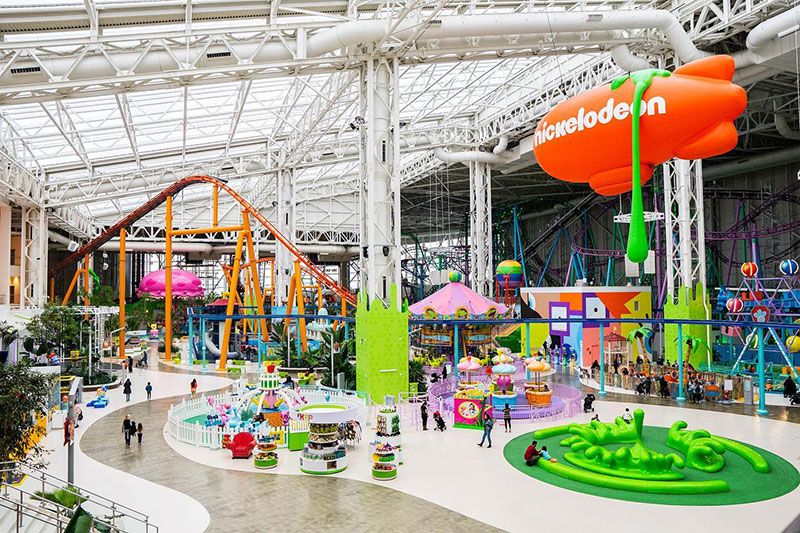
American Dream does not sneak up on you. It rises beside the Meadowlands like a retail-and-entertainment spaceship that landed near MetLife Stadium and decided subtlety was overrated.
The East Rutherford complex is enormous, but size alone is not what makes it strange. It is the combination: luxury shops, food halls, an indoor theme park, an indoor water park, and a year-round indoor ski slope all living under one roof in Bergen County.
The building feels less like a mall than a weather-proof alternate universe. You can watch people carrying shopping bags while others walk by in ski gear.
Kids can spend the morning on Nickelodeon rides, families can head into DreamWorks Water Park, and someone else can treat the place like a very oversized rainy-day walking route. Even if you are not there to shop, the sheer oddness of the concept is worth seeing once.
Planning helps because attractions are ticketed separately, and Bergen County’s retail rules can affect Sunday shopping, though entertainment options may still be operating. American Dream belongs on this list because it is New Jersey excess rendered in glass, steel, escalators, and indoor snow.
It is strange, divisive, useful, absurd, and completely unforgettable.
Share this story