One Pennsylvania town has fewer than 40 residents, and the whole place sits inside a state park. A river runs right through it and tumbles over a 20-foot waterfall next to the visitor center. I can’t get over that.
That tiny spot is only one stop on this trip. Another town has a golf course that opened in 1887 and still welcomes the public. Another sits beside a French-style mansion that President Kennedy helped dedicate.
Rivers shaped these towns long before anyone wanted a weekend getaway. Logs floated past. Canal boats moved coal. Trains pulled in at stations that still stand.
Now the same water brings kayaks, trail bikes, and folks who just want a bench with a view. I love that the past and present share the same riverbank. These are the kinds of places that make you want to take the long way home.
1. Marietta
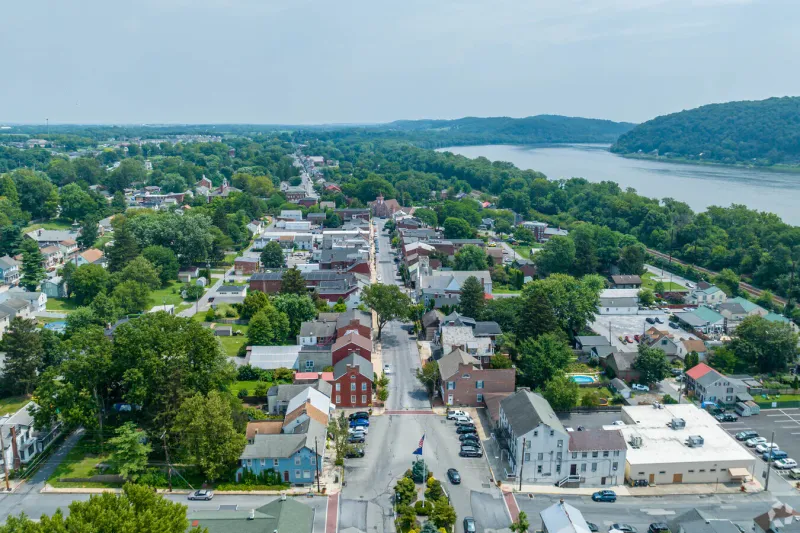
Presidents Grant and Cleveland once showed up for parties in this little Susquehanna River town.
Lumber money built mansions here, and many of those old buildings are still standing.
Marietta was founded in 1812, and it grew fast as a timber hub.
Rivermen floated logs down the Susquehanna and stopped here to rest before moving on.
Today the Marietta Historic District holds about 373 contributing buildings.
Most show off Italianate and Federal styles from the 1700s and 1800s, so a simple stroll feels like flipping through an architecture book.
Keep an eye out for the English Presbyterian Church, built in 1853.
You’ll also pass the Marietta Theater, the Union House Gallery, and the Pierre de Vittry House from around 1825.
Curious about the town’s backstory?
The Old Town Hall houses a historical museum, which makes a handy first stop before you wander.
Here’s a fun banking fact for trivia night.
Marietta was home to the first chartered bank in Lancaster County, The First National Bank of Marietta.
Once you’ve had your fill of old brick, head for the water.
The Northwest River Trail follows the Susquehanna and works for walking or biking.
The Columbia Crossing River Trails Center sits in Columbia River Park and serves as a trailhead.
You’ll find maps, exhibits, restrooms, and a covered porch made for sunset watching.
That trail center site carries real weight, too.
It was once a lumber yard owned by William Whipper, a founder of the Underground Railroad.
Hungry after all that walking?
Molly’s Courtyard Cafe of Marietta and Marco’s Restaurant and Pizzeria are both in town, and Mulberry Thrill Outdoor Cafe adds an open-air option.
Want to stretch the visit into a sleepover?
Marietta Inn Bed and Breakfast, Susquehanna Manor Inn Bed and Breakfast, and B.F.
Hiestand House Bed and Breakfast all welcome overnight guests.
Small shops line the main street, so pack a little room in your bag.
Pennsylvania has plenty of river towns, but few let you trace a logging boom one doorway at a time.
2. Milford
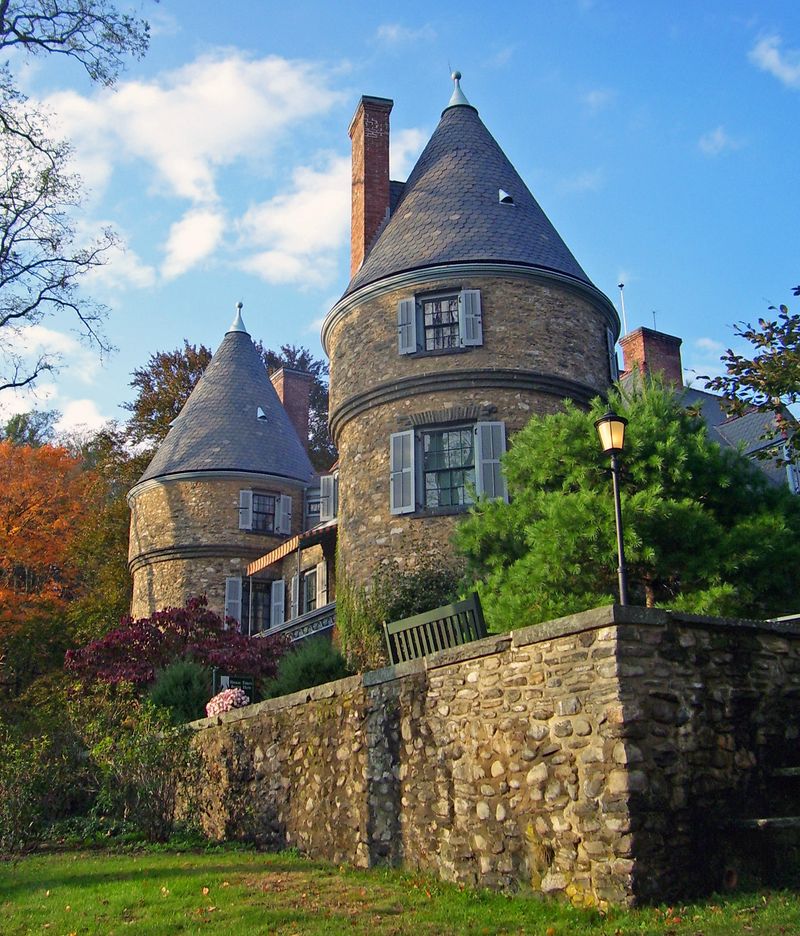
A French castle in the Pocono woods sounds like a daydream.
In Milford, it’s a real place with a gift shop and visitor films.
Grey Towers National Historic Site was completed in 1886 by James Pinchot.
His son, Gifford Pinchot, became the first Chief of the U.S.
Forest Service and later a Pennsylvania governor.
The estate looks like a French chateau, round towers and all.
In 1963, the family donated it and 102 acres to the U.S.
Forest Service, and President John F.
Kennedy dedicated it.
Three years later, Grey Towers became a National Historic Landmark.
Not bad for a summer home.
Planning a visit takes a little timing.
Guided mansion tours are ticketed and run Fridays through Mondays until November 1, 2026, with an 11 a.m. tour and a first-floor open house from 1 to 3 p.m.
Missed the tour?
The grounds and gardens are open daily from dawn to dusk all year, and you can explore them on your own.
Free films play daily from 10:30 a.m. to 3 p.m. in the historic Baitbox building, weather permitting.
Bring your leashed pup along, since pets are allowed on the grounds.
Back in town, Milford takes its looks seriously.
The borough has a historic district, and exterior changes need approval from a Historic Architectural Review Board.
That rule helps explain the well-kept downtown buildings.
Shops and restaurants fill the streets, so lunch and a little browsing come easy.
Then there’s the scenery.
Milford sits along the Delaware River and is surrounded by the Delaware Water Gap National Recreation Area.
So you get a castle, a tidy historic main street, and a national recreation area as your backyard.
That’s a lot of charm for one small borough.
Leaving is the hard part.
You’ll probably start planning a fall return before you even reach the car.
3. Foxburg
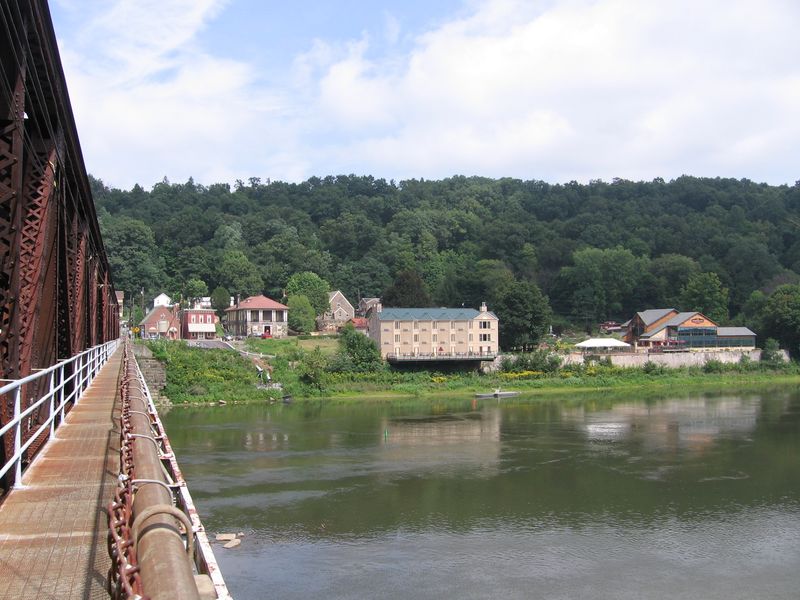
Golf fans, brace yourselves.
The oldest continuously operated golf course in the United States sits in a tiny town on the Allegheny River.
Foxburg Country Club dates to 1887 and is open to the public.
It also houses the American Golf Hall of Fame, plus a stash of golf artifacts.
Not a golfer?
No problem, because the river does plenty of heavy lifting here.
Canoeing, kayaking, fishing, and pontoon boat tours are all popular ways to spend the day.
Segway tours are an option too, if you’d like to cruise instead of paddle.
The Allegheny River Trail also runs along the water for hiking and biking.
Now for the surprise twist in this quiet place.
The Allegheny RiverStone Center for the Arts brings professional performances to town all year.
Shows take place in Lincoln Hall, built in 1909 and carefully restored.
Expect classical, jazz, folk, and popular music, plus drama, film, and Wurlitzer Theatre Organ concerts.
The group also runs the Red Brick Gallery and Gift Shop on Main Street.
It’s a smart stop for art lovers and last-minute gift hunters.
Got a sweet tooth?
Divani Chocolate Boutique makes European-style chocolates by hand in the Allegheny-Clarion River Valley.
For a real meal, The Allegheny Grille offers riverfront dining.
Foxburg Pizza, Crow’s Cupboard, Holy Sundae, and Little It Deli round out the choices.
History buffs should look for the Memorial Church of Our Father, a Gothic Revival church from 1881.
The Fox family founded the town around 1870, and oil and railroads shaped the region.
Fun fact for the road.
Foxburg didn’t officially incorporate as a borough until February 6, 1930.
Staying the night makes sense, since there’s so much packed in.
The Foxburg Inn offers rooms with river views, which makes checkout even tougher.
4. Danville
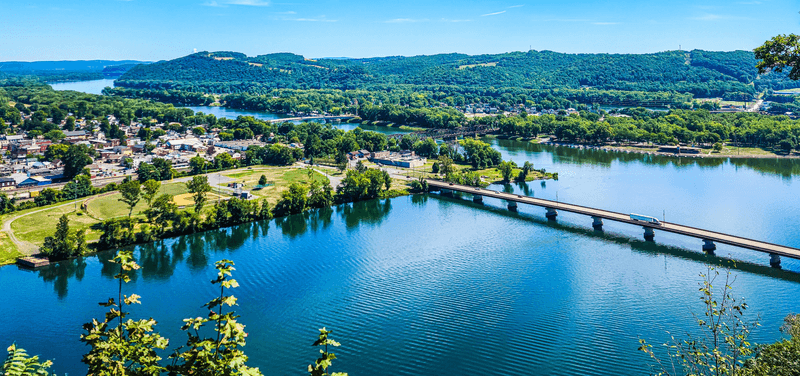
Some towns are named after a famous general.
Danville took its name from the general’s son, Daniel Montgomery.
His father, William Montgomery, founded the area in 1773 and planned the town in 1792.
That same year, he built a house that still stands today.
The General William Montgomery House now works as a museum run by the Montour County Historical Society.
It’s been on the National Register of Historic Places since 1979.
Timing matters if you want a peek inside.
Tours run seasonally on Sunday afternoons from April to October.
The historical society didn’t stop with one house.
In 2010 it bought the Daniel Montgomery Boyd Home to make more room for its collection.
Since September 2017, visitors can see a Military Room and Victorian Parlor there.
A Business and Industry Room tells the story of the county’s working past.
And Danville had a busy past.
It was a transportation center in the mid-1800s, and it was known for its iron industry.
You can see that era in the Historic District.
Most buildings date from the 1840s to the early 1900s, so the downtown has real character.
Look up at the Montour County Courthouse, built in 1871.
Mahoning Presbyterian Church from 1853 and Pine Street Lutheran Church from about 1860 are nearby highlights.
Danville has served as a county seat twice, which is a neat bit of trivia.
It led Columbia County starting in 1813, then became the seat of Montour County in 1850.
Today, Geisinger Medical Center is a major employer and trauma center in town.
So Danville stays busy, even while it holds onto its history.
The North Branch of the Susquehanna River runs right alongside.
Riverfront trails and walkable streets make it easy to fill an afternoon on foot.
Grab a bite at a local restaurant and take one more loop by the water.
Pennsylvania history rarely feels this easy to reach.
5. Schuylkill Haven
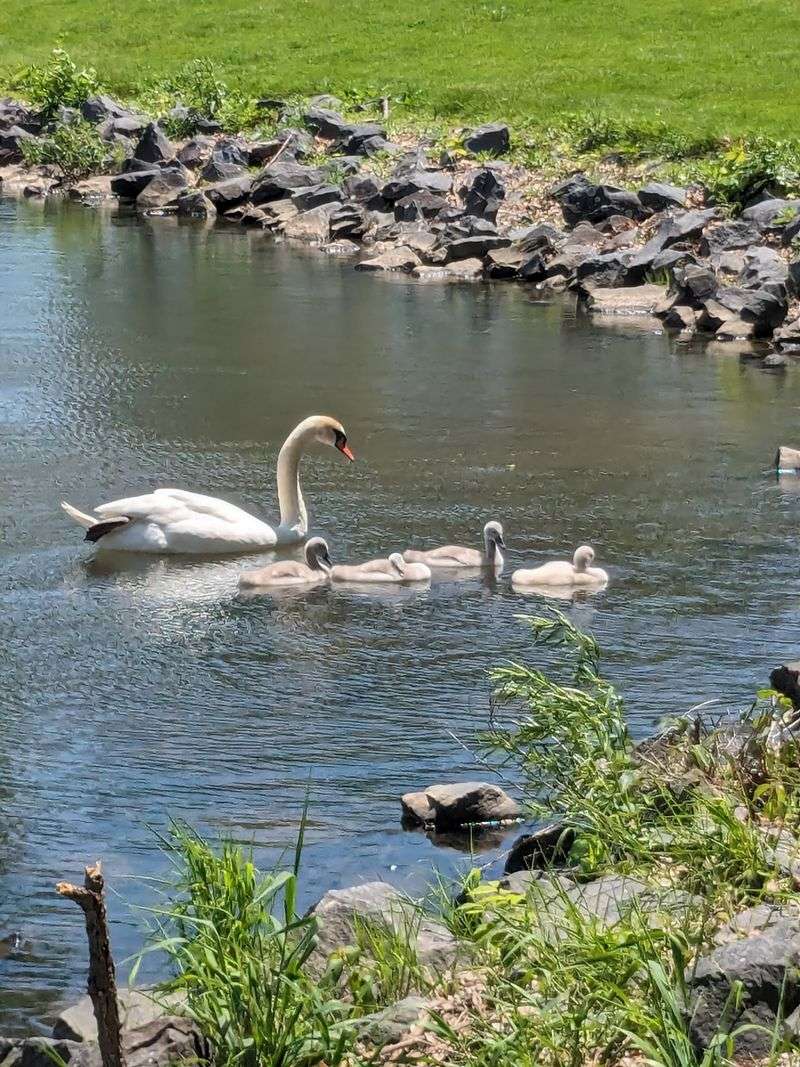
Meet Abby and Rambo, two swans with a very nice address.
They live on the pond at Bubeck Park in Schuylkill Haven.
That pond comes from Stoyer’s Dam, and you can fish there year-round.
Ducks join the swans, so bring your patience and maybe a camera.
Bubeck Park on Washington Street has more than birds.
You’ll find three pavilions with electricity, charcoal grills, a gazebo, a playground, and a war memorial.
Benches and trees fill the landscaped grounds.
It’s an easy spot for a picnic with a side of swan watching.
Need more space to roam?
Island Park on Broadway Street covers 23 acres right by the river.
Sports families will love the fields.
There are three soccer fields, two softball fields, a baseball field, and a multipurpose field.
The Irish Flats Walking and Bike Path makes a one-mile gravel loop along the Schuylkill River.
A boat and kayak launch opens the water for paddling and fishing.
Best of all, a walking bridge links Island Park to downtown.
So you can paddle in the morning and stroll Main Street by lunch.
The name says a lot about this place.
Schuylkill Haven comes from the river that runs beside it.
Its unofficial birthday is March 5, 1750.
That’s when John Fincher got a land grant and set up Fincher’s Ford along the water.
Later the town became a key crossroads for river and railroad travel.
The Schuylkill Canal, built in 1825, carried coal right through the area.
Bookworms can swing by the Schuylkill Haven Free Public Library on St. John Street.
It opened on June 26, 1966.
Schuylkill Haven doesn’t shout for attention.
It just quietly hands you parks, river views, and two famous swans, then dares you to leave early.
6. Mifflintown
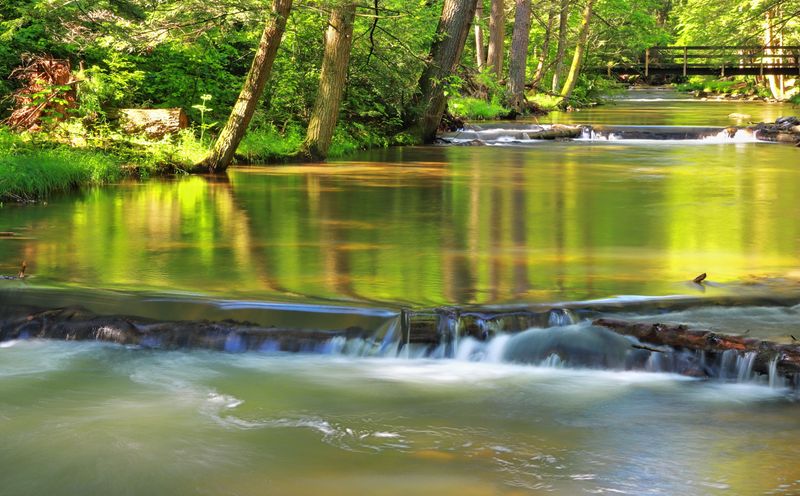
Old canal boats once crept through Mifflintown, one lock at a time.
You can still stand beside one of those locks today.
Canal Park shows off the town’s river heritage in a hands-on way.
Its public trail follows the old Juniata Branch of the Pennsylvania Canal.
Along the path, you’ll spot the preserved Canal Lift Lock No. 13.
Nearby sits a restored lock keeper’s house built in 1860.
It’s fun to picture the lock keeper’s job.
Boats arrived, water levels changed, and life moved at walking speed.
Mifflintown sits right on the Juniata River.
The valley around it is known for scenic views and lots of water fun.
Kayaking and canoeing are big draws here.
Anglers also come for the fishing, so pack a rod if you’ve got one.
The town has deep roots, too.
John Harris settled along the Juniata River in 1774, laid out the town, and gave it its name.
Mifflintown was settled in 1790.
It officially became a borough on March 6, 1833.
Juniata County formed in 1831, and Mifflintown became its county seat.
The courthouse went up right in the center of town.
That central courthouse gives the downtown a clear heart.
Westminster Presbyterian Church is another landmark worth a look while you wander.
Mifflintown is small, and that’s part of the appeal.
There’s no rush here, just river, history, and quiet streets.
If you like your road trips slow and scenic, this stop fits nicely.
Pennsylvania’s canal era feels close enough to touch.
Plan a paddle, then finish with a walk through Canal Park.
Watching the Juniata roll by is a pretty great way to stall before driving home.
And honestly, who could blame you?
A town with its own lock keeper’s house deserves a little extra time.
7. New Hope
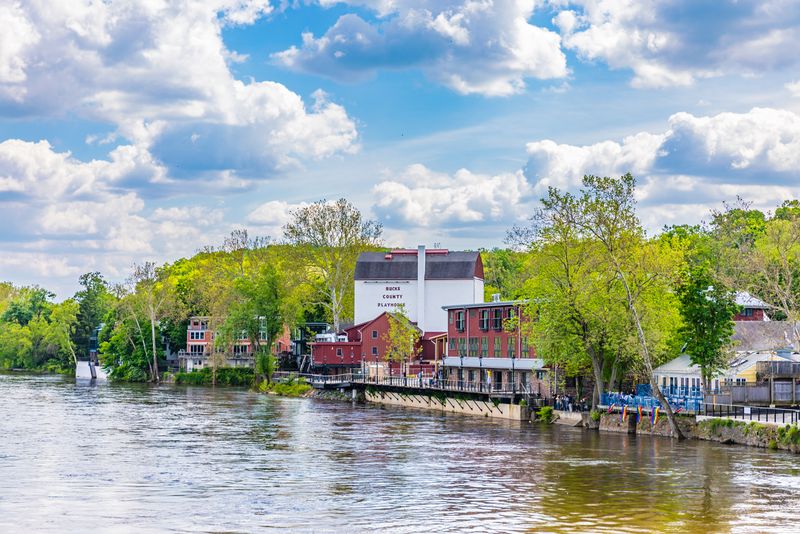
All aboard, art lovers.
New Hope has a train station from 1891, and trains still leave from it.
The New Hope Railroad departs from its historic downtown station on West Bridge Street.
The round trip to Buckingham takes about 90 minutes through the Bucks County countryside.
The ride lineup is surprisingly creative.
You can pick a Fall Foliage Excursion, a Traditional Excursion, a Locomotive Cab Ride, or even a Rail Bike Adventure.
Families tend to love the seasonal trips.
The Trick or Treat Train and Santa’s Premium Train Ride are on the list.
Off the tracks, New Hope is all about art.
The walkable downtown packs in galleries, local shops, and well-known restaurants.
Want a show with dinner plans?
The Bucks County Playhouse stages live theater right in town.
Then there’s the Delaware River, the star of the whole scene.
Kayaking, canoeing, tubing, fishing, and rafting are all popular here.
Prefer dry land?
The Delaware Canal Towpath is a 60-mile National Recreation Trail for walking and biking.
History runs deep along this stretch.
George Washington and his army stayed in the area before crossing the Delaware River in 1776.
Washington Crossing Historic Park sits a short drive south.
It honors that famous winter crossing during the Revolutionary War.
Covered bridge fans have a treat close by, too.
The Van Sant Covered Bridge, built in 1875, crosses Pidcock Creek near New Hope.
So in one weekend, you could ride a vintage train, catch a play, and paddle the Delaware.
That’s a tough schedule to beat in Pennsylvania.
Fair warning about one thing.
Saying goodbye gets hard when the next train whistle sounds like an invitation.
8. Ohiopyle
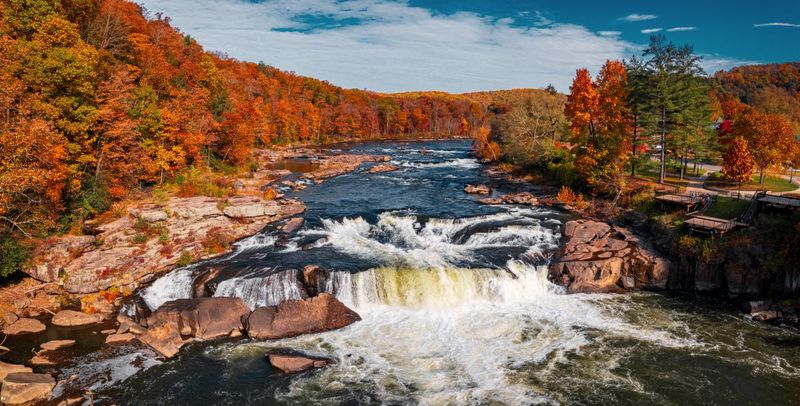
Fewer than 40 people live in Ohiopyle, yet the town sits inside about 20,500 acres of state park.
That’s a lot of backyard per person.
Ohiopyle State Park surrounds the borough completely.
It’s also known as the southern gateway to the Laurel Highlands.
The Youghiogheny River flows right through town.
It drops over the 20-foot Ohiopyle Falls, right next to the visitor center.
Start at the Laurel Highlands Falls Area Visitor Center on Sheriden Street.
It’s the main hub for park info and activities.
Thrill seekers, listen up.
The stretch below the falls, called the Lower Yough, is the busiest whitewater run in the eastern United States.
Rafting is the headline, but the menu goes much further.
Kayaking, paddleboarding, hiking, horseback riding, mountain biking, and fishing all happen here.
Bikers should know about the Great Allegheny Passage.
This 150-mile car-free trail follows an old rail bed straight through town.
Want a waterfall you can walk behind?
Cucumber Falls drops about 30 feet into a grotto, and you can step back behind the water.
Ferncliff Peninsula is another standout.
It’s a 100-acre National Natural Landmark where the river loops around plants more common in the southern Appalachians.
For a big view, head to Baughman Rocks.
It looks into the deepest gorge in Pennsylvania.
Need snacks or supplies?
The Falls Market general store covers the basics.
Sleeping under the stars is easy here.
Kentuck Campground offers 226 campsites, plus cottages, yurts, and group tent sites.
Ohiopyle proves that tiny towns can hold huge adventures.
Just don’t be surprised if your weekend turns into a whole week.
Share this story