North Carolina is one of those rare states where mountains, forests, beaches, and cities all exist within a single road trip. Whether you love hiking through misty peaks, standing where history was made, or simply soaking in a beautiful garden, this state has something waiting for you around every bend. The best part? Many of these incredible destinations are completely free or surprisingly affordable, making it easy to explore without blowing your budget.
From the rolling ridges of the Appalachians in the west to the sandy shores of the Outer Banks in the east, North Carolina rewards travelers who are willing to hit the road and keep their eyes open. This guide covers nine amazing spots spread across the state, each one offering a different flavor of what makes North Carolina so special.
You do not need a luxury travel budget to experience stunning natural scenery, rich history, and unforgettable moments here. Families, solo travelers, couples, and friend groups alike will find something to love at every stop on this list. Pack a cooler, fill up the tank, and get ready for a road trip that proves the best adventures do not always cost a fortune. North Carolina is calling, and these nine destinations are the perfect reason to answer.
1. Blue Ridge Parkway
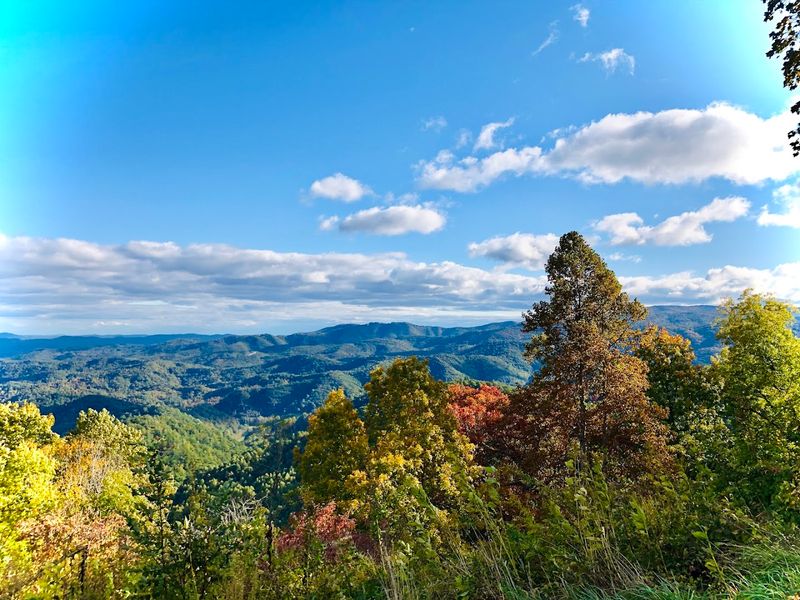
Stretching 469 miles through the Appalachian Highlands, the Blue Ridge Parkway has been called “America’s Favorite Drive” — and once you see it, you will understand exactly why.
Running along the backbone of the mountains, this legendary road connects Shenandoah National Park in Virginia all the way to Great Smoky Mountains National Park in North Carolina.
The best part for budget travelers?
There is no toll to drive it.
Every season brings a completely different look to this route.
Spring fills the hillsides with blooming wildflowers and fresh green growth, while summer offers cool temperatures that feel like a welcome escape from the heat below.
Fall is arguably the most popular time to visit, when the entire ridge explodes into a patchwork of orange, red, and gold that feels almost unreal.
Along the route, you will find dozens of overlooks where you can pull off and just stare at the view.
Many of these spots have short walking trails nearby, making it easy to stretch your legs without committing to a full hike.
Picnic areas are scattered throughout, so packing your own lunch keeps costs low while you enjoy some of the most beautiful scenery in the eastern United States.
The Linn Cove Viaduct near Grandfather Mountain is one of the most photographed sections of the entire parkway.
The engineering alone is worth stopping for, but the surrounding mountain landscape makes it genuinely breathtaking.
Milepost markers help you track your progress, and visitor centers at various points offer free maps and friendly rangers who can suggest the best stops based on what you enjoy most.
2. Great Smoky Mountains National Park (Cherokee)
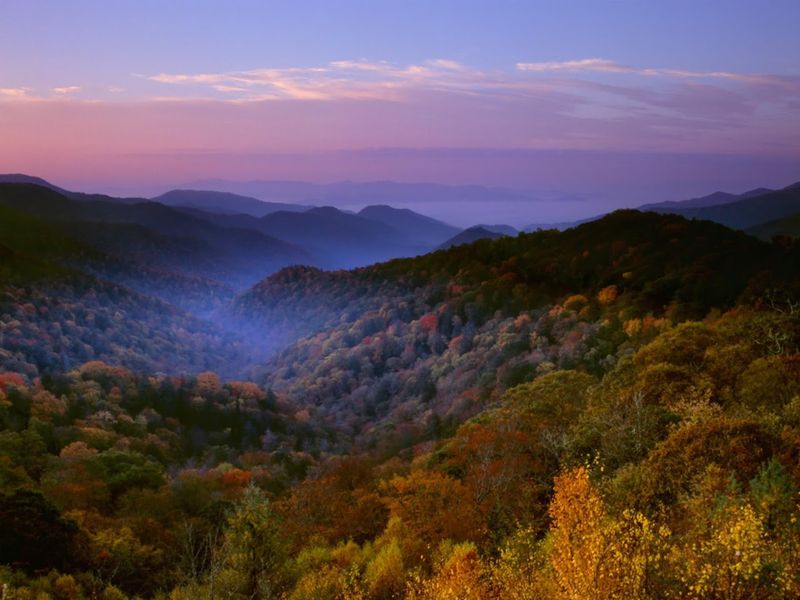
Fog rolls through the valleys like something out of a storybook every single morning, which is exactly how the Smokies earned their famous name.
Great Smoky Mountains National Park is the most visited national park in the entire country, and unlike most national parks, it charges absolutely zero admission.
That alone makes it one of the greatest travel deals anywhere in America.
The Cherokee entrance on the North Carolina side gives you access to some of the park’s most dramatic landscapes.
Newfound Gap Road climbs through the heart of the park, offering jaw-dropping views at every turn.
On a clear day, you can see mountain ridges stretching endlessly into the distance from the Oconaluftee Visitor Center, which is also a great free starting point for first-time visitors.
Wildlife watching here is genuinely world-class.
Black bears, white-tailed deer, wild turkeys, and even elk roam freely throughout the park.
The Cataloochee Valley on the North Carolina side is one of the best places in the eastern U.S. to spot elk at dawn or dusk, and the experience costs nothing but a bit of patience and an early alarm.
Hiking options range from easy flat walks along rivers to strenuous climbs up to panoramic summits.
The Alum Cave Trail is a fan favorite, passing through fascinating geological formations before reaching a stunning overlook.
Families with younger kids often enjoy the easy Oconaluftee River Trail, which follows a flat path beside a rushing mountain stream.
Cherokee itself, just outside the park entrance, also offers affordable dining, cultural exhibits, and a chance to learn about the Eastern Band of Cherokee Indians who have called these mountains home for centuries.
3. Pisgah National Forest (Asheville)
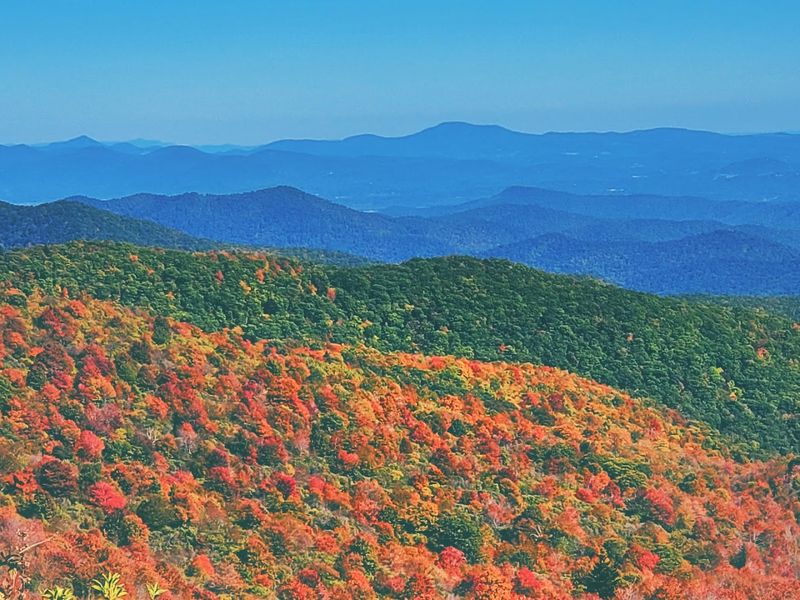
Just minutes from the lively city of Asheville, Pisgah National Forest feels like stepping into an entirely different world.
Covering nearly 500,000 acres of rugged western North Carolina terrain, this forest is packed with waterfalls, mountain streams, ancient hardwood trees, and trails that suit every fitness level.
Visiting is free, and the scenery rivals anything you would pay top dollar to see elsewhere.
Looking Glass Falls is one of the most accessible and stunning waterfalls in the entire state.
You can park just off the road and walk a short path to a wide, powerful waterfall that crashes into a clear pool below.
It is the kind of place that makes people stop mid-sentence and just stare.
Sliding Rock, nearby, is a natural water slide where a shallow stream rushes over a smooth rock face — a favorite with kids and adults who do not mind getting soaked.
The Pink Beds Loop Trail offers a gentler experience, winding through a unique mountain bog ecosystem filled with wildflowers and native shrubs.
Birders love this trail because it attracts species that are hard to find elsewhere in the region.
For more serious hikers, the Black Balsam Knob area offers above-treeline views that feel more like the Rocky Mountains than the American Southeast.
Asheville itself is worth factoring into your trip.
The city is known for its vibrant arts scene, independent restaurants, and the stunning Biltmore Estate.
While the estate charges admission, walking around downtown Asheville and visiting local galleries and markets costs nothing.
Combining a day in the forest with an evening exploring Asheville gives you one of the most well-rounded and affordable stops on any North Carolina road trip.
4. Jockey’s Ridge State Park (Nags Head)
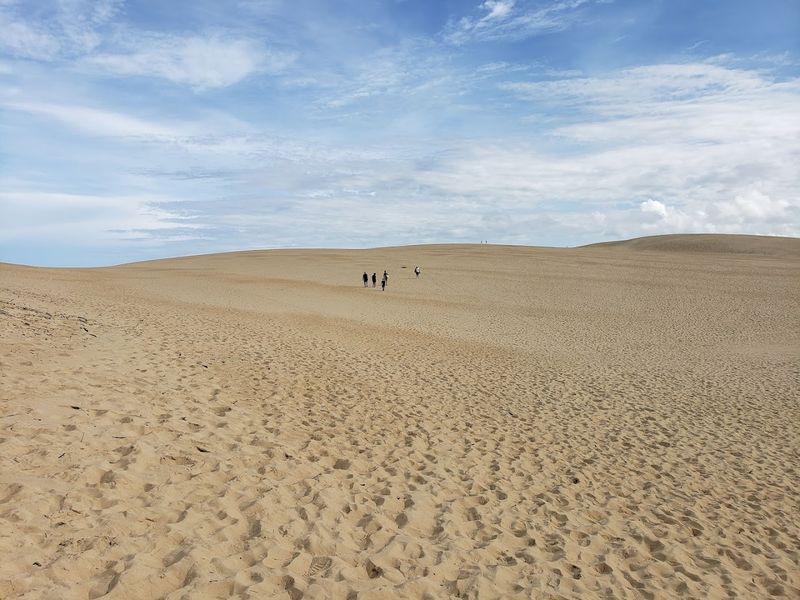
Imagine standing on top of a massive sand dune, looking out over the Atlantic Ocean on one side and the Roanoke Sound on the other.
That is exactly what you get at Jockey’s Ridge State Park in Nags Head, home to the tallest active sand dune system on the East Coast of the United States.
The dunes here reach up to 100 feet high, and climbing them is an adventure that costs nothing but a little energy.
The park is open year-round, and admission is free.
Sunrise and sunset visits are especially magical when the shifting light turns the sand every shade of pink, gold, and purple.
Photographers make the trip from across the country just to capture those colors reflected off the dunes.
Even on a cloudy day, the sheer scale of the landscape is humbling in the best possible way.
Hang gliding lessons are available through a local company that operates right in the park, making Jockey’s Ridge one of the few places in the world where beginners can learn to hang glide over open sand dunes with a soft landing guaranteed.
Lessons are reasonably priced and a truly unforgettable experience.
Kite flying is also incredibly popular here because the coastal winds are almost always perfect.
A short nature trail winds through the park and offers interpretive signs about the unique ecology of the dune system.
The visitor center has exhibits about how the dunes formed and why they continue to migrate slowly each year.
The nearby town of Nags Head has affordable seafood restaurants, beach access, and a laid-back coastal vibe that makes it a natural overnight stop.
Jockey’s Ridge is the kind of place that surprises people with just how spectacular it really is.
5. North Carolina Museum of Natural Sciences (Raleigh)

Free admission at a world-class natural history museum sounds almost too good to be true, but that is exactly what the North Carolina Museum of Natural Sciences in Raleigh offers every single day.
As the largest natural history museum in the Southeast, it draws over a million visitors per year — and not one of them has to pay a cent to walk through the door.
For budget-conscious road trippers, this is an absolute must-stop.
The museum spans four floors and covers everything from prehistoric life to the wonders of the cosmos.
The centerpiece of the building is a massive open atrium where a remarkable whale skeleton hangs from the ceiling alongside ancient marine reptile fossils.
Walking beneath these giants gives you a genuine sense of just how vast and ancient life on Earth really is.
Kids tend to lose their minds in the best possible way.
One of the most unique features is the “Nature Research Center” attached to the main building, where visitors can watch real scientists at work through glass walls.
Seeing actual research happening in real time makes science feel immediate and exciting rather than something locked away in a textbook.
Live animal exhibits, including snakes, fish, and insects, add another layer of hands-on engagement.
Raleigh itself is one of North Carolina’s most walkable and affordable cities.
After the museum, a short walk takes you to the North Carolina State Capitol building, the State Legislative Building, and several other free historic sites clustered in the downtown area.
Grabbing lunch at one of the food trucks that regularly park near the museum keeps costs low.
Spending a full day in Raleigh around this museum is genuinely one of the smartest moves you can make on a budget road trip through the state.
6. Wright Brothers National Memorial (Kill Devil Hills)

On December 17, 1903, two brothers from Ohio changed the course of human history on a windy stretch of North Carolina coastline.
Orville and Wilbur Wright made the world’s first successful powered airplane flights right here at Kill Devil Hills, and today the Wright Brothers National Memorial preserves that exact ground for anyone curious enough to visit.
Entry costs just a few dollars per adult, making it one of the most affordable history experiences in the country.
Markers on the ground show exactly where each of the four flights that day began and ended.
The longest flight covered 852 feet and lasted 59 seconds — a modest distance by today’s standards, but an earth-shattering achievement in 1903.
Standing on that same ground and imagining what those first moments of powered flight must have felt like is a surprisingly moving experience, even for people who do not think of themselves as history buffs.
The visitor center holds reproductions of the Wright Flyer and the gliders the brothers used during their test flights in the years leading up to 1903.
Rangers give free talks throughout the day that bring the story to life with fascinating details you will not find in any textbook.
Learning about the years of careful, methodical experimentation that went into that December morning makes the achievement feel even more remarkable.
A large granite monument sits atop Kill Devil Hill, the actual sand dune from which the brothers launched their glider tests.
Climbing the hill for a panoramic view of the surrounding coastal landscape is free and takes only a few minutes.
The Outer Banks region surrounding the memorial is full of affordable seafood spots, natural beauty, and historic charm, which makes it well worth spending a full day or two in the area.
7. Maggie Valley
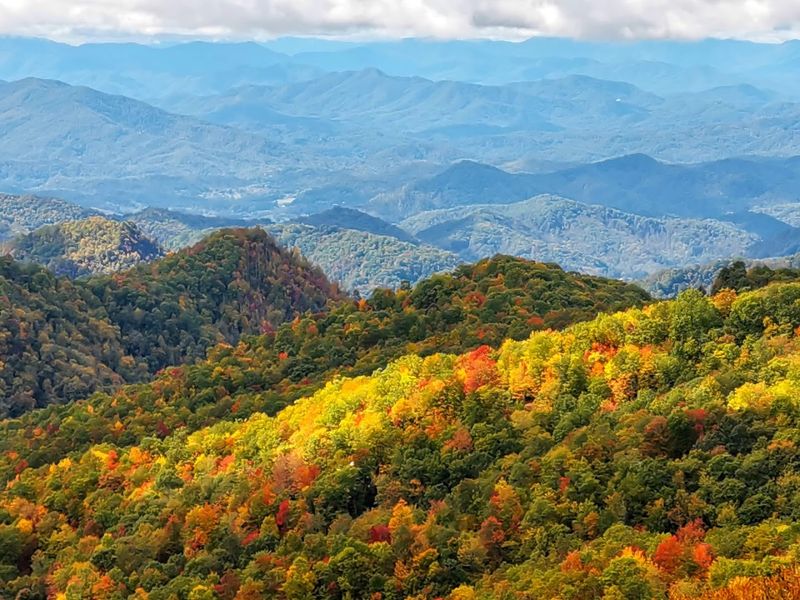
Tucked into a narrow valley in the heart of the western North Carolina mountains, Maggie Valley is the kind of small town that feels like it was designed specifically to make visitors feel at home.
It sits at around 3,000 feet elevation, which means summers are comfortably cool even when the rest of the state is sweltering.
The drive into town alone, with mountain ridges rising steeply on both sides, sets a mood that is hard to shake.
Ghost Town in the Sky, the old mountaintop amusement park perched above town, is currently undergoing a long-awaited revival that has locals buzzing with excitement.
Even without it fully open, the cable car ride up the mountain offers stunning panoramic views of the surrounding Smokies.
The town itself has a cheerful strip of shops, candy stores, gem mining spots, and family-friendly attractions that are easy on the wallet.
Stompin’ Ground, a classic clogging and traditional mountain music venue in the heart of town, is one of the most uniquely Appalachian experiences you can have anywhere in North Carolina.
Watching skilled cloggers perform traditional dances while live musicians play old-time mountain music is genuinely entertaining and deeply rooted in the cultural heritage of this region.
Ticket prices are modest and the atmosphere is warm and welcoming.
Cataloochee Ski Area, located just outside town, operates in winter and offers some of the most affordable lift tickets in the Southeast.
But even off-season, the drive up to the ski area gives you sweeping mountain views that rival anything in the region.
Maggie Valley also sits conveniently close to the Great Smoky Mountains National Park entrance, making it a smart and affordable base camp for exploring the broader western North Carolina mountains.
8. Sarah P. Duke Gardens (Durham)
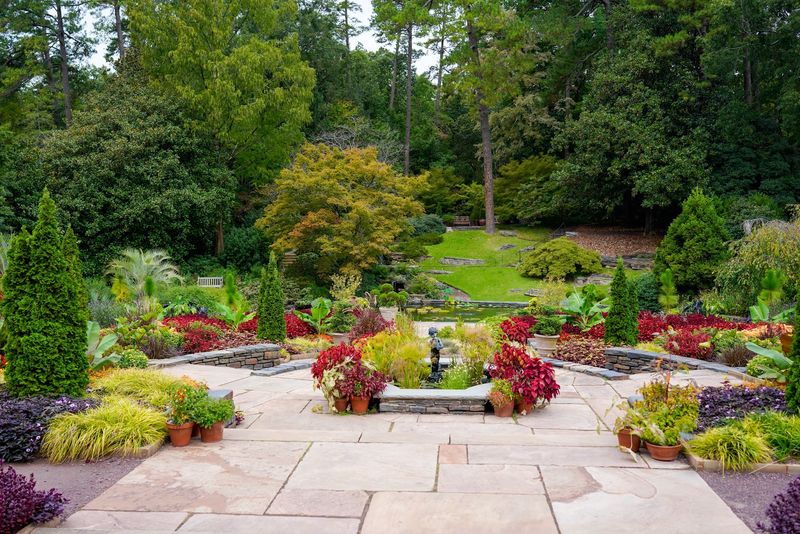
Some places make you slow down without even trying.
Sarah P.
Duke Gardens at Duke University in Durham does exactly that the moment you step through the gate.
Spread across 55 acres of beautifully landscaped grounds, this is widely considered one of the finest public gardens in the entire United States — and admission is completely free.
Roughly 400,000 people visit each year, drawn by a rotating tapestry of seasonal blooms and carefully tended landscapes.
The gardens are divided into several distinct areas, each with its own character and plant palette.
The Historic Gardens feature formal terraces, reflecting pools, and wisteria-draped pergolas that feel almost European in their elegance.
The Doris Duke Center Gardens lean toward a more relaxed woodland aesthetic, with native plants and winding paths that invite unhurried exploration.
In spring, the whole property erupts in color as thousands of bulbs, flowering trees, and shrubs burst into bloom simultaneously.
Visiting in different seasons reveals entirely different gardens.
Summer brings bold tropical plantings and lush greenery, while fall transitions into warm tones and ornamental grasses.
Even winter has its own quiet beauty here, with evergreen plantings, berry-covered shrubs, and the occasional camellia adding color to the bare landscape.
Serious gardeners often visit multiple times a year just to track the seasonal changes.
Bringing a picnic lunch is both allowed and encouraged, and there is no shortage of beautiful spots to spread out a blanket and enjoy the surroundings.
The on-site cafe offers affordable options if you prefer not to pack food.
Durham itself is a fantastic city for budget travelers, with a thriving food scene, walkable neighborhoods, and a growing collection of independent shops and galleries.
Pairing the gardens with a stroll through downtown Durham makes for a perfect low-cost day.
9. Old Baldy Lighthouse (Bald Head Island)
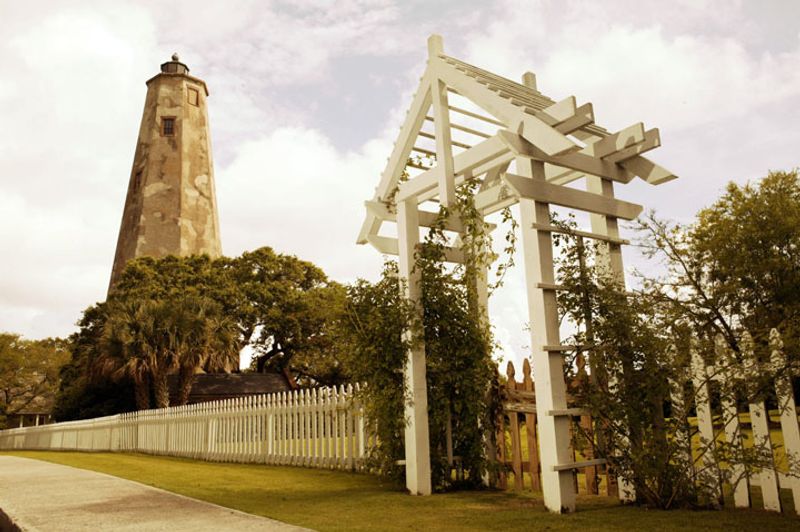
Getting to Bald Head Island requires leaving your car behind, which is part of what makes it feel so wonderfully removed from the rest of the world.
A passenger ferry from Southport is the only way in, and once you arrive, the island is explored entirely by foot or electric golf cart.
No cars, no traffic, no noise — just miles of undeveloped beach, maritime forest, and the oldest standing lighthouse in North Carolina waiting to be discovered.
Old Baldy, built in 1817, is a squat, thick-walled lighthouse that looks nothing like the tall, striped towers most people picture.
Its unusual shape comes from the fact that it was designed to be extra durable against the brutal coastal storms that batter the Cape Fear coast.
Climbing to the top rewards you with a sweeping view of the island, the Cape Fear River inlet, and the Atlantic stretching endlessly to the horizon.
Admission to climb is modest and absolutely worth every penny.
The surrounding Smith Island Museum of History sits right next to the lighthouse and tells the story of the island’s maritime past, including shipwrecks, colonial-era history, and the generations of lighthouse keepers who lived here.
The museum is small but genuinely engaging, with artifacts and displays that bring the island’s long history to life in a tangible way.
Bald Head Island has 14 miles of pristine beach that see far fewer visitors than the more famous Outer Banks beaches further north.
Sea turtle nesting season runs through summer, and the island has an active conservation program that protects nesting sites along the shoreline.
The ferry ride itself, gliding past marshes and watching pelicans skim the water, sets the tone for a day that feels genuinely unhurried.
Bald Head Island is a reminder that some of North Carolina’s best experiences require just a little extra effort to reach.
Share this story