Some New York corners change faces every few years, swapping one shiny storefront for another until nobody remembers what came before. One East Village corner has refused to play that game for more than seven decades.
It began as a tiny newsstand in 1954, and it never packed up and left. Instead, it slowly grew outward, one step at a time, until it became a full diner that now stays open around the clock on Saturdays.
The family behind it is reportedly in its third generation of ownership, and the kitchen still turns out pierogi by hand. Artists, film crews, longtime couples and late-night train riders all end up at the same counter.
Keep reading to learn how a small stand became a neighborhood anchor, what keeps people lining up, and the practical tips that make a first trip easier.
1. A Rainbow on Second Avenue
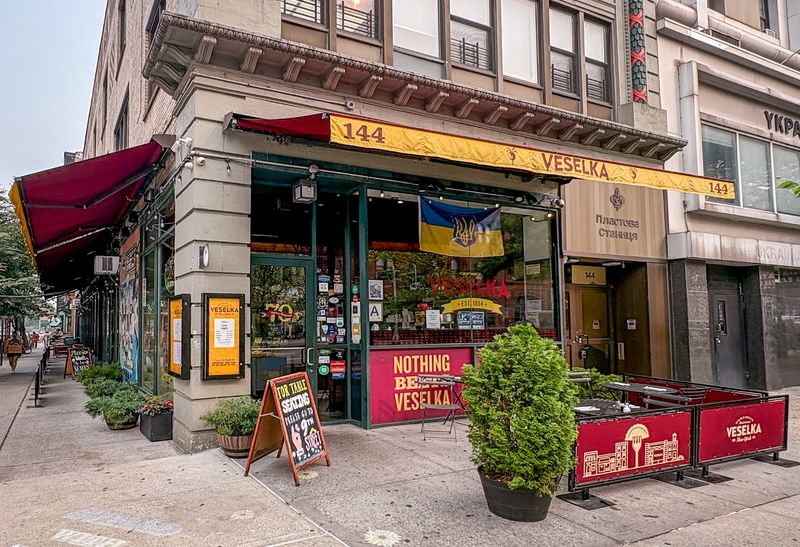
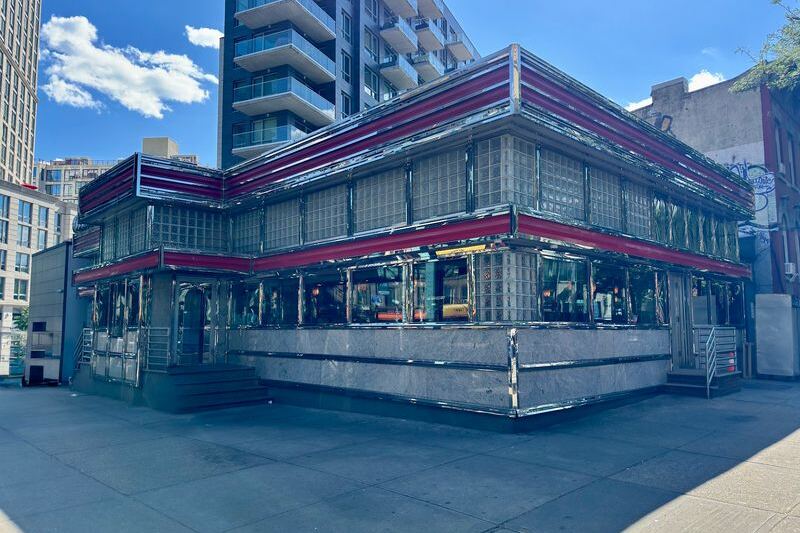
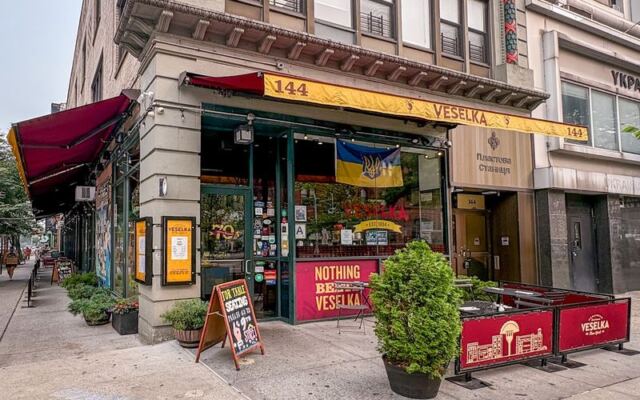
The mystery corner has a name, and it means rainbow in Ukrainian. Veselka sits at 144 2nd Ave, New York, NY 10003, on the corner of 2nd Avenue and 9th Street in Manhattan’s East Village.
It is a Ukrainian restaurant run in the spirit of a neighborhood diner. The menu leans on Eastern European classics while still offering the diner favorites New Yorkers expect.
That mix is a big part of the appeal. A table can hold borscht and stuffed cabbage on one side and a plate of eggs on the other, and nobody blinks.
The corner itself matters too. For a city that loves a fresh start, this address has stayed loyal to one spot for decades.
Readers from Queens, Brooklyn, the Bronx or Staten Island will recognize the type. It is the kind of place every borough used to have on its main drag, a dependable room where the food is familiar and the door is almost always open.
Here, that idea never went out of style. The rest of the story explains how a modest stand turned into one of the most talked-about tables in the neighborhood.
2. From Newsstand to Neighborhood Fixture
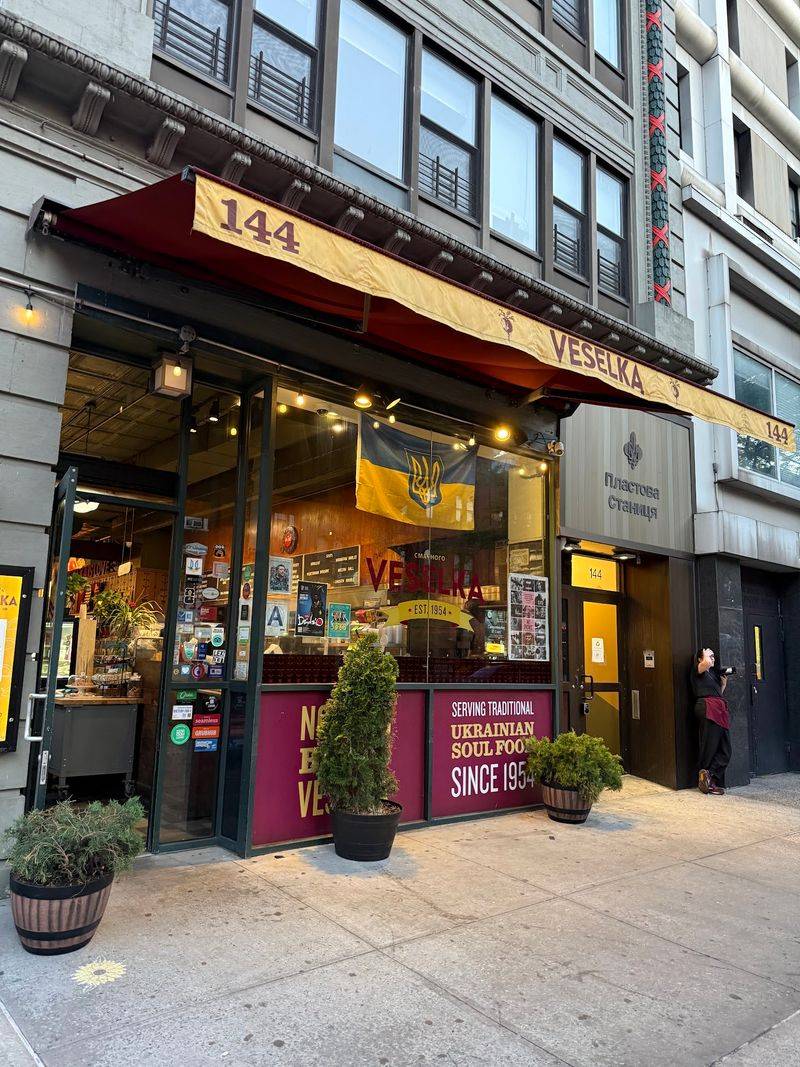
Back in 1954, the operation was small enough to fit in a corner newsstand. The founders reportedly came as refugees, building a living one sale at a time on 2nd Avenue.
What happened next is a slow-and-steady story. Rather than moving to a bigger location, the business expanded outward from that same corner over the years.
That detail says a lot. Plenty of growing businesses chase cheaper rent or a flashier block, but this one stayed put and simply grew around itself.
Today, the restaurant is said to be in its third generation of family ownership. That continuity is rare in a city where leases flip and storefronts turn over constantly.
The family thread shows up in the menu too. Pierogi are handmade to order, and that practice reportedly goes back to the early days.
New Yorkers who miss the old corner spots in their own neighborhoods tend to appreciate this kind of persistence. It proves that tradition can survive in Manhattan without being frozen in time.
Not bad for a business that started by selling the morning paper.
3. Pierogi Made by Hand, Eight at a Time
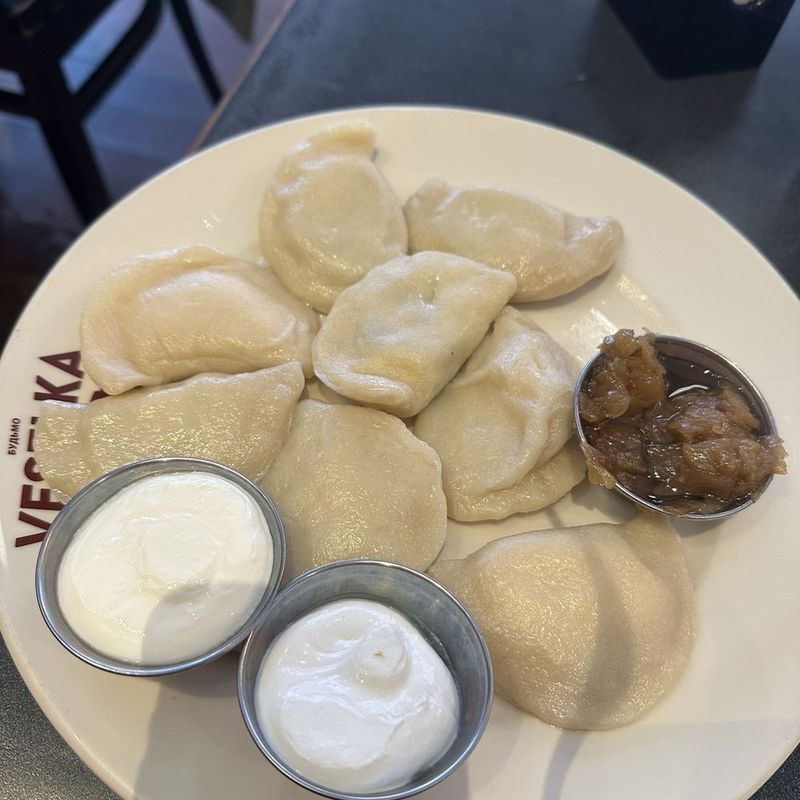
Ask around about this diner and one word comes up again and again: pierogi. They are the single most talked-about item on the menu, by a wide margin.
The dumplings are made by hand to order. Fillings run from potato and cheese to braised beef short rib, sauerkraut and mushroom, arugula and goat cheese, spinach, chicken and vegetable, and even bacon, egg and cheese.
Here is the fun part. Guests can mix eight different kinds in a single order instead of committing to three of the same, so indecisive eaters finally get a break.
They come boiled or fried. Regulars often suggest boiled for a more traditional style, while others go for the fried version with a slight crisp on the outside.
Toppings add another layer. Caramelized onions, sour cream and bacon are popular add-ons, and the onion dip has its own fans.
Some guests find certain fillings simpler than expected, so it pays to try a mixed plate and pick a personal favorite. Consider it homework that nobody minds doing.
4. Borscht, Holubtsi and the Old Country Classics
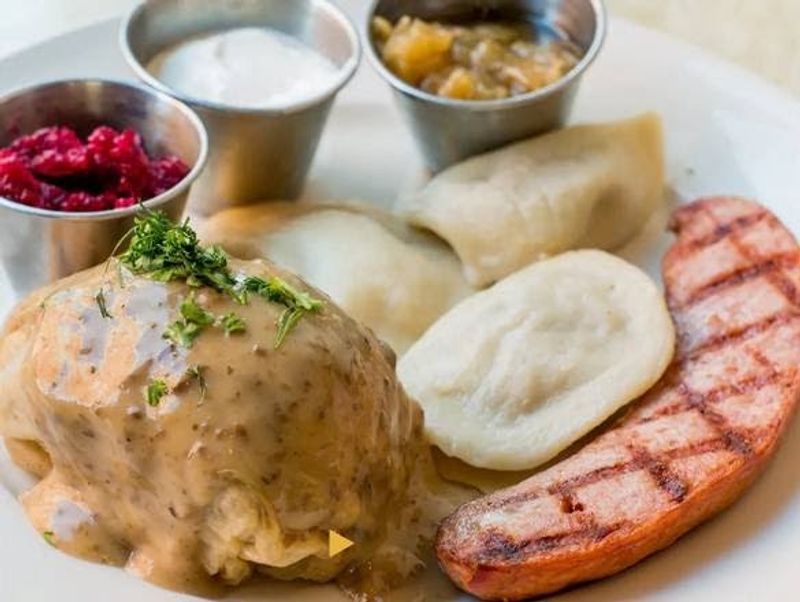
Beyond the dumplings, the menu reads like a family cookbook from Eastern Europe. Ukrainian borscht is a fixture, offered with or without meat.
Stuffed cabbage, called holubtsi, is another standout. The classic version wraps cabbage leaves around pork and rice braised in tomato sauce, and a mushroom gravy option is also available.
Plenty of first-timers say the holubtsi surprised them more than anything else on the table. Even people who usually skip beets have admitted the borscht won them over.
The kitchen also serves varenyky, chicken Kyiv, bigos, beef stroganoff and potato pancakes with applesauce. Opinions on the stroganoff are mixed, while the stuffed cabbage earns steady praise.
Matzoh ball soup and a seasonal cucumber soup have also shown up on tables. The variety reflects the East Village’s long Eastern European roots.
For anyone new to Ukrainian cooking, these dishes form a solid starter kit. Grandma would probably approve of the order, even if she insists hers is better.
5. Portions That Invite Sharing
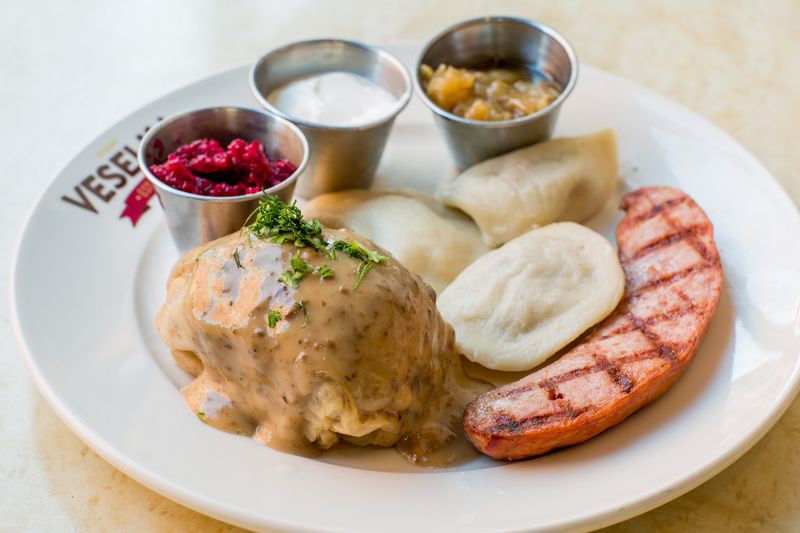
Hungry guests, take note. The combo plates here are big, and many diners say they could not finish theirs.
The Deluxe Meat Combo is one example that tends to inspire sharing. A set called the Ukrainian Stand works as a sampler of several house favorites in one order.
On the flip side, the menu also offers smaller portions. That makes it easier to try borscht, varenyky and potato pancakes in one sitting without needing a nap afterward.
Prices are described as fair by many guests, which matters in a part of Manhattan where a simple lunch can sting. The value adds to the old-school appeal.
This is the kind of generosity outer-borough and Upstate readers often say is disappearing. A plate that arrives looking like it was meant for two is a welcome throwback.
Bring a friend, order a combo, and split it. Your appetite and your wallet will both leave on good terms.
6. Blintzes, Medovyk and a Sweet Finish
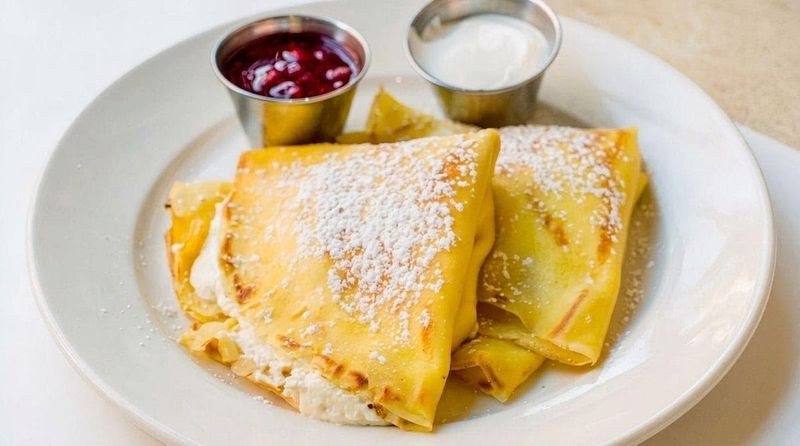
Dessert deserves its own section, since blintzes are among the most mentioned items at this diner. They are thin crepes filled with sweet ricotta and served with sour cream and fruit preserves.
Some regulars suggest asking for raspberry sauce on the side. It is a small request that a lot of people seem glad they made.
Medovyk, a traditional Ukrainian honey cake made with walnuts and cream, is another option. It is a good pick for anyone wanting to try something new.
Apple strudel with custard has also appeared on the menu. An apricot cheesecake has caught the attention of guests planning a return trip.
The famous egg cream is a classic New York diner order. More than one person has spotted it too late after a mountain of pierogi.
The lesson is simple. Leave a little room, because the last course here is not an afterthought.
7. Murals, Booths and a Seat at the Counter
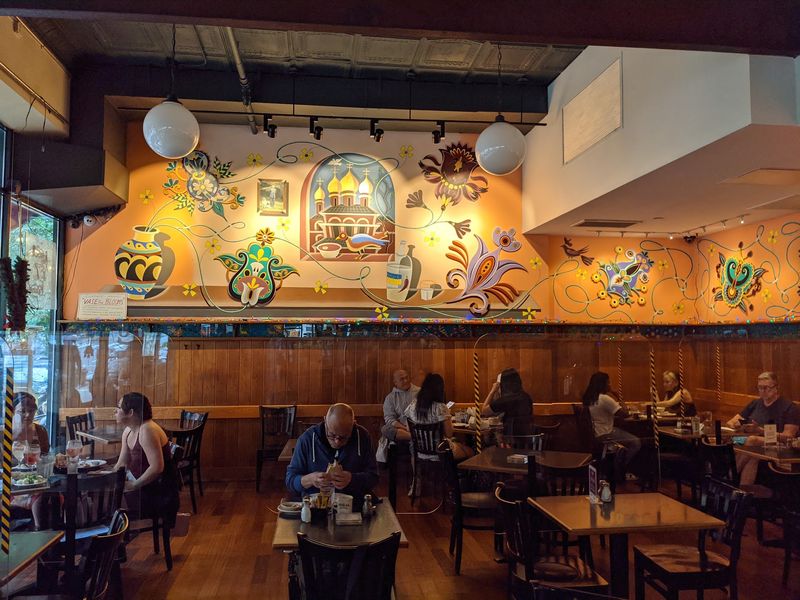
The room has a rustic, lived-in look, with murals on the walls and decor rooted in Ukrainian tradition. It feels like a space that has seen every kind of New York day and simply kept going.
Seating comes in several forms. There are booths, tables mostly for two or four, and counter seats for solo diners or anyone who loves the classic diner perch.
The space is open and well lit. It gets busy, but many describe the energy as lively rather than stressful.
Outdoor seating is also available, and it has gathered praise of its own. On a mild day, a sidewalk table on 2nd Avenue is a nice way to watch the neighborhood roll by.
The restrooms are described as spacious and clean, a small detail that matters in a busy city spot. Takeout orders are available too.
Counter or booth, inside or out, the choice is yours. Every seat comes with a side of history.
8. A Table for Artists, Couples and Night Owls
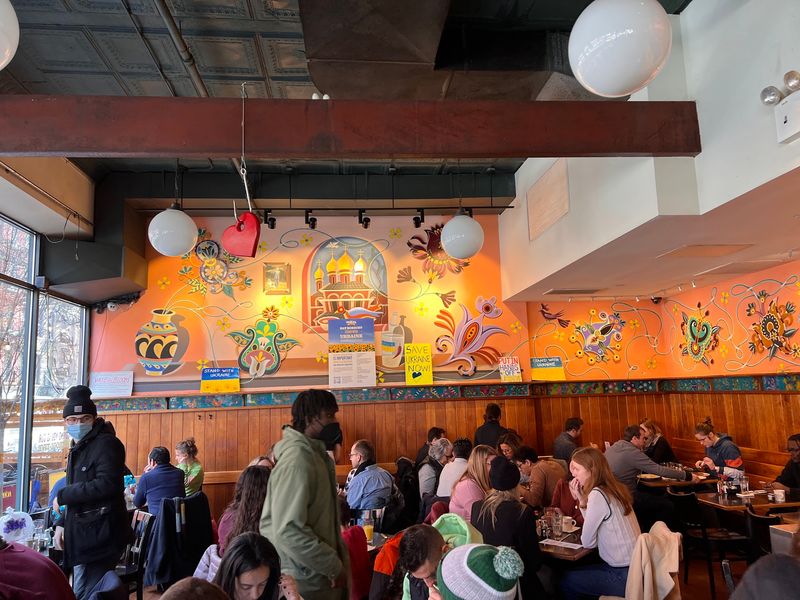
Who eats here? Pretty much everyone.
Artists with paint on their hands, couples who have been coming since the 1970s, film crews on a break and people fresh off the F train all share the room.
Famous faces have dropped in too. Anthony Bourdain ate here, and Paul Giamatti is reportedly a regular.
Staff often get credit for warm welcomes and helpful suggestions for first-timers. One manager named Yaroslav has been singled out for checking in on tables throughout the evening.
Service is not perfect every visit. Some guests mention slow moments, order mix-ups or rigid host rules about seating incomplete parties.
Still, the overall feeling is welcoming. Many describe it as a place where a big city suddenly feels a bit like home.
Families, solo diners and curious food fans all seem to fit in. The diner works because it never tried to be exclusive.
9. Hours, Lines and Getting There
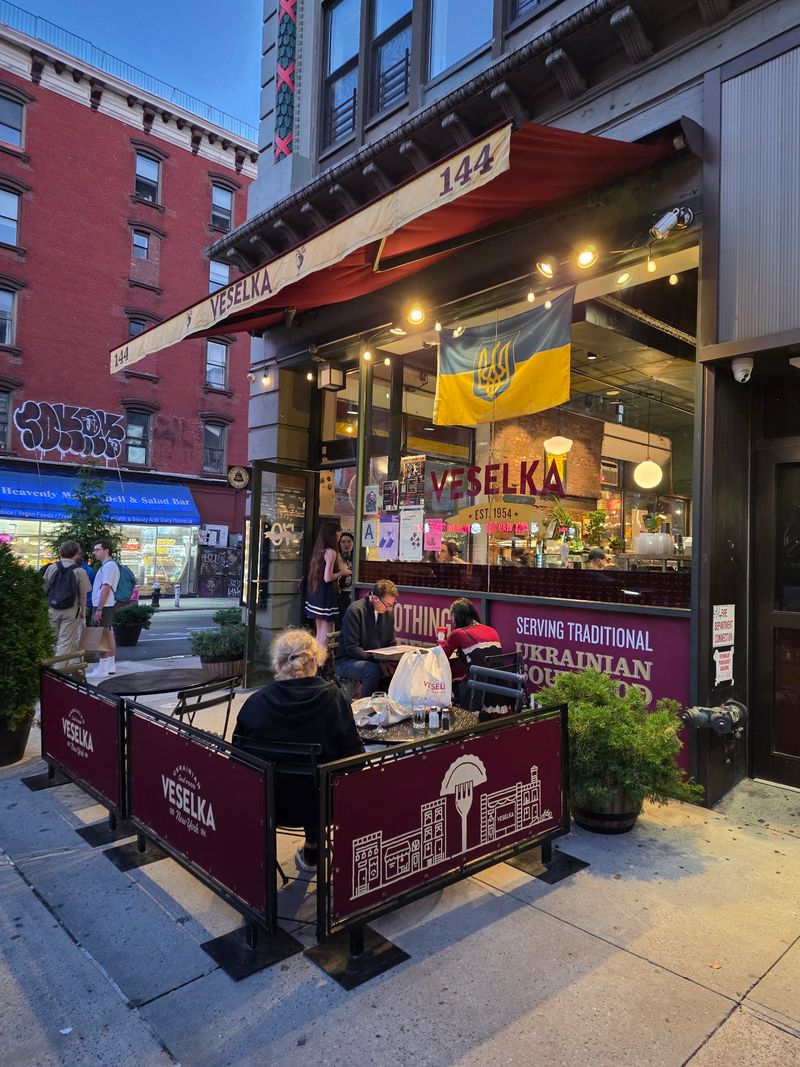
Planning helps, but not as much as you might fear. Veselka opens at 9 AM and stays open until midnight Monday through Friday.
Saturday is the headliner, with the doors open 24 hours. Sunday runs from 9 AM to 11 PM.
Lines can form, especially on weekends. The good news is that the line tends to move fast, and some guests report short waits even around 6 PM on a Saturday.
Parties should arrive together, since the host stand may wait until everyone is present before seating. That small step saves time on the sidewalk.
Getting there by transit is straightforward for most New Yorkers. The corner of 2nd Avenue and 9th Street is reachable from several nearby subway lines, including the F train.
Weekend brunch is popular, so earlier visits may be calmer. A late Saturday night trip is another option for anyone who keeps unusual hours.
10. Why the Corner Still Matters
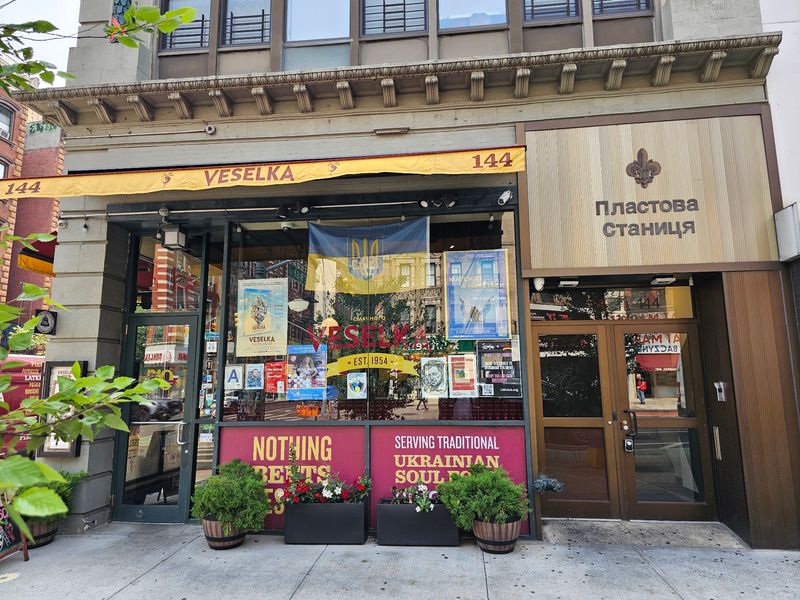
Seventy-plus years on one corner is not luck. It takes a family willing to keep showing up, a kitchen willing to keep folding dumplings by hand, and a neighborhood willing to keep coming back.
Veselka also carries a connection to Ukraine today. Proceeds from one featured drink reportedly go toward helping Ukraine, a choice that has moved some guests to order it.
It is not a flawless operation, and a few dishes split opinions. Yet the core of the place, the pierogi, borscht, stuffed cabbage and blintzes, keeps earning loyalty.
For readers in Buffalo, Albany, Rochester or the outer boroughs, the trip is about more than a meal. It is proof that New York has not traded every good thing for convenience and turnover.
A third-generation family business, fair prices, big plates and a door open into the night still exist here. The rainbow, it turns out, never faded.
Share this story