Some New York streets get repaved, rebuilt and renamed every few decades. One quiet lane in New Paltz has held on to its stone houses for more than three centuries.
The families who raised those walls came to the Hudson Valley after fleeing religious persecution in France, and many of their homes are still standing on the same block today. You can walk the whole stretch in about an hour, yet the stories packed into it could fill a long winter.
Some guided tours run so long that guests forget to check the clock. There is a cemetery with graves reaching back to the colonial era, a museum with artifacts, a gift shop and an app that tells each house’s story as you go.
Keep reading for the history, the best way to tour, the hours and a few smart tips before you head out.
1. A Colonial Lane on the Edge of Downtown New Paltz
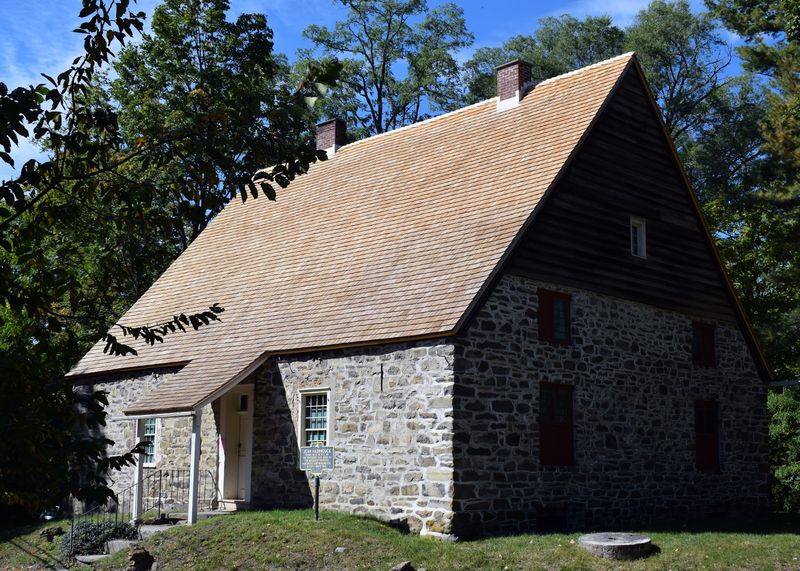
Historic Huguenot Street sits at 81 Huguenot St, New Paltz, NY 12561, in Ulster County in New York’s Hudson Valley. It is listed as a historical landmark and is easy to reach from the center of town.
The site is a restored settlement built around stone houses raised by Huguenot settlers. The site describes seven stone houses, plus a visitor center, a museum shop and living history demonstrations on certain days.
What makes the street unusual is its setting. It runs through the middle of a residential neighborhood, so modern homes sit not far from colonial walls.
That mix does not spoil the experience. Traffic is light, the houses are clearly marked, and the whole place reads like a chapter of early New York history left open on the table.
For Upstate readers used to old buildings vanishing behind new storefronts, this lane is proof that some things do get saved. The houses have been preserved, studied and opened to the public rather than torn down.
So the first stop is simple. Find Huguenot Street, park nearby, and let the old stone do the talking.
2. Refugees Who Planted Roots in the Hudson Valley
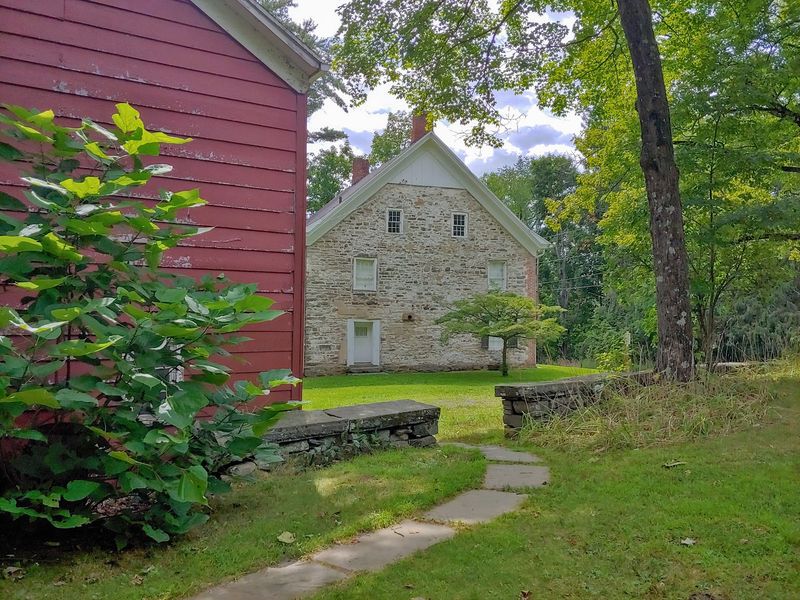
Long before New Paltz became a college town, a group of French Protestants arrived looking for safety. The Huguenots were fleeing religious persecution in France, and they eventually settled this stretch of the Hudson Valley.
The founders are known as the patentees. Tours explain how these families organized the settlement and how life on the street worked in colonial times.
That story is not limited to the founding families. Guides also cover the lives of the enslaved people who lived and worked here, a part of the history that tours reportedly treat with care.
Native American history is part of the picture too. A wigwam has been featured on the grounds, giving families a hands-on look at the people who lived in the region before the settlers came.
Put together, the site offers a fuller look at the early history of New York than a single plaque ever could. It is a story of arrival, labor, faith and survival in one small corner of Ulster County.
The best part is that the backdrop is real, not rebuilt from scratch for a film set.
3. Stone Walls That Outlasted the Centuries
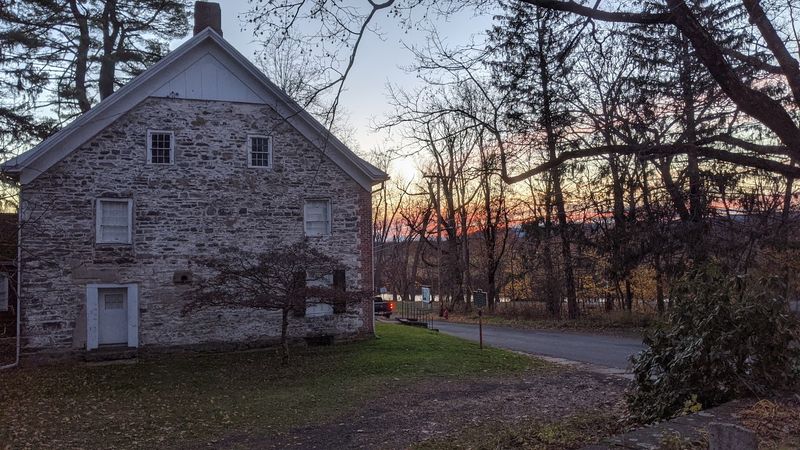
Stone was a smart bet. The large houses on this street were built to last, and they still look impressive today.
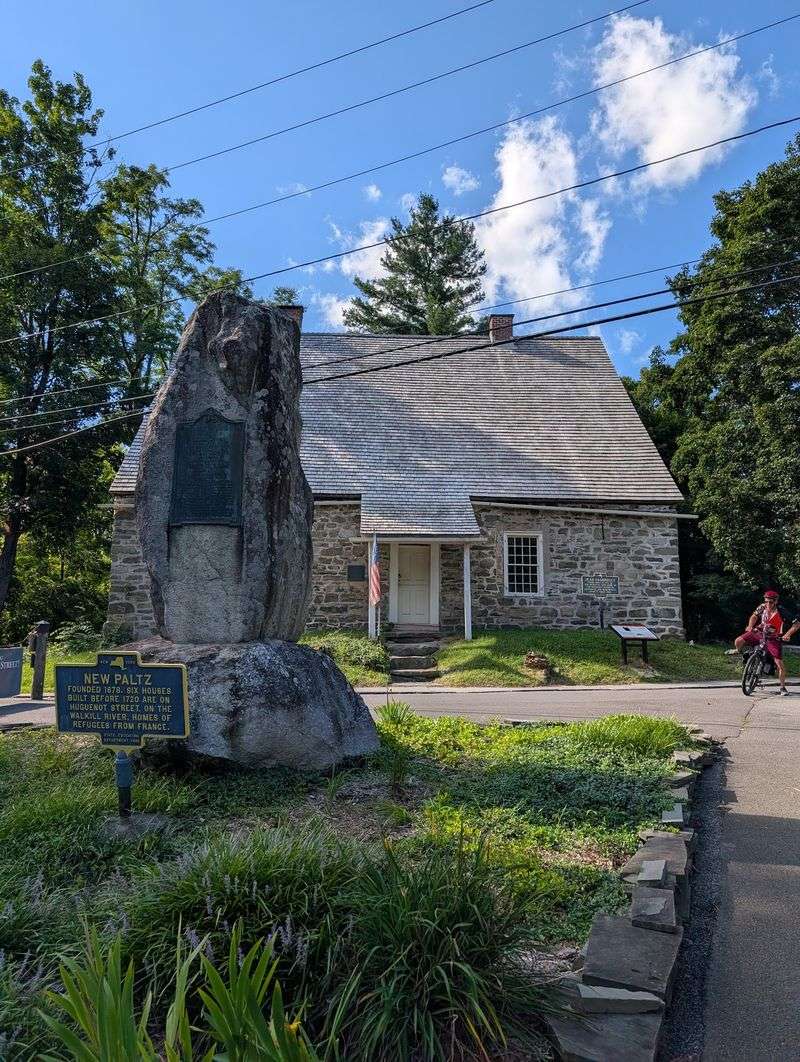
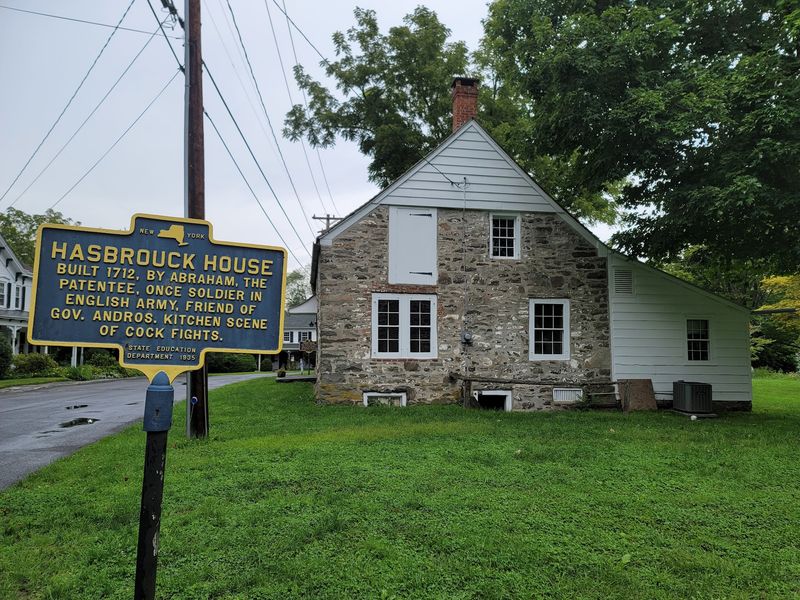
The buildings are few in number but remarkably well preserved. Written descriptions outside each house explain when it was constructed and when later additions were made.
That detail matters, because these homes changed over time. Families expanded them, renovated them and adapted them as generations came and went.
One house at the far end of the street has been renovated several times. A smaller stone structure in front of it is described as the original one-room home.
Seeing the before and after side by side helps make sense of how a frontier family grew into an established household. It is architecture told as a family timeline.
The roofs are newer than the walls, and a few guests notice the contrast. Still, the stonework is the star, and it has held up through more than three hundred years of Hudson Valley winters.
Not bad for houses built without a single power tool.
4. Family Ties That Bring People Back
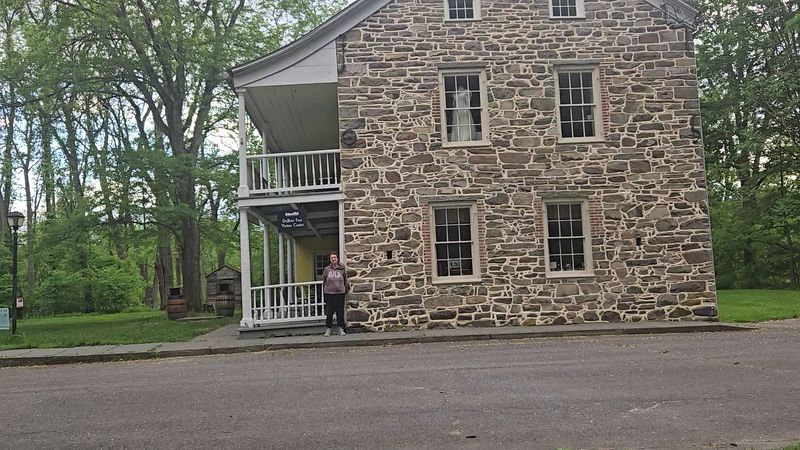
Some guests arrive with a family tree in hand. For descendants of the founding Huguenot families, this street is not just a museum but a homeplace.
One family traced a great-grandfather from the late 1600s straight to a house on this lane. They could point to his home, the small original one-room structure in front of it, and the nearby house where one of his daughters lived with her husband.
Stories like that are what give the street its pull. The names on the houses belong to real households whose descendants still visit.
Genealogy researchers often find that a single connection opens up a whole chapter. Here, the chapter comes with a front door you can actually stand beside.
Even guests with no family link tend to feel the weight of that continuity. Generations of the same families shaped this block, and the block has been kept for those who come after.
That is the kind of tradition New Yorkers rarely get to see in stone.
5. Guides Who Turn Facts Into Stories
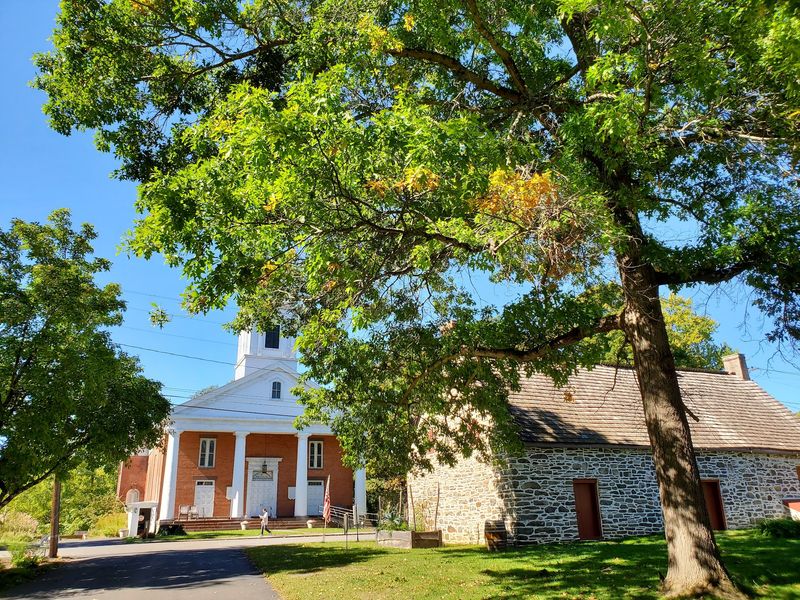
Guided tours are the most talked-about part of a trip here. Knowledgeable guides come up again and again, and for good reason.
One tour scheduled for an hour stretched to nearly twice that because the guests kept asking questions. The guide stayed patient and good-humored the entire time.
Guides cover history, architecture and the reconstruction work done on the buildings. They also connect the street to the surrounding area, so the story does not stop at the property line.
Patience is another strength. Tours have reportedly slowed down for older family members who walk at a gentler pace.
The houses are generally closed unless you join a tour. That makes the guided option the key to seeing interiors.
A guided tour has been listed at about $15, though prices may change, so check the website first. Booking ahead is wise if your day is on a tight schedule.
A good guide leaves you wanting more, and this one tends to deliver a cliffhanger every few doors.
6. The Burial Ground With Very Old Markers
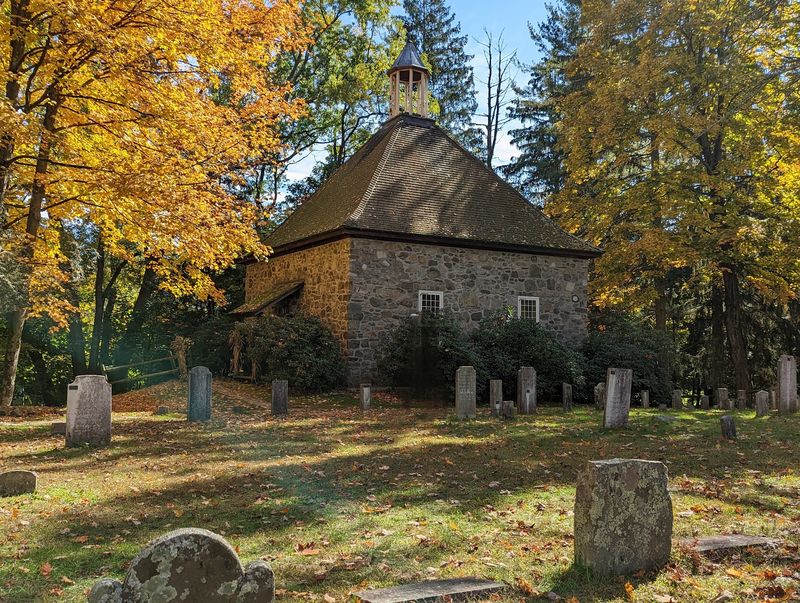
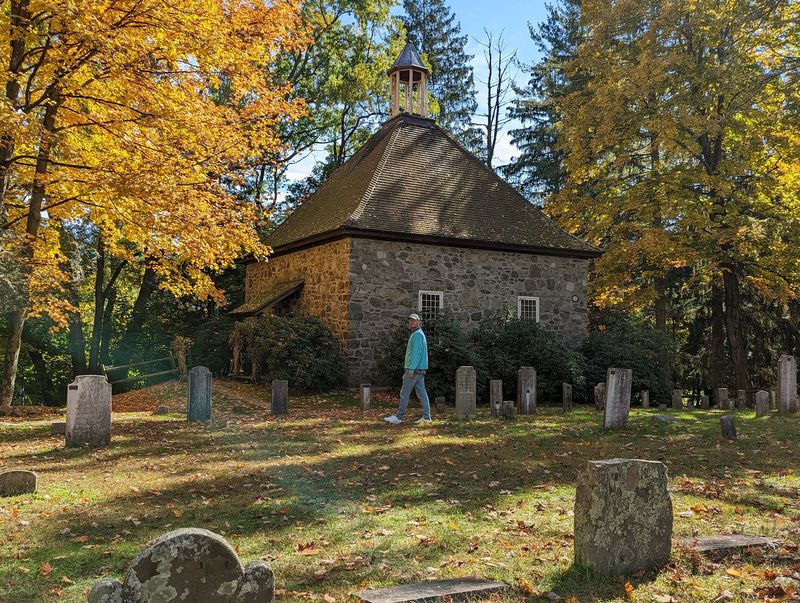
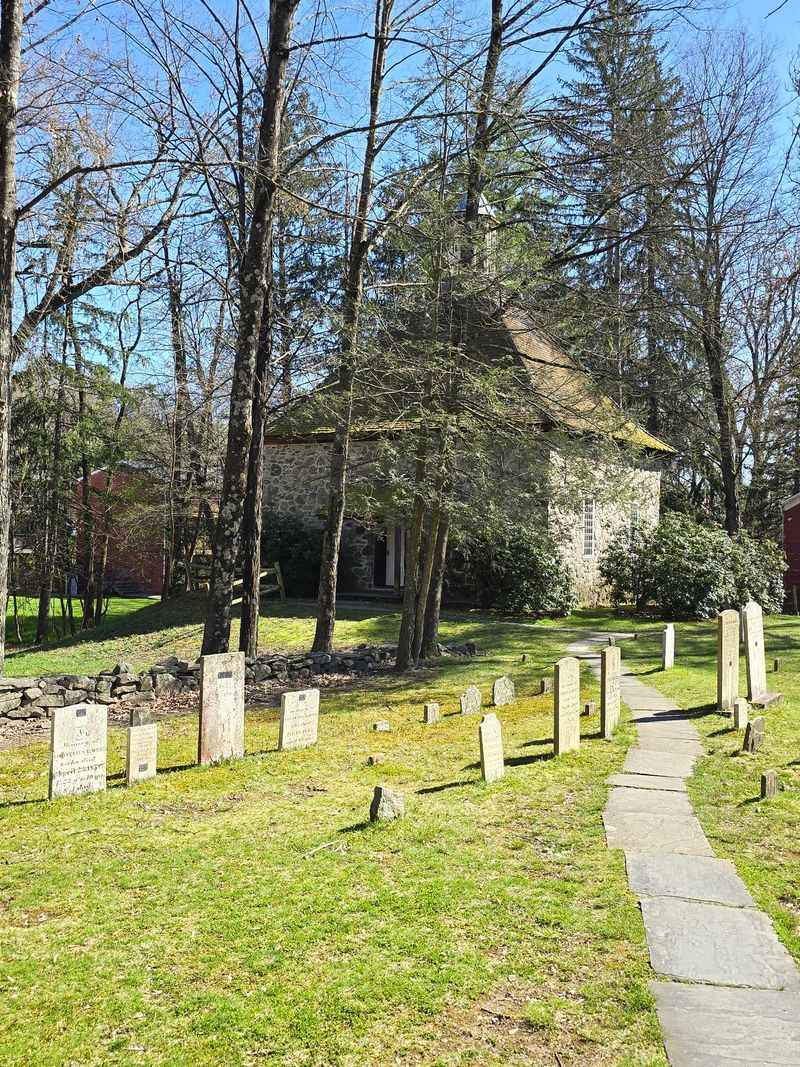
History buffs often linger longest in one spot. The cemetery on Huguenot Street holds graves that reach back to the early colonial era.
It is open for walking even when no tour is running. Off-peak days can feel nearly empty, giving you room to read the markers slowly.
The headstones add names and dates to the story told inside the houses. They link the buildings to the people who actually lived in them.
Without a guide, some details may be harder to piece together. Still, the walk is considered worthwhile on its own.
Be respectful while exploring. Stay on paths, avoid touching fragile stones, and keep voices low.
For anyone tracing ancestors, this is a natural place to look for familiar surnames. The cemetery quietly ties the founding families to the street they built.
It is a short stop with a long memory.
7. An Old Church Rebuilt on Its Roots
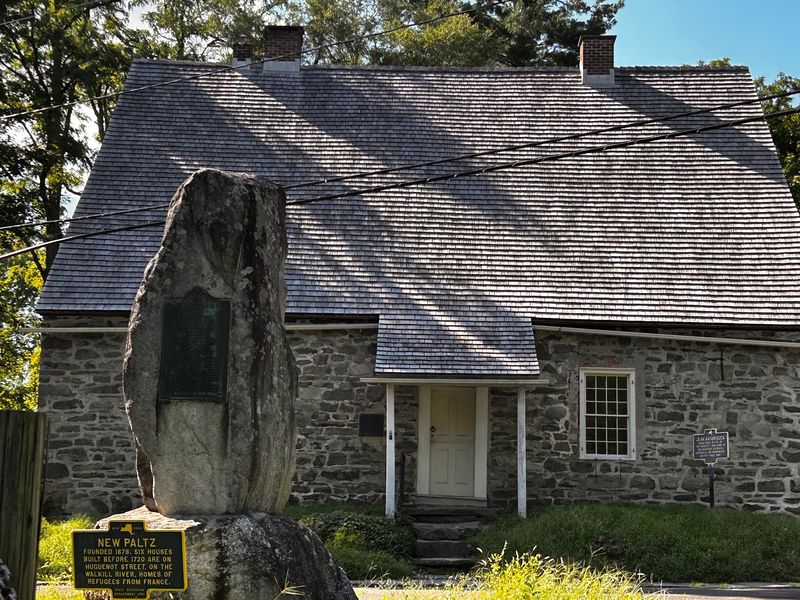
Faith is why the Huguenots crossed an ocean. So it fits that a church holds a place on this street.
The church building here has been renovated and re-created. Tours may include a visit inside, giving guests a look at the center of community life for the settlers.
For refugees who fled persecution over their beliefs, a place of worship meant everything. The church helps explain why this settlement held together.
Its presence also shows how the street worked as a village, not just a row of homes. People gathered here, made decisions here, and marked milestones here.
Guides usually explain how the structure was rebuilt and what parts reflect the original design. That reconstruction story is a lesson in how preservation is done.
Even from the outside, the building completes the picture of colonial life. It ties the houses together with a shared purpose.
Small building, big reason for the whole street.
8. Museum Finds and a Wigwam for Young Explorers
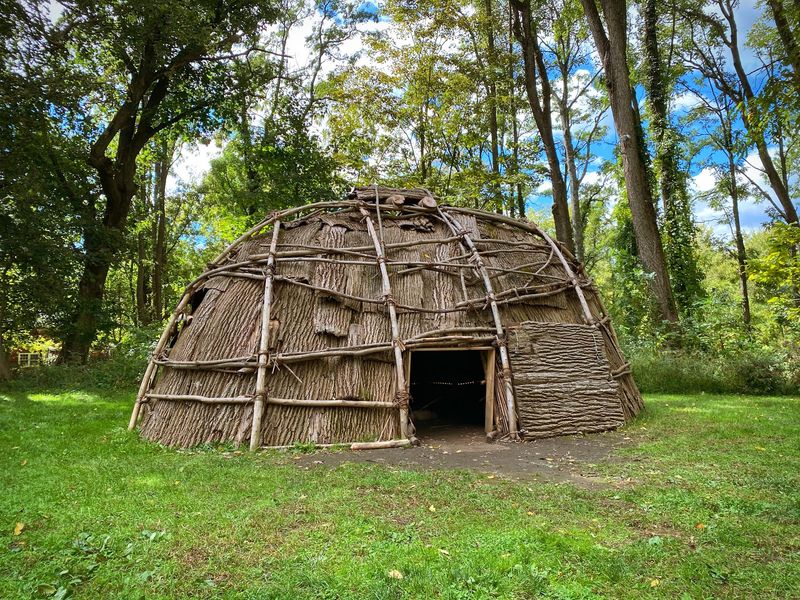
Kids tend to remember one thing above all. On this street, that thing might be the wigwam.
Families have stepped inside a Native American wigwam on the grounds, a hands-on stop that makes history feel less like a textbook. The museum also displays artifacts that bring the colonial period into focus.
Children often enjoy simply walking the lane and spotting the old houses. It is easy for small legs, since everything is within a short stroll.
Reenactments and living history demonstrations happen on certain days. Those can be a highlight for younger guests who like seeing history acted out.
Check the website for scheduled reenactor days. A ticket is needed for those programs.
The pace here suits families well. A visit can fit into an hour or so, leaving plenty of energy for the rest of the day in New Paltz.
It is a history lesson that does not feel like homework.
9. Free Audio Tour for Self-Paced Wandering
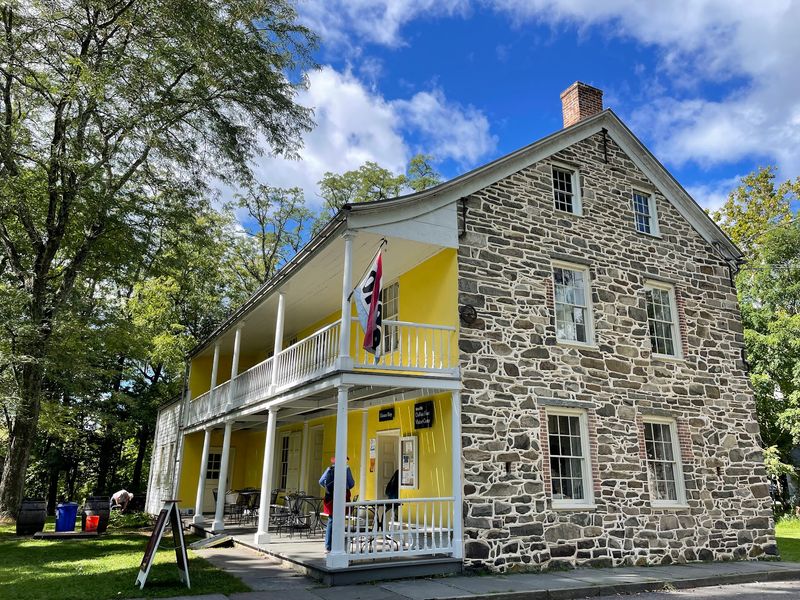
Short on time? The street has a solution in your pocket.
A free app offers a self-guided audio tour. Download it, then walk from house to house to hear the story behind each one.
The audio tour takes under an hour. It can be done anytime, even when guided tours and reenactors are not on the schedule.
Occasionally the audio may skip from one house to the next. The fix is reportedly easy, so it is not a dealbreaker.
The self-guided route will not get you inside the houses. Still, the exteriors are well marked with written descriptions, so you will not miss the basics.
Many guests who choose the app say they would happily return for a guided tour later. It works as a great first look.
Think of it as the trailer before the full feature.
10. Visitor Center and Gift Shop Stop
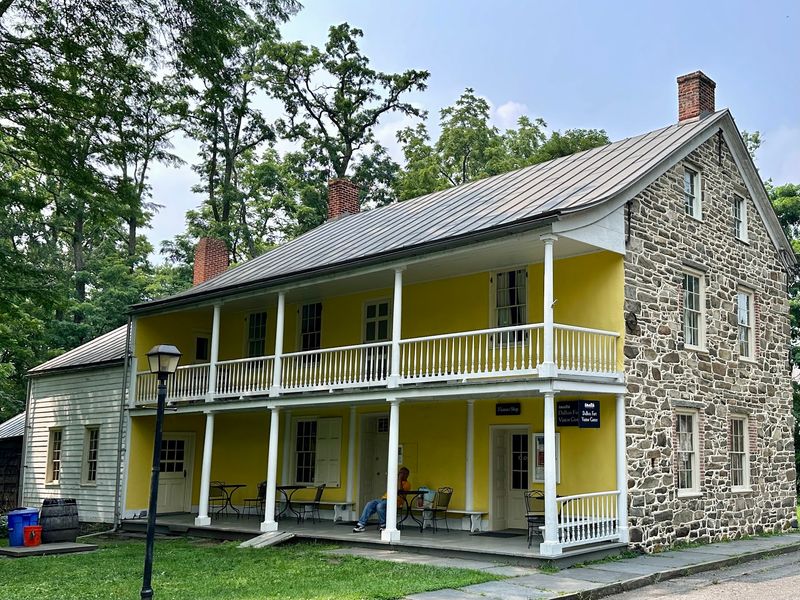
Every good walk needs a starting point. Here, it is the visitor center.
Guests check in, get oriented and book tours at this hub. It is also where you will learn whether a guided tour is running that day.
The gift shop is small but charming. Upstairs space has also been open to browse, giving a peek at an interior even without a full tour.
Staff can point you toward the houses, the cemetery and any special programs. Asking questions here saves time later.
Purchases support a nonprofit museum that keeps these houses standing. That alone makes a small souvenir feel worthwhile.
If no tour is available, the visitor center still helps you plan a self-guided route. The houses are all within easy walking distance.
Start here, and the rest of the street falls neatly into place.
11. Seasonal Evening Programs
The street does not only come alive during daytime hours. Special seasonal events have drawn crowds over the years.
Themed evening tours have been offered in past autumns. Guests who stumbled onto one during a road trip called it a highlight and great value.
Event offerings may change from year to year. The museum website lists current programs and dates.
Reenactments and living history demonstrations are another draw. Costumed interpreters show how colonial life worked on the street.
Some guests expect a full living museum every weekend. In reality, those programs happen on set days, so plan ahead.
Fall is a natural time to combine a visit with a Hudson Valley drive. The heritage story stays the main reason to come, with the season as a bonus.
Timing your trip right can turn a quiet stroll into a memorable night out.
12. Who Will Love This Street Most
Not every attraction suits everyone, and honesty helps. This one rewards curiosity more than spectacle.
History fans, genealogy researchers and families with school-age kids tend to get the most out of it. A relaxing afternoon of sightseeing is the general mood.
The street pairs well with other New Paltz plans. Hikers coming off trails like Bonticou Crag have stopped here afterward.
Some guests find the houses similar to other old homes in the Hudson Valley. Without a tour, interiors stay closed, which can feel limited.
That is why the guided tour matters. It turns a pleasant walk into a much richer story.
For locals across Upstate and the boroughs, the appeal is simple pride. A colonial New York street survived, and its stories are still being told by people who care.
That is reason enough for a day trip.
13. Hours, Tickets and Parking Tips
Plan around the weekend. The site is open Saturday and Sunday from 10 AM to 4 PM and closed Monday through Friday.
Guided tours have been priced around $15, though rates can change. Buying tickets in advance is smart if you are on a schedule.
The grounds and exteriors can be explored with the free audio tour app. Reenactor programs require a ticket, so check the website for dates.
A parking lot is nearby. Walking down the street rather than driving it is the better way to see the houses.
A bike path also connects to the site, a handy option for cyclists. Downtown New Paltz is close enough to walk from as well.
Budget about an hour to an hour and a quarter for a self-guided look. A guided tour can take longer, especially if questions keep coming.
Visit huguenotstreet.org for the latest details before you go.
14. Why the Old Stones Still Matter
Plenty of New York history ended up under parking lots. This street went another way.
Historic Huguenot Street keeps the homes of refugee families standing on the same block where they were built. Its tours, cemetery, church and museum tell a layered story of early New York.
The site is small, and it will not overwhelm anyone. That modest size is part of its charm.
A visit can take an hour or most of an afternoon, depending on your curiosity. Either way, the stories tend to stick.
For the best experience, come on a weekend and join a guided tour. Bring questions, because the guides clearly enjoy them.
New Paltz has hiking, food and plenty to do. Still, this old lane offers something rarer: proof that tradition can survive in plain sight.
Some streets get remodeled. This one got remembered.
Share this story