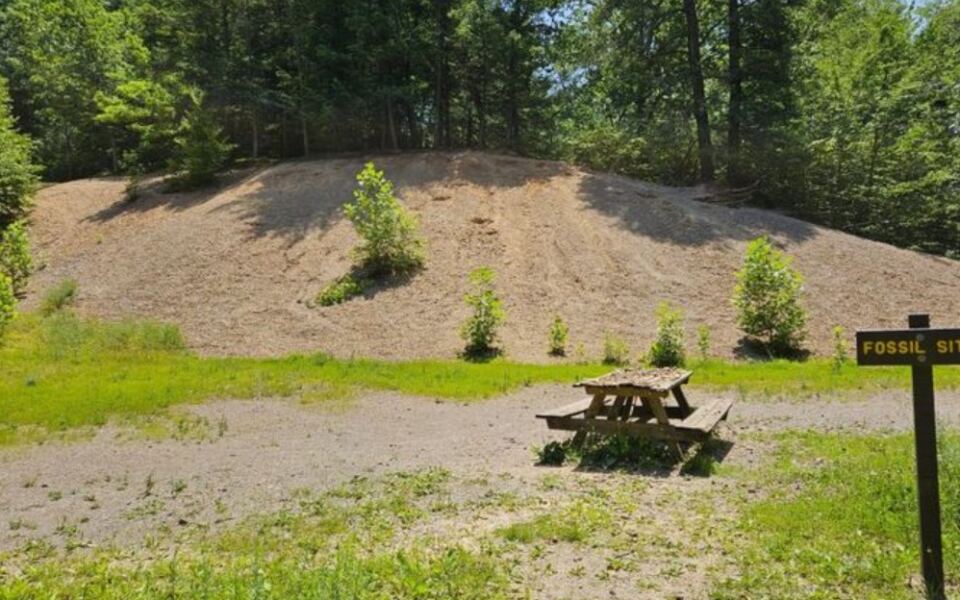
Pennsylvania has an official state fossil, and it’s a trilobite with big bug eyes called Phacops rana. That little sea creature crawled across an ocean floor roughly 390 million years ago. The ocean sat right where farms and highways run today.
I love that detail. It means the ground under the Keystone State is basically a scrapbook from a vanished sea, and later from steamy coal swamps full of giant fern-like plants.
Even better, no museum badge is required to page through it. At some spots, you can grab a hammer, crack open a chunk of shale, and carry home a shell older than the dinosaurs.
I can’t think of a cheaper time machine. A little digging can take you millions of years back, and you never know what might turn up beneath your feet. Pack a brush, some safety goggles, and a little patience.
1. Montour Preserve Fossil Pit
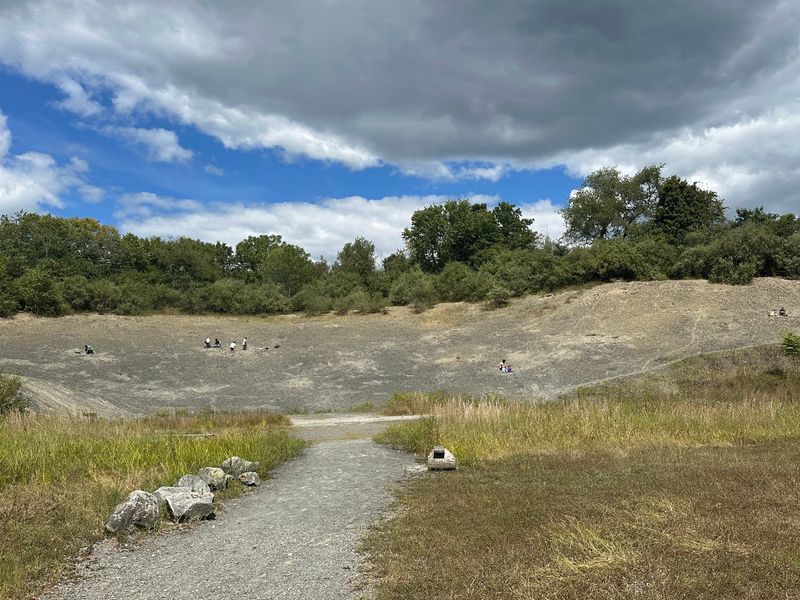
Few places on Earth actually invite you to dig a hole and keep what you find.
Montour Preserve set aside a one-acre pit for exactly that, and it has welcomed collectors since 1972.
The pit is open from dawn till dusk, 365 days a year.
Admission costs nothing, which might be the best deal in the entire fossil business.
So what’s waiting in the rock?
You’re digging through the Mahantango Formation, a layer of Middle Devonian shale that formed around 395 million years ago.
Back then, this corner of Pennsylvania sat under an ocean.
The creatures that lived on that seafloor are now tucked inside the gray stone, waiting for someone curious to split it open.
Brachiopods are the most likely reward, and they look a lot like tiny clams.
You may also spot crinoid stems, which resemble stacks of little stone buttons.
Horn corals, bryozoans, and trilobite fragments turn up too.
A full trilobite is a lucky day, but even a partial tail feels like winning a prize.
Bring the right gear and your day gets much easier.
A rock hammer, a chisel, safety goggles, and a small brush cover the basics.
Goggles matter more than you’d think.
Shale chips fly in surprising directions when you tap them, and your eyes deserve better than a souvenir splinter.
Leave your pup at home for this trip.
Service dogs are welcome, but other dogs are not allowed at the site.
Before or after digging, swing by the Visitor Center on Preserve Road.
It offers educational materials and fossil specimens that help you figure out what you just pulled from the ground.
Here’s a tip for beginners.
Look at the flat surfaces of split rocks, because shells often show up as faint ridged shapes rather than obvious lumps.
Families love this spot because success comes quickly.
Kids can find a real ancient sea creature within minutes, and that tends to spark questions for the whole ride home.
Address: 160 Sportsmans Road, Danville, PA 17821
2. Swatara State Park
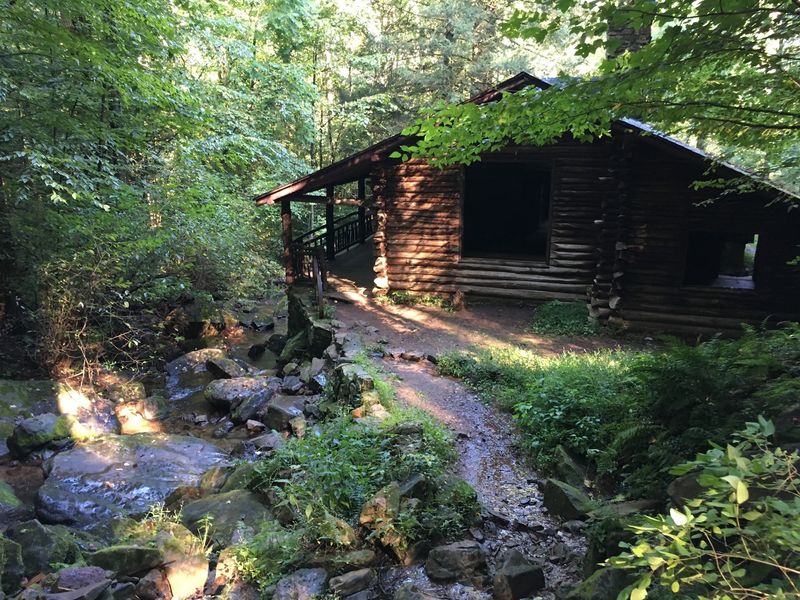
Highway construction rarely gives anything back, but Interstate 81 handed Lebanon County a gift.
When crews dug through fossil-rich rock, PennDOT moved some of that material to Swatara State Park for public searching.
The result is a designated collecting area you can visit year-round.
Even better, park rules let you keep the fossils you find.
Getting there takes a short walk.
Park at the Swopes Valley Trailhead lot off Swopes Valley Road, then follow the Bear Hole Trail to the site.
The rocks here come from the Middle Devonian Period, roughly 375 million years ago.
A shallow sea covered the region then, and it was crowded with shelled and spiny life.
Brachiopods and crinoids are common finds.
Bryozoans show up too, looking like tiny lacy nets pressed into stone.
Keep your eyes open for stelleroids, the starfish relatives of that ancient sea.
They’re a rarer treat, so finding one is serious bragging material.
Then there’s the headliner.
Trilobites appear here, including Phacops rana, Pennsylvania’s official state fossil.
Phacops rana had large compound eyes made of many tiny lenses.
Holding one in your palm means meeting a creature that watched the ocean floor long before trees covered land.
You won’t need a heavy toolkit.
Small hand tools work fine, and gloved hands can do plenty of sorting on their own.
Gloves are smart because shale edges can be sharp.
They also keep your fingers happier on chilly days in the woods.
Try working slowly through the pile rather than smashing big chunks.
Splitting rocks along their natural layers often reveals the cleanest fossil surfaces.
Pair your hunt with the rest of the park for a full outing.
Swatara covers a broad stretch of woods and creek, so your rock trip can easily become a hiking day.
Address: Swopes Valley Trailhead, Swopes Valley Road, Swatara State Park, Lebanon County, PA
3. Pennsylvania State Forests
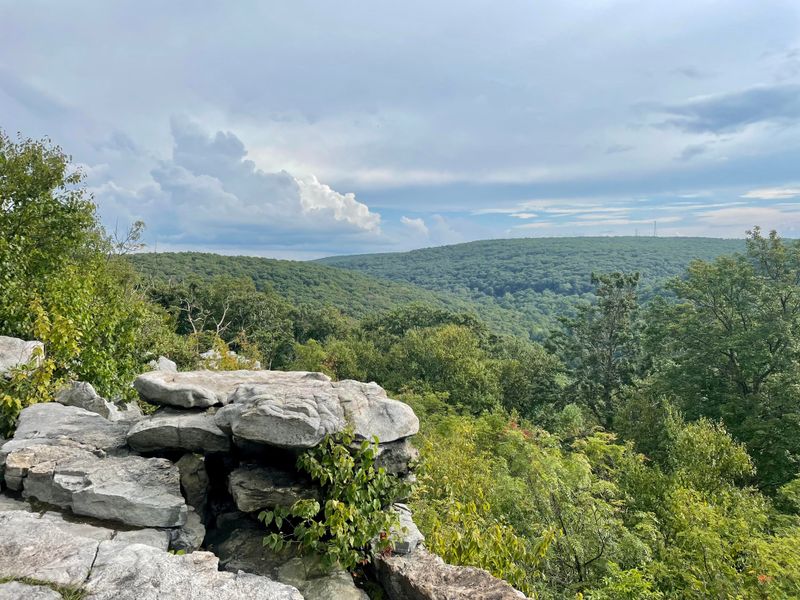
A permit that costs nothing opens up millions of acres of rock to explore.
That’s the deal Pennsylvania offers fossil fans in its state forest system.
Surface collecting of rocks, minerals, and fossils for personal use is permitted in state forests.
You just need a free permit from the Pennsylvania Bureau of Forestry first.
Notice the words surface collecting.
You’re picking up what nature has already exposed, not tearing into hillsides with a shovel.
Why is this such a big opportunity?
The state forests stretch across a huge range of landscapes, and each one sits on different rock.
That variety means your finds change depending on where you go.
One forest might hold sea shells, while another holds plant fossils from old coal swamps.
Both worlds belong to the Paleozoic Era.
During that long stretch of time, Pennsylvania spent ages under tropical seas and later in steamy swamps.
The Laurel Highlands are a popular area for rockhounding.
Its ridges and streams expose plenty of stone for curious eyes.
Stream beds are smart places to look.
Moving water tumbles rocks around and often uncovers fossil surfaces on its own.
Do a little homework before you head out.
A geologic map of your chosen forest can show you which rock layers sit nearby.
Once you know the layer, you can guess the fossils.
Marine shale suggests shells, while coal-bearing rock hints at ferns and bark impressions.
Keep your permit handy during your trip.
Rules can vary, so read the conditions carefully and stick to personal collecting.
A hand lens makes this hunt more fun.
Tiny bryozoans and plant details jump out once they’re magnified.
The best part might be the setting.
Instead of a roadside, you’re searching under tall trees with birds overhead and trails all around you.
Address: Pennsylvania state forests (specific locations vary; contact DCNR for access information)
4. Allegheny National Forest
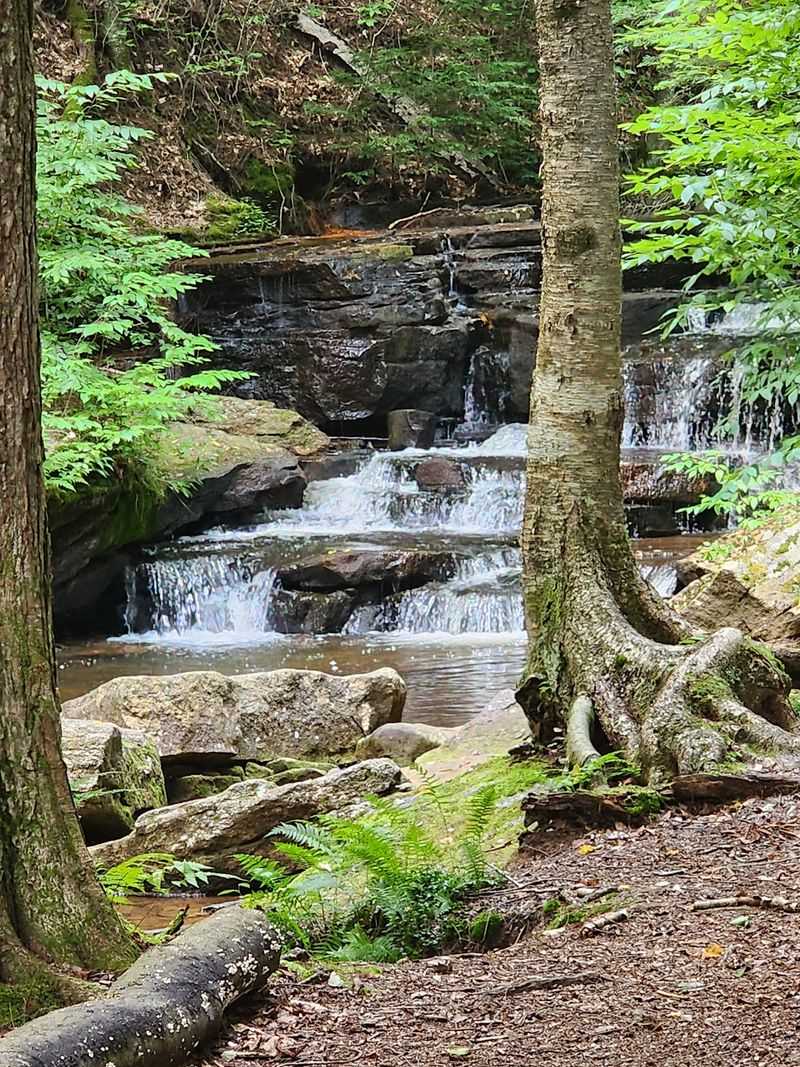
Twenty-five pounds sounds like a lot of rocks until you start finding fossils.
That’s the daily limit for casual collecting in Allegheny National Forest, and you might bump into it faster than expected.
The rules are refreshingly simple.
Casual collecting of common invertebrate and plant fossils is allowed without a permit.
Personal use is the key phrase.
You can take up to 25 pounds per day and no more than 100 pounds per year.
Tools stay small and old-school here.
Only non-powered hand tools are allowed, so leave the power drill in the garage.
What will you find?
Invertebrate fossil casts and molds are common finds in the forest.
A mold is the hollow print an ancient shell left behind.
A cast forms when minerals later fill that hollow, making a stone copy of the original creature.
Learning the difference makes your hunt more satisfying.
You’ll start spotting faint shell shapes that most hikers walk right past.
The forest covers a huge chunk of northwestern Pennsylvania.
Collecting is permitted on most National Forest System lands inside its borders.
That much room means you can hunt and hike in one trip.
A creek bank or rocky trail edge can become your personal dig site.
Remember that some areas may have special rules.
Checking with the forest headquarters in Warren before your visit is a smart move.
Bring a lightweight scale or a rough sense of your bag’s heft.
Staying under the daily limit keeps your collecting both legal and fair.
Wear sturdy boots for this one.
Wet rocks and uneven ground are part of the adventure in big wild forests.
Pack a snack and plan to wander.
The forest rewards patience, and slow walkers usually notice the most interesting stones.
Address: Allegheny National Forest Headquarters, 112 Skyline Drive, Warren, PA 16365
5. Dubois Area Fossil Sites
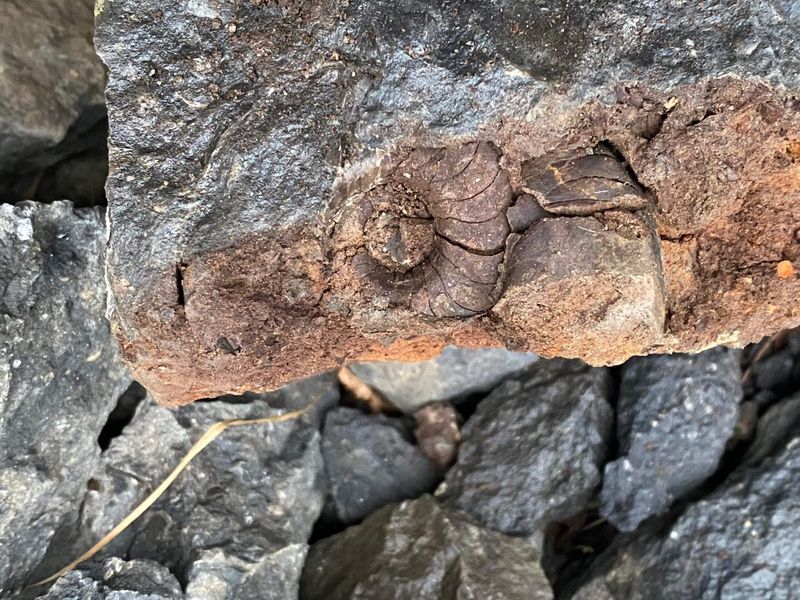
Snails older than the dinosaurs are hanging around DuBois.
They’re tucked inside the Brush Creek Limestone, a rock layer from the Pennsylvanian Period.
Collector guides list several spots in the area.
Each one exposes the same fossil-rich layer in a slightly different setting.
One is a borrow pit about 2.5 kilometers south of the DuBois line on US119.
A borrow pit is simply a place where crews dug out dirt and rock for construction.
Another sits along railroad tracks south of the tunnel under South Highland Street.
A third lies on US119 in Jefferson County, about 6 kilometers west-southwest of DuBois.
Gastropods are the common stars here.
These ancient sea snails often show their spiral shapes clearly in the limestone.
Corals turn up as well.
They’re a reminder that warm sea water once covered this hilly part of the state.
Interestingly, the Brush Creek layer also shows up near Ambridge.
Finding it here too shows how far that ancient sea spread across western Pennsylvania.
That’s a neat thing to share with kids.
Two sites hours apart can hold pieces of the same vanished ocean.
Now for the serious part.
Railroad tracks are private property and dangerous, so never collect on or beside active rail lines without permission.
Highway sites need care too.
Park safely off the road and stay well away from traffic while you search.
Since these sites come from older collector guides, conditions may have changed.
Check access and posted signs before you start swinging a hammer.
Limestone can be tough to split.
A heavier hammer and a chisel make freeing a snail shell much easier.
Address: US119, about 2.5 km south of the DuBois line, Clearfield County, PA
6. Penfield Area Borrow Pit
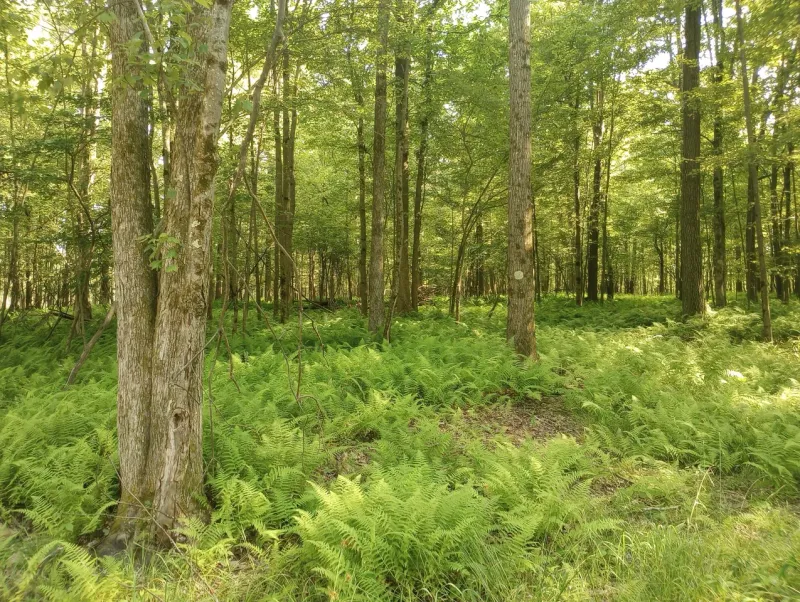
Saving a younger world for last feels right.
The borrow pit near Penfield holds fossils from the Mississippian Period, which came just before Pennsylvania’s famous coal age.
You’ll find it about 7 kilometers northwest of Penfield on PA153.
It sits on Boone Mountain, in a borrow pit on the southwest side of the road.
The fossils hide in shale deposits.
Shale splits into thin sheets, which is great news for anyone hoping to reveal a flat leaf print.
Plant fossils are a highlight here.
Collectors report Adrianites and Lepidodendropsis, early relatives in the story of ancient forests.
Lepidodendropsis is a mouthful, so think of it as an early scale tree cousin.
Its bark patterns can look like neat rows of tiny shapes.
Marine fossils share the same pit.
Brachiopods, crinoid columnals, and bryozoa all appear in the rock.
Bivalves show up too, including Cypricardinia.
Those are clam-like creatures that lived in the shallow water nearby.
So you get land plants and sea life side by side.
It’s a snapshot of a coastline where forests met the ocean.
Crinoid columnals are fun for beginners.
These little round discs were pieces of a sea lily’s stem, and they often look like stone beads.
Bring a flat pry tool or putty knife for this shale.
Gently lifting layers apart works better than smashing them.
Information on this site comes from older collector guides, so confirm current access before your trip.
Respect any posted signs and stay clear of traffic on PA153.
Wrap plant fossils in newspaper for the ride home.
Shale can flake, and nobody wants a 330-million-year-old leaf crumbling in the cup holder.
Address: PA153 on Boone Mountain, about 7 km northwest of Penfield, Clearfield County, PA
7. Red Hill Fossil Site
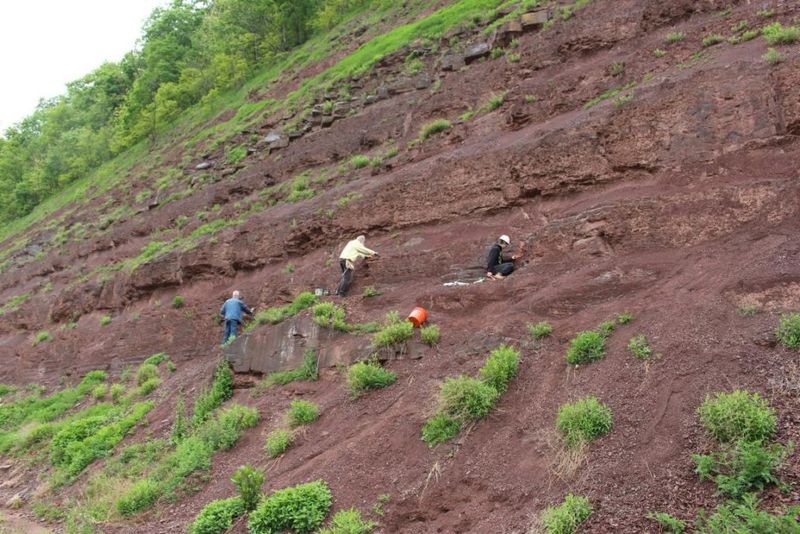
Picture a muddy river 365 million years ago, packed with armored fish and some of the first animals brave enough to crawl onto land.
Red Hill, a reddish rock cut along Route 120 near Hyner in Clinton County, preserves that exact moment.
It’s one of those places where an ordinary-looking roadside outcrop holds a remarkable piece of Earth’s history.
Scientists from the Academy of Natural Sciences in Philadelphia found Hynerpeton here, one of the oldest four-legged animals ever discovered in North America.
This ancient creature lived during the Late Devonian period, when life was beginning to make the transition from water to land.
Its discovery helped scientists better understand the early evolution of tetrapods, the group of vertebrates that eventually gave rise to amphibians, reptiles, birds, and mammals.
The fossils found at Red Hill offer a glimpse into an ecosystem that existed long before dinosaurs appeared.
Fish scales and plant bits still turn up in the crumbly red layers, giving visitors a chance to see traces of that prehistoric environment.
The exposed rock also makes it easier to imagine what this part of Pennsylvania looked like millions of years ago, when shallow waterways and muddy habitats supported an unusual mix of life.
Even without finding a fossil yourself, there’s something fascinating about standing beside a landscape that has helped scientists piece together such an important chapter in evolution.
Stay well off the busy highway and never climb the steep face.
Collect only loose pieces at the base, and take photos of anything unusual.
A little patience and curiosity can make this roadside stop surprisingly rewarding, especially if you enjoy geology, fossils, or the stories hidden in Pennsylvania’s landscape.
Address: Along PA Route 120, approximately 3 miles west of Hyner, Clinton County, PA 17738.
Share this story