A 40-foot deer made from scrap pipes and wire stands guard over a rusting iron mill. Local artists built it in secret back in 1997. Nobody asked permission first.
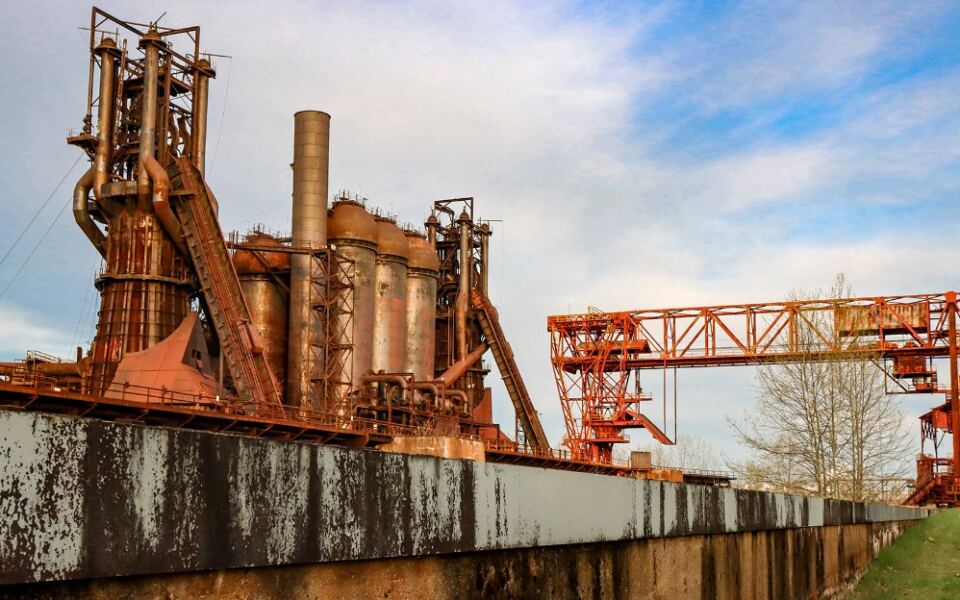
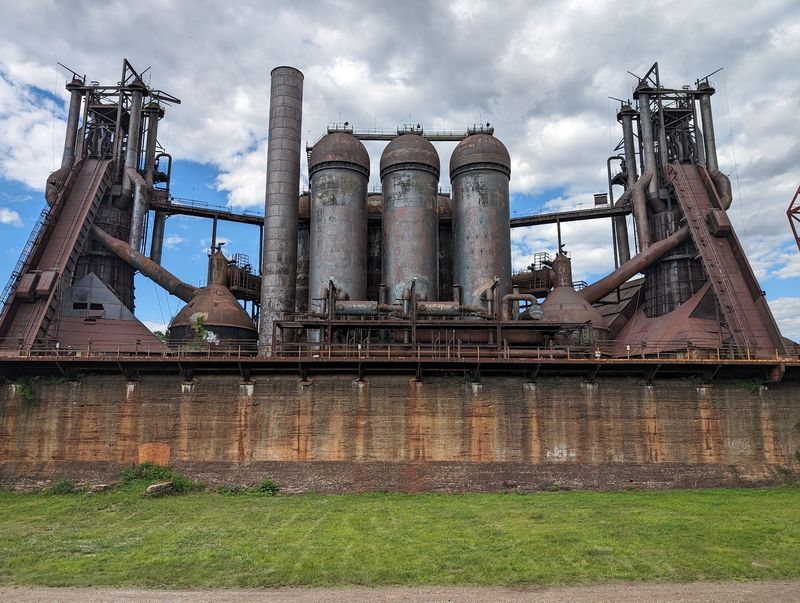
That deer shares the grounds with two furnaces that rise 92 feet into the sky. Their steel skins are two and a half inches thick. They stopped running in 1978, and they still look ready to roar.
I like how this Pennsylvania site refuses to pick one mood. It feels part history lesson, part art show, and part wild garden. Plants now climb over spots where molten iron once flowed.
I can’t imagine standing beside something that once made over a thousand tons of iron a day. Would you feel tiny, amazed, or both? I believe most people would feel all of that at once.
1. Two Rusty Giants Are Waiting To Make You Feel Very Small
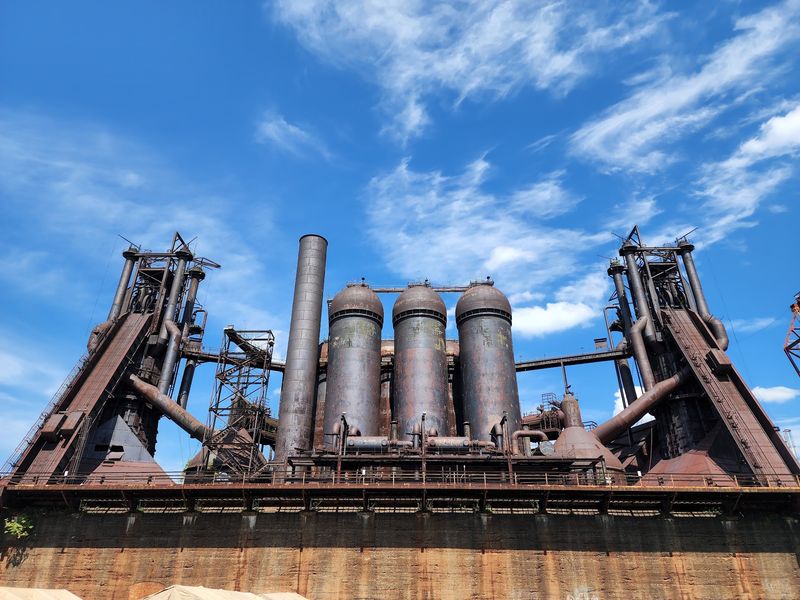
Ninety-two feet of rusted steel tends to grab your attention fast.
The Carrie Blast Furnaces National Historic Landmark keeps two of these giants standing, known as Furnaces #6 and #7.
Both were built in 1907 with steel plate two and a half inches thick.
Inside, refractory brick lined the walls to handle wild heat.
That’s some serious armor for a building.
Here’s what makes them rare.
They’re the only non-operating, pre-World War II blast furnaces left in the region.
Most of their cousins got torn down long ago.
Furnaces #6 and #7 shut down in 1978 after decades of hard work.
The wider site kept going until 1984.
Then the whole place went quiet.
Today, the rust gives everything a deep orange and brown glow.
Pipes twist overhead like giant metal spaghetti.
Ladders and walkways cling to the sides in every direction.
Bring your camera, but also bring patience.
Photos rarely capture how huge everything feels in person.
Standing near the base, you might just tilt your head back and stay that way for a while.
Your neck will forgive you eventually.
2. Yes, The Furnaces Were Named After Somebody’s Daughter
Carrie Clark never poured iron, but her name stuck to one of the biggest mills around.
She was the daughter of William Clark, a well-known figure in the iron business.
Naming furnaces after female family members was common in the late 1800s.
So mills across the country carried names like little family portraits.
It’s oddly sweet for such a tough place.
The first Carrie Furnaces went up in 1884.
Andrew Carnegie added them to his Homestead Steel Works in 1898.
Then U.S.
Steel took over in 1901.
That timing matters.
Around 1910, Pittsburgh was one of the country’s leading steel-producing centers.
The Homestead Works played a big part in that story.
The furnaces turned iron ore into molten iron, which later became steel.
At its peak, the site cranked out between 1,000 and 1,250 tons of iron per day.
Bridges, buildings, and railroads across America needed that metal badly.
So when you look at these rusty towers, you’re seeing a piece of the country’s backbone.
Not bad for a mill named after a young woman who probably never worked a shift there.
3. The Industrial Tour Explains How Rocks Turned Into Liquid Metal
Iron ore, heat, and a whole lot of muscle.
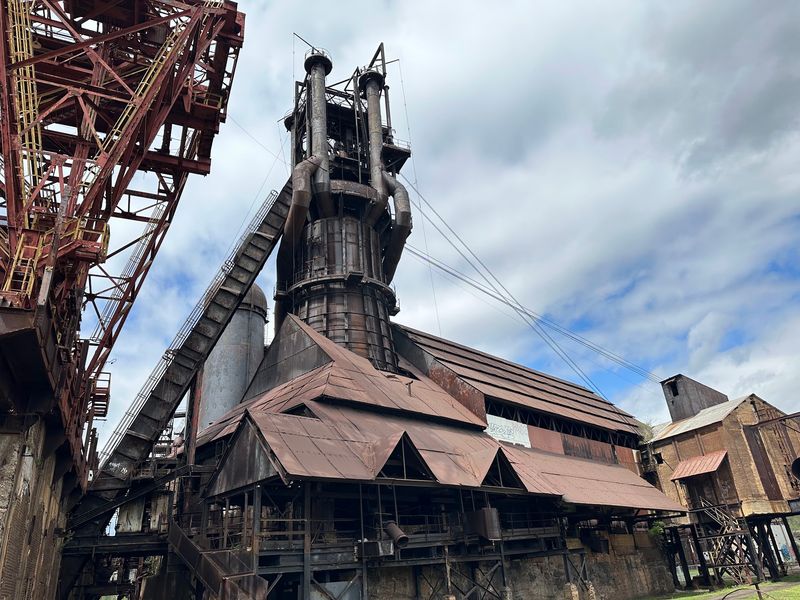
That’s the recipe the Industrial Tour breaks down for you at the Carrie Blast Furnaces National Historic Landmark.
The guided tour usually runs about two hours.
It covers the iron-making technology, plus the workers who kept those furnaces fed.
You’ll learn how raw materials became glowing molten iron.
The worker side of the story hits hardest.
These folks faced long shifts, brutal heat, and loud machines.
The tour talks about their culture and daily lives, not just the equipment.
Some guides have personal ties to the mill industry.
That adds a real, human layer to the history lesson.
Tours run seasonally, generally from May through October.
Weekends and Fridays are the usual days, so plan around that schedule.
Most of the walking happens outdoors on uneven ground.
Sneakers or boots are a smart pick.
Open-toed shoes and high heels aren’t allowed for safety reasons.
Pack sunscreen and water on hot days, since there’s not much shade in spots.
Preservation work is ongoing too, so each visit can look a little different.
That just gives you a reason to come back.
4. Good Luck Ignoring The 40-Foot Metal Deer
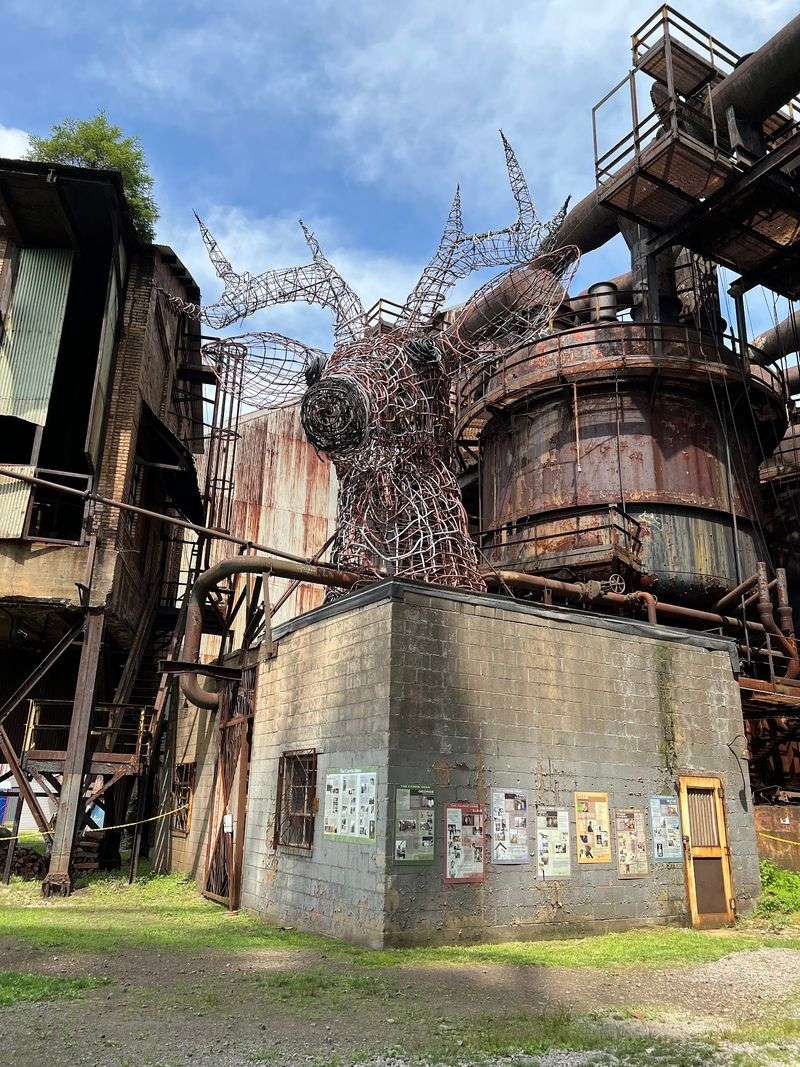
Back in 1997, a group of local artists snuck onto the abandoned mill grounds with a bold idea.
They gathered salvaged pipes, tubing, and wires found right on the site.
What they built became the Carrie Deer.
It stands about 40 feet tall and looks like it wandered out of a dream.
Nobody gave them a permit.
That’s why folks call it guerilla art.
The artists created it quietly, and it surprised plenty of people once word got out.
Somehow the deer survived.
Now it’s one of the most famous pieces at the Carrie Blast Furnaces National Historic Landmark.
It even plays a starring role on the Arts and Grounds Tour.
I love that it’s made from the mill’s own leftovers.
The scrap that once helped make iron now forms antlers and a proud head.
It’s a great reminder that creativity can grow anywhere.
Even an empty steel yard can turn into a gallery when the right people show up.
Snap a photo, but don’t expect the deer to blink.
It’s been holding that pose for decades.
5. Nature Moved Back In And Started A Garden
Plants are sneaky.
Give them a few decades and an empty mill, and they’ll take over without asking.
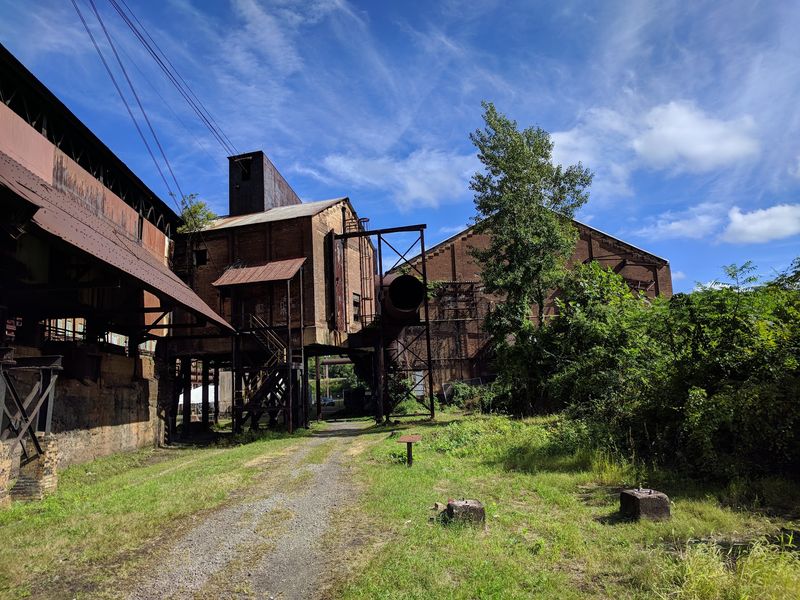
The Iron Garden sits right where the site’s first two furnaces once stood.
Now greenery grows around old foundations and rusty bits of metal.
It’s a strange and lovely mix.
Soft leaves brush against hard steel.
Wildflowers pop up where workers once dodged sparks and heat.
The Arts and Grounds Tour spends time here.
It shows how the land changed after the mill closed.
You’ll see how nature and industry now share the same space.
Photographers tend to love this spot for obvious reasons.
The colors shift with the seasons, from bright green to golden tones.
Rust looks extra dramatic next to fresh growth.
Since the grounds get wild in places, a few tips help.
Long pants and bug spray are smart in summer.
Mosquitoes enjoy the garden just as much as people do.
Take a slow walk and look closely at the ground.
Little bits of the mill’s past still poke through the plants.
It’s like a treasure hunt where the treasure is history.
6. Hands-On Workshops Let You Get Creative With Metal And Paint
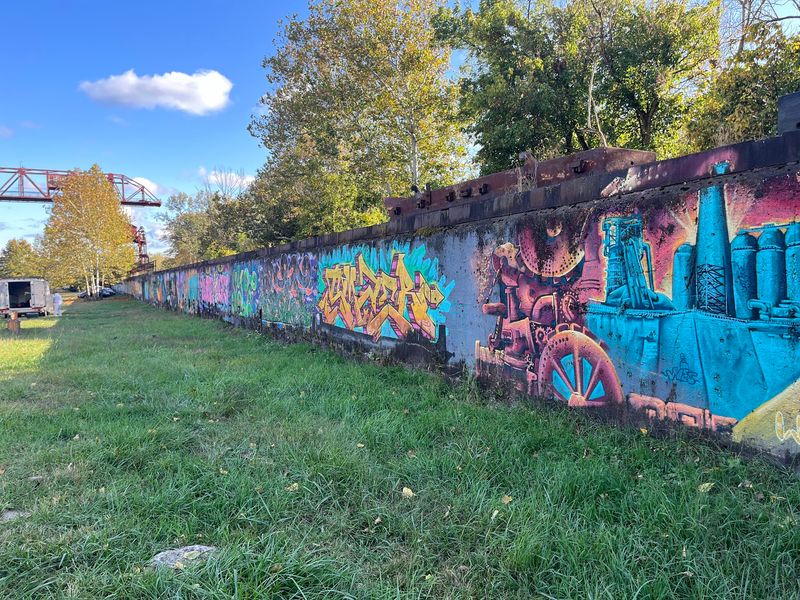
Looking is fun, but making something is even better.
Rivers of Steel runs hands-on workshops at the site for curious beginners.
Options include metal casting, blacksmithing, interactive graffiti art, and photo safaris.
You don’t need any experience to sign up.
That’s great news for anyone who’s never held a hammer.
Metal casting feels fitting at a place built to melt iron.
You get a tiny taste of what this ground was made for, minus the dangerous parts.
The graffiti workshops lean into the site’s artsy side.
Colorful murals already brighten parts of the grounds.
Trying spray paint yourself makes you appreciate that skill fast.
Photo safaris give camera fans more time to explore angles and details.
Rusty textures, tall towers, and twisting pipes make wonderful subjects for any lens.
Workshop schedules change, so check ahead before planning a trip.
Spots can be limited, which makes signing up early a good habit.
Walking away with something you made at a National Historic Landmark?
That’s a pretty cool souvenir.
It definitely beats another fridge magnet, though the gift shop has goodies too.
7. Festivals Turn The Old Mill Into A Party Spot
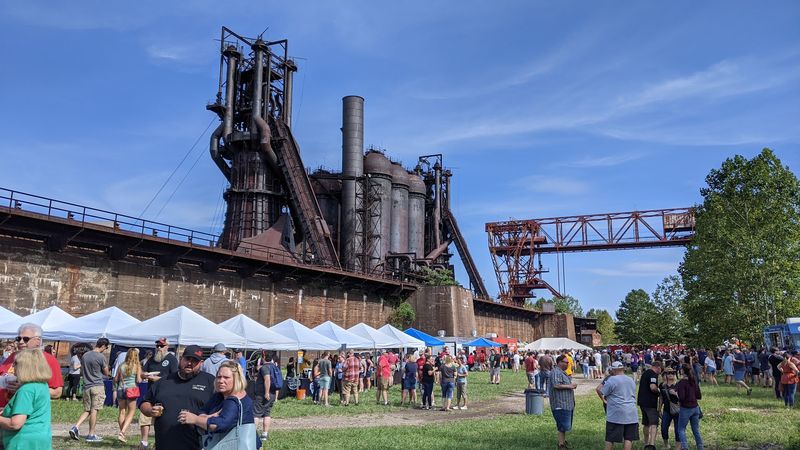
Rusty furnaces make an amazing backdrop for a good time.
The Carrie Blast Furnaces host festivals, events, and exhibitions throughout the year.
The Pittsburgh Irish Festival has called this place home.
Car and motorcycle shows have rolled through as well.
Each event gives the old mill a fresh burst of energy.
Food usually isn’t sold at the site on regular days.
During festivals, though, food trucks sometimes pull in.
That’s a nice bonus after a long walk.
Exhibitions add another layer.
Art and history displays pop up in a setting that feels nothing like a normal museum.
No polished floors here, just character.
The space also works as a venue for weddings, corporate gatherings, and social events.
Filmmakers have used it as a location too.
You can see why.
Imagine wedding photos with 92-foot furnaces behind the happy couple.
That’s certainly memorable.
Keep an eye on the event calendar if you want to catch something special.
Events often book up, so planning ahead pays off.
The furnaces have hosted plenty of busy days before, and they’re clearly not finished yet.
8. Finding It Is Easier Than Pronouncing Monongahela
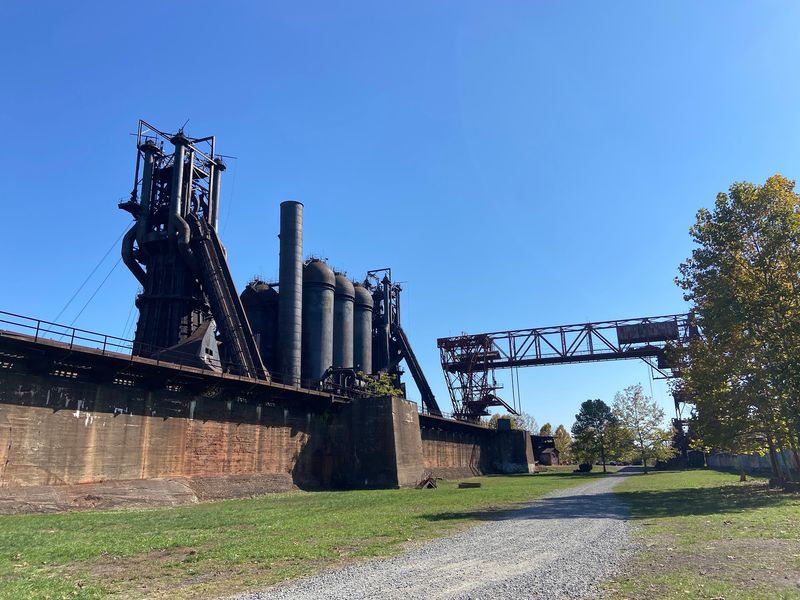
The Monongahela River curls right past this spot, giving the furnaces a scenic riverside home.
The site stretches across the communities of Swissvale and Rankin in Pennsylvania.
For your GPS, use 801 Carrie Furnace Boulevard, Pittsburgh, PA 15218.
It sits just a short drive from downtown Pittsburgh.
Across the river once stood the massive Homestead Steel Works.
The historic Hot Metal Bridge connected Carrie Furnaces to that mill.
Molten iron literally crossed the water to become steel.
That connection ties into a big chapter of American labor history.
The Homestead Works was linked to the 1892 Homestead Strike, a major clash between workers and owners.
Handicapped parking is available on site.
Keep in mind the tour grounds themselves aren’t wheelchair accessible because of the rough terrain.
Facilities are pretty basic.
Portable bathrooms and wash stations cover the needs, while running water is limited.
Use the restroom before your tour starts.
Hours shift with the season, and tours usually run May through October.
Check the schedule before heading out.
Showing up to locked gates is a sad kind of adventure.
9. Preservation Work Means The Story Keeps Growing
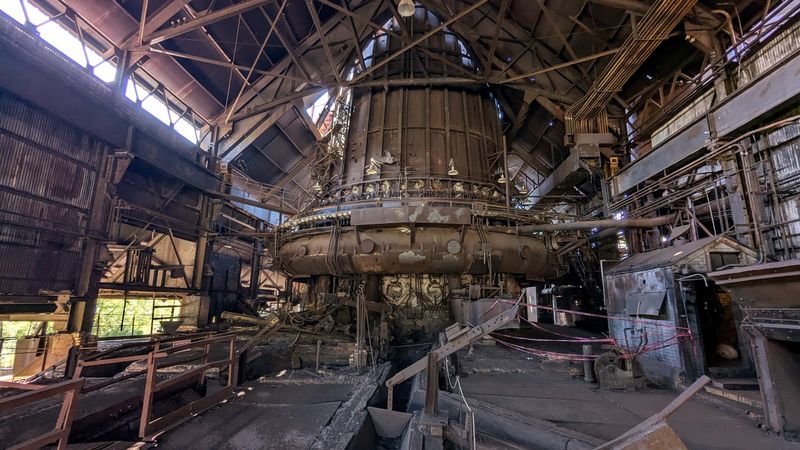
A site this old needs some tender loving care.
The Carrie Blast Furnaces National Historic Landmark earned its official title in 2006.
The nonprofit Rivers of Steel Heritage Corporation began managing the place in 2010.
Their goal is to protect this industrial legacy for future visitors.
Stabilization and preservation work is happening right now.
Crews are working to keep the structures safe and standing.
The plan also aims to open up more areas for visitors over time.
So your tour might include spots that are under repair.
Some sections could be closed while work continues.
That’s part of saving a place this huge.
I like knowing my visit helps support that effort.
Tickets, workshops, and gift shop purchases all feed into keeping the site alive.
Think about it.
Most mills like this were knocked down and forgotten.
These two furnaces got a second life instead.
Pennsylvania has plenty of history, but few spots let you stand inside it like this.
Visit once, and you’ll probably want to see what changes next.
These rusty giants have more stories to tell.
Share this story