Most Valley drivers blast past the Camp Verde exits on I-17 without a second thought. Just off that freeway sits a frontier Army post where original buildings still stand and the rooms are set up as if the officers might return any minute. You can walk right inside, not just peer through a rope.
The fort never had a wall around it, which surprises almost everyone who shows up expecting a stockade. The rangers here know the backstory of nearly every object on display, and they love sharing it. It takes about an hour or two to see everything, so it fits neatly into a Sedona run or a lazy Saturday.
Keep reading for the history, the buildings worth your time, the events that bring the parade field to life, and the practical details that help you plan the trip.
1. A Frontier Post Hiding Off I-17
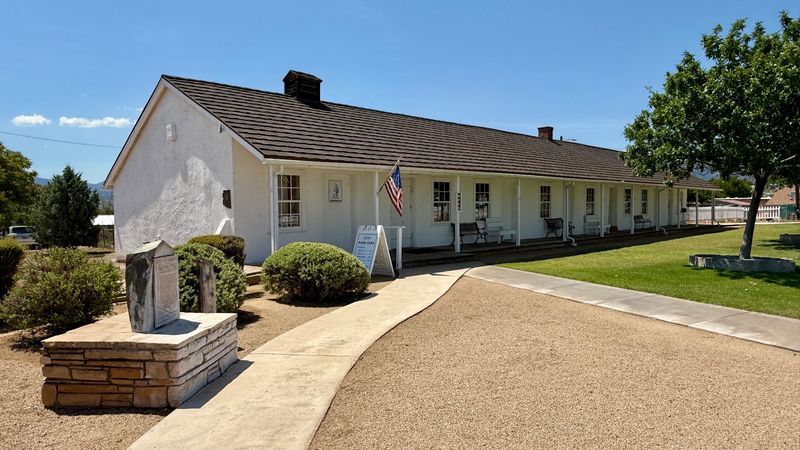
Fort Verde State Historic Park sits at 125 E Hollamon St, Camp Verde, AZ 86322, a short hop off Interstate 17 in central Arizona.
For Phoenix folks, it lands roughly halfway to Sedona, which makes it an easy pit stop. Plenty of people discover it on the drive between the two and wonder how they missed it for years.
The park is a compact state historic site built around what remains of a 19th century Army fort. Its description lists restored buildings, exhibits, and occasional re-enactments across about 10 scenic acres.
The main Administration building doubles as the park entrance. That is where you pay your fee and start the tour, and the staff at the ticket office tend to be friendly and quick with directions.
Small does not mean thin here. A museum, a row of officers’ houses, and a wide parade field pack a lot of frontier history into a short walk.
Think of it as the local history lesson you never got in school, minus the pop quiz.
2. Eleven Acres Out of Fifty-Five
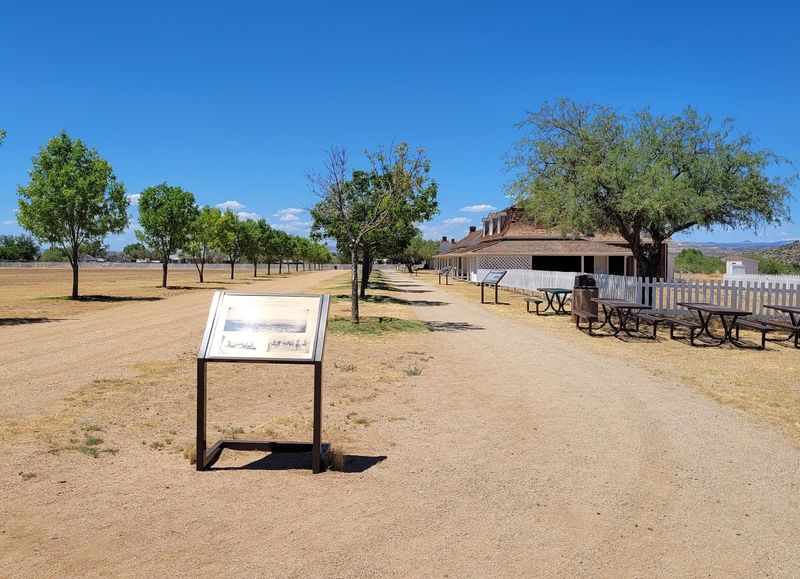
Here is a number that puts things in perspective. Rangers explain that only about 11 acres of the original 55 acre fort are part of today’s park.
Even so, the exhibits and maps make it possible to piece together what the entire post once looked like. Photos and placards fill in the missing streets and structures.
The fort was active in the late 1800s, during a turbulent era in Arizona’s early history that included the Indian wars. The museum lays out the purpose of the post and why it mattered in that period.
One detail grabs history fans right away. The fort never had a barrier or wall around it, which runs against the classic movie image of a log stockade.
A looping video in the last room of the main building covers the role of Native peoples in Arizona during those years. It also explains how many of them served alongside the Army.
Spend a few minutes with it before heading outside, because the buildings make far more sense with that context in your back pocket.
3. The Museum Inside Headquarters
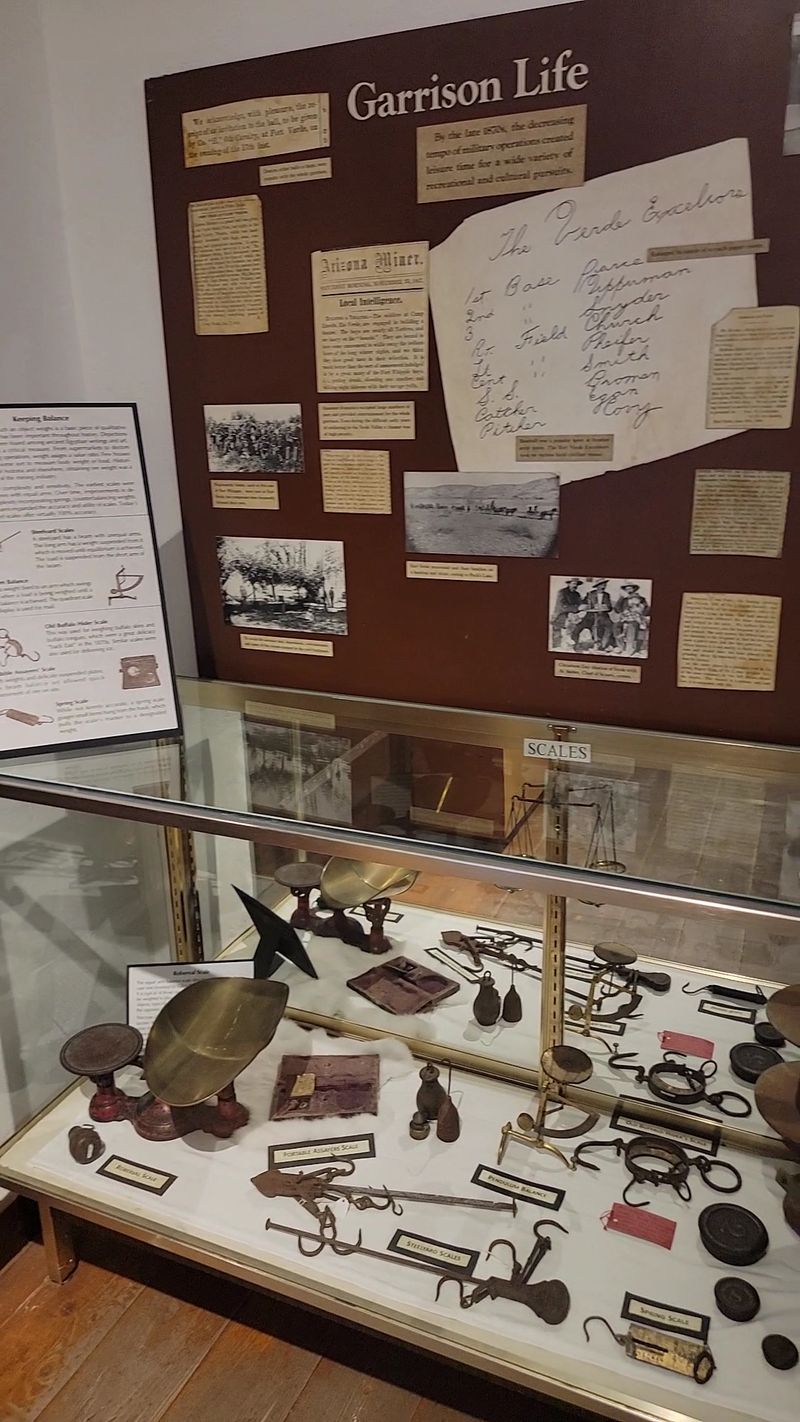
Start indoors, and not only because the museum is air conditioned.
The main building holds a series of rooms with exhibits on frontier life, especially military life in early Arizona. Artifacts cover a range of roles, from doctoring to soldiering and more.
Photos, items, and facts from the late 1800s line the displays. Some exhibits feel a bit old-fashioned in presentation, yet the information itself is solid.
A clever bonus lives on certain displays. QR codes link to YouTube videos where re-enactors in period dress play characters tied to the exhibit in front of you.
Plan on about an hour in this building alone if you like reading placards. Families with kids often find the museum long enough to count as the main event, with the grounds as dessert.
Phone battery check before you go, since those QR videos are half the fun.
4. Officers Row, Furnished as It Was
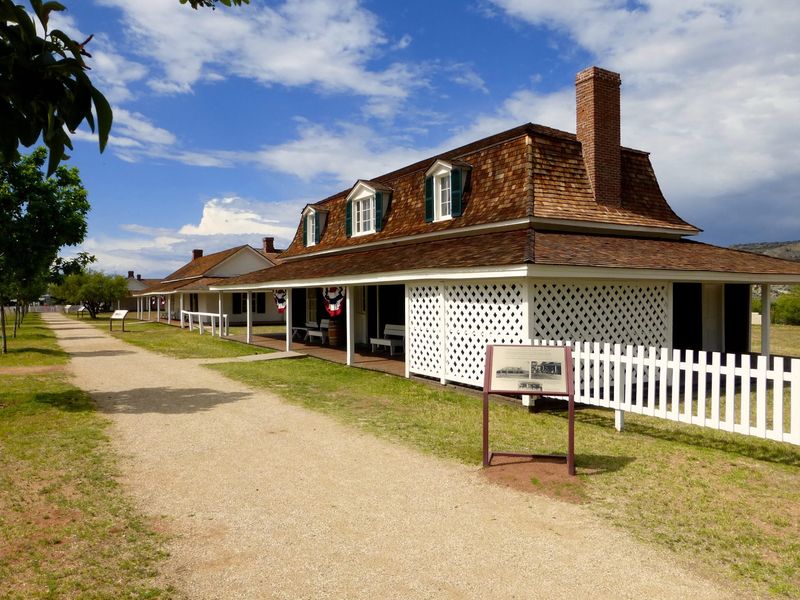
Most historic sites keep you behind a doorway. Fort Verde lets you walk through the rooms.
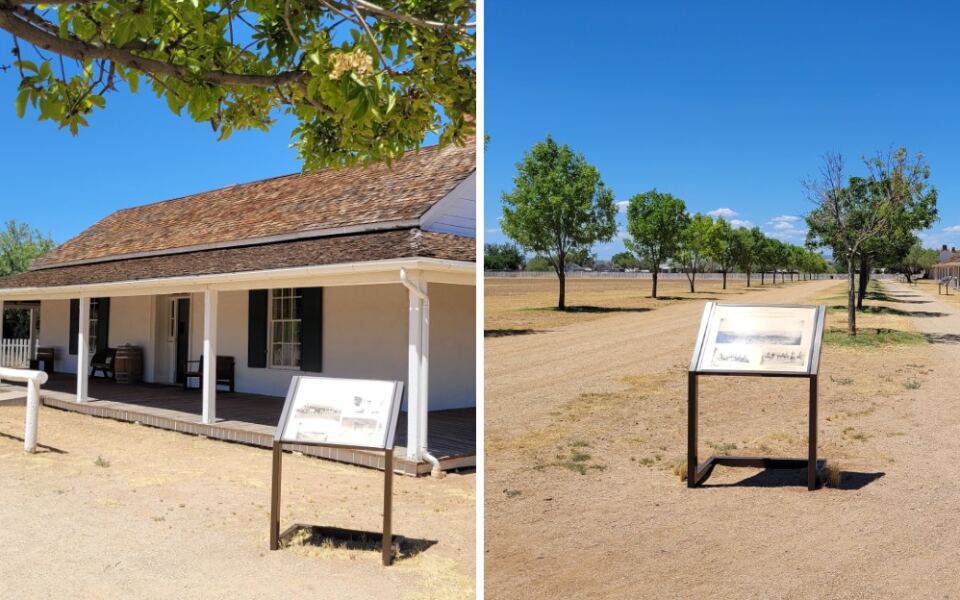
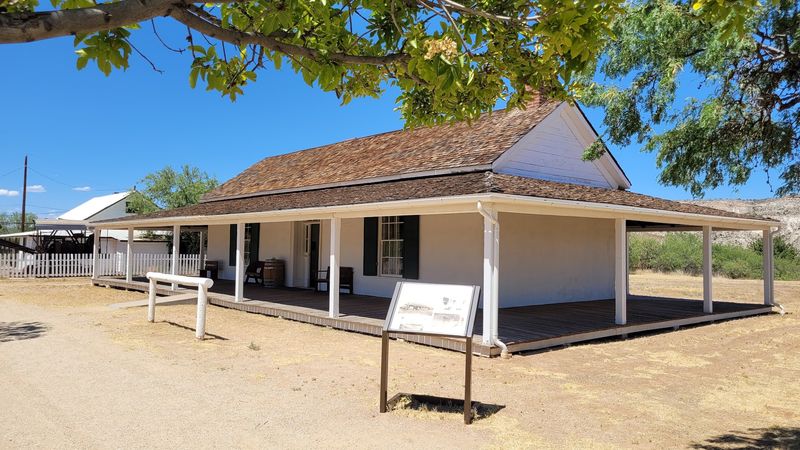
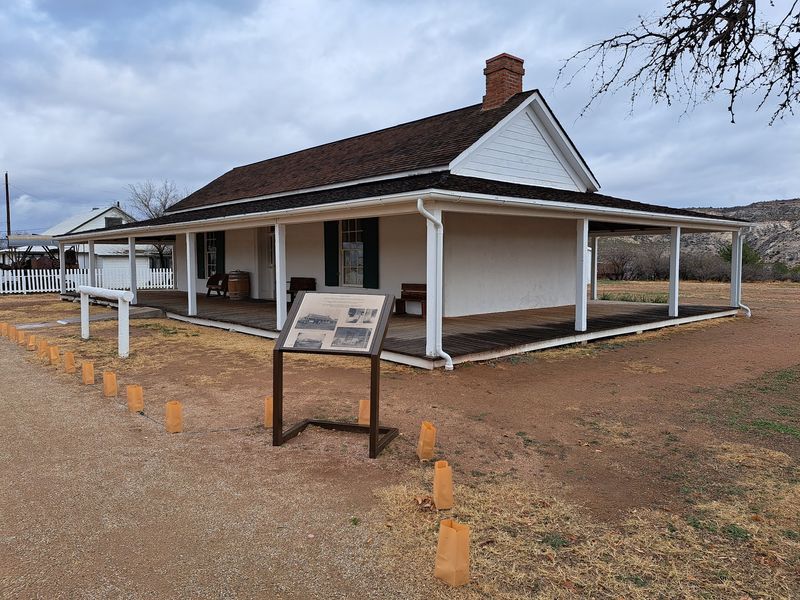
The original officers’ quarters are well preserved and furnished to match the 1880s. Nearly all the pieces inside appear to be from that era, so the houses read like a family just stepped out.
There are four original fort buildings open to explore, counting the Administration building. Each one offers a different peek at how military members lived with their families on the frontier.
Look for the cutaway in the outside stucco. It reveals the original adobe wall underneath, a small detail that history nerds tend to love.
During the holidays, the Officers Row houses have been decorated for the season. That gives the old rooms a festive twist worth timing a December visit around.
Desk lamps were not a thing back then, so admire the writing setups and be grateful for your laptop.
5. Benches by the Parade Field
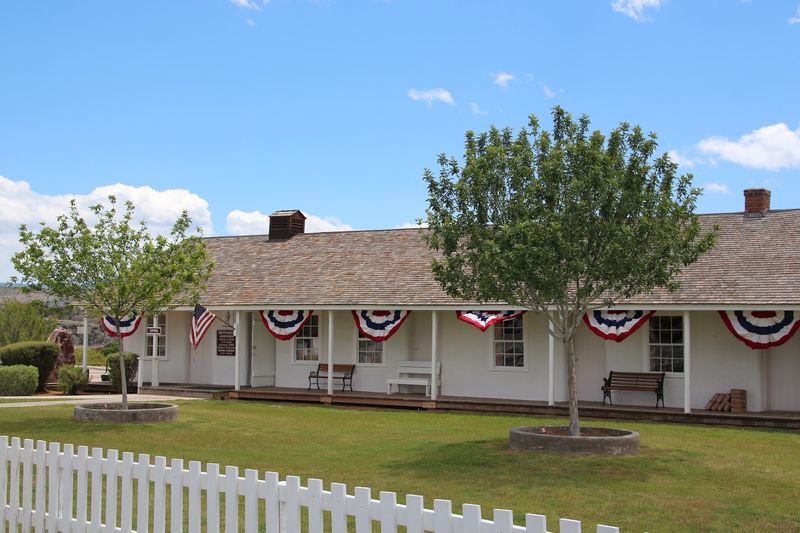
Slow down for a moment on the porch of the surgeon’s house.
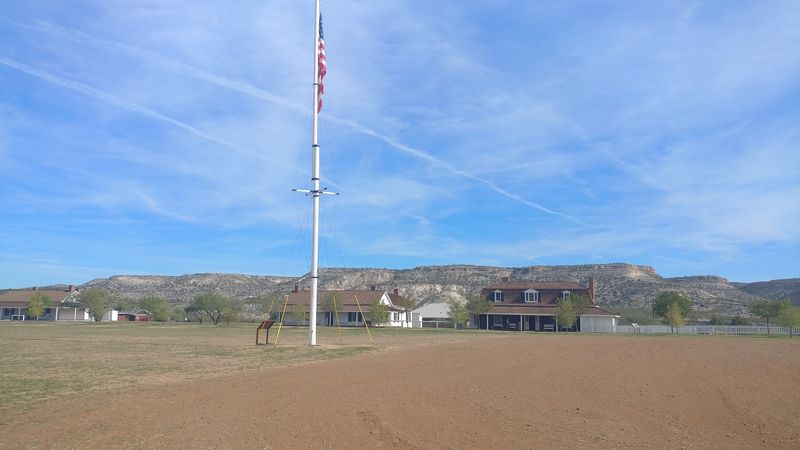
Benches there face the parade field, where a ship mast flies the nation’s colors. It is a calm spot to sit and take in the restored grounds.
The parade field and several original buildings have been fully restored. The whole property stays clean and well kept, which shows how much care the staff puts in.
Dogs are welcome on the grounds, though they cannot go inside the buildings. That makes it a decent outing for anyone who travels with a four-legged copilot.
Just outside the paid area stands a large vintage power shovel. It is an odd and photogenic piece of equipment that kids tend to point at first.
The field also hosts events from time to time, so the open lawn rarely stays quiet for long.
6. Buffalo Soldiers and Apache Exhibits
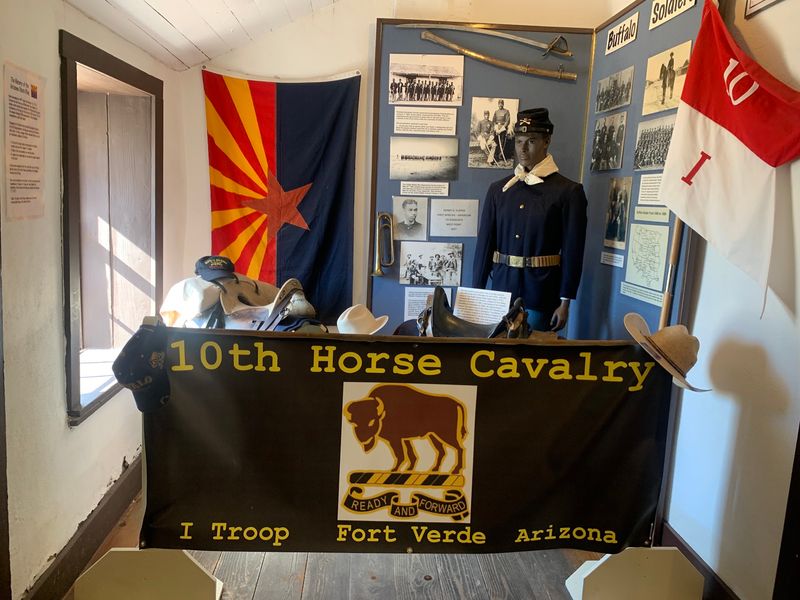
Some people drive up specifically for one exhibit, and the Buffalo Soldiers display is a big reason why.
The park has featured exhibits on the Buffalo Soldiers alongside Apache exhibits. The space is modest, but the quality of the displays stands out.
The curator has been eager to share extra details with anyone who asks. That kind of enthusiasm turns a quick look into a real conversation.
Together, these exhibits widen the story beyond officers and their parlors. They show the many groups whose lives shaped this corner of Arizona.
Give yourself time to read rather than skim. Questions are welcome, and the answers often come with stories no placard has room for.
7. Cannons, Camps and Fort Verde Days
Quiet weekday? Sure. Event weekend?
Bring earplugs.
The park hosts occasional re-enactments and special events on the field. One spring History of the Soldier weekend featured regalia, encampments, an open house, artillery demos, a very loud cannon blast, and a Nez Perce traditional dance.
Fort Verde Days is another name that pops up among locals. Camp Verde festivals nearby have drawn vendors, music, and even ponies and a goat, with plenty of room to wander.
Event dates change, so check the Arizona State Parks website before you load the car. A little planning turns a regular visit into a full day.
Nothing makes 1880s history feel current quite like a cannon going off on a Saturday morning.
8. Hours, Fees and Summer Strategy
Good news for spontaneous types. The park is open daily from 9 AM to 4:30 PM, seven days a week.
The admission fee is very affordable, which makes it an easy add-on to any road trip. Check azstateparks.com/fort-verde for current prices before heading out.
Plan for one to two hours to see everything. That leaves time for lunch in town or another stop afterward.
Here is the catch for summer trips. The buildings across the street are not air conditioned, and moths can gather inside the last couple of houses on warm days.
On hot afternoons, many people see the cool museum and skip the outer houses. Arriving right at 9 AM, or saving the trip for fall and winter, solves that problem.
Rangers and staff are knowledgeable and happy to give you the backstory, so ask where to start.
9. Worth the Exit, and Then Some
Kids asking to come back is a pretty strong endorsement, and this little fort earns it.
It suits history buffs, families, seniors who want a short and manageable walk, and anyone curious about Arizona before statehood. Rangers who clearly love their jobs make it feel personal.
Pair it with Montezuma Castle, roughly a 10 minute drive away, for a double dose of history in one outing. That combo makes the I-17 trip feel well spent.
The fort is small, and nobody pretends otherwise. What it offers is access, real rooms to walk through, and stories told by people who know them well.
Next time the Camp Verde exit sign rolls by, take it. The officers left the desk ready, and the quill is still waiting.
Share this story