Thousands of Tucson fans pack the stands on game days without knowing that something far bigger than a touchdown is happening beneath their seats. Under the concrete of a campus football stadium, a team is building some of the largest telescope mirrors on Earth. These mirrors will help scientists study distant galaxies and the early universe, and the work happens right here in Tucson.
Better yet, regular folks can book a small-group tour on a weekday afternoon and see it with their own eyes. The tour runs about 90 minutes, mixes a lively talk with a walk to the lab floor, and works as a smart indoor plan when the desert heat cranks up. Here is what to know before you go.
1. A Lab Hiding Beneath the Bleachers
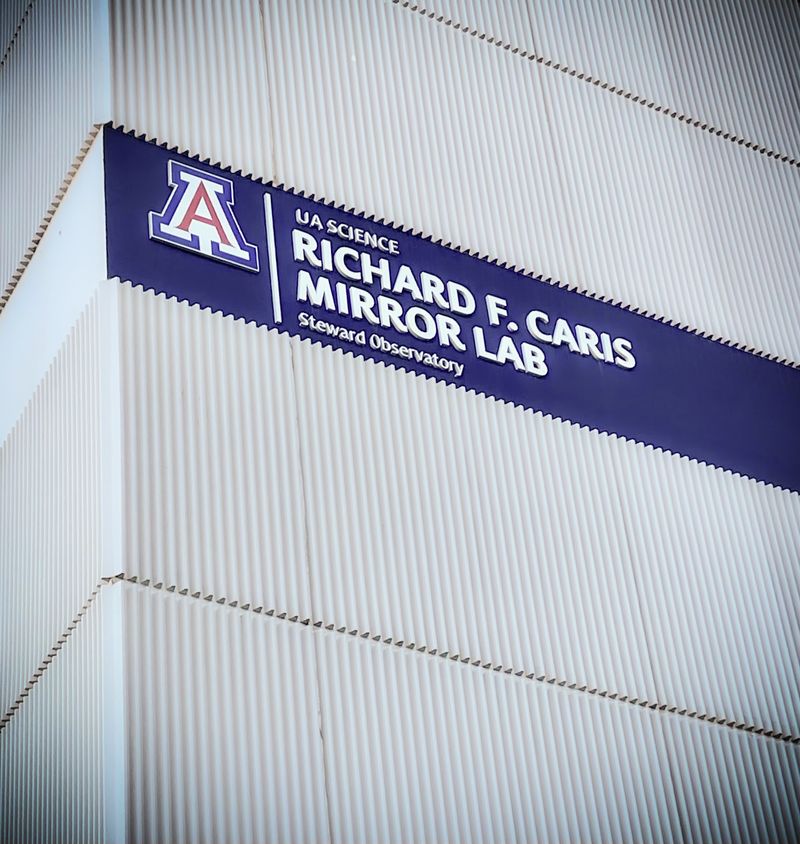
Few campus secrets are this big, literally. The University of Arizona’s Steward Observatory Richard F. Caris Mirror Laboratory sits at 527 N National Championship Dr, Tucson, AZ 85719, tucked inside the infrastructure of the university’s football stadium.
Yes, the same structure that hosts game days also shelters a high-tech workshop for giant telescope mirrors. Most Tucsonans drive past it without a clue.
The lab belongs to Steward Observatory, the university’s astronomy home base. Tours start at the observatory building, then the group takes a short walk across campus to the stadium.
Inside, the space is used with remarkable efficiency. Not a square foot seems wasted, which is impressive for a place that builds objects measuring 8.4 meters across.
That size puts the lab in rare company. Guides explain that it is the only place in the world using its special process to make these giant mirrors, which means a Tucson local can see a one-of-a-kind operation without leaving town.
For a city known for dark skies and stargazing, it fits perfectly. The mirrors made here end up in observatories that peer deep into space, and it all starts under a football stadium near downtown.
2. From a Garage Experiment to a Global Leader
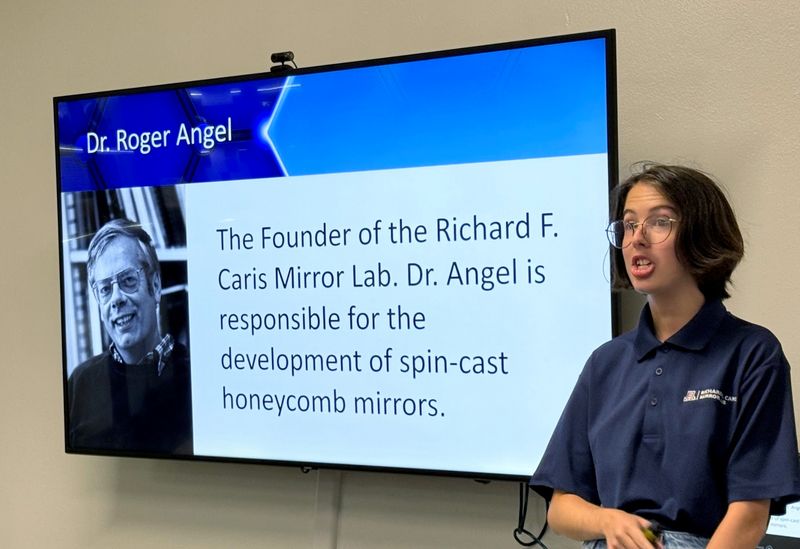
Some world-changing ideas begin in labs. This one began in a garage.
The tour shares how the lab’s signature honeycomb mirror process grew out of Dr. Angel’s experiments in his garage. From those humble trials came a method that turned the University of Arizona into a global leader in telescope mirror fabrication.
Guides walk the group through the history of Steward Observatory and how the lab got its start. It is a classic underdog story with a lot more glass involved.
The history portion also covers why the lab matters to modern astronomy. Today it is helping lead the field, building mirrors that power some of the largest telescopes on the planet.
Telescope history gets a nice spotlight too. The talk connects older instruments with today’s giants, so the leap in technology feels clear instead of abstract.
Local pride runs strong here. Plenty of Tucsonans leave feeling proud that this kind of work is happening at their hometown university, and the backstory is a big reason why.
By the time the history wraps up, the group is ready to see the real thing. That is exactly where the tour heads next.
3. The Talk Before the Tour Floor
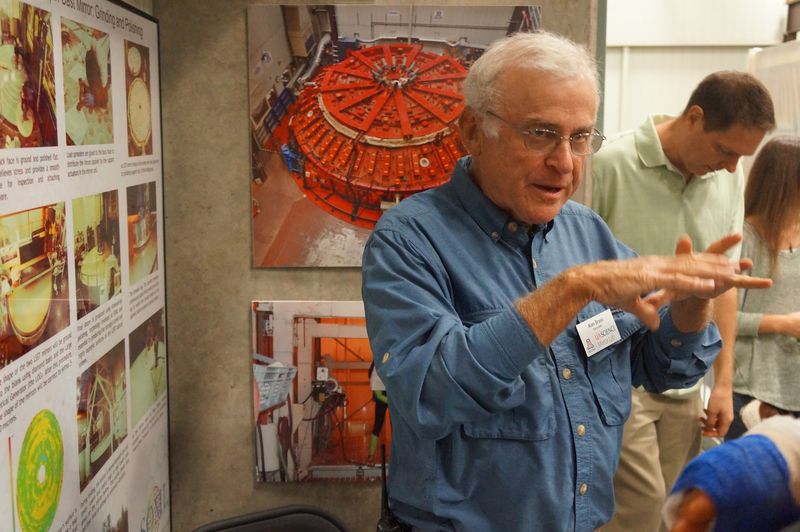
Every good mission needs a briefing. The tour opens at Steward Observatory with a quick introductory talk and video session that explains what the group will soon see in the lab.
Videos show processes unique to this facility. That way, the machines and stations make sense once everyone is standing above them.
Questions are welcome from the start. The hosts encourage curiosity, and the Q and A portion often becomes a highlight on its own.
The presentation also explains what the world’s largest telescopes can actually see. One wall displays galaxy images so packed that some galaxies fit into the space of a thumbnail, which tends to stop people in their tracks.
The best part is how approachable it all feels. The talk uses relatable comparisons and a few cute jokes, so an arts lover can keep up just as easily as an engineer.
Nobody needs a physics degree here. The goal is to leave curious rather than confused, and the briefing does that job well.
Once the slides end, the walk begins. It is short and easy, though the real excitement waits under the stadium.
4. Catwalk Views of a Spinning Furnace
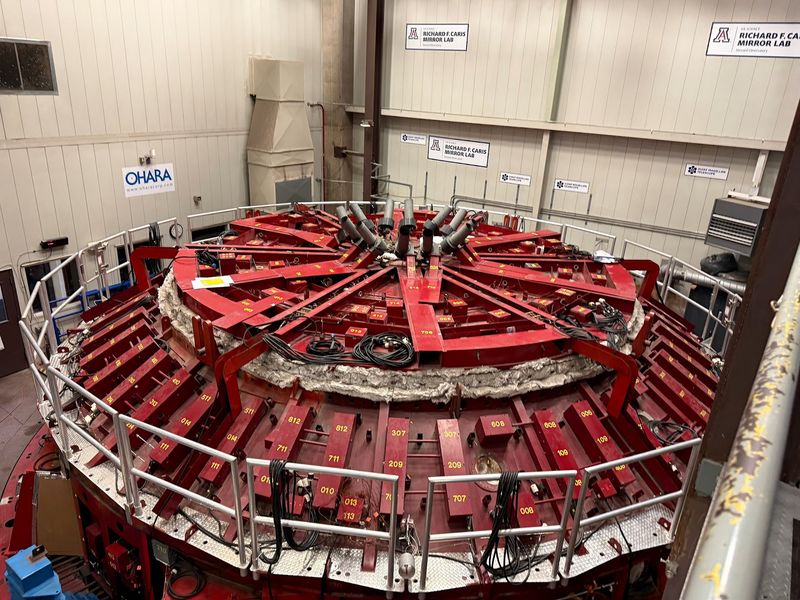
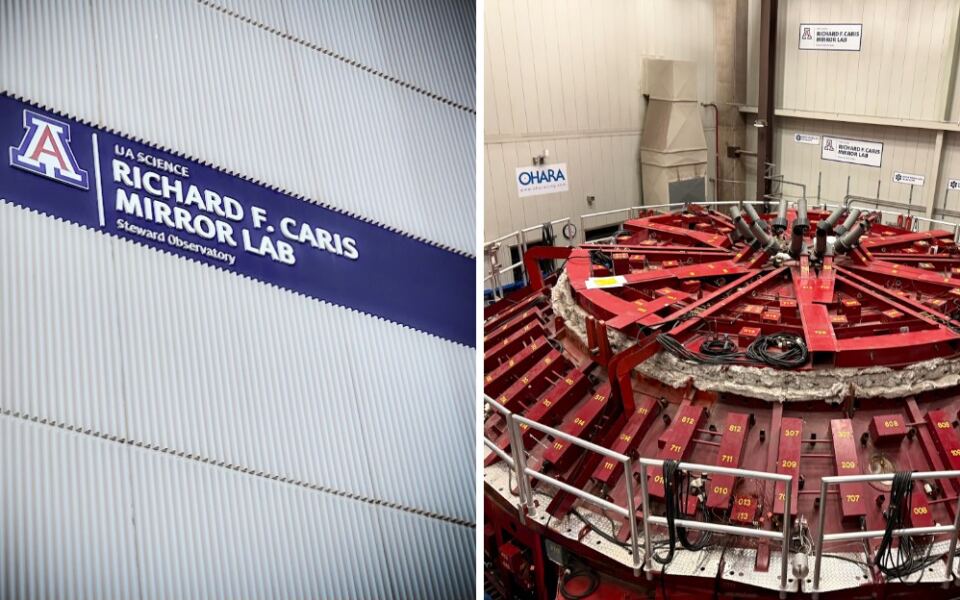
Here is where the stadium secret really pays off. From several catwalk vantage points, the group looks down on the rotating furnace used to melt Ohara E-6 borosilicate glass.
Photos are allowed from these spots. That makes for some serious bragging rights on social media.
The furnace spins while the glass melts, which shapes the mirror’s curved surface. This spin-casting method is part of what makes the lab so unusual.
Guides also explain the clever honeycomb design inside each mirror. That engineering keeps these massive pieces from cracking under their own weight, a problem that would sink a solid slab this big.
Watching the setup in person helps the scale click. The sheer size of the mirrors is hard to grasp until it is right there below the railing.
Plan for stairs. The tour includes climbing, so comfortable shoes are a smart call.
It is a rare chance to see raw glass become future science gear. Not many factory floors double as a front-row seat to astronomy.
5. Grinding, Polishing and Patience
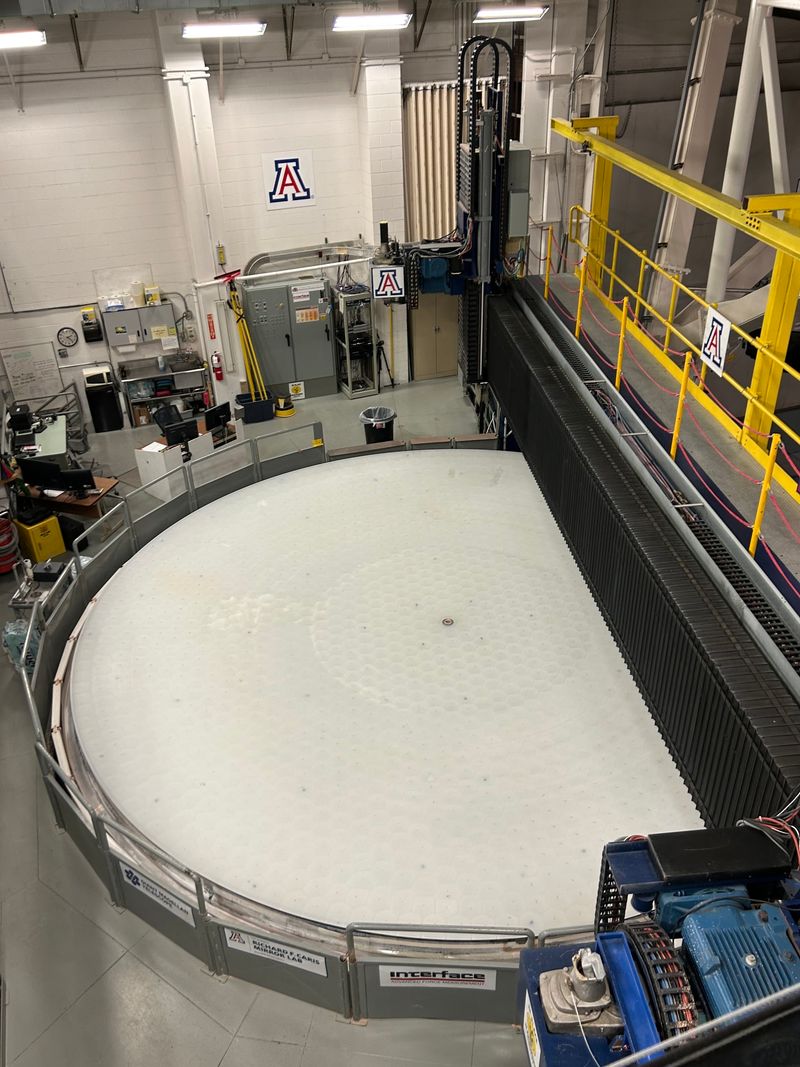
Patience is the secret ingredient. Each mirror can take an average of about five years to complete, and polishing alone can run around two years.
After casting, the tour moves through the grinding, cleaning, and polishing stations. Guides explain each step in detail, so the long timeline starts to make sense.
Mirror accuracy is the whole point. Tiny imperfections would blur the view of distant galaxies, so the work is extremely meticulous.
Depending on the timing, the group may see a mirror waiting for its long polishing stage. Seeing a giant disk of glass that will one day capture light from the early universe is quite a moment.
Engineers and builders tend to love this part. The mechanics of the operation are on full display, and the guides can go deep when asked.
Others simply enjoy the scale. A mirror nearly 28 feet across is hard to forget.
Transportation gets a mention too. Moving these huge pieces safely to faraway observatories is a feat of logistics all its own.
6. Seven Mirrors for the Giant Magellan Telescope
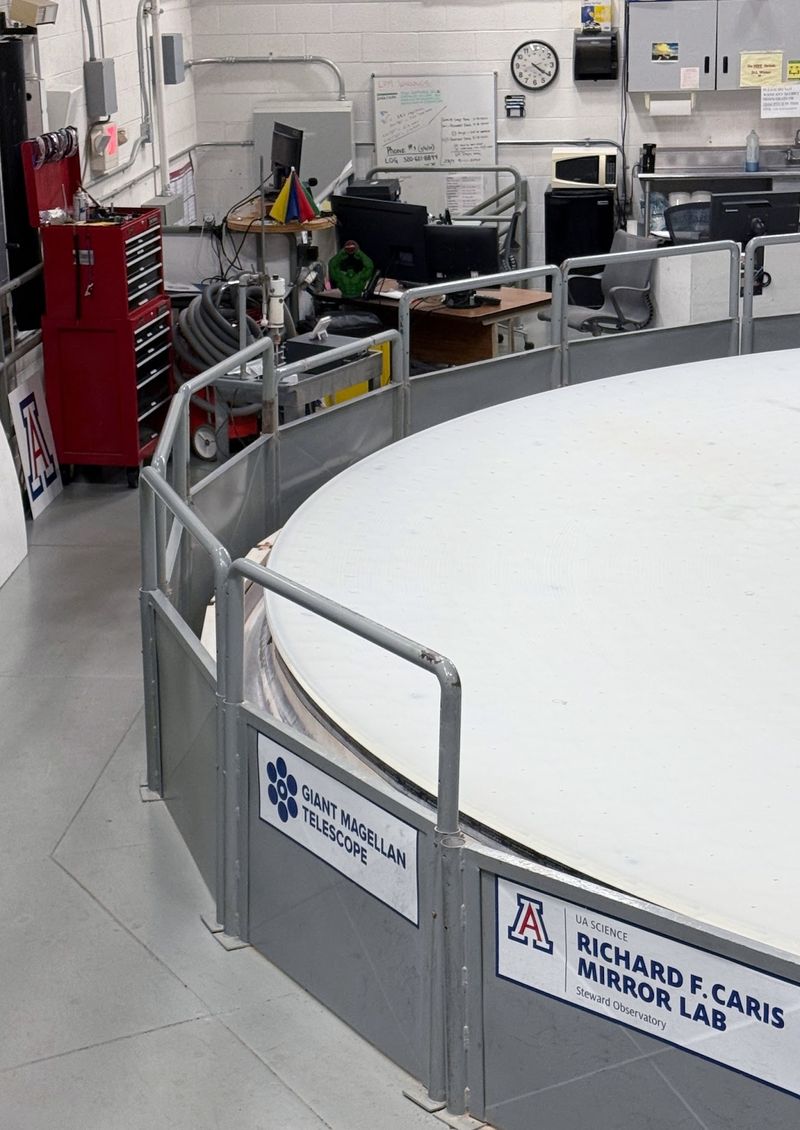
Big projects need big mirrors. The lab is fabricating the seven 8.4-meter spin-cast mirrors that will form the heart of the Giant Magellan Telescope.
That telescope is expected to be up to 200 times more powerful than today’s best land-based telescopes. It is also expected to take images 10 times sharper than Hubble.
Those numbers come up on the tour, and they land hard. Seeing the actual mirrors in progress makes the future feel close.
Production is ongoing, which gives locals a reason to go sooner rather than later. A tour now means seeing a decades-long project mid-build.
Plenty of people like the idea of saying they were there. When the telescope eventually starts making discoveries, Tucson folks who toured the lab can point to the mirrors they saw being made.
The project also shows how much teamwork goes into space science. Collaboration, creativity, and long-term commitment all play a part.
It is a rare chance to meet a famous telescope before it is famous. Few science stories offer that kind of sneak peek.
7. Student Docents Who Steal the Show
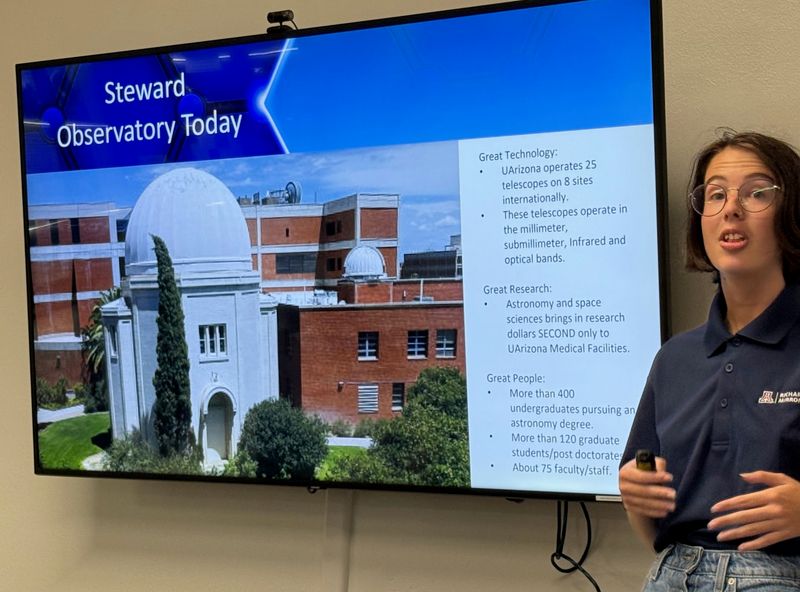
The guides might be the lab’s second-best product. Many tours are led by University of Arizona students, including optical engineering majors, sometimes paired with longtime astronomers.
They are known for being knowledgeable, friendly, and great at making tough ideas easy to follow. Tours often have two hosts, one leading the talk and another leading the lab portion.
Questions never seem to faze them. Groups stay small, so there is plenty of room to ask about anything, from glass chemistry to telescope logistics.
The enthusiasm is contagious. The staff clearly takes pride in the facility, and that pride shapes the whole experience.
Humor helps too. A few jokes and smart comparisons keep the energy up through the 90 minutes.
For students, it is a chance to share their field. For guests, it is a chance to learn from people living the science every day.
Many leave feeling smarter than when they arrived. That is a pretty good return on an afternoon.
8. Who Gets the Most Out of It
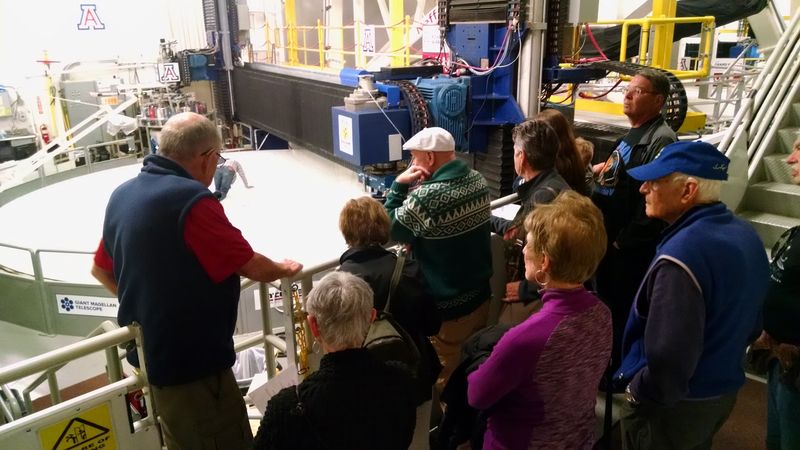
Science fans are an easy yes, but the crowd is wider than that. Builders, engineers, curious families, and arts lovers all find something to enjoy.
The tour works best for teens and older. Younger kids may get restless during the talk, though some school-age children enjoy it, including a 7-year-old who had a blast.
Parents can judge their own kids’ patience. Ninety minutes with stairs is a fair commitment for little ones.
It is also a strong summer move. When Tucson temps climb past 100, an indoor tour beats sweating on a trail.
Some locals pair it with other astronomy outings. Kitt Peak and Whipple Observatory make natural partners, since those places show how such mirrors are used.
Spring weather adds a bonus. Walking between the observatory and the lab is pleasant in mild months like April.
Out-of-town guests are another great fit. Bringing visiting friends here makes any local look like an insider.
9. Booking Tips and a Final Word
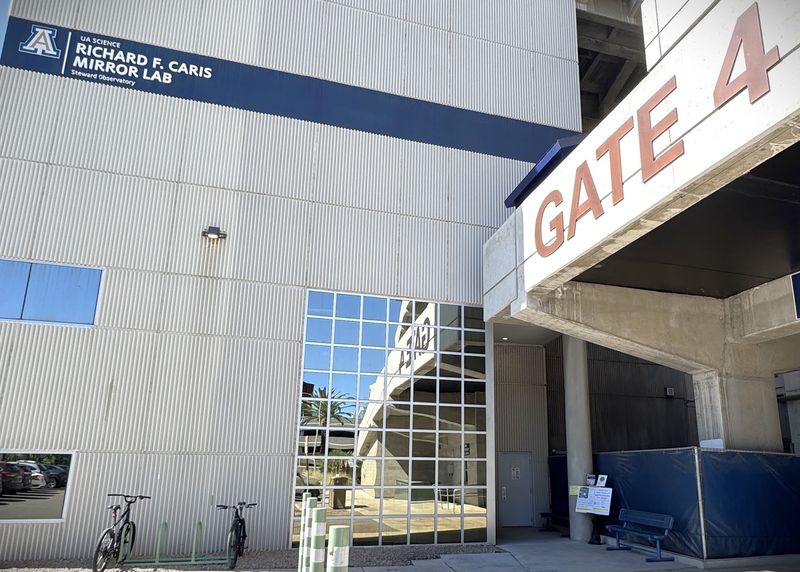
Timing matters here, so plan ahead. Tours run Monday through Friday from 1 to 5 PM, and the lab is closed on Saturday and Sunday.
Advance booking is required. Tickets are sold online through the lab’s tours page, and same-day booking can sometimes work for an afternoon slot.
Ticket prices are not listed in the data used here, so check the official website before heading out. The tour is a paid experience, and many groups call it well worth the money.
Wear comfortable shoes for the stairs and campus walk. A phone or camera helps for catwalk photos.
Tucson locals can reach campus with a quick drive, and Phoenix residents can make it a solid day trip. Pairing it with Kitt Peak turns one afternoon into a full astronomy outing.
The final verdict is simple. Under a stadium built for cheering, a quiet team is building tools to explore the universe, and locals can walk right in and watch.
Football season comes and goes. These mirrors will be looking at galaxies for decades.
Share this story