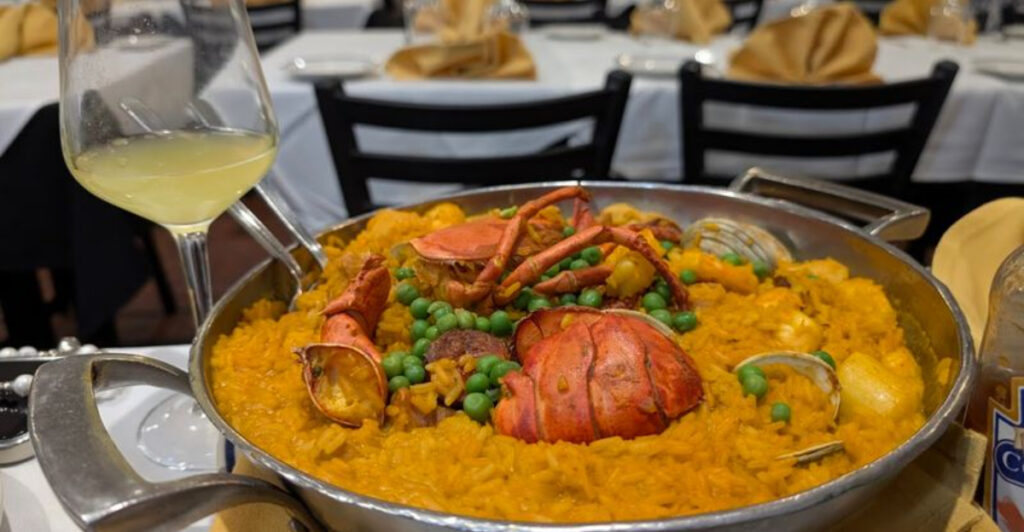
The first clue is the smell of garlic hitting hot olive oil before you even settle into the rhythm of the room. At Seabra’s Marisqueira in Newark’s Ironbound, seafood does not arrive dressed up in tiny tweezed portions or hiding under a foam nobody asked for.
It comes in copper pans, on wide platters, with shells, sauce, rice, potatoes, and enough confidence to make a table go quiet for a minute. The restaurant sits at 87 Madison Street, close enough to Ferry Street’s buzz to feel plugged into the neighborhood, but tucked just enough away to still feel like something locals get to keep for themselves.
It has been serving Portuguese food in Newark since 1989, and that matters here. In a state full of excellent seafood, this is the kind of place that reminds you memory is an ingredient too.
Newark’s Ironbound Knows Where to Find the Real Thing
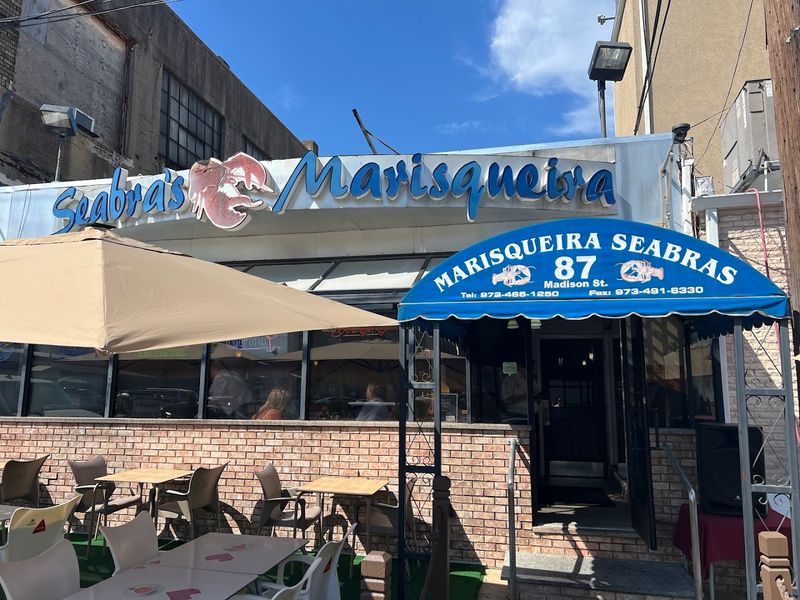
The Ironbound does not need anyone to explain good Portuguese food to it. This four-square-mile Newark neighborhood has been shaped for generations by Iberian, Brazilian, Ecuadorian, and other immigrant communities, and its food scene is not some recent discovery cooked up for weekend visitors.
New Jersey Monthly recently described the area as a place where Portuguese and Spanish flavors still anchor much of the local dining culture, with more than 100 Iberian restaurants, lunch counters, and bars packed into roughly a single mile, according to local tour operators. That is not a dining scene.
That is a delicious traffic jam. The reason Seabra’s Marisqueira still stands out in that crowded field is not because it is the loudest name on the block.
It is because it feels deeply rooted. The restaurant was founded by the Seabra family in 1989, and its own history notes that since 2000, the legacy has been carried on by three former employees turned owners: head chef Joaquim Fernandes, Antonio Sousa, and Manuel Cerqueira.
That little detail tells you a lot. This is not a concept restaurant borrowing Portuguese flavor for aesthetic points.
It is a working neighborhood seafood house where the knowledge stayed in the kitchen, then became the ownership. In the Ironbound, that kind of continuity counts.
People here know the difference between a place that serves Portuguese food and a place that understands it. Seabra’s falls into the second group, which is why it can sit a few blocks from Newark Penn Station and still feel more like a regulars’ clubhouse than a restaurant chasing attention.
A No-Frills Dining Room Built Around Fresh Portuguese Seafood
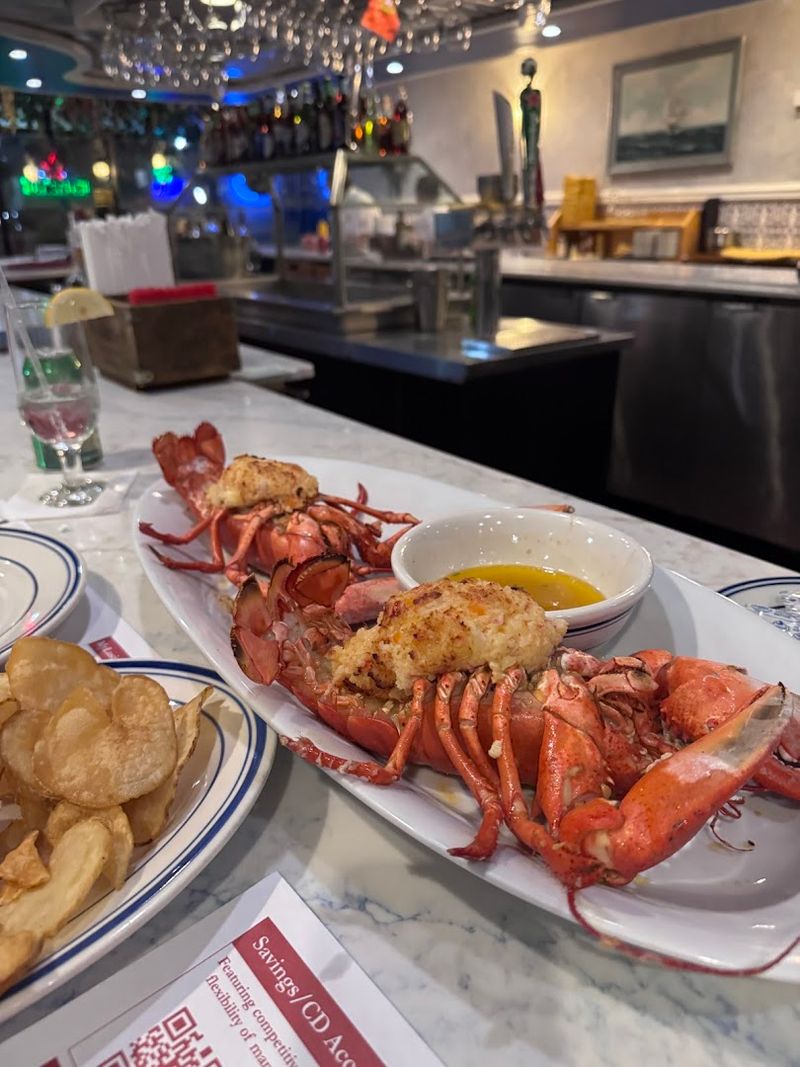
Walk in expecting velvet banquettes and moody cocktail-bar lighting, and you have made the first mistake. Seabra’s Marisqueira is more practical than polished, and honestly, that is part of the fun.
The room has the rhythm of a place built around food first: tables filling, servers moving fast, platters passing by, somebody at the next table leaning back to make room for a pan that needs both hands.
The official site says the restaurant offers indoor and outdoor dining, and its hours make it unusually useful for almost any appetite schedule: Sunday through Thursday from 11 a.m. to midnight, and Friday and Saturday until 1 a.m.
That means lunch can turn into a long afternoon, and dinner does not have to end just because the rest of the night is getting interesting. The no-frills feeling works because the seafood is not an accessory here.
It is the whole point. The restaurant’s own tagline leans straight into “fresh seafood, Portuguese style,” and the menu backs that up with a deep bench of fish, shellfish, crab, lobster, shrimp, cod, and rice dishes that read like somebody opened a coastal Portuguese pantry and refused to edit it down for timid diners.
There is something refreshing about that. Nobody needs to convince you that the place has character by hanging a fishing net on the wall and calling it decor.
The character is in the pacing of the meal, the scale of the portions, the Portuguese names on the menu, and the way a table can go from casual conversation to serious shellfish logistics in about five seconds.
The Dishes Locals Keep Coming Back For
A smart first order at Seabra’s starts before the entrées. The appetizer list is not just a warm-up act; it is where the table begins to understand what kind of meal it has wandered into.
There are lulas fritas à Sevilhana, fried calamari Sevilla style, listed at $19.75, and chouriço Português assado, roasted Portuguese sausage, at $20.95. If the table is already leaning seafood-heavy, the clams in tangy garlic sauce, ameijoas a Bolhão Pato, are also $20.95, while salada de polvo brings cold octopus in vinaigrette at $29.95.
Those are not throwaway starters. They are the kind of dishes people keep reaching for while pretending they are “saving room.” The entrées go bigger, and very quickly.
Arroz de marisco, priced at $52.75, brings mixed seafood into rice with brandy and wine sauce. Paelha à Marinheira, also $52.75, folds lobster, clams, mussels, shrimp, and scallops into yellow rice.
Mariscada, at the same price, moves that lobster-clams-mussels-shrimp-scallops lineup into a tomato sauce touched with cognac and served with rice. Then there are the cod dishes, because no Portuguese seafood conversation gets far without bacalhau.
The grilled bacalhau comes with olive oil, garlic, green peppers, and onions, while bacalhau cozido com todos keeps it classic with potatoes, onion, and egg. What makes the menu memorable is not only variety.
It is the way the dishes encourage a table to eat communally, even when everyone technically ordered for themselves. Someone gets shrimp in garlic butter.
Someone else gets cod. A pan of seafood rice lands in the middle. Suddenly the forks are traveling.
Why the Cataplana Feels Like the Star of the Table
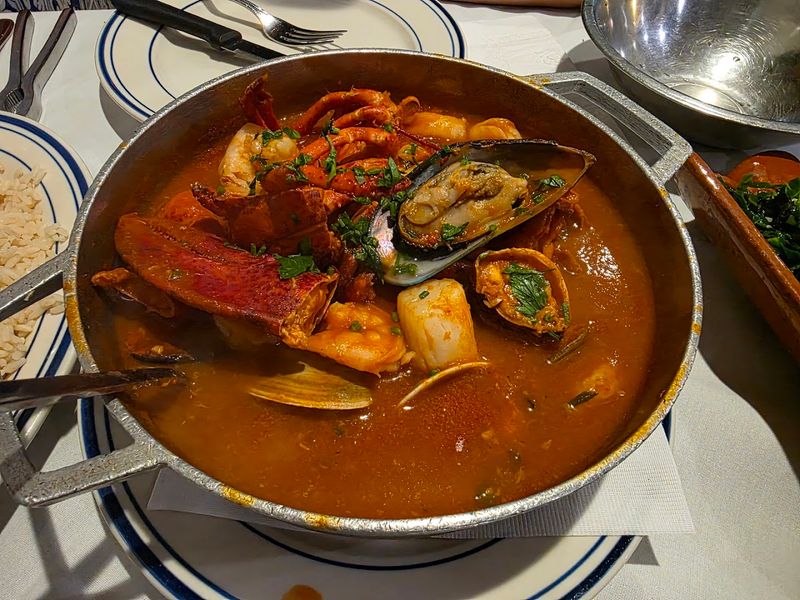
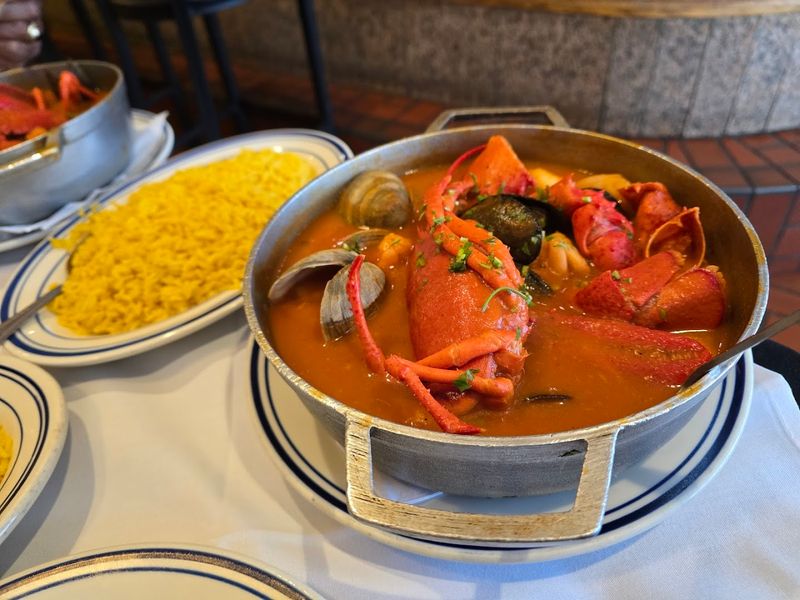
The cataplana has main-character energy before anyone tastes it. Part of that comes from the drama of the vessel itself.
Traditionally, cataplana refers to a hinged copper pan used in Portuguese cooking, especially in the Algarve, and at Seabra’s the menu’s Frutos do Mar na Cataplana leans into that Southern Portuguese spirit. The restaurant describes it as seafood simmered in a light tomato-based sauce and served in a copper skillet, accompanied by rice.
It is listed at $56.95, which makes it one of those orders that announces, politely but firmly, that dinner is now an event. The beauty of this dish is that it is generous without being clumsy.
A tomato-based seafood sauce can go heavy fast, but the best versions keep enough brightness to let the shellfish taste like itself. Rice on the side is not just filler; it is the insurance policy, the thing that keeps every spoonful of sauce from being abandoned at the bottom of the pan.
Around the table, the cataplana also changes the tempo. People slow down. They negotiate shrimp. They point at clams.
They ask, without shame, whether anyone is going to finish that last bit. That is the secret of a great seafood dish in a restaurant like this: it is both dinner and a small social exercise.
You do not just eat it. You work through it together.
In a neighborhood where Sunday lunches, family tables, and group dinners have long been part of the dining culture, the cataplana fits perfectly. It is not dainty, and it is not trying to be.
It is built for appetite, conversation, and sauce-stained satisfaction.
Big Portions, Bold Flavors, and That Family-Style Newark Energy
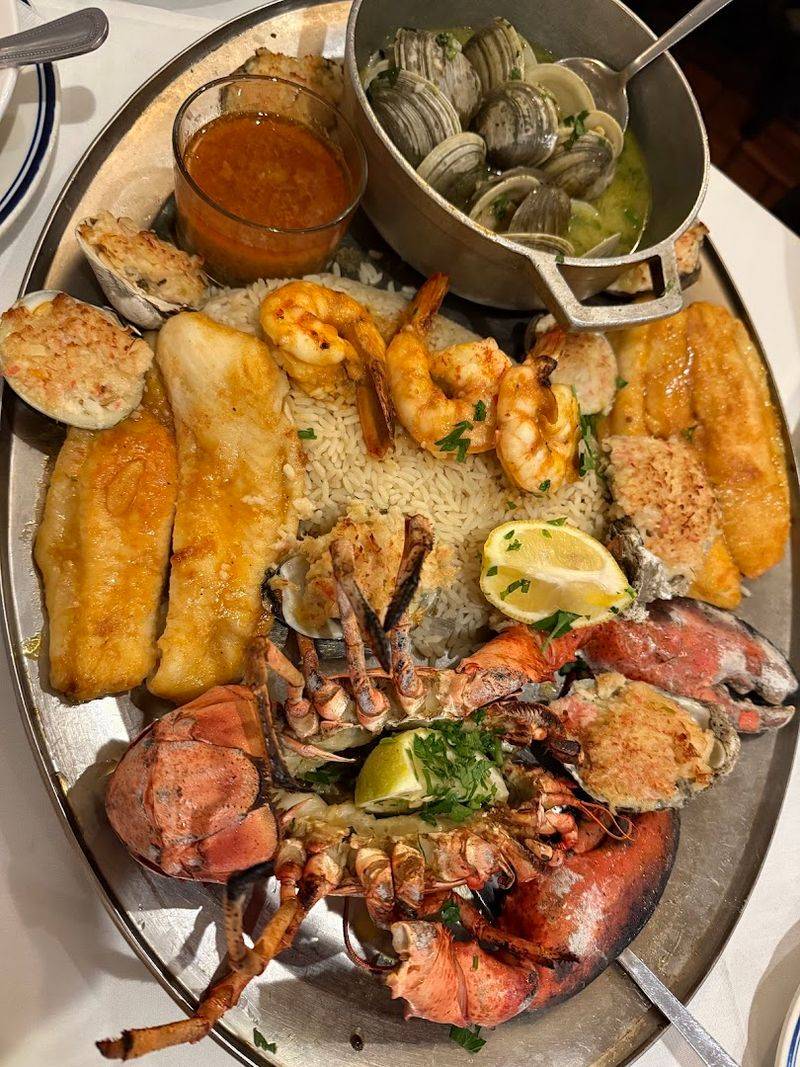
There is a particular kind of silence that happens when a huge platter lands on a table and everybody realizes they may have overestimated themselves. Seabra’s is very good at creating that moment.
The menu even has a “To Share” section that does not play around: Frutos do Mar served hot is listed at $117.95 and includes clams casino, shrimp in garlic sauce, shrimp shish kebab, mussels in red sauce, broiled lobster, clams in garlic sauce, and stuffed oysters with crab meat, with the menu noting it serves four.
The cold version, listed at $112.95, gathers clams and oysters on the half shell, steamed shrimp and lobster, octopus salad, and Portuguese crab.
That is the Seabra’s experience in miniature. The food is not shy. Garlic is allowed to be garlic. Olive oil gets a proper role.
Sauces are there to be eaten, not admired from a distance. Even the simpler fish dishes have that same directness, whether it is grilled sole in butter-lemon sauce at $21.95 or grilled salmon at $28.95.
The room matches the food. Roads & Kingdoms captured the restaurant’s Sunday-lunch energy years ago, describing it as hard to find a seat after 1 p.m., with Portuguese families, Brazilian couples, friends drinking sangria, and a TV playing Portuguese channel RTP on mute.
That snapshot still explains the appeal better than any polished dining-room description could. Seabra’s feels like Newark because it moves with a little noise, a little impatience, a lot of appetite, and zero interest in pretending dinner should be precious.
How Seabra’s Marisqueira Became a Quiet Must-Visit
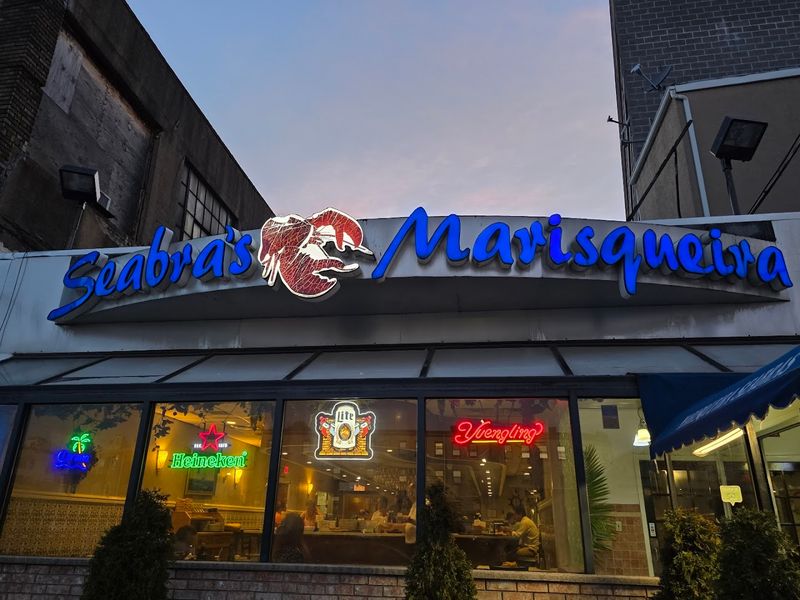
Longevity is not glamorous, but in restaurants, it is the stat that matters most.
Seabra’s Marisqueira has been around since 1989, which means it has survived changing dining trends, changing neighborhoods, changing budgets, changing tastes, and who knows how many people suddenly deciding they were “really into small plates now.” Through all of that, it stayed focused on Portuguese seafood in the Ironbound.
That steadiness is why it feels less like a hidden gem in the usual overused sense and more like a place hiding in plain sight. It helps that the practical details are easy.
The address is 87 Madison Street, the reservation phone number is 973-465-1250, and the late hours make it flexible for both family dinners and post-event meals in Newark. But convenience is not what gives the restaurant its pull.
It is the way Seabra’s connects several New Jersey stories at once: immigrant foodways, Ironbound pride, big-table dining, old-school hospitality, and seafood that does not need a coastal zip code to feel transportive.
Vogue once wrote that stepping into Seabra’s can feel like being carried to a small town in Portugal, and while that sounds almost too neat, the feeling is easy to understand once the food starts arriving.
This is not a restaurant trying to become beloved.
It already is, in the way that matters most: by feeding people well enough that they come back with parents, cousins, friends, coworkers, and eventually someone who says, “How did I not know about this place?”