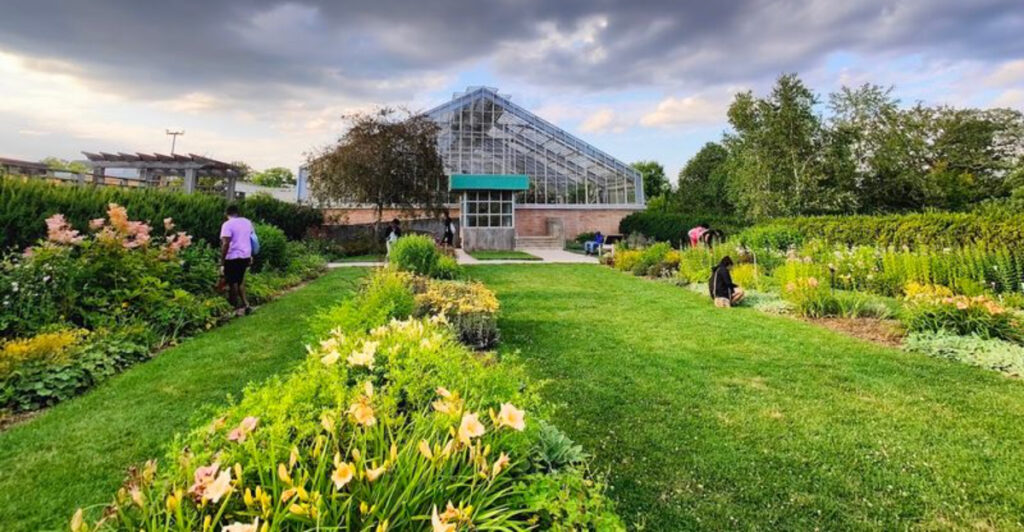
Not every garden is just a pretty place to wander, and this Ann Arbor escape proves it quickly. Along North Dixboro Road, Matthaei Botanical Gardens blends University of Michigan plant science with peaceful outdoor spaces, making it feel both educational and deeply relaxing at the same time.
Visitors can move from climate-controlled conservatory rooms filled with plants from different environments to more than three miles of natural trails, wetlands, woodlands, and open spaces made for slowing down. Whether you are a nature lover, a curious student, or simply looking for a free Michigan escape that feels refreshing without being complicated, this garden gives you plenty of reasons to linger.
The Conservatory: Three Climates Under One Roof
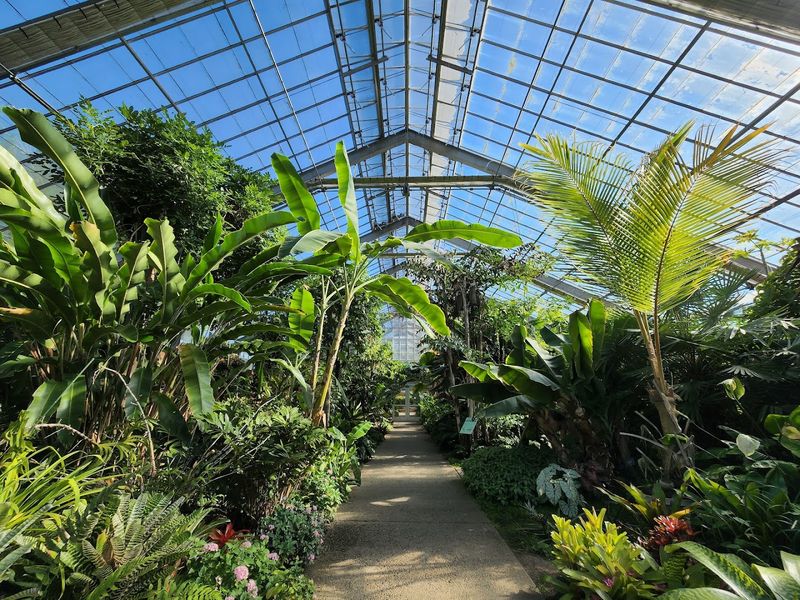
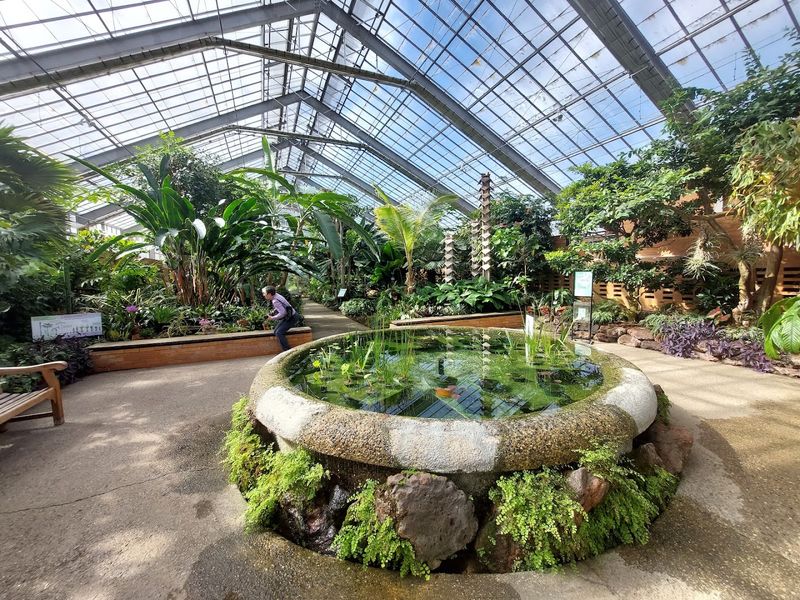
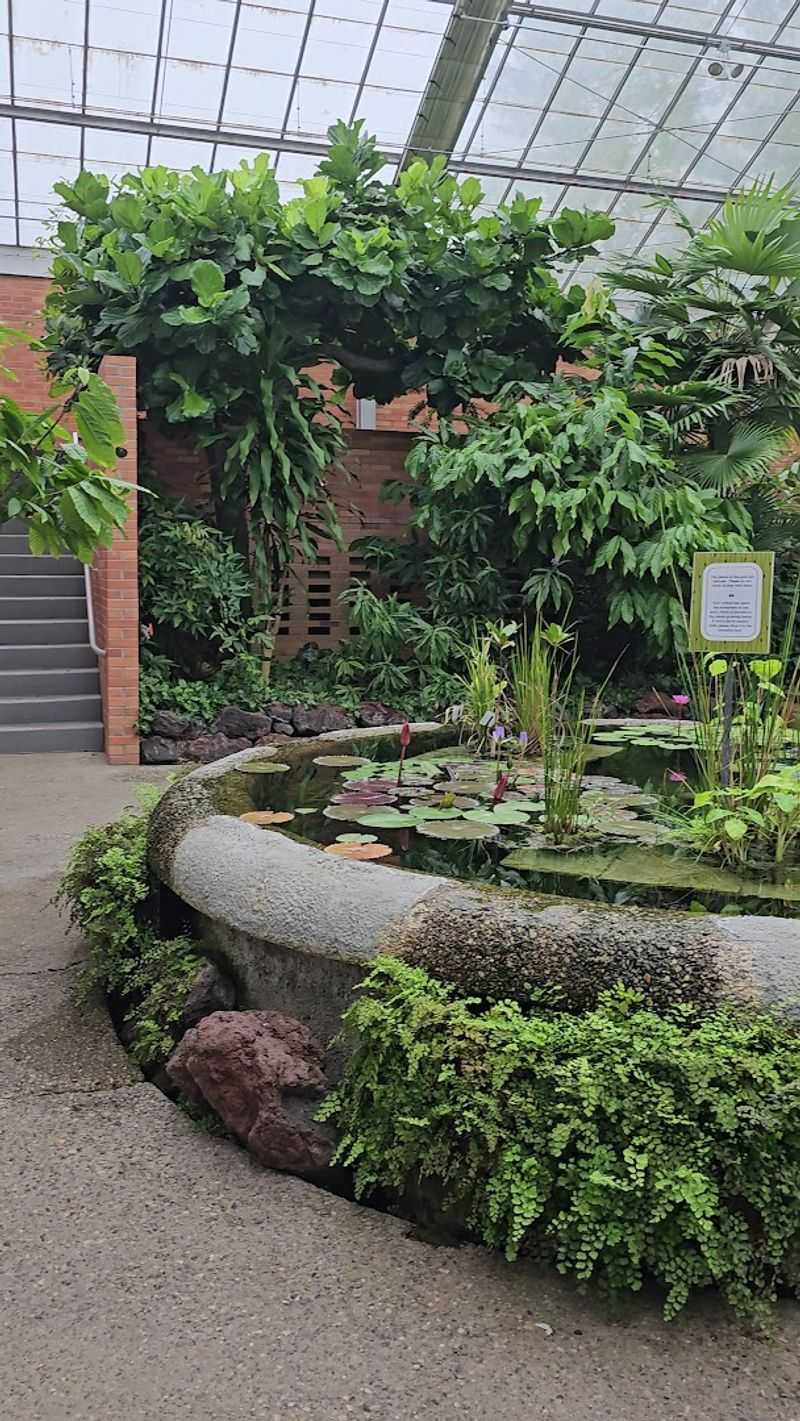
Walking into the conservatory at Matthaei Botanical Gardens feels like stepping through a portal into three completely different parts of the world. The building is divided into three distinct climate rooms: a tropical house, a temperate house, and an arid house, each carefully maintained to recreate the conditions plants from those regions actually need to thrive.
The tropical room hits you first with warmth and humidity the moment you push through the door. Tall palms, broad-leafed plants, and flowering species crowd the space in a way that feels genuinely dense and alive.
An elevated seating area with tables sits in this room, though it fills up quickly because the atmosphere is so inviting for reading or relaxing.
The temperate room offers a cooler, more measured environment with a handful of benches where visitors can sit and observe plants from Mediterranean and mild-climate regions. There is even a small children’s play table tucked into this section, making it a practical stop for families with younger kids who need a moment to settle.
The arid room rounds out the trio with a striking collection of cacti and drought-tolerant plants. Unlike the other two rooms, this one skips the regular misting cycle, keeping the air dry and the atmosphere noticeably different.
One bench sits in the corner, giving visitors a quiet spot to study the sculptural forms of the plants around them.
Throughout the conservatory, informational signage explains where each plant originates and how it fits into its native ecosystem. A special exhibit has featured recipes from around the world placed near edible plants, connecting botany directly to culture and food.
The conservatory is open year-round, making it an especially valuable space during Michigan winters when outdoor exploration is limited.
The Bonsai Collection That Stops People in Their Tracks
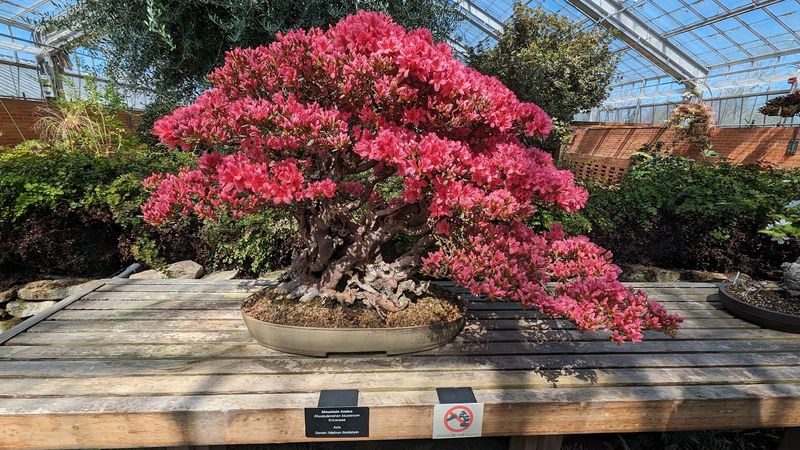
Most people know bonsai trees exist, but few realize the scale of dedication involved in keeping one alive and shaped for centuries. At Matthaei Botanical Gardens, the bonsai collection reframes that understanding entirely.
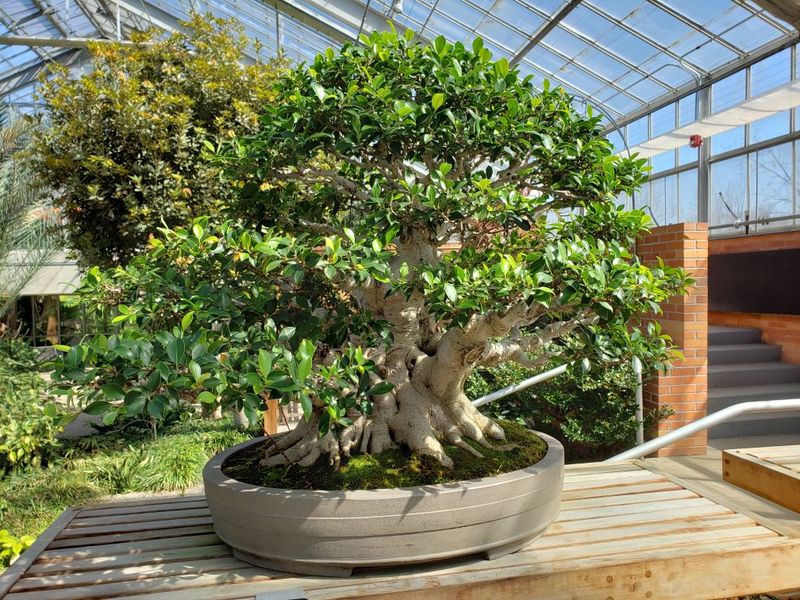
One tree in the collection is over a thousand years old, and standing in front of it shifts your perspective on time in a way that few natural displays can.
The collection is maintained with visible care. On many visits, staff members or trained volunteers can be found actively trimming and tending the trees, and they are genuinely happy to answer questions.
That kind of open, educational interaction makes the bonsai garden feel more like a living classroom than a display case.
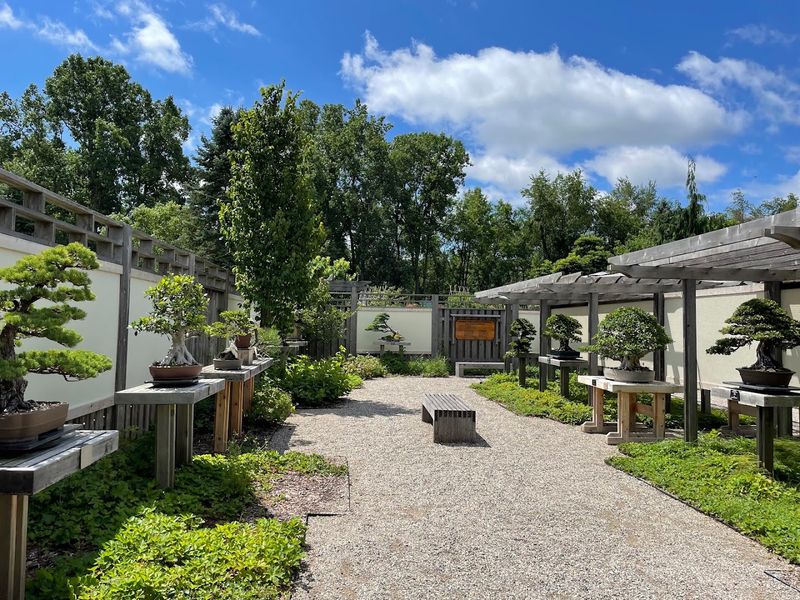
Each tree is labeled with details about its species, origin, and age, so even someone who has never thought about bonsai before can walk away with real knowledge. The arrangement of the collection gives each specimen enough visual breathing room to be appreciated individually rather than as part of a crowded display.
Bonsai are not a type of tree. They are a centuries-old technique of cultivating and shaping ordinary tree species through careful pruning, wiring, and root management over decades or even lifetimes.
Understanding that changes how you look at every single specimen in this collection, especially the oldest ones that have been passed down through generations of caretakers.
The bonsai garden sits outdoors, which means seasonal visits offer different views as the trees change throughout the year. Spring growth, summer fullness, and the stark silhouettes of winter all reveal different details in the same trees.
Photography here tends to be rewarding precisely because the subjects are so detailed and so visually distinct from anything else on the grounds.
Over Three Miles of Michigan Nature Trails Worth Every Step
The trail network at Matthaei Botanical Gardens covers more than three miles of woods, prairies, and natural areas that connect directly from the main parking lot. That accessibility matters because it removes the usual friction of getting to a trailhead, and it means the transition from conservatory to forest happens within a single visit without moving the car.
Trails wind through ecosystems that represent native Michigan landscapes, including forested stretches, open meadow sections, and areas near a pond with viewing binoculars positioned on a small hill above the water. A bridge crosses what appears to be a stream feeding into that pond, offering a quiet pause point with a view that rewards slower walkers.
Informational plaques and signs appear throughout the trail system, explaining the plants, trees, and ecological history of specific areas. These signs are not overwhelming or overly academic.
They are written in a way that makes a solo walk feel guided without removing the sense of independent exploration.
One important note for trail users: the eastern massasauga rattlesnake, a small and venomous species native to Michigan, has been spotted on these trails. The snakes are generally non-aggressive and will rattle as a warning if approached, but wearing sturdy footwear and watching your step on the paths is genuinely practical advice here, not just precautionary language.
Picnic tables and benches are scattered along the routes, making it easy to stop and sit without committing to a full loop. Birders find the trail system especially productive during migration seasons when native plants attract a wide variety of species.
The combination of habitat diversity and trail length makes this one of the more substantive free nature walks available anywhere in Ann Arbor.
A Children’s Space Designed for Curious, Muddy Hands
The children’s garden at Matthaei Botanical Gardens takes a Montessori-inspired approach to outdoor learning, which means it prioritizes hands-on exploration over structured activities. Rather than a traditional playground with fixed equipment, the space is designed around natural materials and plant life, encouraging kids to observe, touch, and ask questions about the living world around them.
For families with younger children, this area functions as a kind of soft landing within the larger garden. It gives kids a designated space to move freely and engage with nature at their own pace while adults nearby can breathe and explore without worrying about keeping small hands away from sensitive specimens in the conservatory.
The garden connects naturally to the broader educational mission of the site, which is operated by the University of Michigan. Field trips from local schools are common here, and the children’s area is designed to support that kind of structured group learning as well as casual family visits.
Home-schooling families in particular have found the combination of children’s garden, conservatory, and labeled trail plants to be a strong all-in-one science resource.
Seasonal programming for kids has included summer activities and educational events tied to plant science and native ecosystems. The schedule varies, so checking ahead before a visit helps families plan around specific programming rather than discovering events after the fact.
Even without a scheduled event, the children’s garden holds up as a standalone destination. The surrounding grounds offer enough variety in texture, color, and living specimens to keep curious kids engaged for a solid stretch of time.
Dress for dirt, bring water, and plan to stay longer than expected. The garden has a way of turning a quick stop into a full afternoon for families who let kids lead the pace.
University Roots and a Research Legacy Behind the Beauty
Matthaei Botanical Gardens is not just a pretty park. It operates as a living research and teaching facility under the University of Michigan, which gives it a scientific depth that most public gardens simply do not have.
The University’s involvement means the collections are curated with academic rigor, the staff includes trained botanists and researchers, and the educational programming connects to real scientific work happening on campus.
The conservatory holds the distinction of being the largest university-operated greenhouse in the United States. That scale reflects decades of institutional investment in plant science, conservation, and public education.
The collections inside represent not just aesthetic choices but deliberate decisions about which species to document, preserve, and study.
On the grounds, the University of Michigan Sustainability Farm and the Native Student Association Garden both operate as active projects rather than static displays. These spaces demonstrate how botanical institutions can function as platforms for community engagement and applied research at the same time.
Walking past the farm plots gives the visit an agricultural dimension that feels distinct from the manicured conservatory sections.
Staff members carry this expertise into daily interactions with visitors. One staff member named Carole has been specifically noted for her depth of knowledge, including detailed information about a century tree on the property and retrieving historical photographs to show how it grew through the greenhouse roof over time.
That kind of engaged, knowledgeable presence turns a casual visit into something more memorable.
The garden also hosts rotating art exhibitions in a small gallery space attached to the main building. A photography exhibit by local artist Joe Ferraro drew strong responses from visitors who appreciated the garden’s support of community artists alongside its scientific mission.
Science and creativity share the same walls here without either one overshadowing the other.
Accessibility, Inclusivity, and Year-Round Welcome
Accessibility at Matthaei Botanical Gardens goes beyond meeting a minimum standard. The conservatory and indoor facilities are fully wheelchair accessible, with smooth surfaces and wide pathways that accommodate a range of mobility aids without difficulty.
For visitors who rely on wheelchairs or other devices, the indoor spaces offer a genuinely comfortable and navigable experience.
The outdoor garden paths are primarily made of small gravel, which can present a challenge for manual wheelchair users. That detail is worth knowing before a visit so individuals can plan which areas to prioritize or choose the right mobility aid for the terrain.
The trail system in the natural areas varies in surface and grade, with some sections more manageable than others depending on conditions.
For people with temperature sensitivities or chronic health conditions, the conservatory provides a climate-controlled environment that stays accessible regardless of outdoor weather. One visitor described the garden as the only place they could comfortably visit during a period of serious illness, returning throughout entire winters because the indoor environment offered nature without the physical demands of outdoor exposure.
That kind of utility is not incidental. It reflects how a well-maintained public garden can serve as genuine infrastructure for community wellbeing.
Admission to the garden is free, which removes a financial barrier that often limits access to cultural and educational spaces. Parking requires a paid meter, but the cost is described as reasonable, and the lot typically has available spaces.
Membership options exist for frequent visitors who want to support the garden financially while enjoying added benefits.
Hours extend to 8 PM on most weekdays and Saturdays, with a 4:30 PM close on Sundays. That evening availability on weekdays makes Matthaei one of the few natural spaces in Ann Arbor genuinely accessible to people with standard daytime work schedules.
Planning Your Visit to Get the Most Out of Every Season
Spring is arguably the most dramatic season to visit Matthaei Botanical Gardens, and the peony bloom event is the centerpiece of that experience. Each spring, the peony collection produces a concentrated burst of color and fragrance that draws visitors specifically for that event.
Native plant nursery sale days also occur periodically, giving gardeners a chance to take home species that actually belong in Michigan ecosystems.
Summer opens up the full trail network and outdoor gardens at their most lush. The bonsai collection is at its most visually striking when surrounded by green foliage, and the children’s garden reaches peak usability in warm weather.
Photographers who shoot portraits, weddings, and family sessions frequently book the garden during summer months, and the space has hosted actual wedding ceremonies in the conservatory and outdoor areas.
Fall brings a shift in the natural areas as the prairie grasses and woodland trees change color. The trails take on a quieter atmosphere after the summer crowds thin out, and the cooler temperatures make longer walks more comfortable.
Migratory birds move through the area during this period, making it a productive season for birders working the trail network.
Winter might seem like an off-season, but the conservatory makes Matthaei a year-round destination. Stepping into the tropical room during a Michigan snowstorm provides a sensory contrast that is hard to replicate anywhere else in the region.
The arid and temperate rooms offer their own quieter appeal during cold months when the conservatory sees fewer visitors.
Parking is metered and ground-level, with enough spaces that availability is rarely a serious problem. Arriving at opening time on weekdays gives the best chance of a quieter experience, particularly in the conservatory.
Wear comfortable walking shoes, bring water for the trails, and plan for at least two hours to cover the main areas without rushing.
Share this story