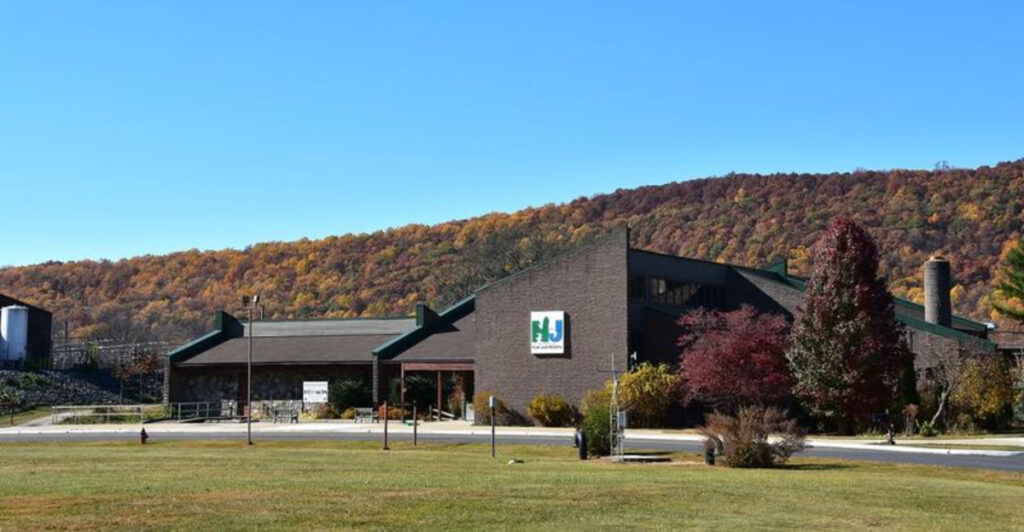
On Route 46 in Warren County, cars roll past a state facility that looks, at first glance, like the kind of place you are not supposed to think about too much.
There are low buildings, long concrete raceways, working gates, water moving where water clearly has a job to do, and signs pointing toward Pequest Trout Hatchery and Natural Resource Education Center in Oxford.
Then you learn the place does not really stop. Not at dinnertime. Not overnight. Not on a snowy Tuesday when most of New Jersey is wondering whether school will be delayed.
Behind the quiet exterior, cold water keeps moving, pumps keep working, and trout keep growing for lakes, ponds, streams, and rivers all over the state.
It is part fish nursery, part outdoor classroom, part local secret, and part reminder that some of New Jersey’s most interesting places are not trying very hard to look interesting from the road.
The quiet Warren County hatchery that never really sleeps
Pequest Trout Hatchery sits in Oxford, tucked into the Pequest Valley about nine miles west of Hackettstown, which is exactly the kind of location that makes people say, “Wait, this is here?”
The public entrance is along Route 46 between Great Meadows and Buttzville, while the GPS address is 605 Pequest Road, Oxford. That little detail alone tells you something about the place: it is visible, official, and somehow still easy to miss.
The hatchery covers about 50 acres inside a much larger wildlife management area, surrounded by the kind of Warren County landscape that makes North Jersey feel farther away than it actually is.
There are fields, wooded edges, the Pequest River nearby, and enough open space that you forget you are looking at one of the state’s busiest fish-production facilities.
The surprise is not that New Jersey has a trout hatchery. The surprise is how much happens there while most of us are driving by on the way to a diner, a farm stand, or a weekend errand.
This is not a decorative pond with a few fish tossed in for school groups. Pequest is New Jersey’s major trout-raising operation, and the work is steady because fish do not care about business hours.
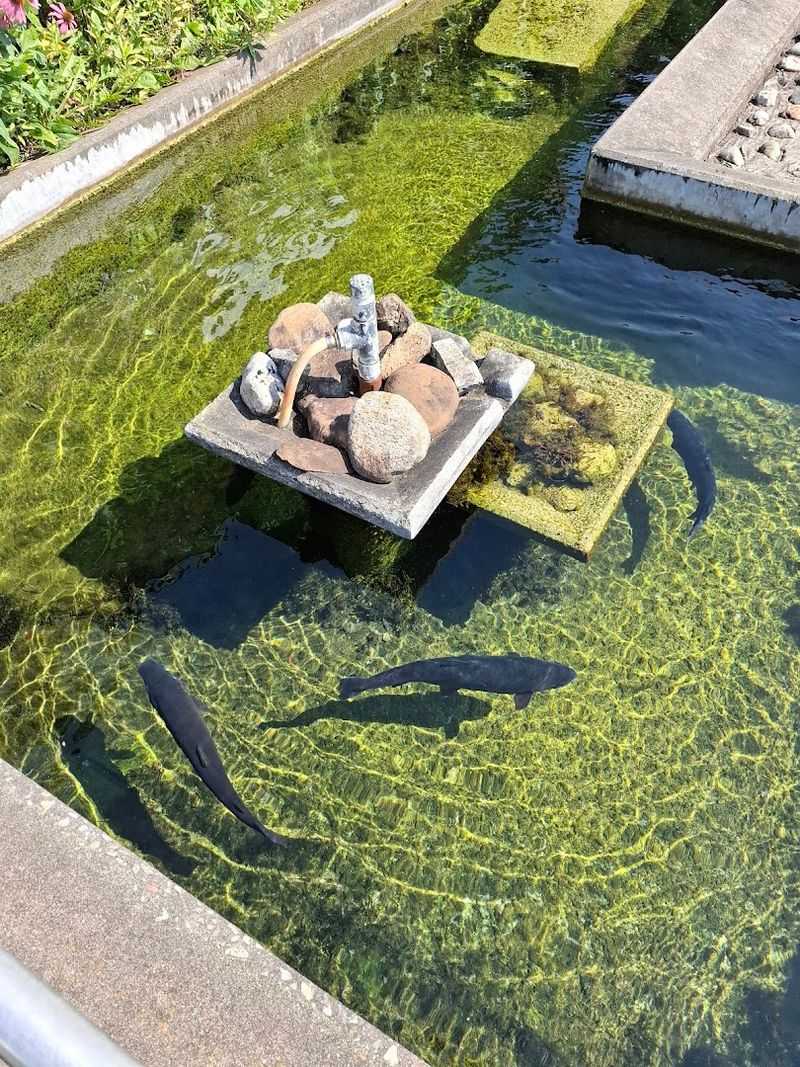
Trout need clean, cold, moving water. They need feeding. They need monitoring. They need tanks and raceways that stay in working order whether the visitor center is open or not.
That is why the “24/7” part is not a gimmick. The public may visit during posted hours, but the working hatchery itself has a very different rhythm.
Pumps, wells, water levels, oxygen, feeding schedules, equipment checks, and fish health do not politely pause at 4 p.m. It is a strange little New Jersey contrast: a quiet rural stop that most drivers barely notice, quietly helping power one of the state’s favorite spring traditions.
Why trout keep this place running long after visitors leave
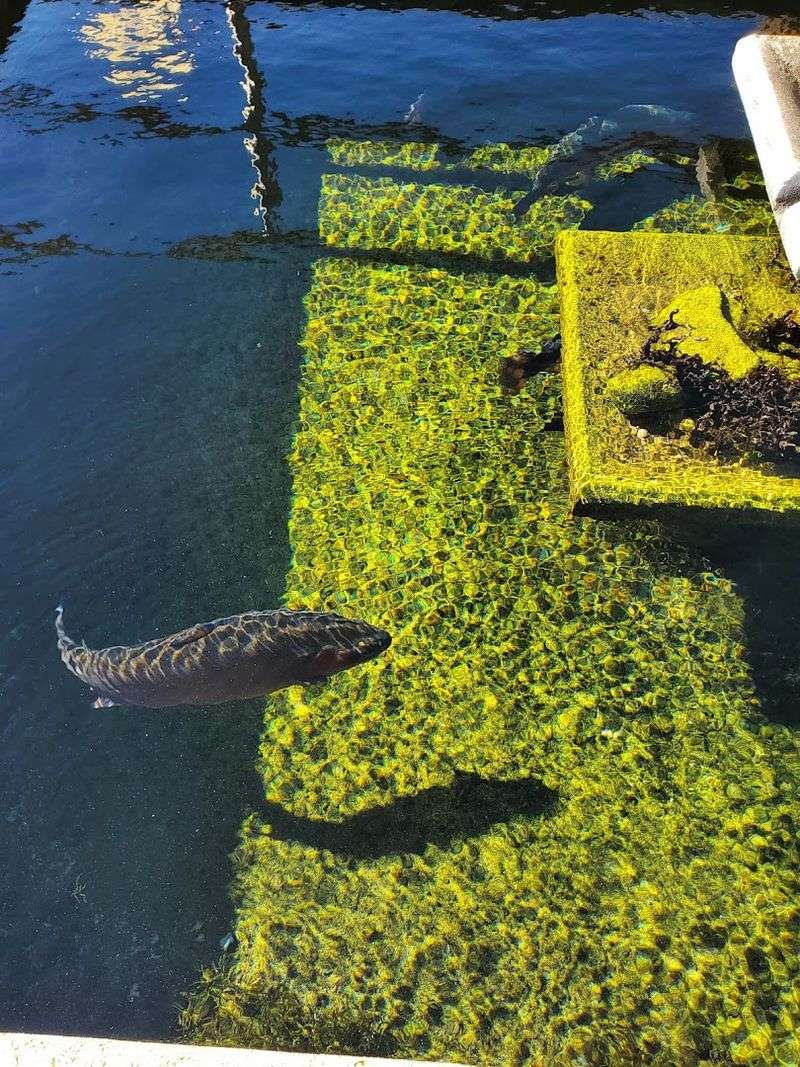
Here is the blunt truth about trout: they are beautiful, popular, and a little high-maintenance. Unlike fish that can tolerate warmer, slower, murkier conditions, trout need cold, clean, oxygen-rich water to thrive.
That is why a hatchery like Pequest cannot operate like a museum, flipping the lights off at closing and hoping everything looks fine in the morning. The fish are alive in the most practical possible way, and the system around them has to keep acting like it.
At Pequest, the job is to raise catchable Rainbow Trout for New Jersey’s stocking programs. The state uses those fish for spring and fall trout stocking, the seasonal ritual that sends anglers checking lists, watching dates, and quietly plotting which waterbody they are hitting first.
Pequest raises hundreds of thousands of Rainbow Trout each year during those stocking periods, which sounds big because it is big. It means the Oxford facility is not simply caring for a few tanks of fish.
It is growing a living supply chain, one that eventually reaches waters across New Jersey. By the time trout season rolls around, fish raised in Warren County may end up in a lake, stream, pond, or river nowhere near Oxford.
The behind-the-scenes work can be surprisingly routine, in the way all important jobs become routine when people do them well.
Fish are fed. Tanks and raceways are cleaned. Screens have to be kept clear. Fish are sorted as they grow so stocking crews can deliver trout at the right size. So yes, Pequest is open to visitors.
But the visitor version is only the friendly front porch. The real work keeps humming in the background, and the trout are the reason.
They are not waiting for a tour group. They are growing on their own schedule, one cold-water minute at a time.
The spring-fed system that makes Pequest perfect for raising fish
Long before anyone worries about fish food, trucks, stocking calendars, or excited kids peering into tanks, Pequest has to get one thing right: water. That is the whole trick.
The hatchery was built in the Pequest Valley because the area has the kind of cold, reliable groundwater that trout need. Water from the local aquifer helps feed the hatchery system, and for trout, that steady cold-water supply is basically the difference between ordinary housing and a luxury apartment with perfect air conditioning.
Stable, chilly water gives hatchery staff the controlled environment they need to raise fish from tiny young trout into the stockable fish anglers recognize. The water does not just sit there looking pretty, either.
It moves through a working system of wells, pumps, aerators, gates, valves, tanks, and raceways. That may not sound especially poetic until you remember this is the trout version of air, heat, plumbing, and room service all at once.
Everything depends on flow. Too little water, too little oxygen, or too much stress in the system can create real problems fast.
And because this is Warren County, where a quiet night can still come with storms, power issues, ice, wind, and every other little inconvenience New Jersey likes to throw around, the hatchery has to be ready for more than a sunny Tuesday.
Backup systems matter. Monitoring matters. Maintenance matters.
The whole thing works because water keeps moving in the right direction, at the right temperature, in the right amount. That is the part most people miss.
The magic of Pequest is not just “New Jersey raises trout.” It is that a very specific valley, with a very specific underground water supply, helps make the entire operation possible.
How hundreds of thousands of trout end up in New Jersey waters
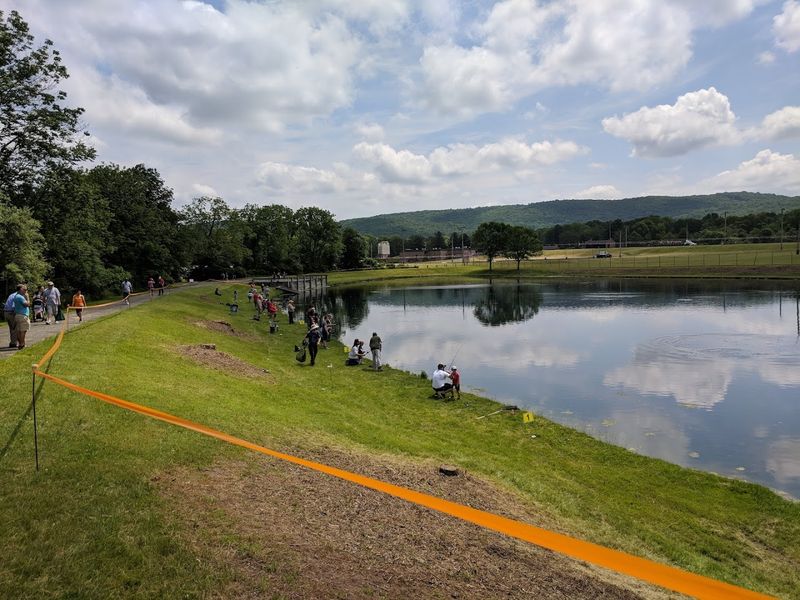
If you have ever seen a freshly stocked New Jersey trout stream in spring, you know the mood. There is a little extra energy in the parking area.
Someone is tying on a lure with the seriousness of a surgeon. Someone else is pretending not to look at the exact spot where the stocking truck might have stopped.
A lot of that anticipation traces back to Pequest. The hatchery raises Rainbow Trout for statewide stocking, and those fish are distributed during spring and fall stocking periods.
The spring program is the big one, built around the traditional early-April opener that generations of New Jersey anglers treat like a minor holiday with waders. The numbers are not small.
Pequest raises hundreds of thousands of trout each year, and those fish are moved from the Oxford facility to public waters across the state. That means the hatchery is part of a much larger recreational network.
A person fishing in Morris County, Sussex County, Bergen County, South Jersey, or somewhere along a familiar local stream may be catching a fish that began its life in Warren County raceways. There is something wonderfully practical about that.
No big mystery branding. No velvet rope. No dramatic entrance. Just a state hatchery doing the work so public waters across New Jersey can support a fishing season people genuinely look forward to.
And it is not only about the fish that get caught. Stocking programs support license sales, outdoor traditions, family trips, local tackle shops, and those extremely New Jersey conversations where someone gives you fishing advice while refusing to reveal their actual favorite spot.
Pequest sits quietly behind all of that. Most drivers who pass the place do not see the end result. They just see the facility. Anglers know better. When trout season arrives, Pequest has already been working for months.
What families can actually see when they visit
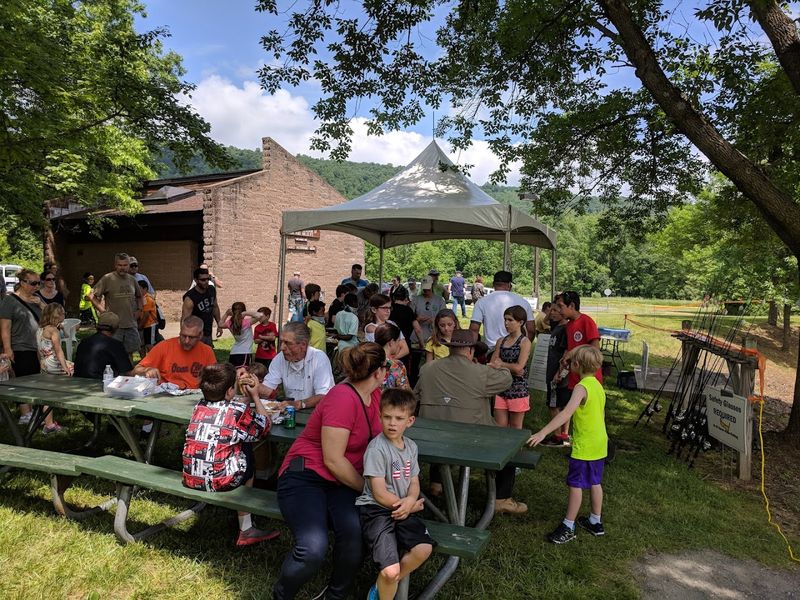
The nice thing about Pequest is that you do not have to be a serious angler to enjoy it. You can show up with kids, grandparents, a curious friend, or that one person who claims fish are boring and then immediately starts asking questions.
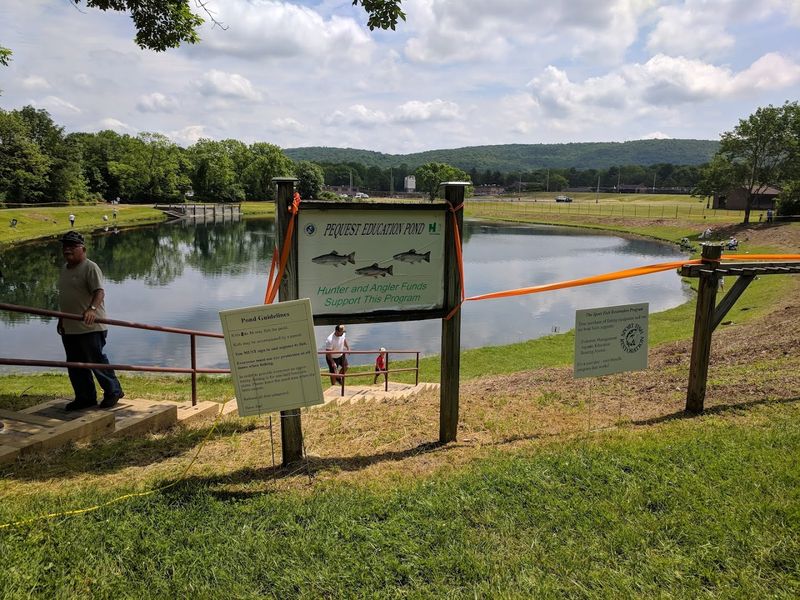
The Natural Resource Education Center is designed for visitors, and the hatchery has offered self-guided tours, exhibits, conservation programs, fishing education, and special events over the years.
The visitor entrance is easy to reach from Route 46, which makes it a simple Warren County stop rather than a complicated expedition that requires three maps and a group chat.
Once you are there, the big draw is seeing the hatchery process up close. This is not a theme park version of nature.
It is better than that because it is real. You can look at raceways, learn how trout are raised, and get a sense of how much planning goes into something many people only think about when they are standing beside a stream with a fishing rod.
Families also get the benefit of space. Pequest connects visitors to outdoor recreation, with trails and the surrounding wildlife management area adding more reason to linger.
That makes it a useful stop even if you are not planning an all-day outing. You can make it an educational detour, stretch your legs, let kids see something more memorable than another screen, and still be close enough to other Warren County stops to build a relaxed afternoon around it.
The best part is that Pequest does not ask visitors to pretend everything is polished and precious. It is a working place.
There are fish, water systems, outdoor paths, education programs, and the occasional reminder that New Jersey has a lot more going on behind the roadside signs than people give it credit for.
Why this free Oxford spot deserves a lot more attention
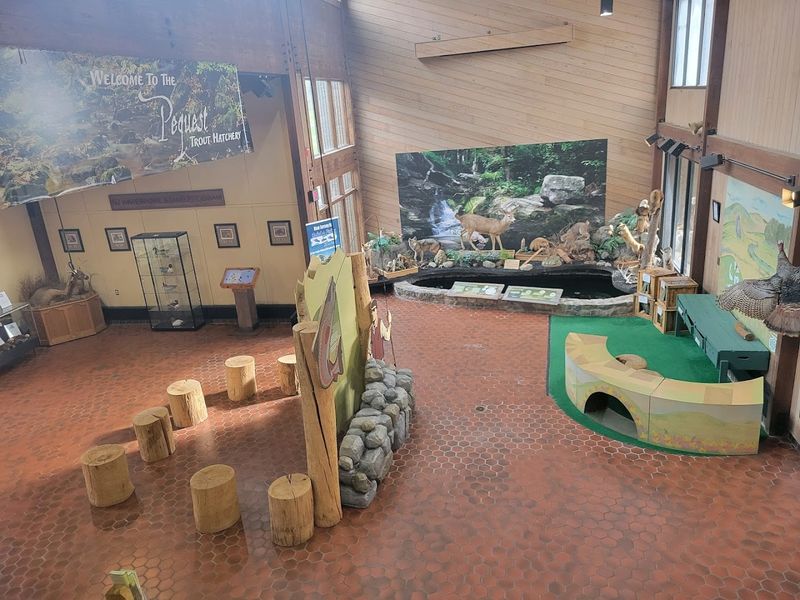
For a state that can make headlines out of boardwalk pizza, Turnpike exits, and whether Central Jersey exists, New Jersey is weirdly quiet about some of its best low-key places. Pequest is one of them.
It is free to visit, and it offers something many family outings do not: a real reason to be there. You are not just wandering around because someone needed plans.
You are seeing where the state raises trout, how cold-water systems work, and why a facility in Oxford matters to people fishing waters miles and miles away. There is also a very New Jersey kind of charm in the location.
This is not a polished tourist corridor. It is Warren County, with Route 46 rolling past, farm-country stretches nearby, and small-town names like Oxford, Buttzville, Great Meadows, and Hackettstown doing their quiet work on the map.
Pequest belongs to that version of New Jersey, the one that feels practical, outdoorsy, and slightly under-discussed. The place also has range.
A curious kid can watch fish and ask questions. A parent can sneak in an educational stop without making it feel like homework.
An angler can appreciate the machinery behind trout season. A local history or nature person can connect it to the Pequest River Valley and the surrounding wildlife management area.
And then there is the simple pleasure of learning what a place does after passing it for years. That may be the real hook here.
Pequest is not hidden because it is impossible to find. It is hidden because most people do not slow down long enough to understand it.
The facility keeps working when the visitor center closes, when the road gets quiet, and when the valley settles into night. Cold water keeps moving through the system.
Trout keep growing in Oxford. Somewhere down the line, a New Jersey angler feels a tug at the end of a line and has no idea how much started at this quiet place off Route 46.