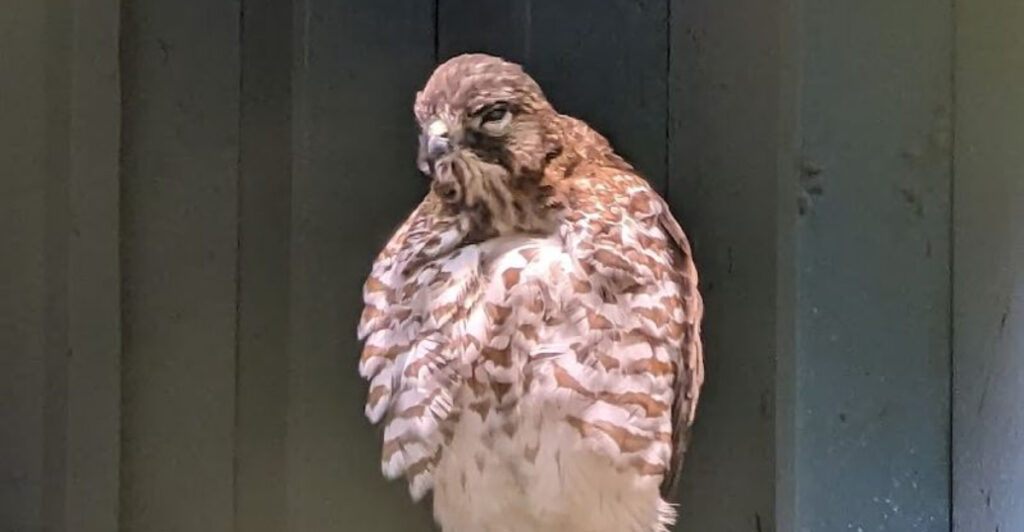
A bald eagle named Uno lives just off White Bridge Road in Millington, and that is already enough to make the turn feel a little unreal. One minute you are in classic Morris County territory, with quiet roads, deep trees, and the Great Swamp nearby.
The next, you are standing close enough to see the hooked beak of an eagle, the sleepy stare of an owl, or the compact little posture of a kestrel watching everyone like it runs the place.
This is The Raptor Trust, a working wild bird rehabilitation center where injured and orphaned birds are treated behind the scenes while visitors walk the self-guided aviary trail for free.
It is not a polished animal attraction, and that is exactly the point. The place feels practical, local, and deeply cared for, with every enclosure reminding you that these birds are not here for decoration.
They are here because someone gave them another chance.
The bird hospital hiding in the New Jersey woods
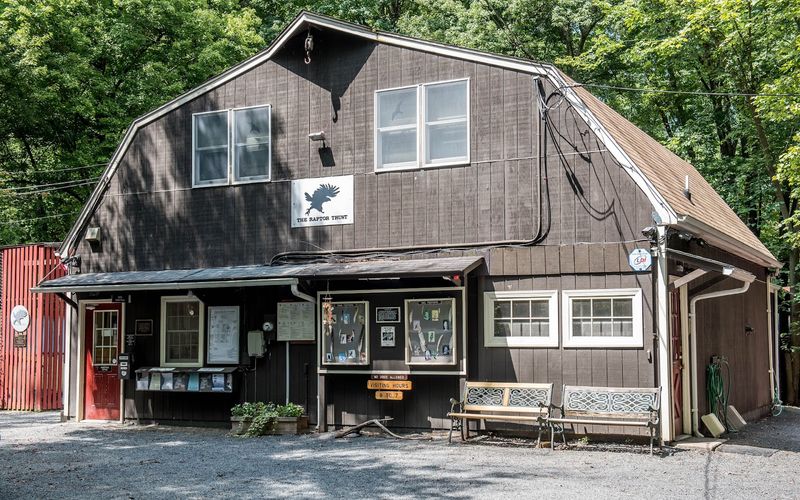
Turn onto White Bridge Road and The Raptor Trust does not announce itself like a major attraction. There is no flashy entrance, no loud production, no sense that you have stumbled into something built for crowds.
It feels more like a quiet New Jersey secret tucked beside the Great Swamp National Wildlife Refuge, which makes the first glimpse of the aviaries even better.
The center sits in the Millington section of Long Hill Township in Morris County, surrounded by the kind of green, marshy, bird-rich landscape that makes its work feel perfectly placed.
The organization is both a hospital and an education center, caring for injured, sick, and orphaned native wild birds while also teaching people how these animals survive in the real world. Its story goes back further than many visitors expect.
In 1968, Len and Diane Soucy bought 14 acres in Millington, and Len began caring for injured raptors part-time in their backyard. As word spread, people started bringing birds of all kinds, not just hawks and owls.
The Raptor Trust was incorporated as a nonprofit in 1983, growing from a backyard rescue effort into one of the country’s notable wild bird rehabilitation centers. That history still gives the place its personality.
It does not feel slick. It feels useful.
There is an infirmary, outdoor housing for birds, an education center, and a visitor trail where people can meet permanent residents that cannot safely return to the wild. That mix is what makes the visit stick.
You are not just looking at owls because owls are cool, although, obviously, owls are very cool. You are seeing the public-facing edge of a serious rescue operation, one still built around the same basic idea: wild birds deserve expert care, even when they arrive scared, stunned, or badly hurt.
How injured hawks owls and eagles get a second chance
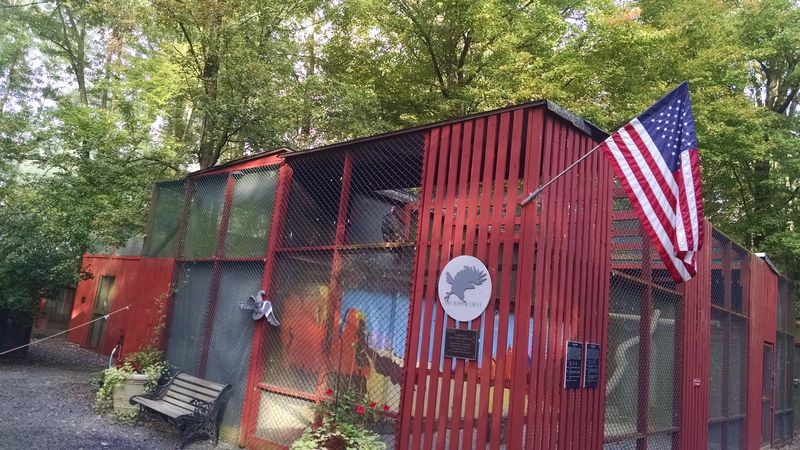
The important thing to know is that most of the real drama happens out of public view. A bird arrives, and visitors do not get a theatrical treatment-room scene.
They get the better version: a professional wildlife team doing careful, quiet work where the bird’s stress matters as much as the injury. The Raptor Trust’s infirmary handles a huge share of New Jersey’s bird rehabilitation, with thousands of birds coming through its doors each year.
Some have hit windows. Some have been struck by cars.
Some are babies that fell from nests. Others arrive tangled, poisoned, sick, weak, or caught in the unfortunate overlap between wild habitat and human life. The first step after admission is not flashy medicine. It is calm.
Birds are placed in a warm, dark, quiet environment so they can de-stress before staff begin a full evaluation. That makes sense when you think about it from the bird’s point of view.
A window strike or car collision is already terrifying. Then a giant human scoops it up, puts it in a box, and drives it somewhere strange.
Once the bird settles, wildlife rehabilitation technicians check for external wounds, broken bones, internal injuries, and other problems. Treatment can mean cleaning and bandaging wounds, stabilizing fractures, giving antibiotics or other medications, or placing the bird in a species-appropriate enclosure with the right food and water.
The center also uses diagnostic tools such as X-rays and veterinary support for more complicated cases. The goal, whenever possible, is release.
Birds move from intensive care into flight cages when they are strong enough, then staff evaluate whether they can fly, self-feed, perch, and behave normally. That standard is high because it has to be.
A wild bird going back outside does not get a soft landing if something is still wrong.
The free trail where visitors can meet resident raptors
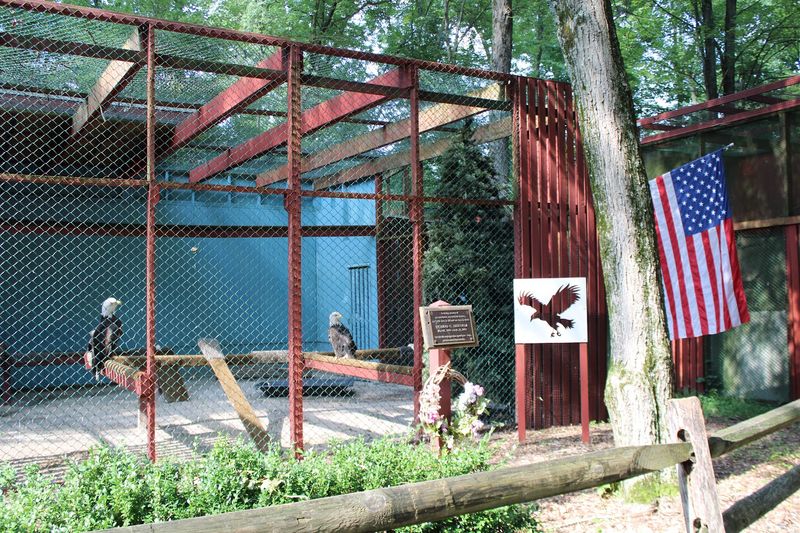
Admission to the self-guided Aviary Trail is free, which feels almost suspiciously generous until you remember that The Raptor Trust is a nonprofit and donations help keep the place running.
Visitors can walk the trail and view hawks, eagles, falcons, vultures, and owls in outdoor aviaries, with the visit feeling more like a slow woodland stroll than a scheduled attraction.
The resident birds have names, which immediately makes the experience more personal. Uno and Colonel are bald eagles. Thor is a golden eagle. Aretha is a peregrine falcon.
There are red-tailed hawks, turkey vultures, a black vulture named Winston, and a lineup of owls that can easily become the highlight for kids who thought they were only coming for the eagles. It is the sort of place where someone may arrive excited to see a massive raptor and then get completely distracted by a tiny owl with a big attitude.
Adults do the same thing, just with more pretending that they are being educational. The trail is self-guided, so you can move at your own pace.
Some visitors might take 30 minutes. Others will read every sign, double back to find a bird that was hiding a minute ago, and spend much longer than planned.
That is a nice problem to have. Hours change by season, with shorter winter hours and extended summer hours, and visits are weather permitting.
That last part matters in New Jersey, especially after winter storms, when icy paths can linger longer than expected. This is not a loud place.
It is better when treated like a library with feathers. The quieter you are, the more you notice: a talon gripping a perch, a head turning almost impossibly far, a wing stretching for one brief second before folding back into stillness.
Why some birds become permanent ambassadors
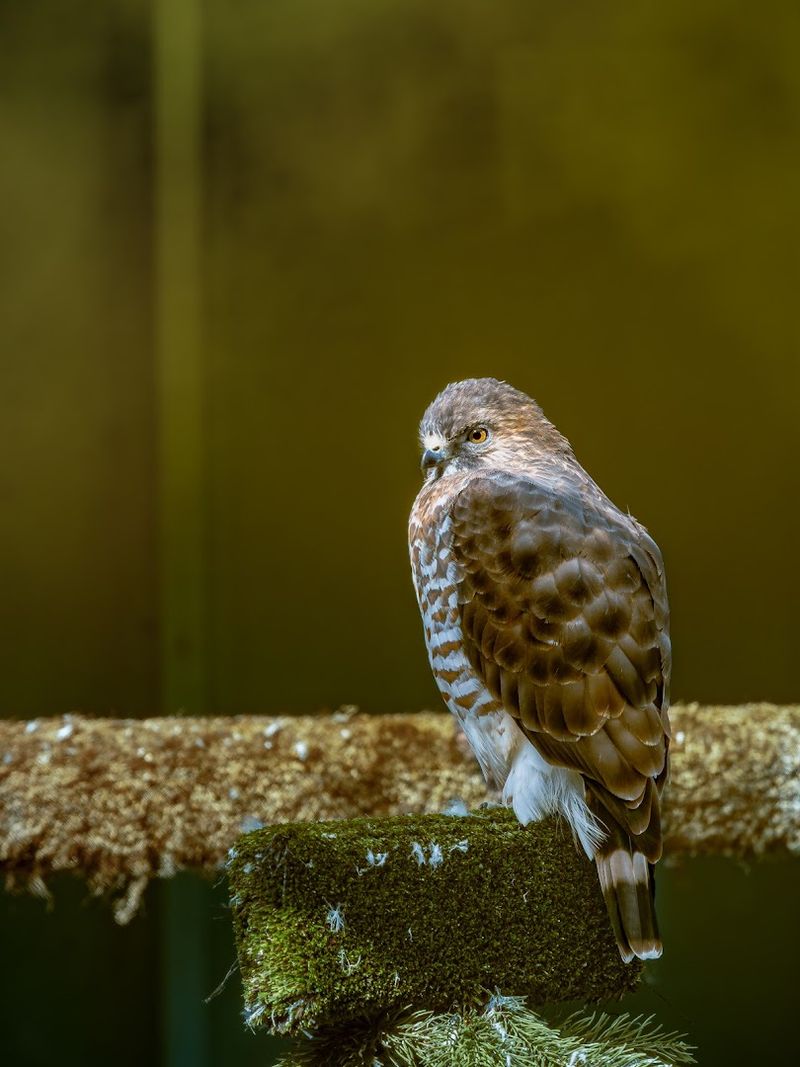
Not every recovery ends with a big release moment, and The Raptor Trust is honest about that. Some birds heal enough to live comfortably, but not enough to survive in the wild.
That difference matters. A hawk with impaired flight, an owl that cannot hunt properly, or an eagle with a lasting injury may look strong to a visitor.
In the wild, though, “almost okay” is not okay. Birds need to fly well, perch securely, feed themselves, avoid danger, and respond to their environment without hesitation.
A small limitation can become fatal very quickly. That is why some unreleasable birds become permanent residents and education ambassadors.
They are not there because captivity is cute. They are there because going back outside would be unsafe, and their presence helps people understand what wild birds face.
The Raptor Trust’s permanent residents are native species, the kinds of birds that naturally live in or migrate through New Jersey. That detail gives the aviary trail a very local feeling.
These are not random animals brought in to impress visitors. They are the birds that share our highways, wetlands, farm fields, suburbs, backyards, and shorelines.
You may never look at a red-tailed hawk on a light pole the same way again. Some birds also become unreleasable because of imprinting, which can happen when young animals learn the wrong identity or behavior from too much human contact.
Baby birds are especially vulnerable to this, which is one reason wildlife rehabilitators are so careful about how they raise orphaned young. A bird that thinks people are its flock may not survive properly in the wild.
That turns the permanent residents into teachers in the most direct way. Their stories show visitors why professional rehabilitation matters, why good intentions are not always enough, and why wild animals need specialized care instead of backyard improvisation.
What families should know before visiting
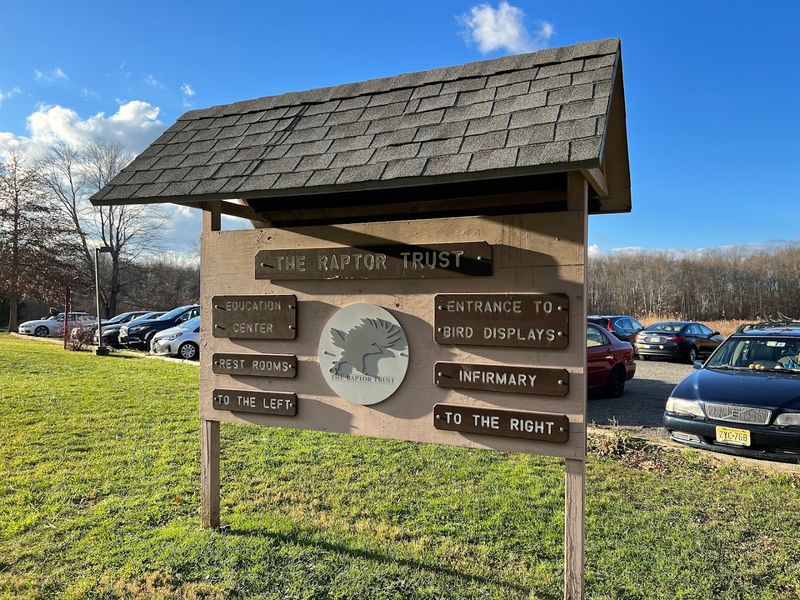
This is one of those rare New Jersey outings that can be simple, meaningful, and free, but it works best when families know what kind of place they are visiting. The Raptor Trust is not a zoo with shows every hour.
It is a working rehabilitation center with public aviaries, and that quieter rhythm is part of its charm. The visitor parking area is separate from injured bird admitting, which is good to know before you start second-guessing yourself in the car.
Families should look for the visitor parking area near the Education Center and follow posted signs rather than pulling into the intake area used for birds needing help. For kids, the sweet spot is to treat the visit like a nature walk with a purpose.
Wear comfortable shoes, keep voices low, and expect the birds to behave like birds, not performers. Owls may be sleepy.
Hawks may sit still for long stretches. A vulture may steal the whole show by doing absolutely nothing in a way that somehow becomes fascinating.
The Education Center sits near the aviary trails and medical infirmary and is used for select programs, classes, and events, so a casual trail visit and a scheduled educational program are not quite the same thing. If you are bringing children, the best preparation is not a long lecture.
Just tell them the birds are healing, resting, or living there because they cannot go back to the wild. That simple explanation usually does more than a speech.
And if someone in your family finds an injured bird someday, The Raptor Trust recommends calling the infirmary before bringing it in. The safest short-term move is usually to place the bird in a ventilated cardboard box, keep it warm, dark, and quiet, and avoid giving food or water unless a licensed rehabilitator says to.
It is calm, practical advice, which fits the place perfectly.
How donations keep this wild bird rescue flying
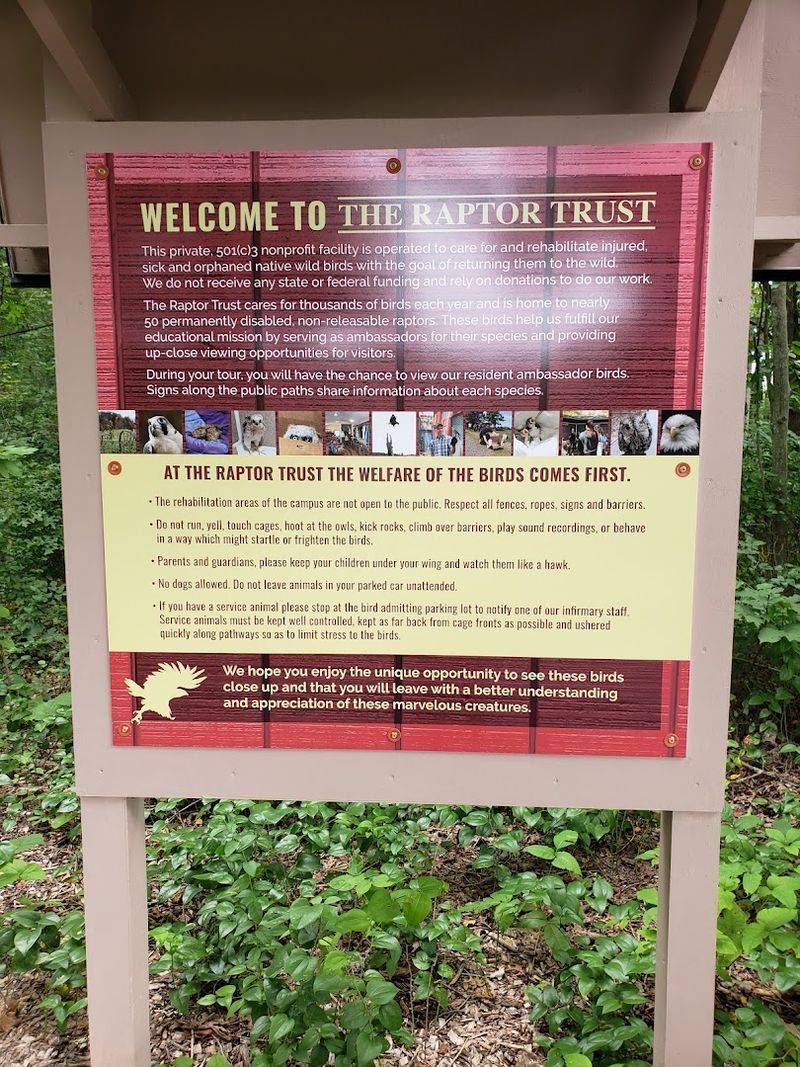
Free admission is wonderful for visitors, but it does not mean the work is free to run. The Raptor Trust relies on private support to continue treating and rehabilitating wild birds, and that makes every quiet walk past the aviaries part of a much bigger picture.
The needs are not all dramatic, either. Yes, there is medical care, specialized equipment, outdoor enclosures, trained staff, and the constant upkeep that comes with caring for large birds with sharp beaks and sharper opinions.
But there are also everyday supplies that make the whole place function. A bird hospital needs medicine, but it also needs towels.
It needs food, but not just one kind of food. It needs cleaning supplies, laundry help, paper products, recordkeeping, heating pads, newspapers, and people willing to answer the phone when someone has a stunned bird in a shoebox and no idea what to do next.
That practical side is part of what makes The Raptor Trust feel so grounded. It is not a place built around spectacle.
It is built around the unglamorous, repetitive, necessary work that gives an injured animal a chance. The on-site gift shop helps too, with bird-themed gifts, books, apparel, toys, and other small finds that feel a little more meaningful because the money supports the mission.
Still, the most memorable part of visiting is not buying something or even spotting the biggest eagle. It is realizing how much care exists just beyond the trail, in the quieter spaces visitors do not see.
Somewhere nearby, another bird is being warmed, examined, fed, cleaned, treated, rested, and watched. With luck, that bird will recover.
With more luck, it will leave Millington the way every wild bird should, by lifting off and disappearing back into the New Jersey sky.