A granite door stands permanently ajar in a Camden cemetery, as if Walt Whitman left it that way on purpose for every reader who would come looking for him later. A mile or so away, his last home sits on Mickle Boulevard, modest enough to miss if you are not paying attention.
That contrast is what makes Camden such a rewarding stop for Whitman fans. This is not a polished literary fantasy with dramatic gates and souvenir-ready scenery.
It is a real city, with hospital traffic, transit stops, brick rowhouses, and a poet’s final chapter tucked right into the middle of it. Whitman came to Camden in 1873, bought the only home he ever owned in 1884, and spent his last years revising, receiving visitors, and becoming the version of himself that history remembers most clearly.
The house is currently closed for major restoration until fall 2026, but Camden’s Whitman story is still very much alive.
Why Walt Whitman’s Camden Years Still Matter
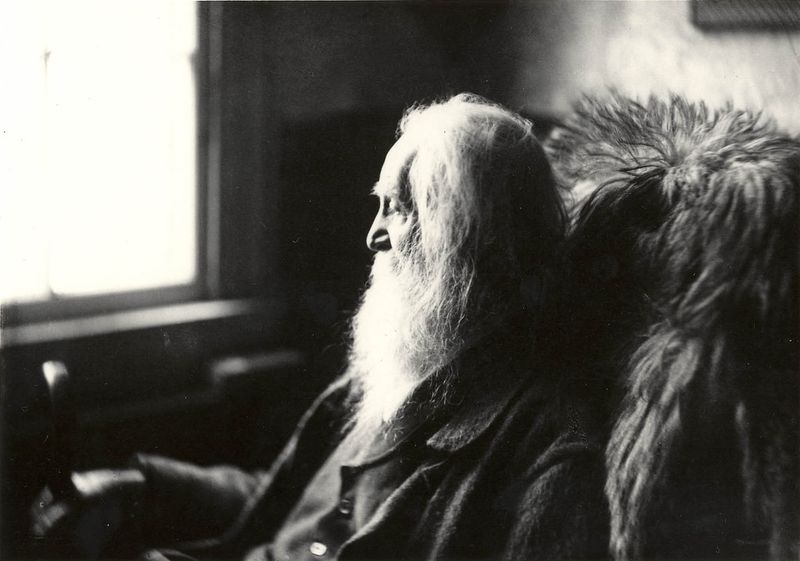
Camden first became part of Walt Whitman’s life by accident, which feels almost too perfect for a poet who spent so much time celebrating chance encounters, ordinary streets, and the messy sprawl of American life. In 1873, after suffering a stroke, Whitman moved to Camden to stay with his brother George.
He was in his fifties, already known for Leaves of Grass, and already the kind of writer people either admired deeply or argued about loudly. Camden was not the place where he became famous, but it became the place where his fame, body, friendships, and work all settled into their final shape.
He stayed in the city for nearly two decades, and those years matter because they show Whitman not as a distant marble bust, but as a person living through pain, aging, money worries, creative stubbornness, and plenty of company.
Famous admirers came to see him here, including Bram Stoker and Oscar Wilde, which says a lot about the pull of this unassuming New Jersey address.
Imagine that for a second: international literary figures making their way to Camden because the old poet in the little house was worth the trip. The city gave Whitman a base close to Philadelphia but distinct from it, a place connected to ferries, rail lines, neighborhoods, and working people.
That matters because Whitman’s poetry was never meant to float above daily life. It belonged to the street, the body, the crowd, and the person passing by.
Camden gave him all of that in his final act.
Step Inside the Modest House That Became a Literary Landmark
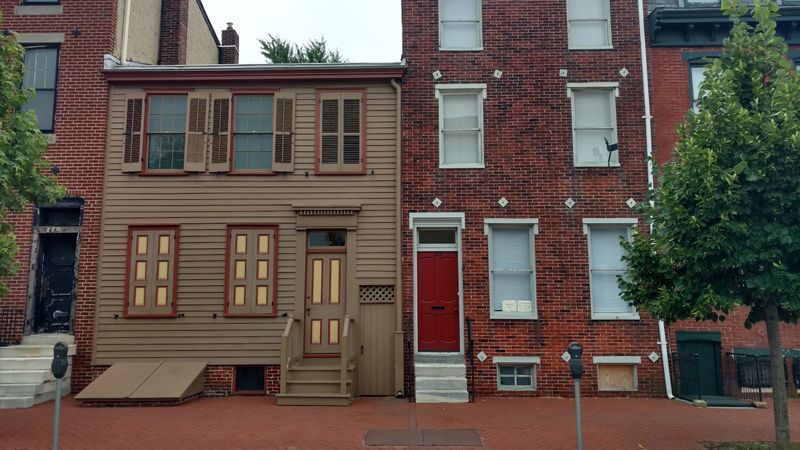
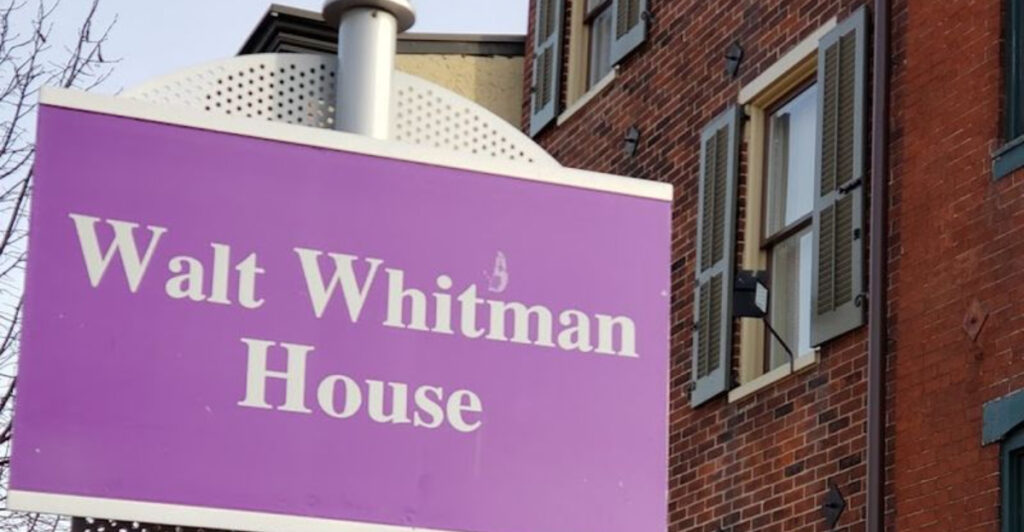
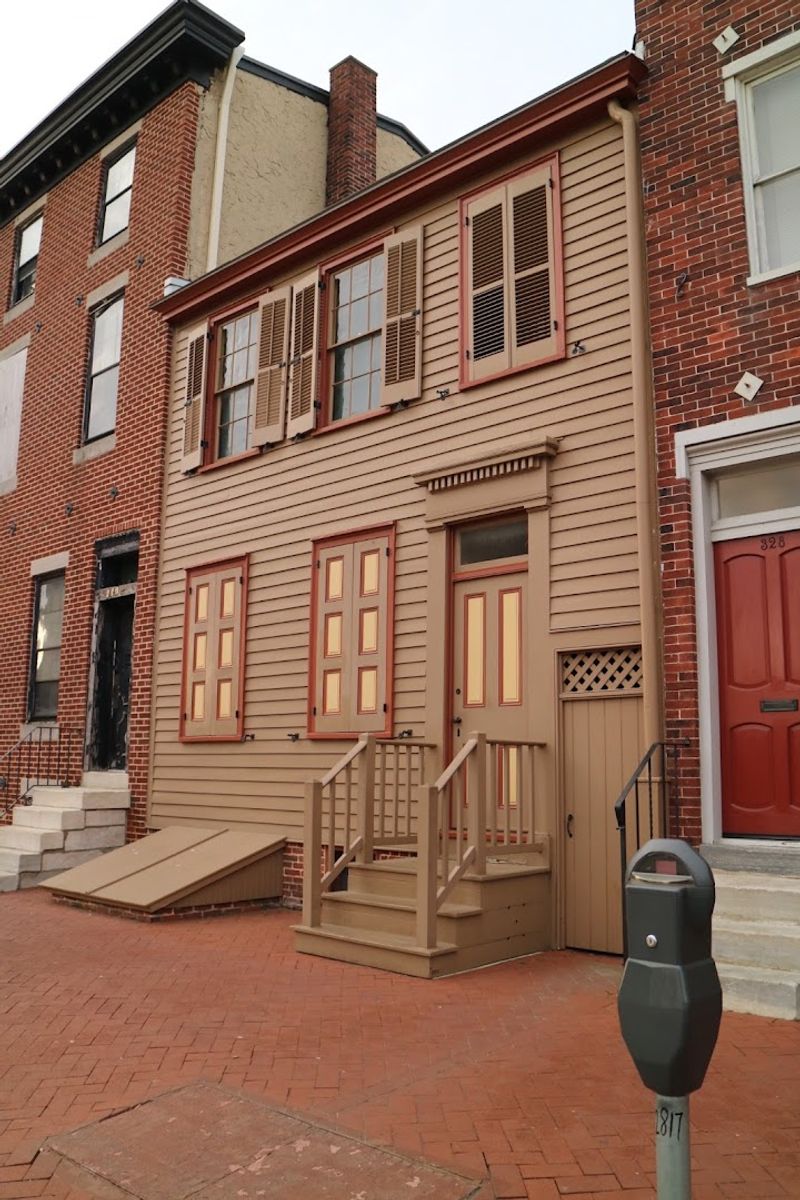
The house at 330 Mickle Boulevard, also known as Martin Luther King Jr. Boulevard, does not announce itself like a grand shrine. That is part of its charm.
Whitman bought the two-story frame house in 1884 for $1,750, making it the only home he ever owned, and the place was modest even then. It was not a dreamy writer’s retreat with rolling lawns and a lake out back.
It needed repairs, had the plainness of a working city home, and sat in a busy Camden neighborhood rather than some secluded countryside setting. But that is exactly why the site feels so right.
Whitman was the poet of workers, sidewalks, ferry crossings, overheard voices, and shared public life, so his final home being a humble rowhouse in Camden makes more emotional sense than any mansion could.
Before its current closure, the house was known for intimate details that literary fans tend to remember: personal belongings, original furnishings, letters, rare photographs, and the room where Whitman died in 1892.
It is the sort of historic house where the small things do the heavy lifting. A bed, a desk, a doorway, a narrow room — none of it needs theatrical staging when you know who lived there and what he was still working on near the end.
The site is now in the middle of a major restoration and visitor improvement project, including a new visitor center, with reopening targeted for fall 2026. That temporary closure is frustrating for anyone planning an immediate visit, but it is also a sign that Camden’s Whitman landmark is being treated like the national treasure it is.
How Camden Shaped the Final Chapter of Whitman’s Life
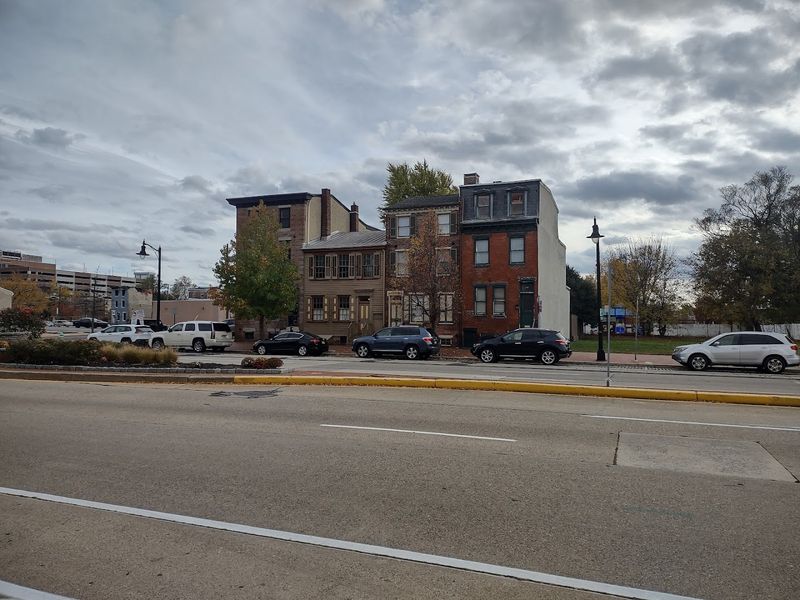
Local context matters here, because Camden has always been more layered than its outside reputation suggests. People who only know the city through headlines miss the point entirely.
Whitman’s Camden was a place of movement: ferries, railroads, river traffic, nearby Philadelphia, neighborhood streets, visitors coming and going. That kind of setting suited him.
He had written about America as a living, breathing crowd, and his final years unfolded in a city that was never frozen in place. From Camden, Whitman remained connected to the wider literary and artistic world while also living a very grounded daily life.
Thomas Eakins, the Philadelphia painter and photographer, became part of his circle and helped preserve the image of the older Whitman that many people still picture today: the beard, the open collar, the calm but piercing presence. The city also shaped how visitors experience him now.
The Whitman House is close to public transit, including PATCO and River Line connections near the Walter Rand Transportation Center, which means this literary pilgrimage does not require a country drive or a full weekend itinerary. It sits inside the rhythms of South Jersey life.
That accessibility feels appropriate for Whitman, who would probably have enjoyed the idea that a reader could arrive by train, walk a few blocks, and end up at the doorstep of his final home. Camden did not soften Whitman into something quaint.
It preserved the more interesting version of him: older, physically limited, still revising, still opinionated, still receiving guests, and still attached to the ordinary world he had spent his career turning into poetry.
The Story Behind Leaves of Grass and Whitman’s Last Great Work
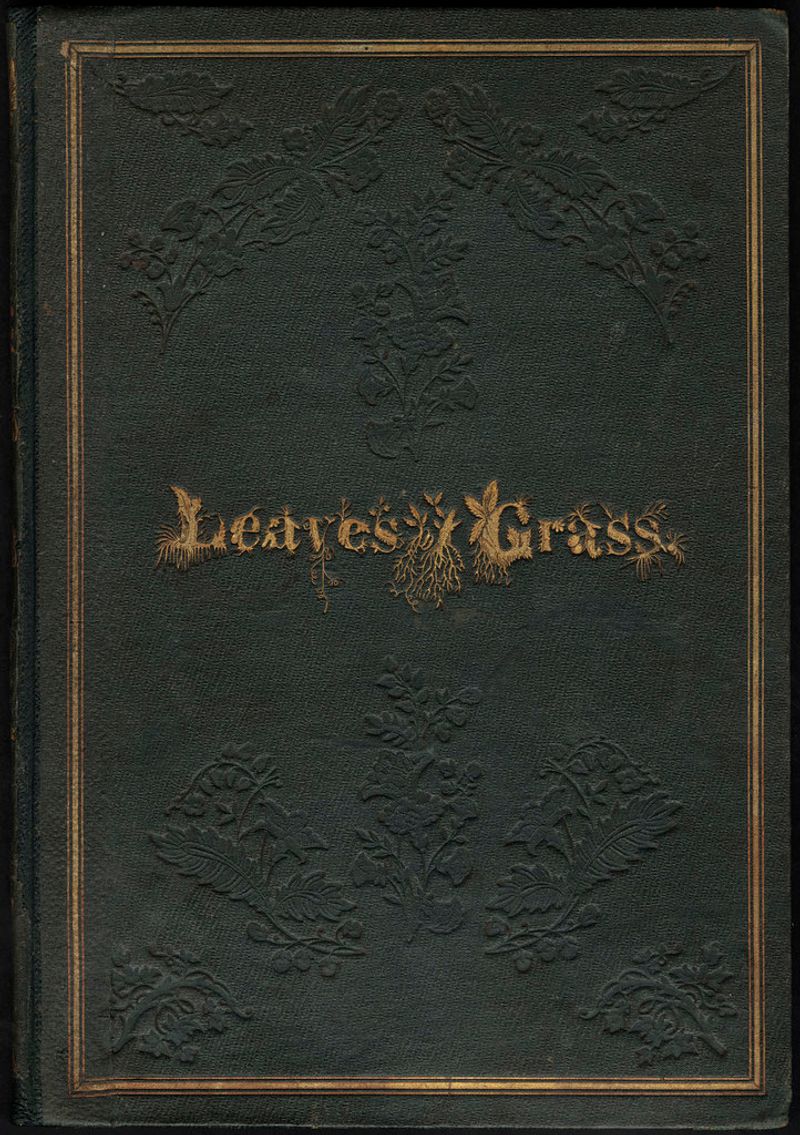
For all its reputation as a classic, Leaves of Grass was never really one fixed book during Whitman’s lifetime. It was more like a lifelong project with a spine.
He first published it in 1855, but he kept returning to it, expanding it, rearranging it, and revising it for decades. That is where Camden becomes essential.
By the time Whitman was living in his Mickle Street house, he was not simply looking backward at the work that made him famous. He was still shaping it.
The final version, often called the “deathbed edition,” belongs to 1891–1892, the very end of his life in Camden. That phrase sounds dramatic, and it is, but it should not make the book feel fragile or sentimental.
Whitman was intensely involved in how his work appeared to the world. He cared about structure, tone, additions, deletions, and the way his poems spoke to one another across editions.
In Camden, Leaves of Grass became not just a book he had written, but a book he had lived with long enough to keep arguing with. He also published important late prose during his Camden years, including Specimen Days and Collect in 1882 and November Boughs in 1888.
That makes the house feel less like a retirement address and more like a workshop with creaky floors. Readers who visit Camden are not just chasing the birthplace of a famous idea.
They are tracing the place where Whitman kept revising his own legacy almost until the end. Few literary landmarks can claim that kind of creative pressure in such a small domestic space.
A Walk to Harleigh Cemetery Completes the Pilgrimage
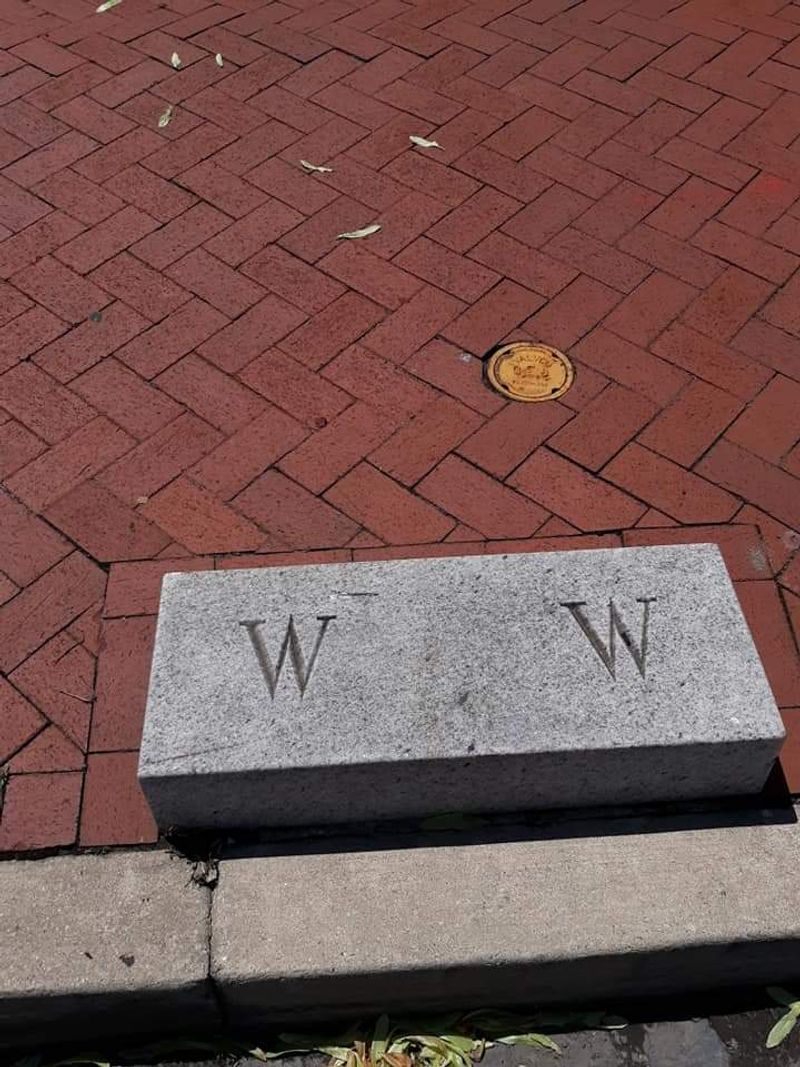
Harleigh Cemetery gives the Camden Whitman trail its quiet, heavy finish. The cemetery is at 1640 Haddon Avenue, about 1.5 miles from the Whitman House by the route along Martin Luther King Boulevard and Haddon Avenue, past the Cooper medical campus and toward Our Lady of Lourdes.
It is close enough to feel connected to the house, but far enough that the mood changes as you go. The city gives way to cemetery roads, mature trees, and the kind of stillness that makes small sounds stand out.
Whitman was buried there on March 30, 1892, four days after his death, following a viewing in the parlor of his Camden home and a procession of about a mile to the tomb.
The mausoleum had been built to his own specifications by Reinhalter and Company of Philadelphia at a cost of about $4,000, a striking amount of money for a poet who had known financial difficulty.
The tomb itself is unforgettable: rough-hewn stone, built into a wooded hill, more severe than pretty, and absolutely intentional. It was inspired by William Blake’s “Death’s Door,” and its granite doorway remains one of the most haunting details on the whole pilgrimage.
This is not a grave you simply glance at before moving on. It feels designed to make you stop and think about Whitman’s favorite subjects: the body, the earth, death, return, and the stubborn possibility that nothing human fully disappears.
For fans, Harleigh is not an add-on. It is the closing line of the Camden story.
Why This Camden Destination Deserves More Attention
Part of Camden’s appeal as a Walt Whitman destination is that it does not try too hard to impress you. The city has major waterfront draws nearby, including Adventure Aquarium and Battleship New Jersey, but the Whitman trail works differently.
It asks for a slower kind of attention. The house, the neighborhood, the cemetery, and the restoration project all tell a story that is more intimate than flashy.
That is exactly why it deserves more recognition. Whitman is one of those writers people quote so often that he can start to feel oddly abstract, but Camden makes him specific again.
He had an address. He had rooms. He had visitors. He had a tomb built before he died.
He had a city he once described as an accidental arrival, then chose to make part of his permanent story.
The ongoing $13 million restoration and visitor improvement project also suggests that the site’s future could be stronger than its recent past, with plans for improved access, restored historic structures, exhibits, gathering space, lectures, educational programming, and a new visitor and interpretive center.
That matters because a literary landmark should not only preserve furniture and dates. It should help people understand why the place still has something to say.
Camden’s Whitman sites do that beautifully because they keep the poet at human scale. This is not the grand myth of Walt Whitman floating above America with his beard and his big lines.
This is Walt Whitman in New Jersey, in a real city, in a modest house, still working on the book that outlived him.