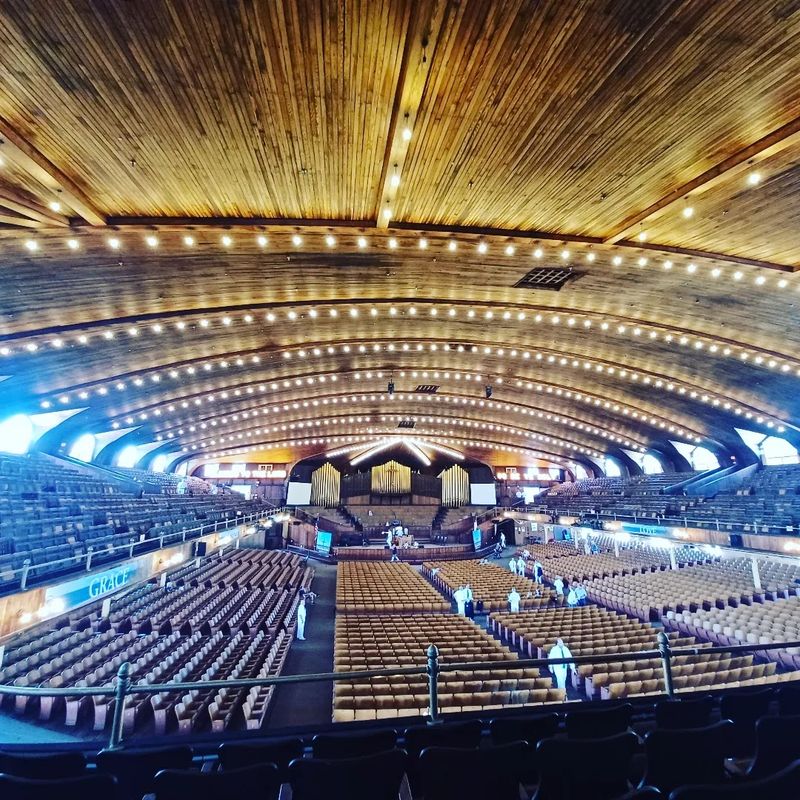
Stand inside the Great Auditorium in Ocean Grove and look up, and the whole place seems to curve above you like the hull of a massive wooden ship. That is not an accident.
This New Jersey landmark was built in 1894 by shipbuilders, finished in about 90 days, and somehow still feels both enormous and handmade. It sits only a short walk from the Atlantic, surrounded by gingerbread cottages, canvas tents, and the kind of quiet Shore-town streets where porch chairs still matter.
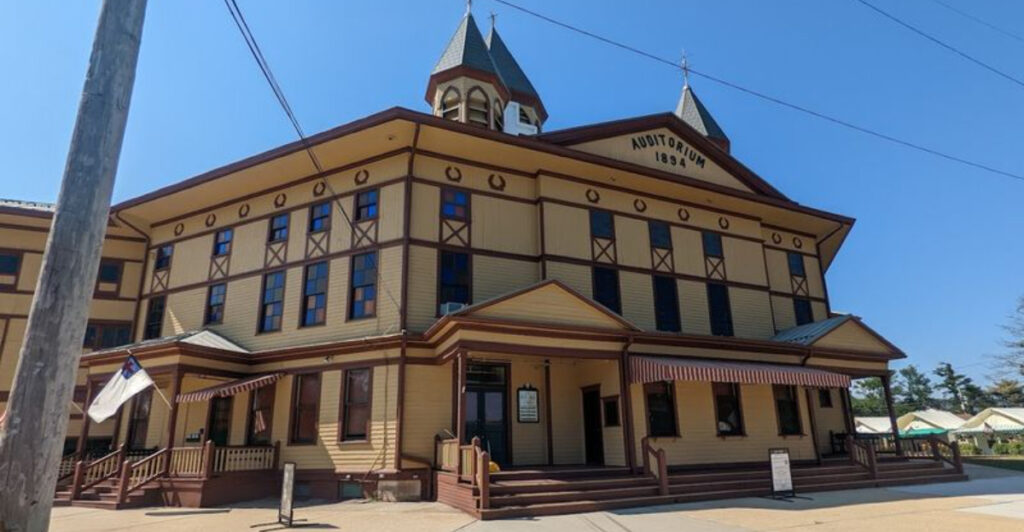
From the outside, it looks like a grand old meeting hall. Inside, it becomes something else entirely: part concert venue, part historic time capsule, part architectural flex from another century.
Ocean Grove has plenty of pretty corners, but the Great Auditorium is the one that makes people stop talking for a second. Not because it is polished and modern, but because it absolutely is not.
The Ocean Grove Landmark That Feels Bigger Than Its Shore Town
You feel it before you fully understand it. Ocean Grove is not a big place, and that is part of the fun.
It is technically part of Neptune Township, tucked along the Monmouth County shoreline between Bradley Beach and Asbury Park, with Wesley Lake to the north and Fletcher Lake to the south.
The streets are narrow, the houses wear Victorian trim like jewelry, and Main Avenue has the small-town rhythm of coffee, ice cream, porch gossip, and beach towels slung over shoulders.
Then, almost out of nowhere, the Great Auditorium appears and changes the scale of the whole scene. It does not merely sit in town.
It anchors it. The building rose from Ocean Grove’s camp meeting roots, when Methodist leaders were creating a seaside place where religion and recreation could share the same salty air.
Early gatherings started much more simply, with a preacher’s stand and open seating, but the crowds kept growing. By the 1890s, Ocean Grove needed something much larger than a summer shelter.
The result was a building designed to hold thousands, right in a town that still feels more like a square mile of porches than a major destination. That contrast is what makes it memorable.
You can wander past the 114 canvas tent structures still clustered near the auditorium, then look up at a hall originally built for a crowd that would swallow many Shore-town venues whole.
Today, with padded theater-style seating replacing some of the original benches and folding chairs, the capacity is closer to 7,000, but it still feels wonderfully oversized.
It is the rare landmark that makes a small town feel even more intimate, because everything around it seems to be orbiting one big, creaky, beloved wooden giant.
How Shipbuilders Raised the Great Auditorium in Just 90 Days
By the winter of 1893, Ocean Grove had a problem that was actually a compliment: too many people wanted to gather there. Dr. Ellwood H.
Stokes, one of the key figures in the Ocean Grove Camp Meeting Association, had pushed for a new auditorium to mark the community’s 25th anniversary, and not some modest little hall either. The goal was a building that could seat roughly 10,000 people, which sounds ambitious now and must have sounded slightly wild at the time.
Ground was broken on December 2, 1893, and the pace that followed feels almost comical by modern construction standards. Crews had the building ready for the 1894 season in about 90 days, at a reported cost of $69,000.
For perspective, many of us have watched a bathroom renovation take longer than that, and nobody was trying to span 161 feet with trusses. The shipbuilders brought a very specific kind of know-how to the job.
They understood curves, ribs, weight, and the discipline of building something large that had to hold together under stress. The Great Auditorium uses seven main trusses set 21 feet apart, plus 18 angle trusses, with hundreds of thousands of pounds of steel and iron worked into the structure.
It was not just a big wooden box with seats. It was engineered.
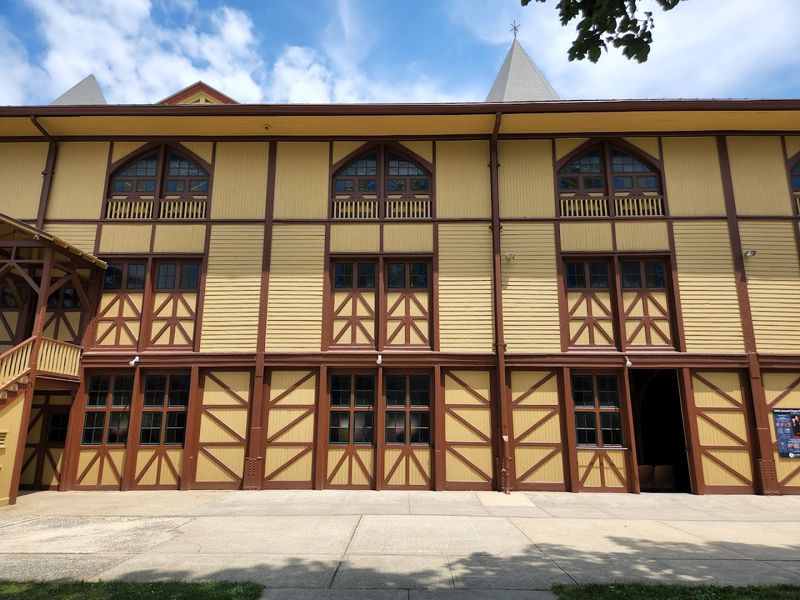
There were 262 doors and windows, most of them designed to open, because before air conditioning, summer comfort required a lot more imagination and a lot more hinges.
Even the jobsite reportedly had a rule against profanity, which feels very Ocean Grove and also slightly funny, considering how many things can go wrong when you are racing the calendar.
Somehow, the building went up, the crowds came in, and the shipbuilders left New Jersey with a landmark that still carries their fingerprints.
Why the Wooden Interior Still Feels Like an Upside Down Ship
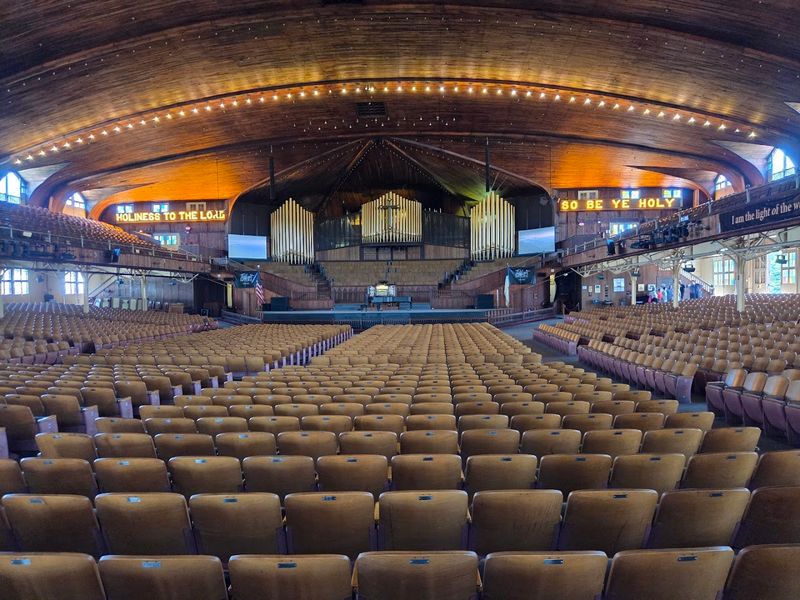
Step inside on a quiet afternoon and the first instinct is to tilt your head back. The ceiling does not simply cover the room.
It sweeps. The broad wooden curve gives the auditorium its famous inside-of-a-ship feeling, as though someone flipped a vessel over, braced it, filled it with seats, and decided the Jersey Shore needed a little more drama.
That nautical impression is not some cute modern nickname. It comes from the way the building was made and the people who made it.
Shipbuilders knew how to create a strong, rhythmic interior with repeating lines, and the Great Auditorium still shows that off without trying too hard. The room is practical, too, in a very 19th-century way.
Those many doors, windows, and panels were not decorative afterthoughts. They were the ventilation system.
In summer, sections could open to let ocean air move through the building, which mattered when thousands of people were packed inside wearing far more clothing than anyone should wear near the beach. The colored glass adds another layer, catching light without turning the place into a cathedral copycat.
It feels more like a Shore invention: part tabernacle, part concert hall, part boardwalk-era engineering experiment that happened to work beautifully. The acoustics are a huge part of the legend.
Wood has a warmth that concrete and drywall rarely manage, and the barrel-shaped ceiling helps sound travel in a way that performers and audiences remember. Yet the building still feels humble in the details.
You notice the honest materials, the visible structure, the sense that this place was meant to be used hard every summer rather than admired from behind a rope. That is the charm.
It is grand, yes, but not fussy. It is the kind of room that makes history feel touchable.
The Mighty Pipe Organ That Helps Fill the Hall With Sound
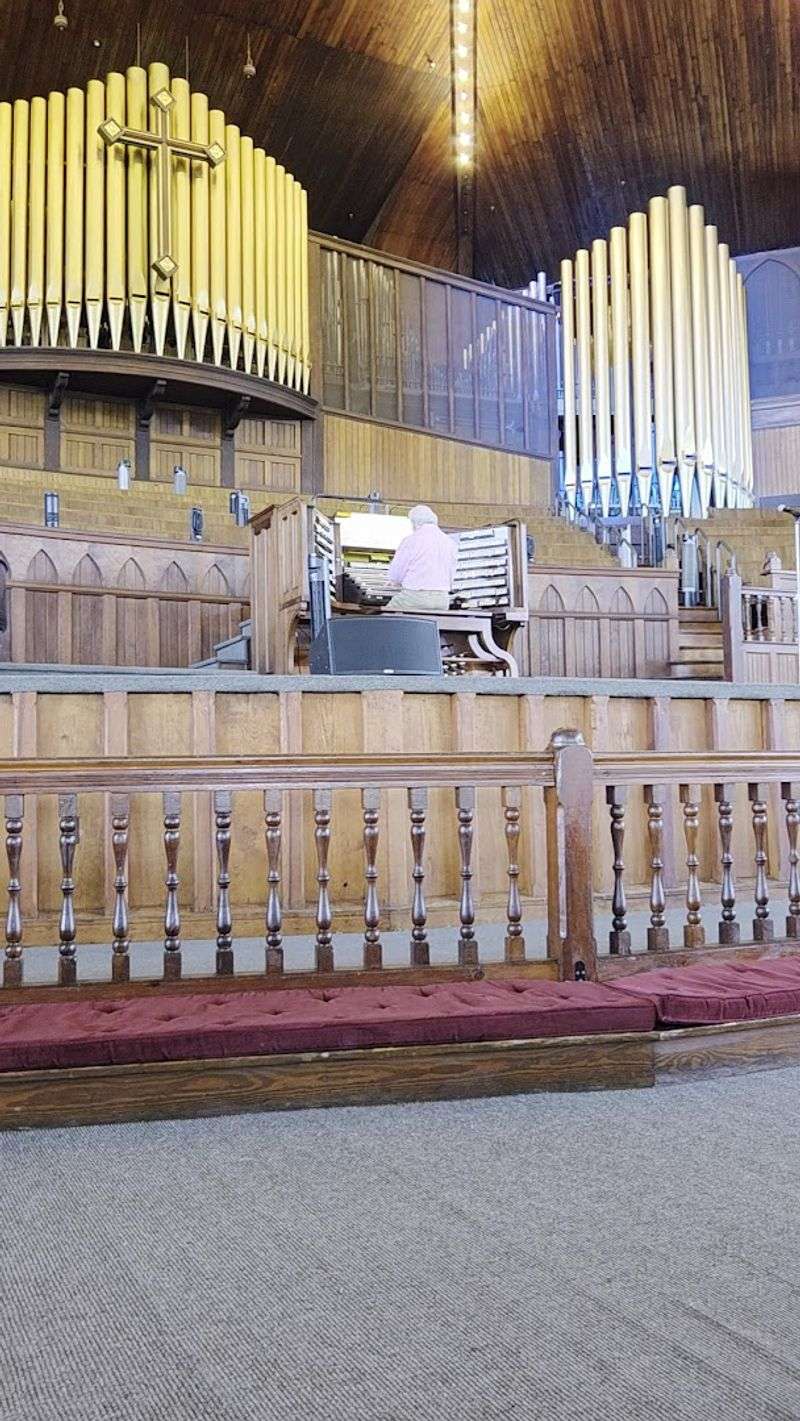
There is a pipe organ in Ocean Grove that does not politely accompany the room. It takes possession of it.
The Great Auditorium’s Hope-Jones/Shaw organ traces its origin to Robert Hope-Jones, an English organ builder and inventor who came to the United States in the early 1900s and became known for bold ideas about what a pipe organ could do.
The instrument was dedicated in 1908 before an audience of about 8,000 people, which is exactly the kind of over-the-top entrance this building seems to deserve.
Over time, the organ has been rebuilt, enlarged, restored, and renamed to honor longtime curator John Shaw. Today, it is the kind of instrument that turns even casual visitors into people who suddenly have opinions about pipes.
It has 10 divisions, 207 ranks, and roughly 12,200 pipes, played from a console with five keyboards and pedals. Behind the choir loft, the pipes sit in concrete chambers with thick walls, while huge blowers generate the wind pressure needed to make the sound move through the space.
That last part matters. This is not background music for people shuffling to their seats.
On the right notes, the whole auditorium seems to wake up. Longtime organist and artist-in-residence Dr. Gordon Turk has been closely associated with the instrument for decades, and summer programming keeps the organ from becoming a museum piece.
In 2026, the listed organ concert season includes free, non-ticketed Thursday evening concerts at 7:30 PM from July 30 through August 27, with a freewill offering taken. That detail feels right for Ocean Grove: world-class scale, old-fashioned access, and a little community tradition mixed in.
You do not have to be an organ buff to understand the appeal. You just have to hear the first big chord and feel the room answer back.
The Famous Voices and Huge Crowds That Made It a Jersey Shore Icon
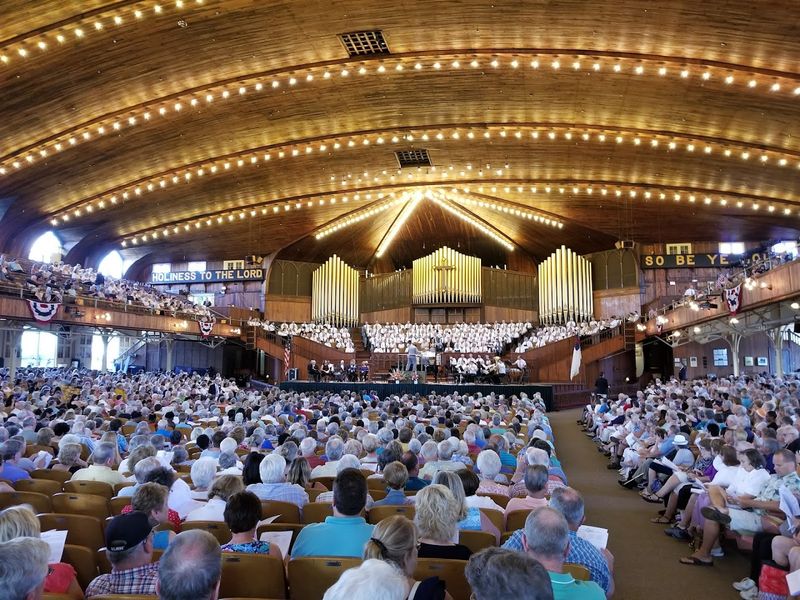
A room this large tends to collect stories, and the Great Auditorium has had more than a century to gather them. Its earliest purpose was worship, and that identity still matters, but the building has never been only one thing.
It has hosted Sunday services, choir festivals, organ recitals, classical programs, gospel events, family entertainment, and concerts that brought Shore crowds in for something other than sand and boardwalk fries. The scale helped.
When a building can hold thousands of people, it becomes a stage for voices that want to reach well beyond the first few rows. Evangelist Billy Graham preached in Ocean Grove.
Well-known performers such as Johnny Mathis and Kenny Loggins have been tied to the auditorium’s entertainment history. The names are impressive, but the more interesting part is how the building changes the experience.
A singer standing in front of that wooden curve is not working against the room. The room is part of the performance.
That is why locals talk about the acoustics with a kind of hometown pride usually reserved for pizza places and secret parking spots. The auditorium’s crowd history is just as important as its celebrity list.
At its original size, it was built for nearly 10,000 people, which made sense in an era when Ocean Grove drew huge seasonal gatherings by rail and by reputation. Even after seating changes brought capacity down, the building remained one of the biggest and most distinctive venues on the Jersey Shore.
And unlike many historic halls that feel frozen, this one still has a working calendar. The Great Auditorium is not famous because famous people passed through once.
It is famous because, summer after summer, ordinary people keep filling the seats under that impossible wooden ceiling.
Why This 1894 Wonder Still Amazes Visitors Today
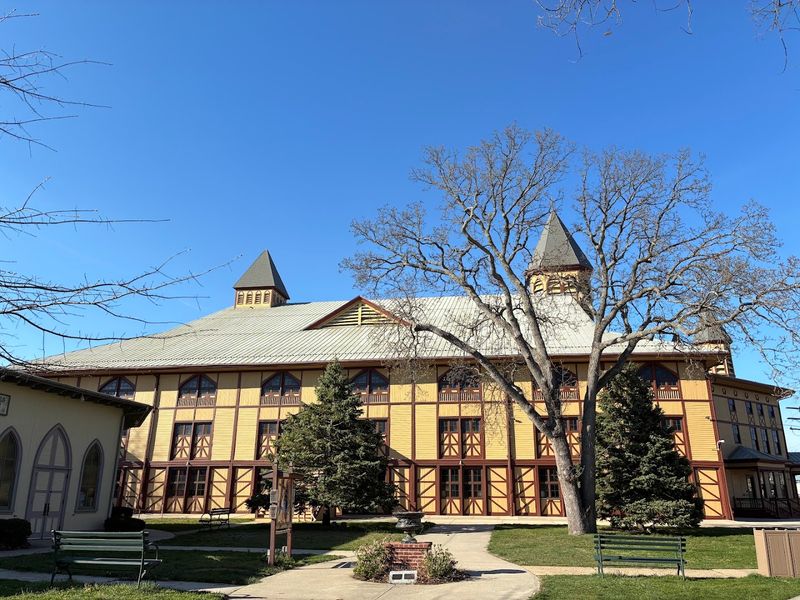
Part of the magic is that the Great Auditorium has not been smoothed into something bland. It still feels old in the best way: big doors, open-air summer logic, wooden surfaces, visible bones, and a sense of purpose that newer buildings often try to fake with reclaimed wood and Edison bulbs.
It sits in a town that protects its past not as a theme, but as daily scenery. Walk around Ocean Grove and you will pass Victorian cottages, the tent community, the Bishop Janes Tabernacle, Thornley Chapel, Founders Park, and the kind of front porches that make people slow their pace without quite realizing it.
The official landmark walking tour even treats the auditorium as part of a broader story, with daily auditorium tours listed most Monday through Friday from June 23 through August 29, departing from The HUB at 27 Pilgrim Pathway at 12:30 PM and 1:15 PM.
That gives visitors a way to understand the building beyond the quick “wow, that’s huge” reaction, although that reaction is perfectly acceptable and probably unavoidable.
What keeps the auditorium interesting is the mix: shipbuilding skill, Methodist camp meeting history, Shore-town architecture, a monster pipe organ, and a living schedule of music and worship. It is not shiny.
It is not trying to compete with Asbury Park’s louder nightlife a short walk away across Wesley Lake. It does something quieter and stranger.
It reminds you that the Jersey Shore has always been more layered than beach badges and boardwalk slices. In Ocean Grove, one of its greatest surprises is still standing where it has stood since 1894, looking like an upside down ship that somehow found its permanent harbor on land.