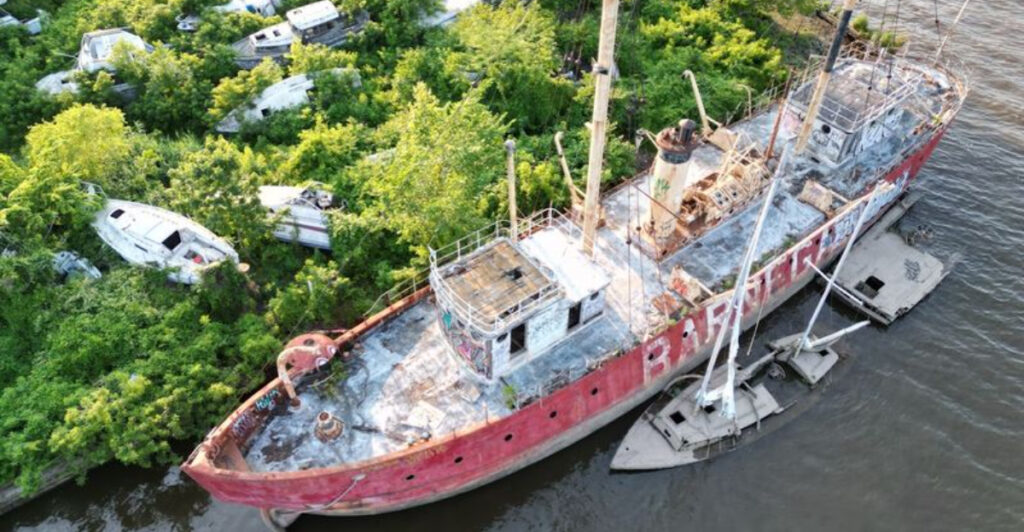
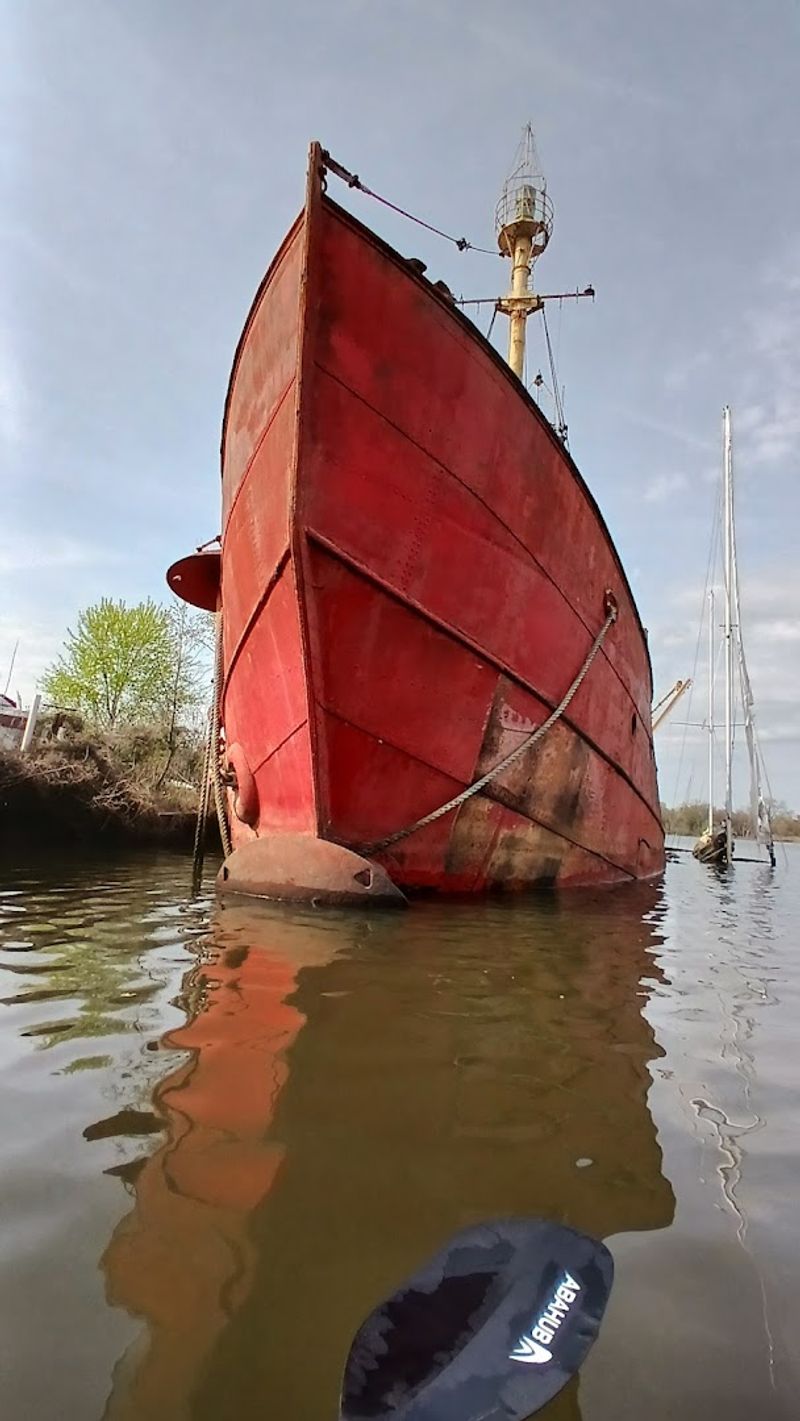
A 130-foot ship is sitting in the Camden mud, and most people driving through North Camden would have no idea they just passed one of the strangest survivors of America’s maritime past. The Barnegat does not look polished, proud, or ready for a postcard.
Its steel hull is weathered. Its deck has seen better decades.
It rests at the former Pyne Poynt Marina near the Delaware River’s back channel, closer to Petty’s Island than to the sandy beaches people usually connect with its name. But that rough condition is part of what makes the ship so fascinating.
Before it became a rusting landmark, the Barnegat was a floating lighthouse, a Coast Guard workhorse, and a lifeline for vessels navigating some of New Jersey’s most stubborn coastal hazards. Its story begins in Camden, travels down the Shore, detours through World War II, and somehow circles right back to Camden again.
The Rusting Lightship Hiding in Plain Sight in Camden
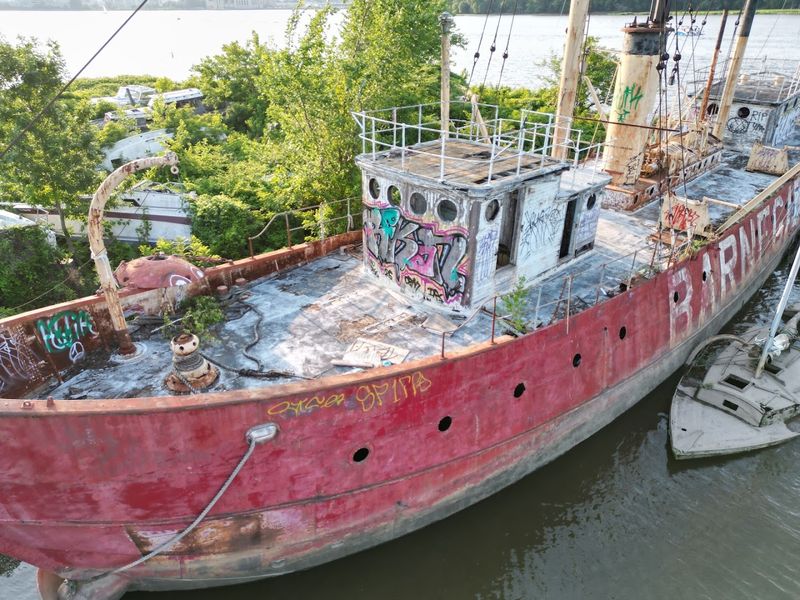
At the former Pyne Poynt Marina, the Barnegat does not announce itself like a grand museum ship. There is no polished gangway, no tidy ticket booth, no cheerful guide waving visitors aboard.
It sits low and battered in a working-looking corner of Camden’s waterfront, surrounded by the kind of industrial scenery New Jersey does better than almost anywhere else: river mud, old pilings, weeds, weathered boats, and the feeling that every object here has a story it is not volunteering right away.
That makes the first glimpse of the vessel a little jarring.
This is not some random abandoned barge. This is LV-79, later known as WAL-506, a federally recognized historic lightship that spent decades helping mariners stay alive off the New Jersey coast.
The ship is roughly 130 feet long with a 28-foot beam, which is big enough to make its current condition feel even more dramatic. It is not tucked away because it is small.
It is overlooked because Camden is full of layered history, and not all of it comes with a shiny sign. The Barnegat’s location also adds a strange twist to the story.
The ship was built in Camden in 1904 by the New York Shipbuilding Company, then spent most of its useful life stationed far from the city, marking dangerous offshore waters. After retirement, it wandered through museum plans and preservation dreams before landing back near the place where it was made.
There is something very New Jersey about that loop: practical, gritty, slightly poetic, and not at all interested in dressing itself up too much.
Built in New Jersey to Protect Ships from the Shore
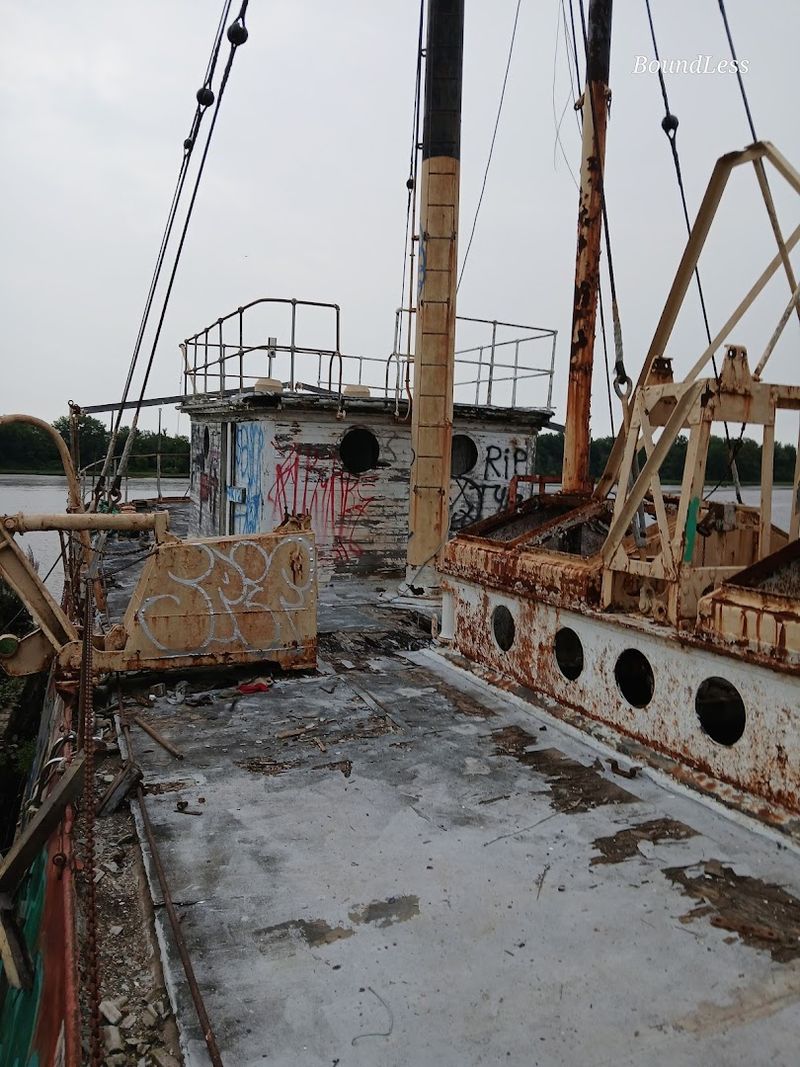
The Barnegat came out of Camden at a time when the city’s shipbuilding industry was doing serious work. New York Shipbuilding Company, despite the name, was based in Camden and became one of the country’s major shipyards.
In 1904, it launched this steel-hulled, steam-propelled lightship for a job that sounds simple until you think about it for more than ten seconds: stay anchored in a dangerous place and warn everyone else not to come too close. Unlike a lighthouse planted safely on land, a lightship had to live where stone towers could not easily be built.
It was part vessel, part warning sign, part floating outpost. The Barnegat carried two masts fitted with oil-fed lanterns, a steam-chime whistle that could blast through fog, and a submarine bell that sent warnings underwater.
Later, as navigation technology improved, radio equipment became part of the mix. This was not decoration.
Every sound and signal mattered. Along the New Jersey coast, sandbars and shoals shift the way locals talk about Parkway traffic: constantly, annoyingly, and with real consequences.
A ship coming up from the south, heading toward New York, Philadelphia, or New England, needed reliable markers long before GPS made everyone overconfident. That was the Barnegat’s purpose.
It was not built for speed, glamour, or comfort. It was built to be seen, heard, and trusted. The crew’s job was even tougher. They were not cruising around the Atlantic.
They were stationed in place, riding out weather, fog, isolation, and long stretches of repetition while keeping the warning systems working. In other words, the Barnegat was born in Camden to do one of the least flashy but most necessary jobs on the water.
Why Lightships Once Mattered as Much as Lighthouses
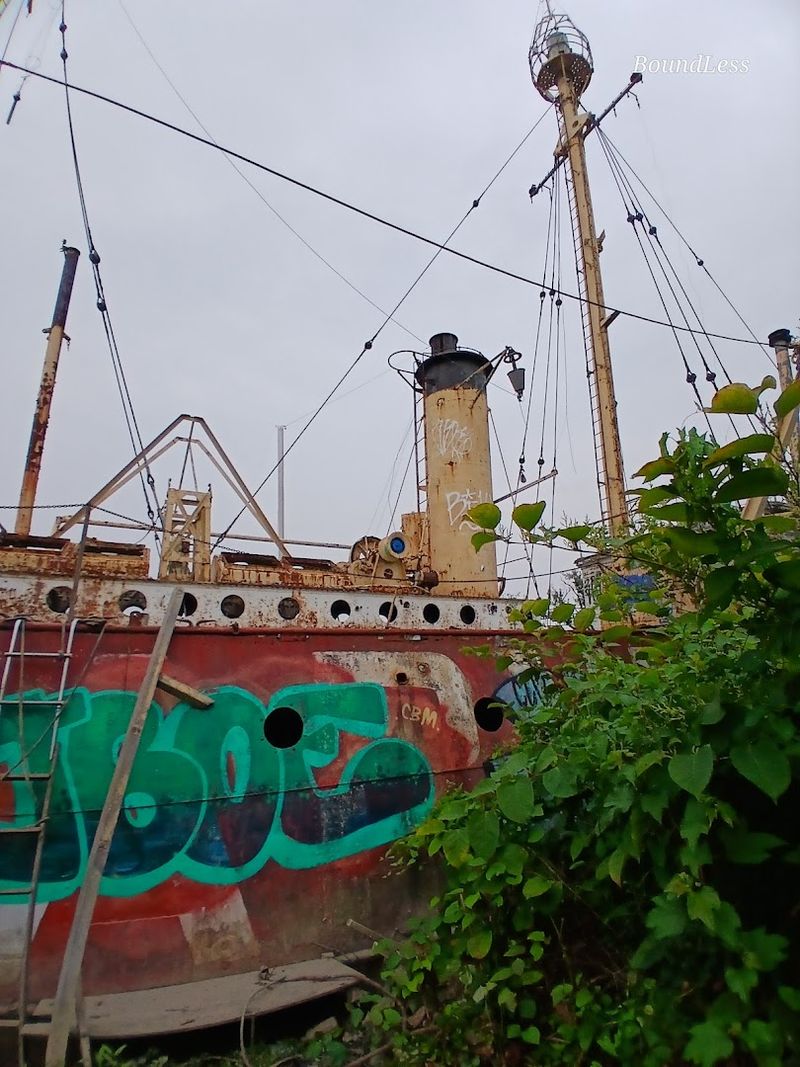
Lighthouses get all the romance. They stand on cliffs, star in paintings, and somehow make even bad weather look dramatic.
Lightships had a rougher assignment. They went where a lighthouse could not, then stayed there on purpose. That is the big thing to understand about the Barnegat. It was not a ship in the usual sense of the word.
Its power came from not moving. Once assigned to a station, a lightship became a fixed navigation mark, holding position in waters that were too deep, too unstable, or too far offshore for a traditional lighthouse.
For mariners, that floating light could be just as important as a tower on land. Sometimes it was more important, because it marked trouble before land was even close.
The Barnegat first served at Five Fathom Bank, a shoal area off Cape May, from 1904 to 1924. That placed it near the approach to Delaware Bay, where commercial traffic had plenty to worry about: Atlantic swells, fog, shallow water, and vessels trying to reach Philadelphia, Wilmington, or ports farther up the river.
After a brief period as a relief lightship, the vessel was assigned in 1927 to the Barnegat station off Long Beach Island. That name is the one that stuck.
The station helped cover waters near Barnegat Inlet and the offshore shoals, a place with a long reputation for giving sailors trouble. The famous Barnegat Lighthouse, or Old Barney, watched from land, but the lightship worked farther out, closer to where ships needed the warning.
Together, lighthouse and lightship were part of a larger safety system. One got the glory. The other took the beating.
The Dangerous Waters That Made Barnegat Essential
Anyone who has watched the water at Barnegat Inlet on a rough day knows the ocean there does not behave like a calm vacation brochure. Currents push, boats pitch, and the meeting of inlet, bay, and Atlantic can turn messy fast.
Now imagine navigating that coastline in the early 1900s, with no GPS, limited radio communication, and a cargo vessel depending on light, sound, charts, and the judgment of people who had seen bad water before. That is the world the Barnegat served.
The ship’s Barnegat assignment began in 1927, after years of concern about how to properly mark the offshore hazards near the inlet and shoals. It was positioned where passing vessels could use it as a fixed reference point before making course decisions along the Jersey Shore.
This was not just about local fishing boats. The New Jersey coast sat along major commercial routes connecting the South Atlantic, Delaware Bay, New York Harbor, and New England.
Cargo traffic, passenger vessels, military movement, and fishing fleets all shared waters where a mistake could get expensive or deadly very quickly. During World War II, the Barnegat’s job changed.
In 1942, it was pulled from its station and sent to Edgemoor, Delaware, to serve as an examination vessel. That meant checking ships entering the Delaware River, confirming identity, cargo, home port, and other details before they moved farther inland.
It was less romantic than a glowing lantern in the fog, but it was just as serious. After the war, the Barnegat returned to its station and kept working until its decommissioning on March 3, 1967.
By then, automated buoys and newer navigation systems were taking over. The old floating lighthouse had done its part for more than six decades.
How a Historic Vessel Ended Up Forgotten in the Mud
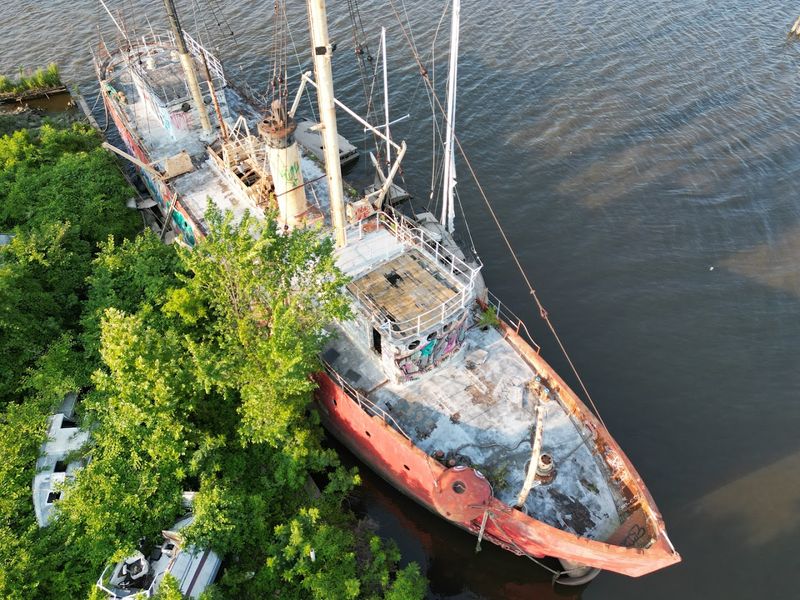
Retirement should have been kinder to the Barnegat. After it left service in 1967, the ship was donated to the Chesapeake Bay Maritime Museum in St. Michaels, Maryland.
On paper, that sounds like a respectable second life. In reality, historic ships are expensive, fussy, and completely unforgiving when maintenance falls behind.
Steel rusts. Wood rots. Pumps fail. Paint is not cosmetic; it is armor.
By 1970, the museum could no longer keep up with the costs, and the Barnegat was sold to a preservation group in Philadelphia. The vessel spent years at Penn’s Landing, where it was meant to become part of a floating maritime display.
There was genuine recognition of its value during this period. In 1979, the Barnegat was added to the National Register of Historic Places, a status that confirmed what maritime-history people already knew: this was not just an old boat.
It was an unusually important survivor from the era of American lightships. But recognition does not patch a hull.
When preservation plans at Penn’s Landing fizzled, the ship eventually moved to Pyne Poynt Marina in Camden. There, another hopeful idea took shape.
The owner wanted to restore the vessel and bring it into a larger Camden waterfront vision. It was a good dream, and a very difficult one.
Volunteer labor, limited funding, and the brutal reality of marine deterioration did not line up neatly. Years stretched into decades.
The Barnegat stayed put. Its name still carried the Shore, but its body sank deeper into Camden’s overlooked waterfront landscape.
That is how a nationally listed vessel can become both famous on paper and forgotten in real life.
The Fight to Save What Is Left of the Barnegat
The most hopeful part of the Barnegat story is not shiny, because nothing about this ship has been shiny in a long time. It is cautious hope, the very New Jersey kind that keeps one eyebrow raised.
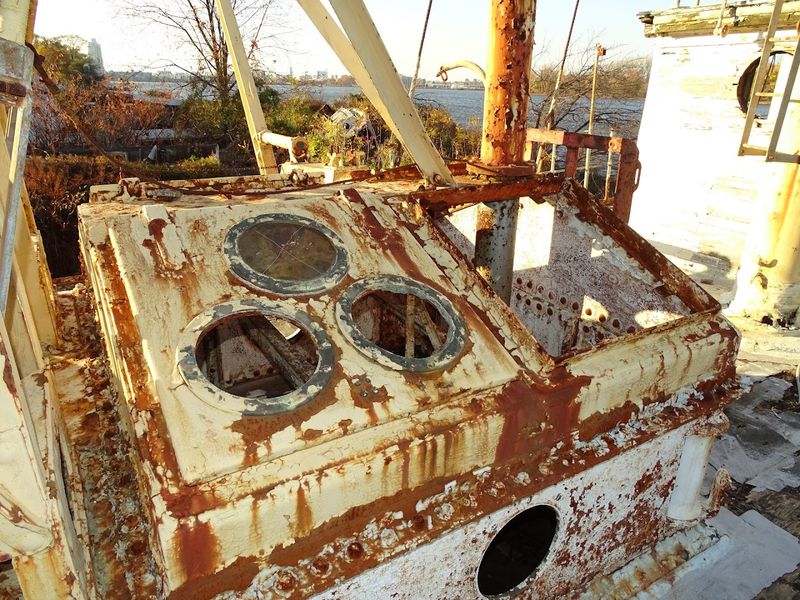
In 2018, Preservation New Jersey listed the Light Ship Barnegat as endangered, warning that without action, the vessel risked being lost through demolition by neglect. That phrase sounds bureaucratic, but it is painfully accurate.
Historic places do not always vanish in one dramatic wrecking-ball moment. Sometimes they disappear by rust, rain, tide, and nobody having enough money to stop the damage.
One important piece of the ship has already found a safer home. In 2020, the Barnegat Light Historical Society purchased the vessel’s bell, had it removed from the deck, restored it, and brought it back to Barnegat Light, where it was displayed near the community whose name the ship carried for decades.
That small act matters. A bell is not the whole vessel, of course, but ship bells have a way of holding memory.
They marked time, emergencies, routines, and lives aboard. Then came a bigger shift.
In 2023, Camden County purchased the former Pyne Poynt Marina property, with the Barnegat included in the sale, as part of a broader plan to turn the area into public waterfront space connected to parks and trails. That does not magically solve the restoration problem.
A 1904 steel lightship stuck in mud is not a weekend project. It needs assessment, money, engineering, patience, and a clear plan.
Still, the fact that the ship is no longer simply stranded in private limbo changes the mood around it. The Barnegat has already survived storms, war service, museum plans, failed dreams, and decades of neglect.
For now, it remains in Camden, rusting but not erased.