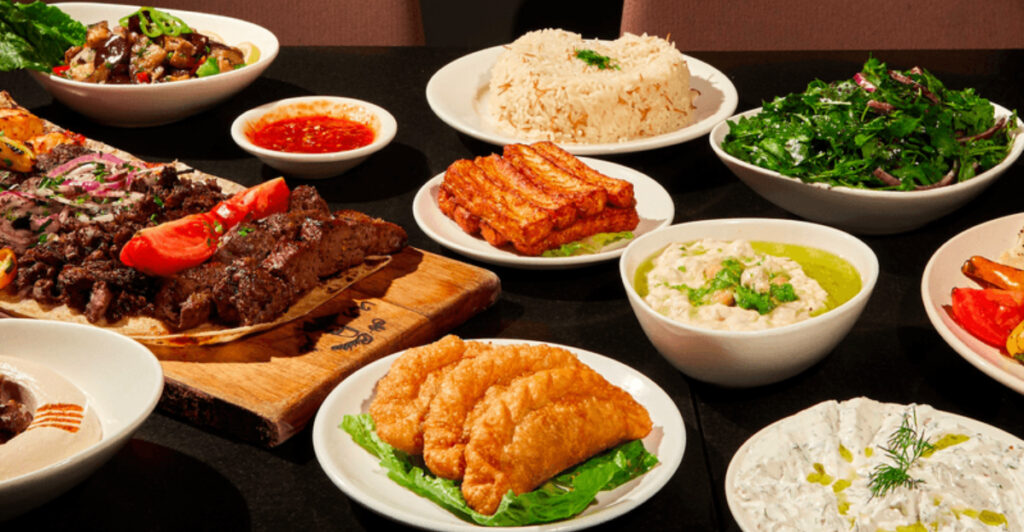
The pita is the first warning that Al-Basha is not playing around. It comes out warm, soft, and puffy enough to make you immediately reconsider every grocery-store pita you have ever politely tolerated.
Then comes the hummus, pale and silky, with olive oil settling into the little grooves on top like it knows exactly what it is doing. This is not some quiet neighborhood spot that accidentally got good.
This is Al-Basha, the Paterson Palestinian restaurant that turned a stretch of North Jersey into required eating for anyone serious about Middle Eastern food. It started in 1998, grew with the Baker family behind it, and became one of those places locals mention with a little pride in their voice.
In a city packed with excellent food, that matters. Paterson has plenty of reasons to brag, but Al-Basha gives it one more.
How Al-Basha Became One of Paterson’s Most Beloved Restaurants
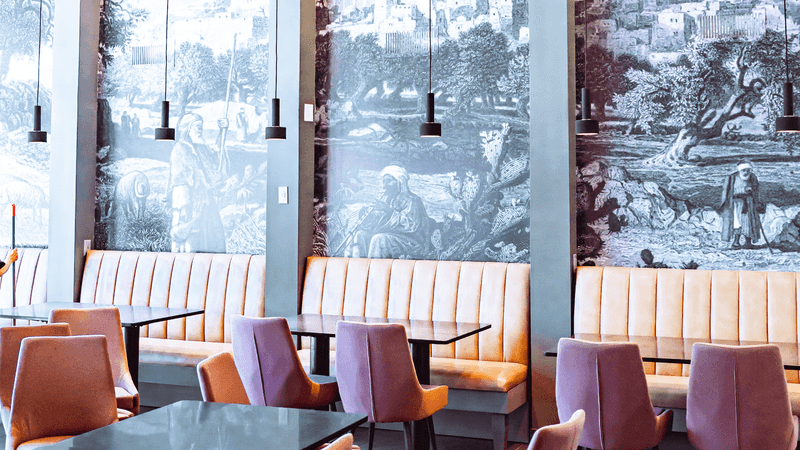
Paterson does not hand out food-legend status casually. This is a city where you can find terrific kebabs, shawarma, falafel, knafeh, Turkish coffee, Iraqi bread, Dominican plates, Peruvian chicken, and old-school Italian sandwiches without leaving town.
You have to be seriously good to become the place people point to first. Al-Basha earned that spot the hard way, one tray of hummus, one puffed pita, and one crowded dining room at a time.
Founded in 1998 by Yaser Baker, an immigrant from Ramallah, the restaurant became known as one of Paterson’s early standard-bearers for Palestinian food. That matters in South Paterson, where Arabic signs, bakeries, markets, and grill smoke are part of the daily rhythm.
The area is often called Little Ramallah, and five blocks of Main Street have even been renamed Palestine Way. Al-Basha fits that landscape perfectly, but it also helped shape it.
What began as a single restaurant has grown into a small local universe, with Al-Basha Quick Serve at 1076 Main Street for takeout and delivery, a dine-in restaurant at 387 Crooks Avenue, and the sweet side of the operation nearby for pastries and fresh-baked bread. That setup says a lot about the restaurant’s staying power.
It is not trying to be one thing for one kind of customer. It handles the weeknight shawarma run, the family dinner, the catering order, the hummus emergency, and the dessert stop after you swore you were too full.
After more than 25 years, Al-Basha is not beloved because it is old. It is beloved because it still feels busy, useful, generous, and very much alive.
The Family Story Behind the Palestinian Flavors
Before the restaurant became a Paterson institution, it was a family story with a serious amount of kitchen experience behind it. Yaser Baker was born in Ramallah and trained in professional kitchens before building Al-Basha into the kind of place that feels personal even when it is packed.
His cooking background included time outside Palestinian cuisine too, including years spent with American and Italian food, which makes his return to the flavors of his heritage feel less like nostalgia and more like a deliberate choice. He knew what kind of food he wanted to stand behind.
That is part of why Al-Basha never feels like it is chasing trends. The menu leans into classics: hummus, baba ghanouj, tabouleh, falafel, shawarma, kebabs, grilled meats over rice, stuffed falafel with onions and sumac, and the kind of mezze that makes the table go quiet for about 30 seconds before everyone starts reaching.
The next generation helped carry that forward. Yaser’s sons, Ammar and Mohammad, joined the business and helped expand it, including the Crooks Avenue dine-in location.
That family continuity shows up in the little things. The menu is broad, but not confused. The food feels polished, but not fussy. The portions understand New Jersey families.
The restaurant also knows its audience: people who want fresh bread, strong flavors, halal options, and a meal that can stretch across a table without turning into a production. Palestinian food has deep regional identity, but it also shares the generous spirit of Levantine dining, where the best meals do not arrive as one perfect plate.
They arrive as a table full of decisions. At Al-Basha, the Baker family built a restaurant around that feeling and kept it steady long enough for it to become local memory.
The Hummus That Has People Driving Across State Lines
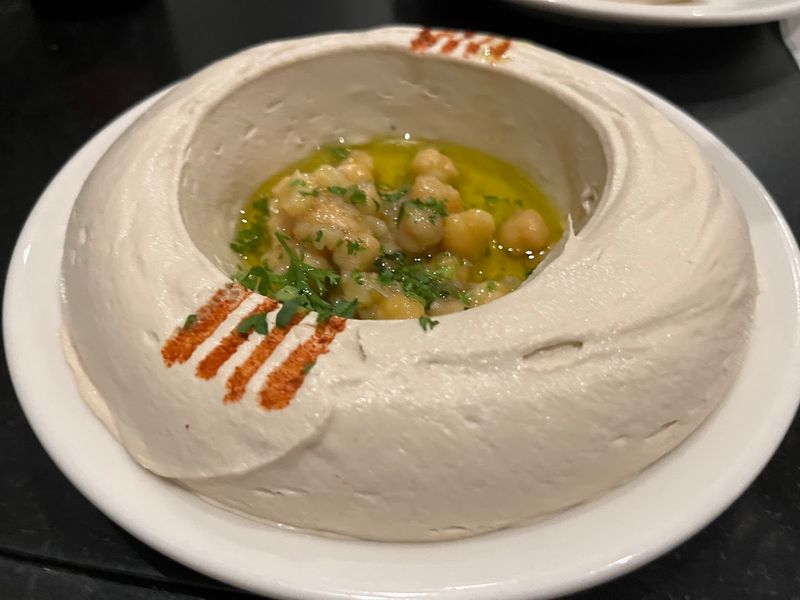
At many restaurants, hummus is something you order because the table needs a dip. At Al-Basha, hummus is the main event wearing appetizer clothing.
It is made with chickpeas, tahina, lemon, and olive oil, which sounds simple until you taste how much difference technique makes. The texture is the thing.
It is smooth without being heavy, rich without turning pasty, and bright enough that you keep going back even after you have already taken more than your share. This is the dish that helped make Al-Basha famous outside Paterson.
People do not cross bridges, sit in North Jersey traffic, or hop a bus from Port Authority because they are mildly curious about chickpeas. They do it because this hummus has become one of those food-personality tests: once someone tries it, they start comparing everything else to it.
The order can be plain, and honestly, that is enough. But the menu also gives you ways to build around it.
There is hummus with meat, hummus with foul, and fatah hummus, where toasted pita and hummus are layered in a deep dish and finished with toasted nuts and parsley. The smarter move, especially on a first visit, is to keep the original hummus close and treat everything else like backup singers.
Scoop it with the fresh pita while the bread is still warm. Drag a piece through the olive oil. Add a bite of pickle or a little tabouleh when you need brightness. The whole thing feels almost unfairly balanced.
It is not trying to be clever, smoky, spicy, or modern. It is trying to be excellent, which is a much harder trick. Plenty of restaurants serve hummus. Al-Basha makes it feel like a destination.
Why the Fresh Pita and Mezze Deserve the Hype
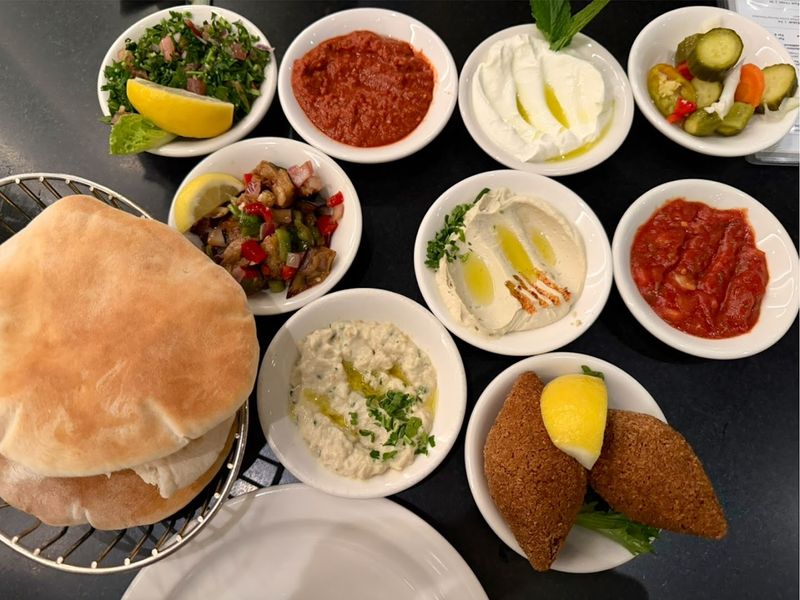
Here is the move: do not treat the mezze like a warmup. That is a rookie mistake, and New Jersey diners should know better.
At Al-Basha, the spreads and small plates are not there to keep you busy until the grilled meat shows up. They are half the reason to go.
The pita sets the tone because it is not just a vehicle for dips. It is warm, soft, slightly chewy, and built for scooping.
It makes even a small tear of bread feel like part of the meal instead of an afterthought. Once that bread hits the table, the mezze starts making sense.
The mazzah spread is the kind of order that saves everyone from arguing. It brings together hummus, baba ghanouj, bakdunsiah, turkiya, mouhamara, labana, tabouleh, and fried kibbeh, which means the table gets creamy, smoky, tangy, herbal, crunchy, and spicy-sweet in one go.
Baba ghanouj brings the charcoal-smoked eggplant. Mouhamara leans richer, with tomato paste, walnuts, pomegranate molasses, and chili.
Bakdunsiah is lighter and sharper, built from parsley, tahina, and lemon. Labana gives you that cool yogurt creaminess.
Turkiya adds tomato, onion, and chili. Nothing here feels like it was added just to fill out a platter.
Each dip has a job. The hot appetizers are just as dangerous.
Falafel comes crisp and deeply seasoned, and the stuffed falafel with onions and sumac has the kind of extra personality that makes plain falafel seem suddenly underdressed. Fried kibbeh, cheese borek, meat arayess, fried cauliflower, and fava beans with olive oil and tatbila can easily turn “just a few starters” into a full meal.
Nobody will judge you. They are probably doing the same thing.
The Mix Mashawi Platter That Turns Dinner Into a Feast
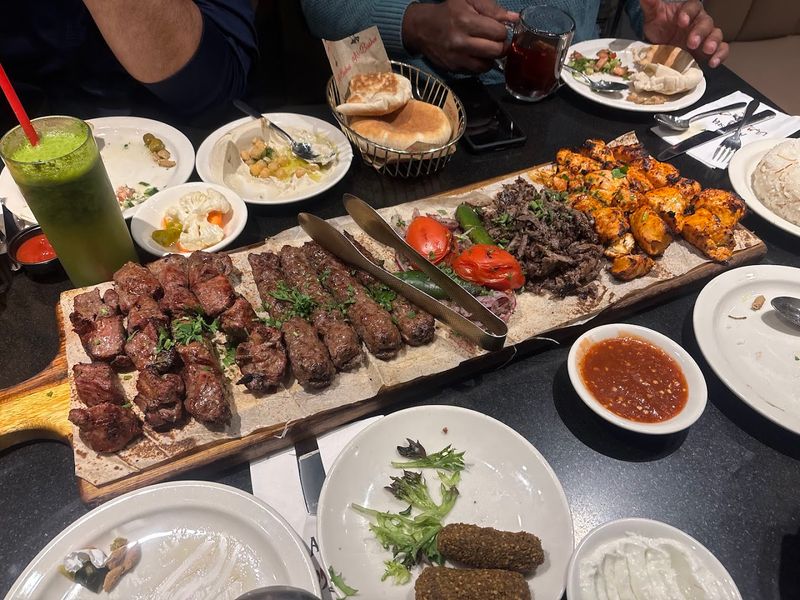
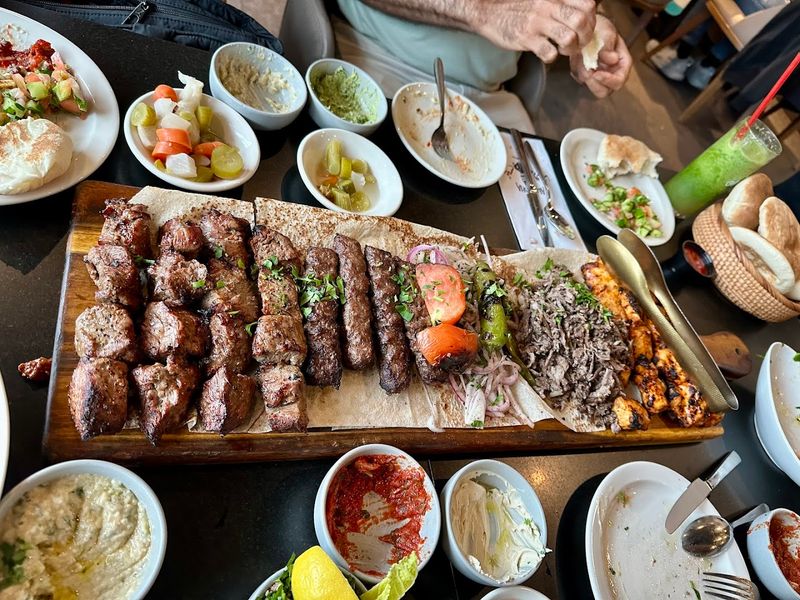
Eventually, the grill has to enter the conversation. At Al-Basha, that usually means Mix Mashawi, the platter that answers the question, “What if we just ordered the fun stuff?” It is the kind of dish that makes the table rearrange itself.
Phones move. Water bottles move. Someone starts clearing space with the urgency of an air-traffic controller. Then the meat lands, and suddenly everyone is paying attention.
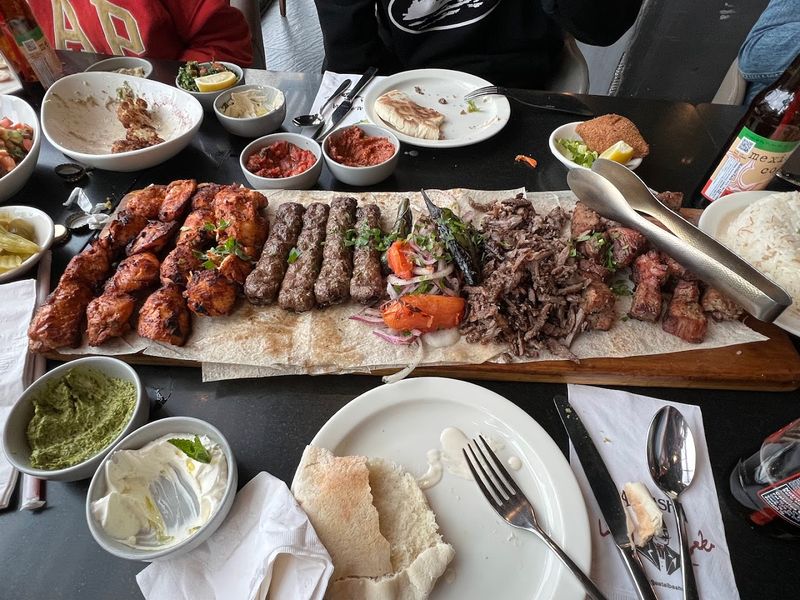
The Mix Mashawi for one typically includes kofta kebab, shish kebab, chicken kebab, and beef shawarma. Larger versions scale up for two, four, or even six to seven people, which tells you exactly what kind of restaurant this is.
It understands that dinner is often a group sport. Recent delivery menus have listed the one-person Mix Mashawi in the low $30s and the two-person platter just under $60, with larger party-style platters climbing from there.
Prices can shift, especially between dine-in and delivery, but the format stays the same: grilled meats, rice, salad, and enough variety to keep everyone negotiating over the last bite. The kofta brings that seasoned ground meat richness.
The shish kebab gives you tender beef. The chicken kebab is straightforward and filling.
The beef shawarma adds the thin-sliced, savory edge that works especially well with onions, pickles, and tahina. This is where the earlier mezze pays off.
A bite of grilled meat with a little hummus, a piece of pita, and something acidic from the salad or pickles is the whole point of the spread. The platter is generous without feeling chaotic.
It is not delicate, and it does not need to be. It is dinner with elbows on the table, sauces being passed around, and someone quietly claiming the best charred piece before anyone else notices.
Why Al-Basha Still Feels Like a New Jersey Food Legend After 25 Years
A quarter-century-plus is a long time for any restaurant, but it is especially impressive in New Jersey, where diners are loyal, opinionated, and not exactly shy when something slips. Al-Basha has lasted because it does not feel frozen in the year it opened.
It has grown, split its operation smartly, and kept feeding different kinds of customers without losing the thing that made people care in the first place. The Main Street Quick Serve location handles the modern rhythm: takeout, delivery, touch-and-go meals, shawarma sandwiches, falafel fixes, and hummus heading home in containers.
The Crooks Avenue dine-in restaurant gives people the slower version: family tables, big platters, fresh pita, mezze, grilled meats, and the pleasant problem of ordering too much. Then there is the sweet side, where pastries like knafeh, baklava, basbousa, and ma’amoul extend the meal beyond the savory restaurants.
That matters because Al-Basha is not just one address. It is part of a food ecosystem in Paterson, surrounded by bakeries, markets, and restaurants that make the city one of the best places in the country to eat Palestinian and broader Middle Eastern food.
The reason it still stands out is not flash. It is consistency with a little swagger.
The hummus still has a reputation. The pita still matters.
The Mix Mashawi still turns a table into a feast. The family story still gives the place roots.
And Paterson, with all its movement and noise and history, still feels like the right home for it. That is how a restaurant becomes a New Jersey legend: not by acting like a destination, but by becoming part of the map.