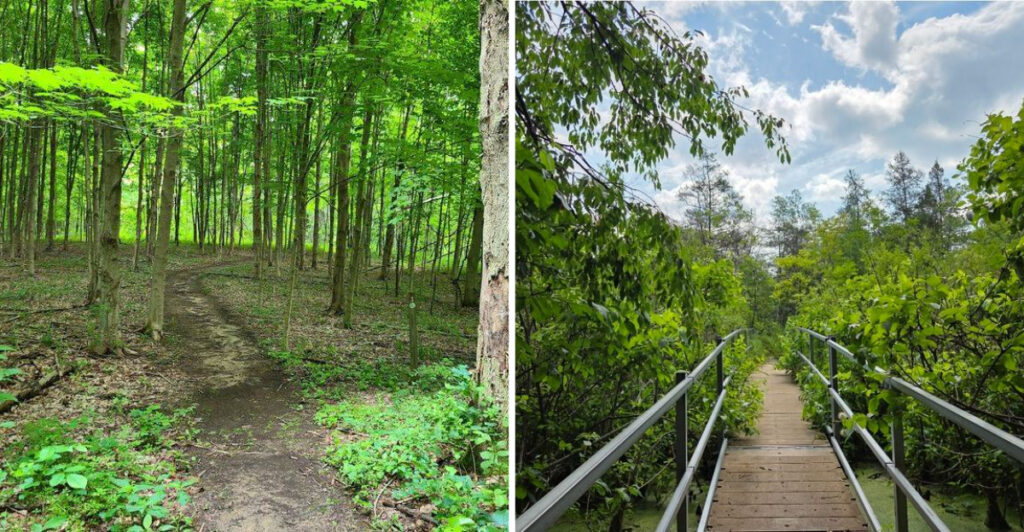
A quiet road in La Porte leads to one of Indiana’s strangest landscapes: a bog born from retreating glaciers and fringed by old woods. Pinhook Bog is not a big, flashy attraction, which is exactly why it lands so hard once you understand what you’re seeing.
The trail reveals layers of wetland ecology, Ice Age geology, and rare plant life that most visitors would never expect to find in northern Indiana. Every stretch of boardwalk encourages a closer look, rewarding curiosity more than speed. By the end, the scenery feels secondary to the remarkable story unfolding beneath your feet.
The Trail Opens on a Different World
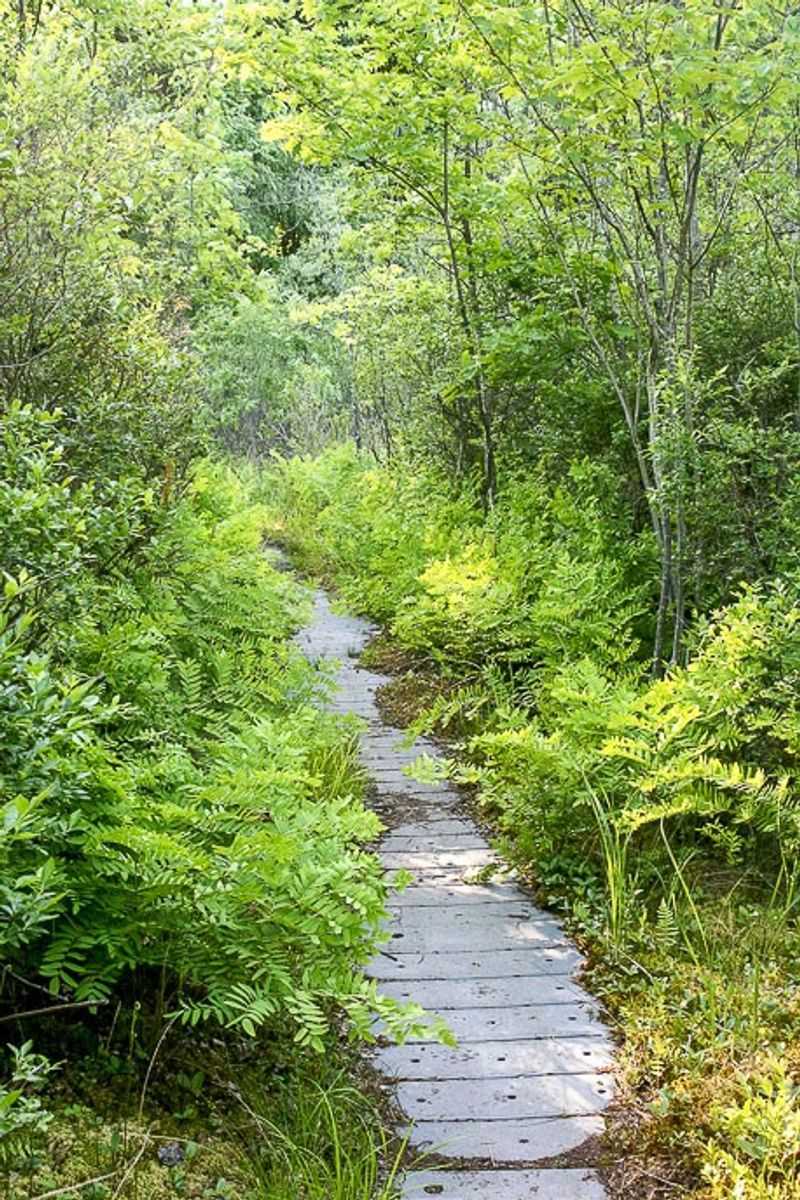
The first surprise at Pinhook Bog is how ordinary the entrance seems. You pull up expecting some dramatic overlook, then find a simple trailhead edged by trees, a parking area, and the kind of quiet that instantly slows your pace.
That understatement works in the place’s favor because the landscape gradually reveals itself instead of shouting for attention. The public route most people experience is the upland loop, which circles near the protected bog without dropping you straight into its most delicate interior.
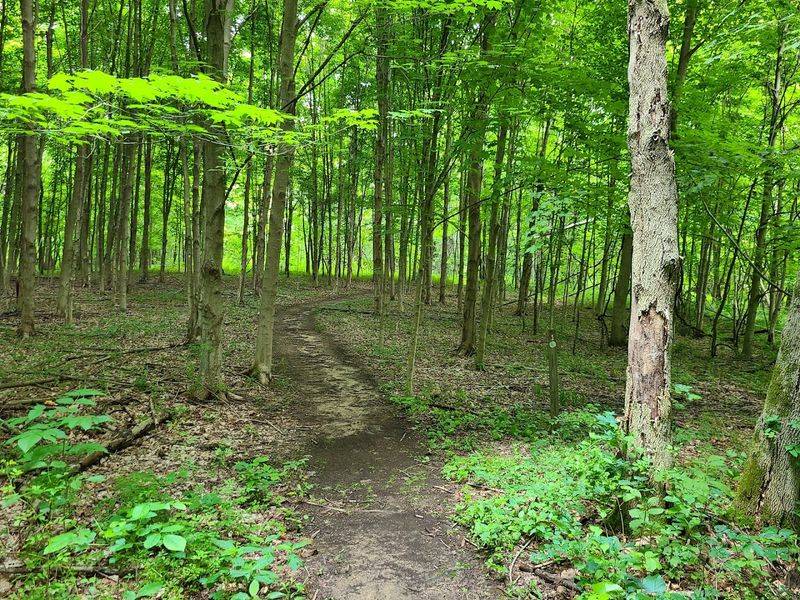
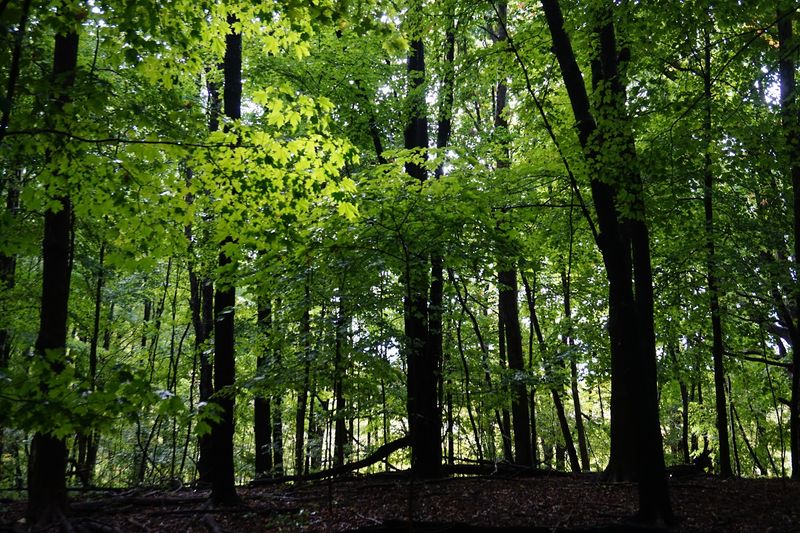
That design matters. You move through hardwood forest on rolling glacial terrain, crossing small rises and dips that make the walk more textured than a flat wetland stroll.
The woods begin to explain the bog before the bog even comes into view. Beech and maple canopy, patches of fern, muddy sections after rain, and a soundtrack of birds create a setting that feels more ancient than manicured.
Reviews often mention frogs, turtles, mushrooms, and strong birding opportunities, which fit the habitat perfectly. Even when the bog itself is only partially visible, the approach builds anticipation by surrounding you with the ecosystems that support it.
What makes the walk especially effective is how naturally the transitions happen. There is no sign announcing that you have entered a rare landscape.
Instead, the clues accumulate through changes in moisture, vegetation, and terrain. Wetter air, pockets of still water, and glimpses across small openings hint at something different ahead.
By the time the trail loops back around, Pinhook Bog no longer feels like just another forest preserve. It reads as a surviving piece of Ice Age geography quietly hidden in northern Indiana.
Why the Bog Looks Like It Should Float
Pinhook Bog stands out because it is not just wet ground with reeds around it. It is an inland kettle bog, a landform tied to glacial retreat, where a block of buried ice melted and left a depression that eventually became a specialized wetland.
The result is acidic water, sphagnum moss, and plant communities that look noticeably different from the surrounding woods. The phrase “floating forest” is not just decorative language.
In bog systems like this, mats of vegetation can form over water, creating surfaces that look stable while actually resting on saturated layers below. During ranger-led access into the bog, that subtle instability becomes part of the experience.
Boardwalk sections and soft footing remind you that this is living ground, not a fixed landscape. Even when the water is hidden beneath layers of vegetation, the bog feels distinct from the forest around it.
The visual shift is part of the thrill. Tall hardwoods along the upland trail give way to a more open, wetter scene where tamarack, shrubs, moss, and specialized plants make the environment feel almost northern despite being in Indiana.
Even casual hikers notice the contrast quickly because the habitat changes in texture, color, and openness. That contrast is what makes Pinhook Bog so unusual.
You are looking at a remnant ecosystem shaped by long-gone ice and preserved well enough to still show its distinctive structure today. Plenty of trails offer pretty woods, but very few let you study a glacial afterimage this closely, then step back into hardwood forest within the same outing.
That quick jump between worlds gives the site its edge and turns a modest trail stop into something far rarer than most visitors expect.
Carnivorous Plants and Other Quiet Oddities
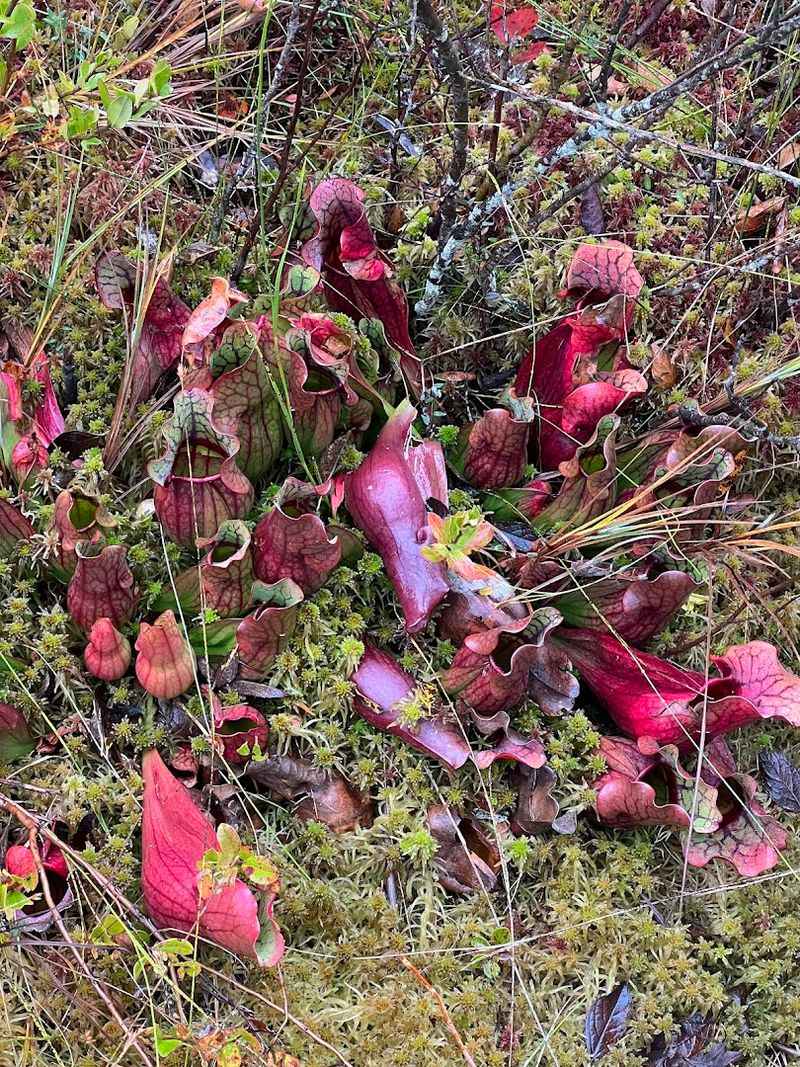
The plant life at Pinhook Bog is where the place shifts from scenic to genuinely unusual. This wetland supports species that thrive in acidic, nutrient-poor conditions, including carnivorous plants that solve the problem by trapping insects.
That means a walk here is not only about trees and water but about a botanical system operating by very different rules than most Indiana landscapes. Pitcher plants are the headline attraction, and for good reason.
Their tubular leaves look decorative at first glance until you realize they are functional traps designed to lure, capture, and digest prey. Visitors and naturalists also note sundews, bladderworts, and seasonal orchids, giving the bog a level of plant diversity that feels far more specialized than the average Midwestern trail.
These species have adapted to survive where many other plants would struggle, making the wetland feel like a living science lesson. Because many of these plants are small and easy to overlook, Pinhook rewards slow attention.
You are not searching for towering landmarks or dramatic vistas. Instead, you watch the ground carefully, noticing shifts in moss texture, spotting tiny red flashes of sundew in sunny patches, and realizing that some of the most remarkable species grow only inches above the soil.
The closer you look, the more the landscape reveals. This is also why guided access can be so valuable.
Rangers can explain the difference between a marsh and a bog, point out species that blend into the scenery, and show how water chemistry shapes the entire ecosystem. Without that context, the wetland is simply attractive.
With it, Pinhook Bog becomes a compact lesson in adaptation, survival, and the strange beauty of specialized habitats that have persisted here since the Ice Age.
Indiana’s Ice Age Story, Written in Hills and Water
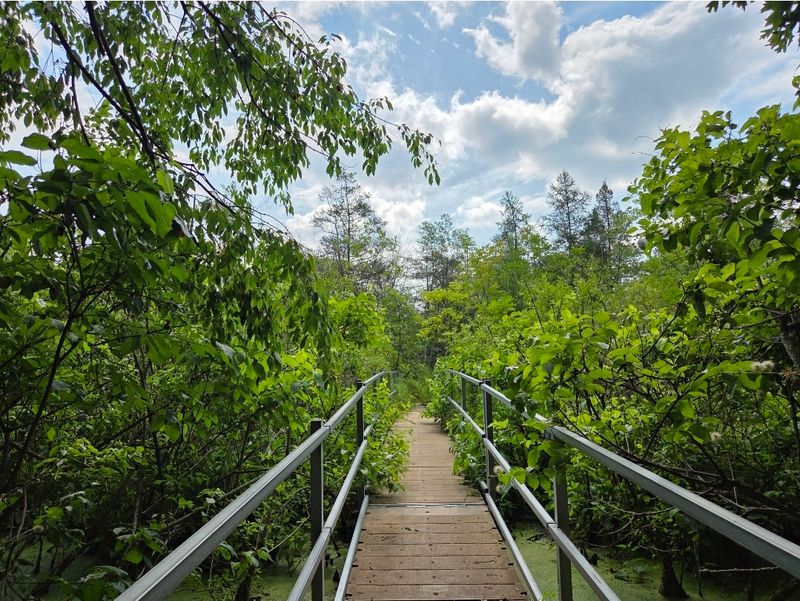
One of the best things about Pinhook Bog is that the geology is not trapped in a museum label. You walk through it.
The surrounding upland trail follows terrain shaped by glaciers, and those modest rises are more than pleasant variations in the path. They are part of the story that explains why a rare bog ended up here in the first place.
Reviews describe small hills, an easy loop, and a route that threads through old woodland before circling the wetland. That topography is a clue.
The moraine landscape left behind by retreating ice creates the framework, while the bog occupies a lower basin formed when stranded ice melted out. In other words, the whole hike works like a field guide with dirt under your shoes. This is where Pinhook gains real depth as an Indiana destination. It is not only pretty or unusual.
It is legible. You can see the relationship between forested uplands, wet depressions, and the protected bog center, then connect those pieces to a climate and landscape history that unfolded thousands of years ago across the region.
The payoff is subtle but strong. Instead of a single scenic monument, you get an intact environmental sequence that shows how geology steers ecology.
The hills influence drainage, the water chemistry shapes vegetation, and the trail lets you read those changes in real time. Plenty of places tell you an Ice Age story with signs and diagrams.
At Pinhook Bog, the evidence is underfoot, around the bend, and waiting in every transition from dry leaf litter to saturated ground.
When the Ranger Unlocks the Real Star
Pinhook Bog has an unusual twist for a nature preserve: the most fragile and fascinating area is not always open for independent wandering.
The bog interior is often accessed through ranger-led tours or limited special openings, and that controlled entry is not red tape for the sake of it. It protects a sensitive landscape that could be damaged quickly by unrestricted foot traffic.
That setup also changes the mood of the visit. Instead of treating the bog as a backdrop for a casual walk, you arrive knowing there is a reason the inner section is managed carefully.
Reviews describe knowledgeable guides explaining ecology, pointing out pitcher plants, and clarifying the difference between bog and marsh. That turns the outing into a sharper experience than simply following a signpost.
When ranger access is available, the experience becomes much more intimate. You are not just circling the edge anymore.
You are stepping closer to the floating mat, seeing specialized vegetation at eye level, and getting the kind of on-the-ground interpretation that makes small details click into place. Even the practical quirks, like a boardwalk that moves a little, underline how alive and delicate the terrain is.
If guided access is not happening that day, the upland trail still delivers a strong outing. But timing your visit around a ranger program can turn a good walk into a rare one.
The difference is scale and understanding. On your own, you see a remarkable protected wetland from its margins.
With a guide, you get invited into the system carefully, and the bog stops being a distant curiosity and becomes the center of the whole day.
Best Time to Go, and What Your Shoes Need to Know
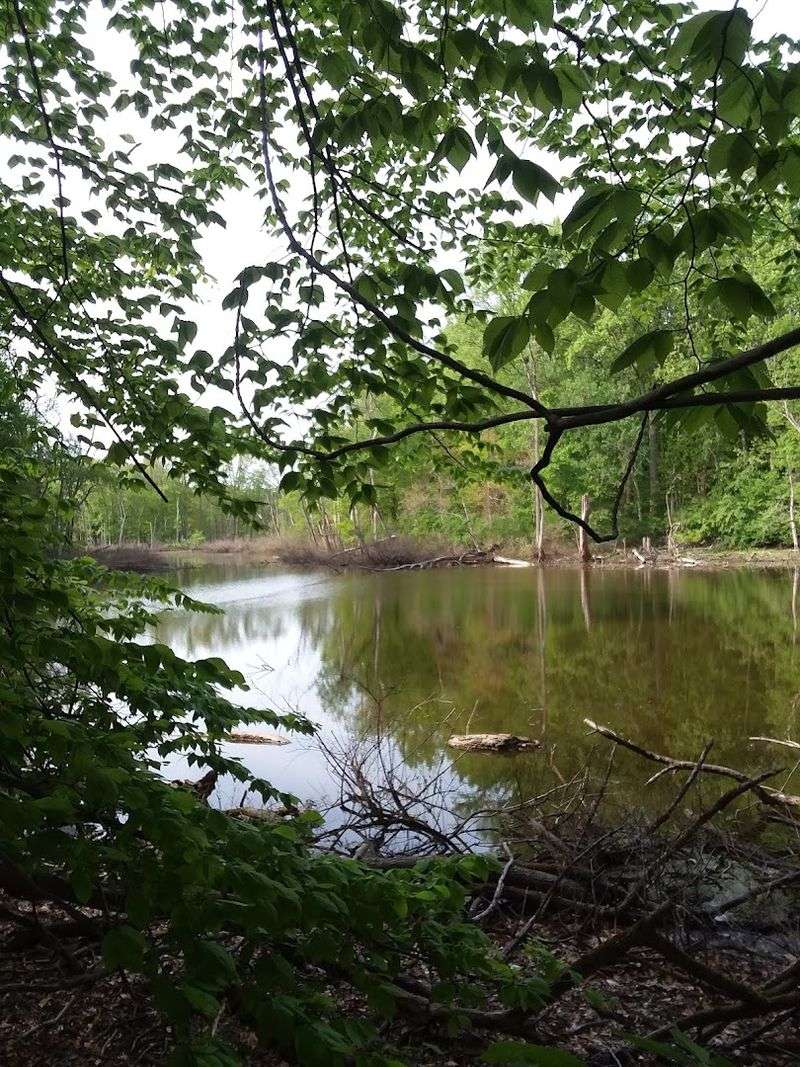
Pinhook Bog is easy enough for a wide range of hikers, but it still rewards a little planning. The loop is commonly described as short to about two miles, with gentle hills rather than anything punishing, so you do not need elite fitness to enjoy it.
What you do need is a realistic attitude about mud, changing access, and how much timing affects the experience.
Waterproof boots are a smart move here. More than one review mentions muddy patches and slippery conditions after rain, which makes sense for a trail bordering wetland habitat.
Tick repellent and bug awareness are equally sensible, especially when vegetation is full and the trail edges are active with summer growth.
Season also changes the tone of the walk in a big way. Spring and early summer can bring standout plant life in and around the bog, while fall earns praise for colorful trees along the upland route.
If you like bird activity, cooler mornings and shoulder seasons can make the forest feel especially busy without the heavier summer humidity.
Then there is the access question. The trail area is generally open long hours, but the bog interior is not a guaranteed walk-up experience, so checking for ranger-led opportunities before driving out is the smartest move if that is your priority.
Even without the inner bog, the trail works as a calm, manageable outing for families, casual hikers, and anyone wanting a nature stop that delivers more than a quick lap through generic woods. Come prepared for damp ground, move a little slower than usual, and let the trail’s changing terrain do the storytelling.
Why Pinhook Bog Earns a Longer Look
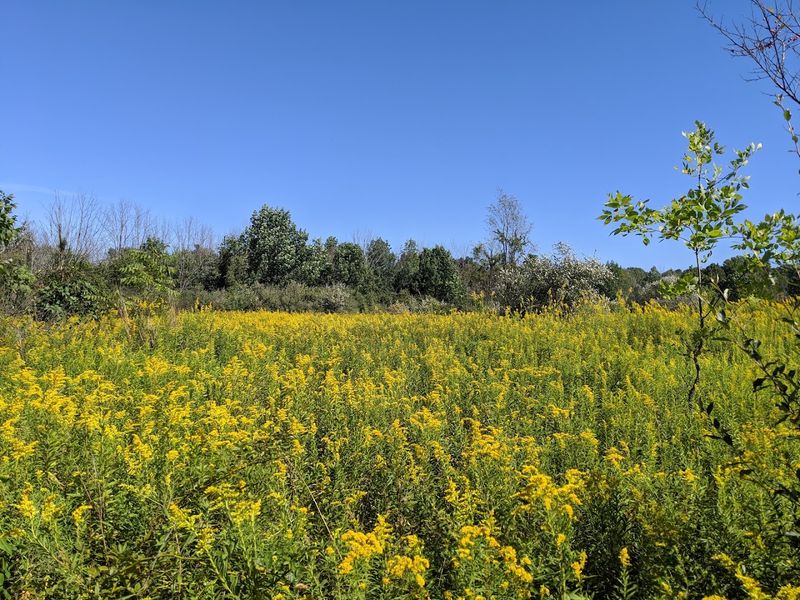
Pinhook Bog does not win you over with size, crowds, or dramatic infrastructure. It works through rarity, restraint, and the strange fact that one protected pocket of Indiana can hold such a specialized remnant of postglacial history.
By the end of the visit, the place feels less like a standard hike and more like a compact encounter with an ecosystem that survived against the odds.
That distinction matters in a region where outdoor stops can blur together if every trail promises scenic woods and a quiet loop. Pinhook is quieter than many of them, but it is also sharper.
The old growth feel on parts of the upland trail, the wetland edge habitats, the possibility of seeing frogs, birds, turtles, orchids, or carnivorous plants, and the clear evidence of glacial land shaping all combine into a walk with real character.
It also helps that the preserve does not overplay itself. There is no need for manufactured spectacle when the main draw is an actual inland bog with floating vegetation and uncommon plant communities.
The experience asks you to notice more, not consume more, which makes the strongest moments feel discovered rather than packaged.
If you are choosing one natural stop in this part of northwest Indiana and want something more distinctive than a basic forest loop, Pinhook Bog deserves serious consideration. Go for the unusual ecology, the Ice Age backstory, or the chance to catch a ranger-led tour into a landscape most people only glimpse from the edge.
Either way, you leave with a better eye for how much complexity can fit into a modest trailhead on a quiet road in La Porte.