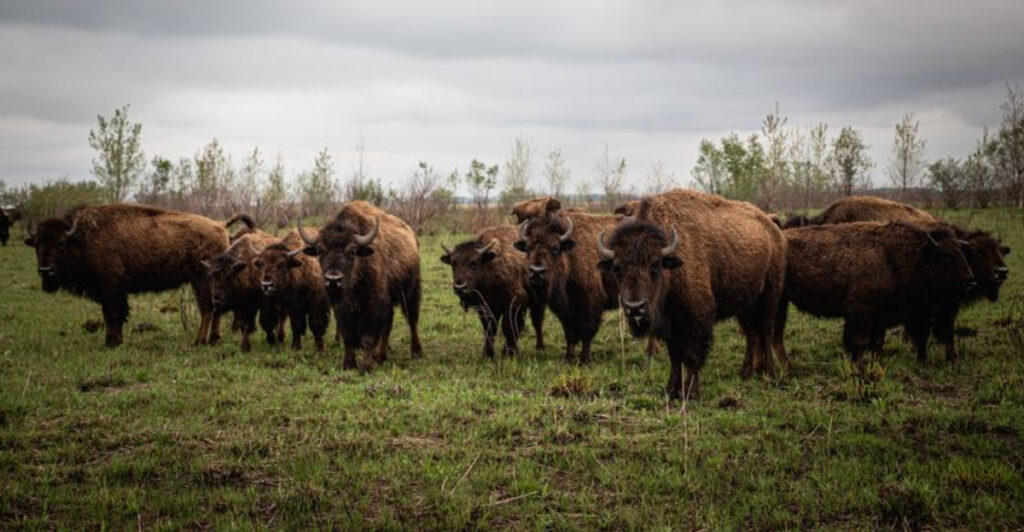
Northwest Indiana is not where most people expect to find a sweeping bison landscape, which is exactly why Kankakee Sands hits so hard. Out near Morocco, the horizon opens into grassland so broad it can make the state feel brand new.
The surprise is only the beginning, because this viewing area pairs raw prairie scale with easy access, thoughtful overlooks, and a wildlife experience that changes with the seasons and even the hour. Bison roam across restored habitat that stretches far beyond what most visitors anticipate. The result feels less like a roadside stop and more like stepping into a different version of Indiana altogether.
Where the Prairie Suddenly Gets Huge
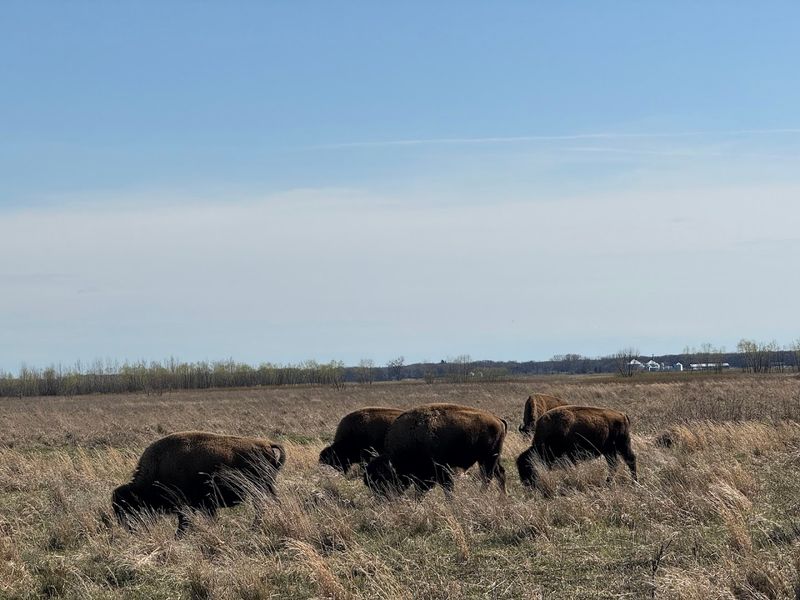
The approach to Kankakee Sands does not build with mountain drama or forest shade. It arrives through flat farm country, quiet roads, and a landscape that looks modest until the view suddenly widens and the prairie takes over.
That shift is the first jolt, because the openness here is enormous, and it makes the surrounding countryside seem smaller the farther you look.
At the viewing area, the eye has to adjust. Instead of scanning for a single scenic focal point, you start reading subtle changes across the grassland: darker patches, moving shapes, low swales, and long lines of horizon.
It is a place where scale does the talking, and the effect is stronger because Indiana rarely advertises itself this way.
The setting also has an unusual clarity. Wind moves through grasses instead of tree canopies, birds cut across the open air, and distant animals can appear as tiny marks one minute and unmistakable silhouettes the next.
On a bright day, the whole preserve looks like a wide sheet of color and motion, with tan, green, blue, and shadow shifting across it.
That openness changes how you behave as a visitor. You slow down, look longer, and stop expecting instant payoff at every turn.
The prairie asks for patience, but it rewards careful watching with a bigger sense of place than many more heavily developed attractions manage.
Even before a bison comes into view, the landscape already earns the trip. The preserve feels less like a park tucked into a town and more like a piece of a much older Midwest, spread out and breathing on its own terms. For a tiny community near Morocco, that is a startlingly large first impression.
The Main Event Is Not Behind Glass
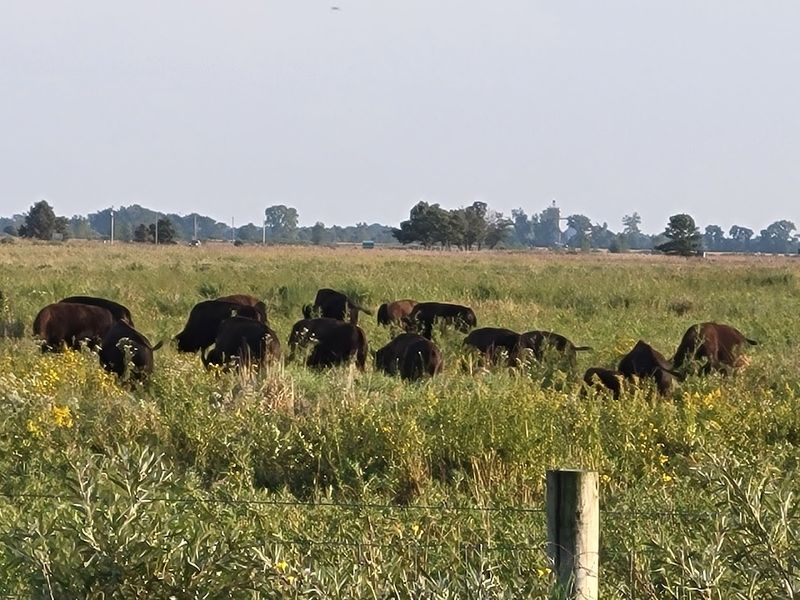
Bison are the headline here, but the experience works because they are not staged like zoo animals. They move through a huge protected prairie, which means every sighting carries a little uncertainty and a lot more excitement.
Sometimes the herd is distant and calm, sometimes it gathers in a dramatic cluster, and sometimes a few massive bodies pass close enough to make the entire scene feel suddenly heavier.
That unpredictability is part of the draw. A visit can begin with empty-looking grassland and then change in a minute once dark shapes emerge from a low rise or drift toward the viewing area.
Instead of a guaranteed close-up, you get the far more satisfying feeling of watching wildlife in a landscape that actually belongs to them.
The bison themselves look startling against the prairie. Their dark bulk breaks up the softer colors of the grass, and their movement is slower and more deliberate than most people expect.
Even from a distance, the contrast between a broad open field and an animal built like a moving wall is enough to command attention.
The viewing setup helps without over-directing the moment. Raised overlooks and binoculars make scanning easier, especially when the herd is spread out, but the preserve still keeps the experience grounded in observation rather than spectacle.
You are there to look, wait, and read the land, not rush past a fence line for a quick photo. That is why the bison here land so differently. They are not just animals to check off on a roadside stop.
They are the force that gives the prairie scale, tension, and meaning, turning a quiet Indiana preserve into one of the most surprising wildlife encounters in the state.
Raised Platforms, Binoculars, and a Smarter View
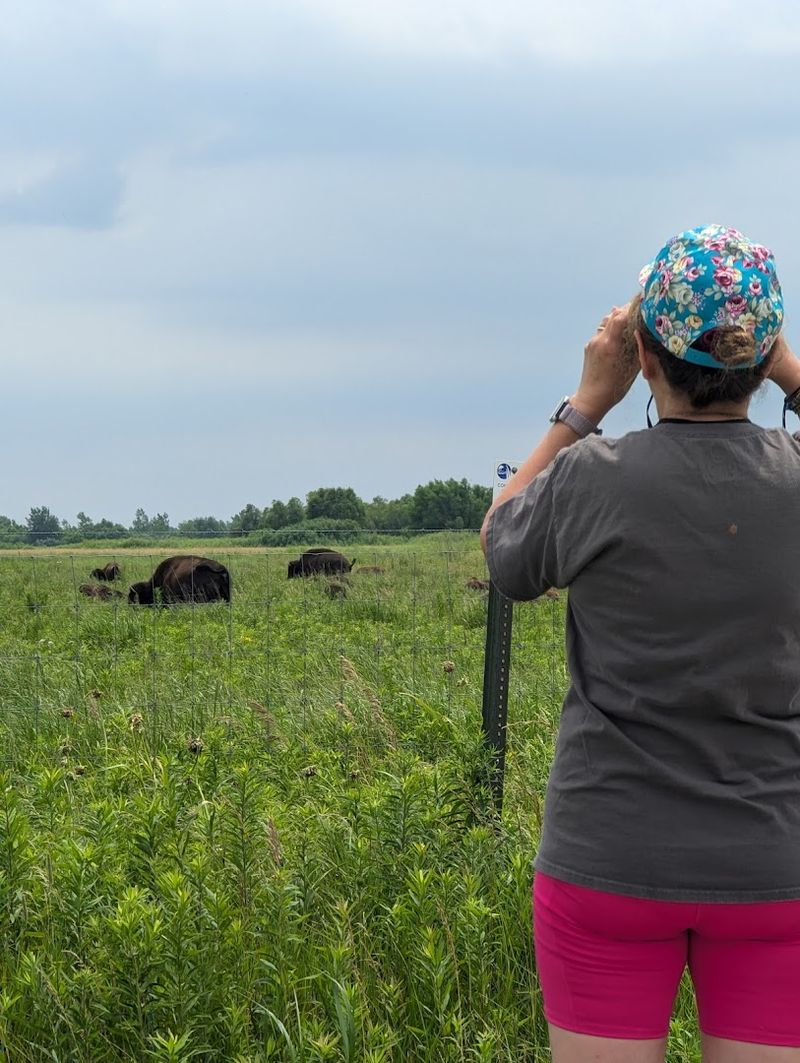
One of the strongest things about Kankakee Sands is that the viewing area is useful, not overbuilt. The platforms lift the sightline above the grass just enough to make scanning easier, which matters in a prairie where animals can vanish behind distance and terrain rather than trees.
That small bit of elevation changes the whole experience, especially for first-time visitors who might otherwise wonder if they are looking in the right direction.
Binoculars on site are another smart touch. They turn tiny dark dots into recognizable animals and help bridge the gap between the preserve’s wild scale and the practical limits of human eyesight.
For photographers, birders, and casual road-trippers alike, that simple tool makes the landscape more readable without taking away the thrill of finding the herd yourself.
The newer amenities also seem designed with the reality of the place in mind. There is parking, there are restrooms, and there are clear spaces to pause without feeling dropped into the middle of nowhere with no support.
That matters here because the preserve sits in a quiet rural area where convenience is not layered all around you.
Even the layout encourages a better pace. Rather than shuffling visitors through a crowded path, the site lets people spread out, take in different angles, and spend a little longer with the view.
Some days that means quietly watching bison graze, and on others it means noticing birds, grasses, and shifting light while waiting for movement.
The result is a viewing area that respects both the animals and the visitor. It gives enough structure to make the prairie approachable, while still letting the landscape stay big, open, and slightly unpredictable. That balance is harder to pull off than it looks, and here it works remarkably well.
Why This Corner of Indiana Looks So Different
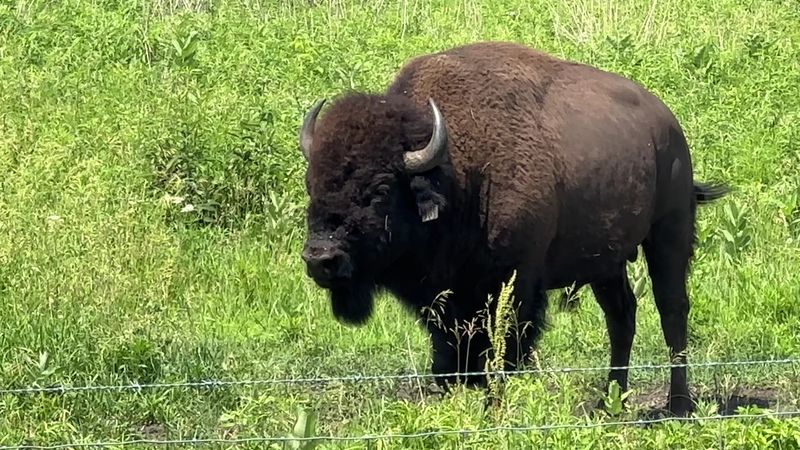
The most interesting part of Kankakee Sands may be how strongly it rewrites expectations about Indiana. Instead of woods, river bluffs, or small-town main street scenery, this place presents a restored prairie system where grasses, wetlands, wildflowers, and grazing bison define the experience.
The land reads less like a decorative nature stop and more like a working ecological landscape with its own rhythms and practical purpose.
That broader context gives the bison extra weight. They are not there as a novelty dropped into open space for entertainment.
They fit into a larger story of prairie restoration, habitat management, and rebuilding a landscape type that once covered far more of the region than many travelers realize.
You can see that purpose in the details around the viewing area. Informational signs, nearby trails, and seasonal plant changes frame the prairie as a living system rather than a single-animal attraction.
In warmer months, native flowers and milkweed add color and texture, while bird activity can be just as compelling as the search for the herd.
This also explains why visits can vary so much. Wind, season, water levels, grazing patterns, and plant growth all change what the preserve looks like and where attention naturally goes.
On one trip the bison may dominate the scene, while on another the prairie itself becomes the more revealing subject.
That layered experience is a big reason the place stands out. Even if the herd is distant, the visit still has substance because the landscape is doing more than providing a backdrop.
Kankakee Sands shows a version of Indiana that is wider, wilder, and more ecologically ambitious than the state’s standard image suggests.
Timing the Herd Without Forcing the Day
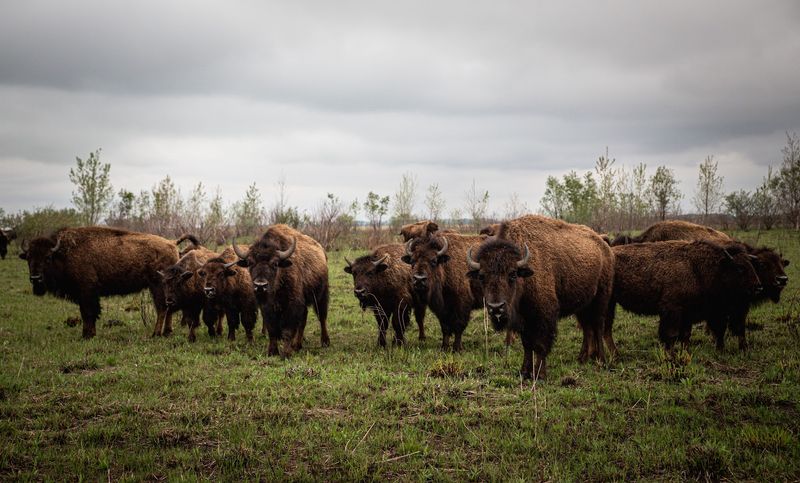
Visiting Kankakee Sands works best when you treat it like wildlife watching, not a timed performance. The preserve is open daily during daytime hours, and that flexibility helps because animal movement, weather, and visibility all matter more than a rigid itinerary.
A patient morning or late-day stop often gives the prairie a calmer, more readable look than a rushed midday pass.
Temperature can shape the experience in obvious ways. On hotter days, the herd may be harder to spot from the main overlook, and it pays to remember that bison use the landscape rather than pose in one convenient spot.
In cooler weather, especially outside the heavy heat of summer, the grassland can feel more open and the search itself becomes part of the fun instead of a test of endurance.
Season also changes what kind of trip you are having. Winter can strip the view down and make dark bison bodies stand out more clearly, while spring and summer add flowers, birds, insects, and richer color across the preserve.
Fall brings its own appeal through dry grasses, lower light, and a more textured palette that photographers tend to appreciate.
One practical mindset helps more than any gadget: come ready for variation. You might see a large herd from the platform, catch only distant shapes from the road, or spend part of the visit appreciating the prairie itself while waiting for movement.
The site rewards curiosity better than expectation. That is why planning here should stay simple. Bring water, bring binoculars if you have them, and give yourself enough time to look carefully instead of demanding instant drama.
Kankakee Sands is at its best when the day has room to unfold naturally, with the herd appearing on prairie time, not yours.
Beyond the Bison: Birds, Trails, and Prairie Texture
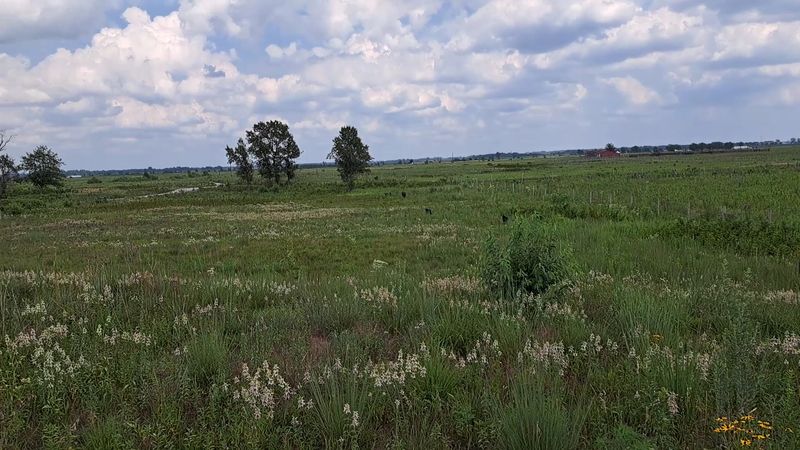
Anyone arriving only for a quick bison sighting can miss how much else is happening at Kankakee Sands. The preserve holds a surprising amount of visual texture, from native grasses and milkweed to birds moving across the open sky and seasonal blooms spreading color at ground level.
Even when the herd stays far out, the place rarely feels empty. That matters because prairie landscapes reward a different kind of attention than forest trails or city parks. Instead of one dramatic overlook after another, the interest comes from movement, pattern, and small shifts in distance.
A patch of flowers can pull the eye one minute, then a hawk, wetland bird, or rolling line of grass can redirect the whole scene.
The walking options add to that sense of slow discovery, though this is not the place for expecting one long dramatic hike from the main viewing area alone. Some paths and viewing spurs are short, practical, and designed more for access and interpretation than mileage.
That setup works well if you arrive knowing the visit is about observing the preserve rather than crushing a trail goal.
There is also a tactile side to the site that many scenic drives never offer. Wind, uneven ground, changing light, and the occasional muddy patch remind you that this is active habitat, not manicured parkland.
On blustery days the prairie can feel raw and exposed, which only sharpens the sense that this landscape operates on natural terms.
For travelers who like more than one payoff from a stop, that is excellent news. Kankakee Sands can be a wildlife outing, a photography stop, a plant-lover’s detour, or a quiet place to recalibrate after miles of highway. The bison may be the star, but the supporting cast is stronger than expected.
A Tiny Indiana Town With an Outsized Payoff
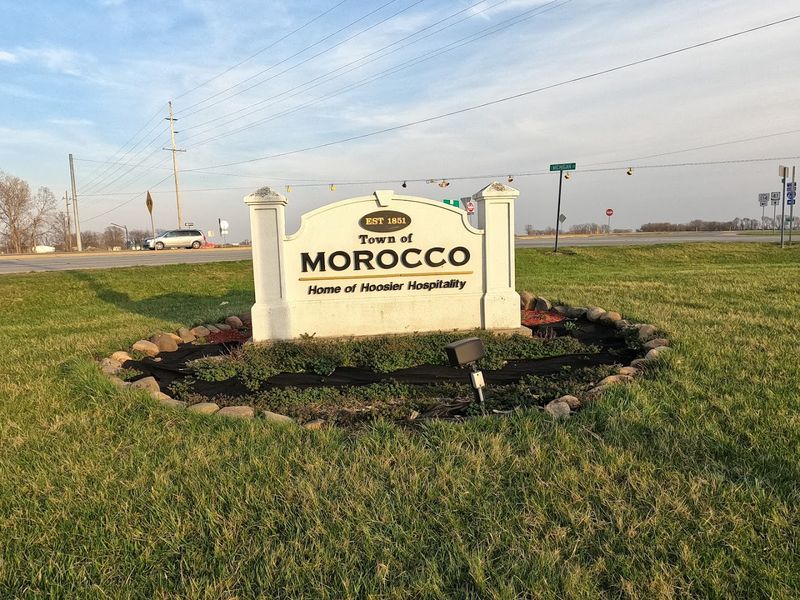
Morocco is the kind of small Indiana town many drivers might pass without expecting a major wildlife surprise nearby. That contrast gives Kankakee Sands some of its punch.
A place with this much visual scale and ecological ambition feels almost secret simply because it sits so far outside the state’s usual tourism script.
Yet the preserve does not rely on novelty alone. Its real strength is how clearly it delivers a distinct experience: broad prairie, free-roaming bison, quiet infrastructure, and enough room for the landscape to stay the main character.
There is no need for theatrical extras when the horizon is this wide and the animals are this imposing. It also suits several kinds of travelers at once.
Families can keep it approachable thanks to the viewing area and amenities, photographers can work the distance and light, and anyone tired of crowded attractions can appreciate the spaciousness.
Because it is free and self-guided, the stop can be short and curious or longer and more deliberate. The key is arriving with the right expectation. This is not a theme-park encounter where every sightline is controlled for maximum certainty.
It is a prairie preserve, and that means conditions shift, sightings vary, and some of the satisfaction comes from paying attention instead of consuming a polished show.
That is exactly why this place stands out. Kankakee Sands offers a version of Indiana that is bigger, quieter, and wilder than many people know exists, all within reach of a modest rural road near Morocco.
For travelers chasing the state’s most unexpected landscape, this one earns a top spot without needing to shout about it.