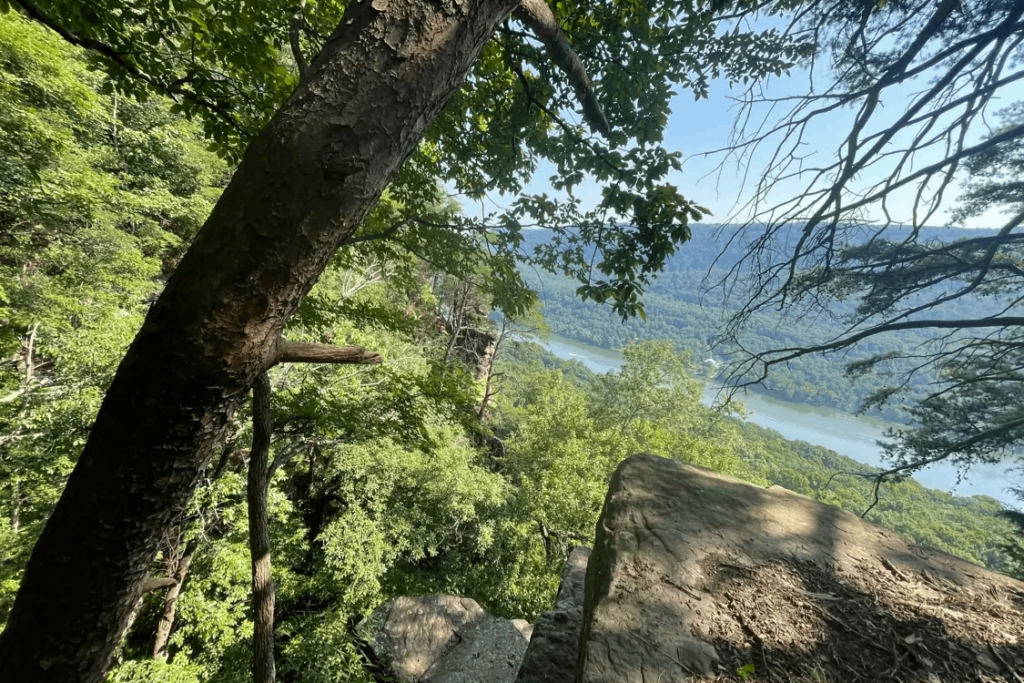
Signal Mountain holds one of those rare hiking gems that delivers massive payoff without eating up your entire day. Julia Falls Overlook sits less than a mile from the trailhead, yet the views stretch across the Tennessee River Gorge like something you’d expect after hours of trekking.
Whether autumn leaves paint the valley in warm colors or winter fog rolls through the gorge, this trail rewards visitors with scenery that changes beautifully with each season.
The Signal Mountain Hike That Pays Off Faster Than You Expect
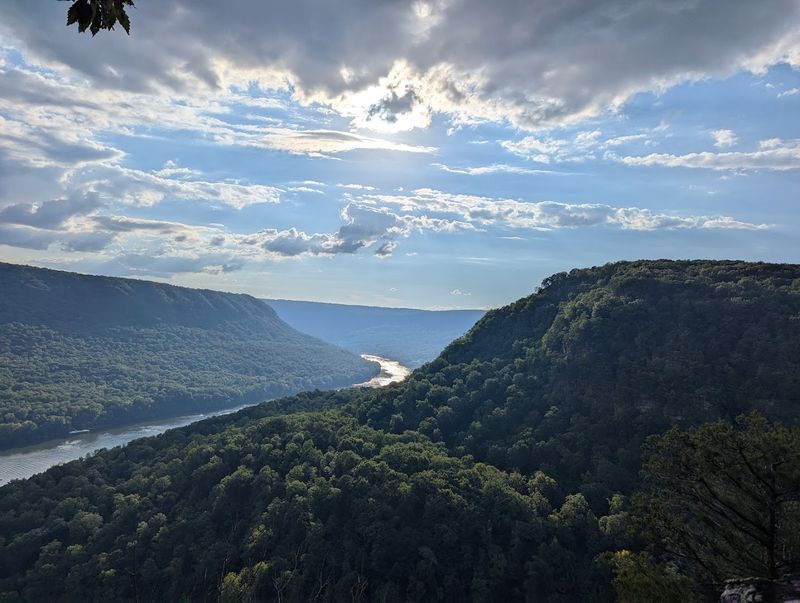
Most memorable hikes seem to demand half your day and all your energy reserves. Julia Falls Overlook flips that script completely. You park at Signal Point, lace up your boots, and within 45 minutes round trip, you’re standing at one of the most stunning overlooks in the Chattanooga area.
The trail covers just 0.9 miles to reach the overlook, but calling it “easy” would be misleading. What you save in distance, you make up for in vertical challenge and rocky terrain. The path drops steeply from the parking area, navigating natural stone steps, exposed roots, and sections where you’re basically scrambling over boulders.
That quick descent means one thing: you’ll be climbing back up on the return. Your legs will definitely feel those 100 feet of elevation change. But here’s the thing—the brevity works in your favor when you’re tired.
Hikers consistently mention the trail’s efficiency in reviews. You get jaw-dropping gorge views, waterfall perspectives, and that accomplished feeling without blocking out your entire afternoon. It’s perfect for squeezing in before lunch or adding to a day of exploring Chattanooga.
The short distance also means you can visit more frequently throughout the year. Different seasons transform the gorge views completely, and since the time commitment stays manageable, returning becomes realistic rather than theoretical.
If you’re used to Tennessee hikes requiring serious mileage for decent payoff, Julia Falls Overlook will pleasantly surprise you. Just don’t confuse “short” with “simple”—this trail demands respect for its technical sections and steep grades despite its compact length.
Where The Trail Begins: Signal Point Park’s First Big View
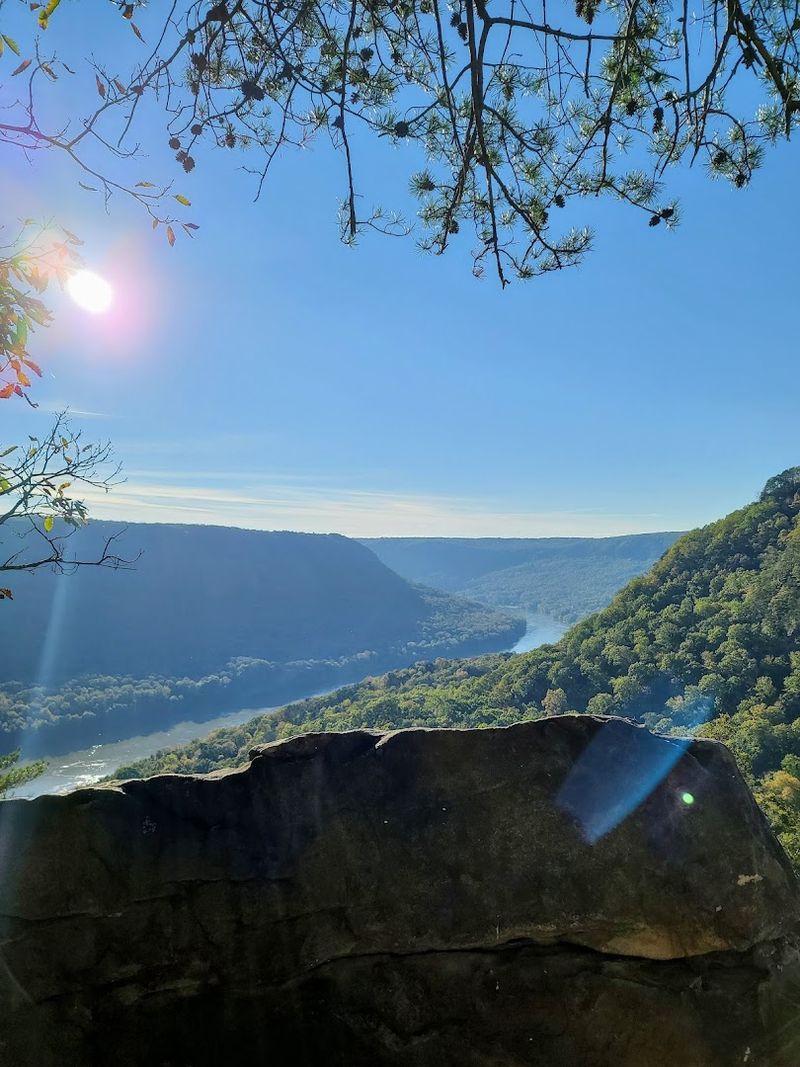
Before you even hit the trail, Signal Point Park hands you a preview that stops most visitors in their tracks. The parking area sits right at the rim of the Tennessee River Gorge, offering sweeping views that some people mistake for the main attraction.
This initial overlook gives you perspective on what you’re about to hike into. The river curves through the valley far below, and on clear days, you can trace its path for miles. It’s also your last chance to gauge conditions—if the gorge looks foggy or the wind feels intense up here, expect similar conditions at Julia Falls.
The park provides basic facilities, including restrooms, though reviews consistently warn these aren’t the cleanest you’ll encounter. Free parking makes the spot accessible, and you’ll often see families taking photos here before deciding whether to tackle the trail itself.
Starting from this high point means your hike begins with immediate descent. Those initial steps down can feel jarring after the flat, easy parking area. The contrast serves as fair warning—this trail changes character quickly.
Some visitors, especially those with mobility concerns or young children, choose to enjoy just this parking area view and skip the trail entirely. That’s a valid choice given the technical terrain ahead. The gorge vista from Signal Point alone justifies the drive up the mountain.
But if you’re ready for the real experience, this overlook acts as your launching point. Take a moment to appreciate the view, use the facilities, and mentally prepare for the rocky descent that starts just yards away from where you parked.
The Short But Rugged Path To Julia Falls Overlook
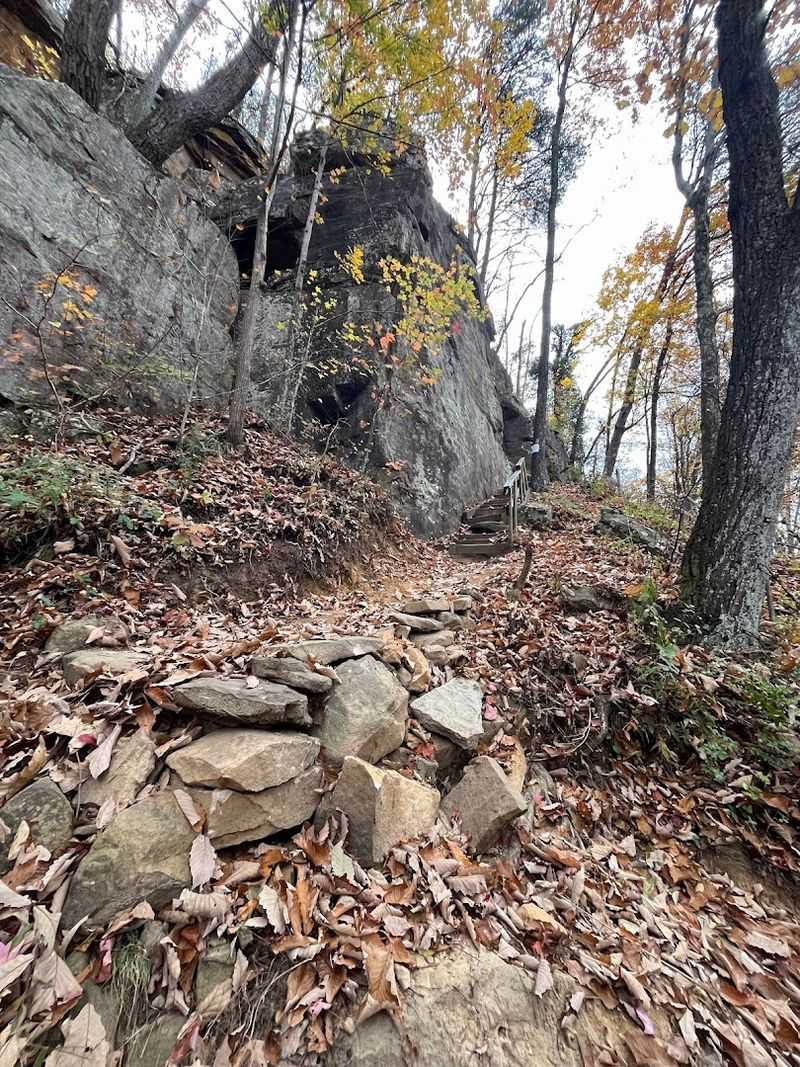
Distance doesn’t tell the whole story on this trail. That 0.9-mile marker sounds gentle until you’re navigating what feels more like a vertical obstacle course than a standard path.
Right from the start, you’re descending steep wooden stairs that have seen better days. Some steps show wear, occasional boards are missing sections, and railings feel wobbly in spots.
Once past the initial staircase, the trail transitions to natural terrain—and by natural, we mean lots of rocks. Huge boulders line the path, roots crisscross everywhere, and you’ll find yourself climbing over, around, and occasionally under obstacles. A few sections even include ladder-like features where you’re pulling yourself up or lowering yourself down.
Footing requires constant attention. Rocks shift, exposed roots catch boots, and leaf litter hides the true surface underneath. After rain, everything becomes slippery enough that multiple reviewers specifically warn against hiking in wet conditions.
Trekking poles earn their keep here. They help with balance on uneven surfaces and take pressure off your knees during the descent and subsequent climb back. Hikers mention poles repeatedly in reviews as making the journey significantly more manageable.
The trail stays well-marked and easy to follow despite the rugged terrain. You won’t get lost, but you might get humbled by sections that require genuine scrambling. This isn’t a trail where you can zone out and let your feet autopilot—every step demands focus and intention.
Why The Tennessee River Gorge Looks Different Every Season
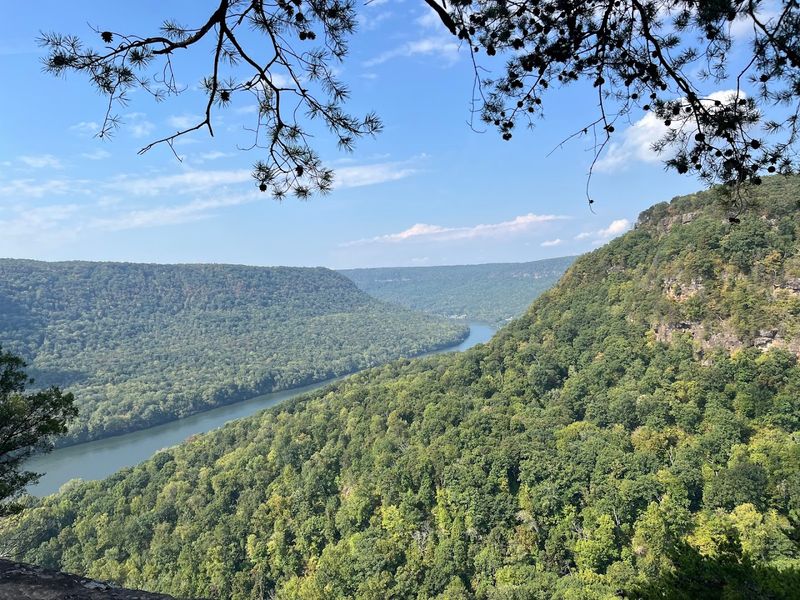
The gorge doesn’t just sit there looking pretty in one unchanging way. It transforms dramatically depending on when you visit, giving you entirely different experiences throughout the year.
Autumn might be the showstopper season. Trees covering the gorge walls erupt in reds, oranges, and yellows that stretch as far as you can see. From Julia Falls Overlook, you’re watching this color explosion happen in layers—the valley floor, the gorge walls climbing up toward you, and the distant ridges all displaying different stages of fall color.
That said, those beautiful fallen leaves create an extra challenge by hiding rocks and making surfaces slippery.
Winter strips away the foliage and reveals the gorge’s raw geography. You can see rock formations and the river’s path with nothing blocking your view. Some visitors specifically seek out winter hikes here because the bare trees open up sightlines that summer completely obscures.
Cold weather also means fewer crowds and that crisp, clear air that makes distant mountains pop.
Spring brings fresh green growth that seems to glow when sunlight hits it right. Waterfalls in the area run stronger with spring rains, and wildflowers start appearing along the trail. The gorge looks alive and renewing itself.
Summer offers lush, full forest views and the warmest hiking conditions, though humidity can make the climb back up more challenging. The thick canopy provides shade on the trail itself, which helps.
This seasonal variety means Julia Falls Overlook genuinely rewards repeat visits. You’re not seeing the same view over and over—you’re watching the gorge cycle through completely different moods and colors.
The Overlook Moment: Waterfall Views, Rock Ledges, And Wide-Open Scenery
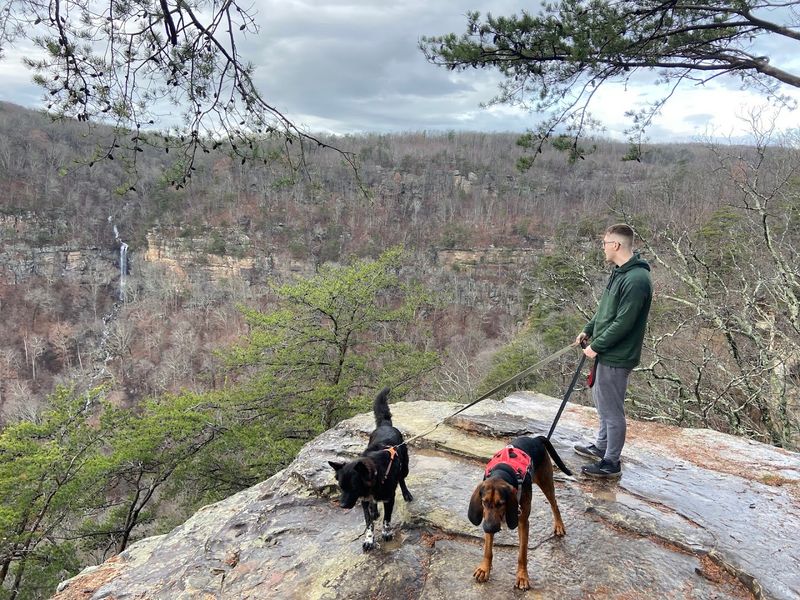
After all that scrambling and descending, you round a final bend and suddenly you’re there. The overlook opens up in front of you with nothing between you and a massive drop except air and your own good judgment.
Julia Falls itself isn’t right where you’re standing—you’re looking across the gorge at the waterfall cascading down the opposite cliff face. Depending on recent rainfall, the falls might be a robust curtain of water or a thinner stream, but the perspective of seeing it from this angle makes it special. You’re at eye level with the top of the falls rather than looking up at it.
The rock ledge you’re standing on juts out naturally, providing an unobstructed platform for taking in the view. And here’s something crucial: there are no guardrails, no safety fences, no barriers whatsoever. You’re responsible for your own safety and that of anyone with you, especially kids or dogs.
The Tennessee River winds through the gorge floor far below, looking almost toy-like from this height. On clear days, you can see for miles—layers of ridges fading into blue distance, the river catching sunlight, and Edwards Point visible across the way.
Most hikers spend significant time here, sitting on the rocks, eating snacks, taking photos, and just absorbing the scale of the view. After the technical trail getting here, this moment feels earned. The overlook rewards your effort with scenery that photographs beautifully but honestly looks better in person.
Just remember: the exposed cliff edge isn’t the place for careless movement or letting children or dogs roam unsupervised.
What To Know Before You Go: Steep Drops, Stairs, And Trail Conditions
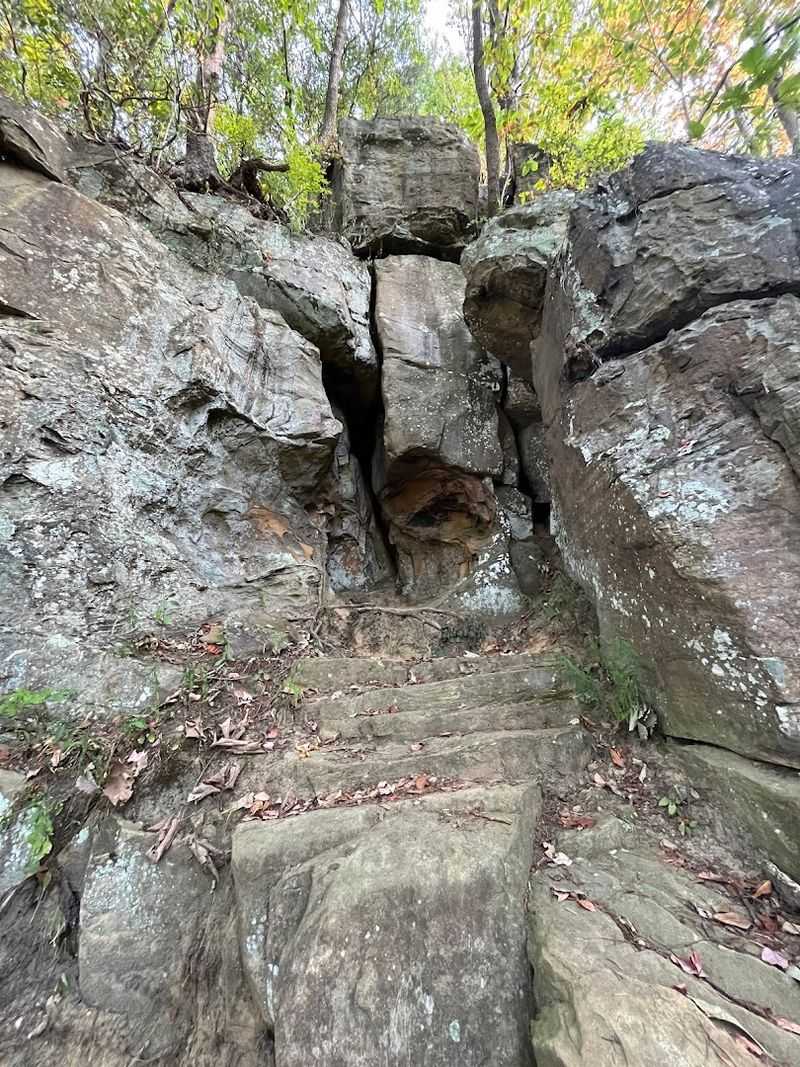
Online descriptions sometimes undersell this trail’s difficulty, leading to unprepared hikers getting more adventure than they bargained for. Let’s be clear about what you’re actually signing up for.
This is not suitable for young children unless they’re experienced hikers comfortable with steep, rocky terrain. Multiple families have arrived thinking it would work for toddlers, only to struggle significantly. Kids under 8 or 10 will likely find it challenging and potentially unsafe, especially near the unguarded cliff at the overlook.
Older adults or anyone with knee problems should seriously consider whether the steep descent and subsequent climb back up works for their fitness level. Going down is hard on knees, and coming back up will test your cardiovascular endurance. There’s no easy alternate route.
Dogs can come but must be leashed, and even then, large or older dogs may struggle with the rocky sections and stairs. Small, agile dogs tend to handle it better than heavy breeds.
Footwear matters tremendously. Hiking boots or shoes with aggressive tread are basically required. The rocks get slippery, and regular sneakers won’t provide adequate grip or ankle support.
Check the weather before you go, and skip this trail if it’s rained recently. Wet rocks and slick leaves create genuinely dangerous conditions.
Bring trekking poles if you have them. Bring water even though it’s short—you’ll want it after climbing back up. And bring your patience for the technical sections where you’ll need to move carefully.
The trail is free, parking is free, and the experience is incredible, but it demands respect and honest assessment of your abilities before you commit to that initial descent.
Why Julia Falls Overlook Is Worth Adding To Your Chattanooga Day Trip
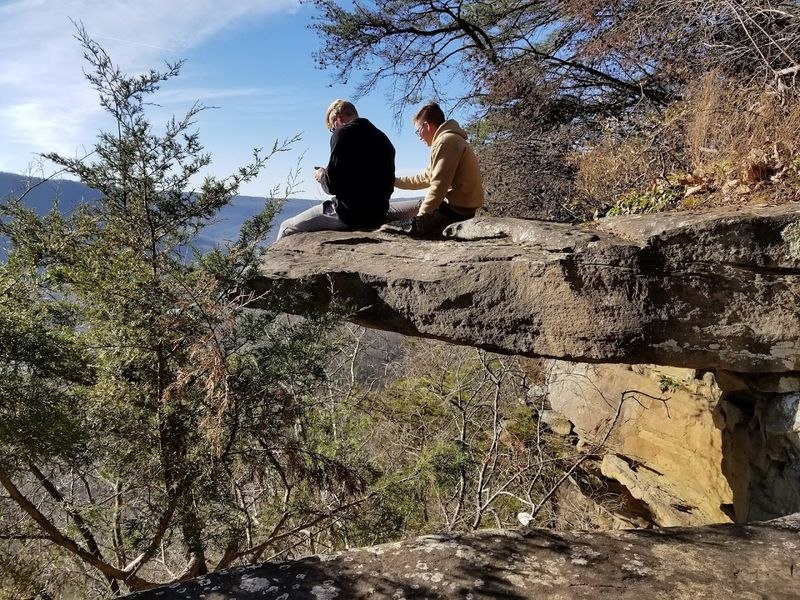
Chattanooga packs in attractions—the aquarium, Rock City, Lookout Mountain, riverfront activities—but Julia Falls Overlook offers something most tourist spots can’t. You get authentic Tennessee wilderness and spectacular natural views without the crowds, admission fees, or commercialization.
The timing works perfectly for day trip planning. An hour or less means you can hike Julia Falls in the morning, then head to downtown Chattanooga for lunch and afternoon activities. Or flip it—spend your morning at attractions, then burn off energy on the trail before dinner.
Signal Mountain sits just a short drive from central Chattanooga, making it easily accessible without feeling like a major detour. You’re not committing to driving deep into remote areas or adding hours to your trip.
The trail provides a completely different pace and atmosphere than typical tourist activities. After navigating busy attractions, the relative quiet of the forest and the raw, unfiltered nature of the overlook feel refreshing. You’re not being guided through or watching from designated viewing areas—you’re actually in the landscape.
For families with older kids or teens, the trail offers physical challenge and adventure that beats standing in another museum or gift shop. It’s a real outdoor activity that creates memorable moments and feelings of accomplishment.
Whether you’re a Chattanooga local looking for nearby hiking options or a visitor wanting to experience Tennessee beyond the standard tourist circuit, Julia Falls Overlook delivers. Just remember it’s a real hike requiring real effort—but that’s exactly what makes it worth the addition to your Chattanooga plans.