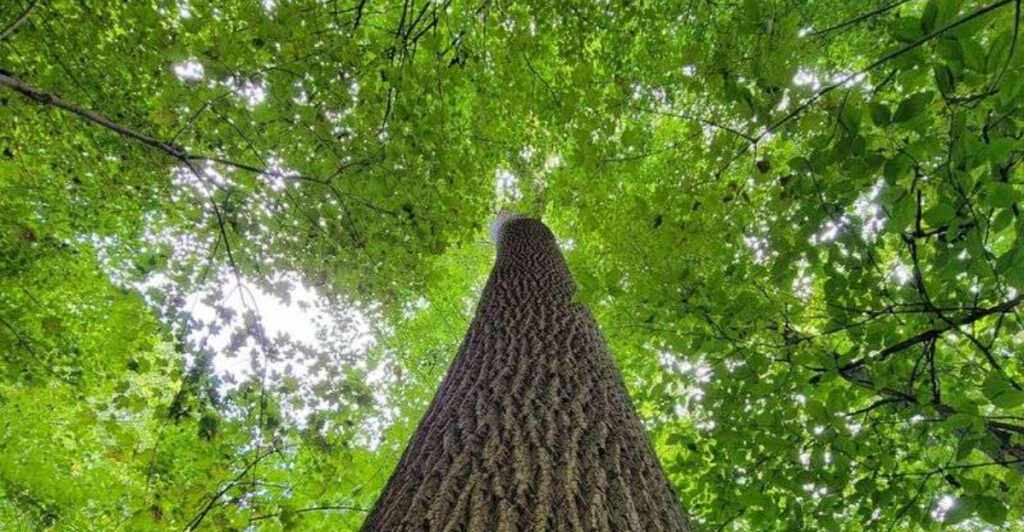
Hidden among the farmland of Shelby County, Indiana, sits one of the rarest natural treasures in the Midwest. Meltzer Woods is home to towering old-growth trees, some estimated to be more than 400 years old, offering a glimpse of what much of the state looked like before widespread settlement.
The moment you step beneath the canopy, the noise of modern life fades away, replaced by birdsong, rustling leaves, and the quiet presence of giants that have stood for centuries. If you’re searching for a unique Indiana hiking destination, this remarkable forest delivers an unforgettable walk through living history.
The Roadside Turnoff That Opens Into Another Century
The approach to Meltzer Woods is part of the surprise. You are driving through open Shelby County farmland, past fields and low horizon lines, and then the preserve appears with almost no theatrical buildup.
That contrast does the work. A landscape that feels broad and exposed suddenly gives way to dense woods, and your eye immediately locks onto the height and thickness of the trees waiting beyond the road.
There is a practical side to this arrival that helps. The gravel parking area sits on the north side of the road, while the public trail entrance is across from it on the south side, a detail worth knowing before you step out and start scanning the edges.
Signage is reported to be clear, which matters here because the setting is rural and quiet, not surrounded by obvious tourist infrastructure or constant foot traffic.
Then the visual rhythm changes. Instead of field rows, fence lines, and wind moving across open ground, you get bark texture, shade, and a layered canopy that blocks out distance.
Meltzer Woods does not announce itself with a dramatic gate or visitor center. It announces itself by making the countryside suddenly look temporary and the forest look permanent, which is exactly the right beginning for a place known for very old trees.
That first shift sets expectations in a useful way. You are not here for a packed itinerary or a checklist of attractions.
You are here to step into one of the rare corners of Indiana where the forest still reads as deep time, and even the short walk from road to trailhead starts putting that idea in focus.
Where the 400-Year-Old Trees Take Over the Scene
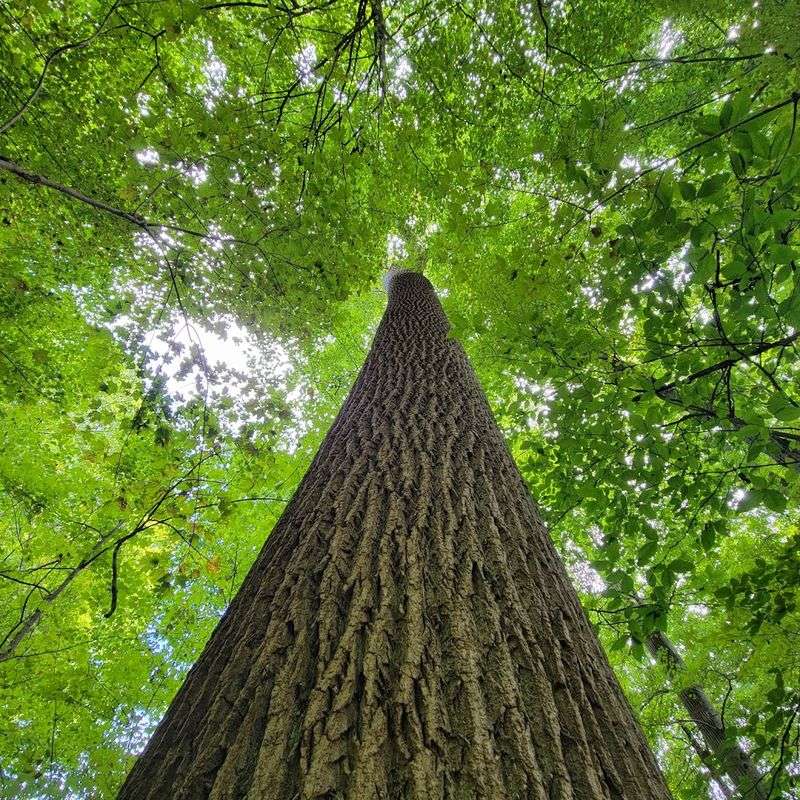
The headline feature at Meltzer Woods is simple and powerful: the trees are enormous. Not decorative-big, not neighborhood-big, but the kind of big that changes how you walk because you keep looking up.
Some are commonly described as 400 years old, and whether you arrive with that number in mind or not, the age is visible in the bulk of the trunks, the irregular bark, and the sense that these trees grew long before the surrounding farmland took its current shape.
This is old-growth forest, and that phrase matters because it changes what you are seeing. The woods are not a neat plantation of similar sizes or straight lines.
Instead, the forest has variation, broken limbs, fallen wood, younger growth rising through older shade, and the layered complexity that comes with time. Even a relatively short trail can feel visually dense because every direction contains a different relationship between height, decay, regrowth, and light.
That scale also affects pace. On a one mile to 1.3 mile loop, you might expect a quick lap, but giant trees slow the walk naturally.
You stop because a trunk flares wider than expected. You pause because one tree rises cleanly while another twists, splits, or keeps living after damage.
The preserve offers enough detail that the distance becomes less important than the constant recalibration of your own size inside the forest. Plenty of trails give you exercise. Meltzer Woods gives you proportion.
It is a reminder that some places do not need overlooks, waterfalls, or dramatic elevation to feel extraordinary. A stand of very old trees, left to show their age honestly, is more than enough.
Boardwalks, Bridges, and a Trail That Keeps the Focus on the Woods
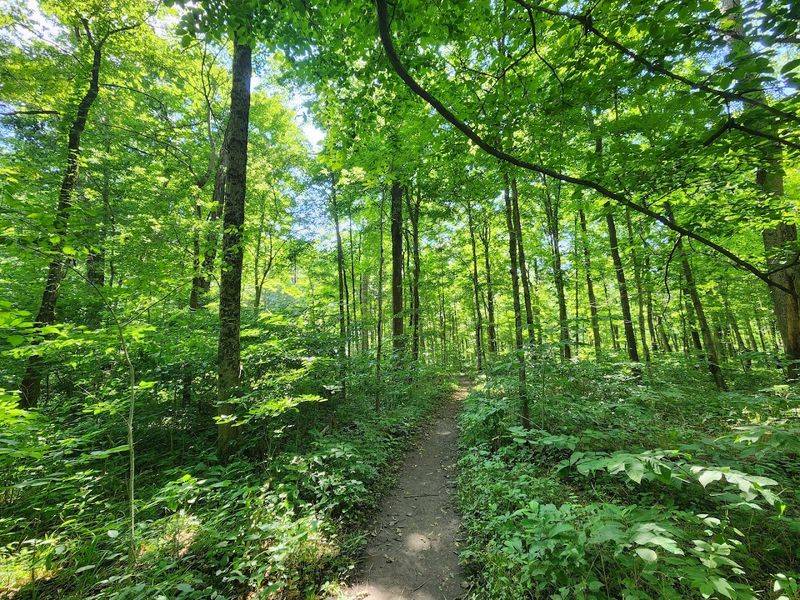
Meltzer Woods works especially well because the trail design does not compete with the forest. The route is described as a loop of about 1.3 miles, with some visitors estimating the main circuit closer to a mile, and that modest length fits the preserve.
You are not here to cover miles. You are here to move through a concentrated stretch of old woods without losing sight of the main event.
The path is generally flat and well marked, which opens the experience to a wide range of walkers. Families with kids, casual hikers, birders, and anyone wanting an easier nature outing can focus on what is around them instead of negotiating steep climbs or confusing junctions.
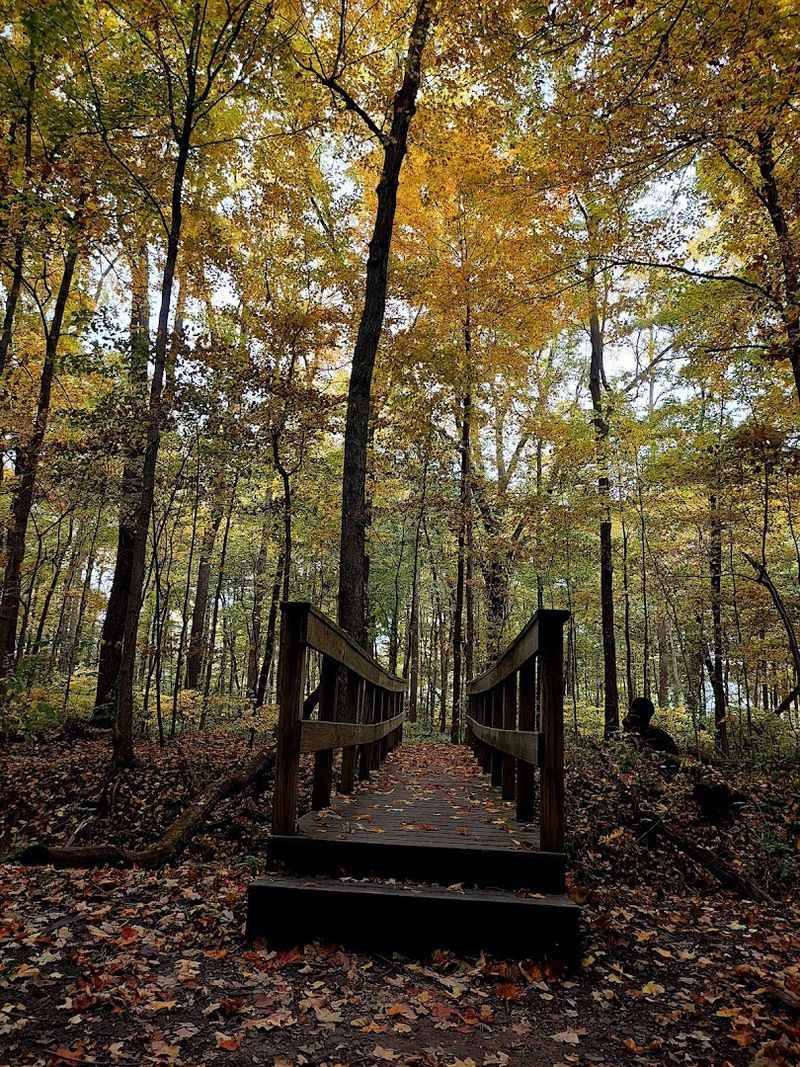
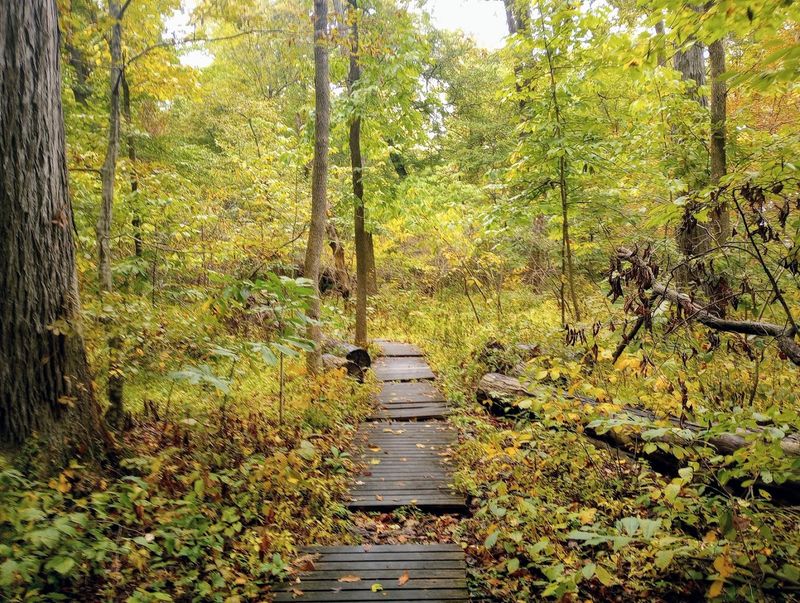
Small bridges and boardwalks appear along the way, adding just enough structure to keep the route practical while still letting the preserve feel natural rather than manicured.
That balance becomes important after wet weather. Several accounts mention muddy or squishy sections, so the boardwalks are not decorative touches.
They are part of how the trail stays usable in a forest shaped by moisture, small waterways, and rich ground cover. If you show up in the wrong shoes after a rainy stretch, you will notice the mud.
If you come prepared, the dampness reads less like a problem and more like evidence that this is a living woodland, not a paved park loop.
The route also keeps you close to the details that matter. Because the terrain is level, your attention can stay on bark patterns, exposed roots, fungi, birds, and the changing density of the understory.
The trail is not trying to impress you with engineering. It is doing something smarter: guiding you through the woods while keeping the woods in charge.
Small Creek, Spring Wildflowers, and the Life Between the Giant Trunks
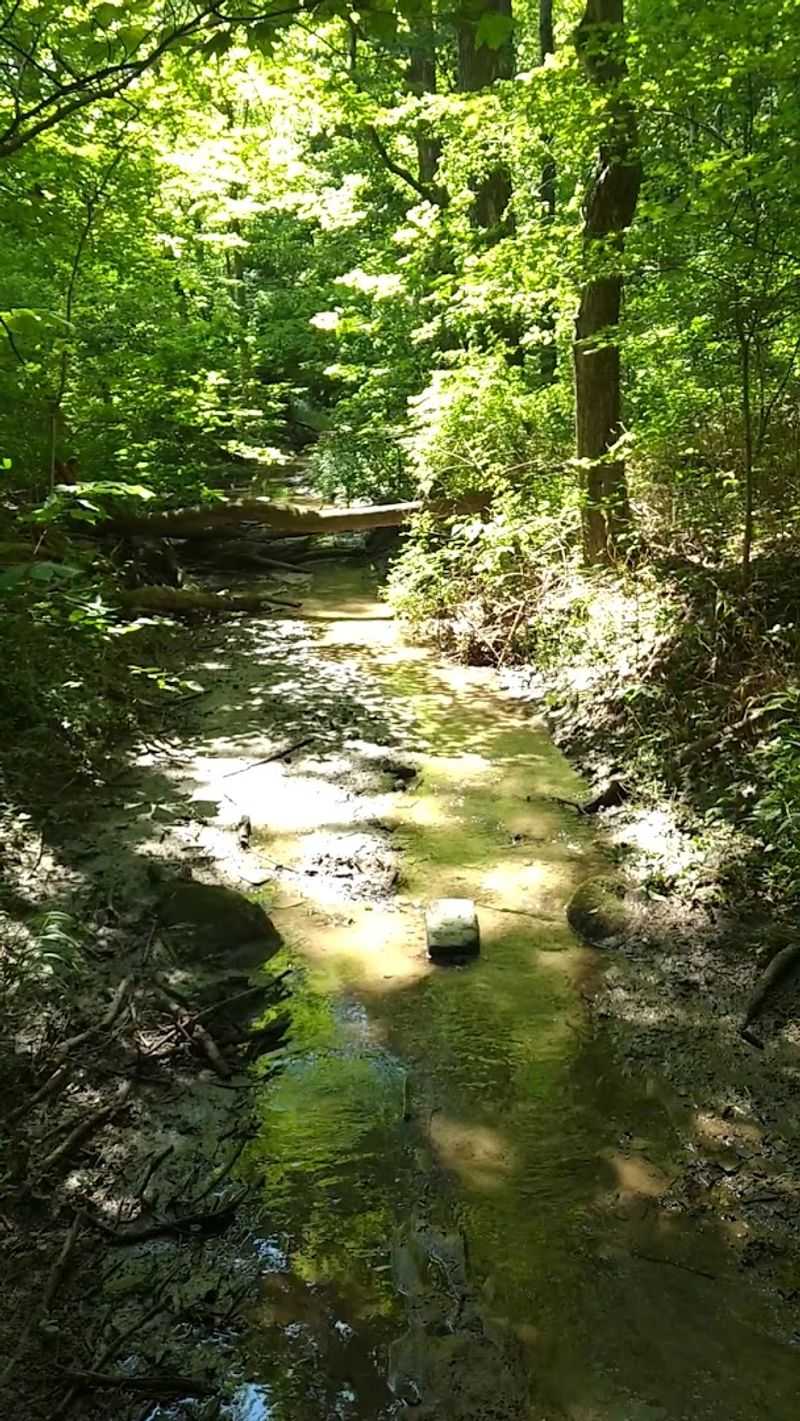
If the giant trees are the headline, the smaller living details are the part that keeps the walk from becoming a single-note experience. Meltzer Woods includes a small creek running through the preserve, and that water changes the mood of the forest floor.
It brings movement, softness, and pockets of habitat that pull your attention downward after all that looking up into the canopy.
Spring appears to be especially rewarding here. Reports of wildflowers, clear streams, and amphibians suggest a woodland that can feel busy in a quiet way, with subtle color and life tucked close to the ground.
A Jefferson salamander sighting stands out because it hints at the quality of the habitat, while birders have recorded a healthy variety of species in the preserve. Even on a short outing, you are not limited to one visual idea.
The understory matters for another reason too. Old-growth woods are often imagined as empty beneath towering trunks, but Meltzer Woods seems to offer the opposite in places: dense growth, fungi, and examples of trees surviving damage, collapsing, or continuing to regenerate in surprising forms.
That gives the preserve texture beyond simple grandeur. You can trace how moisture, shade, decay, and competition shape different parts of the same forest within a relatively compact area.
This is where a slower pace pays off. Instead of treating the trail as a quick fitness loop, it makes sense to watch the edges of the path, scan logs, and pause near the creek crossings.
The preserve rewards attention to scale in both directions, from the tallest canopy overhead to the smallest signs of life in the damp leaf litter below.
Why Meltzer Woods Matters in Indiana
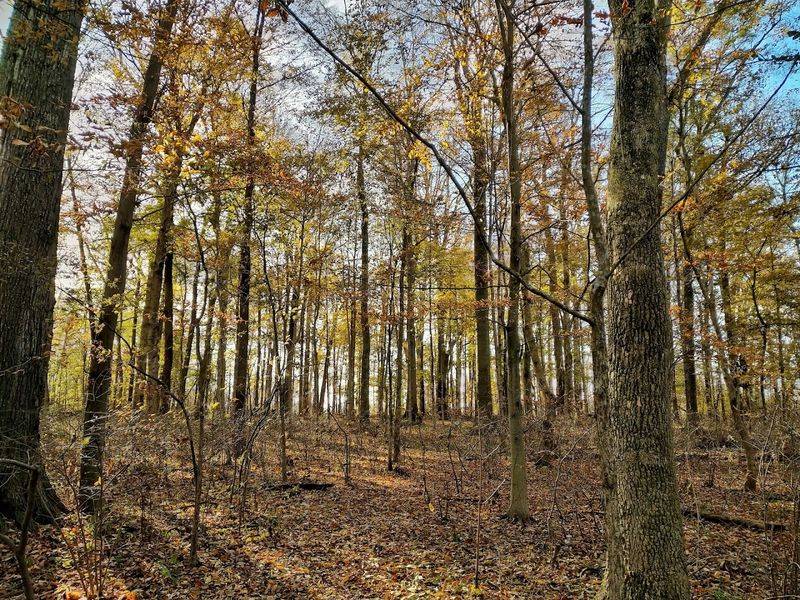
Meltzer Woods stands out in Indiana because it offers a glimpse of a forest type that has become exceptionally rare. In a state where so much land has long been shaped by agriculture, roads, and settlement patterns, an old-growth preserve carries a different kind of weight.
You are not just looking at pretty trees. You are walking through a remnant landscape that helps explain what much larger parts of the region once looked like.
That historical dimension changes the experience without turning it into a museum piece. Nothing here needs artificial staging to communicate age.
The height of the trees, the complexity of the woods, and the uneven, lived-in character of the forest already do that. The preserve gives you a more grounded sense of Indiana’s natural past than any plaque-heavy interpretation could manage on its own.
There is also a useful lesson in its scale. At about 60 acres, Meltzer Woods is not a giant wilderness, and that makes its survival more striking, not less.
A relatively compact preserve can still protect enormous ecological and visual value when what survives inside it is this old, this layered, and this regionally uncommon. The place proves that rarity is not always measured in size. Sometimes it is measured in continuity.
For anyone used to thinking of major forest experiences as something that only happens in distant mountains or famous national parks, Meltzer Woods quietly resets that assumption. Central Indiana is not the first place many people picture when they think about ancient trees.
That is exactly why this preserve lands so strongly. It takes a familiar landscape and reveals a much older version still standing within it.
Best Timing for the Trail – And the Footwear That Can Save the Day
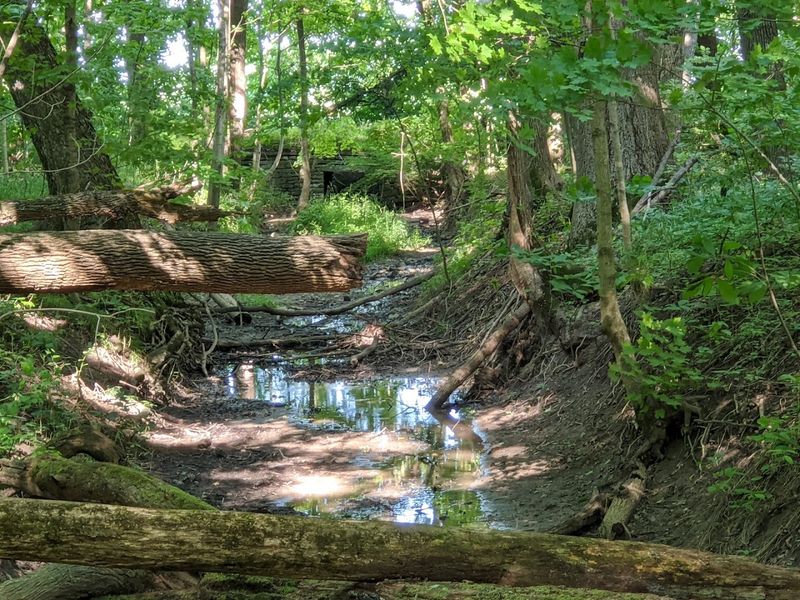
Planning a visit to Meltzer Woods is less about carving out a full day and more about choosing the right conditions. The trail is short enough for an easy outing, but several visitors note the same practical issue: mud.
After rain, parts of the preserve can turn squishy, slick, or deeply soft underfoot, which changes the walk from casual countryside ramble to careful step-by-step navigation if you arrive in sneakers that were built for dry pavement.
The smartest move is simple. Check recent weather, assume moisture lingers, and wear boots or shoes you do not mind getting dirty.
That one decision can make the difference between focusing on the forest and staring at the ground with every step. Because the trail is otherwise flat and approachable, bad footwear is probably the main thing most likely to make the experience harder than it needs to be.
Season also changes what you notice. Spring appears especially rich for wildflowers, birds, and active woodland life, while leaf-on months deepen the enclosed feeling beneath the canopy.
Drier stretches will make the route easier, but a bit of dampness also suits the character of the place. This is not a crisp, gravelly overlook trail.
It is a preserve with creek edges, organic ground, and all the messiness that comes with healthy woods. There are a few other practical notes worth carrying in.
Cell service may be limited in the woods, and facilities are minimal, so this works best as a prepared, self-contained stop rather than a fully serviced park visit. Arrive ready, step carefully after wet weather, and the logistics stay refreshingly low drama.
A Quiet Shelbyville Walk That Lets You Hear the Place
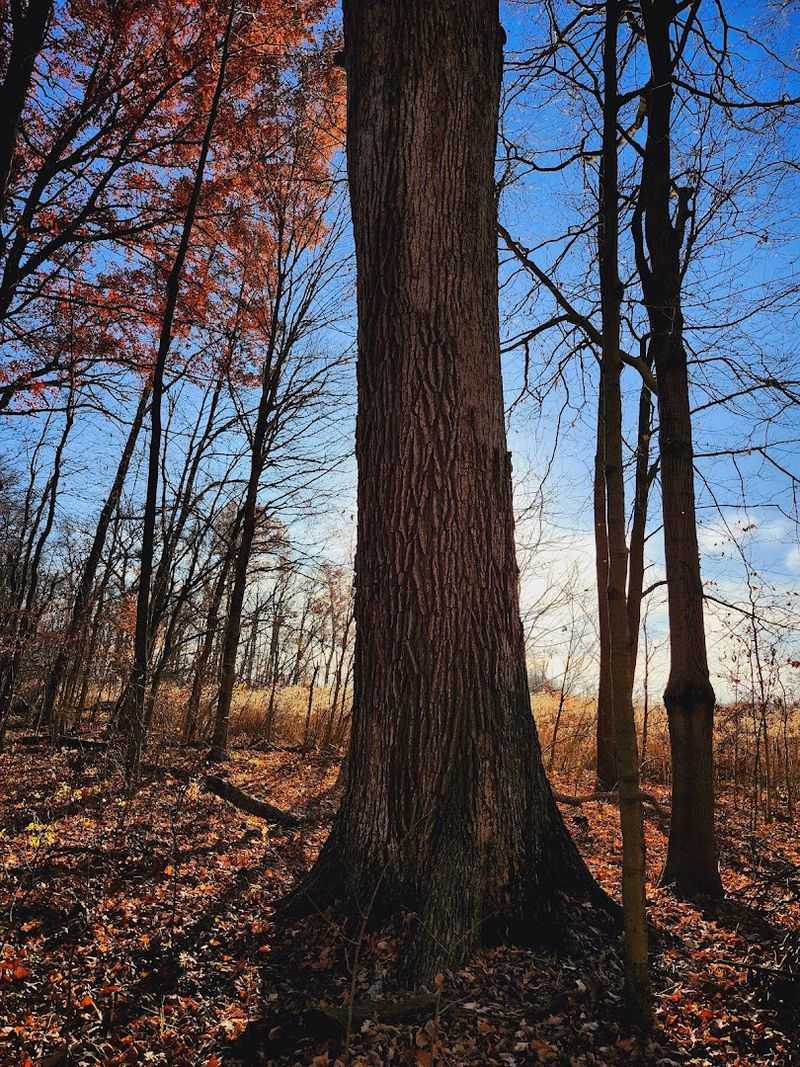
One of the most appealing things about Meltzer Woods is how little noise it adds to itself. There is no oversized attraction trying to dominate the preserve, no long list of distractions once you reach the trail, and no need to manufacture a sense of escape.
The quiet arrives on its own, helped by the rural setting and the fact that this is a straightforward nature preserve rather than a high-volume recreation hub. What helps the preserve stand out is how different it can feel throughout the year despite its relatively compact size.
Spring brings wildflowers and fresh green growth, while summer deepens the canopy into a cool tunnel of shade beneath the towering trees. Autumn adds another layer of appeal as changing leaves introduce bursts of color around trunks that have stood through centuries of seasonal cycles.
Even repeat visitors can find the woods presenting a slightly different character from one visit to the next. The forest also rewards photographers because scale becomes part of every composition.
Massive trunks, winding roots, patches of filtered light, and elevated boardwalk sections provide plenty of opportunities to capture scenes that feel far removed from the surrounding farmland.
Some of the most memorable images come from including people in the frame, creating a visual comparison that highlights just how large and old these trees really are.
That kind of atmosphere is harder to find than it sounds. Not dramatic silence, not total wilderness solitude, just a pocket of Indiana where the dominant sounds can still be wind, water, and birds. For many people, that is the exact reset a short nature outing is supposed to deliver.
Why This Short Hike Punches Far Above Its Length
Meltzer Woods is the kind of place that makes a modest trail feel much bigger than it is. On paper, a roughly one mile to 1.3 mile loop through a 60-acre preserve may not sound like a destination with unusual reach.
On the ground, the equation changes. Huge old trees, a layered forest floor, creek crossings, and the sheer rarity of the setting give the walk a level of depth that most longer outings never manage.
The preserve also succeeds because it stays specific. It does not try to be an everything park with playgrounds, sports facilities, and endless side activities competing for attention.
Its identity is clear: old-growth woods, easy access, quiet atmosphere, and a direct encounter with a version of Indiana that has largely disappeared. That clarity makes the visit easy to understand and easy to recommend to the right person.
The right person, in this case, includes more people than you might expect. Serious nature lovers will appreciate the age and ecological character of the forest.
Casual walkers can enjoy the flat, well-marked route. Families can tackle the distance without turning the day into a major expedition.
Photographers, birders, and anyone craving a break from busy parks have solid reasons to make the drive, especially when conditions are not overly wet.
If there is one final reason this preserve stands apart, it is the proportion between effort and payoff. You do not need a long hike, elite fitness, or an entire weekend to experience something unusual here.
You just need enough time to cross the road, enter the woods, and let a stand of very old trees completely reset your sense of what central Indiana can hold.