Tennessee’s landscape holds more than rolling hills and country music—it’s dotted with fortifications that witnessed some of America’s most pivotal moments. From Revolutionary War outposts to massive Civil War earthworks, these structures tell stories of frontier survival, military strategy, and the people who shaped the South.
Whether you’re chasing battlefield drama or curious about 18th-century life, these nine forts offer history you can walk through, touch, and truly understand.
1. Fort Donelson National Battlefield — Dover
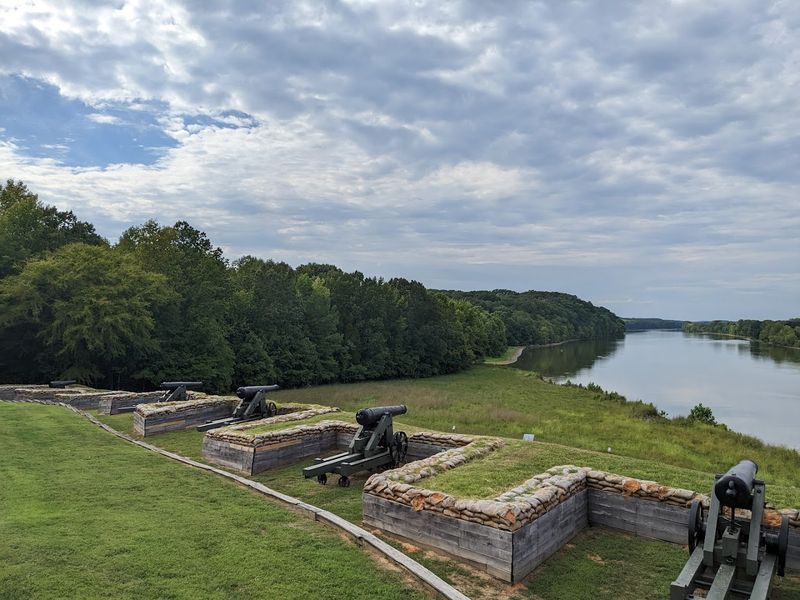
February 1862 changed everything at this riverside stronghold. Union gunboats and troops surrounded Confederate defenders in a winter siege that cracked open the Western Theater and made Ulysses S. Grant a household name.
The fall of Fort Donelson handed the North control of the Cumberland River and forced the South to abandon Nashville—a domino effect that reshaped the entire war.
Walking the preserved earthworks today, you’ll follow battlefield roads that curve past artillery positions and overlook the same river bends Confederate gunners tried to defend. The massive river batteries still command the bluffs, their cannons pointed toward the water as if frozen mid-battle. Interpretive signs explain how Grant’s “unconditional surrender” demand became legendary, and why this victory mattered far beyond Tennessee.
The national cemetery here holds over 670 Union soldiers, many unknown, their white headstones arranged in perfect rows beneath old-growth trees. It’s a sobering reminder of the human cost behind strategic wins. The visitor center offers detailed exhibits on the siege, including personal accounts from both sides and artifacts recovered from the battlefield.
Plan to spend at least two hours exploring—there are six miles of driving tour roads, multiple hiking trails, and the Dover Hotel where Grant accepted the surrender. Spring and fall bring the best weather for walking the grounds, though winter visits offer a haunting sense of what those soldiers endured. Rangers lead programs on weekends during peak season, and the site hosts living history events that bring 1860s military life into sharp focus.
This isn’t just Tennessee’s strongest fort visit—it’s one of the Civil War’s most accessible turning points.
2. Fort Loudoun State Historic Park — Vonore
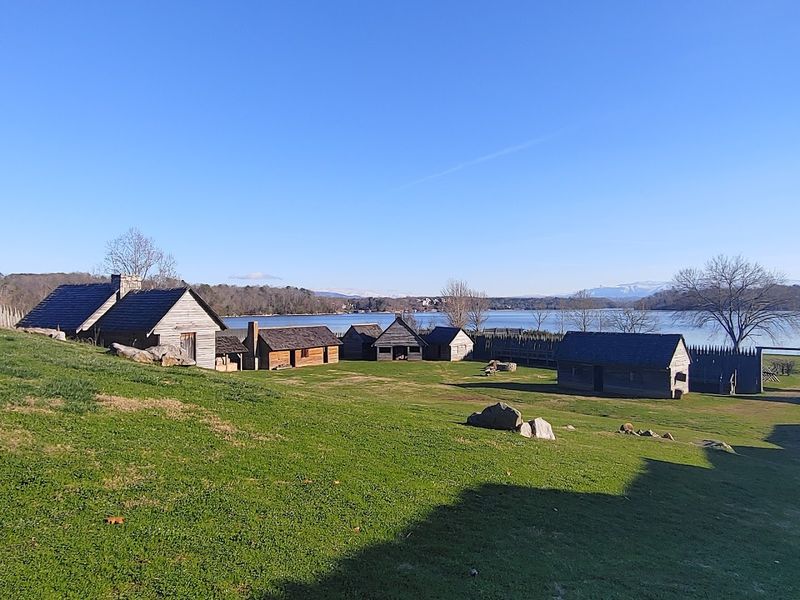
Long before the Civil War, Britain planted a flag on what’s now Tellico Lake. Fort Loudoun rose in 1756 as England’s westernmost outpost during the French and Indian War, built to secure Cherokee alliances and block French expansion. The fort’s story ended badly—besieged and starved by former Cherokee allies in 1760, the garrison surrendered and was attacked during retreat.
Today’s reconstruction sits near the original site, submerged when TVA dammed the Little Tennessee River.
What makes this place special is how thoroughly it interprets frontier military life. The reconstructed palisade walls, barracks, and blockhouses look exactly as they would have in the 1750s, right down to the construction techniques. Costumed interpreters demonstrate musket drills, blacksmithing, and cooking methods that kept soldiers fed on the edge of colonial America.
It’s hands-on history that makes the 18th century feel immediate rather than abstract.
The visitor center digs into the complex relationship between British soldiers and Cherokee communities—an alliance that shifted from cooperation to conflict as European settlement pressures mounted. Exhibits include recovered artifacts from archaeological digs at the original fort site before flooding, offering tangible connections to the people who lived and died here.
Timing your visit around living history weekends or reenactment events pays off—you’ll see musket demonstrations, period crafts, and sometimes full military exercises. The park also offers hiking trails along the lakeshore and picnic areas with views across the water. It’s quieter than Civil War sites, which means you can explore at your own pace without crowds.
For anyone interested in Tennessee before statehood or the French and Indian War’s southern frontier, Fort Loudoun delivers context you won’t find anywhere else in the state.
3. Fort Negley — Nashville
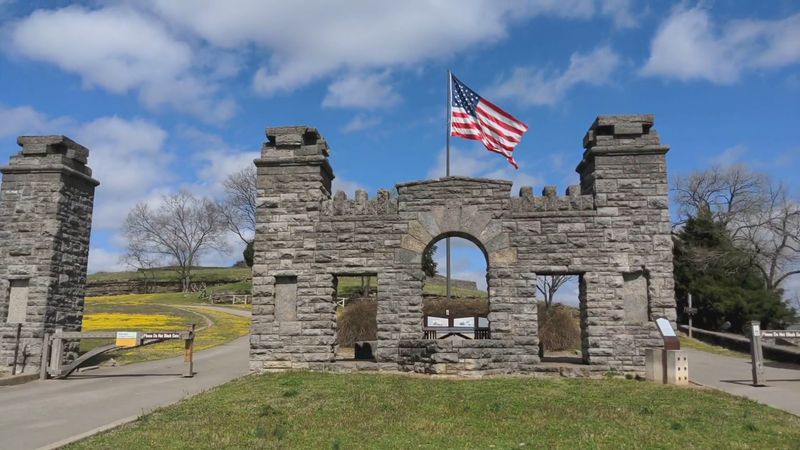
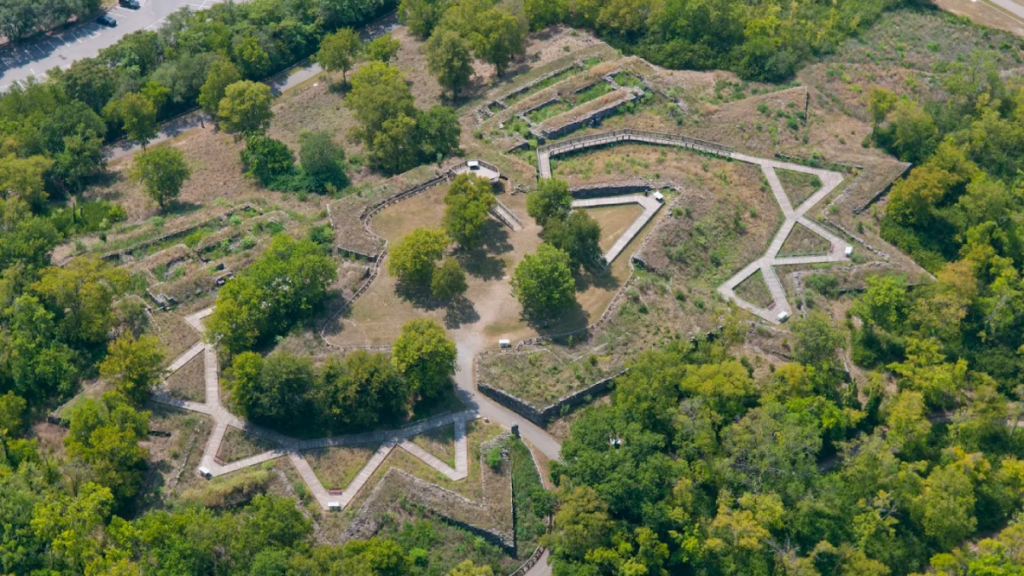
Nashville fell to Union forces in February 1862, and what happened next reshaped the city’s landscape. Fort Negley rose on St. Cloud Hill as one of the largest inland fortifications built during the entire Civil War—a massive stone-and-earth complex designed to hold Nashville against any Confederate attempt to reclaim Tennessee’s capital.
What makes this fort’s story particularly powerful is who built it: thousands of enslaved and free Black laborers, forced to construct the very defenses that would help preserve the Union.
The surviving earthworks and limestone walls still dominate the hilltop, their scale impressive even in ruin. Standing inside the fort’s remains, you can trace the original bastions and gun positions while looking out over modern Nashville—the same strategic view Union commanders valued. The fortifications never faced a major assault, but their presence kept the city firmly in Northern hands for the war’s duration.
The visitor center is where Fort Negley’s full story unfolds. Exhibits focus heavily on the laborers whose work built these walls—men whose names were rarely recorded but whose labor was essential to Union strategy. Interactive displays explore occupied Nashville’s transformation into a military hub, complete with hospitals, supply depots, and a massive garrison.
You’ll learn about the city’s complex wartime experience, caught between Confederate sympathizers and Union occupation.
The fort sits within a larger park that includes trails and green space, making it easy to combine history with a walk. Interpretive signs throughout the grounds explain specific features and construction techniques. The site hosts occasional living history programs and ranger talks, though the fort itself is always accessible during park hours.
Sunset visits offer particularly dramatic views as the city lights up below the old battlements. For understanding Nashville’s Civil War transformation from a Southern city to a Union stronghold, Fort Negley is absolutely essential.
4. Fort Pillow State Historic Park — Henning
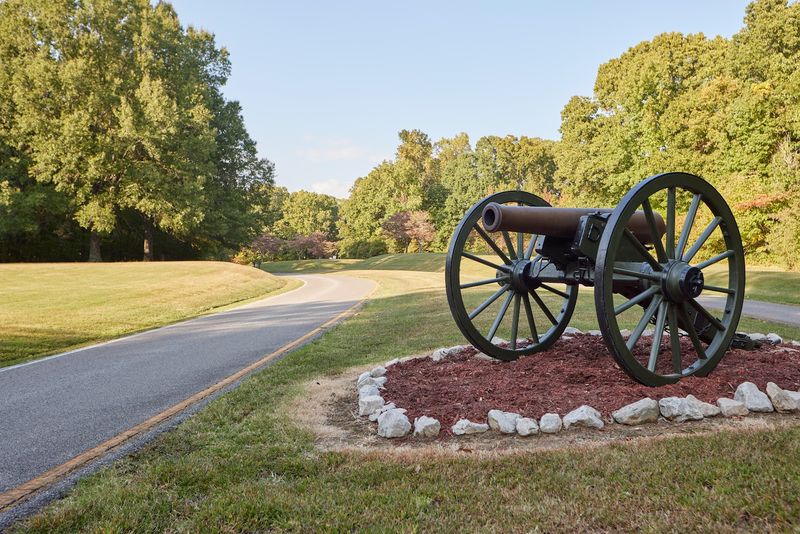
Perched on Chickasaw Bluffs above the Mississippi, Fort Pillow commanded one of the river’s most strategic bends. Confederate forces built the fort in 1861 to block Union gunboats, but it changed hands in 1862 and became a Union garrison—one that would witness one of the Civil War’s most controversial and tragic events.
On April 12, 1864, Confederate troops under Nathan Bedford Forrest overran the fort in an assault that turned into a massacre, particularly targeting U.S. Colored Troops who made up nearly half the garrison.
The preserved earthworks remain remarkably intact, their angles and height still conveying the defensive advantages the bluff location provided. Walking the fortification lines, you can see why both sides valued this position—the river spreads out below, and any approaching force would face murderous fire from above.
The site’s museum doesn’t soften the difficult history; it presents the evidence and eyewitness accounts from the 1864 battle and its aftermath, letting visitors grapple with what happened here.
Beyond the fort itself, the park offers extensive hiking trails that wind through forests and along the bluffs, plus camping facilities and picnic areas. Interpretive signs throughout the grounds explain both the fort’s construction and the broader context of African American soldiers fighting for their freedom. The museum displays artifacts recovered from the site and explores how Fort Pillow became a rallying cry in the North, influencing both public opinion and military policy.
Spring wildflowers and fall colors make those seasons particularly beautiful for visiting, though the fort’s story carries weight year-round. The park is more remote than Nashville or Franklin sites, which means smaller crowds and more contemplative space.
Rangers offer programs during summer months, and the site hosts commemorative events that honor the U.S. Colored Troops who served here. Fort Pillow combines natural beauty with essential, difficult history—a place where military strategy and racial violence intersected in ways that still echo today.
5. Fort Southwest Point — Kingston
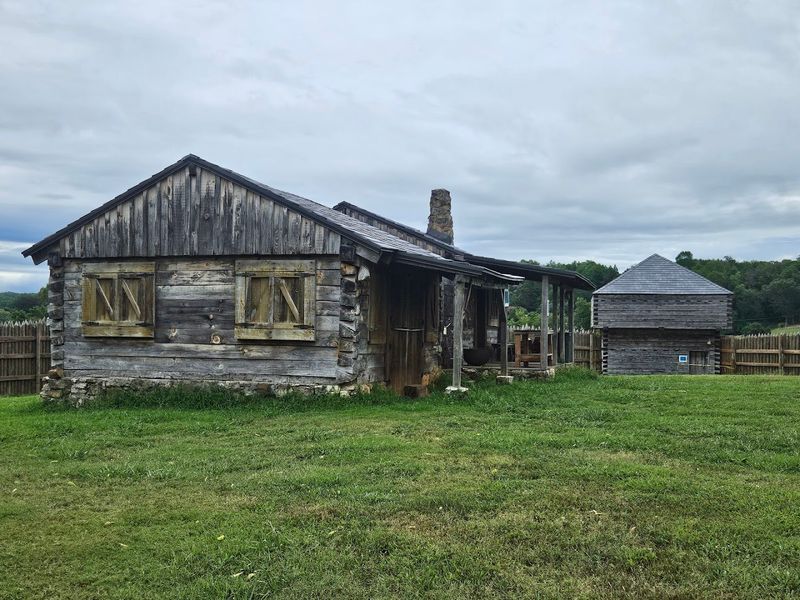
Imagine federal authority trying to establish itself in the Tennessee wilderness around 1797. Fort Southwest Point was Washington’s answer—a military outpost planted where the Clinch River meets the Tennessee, meant to keep peace between Cherokee lands and incoming settlers while protecting the road between Knoxville and Nashville.
Unlike most Tennessee forts that exist only as earthworks or reconstructions on approximate sites, Southwest Point’s buildings stand on the actual footprint where soldiers bunked and officers strategized over two centuries ago.
The reconstructed fort brings the 1790s-1800s frontier period to life with remarkable detail. Wooden stockade walls enclose officers’ quarters, enlisted barracks, a blockhouse, and support buildings that show how a federal garrison operated on the edge of Cherokee territory. Archaeological work on the site has been extensive, meaning the reconstruction reflects real evidence about building methods, layout, and daily life.
It’s a rare window into the Republic’s early years when Tennessee was still frontier country.
The fort’s history connects to larger stories about westward expansion, Native American displacement, and the federal government’s role in managing that often-violent process. Exhibits explore the fort’s relationship with nearby Cherokee communities, the soldiers who served here, and the families who followed military postings to remote outposts.
You’ll also learn about the fort’s connection to migration routes that eventually became major roads—infrastructure that shaped Tennessee’s development.
The site includes a visitor center with artifacts and interpretive displays, plus walking grounds that let you explore the fort’s relationship to the landscape. Special events bring in reenactors and living history demonstrations, particularly during summer and fall. The fort’s location in Kingston makes it easy to combine with visits to nearby Oak Ridge or Norris Dam if you’re touring East Tennessee.
Crowd levels stay manageable year-round, and the staff are knowledgeable about both the fort’s specific history and its broader context in early American military policy. For anyone interested in Tennessee before statehood or the frontier army experience, Southwest Point offers authenticity that’s hard to match.
6. Fort Watauga — Elizabethton
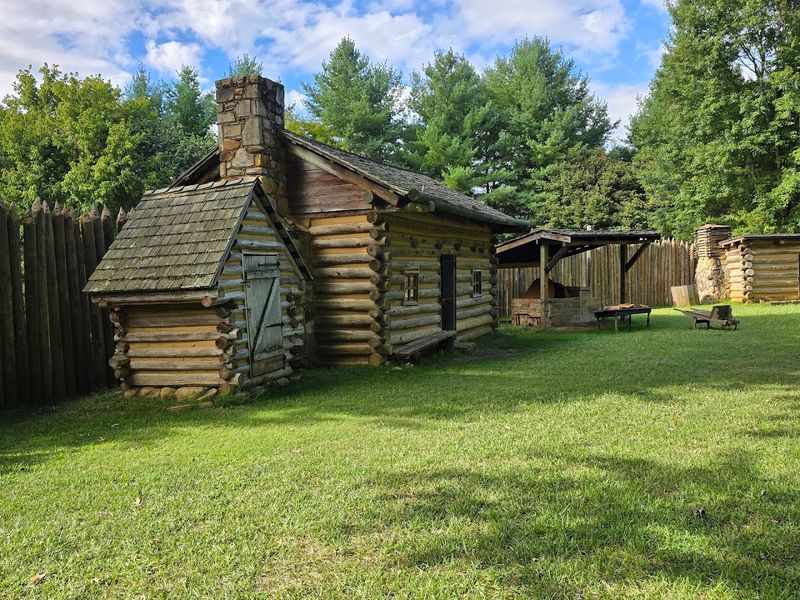
Before Tennessee was even a state, Fort Watauga stood as a symbol of frontier defiance and survival. Built in the 1770s along the Watauga River, this fortification protected one of the earliest permanent settlements west of the Appalachians—a community that existed outside any colonial government’s official jurisdiction.
The settlers here essentially governed themselves through the Watauga Association, a precursor to Tennessee statehood and a bold experiment in frontier democracy.
Today’s reconstruction sits within Sycamore Shoals State Historic Park, a site loaded with Revolutionary War significance. In September 1780, hundreds of Overmountain Men mustered here before crossing the mountains to fight at Kings Mountain, a turning point in the Southern campaign.
The park’s visitor center and museum explore both the fort’s defensive role and the broader story of early Tennessee settlement. Exhibits cover the Transylvania Purchase, conflicts with Cherokee communities whose lands were being taken, and the Revolutionary War’s impact on the frontier. You’ll learn about the women and children who lived inside these walls during times of danger, and the complex relationships between settlers and Native peoples that mixed trade, diplomacy, and violence.
Living history programs bring the fort to life with costumed interpreters demonstrating 18th-century crafts, cooking, and military drills. The outdoor drama “Liberty!” performs during summer months, retelling the Overmountain Men’s story with a cast of locals. Hiking trails along the Watauga River and picnic areas make the park suitable for a full day’s visit.
The site also hosts an annual reenactment of the Overmountain Muster each September, drawing hundreds of reenactors and history enthusiasts. For understanding Tennessee’s Revolutionary War connections and earliest European settlement, Fort Watauga provides context that textbooks simply can’t match.
The Elizabethton location also puts you near other historic sites in the beautiful Watauga River valley.
7. Fort Nashborough — Nashville
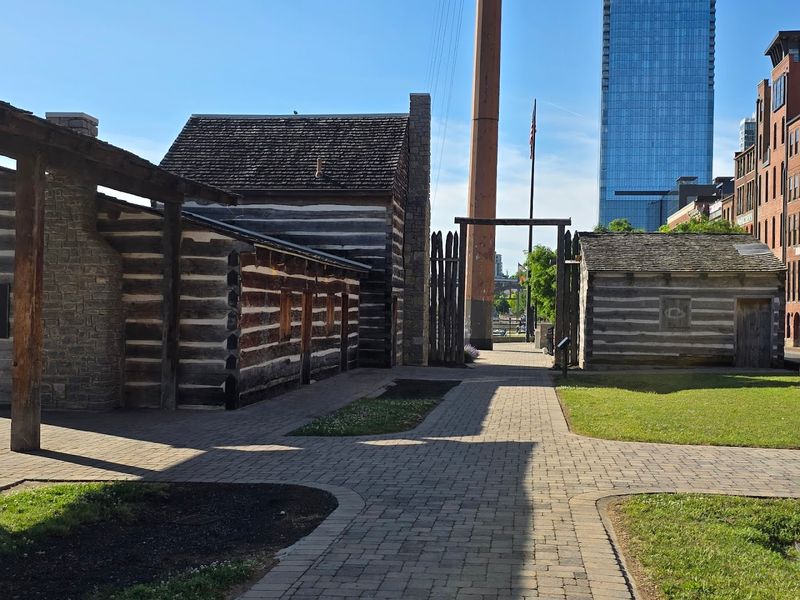
Christmas Day 1779 brought a flotilla of flatboats down the icy Cumberland River carrying James Robertson’s party to found what would become Nashville. The settlement they built—originally called Nashborough after Revolutionary War hero Francis Nash—started as a cluster of cabins surrounded by a protective stockade.
Today’s reconstruction sits near the original site along the riverfront, interpreting Nashville’s earliest Anglo-American chapter when the settlement was just a precarious toehold in Cherokee and Chickasaw hunting grounds.
The reconstructed fort gives visitors a sense of scale and vulnerability that defined frontier life. Log cabins with period furnishings show how families lived in close quarters, always ready to retreat behind the stockade walls when conflicts arose. The Cumberland River setting makes it easy to understand why this spot was chosen—water access meant transportation and trade, though it also meant exposure to river-based raids.
Standing inside the fort, modern Nashville’s skyline rising just blocks away creates a striking contrast between then and now.
Interpretive programs focus on the settlement’s early years, including the dangerous journey from the Holston River settlements, relationships with Native peoples, and the Cumberland Compact that governed the community before Tennessee became a state.
The fort also explores the role of enslaved people in building Nashville, a story often overlooked in frontier narratives. Exhibits include replica tools, weapons, and household items that show the material culture of 1780s Tennessee.
The fort’s downtown location makes it extremely accessible, though it’s smaller than other Tennessee fort sites. Visiting takes maybe an hour unless you catch a guided tour or special program. The site hosts living history days with costumed interpreters demonstrating frontier skills like blacksmithing, cooking, and flintlock shooting.
School groups frequent the fort during weekdays, so weekends often offer quieter visits. It’s an easy addition to any Nashville itinerary, providing historical context for a city that’s grown from twenty log cabins to a metropolitan area of nearly two million. For understanding where Nashville came from and what its founders faced, Fort Nashborough offers essential perspective.
8. Fort Defiance Civil War Park & Interpretive Center — Clarksville
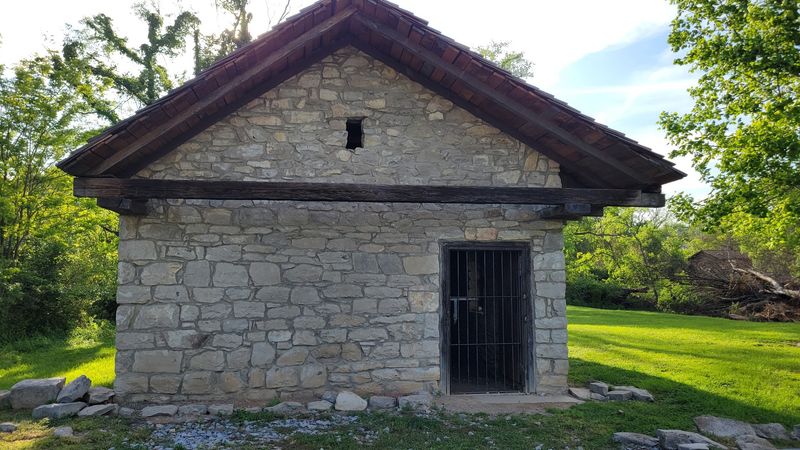
Clarksville’s position on the Cumberland River made it strategically vital during the Civil War, and Fort Defiance was built to control river access and protect the town. Constructed in 1861 by Confederate forces, the fort changed hands the following year when Union troops occupied Clarksville and held it for the war’s duration.
The surviving earthworks preserve one of Tennessee’s best examples of Civil War defensive engineering, complete with bastions, trenches, and gun emplacements that show how armies fortified key river towns.
The interpretive center opened in recent years and dramatically improved the visitor experience. Inside, you’ll find detailed exhibits about the fort’s construction, the occupation of Clarksville, and the daily lives of soldiers who garrisoned this position. Interactive displays explain Civil War fortification design—why earthworks were shaped in certain ways, how artillery was positioned for maximum effect, and what advantages the hilltop location provided.
Walking the preserved earthworks themselves gives you a physical sense of the fort’s layout and the labor required to build it. Trails wind through the fortifications and around the hilltop, with interpretive signs explaining specific features. The site overlooks modern Clarksville, though enough tree cover remains to let you imagine what sentries saw when watching for approaching gunboats or enemy troops.
The earthworks’ preservation is impressive—these aren’t subtle bumps in the ground but substantial walls and defensive positions that clearly show military engineering.
The park includes picnic areas and connects to Clarksville’s greenway system, making it easy to combine history with exercise or family outings. Living history events happen periodically, bringing in reenactors who demonstrate camp life and military drills. The interpretive center staff are knowledgeable and enthusiastic about sharing Clarksville’s Civil War story, which often gets overshadowed by battles at Nashville and Franklin.
Visiting Fort Defiance reveals how the war affected smaller river towns and the extensive fortification networks that Union forces built to hold occupied Tennessee. It’s a site that rewards both casual visitors and serious Civil War students with well-preserved features and thoughtful interpretation.
9. Fort Granger — Franklin
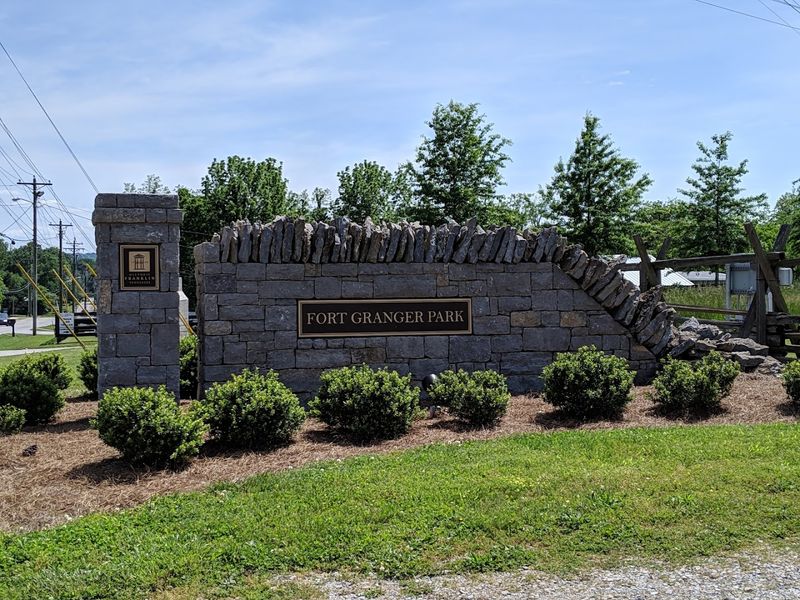
Franklin’s name conjures images of the devastating 1864 battle, but Fort Granger tells a different part of that story. Union forces built this hilltop fortification in 1863 during their occupation of Middle Tennessee, creating a strongpoint that commanded the town and surrounding approaches.
The fort never saw the massive assault that bloodied Franklin’s center on November 30, 1864, but it played a crucial role in the Union defensive network and witnessed the campaign’s aftermath as wounded soldiers filled the town below.
The earthworks survive in excellent condition within Pinkerton Park, their walls and ditches still clearly defined after more than 150 years. Climbing into the fort’s interior, you gain the elevated perspective Union commanders valued—Franklin spreads out below, and you can trace the same roads Confederate troops used during their approach. The fort’s position also overlooks the Harpeth River, which Union forces needed to protect during their occupation.
What makes Fort Granger particularly interesting is how it illustrates Union strategy in occupied territory. This wasn’t built for a single battle but as part of a permanent garrison network meant to hold conquered ground. The fort housed troops, stored supplies, and served as a command post for controlling the Franklin area.
Learning about garrison life—the routine of occupying hostile territory—adds depth to the more dramatic battle narratives that dominate Franklin’s history.
The park setting makes Fort Granger accessible and pleasant to visit. Trails connect the fort to other park features, and the hilltop location provides good views year-round, though fall foliage and spring greenery are particularly nice. The site is less developed than some other Tennessee forts, which means fewer interpretive resources but also a quieter, more contemplative experience.
You can walk the earthworks at your own pace, imagining the soldiers who manned these positions while the massive Battle of Franklin unfolded in the town below. Combined with visits to Carter House and Carnton, Fort Granger completes the picture of Franklin’s Civil War experience beyond that single terrible afternoon in 1864.
Share this story