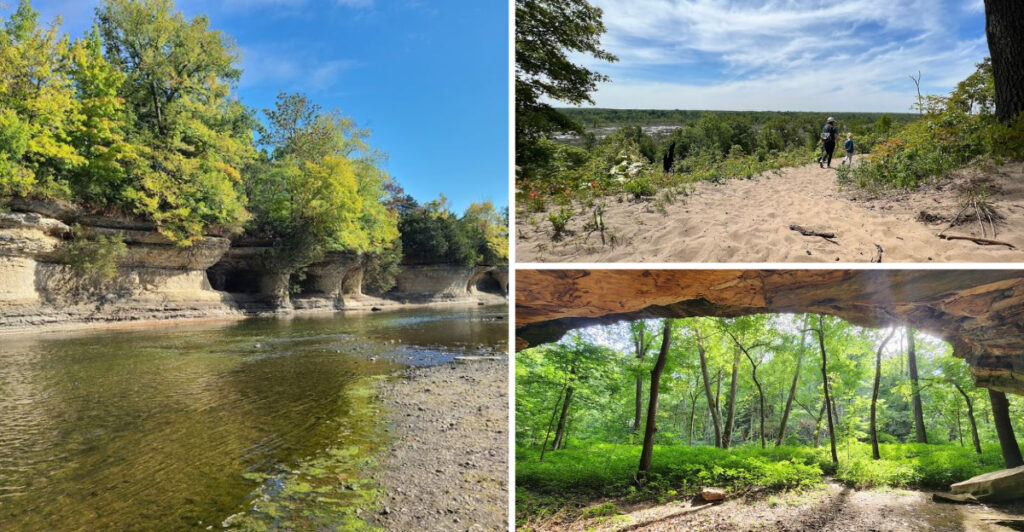
When most people think of scenic hiking destinations, Indiana is rarely the first state that comes to mind. That is exactly what makes its hidden trails so rewarding. Beyond the well-known parks and crowded overlooks, you’ll find surprisingly dramatic landscapes featuring rugged ridgelines, river valleys, forested bluffs, rolling hills, and sweeping panoramic views.
These lesser-known hikes offer the perfect combination of natural beauty and peaceful surroundings, allowing you to enjoy the scenery without competing for space on the trail. Whether you’re an experienced hiker or simply looking for a new outdoor adventure, these 11 underrated Indiana hikes deserve a closer look.
1. Green’s Bluff Nature Preserve (Owen County)
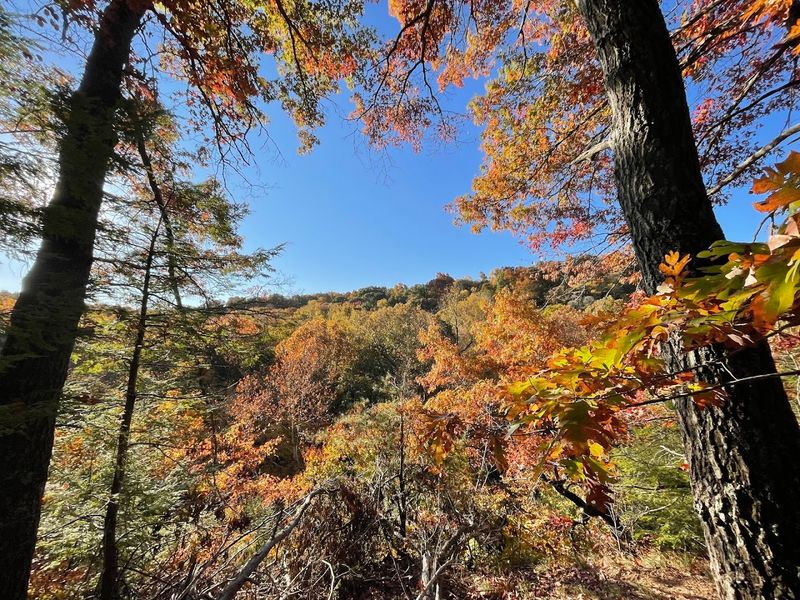
Green’s Bluff is the kind of place that quickly changes your idea of what an Indiana hike can look like. One minute you are moving through cool creekside woods, and the next you are climbing toward rugged sandstone features that give the preserve its edge.
The terrain has a rougher, more textured personality than many casual state park walks, which makes the overlooks feel earned.
As the trail gains elevation, the scenery starts stacking layers. Hemlocks, rock faces, and small cascades keep the route visually busy, so the reveal toward wider views lands with extra impact.
When the forest opens, you get a broad look over Raccoon Creek and the surrounding hills, with a nice mix of valley depth and tree-covered ridges stretching outward.
This is a strong pick when you want variety without needing a huge mileage day. The preserve offers enough elevation change, uneven footing, and bluffside drama to stay interesting, yet it still works for hikers who prefer a shorter outing with memorable scenery.
A damp day can make the creek and waterfalls more photogenic, while fall color can sharpen every contour in the landscape.
Footwear matters here more than at flatter trail systems. Parts of the route can be rocky, rooty, and slick, especially near water and shaded stone.
Taking your time pays off anyway, because this is not a hike to rush through with your eyes locked on the finish. For a quieter panorama in southern Indiana, Green’s Bluff delivers a satisfying mix of forest intimacy and elevated perspective.
It has enough rugged character to feel adventurous, and enough scenic payoff to stay in your memory long after the dust is off your boots.
2. Seven Pillars of the Mississinewa (Peru)
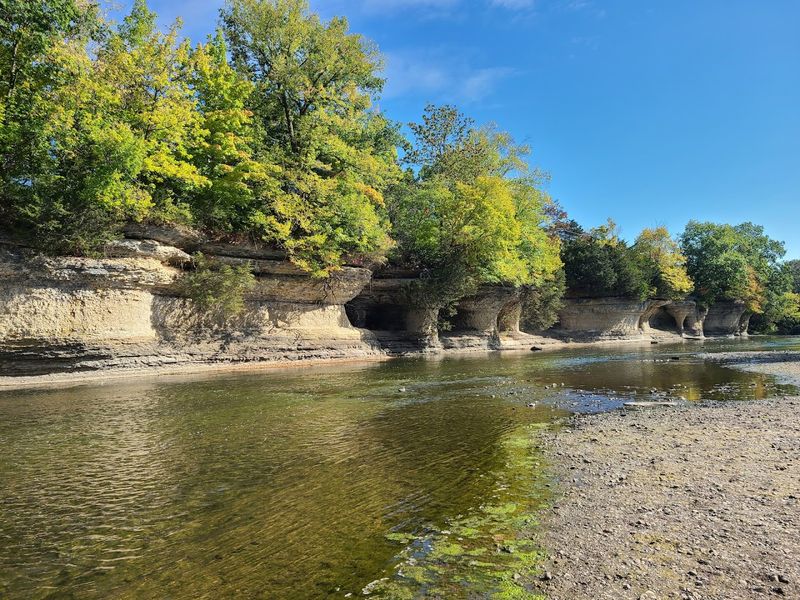
Seven Pillars of the Mississinewa brings together two things that always make a trail more fun to follow – a distinctive landmark and a river that keeps changing the view. The limestone formations rising above the water give this hike a strong visual identity right away.
Even before you reach broader overlooks, the route has a scenic focus that keeps you looking up, out, and across.
The best moments here come when the woods thin just enough for the valley to spread open. You can trace the Mississinewa as it bends through the landscape, with tree cover framing the water and softening the wider scene.
That combination of stone, river, and elevated perspective gives the hike a layered look that stands out from more enclosed woodland trails.
This is also a smart option when you want a place that feels tied to Indiana’s natural character without requiring a deep backcountry effort.
The riverside setting keeps the walk approachable, but the overlook sections add enough scale to make the outing feel larger than its mileage. Light wind on the water and changing cloud cover can make the valley look different every hour.
Because the limestone pillars are such a focal point, it is easy to assume the hike is all about one photo stop. It is better to treat the trail as a full scenic route, not a quick in-and-out.
Slowing down helps you catch the shifting relationship between the riverbank, the rock faces, and the surrounding woodland slopes.
For hikers who like landmarks with a little drama, Seven Pillars makes a strong case for central Indiana scenery. The views are expansive without feeling exposed, and the river corridor gives the whole hike a calm, steady sense of movement.
3. Hemlock Cliffs (Hoosier National Forest, Crawford County)
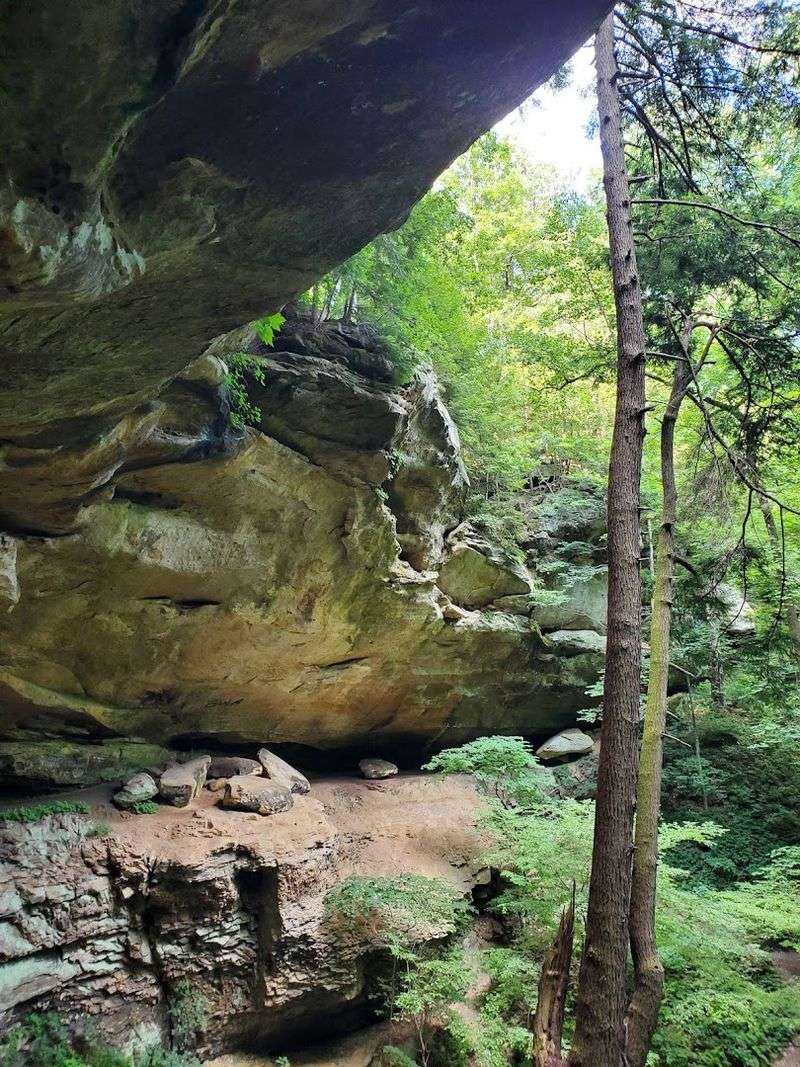
Hemlock Cliffs wastes no time easing you in. The trail drops you into a cooler, shadier world of sandstone walls, dripping rock, and pockets of green that look more dramatic than many people expect from Indiana.
The ravine has a compact, enclosed intensity, and that contrast makes the higher viewpoints hit even harder once the landscape begins to open.
Along the way, waterfalls and weathered cliff bands keep the route visually sharp. The eastern hemlocks add a different texture from the usual hardwood-heavy scenery, giving the canyon a slightly older, darker look that fits the setting.
When the trail reaches scenic openings, you start seeing beyond the immediate rock corridor into broader folds of rugged southern Indiana terrain.
This is a strong choice for hikers who want a lot of character packed into a manageable outing. The route blends close-up details and wider overlooks, so it never depends on one single payoff.
Wet conditions can intensify the canyon mood, while leaf-off seasons may open longer views through the surrounding ridges.
Even though the trail is popular with people who know the area, Hemlock Cliffs still rewards a slower pace. The rock features, stream crossings, and shaded curves create natural pauses, and those pauses help the overlook sections land with more force.
Good traction is helpful, especially where moisture lingers near stone and water. Among Indiana hikes that feel unexpectedly dramatic, this one belongs near the top of the conversation.
It combines canyon scenery, cliffside texture, and panoramic hints of the forest beyond, all without requiring an all-day push. If your ideal trail mixes intimacy with a rugged outlook, Hemlock Cliffs makes that combination look easy.
4. Devil’s Backbone via Shades State Park (Montgomery County)
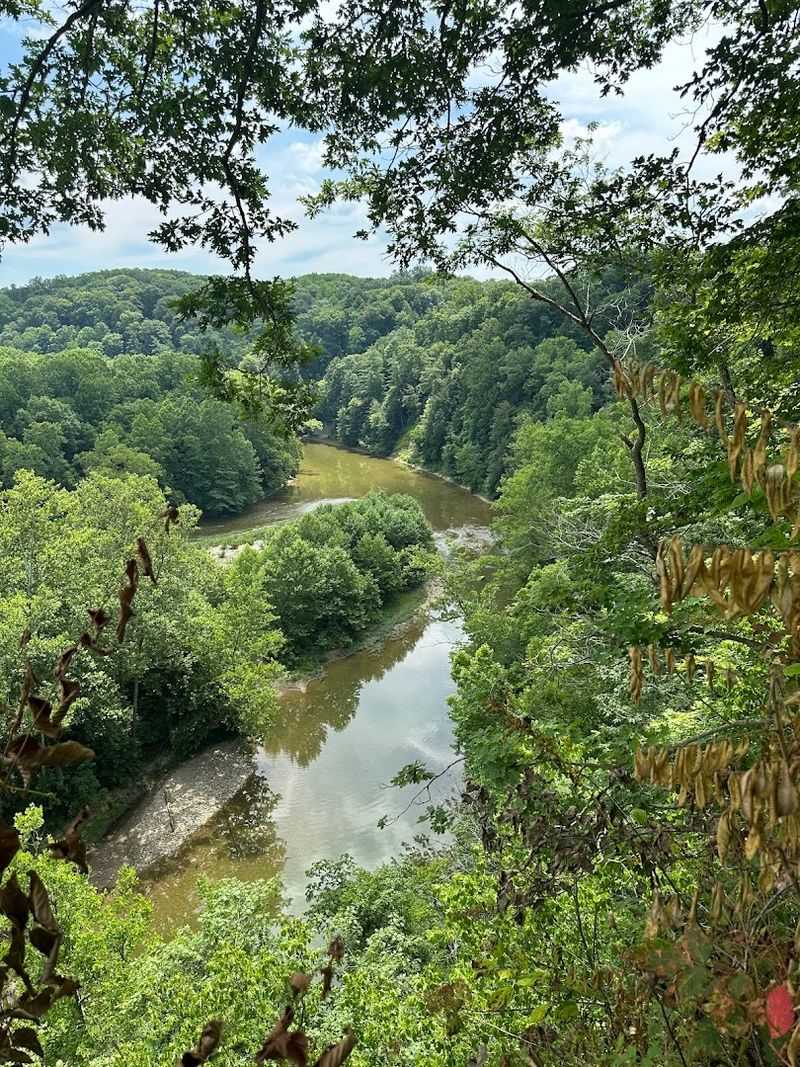
Devil’s Backbone sounds dramatic, and in this case the trail name earns its reputation. This route trades broad easy grades for a narrow ridge experience where the terrain grabs your attention fast.
You are not just walking through the woods here – you are moving along a spine of land with steep slopes falling away on both sides.
That topographic shape is the whole thrill. Views across Sugar Creek’s ravines and forested valleys arrive in angled glimpses, then open wider at the right moments, giving the trail a constant push and pull between exposure and enclosure.
Instead of one giant overlook, you get a sequence of elevated perspectives that make the surrounding landscape feel deeper and more complex.
Shades State Park already has a strong reputation for rugged scenery, but this route often gets overshadowed by more talked-about features. That is good news if you prefer a hike with standout terrain and a little less crowd energy.
The ridge itself creates enough natural drama that the views feel active rather than passive, especially when the canopy is shifting with seasonal color.
This is not the place for autopilot hiking. Uneven ground, slopes, and the narrow feel of the ridge encourage steady footing and a slower pace.
That works in your favor, because Devil’s Backbone rewards hikers who keep scanning the sides instead of racing toward the next signpost.
If you want an Indiana trail that delivers nerve, texture, and real scenic payoff, put this one high on the list. The ravines around Sugar Creek give the park a wild, folded look, and the ridge perspective lets you appreciate that shape from above. Few hikes in the state make the landform itself the main event quite this effectively.
5. Portland Arch Nature Preserve South Trailhead (Fountain County)
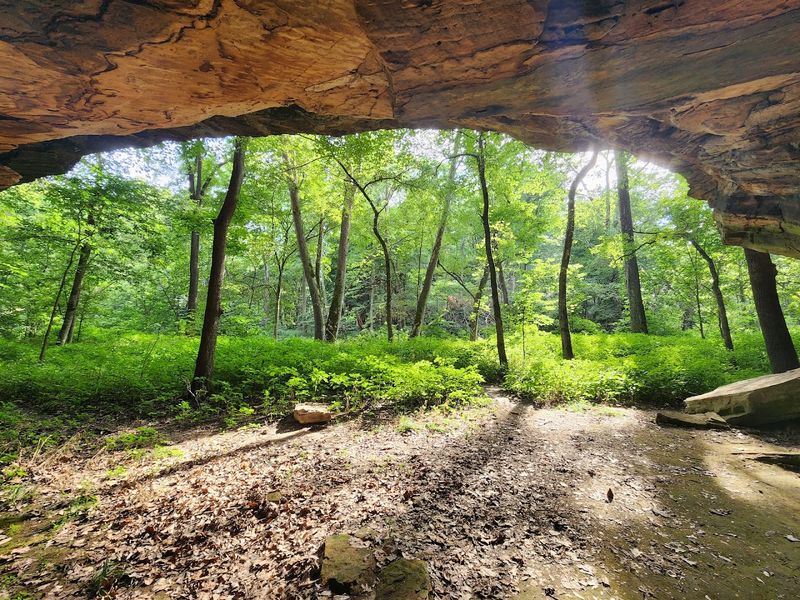
Portland Arch gives you a rare combination that always plays well on the trail – a major rock feature and a landscape that unfolds around it. Starting from the south trailhead, the route moves through hardwood forest and rocky ravines that steadily build visual interest.
By the time you reach the arch and nearby higher vantage points, the hike feels bigger than a simple destination walk.
The sandstone arch is the obvious headline, and it deserves the attention. Its scale changes the mood of the hike, adding a sculptural focal point that stands out against the surrounding trees and ravine walls.
But the elevated views over Bear Creek’s valley are just as important, because they widen the experience beyond one natural feature and give the whole preserve a stronger sense of place.
This trail works especially well for hikers who like terrain with a little shape and movement. The ravines create natural drama underfoot, while the overlook sections let your eyes travel much farther than the enclosed forest suggests.
In autumn, the valley lines can look especially crisp, but even in greener months the layers of stone and woodland keep the route visually rich.
Because the arch draws attention, some visitors may be tempted to hurry to the centerpiece and head back. Better move at a measured pace and let the preserve show off its full range.
Small shifts in elevation, rock texture, and changing tree cover make the approach part of the reward, not just the setup.
For a scenic hike in western Indiana that offers more than one talking point, Portland Arch is a standout. You get ravine depth, a major sandstone landmark, and broad views over Bear Creek, all packed into a route that keeps your camera and your footing equally busy.
6. Dune Ridge Trailhead at Indiana Dunes National Park (Porter County)
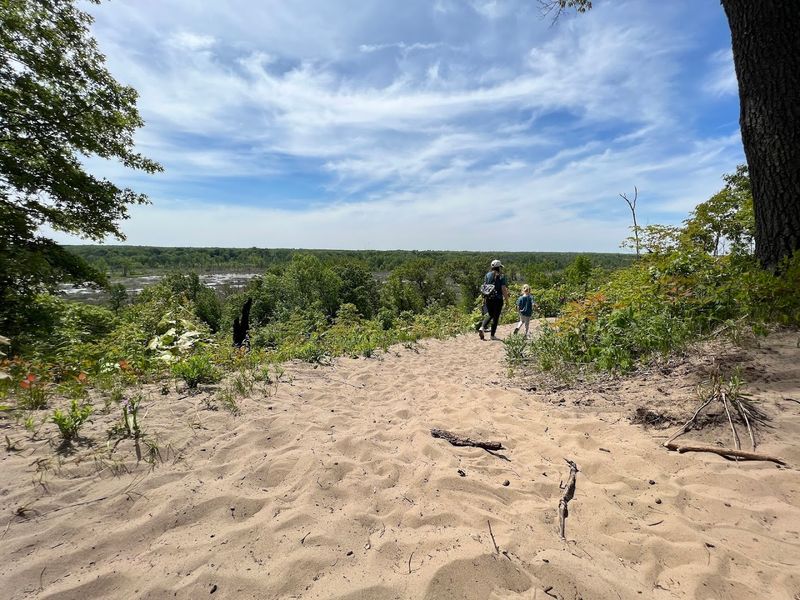
Plenty of visitors head to the Indiana Dunes for the beach-adjacent classics, but Dune Ridge has a different rhythm. This trail gives you a quieter way to experience the park’s dramatic elevation changes while still cashing in on the big scenery.
Instead of competing for the same shoreline snapshots, you climb into views that connect lake, wetland, and dune in one sweep.
The most satisfying part of this hike is how many landscapes stack together. From higher points, Lake Michigan spreads out with that wide horizon effect, while nearby wetlands add contrast in color and texture below.
The surrounding dunes rise and fold around the scene, reminding you that this corner of Indiana is shaped as much by sand and wind as by forest and water.
Dune Ridge is a strong pick when you want a national park experience without defaulting to the most talked-about route. The trail has enough elevation to make the panoramas feel earned, yet it remains manageable for hikers looking for a shorter outing with real payoff.
Morning light can sharpen the lake views, while changing weather can make the dune contours look especially dramatic.
Sand hiking always asks for a bit more patience than packed dirt, so this is a good place to settle into a steady pace.
That slower movement works well anyway, because the trail keeps offering reasons to stop and look in different directions. You are not chasing a single overlook as much as moving through a series of scenic relationships.
Among lesser-discussed hikes in the dunes, this one punches above its mileage. The combination of lake horizon, wetland patchwork, and elevated sandy ridges gives it a panoramic range that feels much bigger than the map suggests. If you want Indiana scenery with a fresh shape to it, Dune Ridge is a smart move.
7. Hesitation Point at Brown County State Park (Nashville)
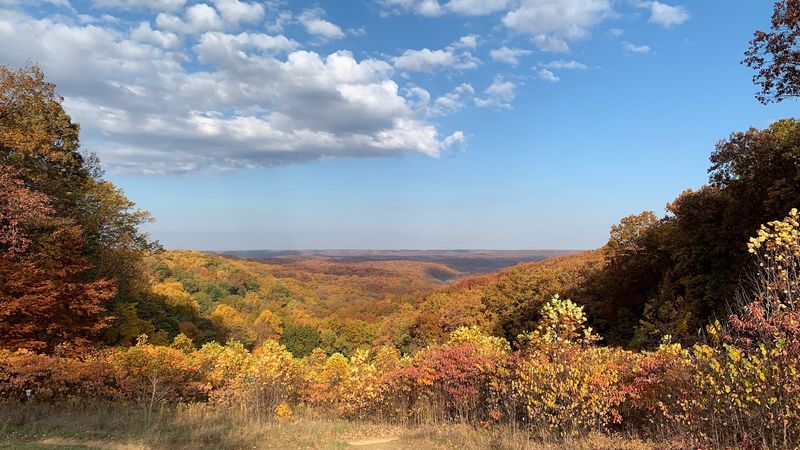
Some overlooks become famous for a reason, and Hesitation Point still earns a spot even when the goal is avoiding the most obvious picks.
Reaching it by one of the park’s hiking routes gives the viewpoint more impact than simply driving near a scenic stop. You arrive with the hills already around you, then suddenly see just how far Brown County’s ridgelines can roll.
The view is broad, layered, and unmistakably southern Indiana. Instead of one dramatic cliff drop, the appeal here comes from wave after wave of forested hills stretching across the horizon.
That softer topography creates a panorama with real depth, especially when angled sunlight starts carving shadow lines into the folds of the landscape.
Brown County State Park is well known, but not every visitor explores it on foot with panorama-hunting in mind. Taking a trail to Hesitation Point changes the experience from a quick scenic stop into a satisfying route with a clear visual payoff.
It also gives you more time to notice how the park’s ridges, hollows, and wooded slopes build toward that final overlook.
This is an especially strong hike in seasons when the canopy is doing extra work. Fall color can turn the hillside layers into a patchwork of warm tones, while spring and summer bring a dense green look that feels almost endless from above.
Even on a hazier day, the repeating ridges keep the view engaging. If your ideal Indiana panorama involves pure rolling-hill country, Hesitation Point deserves the attention it gets. The route blends accessible hiking with a classic overlook that actually delivers on scale.
Sometimes the best way to skip the crowds is not avoiding a known place entirely, but approaching it in a smarter, more scenic way.
8. Pine Hills Nature Preserve (Rockville, Parke County)
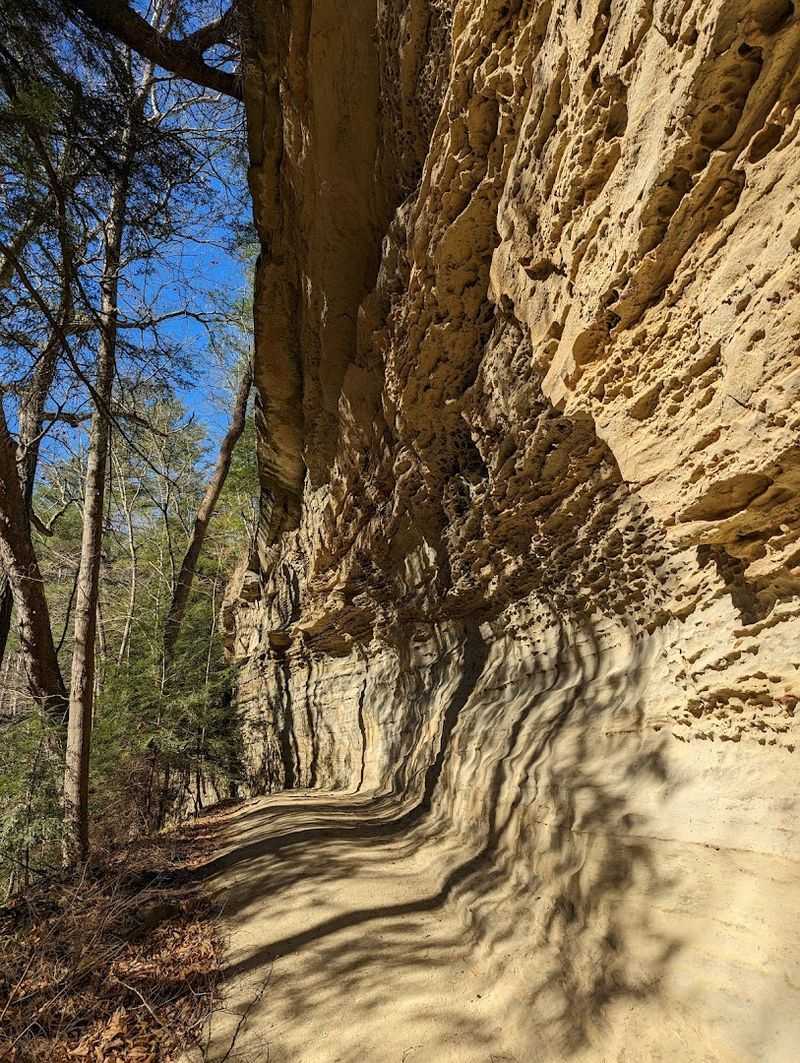
Pine Hills Nature Preserve has a way of surprising hikers who think they already know what Indiana terrain looks like. The preserve packs a remarkable amount of elevation, sandstone scenery, and rugged character into a relatively compact area.
From the moment the trail begins weaving through wooded slopes and rocky terrain, the landscape feels more dramatic than many people expect. Instead of long stretches of flat forest, you get a route shaped by ridges, ravines, and distinctive geological features that constantly pull your attention toward the surrounding scenery.
The preserve is best known for its narrow ridges and sandstone formations that give the area its unique personality. As the trail gains elevation, views begin opening toward Sugar Creek and the forested valley below.
The changing terrain creates a steady sense of anticipation, with each section offering a slightly different perspective. Rather than relying on one dramatic overlook, Pine Hills delivers several elevated viewpoints that showcase the rolling beauty of western Indiana.
One of the things that makes this hike stand out is the contrast between enclosed forest and broader scenery. Dense tree cover creates stretches that feel secluded and intimate, while higher vantage points reveal how much terrain surrounds you.
That balance keeps the hike engaging from start to finish. During autumn, the overlook sections become especially impressive as waves of red, orange, and gold spread across the valley.
This is a trail that rewards hikers who are willing to slow down and pay attention. Uneven footing, rocky sections, and changing elevation naturally encourage a more deliberate pace.
Often overshadowed by nearby Turkey Run and Shades State Park, Pine Hills offers distinctive scenery without the same level of visitor traffic. For hikers searching for an underrated trail with genuine scenic payoff, Pine Hills Nature Preserve delivers.
9. Overlook Trail at Interlake State Recreation Area (Pike & Warrick Counties)
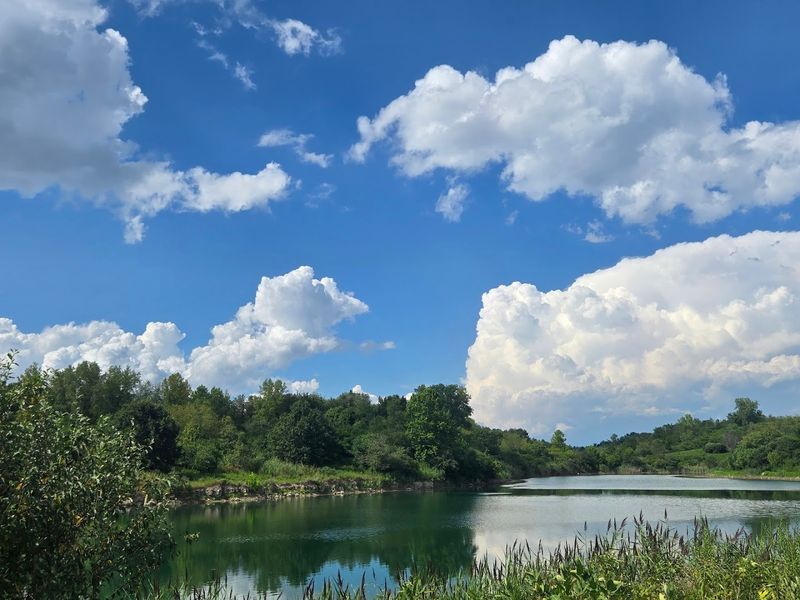
Interlake Overlook Trail has a landscape you do not see every day on Indiana hiking lists. Instead of river bluffs or sandstone canyons, this trail leads you toward high views over reclaimed mining lakes that glint against rolling southern Indiana terrain.
The contrast between water, open space, and surrounding vegetation gives the scene a distinct look from the usual forest-only panorama.
That difference is exactly why the overlook lands so well. From above, the lakes create reflective shapes that break up the land into bold patches of blue and green, and the broader terrain around them adds depth rather than distraction.
It is a broad, open kind of view, less enclosed than many wooded hikes, with enough elevation to make the whole setting read clearly.
This is a good trail for hikers who want something scenic without repeating the same bluff-and-ravine formula. The route feels a bit more unexpected, and the overlook has a visual identity that sticks in your head after the hike is over.
Depending on light and season, the water can shift from silver to deep blue, changing the mood of the panorama in a big way.
A clear day helps here, since the value of the viewpoint comes from being able to read the full spread of lakes and terrain.
Even so, softer skies can add their own appeal by flattening glare and pulling more detail out of the slopes and shorelines. Either way, it is a place where pausing longer usually improves the experience.
For a less talked-about southern Indiana hike with a genuinely different view profile, Interlake Overlook is easy to recommend.
The reclaimed landscape creates a panorama that feels both expansive and unusual. If you want a break from standard woodland vistas, this one delivers a fresh angle without trying too hard.
10. Hobart Woodland at Robinson Lake Park (Lake County)
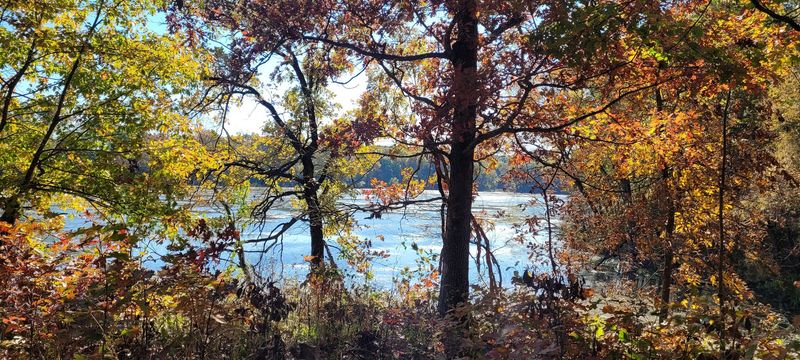
Hobart Woodland offers a quieter style of scenic hiking, built less on dramatic elevation and more on the way different habitats fit together. The trail system moves through wetlands, woodlands, and lake-adjacent spaces that keep the scenery shifting in subtle but rewarding ways.
When you reach elevated viewpoints around Robinson Lake, the whole area starts to read as one connected landscape instead of separate pockets of green and water.
The lake views are the natural highlight, but they work because the approach has already set up the contrast. Wetland edges, tree cover, and open water each bring different textures, and the higher perspectives pull those elements into a broader composition.
Rather than one bold cliffside reveal, you get a calm panorama with a lot of visual variety packed into it. This is a smart trail to choose when you want scenery without committing to a rugged, all-legs workout.
It feels accessible and low-key, yet the viewpoints still give you enough breadth to pause for a while instead of breezing through.
Bird activity, changing cloud reflections, and seasonal shoreline color can all make the same overlook look slightly different from one visit to the next.
Because the terrain is gentler, this is a good place to pay attention to smaller details along the route. Boardwalk-like wetland edges, shifts in light across the water, and the framing effect of nearby trees all add texture before the wider views arrive.
The pace can stay easy without the hike ever feeling dull. For northwest Indiana hikers who want a peaceful trail with a strong scenic finish, Hobart Woodland deserves more attention.
The viewpoints across Robinson Lake are broad enough to satisfy, and the mix of habitats gives the route a freshness that many single-setting trails cannot match. It is a quietly effective panorama instead of a flashy one.
11. Fire Tower Trail at Harrison-Crawford State Forest (Harrison & Crawford Counties)
Fire Tower Trail is for the hiker who wants southern Indiana to show a little more muscle. The terrain here leans rugged, with ridges, forested climbs, and a backcountry feel that separates it from shorter scenic loops in more manicured settings.
Even before the bigger overlooks come into play, the route has enough shape and movement to make the miles feel purposeful.
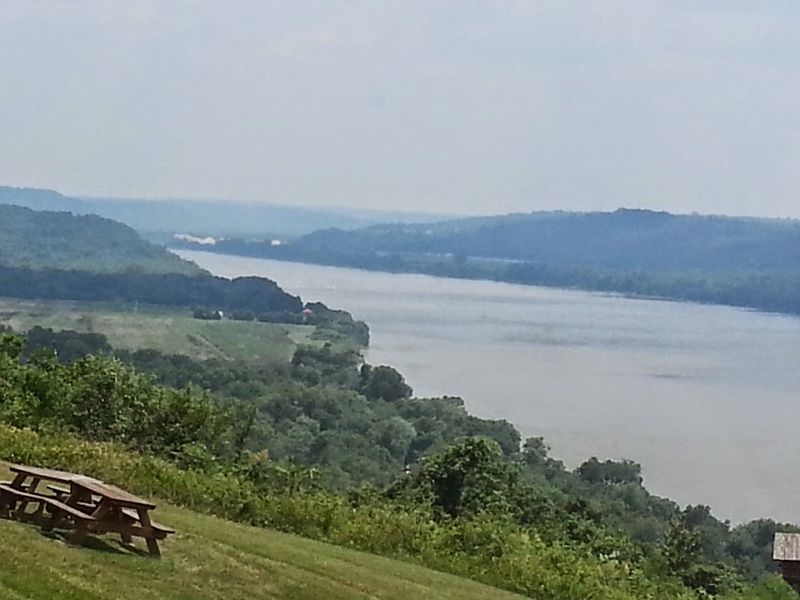
The scenery builds through the trail network rather than hinging on one quick platform view. As you move across ridges and higher ground, the forest begins to open toward larger outlooks tied to the Ohio River Valley and broad stretches of protected land.
That sense of scale is the real reward – not just a pretty angle, but a feeling of distance and continuity across the landscape.
This is a strong pick when you want an underrated hike with room to breathe and terrain that demands your attention. The maintained state forest setting means you can chase a more adventurous outing without it feeling abandoned or neglected.
It helps to bring a little extra time, because this is the kind of place where a rushed pace would miss the point. Expect a route that favors hikers comfortable with longer efforts, uneven surfaces, and a more immersive forest environment. The overlooks matter, but the journey through scenic ridges is part of why they land so well.
In cooler months, longer sightlines may open through the woods, while greener seasons emphasize just how extensive the surrounding forest can be.
If you are after a panoramic trail that feels bigger, wilder, and less packaged, Fire Tower Trail stands out. The connection to ridge country and Ohio River Valley views gives it serious range, and the backcountry character adds weight to every scenic payoff. This is one of those hikes that rewards sturdy shoes and a full water bottle with interest at every turn.