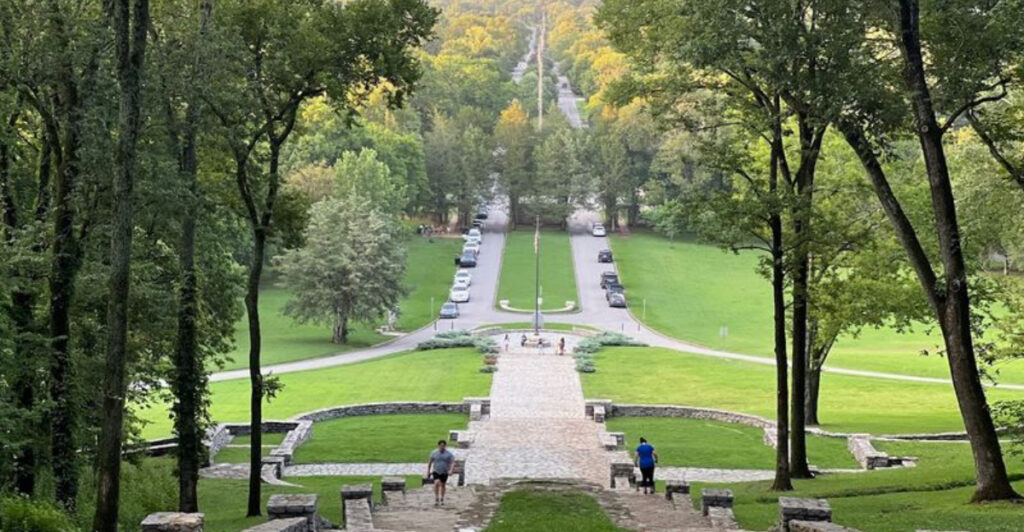
Nashville pulls millions of visitors every year, but most of them stick to the same handful of spots downtown. Broadway’s neon lights and the honky-tonks get all the attention while some of the city’s most fascinating places sit quietly just a few miles away.
If you want to see the Nashville that locals actually love, you need to wander beyond the tourist trail and discover these hidden treasures that make Music City truly special.
1. Radnor Lake State Park
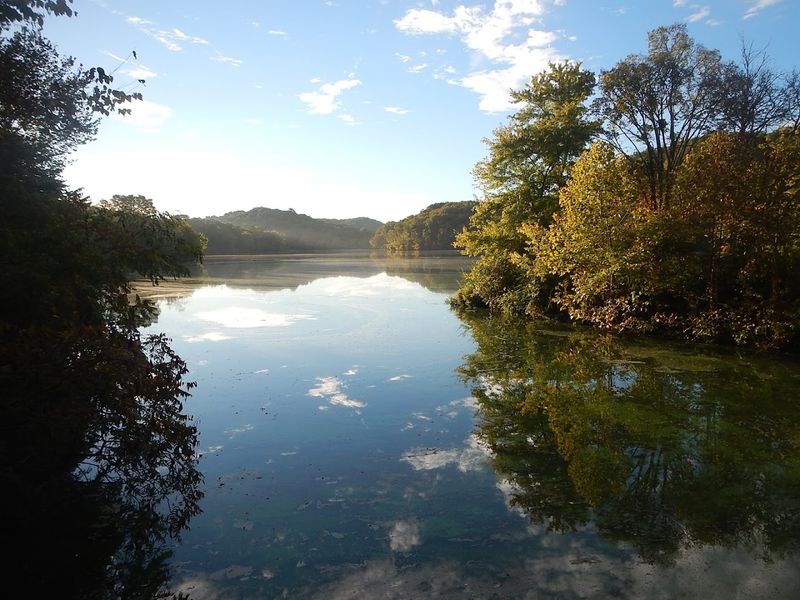
Just eight miles from downtown Nashville sits a natural oasis that feels worlds away from the bustling city streets. Radnor Lake covers 85 acres and is surrounded by protected wilderness that’s home to deer, owls, herons, and even the occasional bobcat.
The park’s trails wind through hardwood forests and along the lake’s edge, offering peaceful walks where the only sounds you’ll hear are birds calling and leaves rustling. Early morning visits reward you with mist rising off the water and wildlife coming down to drink.
Unlike the crowded parks closer to downtown, Radnor Lake limits development to preserve its wild character. There are no playgrounds, picnic pavilions, or food vendors here, just pure nature.
Photography enthusiasts love this spot because the changing seasons paint the landscape in completely different colors throughout the year. Spring wildflowers give way to summer greenery, then autumn sets the hillsides ablaze with reds and golds.
The main loop trail is fairly easy and takes about two hours at a leisurely pace. Pack water and wear good walking shoes because the paths can be rocky in spots.
Most tourists never make it out here, which means you’ll have plenty of space to enjoy the tranquility.
2. Fort Negley Park
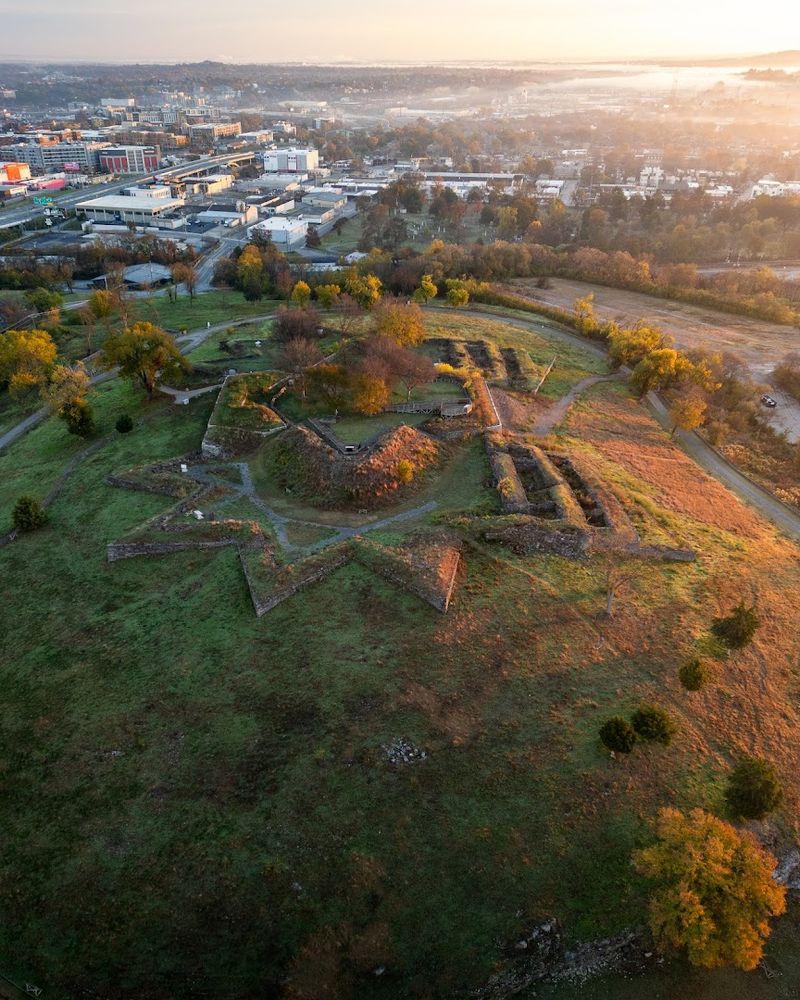
Perched on St. Cloud Hill, Fort Negley stands as the largest inland stone fort built during the Civil War. Enslaved African Americans and Union soldiers constructed this massive fortification in 1862, and today it offers both history lessons and stunning city views.
Walking through the restored stone walls and earthworks gives you a real sense of the fort’s strategic importance. Interpretive signs explain how the structure defended Nashville from Confederate attack and served as a symbol of Union control in Tennessee.
The visitor center houses artifacts and exhibits that tell the complex story of the fort’s construction and the people who built it. Many tourists skip this site entirely, assuming Nashville’s history begins and ends with country music.
Beyond the historical significance, the park itself provides one of the best elevated views of the Nashville skyline. Photographers come here during golden hour to capture the city bathed in warm light.
The surrounding park includes walking trails and green spaces perfect for a quiet afternoon. It’s a sobering reminder that Nashville’s story involves more than guitars and recording studios, encompassing difficult chapters that shaped the city’s identity and the nation’s history.
3. Bicentennial Capitol Mall State Park
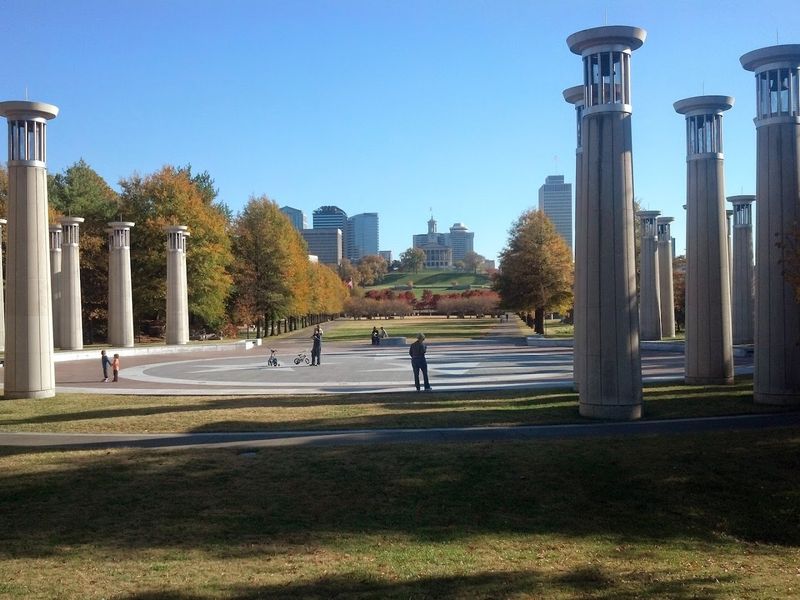
Most visitors photograph the State Capitol building but completely miss the 19-acre park right next to it. Bicentennial Capitol Mall State Park opened in 1996 to celebrate Tennessee’s 200th anniversary, and it’s packed with features that tell the state’s story in creative ways.
A 200-foot granite map of Tennessee serves as the park’s centerpiece, with all 95 counties represented and major rivers carved into the stone. Kids love running across it while adults appreciate the geography lesson.
The Court of 3 Stars features 31 fountains representing Tennessee’s major rivers, and on hot summer days, children splash through the water jets. The 95-bell carillon tower plays music throughout the day, creating a peaceful soundtrack.
Walk the World War II Memorial or the Pathway of History, which uses markers to chronicle important dates in Tennessee’s timeline. Each element teaches something different about the state’s heritage, from its Native American roots to its role in various wars.
The park connects directly to the Farmers’ Market and offers unobstructed views of the Capitol building without the crowds you’ll find on the building’s grounds. It’s especially beautiful during early morning hours when the light hits the Capitol dome and the fountains create rainbows in the mist.
4. The Parthenon
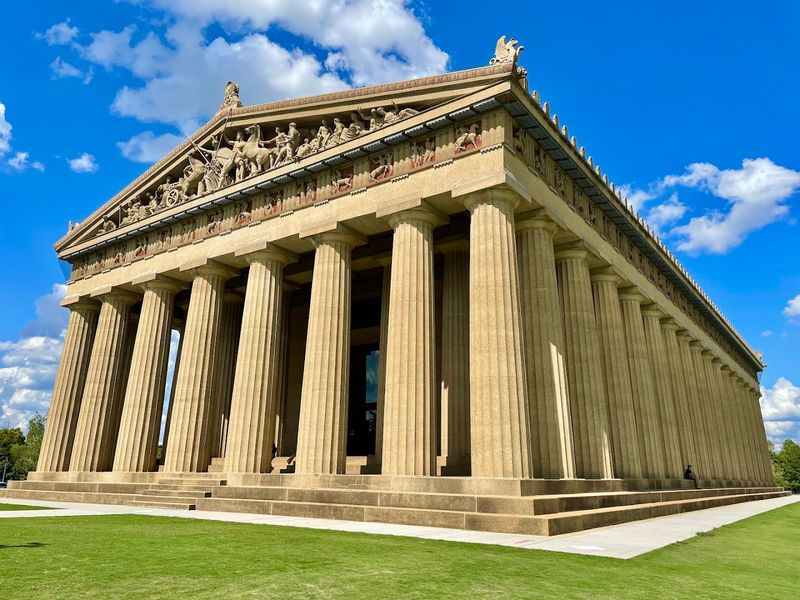
Standing in Centennial Park is a full-scale replica of the ancient Greek Parthenon, and yes, you’re still in Nashville. Built for Tennessee’s 1897 Centennial Exposition, this remarkable structure serves as an art museum and a testament to Nashville’s nickname as the Athens of the South.
Inside, you’ll find a 42-foot statue of Athena covered in gold leaf, the tallest indoor sculpture in the Western world. The goddess’s presence is genuinely awe-inspiring, and seeing her gleaming in the dim gallery light makes you understand why ancient peoples built temples.
The building’s exterior faithfully recreates the original Parthenon’s proportions and design. Walking around its massive columns gives you a sense of classical architecture’s power and elegance that photographs simply can’t capture.
The permanent art collection includes American paintings from the 19th and 20th centuries, providing cultural enrichment beyond the building’s architectural significance. Rotating exhibitions keep the museum fresh for repeat visitors.
Centennial Park itself deserves exploration, with walking paths, a lake, and plenty of space to relax. The Parthenon looks particularly magical during sunset when the golden light makes the cream-colored concrete glow.
Most tourists race past this on their way to more obvious attractions, missing one of Nashville’s most unique landmarks.
5. Tennessee State Museum
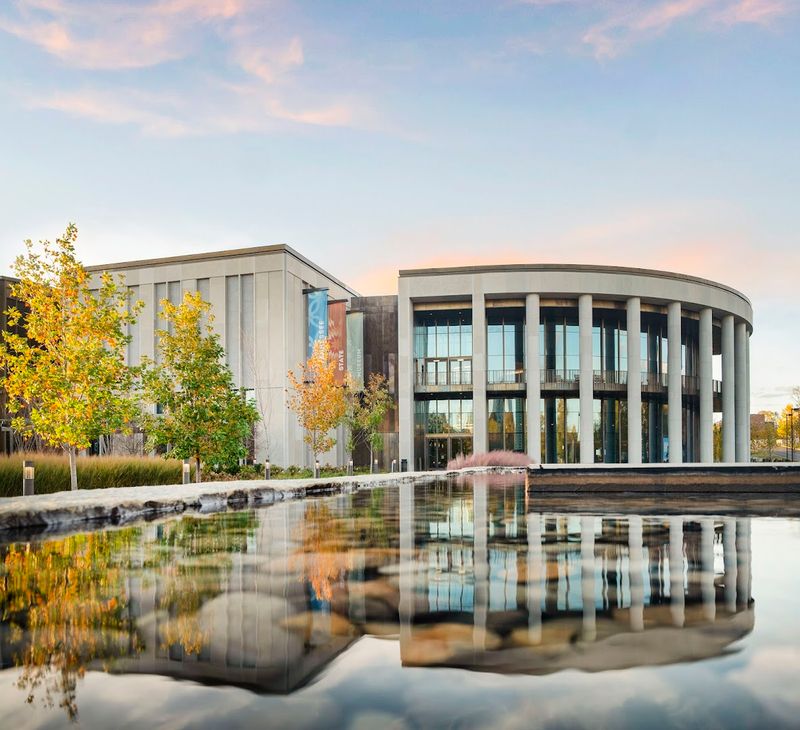
The Tennessee State Museum moved to a stunning new building in 2018, and admission is completely free. This 137,000-square-foot facility houses artifacts spanning 14,000 years of Tennessee history, yet many visitors never step inside.
Exhibits start with the state’s earliest inhabitants and progress through the Civil War, Reconstruction, and into the modern era. You’ll see everything from ancient pottery and Civil War uniforms to a complete recreation of a 1950s soda fountain.
The Civil War section is particularly comprehensive, presenting perspectives from soldiers, enslaved people, and civilians. Interactive displays let you explore how battles unfolded and how the war transformed Tennessee forever.
Music fans will appreciate exhibits covering Tennessee’s incredible musical heritage beyond just country music, including blues, rock and roll, and gospel traditions. The museum connects these musical movements to broader social and cultural changes.
Plan at least two hours to see the permanent collection properly, though you could easily spend half a day here. The building’s modern design includes plenty of natural light and comfortable spaces to rest between galleries.
Located just north of downtown, the museum sits within walking distance of other attractions but somehow remains overlooked. It’s the perfect rainy-day activity or a great way to understand Nashville’s place in Tennessee’s larger story.
6. Cheekwood Estate & Gardens
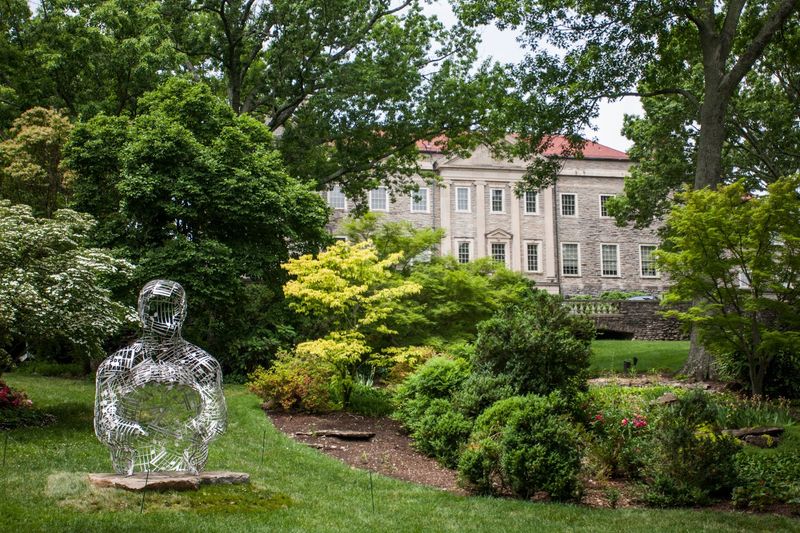
Built in the 1930s for the Cheek family of Maxwell House Coffee fame, Cheekwood sprawls across 55 acres of gardens and woodlands in West Nashville. The Georgian-style mansion now operates as an art museum, while the grounds showcase some of the finest botanical gardens in the Southeast.
Each season brings different blooms and colors to Cheekwood’s themed gardens. Spring explodes with tens of thousands of tulips, summer brings roses and perennials, fall showcases chrysanthemums and changing leaves, while winter features holiday lights displays.
The mansion’s art collection includes American and contemporary works, with rotating exhibitions that bring in pieces from major museums nationwide. The building’s period rooms show how Nashville’s wealthy families lived during the city’s early 20th-century prosperity.
Sculpture trails wind through the wooded areas, placing modern art in natural settings that create interesting contrasts. The Japanese garden offers a peaceful retreat with its carefully designed water features and stone arrangements.
Families enjoy the interactive children’s garden area, which encourages kids to explore nature through play. The onsite restaurant serves lunch with views overlooking the gardens, making Cheekwood an all-day destination.
Most tourists never venture this far from downtown, which is a shame because Cheekwood offers beauty and culture in a setting that feels like a world away from the city’s hustle.
7. Belle Meade Historic Site & Winery
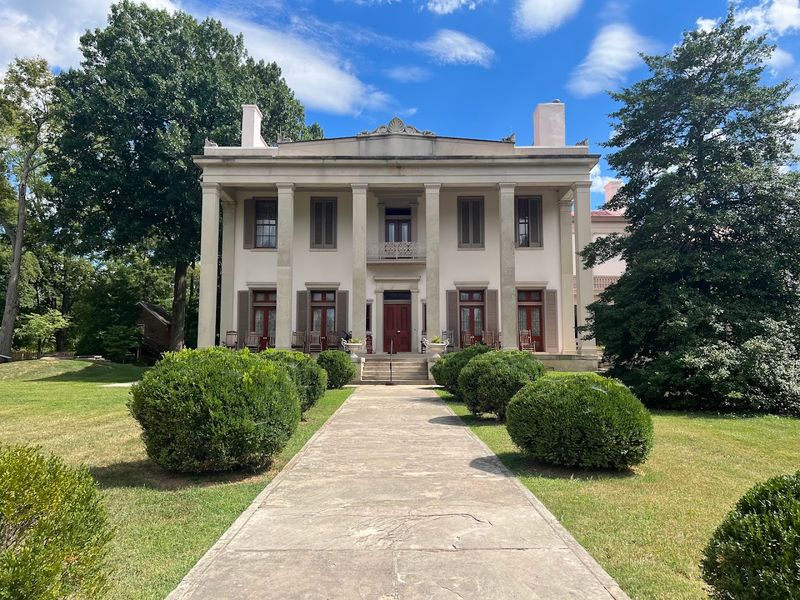
Belle Meade operated as one of the South’s premier thoroughbred breeding farms during the 19th century, and the preserved plantation tells a complicated story of wealth, horses, and the people enslaved here. The Greek Revival mansion sits on what remains of a 5,400-acre estate that once stretched across much of West Nashville.
Guided tours take you through the mansion’s elegant rooms while discussing both the Harding and Jackson families who owned the property and the enslaved people who actually ran the farm. The site doesn’t shy away from difficult history, presenting slavery’s reality alongside the plantation’s horse-breeding legacy.
Belle Meade’s horses influenced American thoroughbred bloodlines significantly, with descendants including Secretariat and Seabiscuit. The stable areas and carriage house display period equipment and explain the farm’s impact on horse racing.
The winery operates in the original 1800s building, producing wines using Tennessee-grown grapes. Tastings include several varieties, and the staff explains the property’s winemaking history that dates back to the plantation era.
Special exhibits cover topics like Victorian-era food preparation, period clothing, and the lives of specific enslaved individuals whose stories have been researched and preserved. The grounds include walking paths and gardens that show how the landscape supported the plantation’s operations.
Located just minutes from downtown, Belle Meade offers historical depth that most tourists miss entirely while rushing between honky-tonks.
8. Shelby Bottoms Greenway and Nature Park
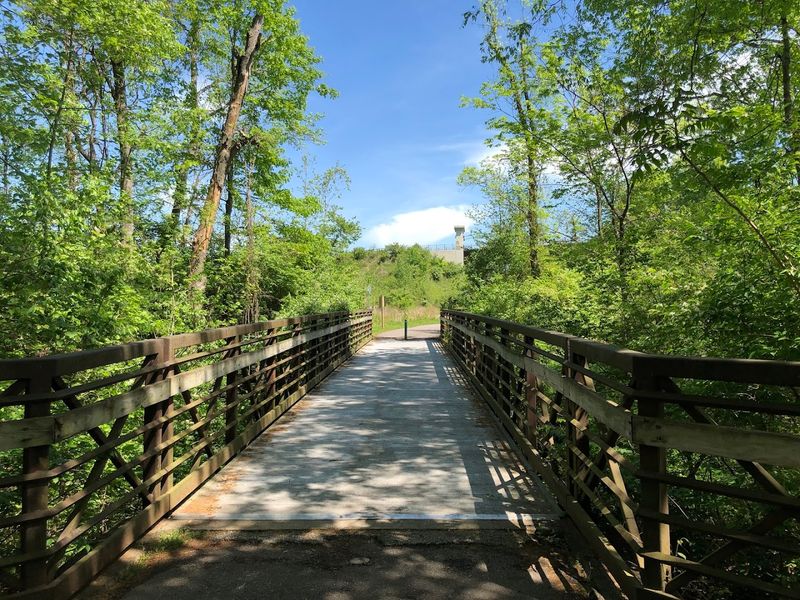
Stretching along the Cumberland River’s east bank, Shelby Bottoms encompasses 960 acres of bottomland hardwood forest, wetlands, and open fields. The park’s paved greenway connects to Nashville’s larger trail system, but most visitors stick to the more popular sections closer to downtown.
Birdwatchers flock here during migration seasons when the wetlands attract herons, egrets, and dozens of other species. The variety of habitats supports an impressive diversity of wildlife that you wouldn’t expect to find so close to the city.
The trails range from easy paved paths perfect for biking and jogging to more rugged nature trails that wind through the forest. Bridges cross over marshy areas, giving you elevated views of the wetland ecosystems below.
Unlike manicured city parks, Shelby Bottoms maintains a wild character that lets nature take the lead. Fallen trees provide habitat for insects and small animals, and the undergrowth grows thick in summer months.
The nature center offers educational programs and trail maps, though many people skip it and just start walking. Early morning visits reward you with cooler temperatures and more wildlife activity.
Locals use this park constantly for exercise and nature observation, but tourists rarely discover it. The greenway eventually connects to other trail systems, meaning you could bike for miles through Nashville’s green spaces without ever touching a road.
9. Percy Warner Park
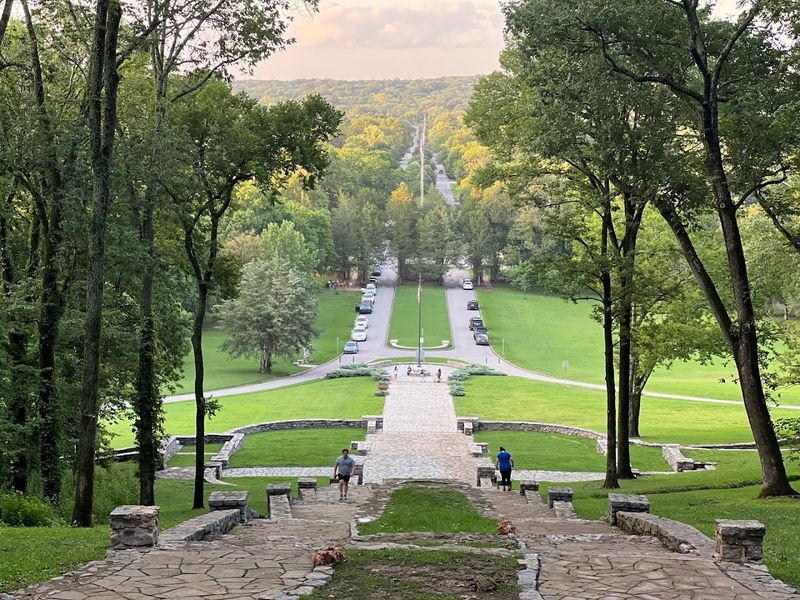
Percy Warner Park covers 2,684 acres of steep hills, forests, and meadows in Nashville’s southwestern corner. Together with adjacent Edwin Warner Park, this creates one of the largest municipal park systems in the United States, yet most tourists never hear about it.
The park’s signature feature is a scenic drive that winds through the hills, offering overlooks with sweeping views of the surrounding countryside. During fall, the road becomes a tunnel of color as the hardwood trees turn brilliant shades of red, orange, and gold.
Hikers can choose from numerous trails ranging from easy nature walks to challenging climbs that reward you with elevated viewpoints. The trail system connects to Edwin Warner Park, creating dozens of miles of possibilities for exploration.
Equestrian trails run throughout the park, and you’ll often see riders exercising their horses along the wooded paths. The park’s natural beauty attracts photographers year-round, with each season offering different landscapes and lighting conditions.
Stone bridges and structures built by the Civilian Conservation Corps during the 1930s add historical character to the scenery. These Depression-era projects created infrastructure that still serves park visitors nearly a century later.
Percy Warner feels remote despite being within Nashville’s city limits, offering an escape into nature without requiring a long drive. Pack a picnic and spend the afternoon exploring trails that most visitors never know exist.
10. Edwin Warner Park
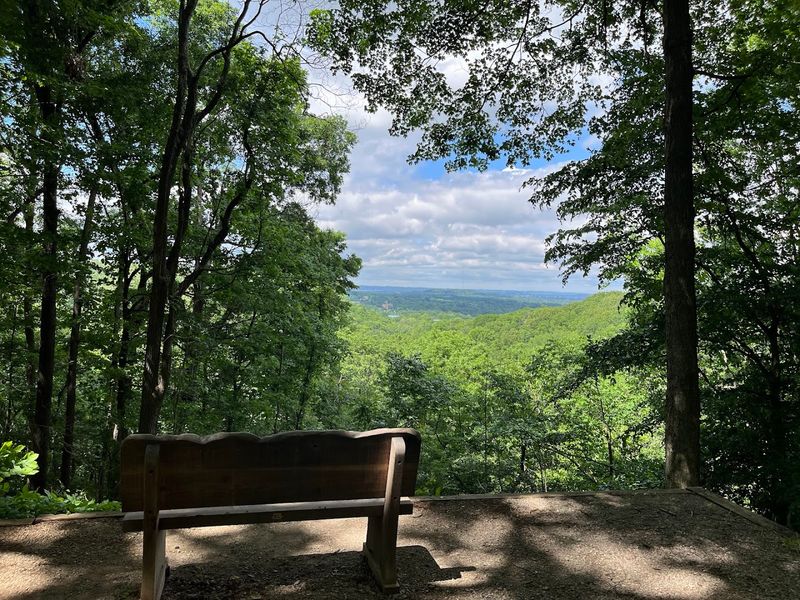
Connected to Percy Warner Park but with its own distinct character, Edwin Warner Park offers 2,100 acres of forests, meadows, and recreational facilities. The park’s nature center serves as an excellent starting point for understanding the area’s ecology and trail system.
The nature center building itself is worth visiting, with exhibits about local wildlife, native plants, and the park’s geological features. Staff members lead guided nature walks and educational programs that help visitors appreciate what they’re seeing on the trails.
Edwin Warner’s trail network includes everything from short interpretive loops to longer backcountry hikes that challenge even experienced hikers. The varied terrain means you’ll encounter creek crossings, steep climbs, and quiet forest glades all in one outing.
During summer months, the park’s open meadows fill with wildflowers and butterflies, creating colorful displays that contrast with the deep green forests. These meadows also provide habitat for grassland birds that struggle to find suitable nesting areas in developed Nashville.
The park maintains several picnic areas and a small playground, making it family-friendly without sacrificing its natural character. On weekends, you’ll see locals using the park for everything from trail running to family gatherings.
Like Percy Warner, Edwin Warner sees heavy use from Nashville residents but remains virtually unknown to tourists. The two parks together create a massive green space that rivals anything you’d find in much larger cities.
11. Lane Motor Museum

Car museums usually showcase Ferraris and Corvettes, but Lane Motor Museum takes a completely different approach. This collection focuses on unusual, obscure, and innovative vehicles from around the world, many of which you’ve probably never seen before.
The museum houses over 500 vehicles, with about 150 on display at any given time. You’ll find microcars barely bigger than golf carts, amphibious vehicles designed to drive on land and water, and experimental prototypes that never made it to production.
European vehicles dominate the collection, particularly unusual models from manufacturers that didn’t survive or never exported to America. Each car tells a story about automotive innovation, economic conditions, or cultural preferences in different countries and eras.
What makes Lane special is the museum’s willingness to show vehicles in various states of restoration. Some gleam with fresh paint while others wait their turn for attention, giving you insight into the preservation process.
The staff regularly drives vehicles from the collection, demonstrating that these aren’t just static displays but functional machines. Special events sometimes feature rides in unusual vehicles, letting visitors experience quirky automotive engineering firsthand.
Located in a former bakery building, the museum has an industrial character that suits its eclectic collection. Automotive enthusiasts could spend hours here, but even casual visitors find the unusual vehicles fascinating.
Most tourists have no idea this treasure exists just minutes from downtown.
12. Musicians Hall of Fame & Museum
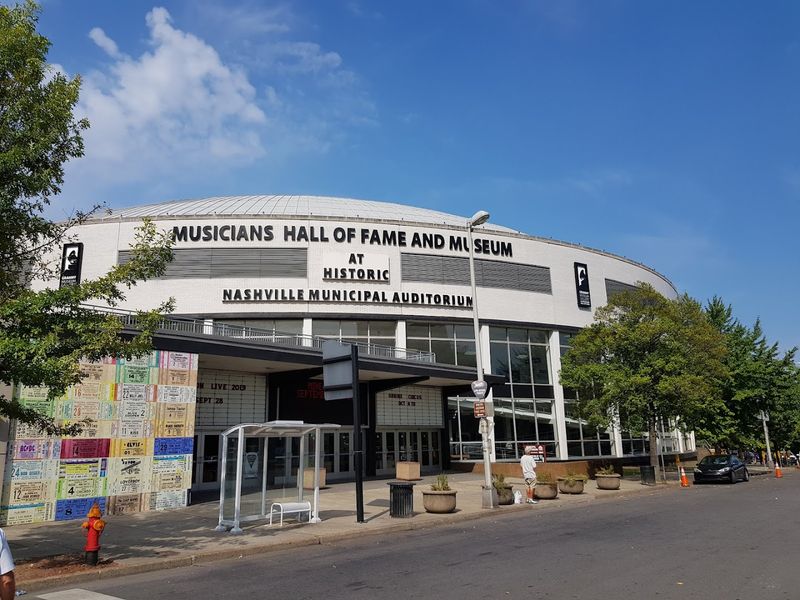
While tourists crowd into the Country Music Hall of Fame, the Musicians Hall of Fame sits quietly in the Municipal Auditorium, honoring the session players and sidemen who actually created the music you love. This museum celebrates the unsung heroes who played on countless hit records across all genres.
The exhibits showcase instruments actually used on famous recordings, from guitars and drums to keyboards and horns. Seeing the specific bass guitar that laid down the groove on a classic track creates a tangible connection to music history.
Interactive displays let you try mixing songs or learn about different instruments’ roles in creating a finished recording. These hands-on elements help visitors understand how much skill and creativity goes into professional music production.
The hall’s inductees span every musical genre, recognizing that Nashville’s recording studios have hosted rock, pop, gospel, and R&B sessions alongside country music. The museum tells stories of musicians whose names you might not know but whose playing you’ve definitely heard.
Special exhibits rotate regularly, focusing on specific eras, studios, or groups of musicians. The Grammy Gallery displays actual Grammy Awards won by various artists and explains the voting process.
This museum offers a deeper appreciation for music’s collaborative nature and the incredible talent required to play at a professional level. Most visitors never make it here, missing out on stories that illuminate how hit records actually get made.
13. Nashville Farmers’ Market
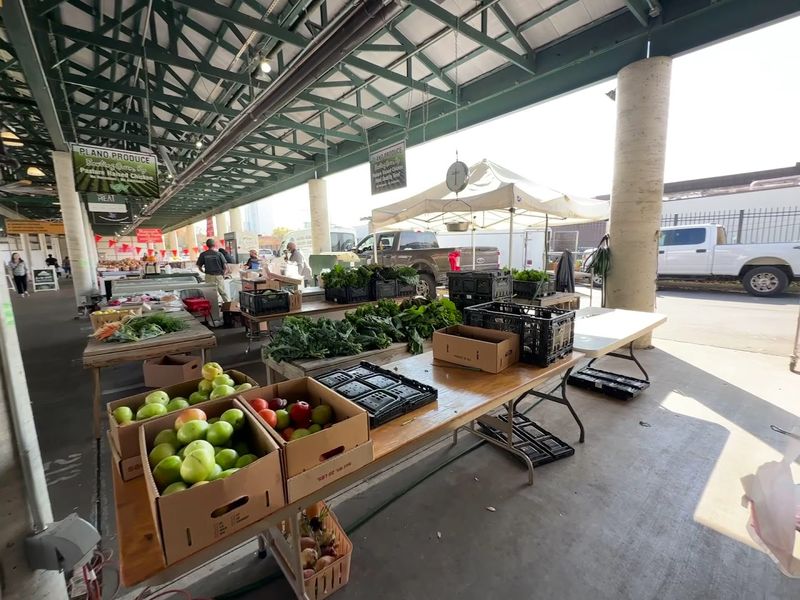
Operating year-round just north of downtown, the Nashville Farmers’ Market brings together local farmers, food vendors, and artisans in a vibrant community gathering space. The permanent market sheds house businesses selling everything from fresh produce to international cuisine, while outdoor stalls host seasonal vendors.
The market’s food hall features restaurants representing cuisines from around the world, including Mexican, Ethiopian, Thai, and traditional Southern cooking. Locals come here for lunch because the food is authentic, affordable, and diverse.
Fresh produce vendors sell fruits and vegetables grown on Tennessee farms, with seasonal offerings that change throughout the year. Spring brings strawberries and asparagus, summer means tomatoes and peaches, fall delivers apples and pumpkins, while winter features root vegetables and preserved goods.
Beyond food, you’ll find vendors selling plants, flowers, handmade crafts, and specialty products like local honey and artisan cheeses. The market supports small businesses and gives farmers direct access to customers who appreciate knowing where their food comes from.
The outdoor garden area includes demonstration plots showing sustainable growing techniques and native plant landscaping. Educational programs teach visitors about gardening, cooking, and food preservation.
Open daily except Sundays, the market buzzes with activity during weekend mornings when the most vendors set up shop. Tourists usually skip this spot entirely, missing a chance to experience Nashville’s diverse food culture and support local producers in one convenient location.
Share this story