Texas doesn’t just do things big—it does them weird, wonderful, and totally unforgettable. From art installations rising out of the desert to giant statues that tower over highways, the Lone Star State is packed with oddball attractions that prove Texans have a serious sense of humor and creativity. Whether you’re a lifelong resident or just passing through, these quirky spots offer photo ops, wild stories, and memories you won’t find anywhere else.
1. Cadillac Ranch (Amarillo)
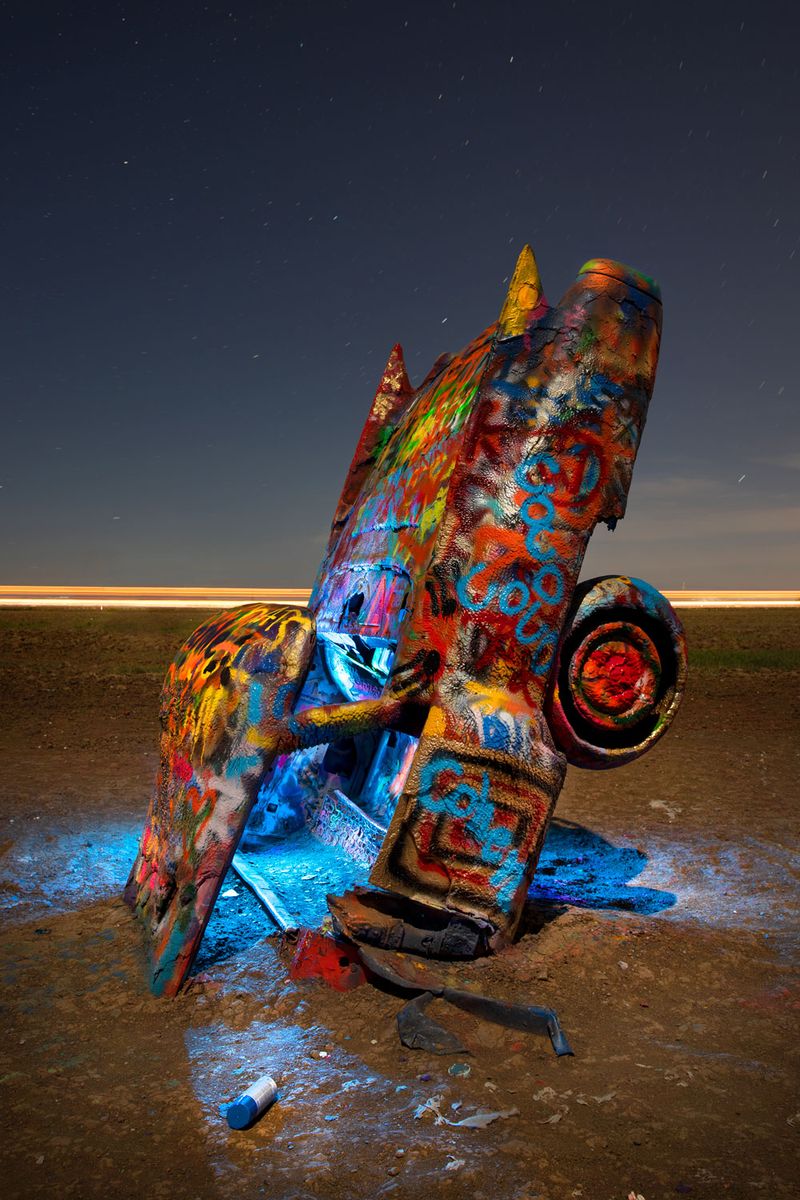
Out in the middle of a flat Amarillo field, ten Cadillacs are planted nose-down in the dirt like some kind of automotive garden. Created in 1974 by a group of artists called the Ant Farm, this roadside art installation has become one of the most photographed spots in Texas. The cars are positioned at the same angle as the Great Pyramid of Giza, though honestly, most visitors are too busy shaking spray paint cans to think about ancient Egypt.
What makes Cadillac Ranch truly special is that it’s completely interactive. Visitors are encouraged—no, expected—to bring spray paint and add their own artwork to the constantly evolving canvas. Every single inch of these vintage vehicles is covered in layers upon layers of paint, tags, messages, and doodles.
Some people write love notes, others leave their names, and a few get genuinely artistic with it.
The best time to visit is early morning or late afternoon when the Texas sun isn’t beating down quite so hard. Wear shoes you don’t mind getting paint on, because the ground around the cars is absolutely splattered. And yes, you can buy spray paint at nearby stores if you forget to bring your own.
Located right off Interstate 40, Cadillac Ranch is free to visit any time of day or night. The site is on private land, but the owners welcome visitors. Just remember to take your empty spray cans with you when you leave.
It’s a small price to pay for adding your mark to this ever-changing piece of Texas weirdness.
2. Prada Marfa (Valentine)
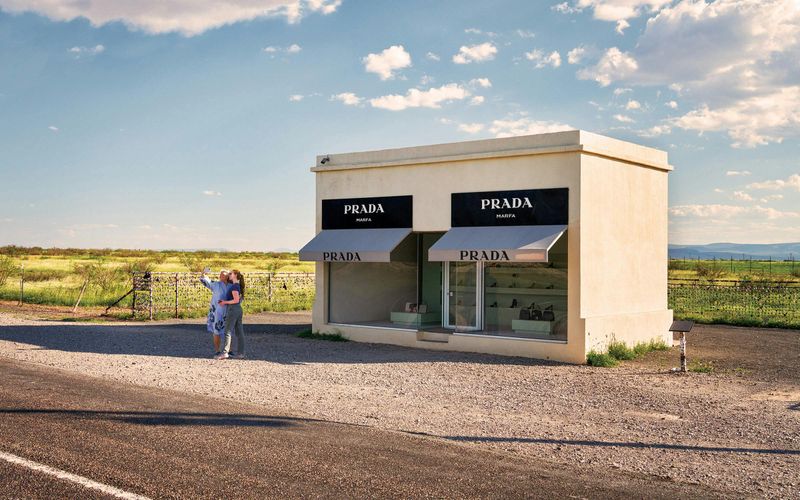
Picture this: you’re driving through the absolutely desolate West Texas desert when suddenly a pristine white Prada boutique appears on the side of the road. No, you haven’t been in the sun too long. Prada Marfa is a permanent art installation that looks exactly like a high-end store but will never sell you a single thing.
Created by artists Michael Elmgreen and Ingar Dragset in 2005, it’s meant to be a commentary on consumerism and luxury brands.
The building contains real Prada shoes and handbags from the 2005 collection, all carefully displayed behind glass windows. You can’t go inside, and even if you could, the shoes are all right-footed only. The artists wanted to create something that would eventually decay and become part of the landscape, but Texans had other ideas.
After vandals broke in shortly after it opened, locals repaired and maintained it, turning it into a beloved landmark instead.
Getting to Prada Marfa requires a bit of a drive—it’s located about 37 miles northwest of the tiny town of Valentine on Highway 90. There’s literally nothing else around for miles, which is exactly the point. The stark contrast between high fashion and empty desert creates an almost surreal experience that’s perfect for Instagram but even better in person.
Plan your visit for early morning or late evening when the lighting is best for photos. Bring water, because there are no services nearby. And whatever you do, don’t try to break in or vandalize this quirky piece of art.
Locals take Prada Marfa seriously and will absolutely call the sheriff on you.
3. Cathedral Of Junk (Austin)
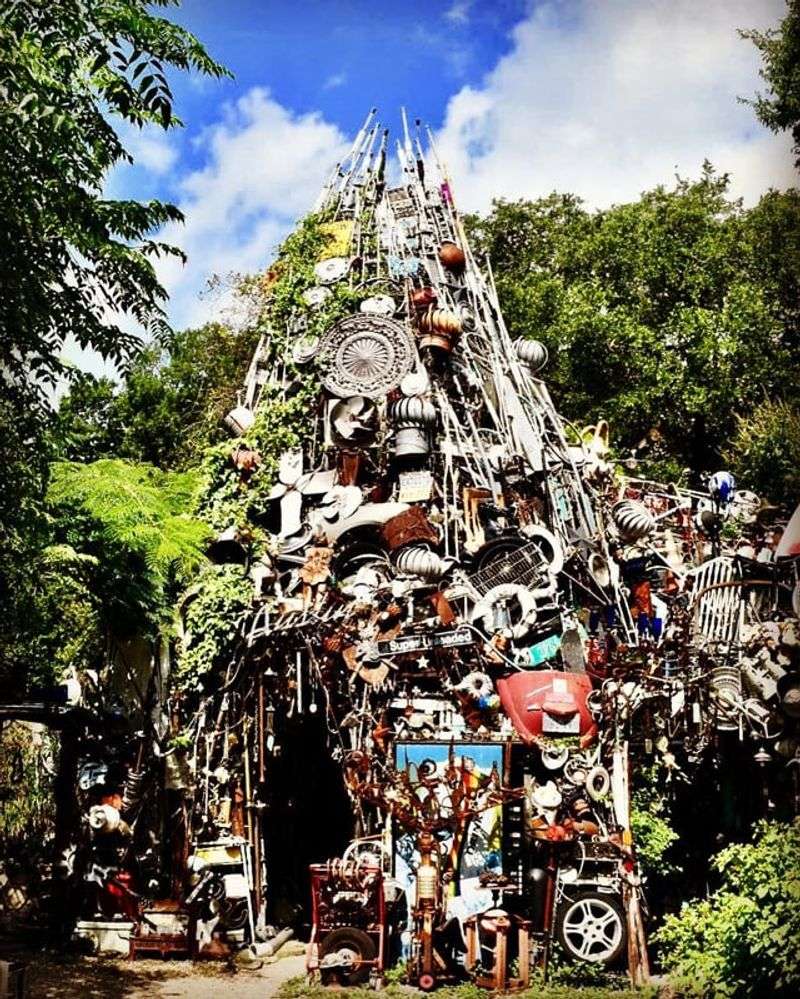
In a quiet Austin backyard, Vince Hannemann has spent over 30 years building a three-story tower entirely out of junk. Not just any junk—we’re talking old bicycles, lawn mowers, circuit boards, hubcaps, and thousands of other discarded items all woven together into a massive, climbable sculpture. The Cathedral of Junk weighs over 60 tons and contains more than 700 bicycle parts alone, plus who knows how many other random objects.
Walking through this towering maze of recycled materials feels like stepping into someone’s wildly creative fever dream. Narrow passages wind through multiple levels, each packed with carefully arranged collections of bottle caps, mirrors, tools, and toys. Hannemann has organized much of the junk by color and type, creating unexpected patterns and designs throughout the structure.
You can actually climb up inside it, discovering new details and hidden treasures at every turn.
The Cathedral faced demolition back in 2010 when city inspectors deemed it unsafe, but the Austin community rallied behind Hannemann. After making some structural improvements and getting proper permits, the Cathedral was saved and reopened to visitors. It’s become a symbol of Austin’s unofficial motto: Keep Austin Weird.
Visits are by appointment only since the Cathedral is located in Hannemann’s private backyard. Check the official website or social media pages to schedule a free tour. Hannemann himself often guides visitors through his creation, sharing stories about various pieces and how they found their way into the structure.
Donations are appreciated but not required. Just remember you’re visiting someone’s home and personal art project, so be respectful of the space and the neighbors.
4. Jacob’s Well (Wimberley)
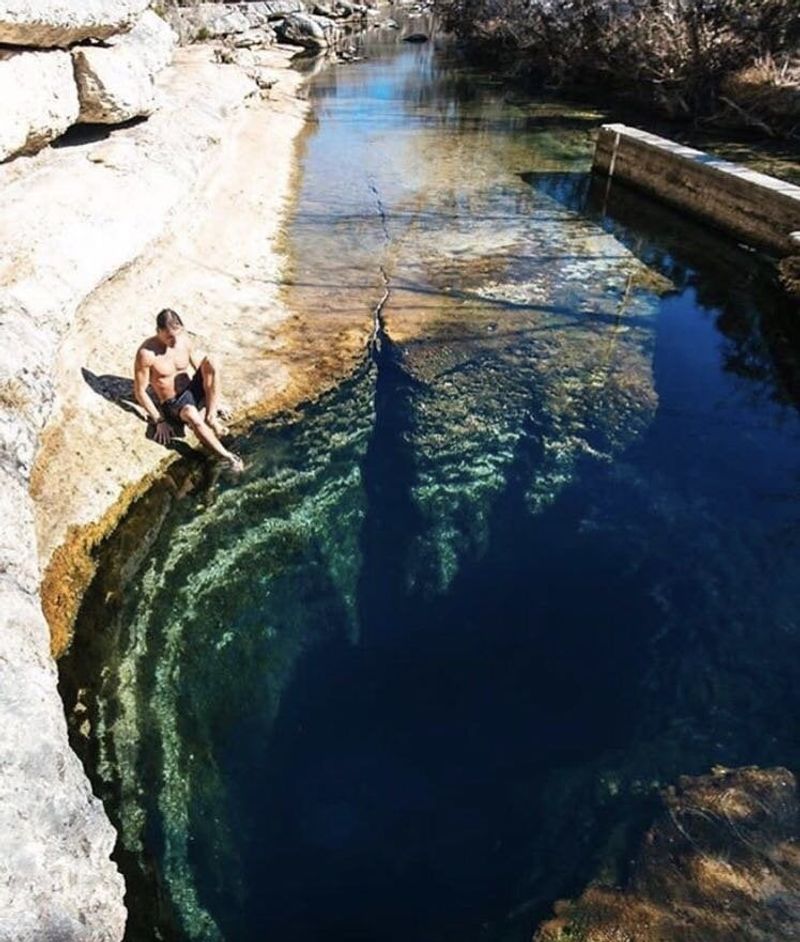
Jacob’s Well looks like nature’s own personal swimming hole, but underneath that crystal-clear water lies one of the most dangerous cave systems in Texas. This natural spring in Wimberley has been drawing swimmers for generations with its stunning turquoise water and constant 68-degree temperature. The well itself is only about 12 feet across, but it drops straight down into a series of underwater caves that have claimed the lives of at least eight divers over the years.
On the surface, Jacob’s Well is absolutely beautiful. Water flows out of the ground at around 170 gallons per minute during wet seasons, creating a pristine swimming spot surrounded by cypress trees and limestone rocks. The water is so clear you can see straight down into the first chamber, which drops about 30 feet before opening into a larger cave system.
During summer months, locals and tourists alike come to cool off and jump from the surrounding rocks.
The cave system beneath Jacob’s Well extends over 140 feet deep and includes multiple chambers connected by narrow passages. Some of these passages are barely wide enough for a person to squeeze through, and silt can reduce visibility to zero in seconds. Cave diving here is now heavily restricted, and for good reason.
The well has earned a reputation as one of the most dangerous diving spots in the entire state.
Access to Jacob’s Well is managed by Hays County Parks and requires a reservation, which you should book well in advance during summer. Swimming is allowed in designated areas, but diving of any kind is prohibited. The park also offers hiking trails and picnic areas if you want to make a day of it.
Come early in the morning for the calmest water and best visibility.
5. Marfa Lights Viewing Area (Marfa)
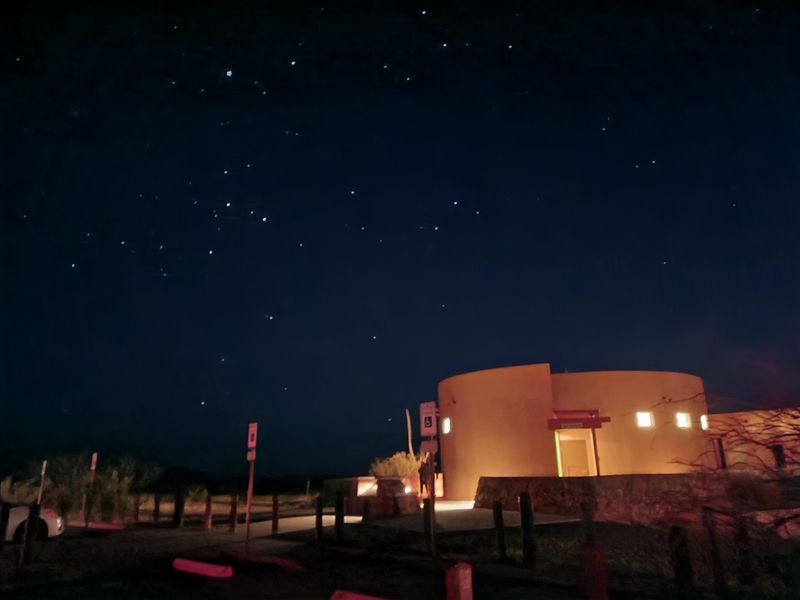
For over a century, mysterious lights have been dancing across the night sky near Marfa, and nobody can quite agree on what causes them. Some folks swear they’re ghosts or UFOs, while scientists suggest they’re probably caused by atmospheric reflections of car headlights or campfires. Whatever the explanation, the Marfa Lights have become one of West Texas’s most enduring mysteries and a genuine roadside attraction that draws curious visitors from around the world.
The lights typically appear as glowing orbs that move, split apart, merge together, or simply hover in place before disappearing. They’re usually white, yellow, or orange, and they show up most often on clear nights. Not everyone sees them—some visitors watch for hours and see nothing, while others spot them within minutes of arriving.
The unpredictability is part of the appeal, turning each viewing into a genuine mystery experience rather than a guaranteed show.
Texas built an official viewing area complete with parking, restrooms, and informational plaques about nine miles east of Marfa on Highway 90. The site offers an unobstructed view of the Mitchell Flat area where the lights most commonly appear. Bring binoculars, a lawn chair, and plenty of patience.
The best viewing times are typically after dark on clear nights, though there’s never any guarantee.
The viewing area is free and open 24 hours a day. Come prepared for cold nights even in summer—the desert drops in temperature dramatically after sunset. Pack warm clothes, snacks, and something to drink.
And remember, those distant lights you see moving along the horizon might just be cars on Highway 67, which runs parallel to the viewing area. The real Marfa Lights appear farther south and behave much more mysteriously.
6. The World’s Largest Cowboy Boots (San Antonio)
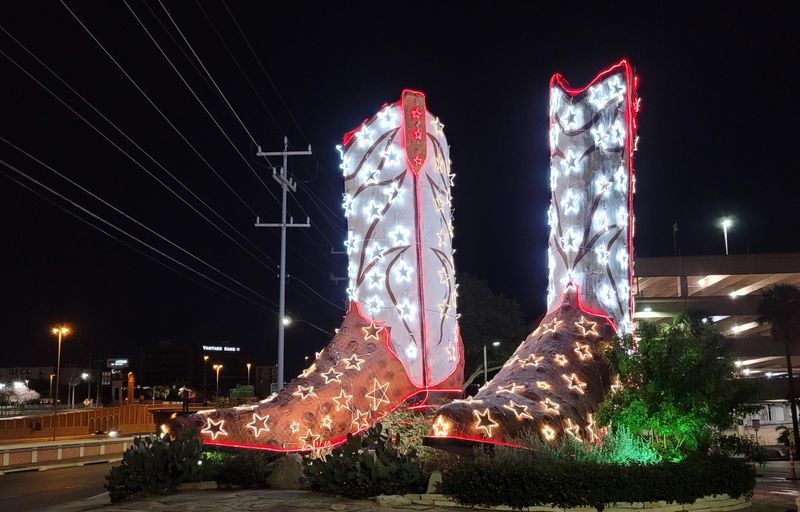
Standing guard outside North Star Mall in San Antonio are two absolutely massive cowboy boots that rise over 35 feet into the Texas sky. These aren’t just big—they’re certified by Guinness World Records as the largest cowboy boots on the planet. Created by artist Bob Wade in 1979 for a Washington D.C. art exhibition, the boots eventually made their way to San Antonio where they’ve become one of the city’s most beloved photo opportunities.
Each boot weighs several tons and features bright orange and red leather with intricate stitching details. Wade originally made them for the Smithsonian’s Bicentennial Folk Festival, where they represented Texas alongside other state-themed installations. After their stint in D.C., the boots traveled to various locations before finding their permanent home in San Antonio.
They’ve become such an iconic part of the city that locals use them as a landmark when giving directions.
The boots sit right in the parking lot, making them easy to access any time of day or night. They’re particularly photogenic during golden hour when the Texas sun makes the orange leather practically glow. Kids love climbing on the base for photos, and the boots have appeared in countless wedding pictures, graduation shots, and tourist snapshots over the years.
While you’re there, take a moment to appreciate the craftsmanship. Wade designed these boots to be anatomically correct scaled-up versions of real cowboy boots, complete with authentic stitching patterns and proper proportions. The attention to detail transforms what could have been a simple roadside gimmick into genuine folk art.
Plus, they’re located at a shopping mall, so you can grab some actual boots in your size after you’ve finished taking pictures with the giant ones.
7. The Big Texan Steak Ranch (Amarillo)
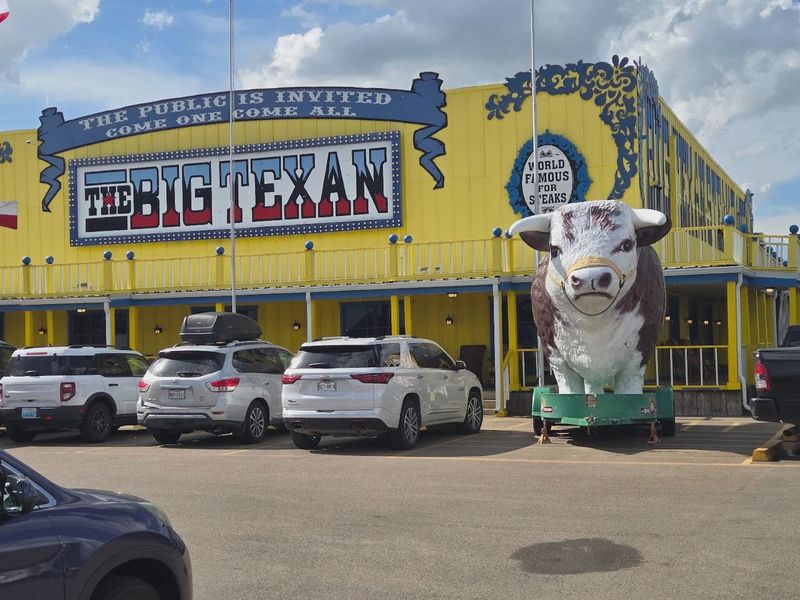
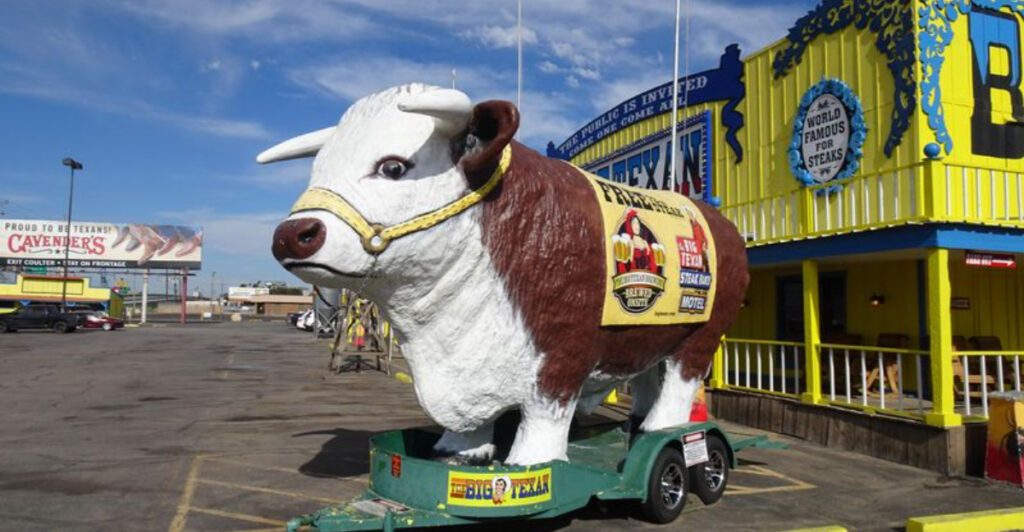
The Big Texan Steak Ranch has been daring hungry visitors to tackle their legendary 72-ounce steak challenge since 1960, and the restaurant has turned this culinary feat into one of Amarillo’s top attractions. The rules are simple but brutal: finish a 72-ounce steak, a shrimp cocktail, a baked potato, a salad, and a dinner roll in under one hour, and your entire meal is free. Fail, and you’ll pay around 72 dollars for the privilege of trying.
Watching people attempt the challenge is half the fun. Successful challengers get to sit at a raised platform in the middle of the dining room where everyone can watch them work. A digital timer counts down the minutes while servers bring out the massive slab of beef on a platter.
Some people finish with time to spare, others tap out after 20 minutes, and a few get so close that the entire restaurant starts cheering them on. Over 10,000 people have successfully completed the challenge since it began.
Even if you’re not brave enough to attempt the steak challenge, the Big Texan is worth visiting for its over-the-top Texas atmosphere. A giant cowboy figure sits on the roof, the gift shop sells every imaginable Texas souvenir, and the attached motel features rooms with Western themes. The regular menu offers plenty of normal-sized steaks and other dishes that won’t require an hour-long eating marathon.
The restaurant is located right off Interstate 40, making it an easy stop for road-trippers. They’re open for breakfast, lunch, and dinner, though steak challenges happen all day long. Call ahead if you want to attempt the challenge—they prefer advance notice so they can have your platform ready.
And whatever you do, don’t eat anything for about 24 hours beforehand if you’re serious about winning.
8. Beer Can House (Houston)
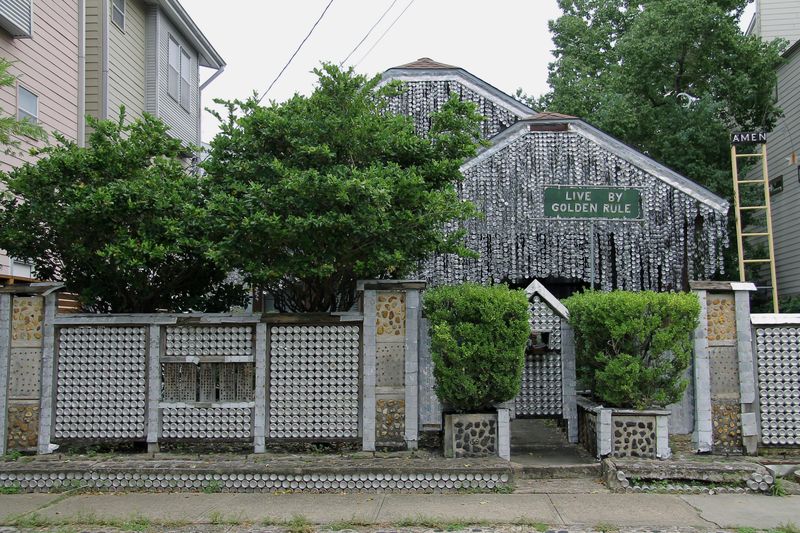
John Milkovisch spent nearly 20 years turning his ordinary Houston bungalow into a glittering monument to beer consumption, and the result is exactly as weird and wonderful as it sounds. Starting in 1968, Milkovisch began covering every surface of his house with flattened beer cans, creating siding that shimmers in the sunlight like aluminum fish scales. He didn’t stop there—he also made curtains from pull-tabs, wind chimes from can lids, and garlands from cut-up cans that dangle from the eaves and make tinkling sounds when the breeze blows.
Milkovisch reportedly drank one beer every day for 18 years to collect the materials for his project, though he also received donations from neighbors and friends who appreciated his artistic vision. He carefully flattened each can, cut intricate designs into many of them, and arranged them in patterns across the house’s exterior. The Beer Can House uses an estimated 50,000 cans in total, representing decades of dedication to both beer and folk art.
After Milkovisch passed away in 1988, his wife continued living in the house until her death in 2002. The Orange Show Center for Visionary Art eventually acquired the property and restored it, opening it to the public as a museum. Today, you can tour the house and yard, marveling at the incredible detail work and sheer persistence it took to create this backyard masterpiece.
Tours are available on weekends, and tickets are affordable. The house is located in Houston’s Rice Military neighborhood, not far from downtown. Guides share stories about Milkovisch’s life and creative process, explaining how he developed different techniques for working with aluminum.
The yard features additional beer can sculptures and decorations, including a fence made entirely from beer can tops. It’s simultaneously trashy and transcendent—exactly what Texas folk art should be.
9. Paris Eiffel Tower With A Cowboy Hat (Paris)
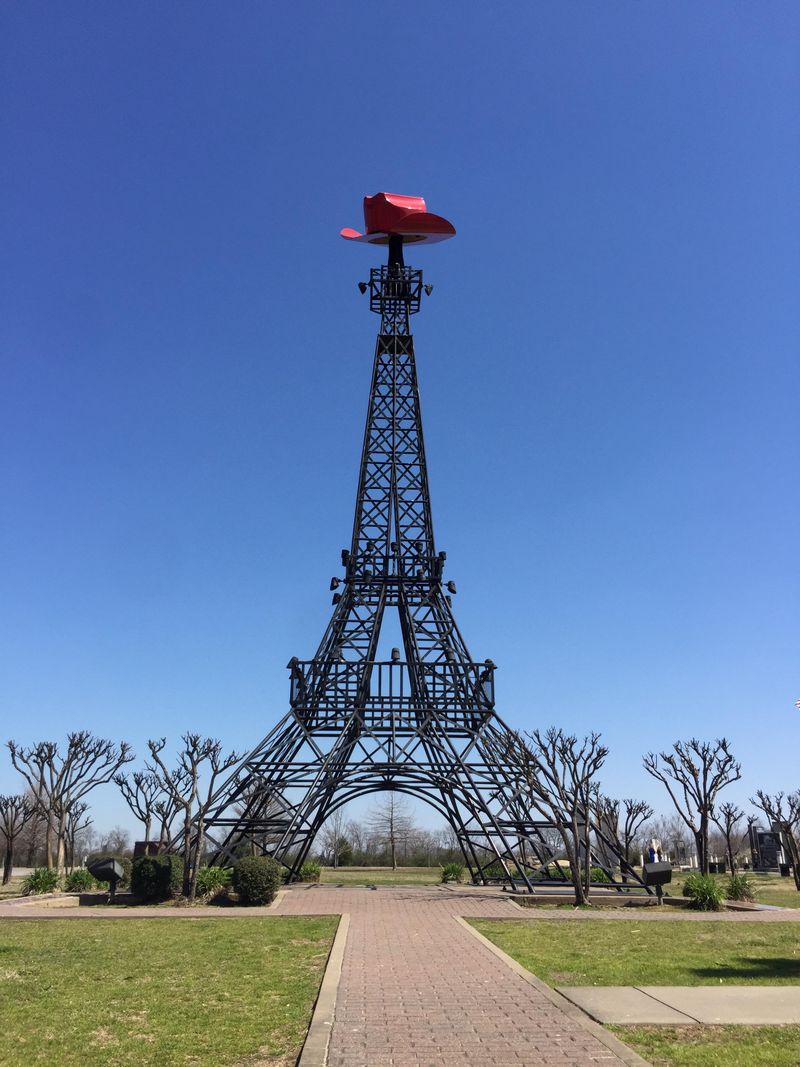
When Paris, Texas decided they needed their own Eiffel Tower, they didn’t just build a replica—they topped it with a giant red cowboy hat to make sure nobody confused them with that other Paris. Standing 65 feet tall in the parking lot of the Paris Visitors Center, this scaled-down version of France’s most famous landmark perfectly captures the Texas sense of humor. The cowboy hat alone weighs several hundred pounds and measures over 10 feet tall.
The tower was originally built in 1993 without the hat, but locals quickly realized their 60-foot structure was actually shorter than the Eiffel Tower replica in Paris, Tennessee. Rather than rebuild a taller tower, they simply added the cowboy hat in 1998, which both increased the height and gave their landmark a distinctly Texan personality. The hat is crafted from red metal and sits at a jaunty angle, as if the tower itself is tipping its cap to visitors.
The area around the tower has been developed into a small plaza with benches and landscaping, making it a pleasant spot to stop for photos during a road trip. At night, the tower lights up, and the effect is surprisingly charming. Local events sometimes use the tower as a backdrop, and it’s become the unofficial symbol of the town.
You can visit any time since the tower is in a public area that’s accessible 24 hours a day. The nearby visitors center offers information about other Paris attractions and sells souvenirs featuring the cowboy-hatted tower. It’s definitely worth a quick detour if you’re driving through Northeast Texas, if only to appreciate the audacity of small-town civic pride.
Only in Texas would someone look at the Eiffel Tower and think, “You know what this needs?
A cowboy hat.”
10. Stonehenge II (Ingram)
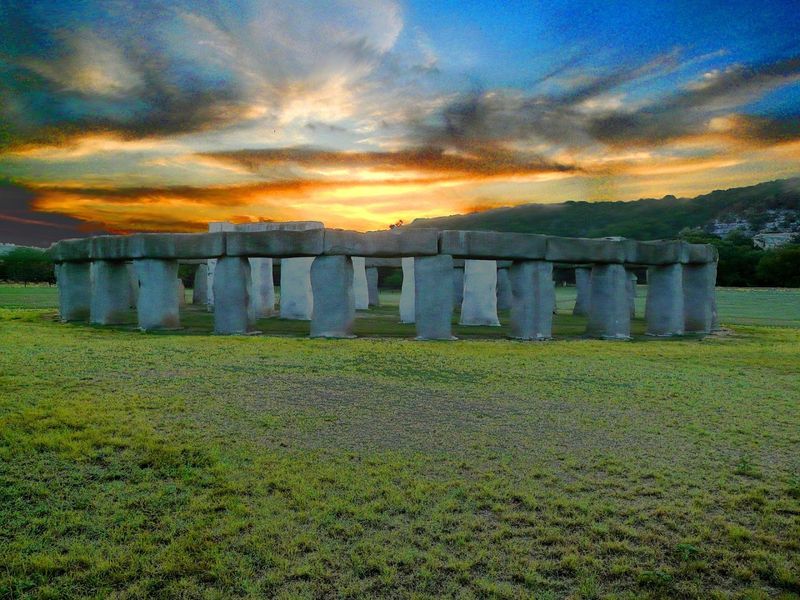
Deep in the Texas Hill Country, a full-scale replica of England’s ancient Stonehenge rises from a grassy field, complete with two Easter Island moai statues standing guard nearby. Built in 2010 by local ranchers Al Shepperd and Doug Hill, Stonehenge II proves that Texans will pretty much recreate any world landmark if given enough time and materials. Unlike the original, which took centuries to build and required massive stones hauled from distant quarries, this version is made from plaster, steel mesh, and foam.
The replica matches the dimensions of the original Stonehenge, standing about 13 feet tall with the same circular arrangement of massive stones. Shepperd and Hill carefully researched the authentic structure to get the proportions right, then spent months constructing their version using modern materials. They added the Easter Island heads because, well, why not?
If you’re going to build one mysterious ancient monument in your backyard, you might as well throw in a couple more.
The site originally stood on private property near Hunt, but after Shepperd passed away, the structure was donated to the Hill Country Arts Foundation and moved to its current location in Ingram. Now it sits in a public park where visitors can walk among the stones, touch them, and take all the photos they want. Kids love climbing on the lower stones, and the site has become a popular spot for quirky wedding photos.
Admission is free, and the park is open during daylight hours. The location is a bit off the beaten path, but that’s part of its charm. Bring a picnic and enjoy the peaceful Hill Country setting.
The combination of ancient mystery and Texas ingenuity creates something oddly magical, even if you know the stones are made of plaster. It’s proof that you don’t need to travel to England to experience Stonehenge—you just need to drive to Ingram.
11. The Giant Sam Houston Statue (Huntsville)
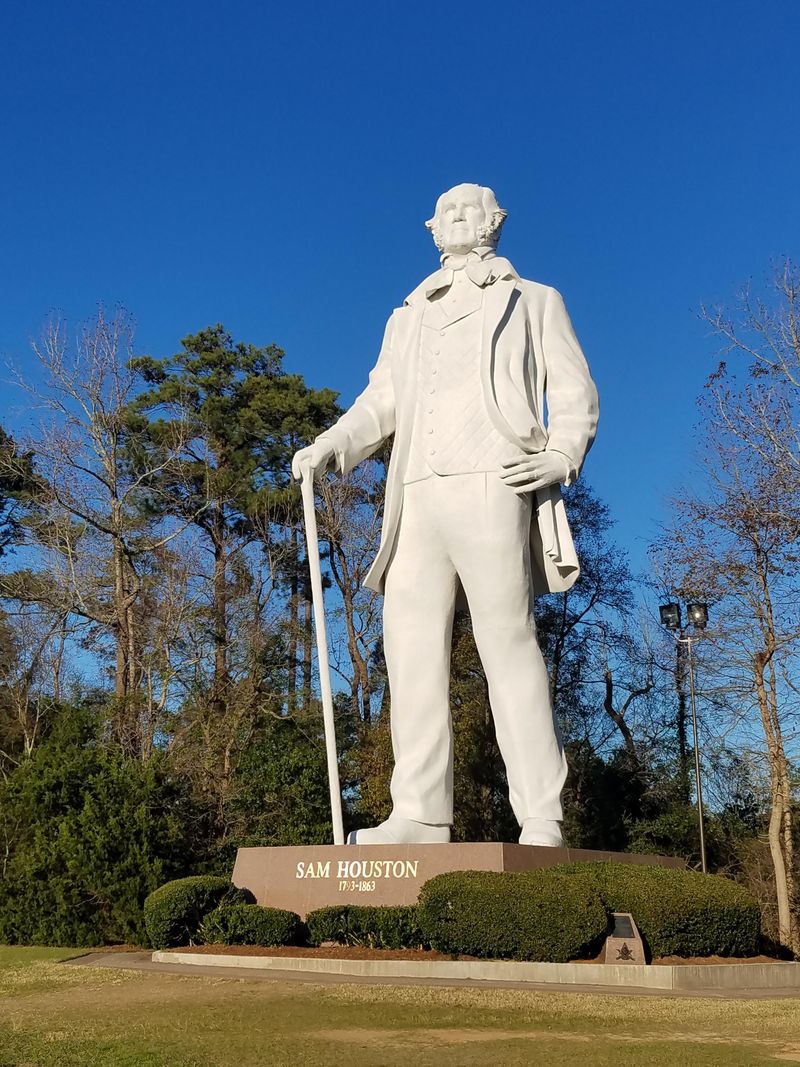
Rising 67 feet above Interstate 45 near Huntsville, a towering white statue of Sam Houston watches over passing motorists like some kind of benevolent giant. This is the world’s tallest statue of an American hero, standing even taller than the Statue of Liberty if you don’t count her pedestal. Sculptor David Adickes created this massive tribute to the Texas hero in 1994, using steel, concrete, and a whole lot of ambition.
The statue depicts Houston in his later years, dressed in period clothing and holding a walking cane. Every detail is oversized—his face alone is over 8 feet tall, and his cane measures 12 feet long. The statue weighs approximately 70 tons and required careful engineering to ensure it could withstand Texas weather, including high winds and storms.
Adickes built it in sections at his studio, then assembled the pieces on-site like an enormous puzzle.
Sam Houston himself would probably have mixed feelings about this tribute. The actual historical figure was known for his humility and often avoided grand gestures. But Texans love their heroes larger than life, and this statue certainly delivers on that front.
It’s become one of the most recognizable landmarks on I-45, visible from both directions of the highway and serving as an unofficial welcome sign for visitors heading north toward Dallas.
The statue stands at a visitors center that includes a small museum, gift shop, and covered picnic area. You can walk right up to the base of the statue for photos, though you’ll need to step back quite a bit to fit the whole thing in your frame. The site is free to visit and easily accessible from the interstate.
It’s particularly impressive at night when spotlights illuminate Houston’s face, making him look even more imposing as he gazes out over the highway that bears his name.
12. Munster Mansion (Waxahachie)
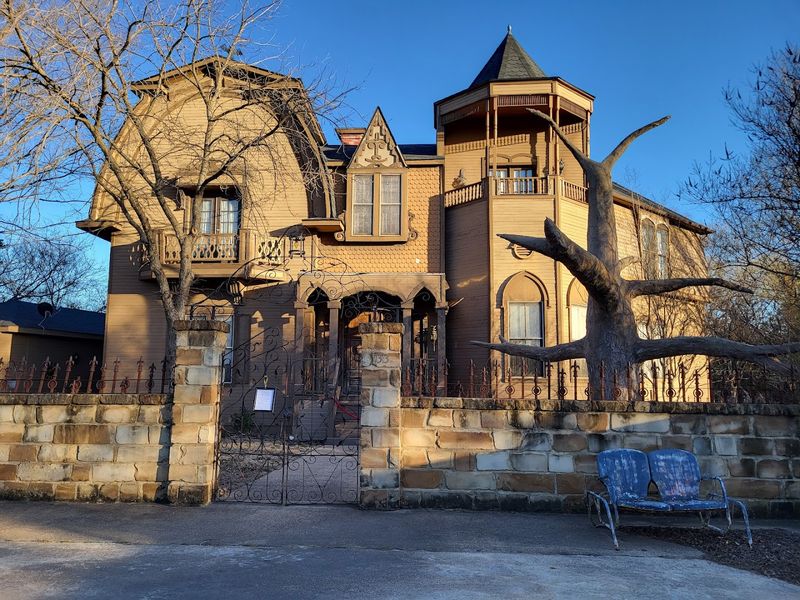
Charles and Sandra McKee loved the 1960s TV show “The Munsters” so much that they built a complete recreation of the Munster family home in Waxahachie, and the result is frighteningly accurate. From the distinctive tower to the Gothic Victorian details, this house looks like it was transported directly from the Universal Studios backlot to a quiet Texas neighborhood. The McKees spent years researching the original set, studying blueprints and watching episodes frame by frame to get every detail right.
The exterior matches the TV mansion almost perfectly, complete with the ornate woodwork, pointed tower, and general air of delightful creepiness. The McKees even tracked down period-appropriate materials to ensure authenticity. Inside, they’ve recreated rooms from the show using vintage furniture and props, including the iconic living room with its coffin phone and Grandpa’s dungeon laboratory in the basement.
Walking through the house feels like stepping into an episode of the show.
The mansion occasionally opens for public tours, especially around Halloween when the McKees go all out with decorations and special events. They’ve hosted cast members from the original show, and fans travel from across the country to see this labor of love. The attention to detail is remarkable—even small props and background elements match what appeared on screen over 50 years ago.
Tours must be booked in advance through the official website, and they typically fill up quickly, especially in October. The McKees are gracious hosts who genuinely enjoy sharing their passion project with fellow Munsters fans. Photography is encouraged, and they’re happy to answer questions about the construction process and their collection of memorabilia.
This isn’t just a replica—it’s a fully functional home where the McKees actually live, making it possibly the coolest residence in all of Texas. Just don’t expect Herman to answer the door.
Share this story