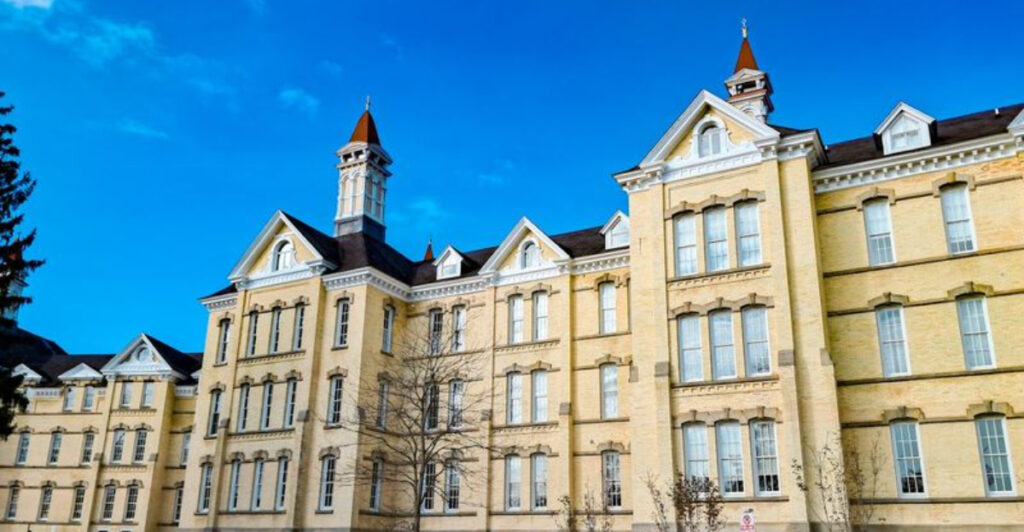
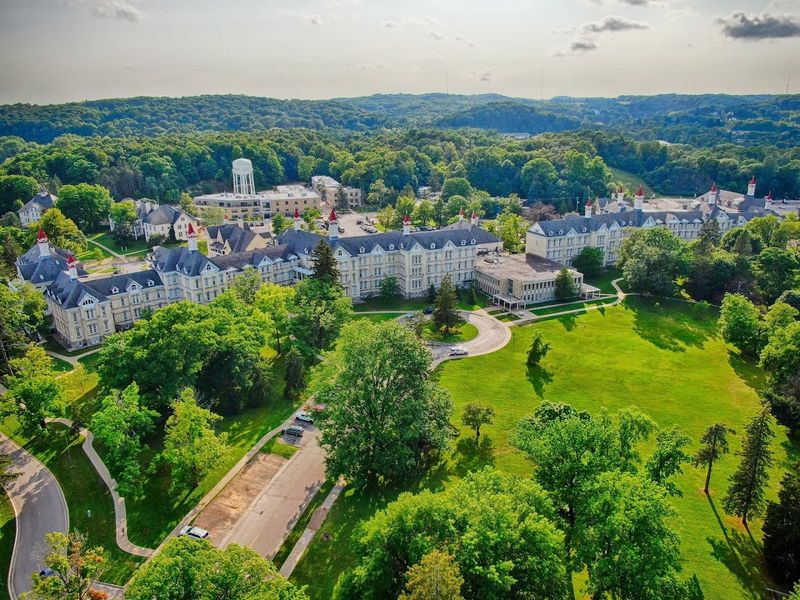
Beneath the rolling hills of Traverse City, Michigan, the Grand Traverse Commons holds more than beautiful brick buildings and scenic walking paths. This sprawling campus, once home to the Traverse City State Hospital, has transformed into one of the state’s most fascinating historic destinations, but its past still lingers in the details.
Yellow brick corridors, restored architecture, quiet grounds, and underground tunnels give the place a layered, almost cinematic feeling. For history lovers, curious travelers, and anyone drawn to places with a little mystery, the tunnels are a major part of the pull.
Step below the surface, and the Grand Traverse Commons quickly becomes more than a landmark — it becomes a Michigan story you can actually walk through.
The Underground Tunnel System That Connects It All
Most visitors arrive at Grand Traverse Commons expecting to browse shops and admire the yellow brick architecture from the outside. Then someone mentions the tunnels, and suddenly the whole afternoon changes.
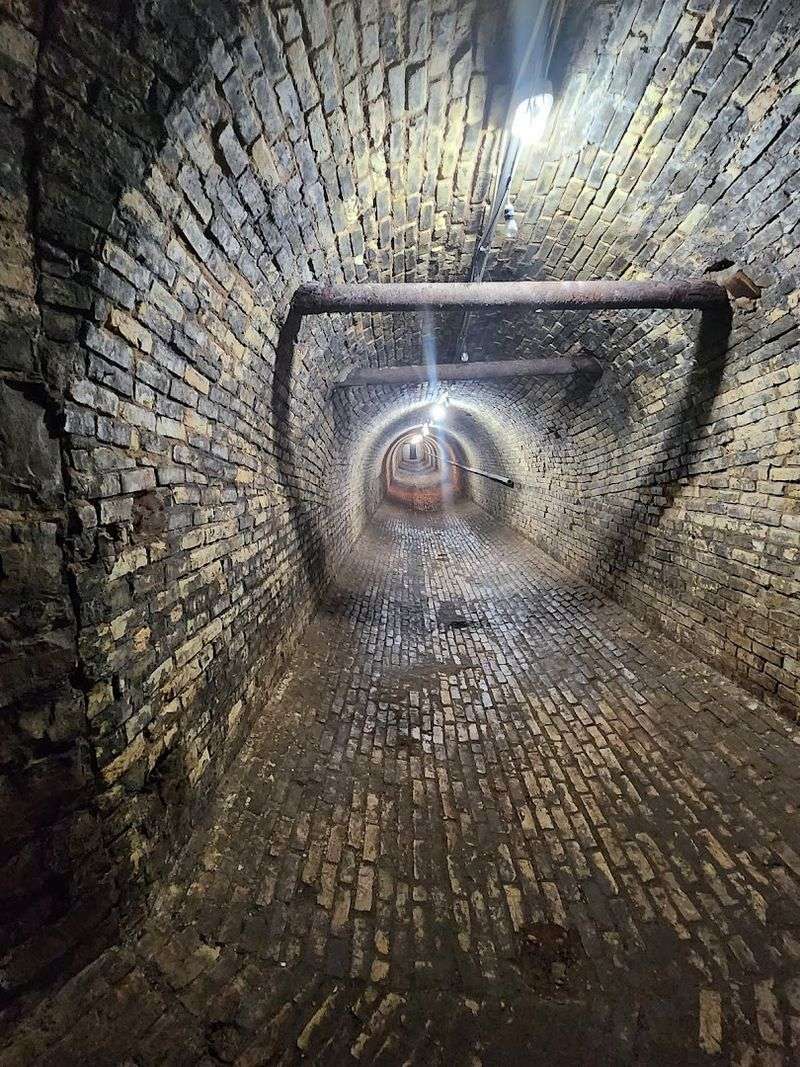
Running beneath the campus like a hidden circulatory system, the underground tunnel network once connected the main hospital buildings, allowing staff to move patients, supplies, and steam heat without stepping outside into brutal Michigan winters.
The tunnels are not polished or prettied up for tourists. Exposed pipes line the curved ceilings.
The floors are uneven in places. Dim light filters through at odd angles, and the air carries a coolness that hits you even on warm summer days.
Walking through one of these passages feels less like a scheduled tour stop and more like stepping into a chapter of something much older than yourself.
What makes the tunnels genuinely compelling is how intact they remain. Original materials are still visible in many sections.
You can see the bones of the old steam heating system that kept the entire campus warm during the era when this was a functioning psychiatric hospital. Guided tours are the best way to access them, and the guides who lead these walks tend to carry deep personal knowledge of the campus history.
Tour guide Shawn, mentioned by several visitors, comes from a family with direct ties to the state hospital. That kind of personal connection changes how a story gets told.
The tunnels stop being just architecture and become something closer to memory. Wear comfortable shoes, because the walking is real and the ground underfoot is not always forgiving.
Book tickets well in advance, especially during the warmer months, because these tours fill up faster than most people expect.
Yellow Brick Walls That Tell a Quieter Story
Before you ever go underground, the buildings themselves stop you in your tracks. The yellow brick used throughout the Grand Traverse Commons campus has a warmth to it that ordinary brick does not.
It catches the afternoon light differently, shifting from pale gold to something closer to amber depending on the hour. Standing outside and looking down one of the long brick facades, you get a sense of just how deliberately this place was designed.
The original architects built this campus with intention. Wide hallways, tall windows, and thoughtful proportions gave the buildings a sense of dignity that was unusual for institutions of this era.
The philosophy behind the design was rooted in the belief that beautiful, humane surroundings could support the healing of patients with mental illness. That idea, radical for its time, is still visible in every arched doorway and carefully laid brick course.
Sections of the campus have been renovated into shops, restaurants, condos, and event spaces. But the unrenovated buildings are where the architecture speaks most honestly.
Visitors on guided tours who enter the original cottages, from basement to attic, often describe the experience as sobering and fascinating in equal measure. Original tile floors, terrazzo work, and remnants of old fixtures are still present in places.
Walking the brick paths between buildings gives you a sense of the campus as a self-contained world. At its peak, this place operated almost like a small town, with its own farm, bakery, and infrastructure.
The yellow brick holds all of that history without explaining it. You have to look closely, move slowly, and let the details accumulate.
The architecture rewards patience in a way that a quick walk-through simply cannot replicate.
Steam Tunnels and the Heating System That Kept the Campus Alive
One detail that catches almost every tunnel visitor off guard is the scale of the original steam heating system. Running through the underground passages, the pipes and infrastructure that once distributed heat across the entire campus are still largely in place.
For a building complex of this size, keeping everything warm through a northern Michigan winter required serious engineering, and the tunnels were the veins through which that warmth flowed.
The steam tunnels were not just functional pathways. They were built to last, and the craftsmanship shows.
Brick archways support the tunnel ceilings at regular intervals. The walls are thick enough to muffle sound from above.
Walking through a section where the original pipe work is still intact feels like visiting a working museum of industrial history, except nothing is behind glass and nothing is labeled with a neat little placard.
Guides who lead tunnel tours often spend time explaining how the system worked and why it mattered to daily life on the campus. During the hospital years, this underground infrastructure made it possible to run a massive operation through some of the coldest months on the Great Lakes.
Patients and staff alike depended on it without ever seeing it directly.
For visitors who work in engineering, architecture, or building trades, the steam tunnel section of the tour tends to generate the most questions. The construction methods used here predate modern HVAC systems by decades, and seeing the original approach still physically present is genuinely rare.
Most historic buildings this age have had their original mechanical systems ripped out and replaced. The fact that significant portions still exist here makes these tunnels more than just a creepy corridor.
They are a record of how this campus actually functioned, day after day, season after season.
The Guided Tour Experience Worth Planning Around
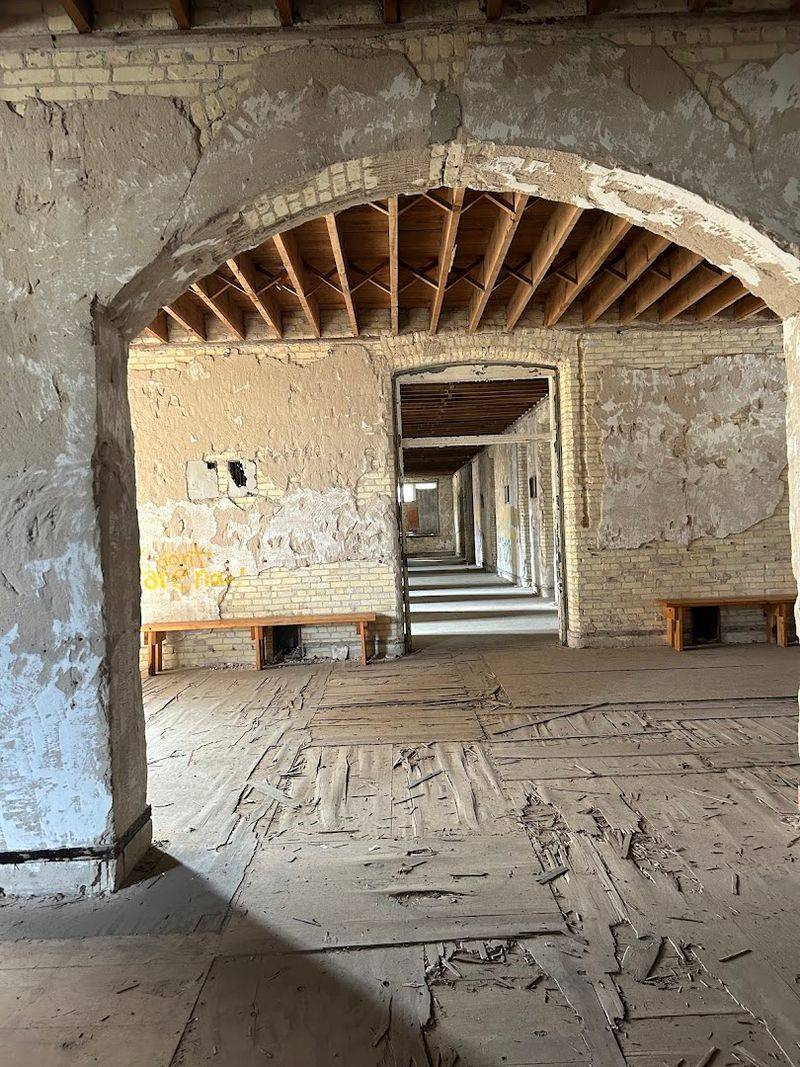
Showing up without a tour ticket and hoping to wander into the tunnels on your own is not going to work. Access to the most interesting parts of the campus, including the underground passages and the unrenovated buildings, requires a guided tour.
And honestly, that turns out to be the right call. The guides here carry the kind of knowledge that transforms a walk through old hallways into something that sticks with you.
Tours run at different lengths and times, with some lasting around ninety minutes and others stretching to two hours or more. The extended tours tend to cover more ground, including multiple unrenovated buildings and at least one tunnel section.
Guides like Shawn, Katherine, Clover, and Catherine Allen-Goodwin have each been singled out in visitor accounts for their depth of knowledge and their ability to make the material feel personal rather than recited.
Shawn, in particular, brings something extra to the experience. Her family members worked at the state hospital across multiple generations, which means her connection to the stories is not academic.
When she describes what daily life looked like on this campus, it comes from somewhere real. That kind of context is hard to manufacture and impossible to replicate with a printed brochure.
Tickets sell out well ahead of time, especially during the summer and around Halloween when twilight and evening tours draw large crowds. Buying online two months in advance is not an exaggeration if you want a specific date.
Check-in happens at the gift shop, where parking is free and restrooms are available. The tour involves a fair amount of walking on uneven surfaces, so footwear matters more than most people anticipate.
Leave the sandals in the car.
Unrenovated Cottages That Froze Mid-Moment
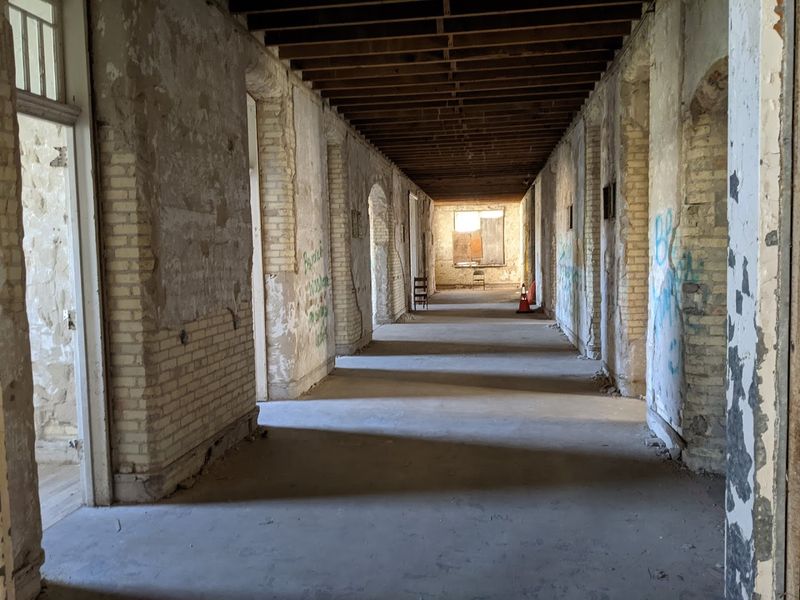
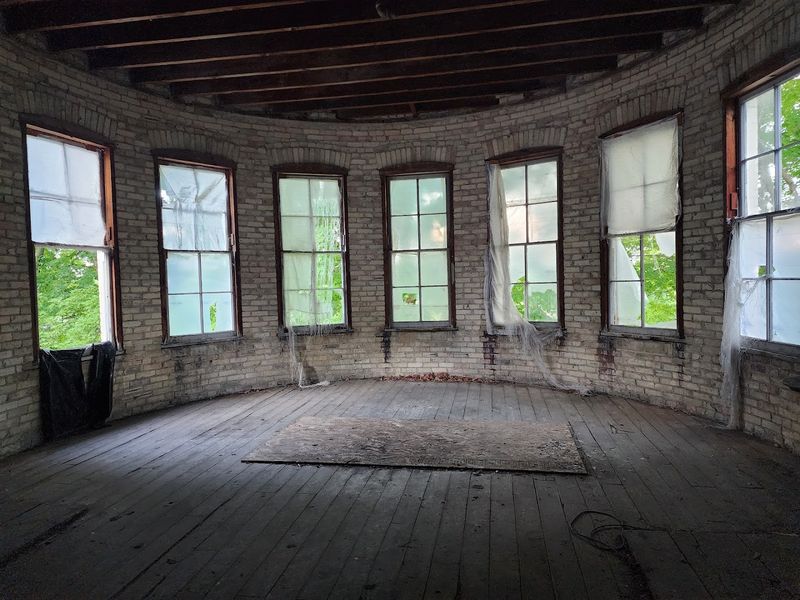
There is a specific kind of quiet that exists inside buildings that have been left to age on their own terms. The unrenovated cottages at Grand Traverse Commons have that quality.
Paint peels in long strips from walls that were once carefully maintained. Floors that are still original terrazzo hold their pattern even as the grout between tiles has worn away.
Ceilings show the slow work of time and moisture. And yet none of it feels like neglect so much as honesty.
Guided tours that include these buildings typically move from basement to attic, giving visitors a vertical slice of how the cottages were organized. Each floor served a different purpose during the hospital era.
The basement levels often housed mechanical systems or storage. Upper floors were patient living quarters.
Walking through the layers, you piece together how daily life was structured in a place that functioned as both a hospital and a home for many of its residents.
Original details survive in unexpected places. Tile work around doorframes.
Hardware on old windows. The outline of a built-in fixture that was removed but left a ghost of itself on the wall.
These small remnants are what make the unrenovated sections more compelling than any restored room could be. Restoration involves choices about what to emphasize and what to smooth over.
Abandonment preserves everything equally, without editorial judgment.
Some visitors find the condition of these buildings sobering. Others find them fascinating.
A few have described the experience as chilling in the best possible way. The one thing nearly everyone agrees on is that the cottages deserve to be saved.
Whether the funding and momentum will align to make that happen remains an open question, and one that tour guides are clearly invested in answering.
Halloween and Twilight Tours That Change the Whole Mood
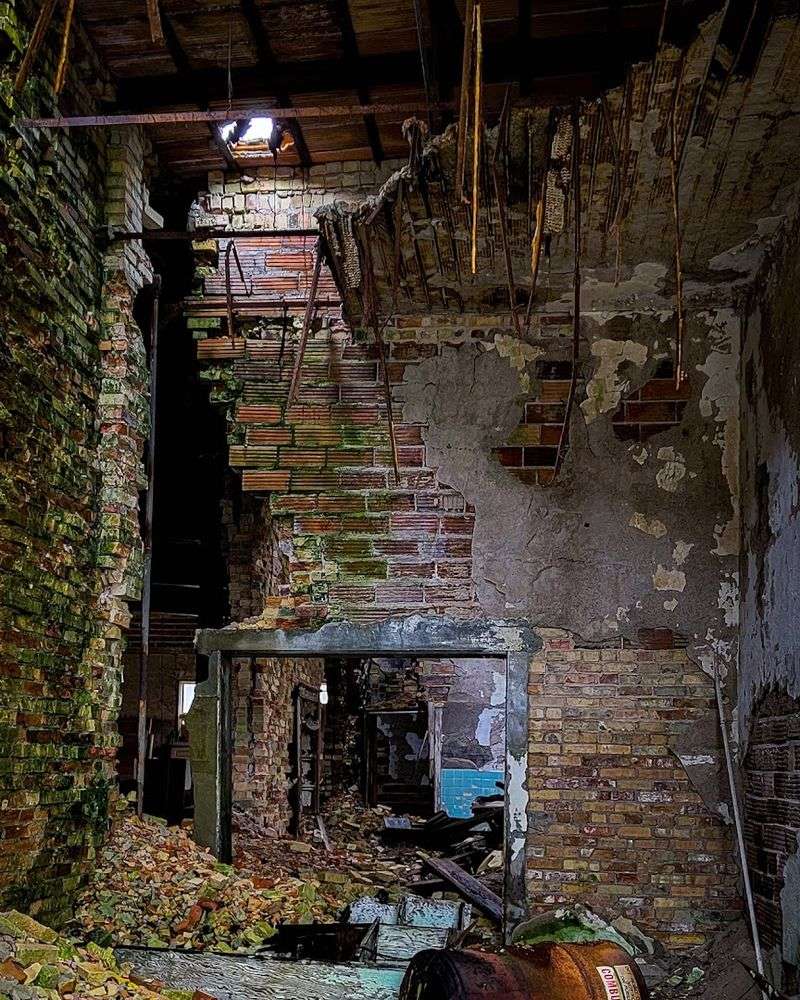
Walking through a dimly lit underground tunnel during daylight hours is one kind of experience. Doing it on a Friday evening in late October is something else entirely.
The twilight and Halloween tours offered at Grand Traverse Commons draw a very specific crowd, and those visitors tend to leave with stories that are harder to shake than the standard daytime version.
The buildings themselves do most of the work after dark. Tall windows glow from inside.
Shadows pool in corners that are easy to ignore during a sunny afternoon visit. The brick paths between buildings take on a different character when the light drops and the air turns cold.
Northern Michigan autumns have a particular quality of chill that arrives early and settles in fast, and the campus feels purpose-built for that kind of evening.
One group used a twilight tour as part of a bachelorette party itinerary, pairing it with dinner at Trattoria Stella, one of the restaurants operating inside the renovated section of the complex. That combination, upscale dinner followed by a walk through tunnels and crumbling hallways, sounds like it should clash but apparently works beautifully.
The contrast is part of what makes the campus interesting in the first place.
Tour guides for the evening sessions tend to lean into the atmospheric qualities without overdoing it. The history of psychiatric care, told honestly, is already dramatic enough without theatrical embellishment.
Guides like Natalie, who led a Halloween night tour that visitors described as genuinely well-informed, seem to understand that restraint is more effective than performance. The tunnels speak for themselves once you are standing inside them in the dark.
No ghost story required.
Shopping, Coffee, and Candy Right Above the Tunnels
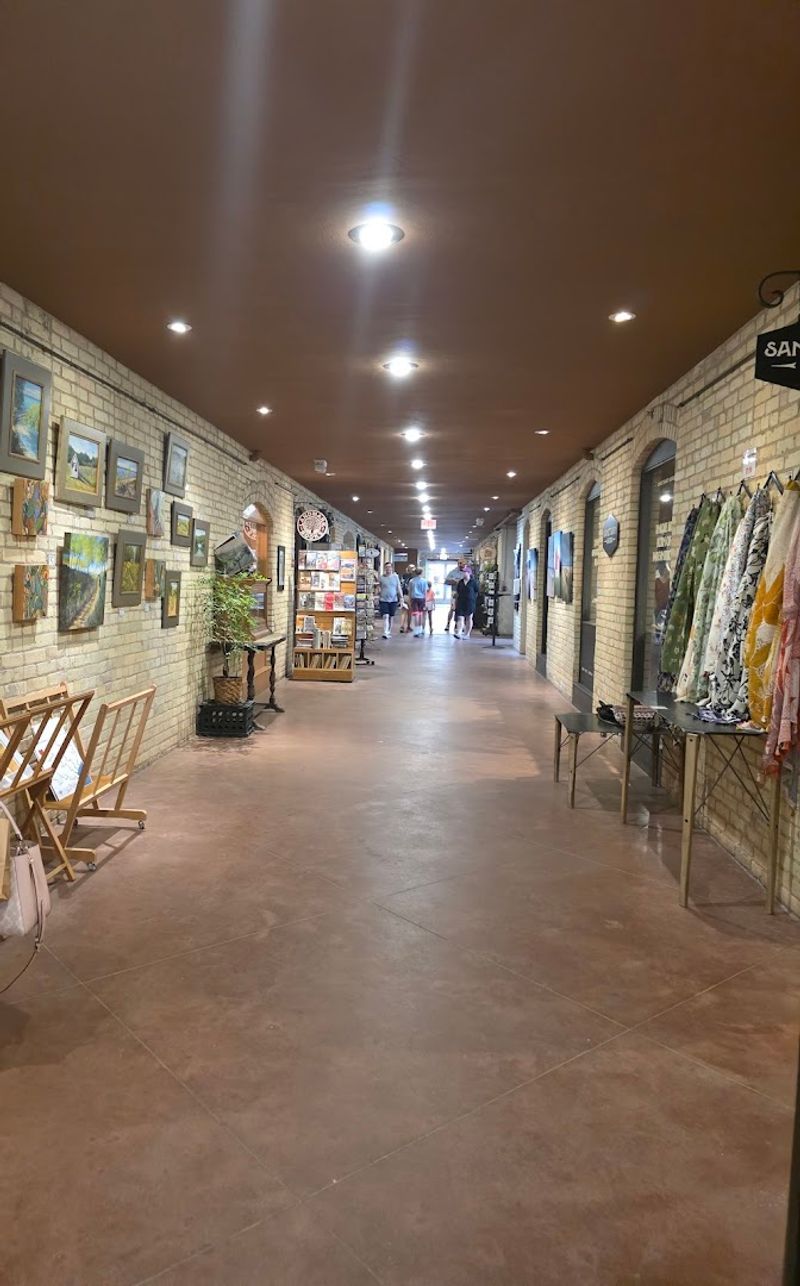
Here is something that takes most first-time visitors by surprise: directly above those atmospheric underground tunnels, there are shops selling pickle-flavored saltwater taffy, 3D-printed dinosaur toys, and hand-poured candles. The contrast is part of what makes Grand Traverse Commons genuinely hard to categorize.
It is a historic landmark, a neighborhood shopping district, a restaurant destination, and an underground history tour all occupying the same yellow brick footprint.
The renovated sections of the main building house a rotating collection of independent retailers. A candy shop sells loose candy by weight, which is the kind of detail that makes kids immediately pull at adult sleeves.
A flower shop fills its corner of the hallway with a scent that carries well beyond its doorway. A refillable soap and personal care shop lets you bring your own containers, which feels surprisingly at home in a building this old.
Higher Grounds Coffee has a devoted following among locals and visitors alike.
Prices lean toward the higher end in many of the shops, which is worth knowing ahead of time if you are budgeting carefully. But the mix of what is available skews toward things you would not find at a typical strip mall.
Unique gifts, artisan goods, and locally made items make up most of the inventory. Several visitors have mentioned breaking their own rules about souvenir shopping after walking through the retail hallways.
The gift shop at the entrance serves as the tour check-in point and carries books about the hospital history, which makes sense as a purchase after spending two hours learning about the place. Restaurants on the campus, including Trattoria Stella, have received consistent praise.
Planning a meal alongside a tour visit turns a half-day stop into a full afternoon worth building a trip around.