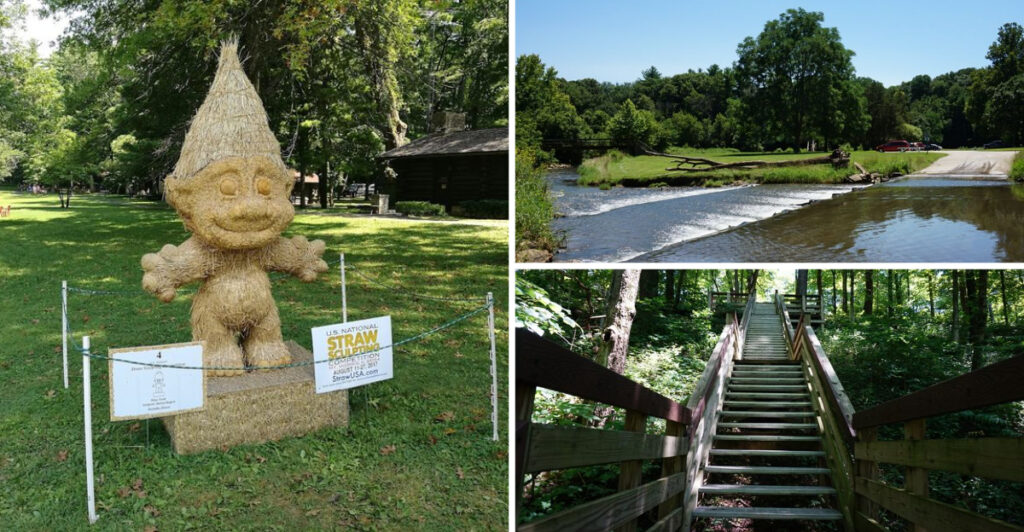
White Pines Forest State Park is one of Illinois’ most beautiful natural escapes, offering towering pine groves, scenic creeks, historic bridges, and peaceful hiking trails that feel worlds away from the surrounding countryside. Tucked near Mount Morris in northern Illinois, this beloved state park has enchanted visitors for generations with its quiet forests, dramatic seasonal beauty, and surprisingly rugged landscape.
Whether you’re crossing the park’s famous low-water bridges, wandering beneath the pines, or enjoying a relaxing weekend getaway, every corner invites you to slow down and take it all in. It’s the kind of Illinois destination that feels almost too beautiful to be real.
The Drive In Changes the Whole Mood
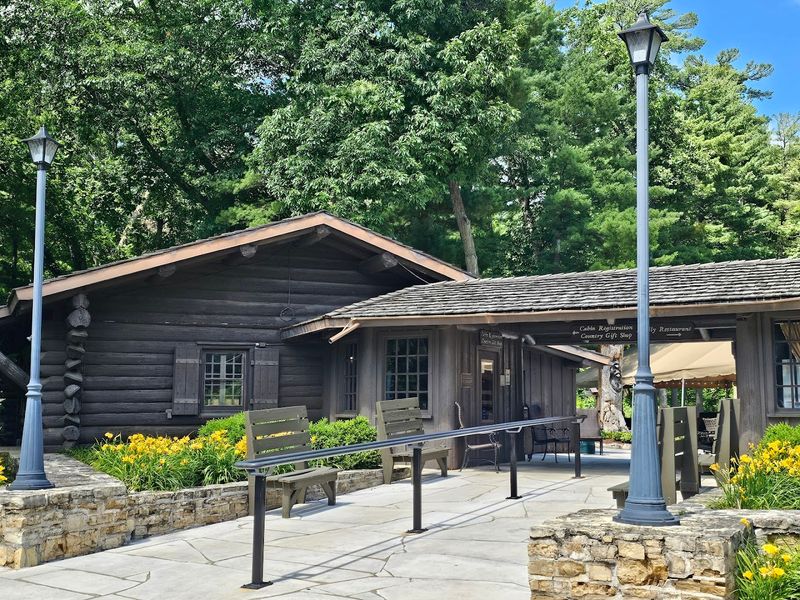
The approach to White Pines Forest State Park does not build with grand gates or oversized signage. Instead, the shift happens quietly, with the road narrowing, the canopy thickening, and the light turning cooler as pines begin to crowd the edges.
In a state better known for open farmland and long horizons, that sudden enclosure is the first surprise. You are not entering a dramatic mountain preserve or a polished resort landscape.
You are slipping into a pocket of dense forest that feels visually out of step with the surrounding region, and that contrast is exactly why the park lands so hard.
The scenery changes from ordinary to immersive in a matter of minutes, which gives the arrival a strange, almost cinematic snap.
The best part is how unforced it all looks. Tree trunks stand close together, ravines fold into the terrain, and Pine Creek threads through the property in a way that makes the park feel shaped by water first and roads second.
Even before any hiking starts, the layout tells you this place was meant to be experienced slowly. That slower rhythm shows up everywhere.
Cars move carefully because of the curves, conversations drop in volume, and people start scanning for trailheads, footbridges, and creek crossings instead of rushing toward a single overlook.
White Pines does not hit you with one giant reveal. It keeps tightening the scene until the everyday world falls away behind the trees.
By the time you park, the logic of the place is clear. This is a forest park where scale stays intimate, the road itself is part of the atmosphere, and the transition from outside to inside is one of the strongest features on the property. Few Illinois parks make the act of arriving feel this complete.
Pine Creek Is the Star Without Trying Too Hard
Some parks revolve around a summit, a waterfall, or one iconic lookout. White Pines Forest State Park works differently.
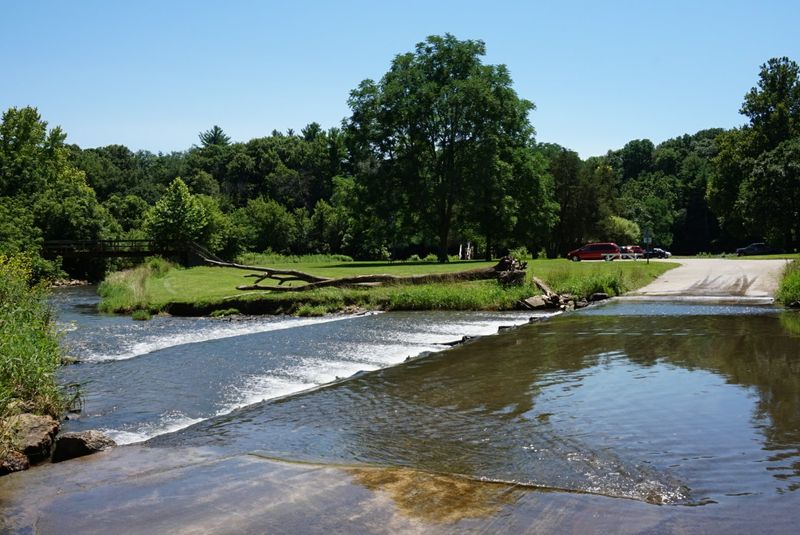
Its most memorable feature is Pine Creek, a modest stream that keeps showing up in new ways, whether as a reflective ribbon through the woods, a playful crossing, or a moving line that organizes the entire landscape.
The creek gives the park texture. It widens into calm sections that mirror trunks and sky, then narrows through stony channels where the sound of water sharpens and pulls your attention downhill.
You notice it visually first, then physically, because the paths and roads repeatedly ask you to deal with it rather than simply admire it from a distance.
That interaction is where White Pines separates itself from more passive scenic parks. There are footbridges, stepping stones, and the famous low water fords where vehicles pass through the creek instead of over it.
It is a slightly old-fashioned setup, practical and fun at the same time, and it gives the park a personality that is hard to confuse with anywhere else in Illinois.
Those crossings also change the pace of a visit. You pause, judge the water, watch the current move around concrete edges, and wait your turn if another car is easing through.
Even on a casual afternoon, that little ritual makes the place feel more hands-on and more rooted in the terrain. Plenty of forest preserves have streams. Very few let water shape the experience this directly.
At White Pines, Pine Creek is not background scenery added for atmosphere. It is the thread connecting trails, roads, views, and some of the park’s most unexpectedly joyful moments, all without needing to be loud or oversized to command the scene.
The Trails Keep Small Hikes Interesting
White Pines Forest State Park is not the kind of place where you commit to one giant all-day route and disappear into the backcountry.
The trail system is shorter, loop-based, and interconnected, which turns the park into a choose-your-own-route landscape instead of a single linear march. That setup makes it especially appealing if you like to adjust your day on the fly.
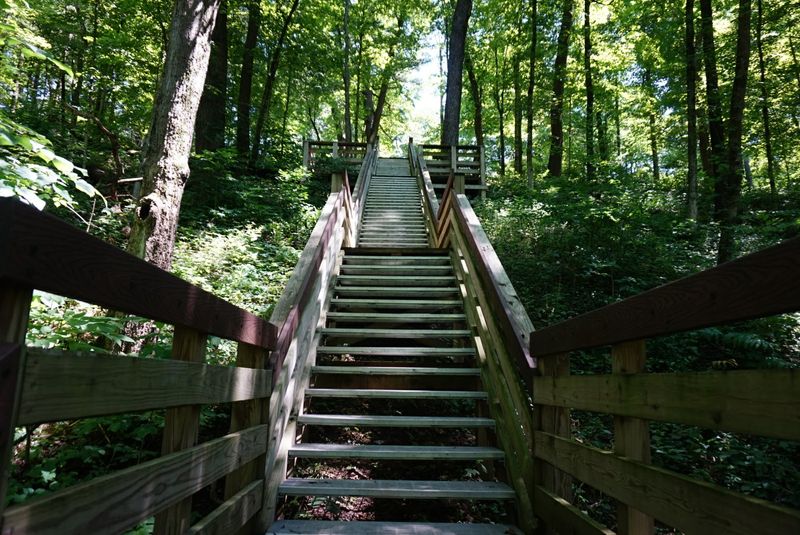
The trails vary enough to keep the walking interesting. One stretch may stay low near the creek, where the ground feels shaded and close, while another climbs to a ridge with stairs, bluffs, or a broader angle through the trees.
You are constantly shifting between water level and higher ground, which helps a relatively compact park feel more layered than the acreage might suggest.
Colored trail markers matter here, because the intersections invite improvisation. It is easy to link routes, shorten a walk, or add another segment once you realize energy levels are still good and daylight is on your side.
That flexibility is useful for families, casual hikers, and anyone who wants variety without committing to punishing mileage.
The terrain also asks for basic attention. Some sections involve worn stepping stones, uneven surfaces, and hills that are modest but noticeable, especially after rain or during leaf-covered fall conditions.
This is not a stroller-first trail network, and that fact helps preserve the park’s more natural, less overbuilt character. What stands out most is the rhythm.
You are not chasing a single endpoint. You are moving through repeating changes in elevation, creek access, and forest density that make each loop feel like a slightly different cut of the same landscape. For northern Illinois, that amount of variation packed into shorter hikes is a big part of the park’s appeal.
Why White Pines Forest State Park Looks Different From Nearby Illinois
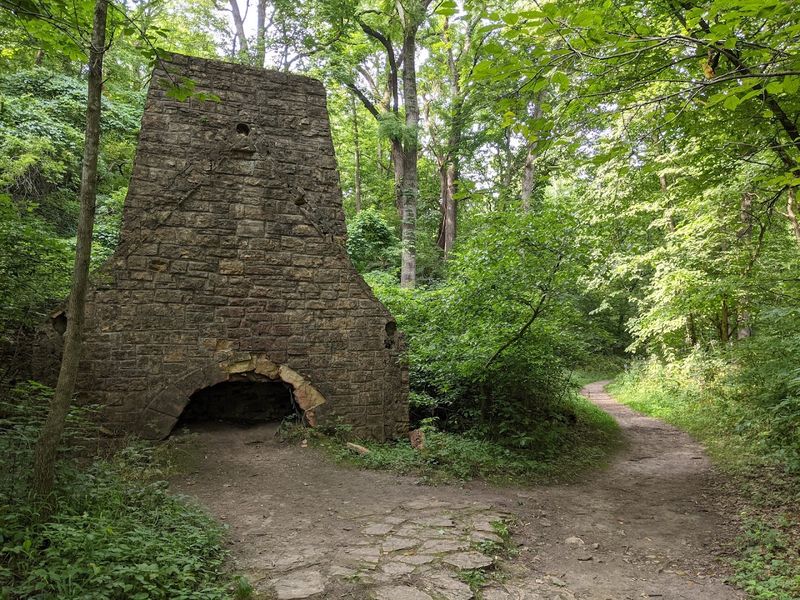
A big reason White Pines Forest State Park catches first-time visitors off guard is that it does not line up with the Illinois scenery many expect. The state image most people carry is broad, open, agricultural, and sky-heavy.
Here, the visual grammar changes to enclosed roads, steep little folds in the land, and tall stands of evergreen trees that make the park read cooler, darker, and more northern.
That contrast matters before any facts or trail names enter the picture. The pines narrow the view, reduce the horizon, and create a sense of vertical shelter that is uncommon enough in this part of the state to feel almost borrowed from somewhere farther north.
Even mixed with hardwoods, they dominate the mood. The terrain helps sell that effect. Ravines, creek cuts, and bluffs break up the ground, so your eye is rarely resting on one flat plane for long.
Instead of scanning outward, you keep looking across, down, and through. The result is a park that photographs well not because it has one spectacular landmark, but because almost every angle includes layers.
Season changes only sharpen the difference. In summer, the shade gets deep and cool under the trees. In fall, warm leaves flare against dark evergreens.
In winter, the structure of the trunks and slopes becomes more obvious, and in spring the creek and fresh growth pull attention back to the forest floor.
This is why White Pines lands so strongly as a place, not just as a recreational site. It offers a version of Illinois that many people do not realize they have access to, especially as a day trip.
The park does not need to imitate mountain scenery. Its power comes from showing how unexpectedly varied northern Illinois can look once the pines close in.
Cabins, Lodge, and the Old Park Romance
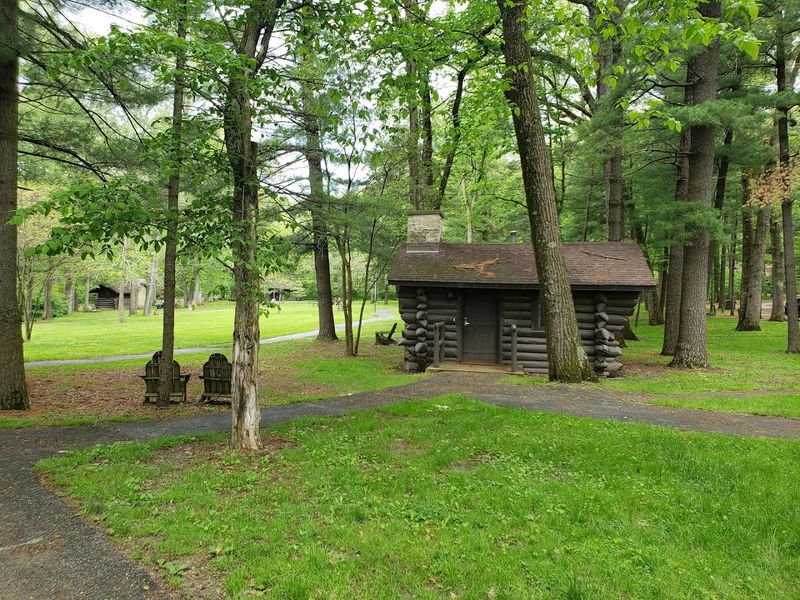
Not every state park carries built-in character beyond picnic tables and parking lots. White Pines Forest State Park does.
The lodge and log cabins give the property a settled, slightly nostalgic layer that changes the whole experience, especially if you are used to parks that empty out once the day hikers leave.
The architecture fits the setting instead of competing with it. Rustic cabins tucked among the trees, a lodge with a classic park look, and gathering spaces that feel tied to an older idea of recreation all make the forest seem inhabited in a gentle way.
You are still here for the woods, but the human footprint adds texture rather than distraction. That matters because the park supports more than a quick loop and a packed lunch.
A meal at the lodge, a cabin stay, or an evening event can turn the visit into something with a beginning, middle, and nightfall, which is very different from a standard afternoon hike.
The forest stops being a backdrop and starts functioning like a temporary neighborhood. There is also a local tradition baked into the place.
White Pines has the kind of setting where families return, couples book a cabin, and hikers end up lingering around the developed core after the trails are done.
Even without hearing anyone’s personal story, the layout tells you this park has long served as both escape and ritual.
That blend of rustic lodging and active landscape is rare enough to stand out. Some parks excel at hiking but offer little reason to stay.
Others have overnight options that feel detached from the scenery. Here, the cabins, lodge, and forest operate as one continuous experience, giving White Pines a warmer, fuller identity than a trail map alone could ever capture.
When to Go and How to Make the Day Work

White Pines Forest State Park is open daily from 6 AM to 6 PM, and timing shapes the visit more than you might think. Early hours make the strongest case for themselves, especially if you want quieter trails, cleaner reflections on the creek, and that soft filtered light under the pines before the middle of the day flattens everything out.
Fall is the obvious attention grabber, but it is not the only smart season. Spring can be especially good if you want moving water, fresh green understory, and a park that feels awake without being crowded.
Summer offers deep shade, which is valuable on hot Illinois days, while winter strips the scene down to trunks, slopes, and creek lines in a more graphic way.
Planning the route helps because the park encourages wandering. Downloading or checking a map beforehand is useful if you want to connect trails efficiently, avoid backtracking, or decide how many creek crossings you are comfortable tackling that day.
After rain, low water roads and stepping stone sections deserve extra attention, particularly if your vehicle sits low or the ground is slick.
The park also works well for layered visits. A short hike, lunch or a picnic, a second trail, and then a slow drive through another section of the property creates a fuller sense of the place than racing through one loop and leaving.
White Pines rewards range more than speed. If you are choosing between a quick stop and a half day, choose the half day.
That gives enough time to see the developed core, walk at least two distinct trail environments, and notice how the creek and pines keep changing the mood. The best plan here is simple: arrive early, stay flexible, and leave room for detours.
The Quiet Twist That Makes This Park Hard to Shake
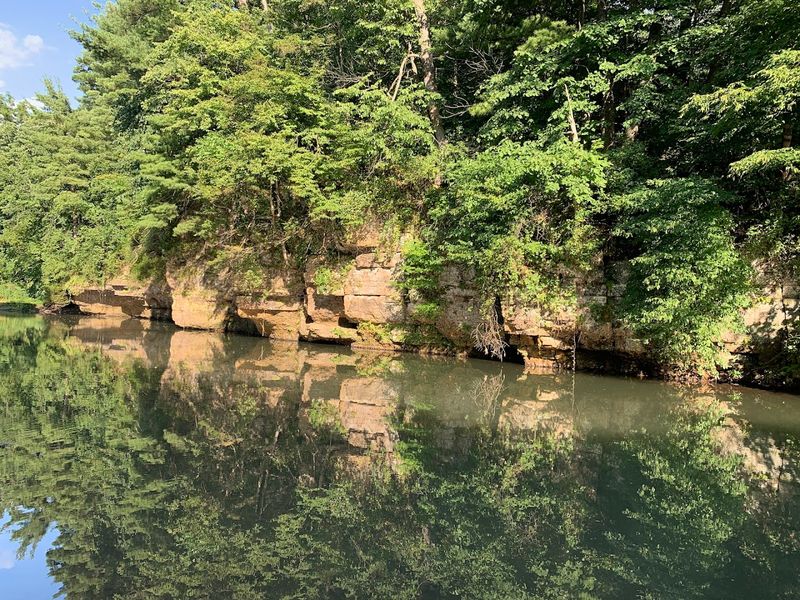
White Pines Forest State Park earns its reputation in an unusual way. It is not enormous, not remote by national park standards, and not built around a single blockbuster sight.
Yet once you spend time there, the place starts to feel larger than its footprint because so many small elements are working together at once.
The creek crossings give it playfulness. The pine stands give it visual identity. The short linked trails keep movement constant, while the bluffs, ravines, cabins, and lodge prevent the park from flattening into one note.
Every part of the experience nudges the next part, so the day unfolds as a sequence rather than a checklist. That coherence is surprisingly rare. Plenty of parks have nice trails but no real sense of place beyond them.
Others have attractive facilities that feel detached from the landscape. White Pines avoids both problems by making the natural setting and the developed features support each other instead of competing for attention.
There is also the Illinois factor. Because the surrounding region sets different expectations, the forested depth here hits harder.
You arrive prepared for a pleasant state park and end up with a pocket of terrain that looks and moves differently from the broader map around it. That mismatch between expectation and reality is a major part of the thrill.
So yes, the beauty is real, but the reaction to it can be a little disorienting. White Pines does not rely on spectacle.
It wins through enclosure, water, texture, and pacing until the whole park starts reading like an alternate version of northern Illinois. When a place can shift your sense of a familiar state that completely, it has already done something special.